
Python for Data Science: Where Should You Start?
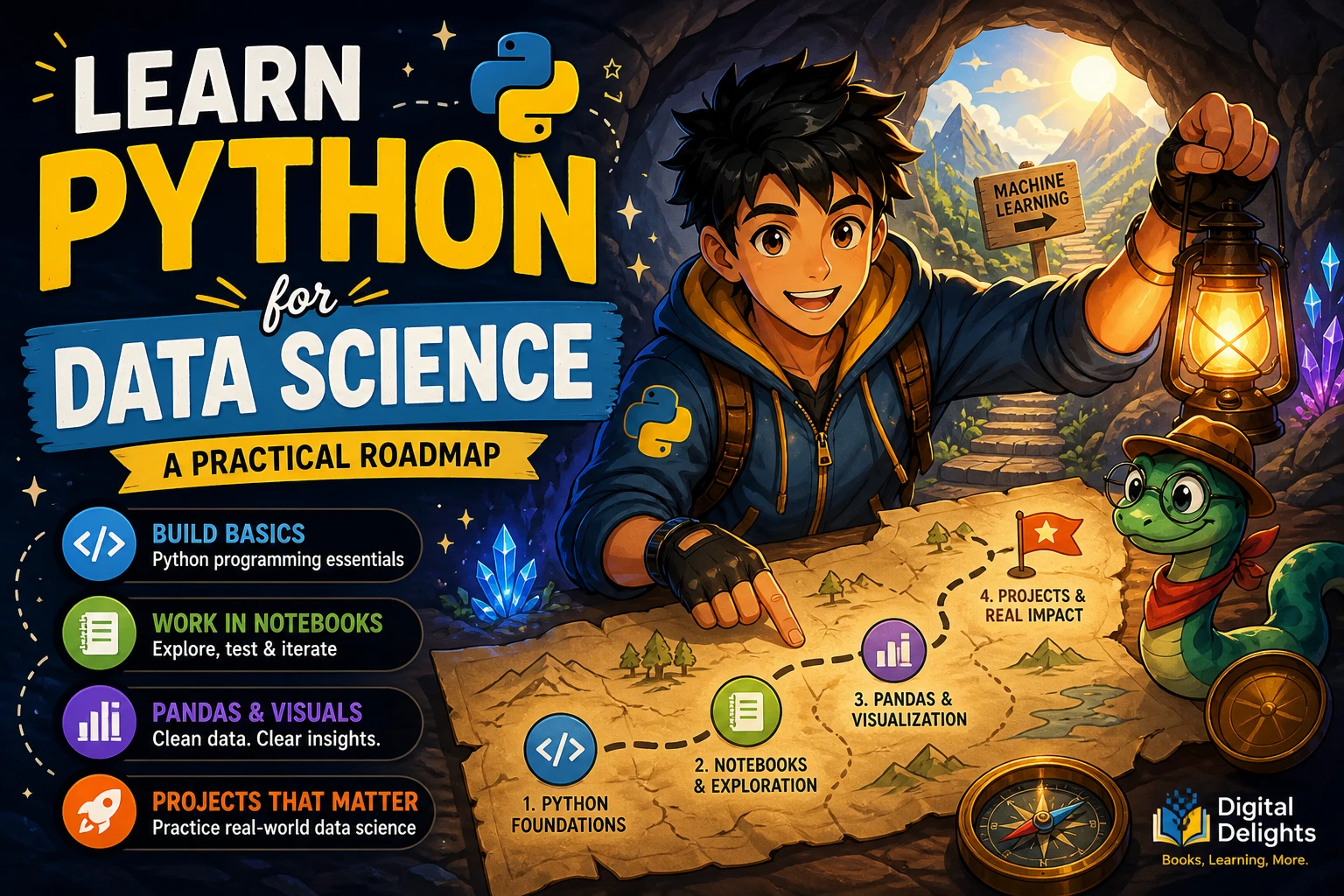
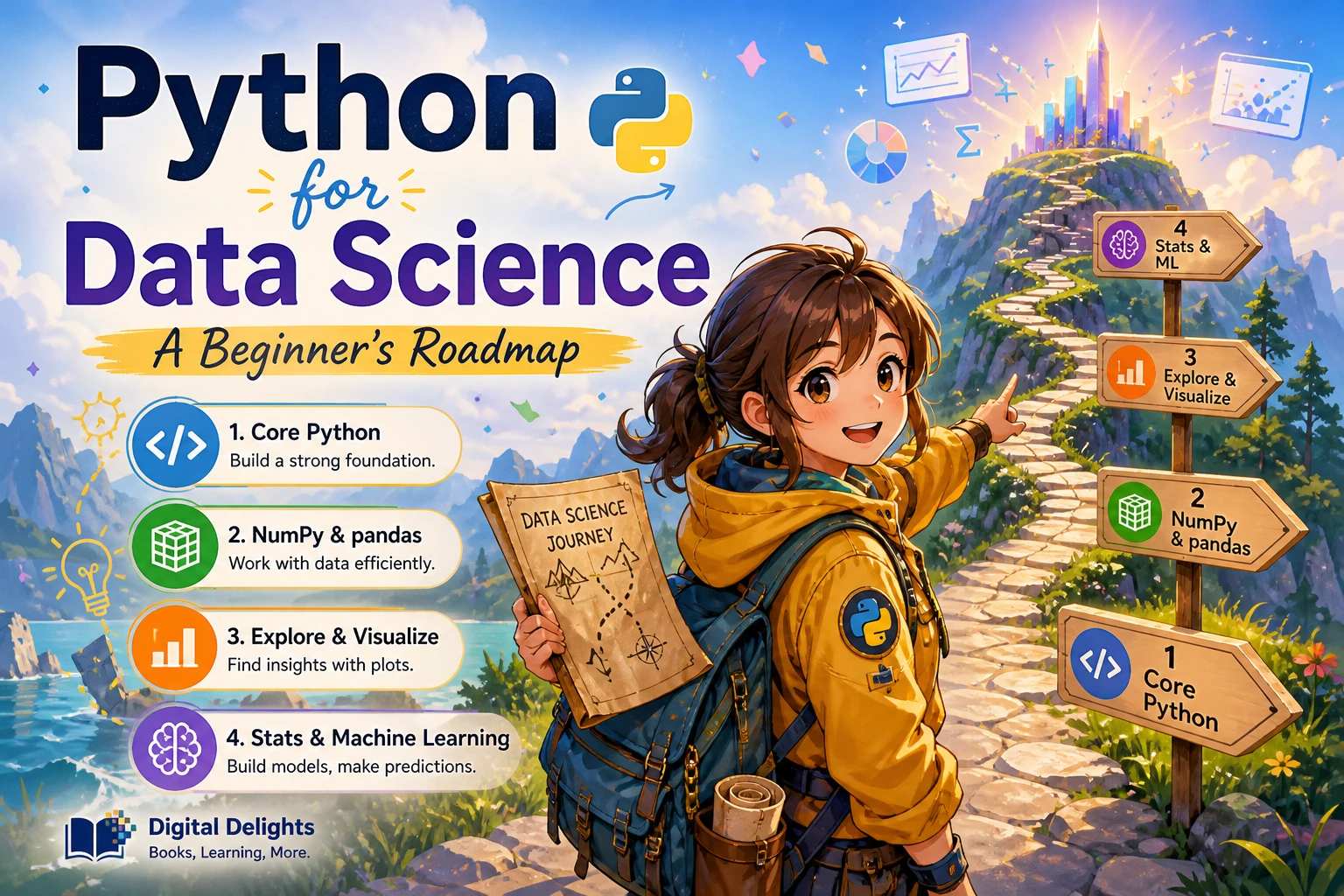
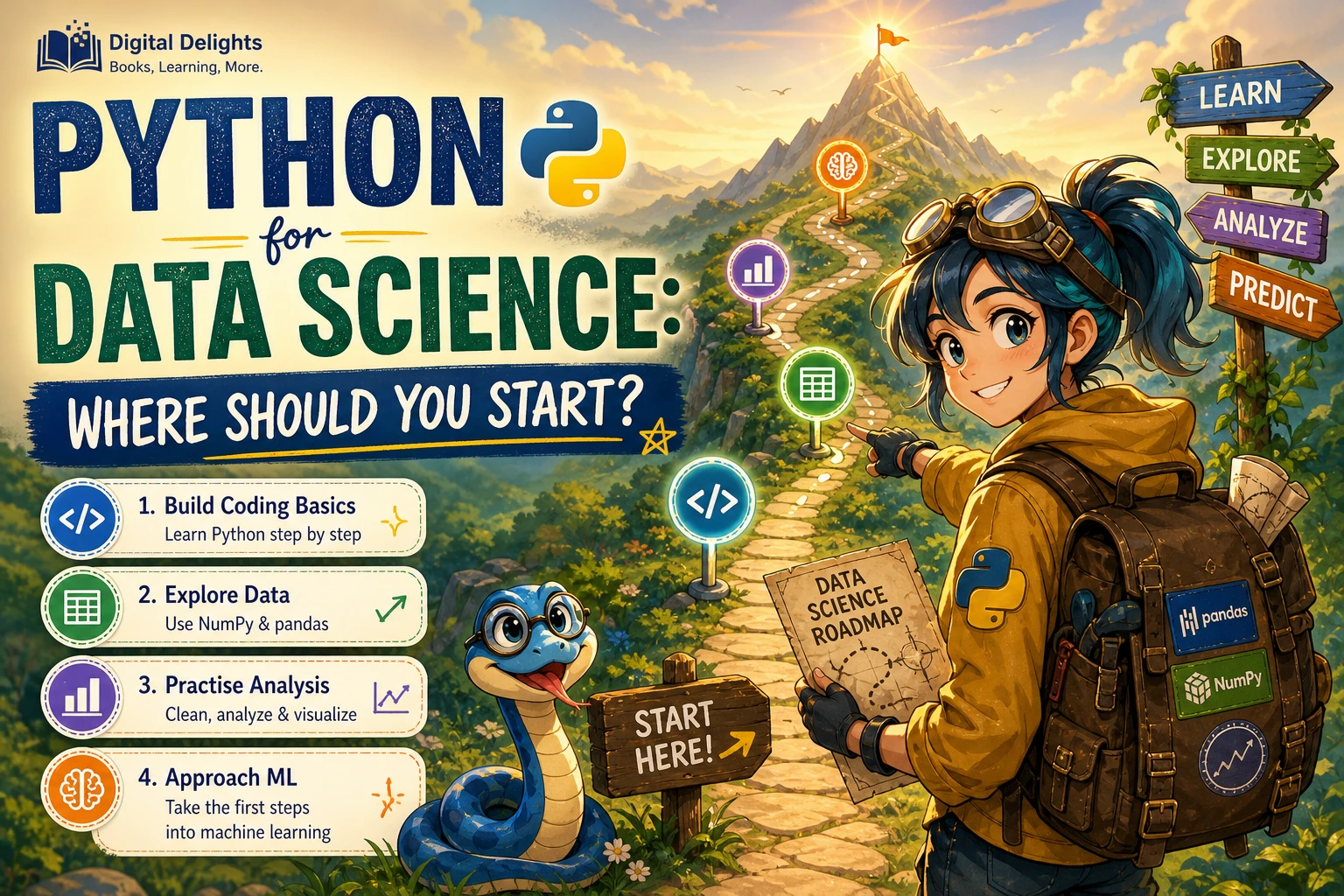
If you want to use Python for data science, start with enough programming to understand and write small scripts, then apply those skills to real data. You do not need to master every corner of Python before beginning, and machine learning does not need to be your first stop. A practical sequence is: learn core Python, practise in a notebook, work with NumPy and pandas, explore and visualize data, and then study machine learning when you can prepare and assess a dataset.
This is a useful route, not a proven one-size-fits-all curriculum. Your starting point depends on whether you have programmed before and what you want to do with data. The steps below give beginners a way to make progress without getting stuck in endless preparation.
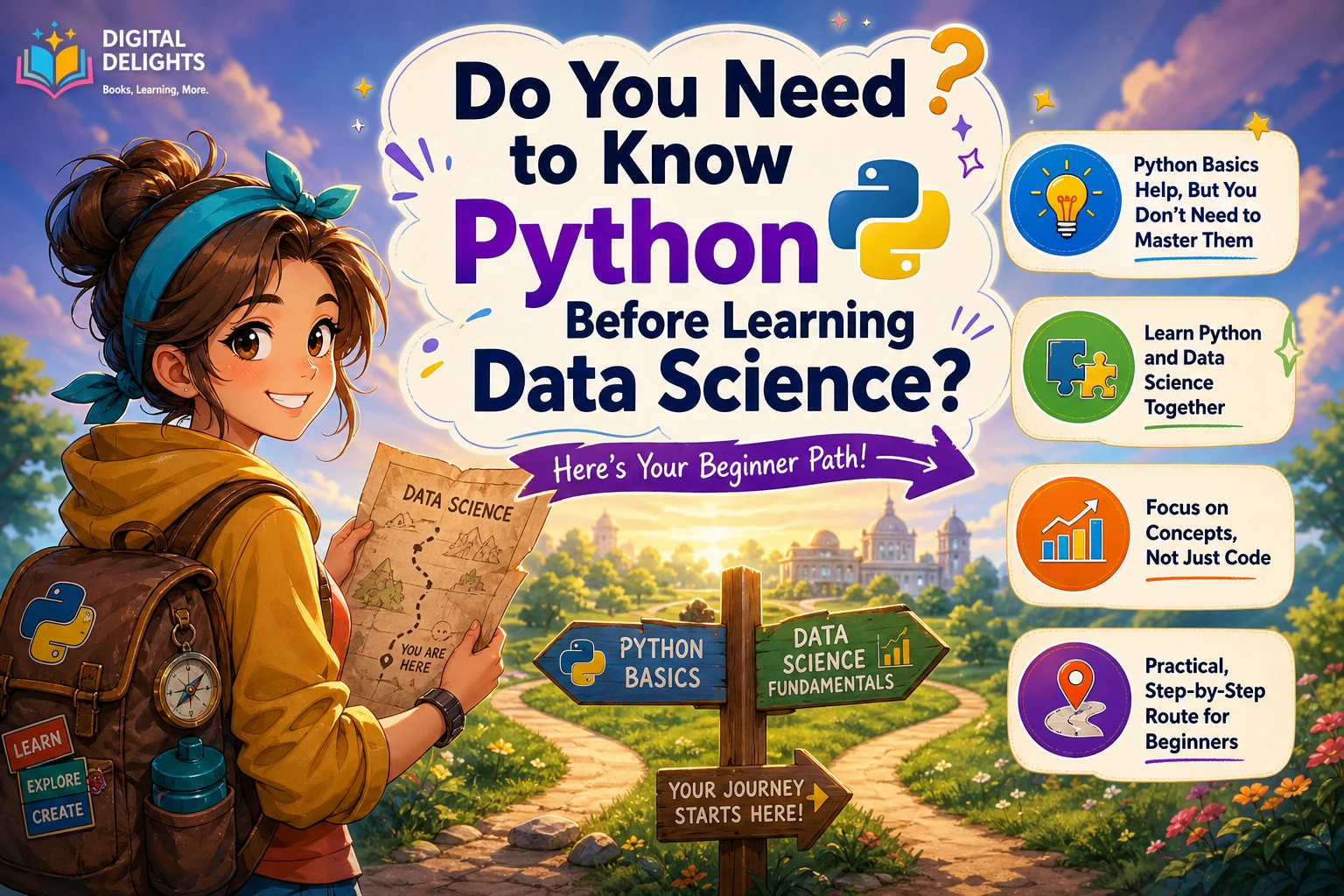
Do You Need to Know Python Before Learning Data Science?
You can begin learning data science while you are still learning Python. A basic grasp of the language makes data-focused lessons easier to follow, but you do not have to become an expert first.
If you are new to programming, learn to read and write short programs before taking on a large analysis. Focus on the building blocks: storing values, making decisions, repeating actions, organizing information, and writing reusable functions. If you already know another programming language, you can move through those ideas more quickly and spend more time on Python’s data tools.
It helps to separate two kinds of starting point:
- New to Python and programming: begin with basic Python concepts and small exercises, then use them on simple data tasks.
- Comfortable with another language: learn Python syntax and common data structures, then start exploring datasets.
- Already comfortable with Python: focus on notebooks, data handling, visualization, and the statistical ideas relevant to your work.
Learning resources do not all set the same prerequisites. For example, Manning describes Data Science Bookcamp as expecting basic Python without requiring prior data-science or machine-learning knowledge, while O’Reilly’s Python for Data Analysis includes introductory Python material. That difference is a reminder to choose a starting resource that fits what you already know, rather than assuming everyone needs the same preparation.
A Beginner’s Roadmap for Python Data Science
Move from language fundamentals to working with data, and from describing data to modeling it. You can revisit earlier steps whenever a project reveals something you need to learn.
1. Learn the Python basics you will use repeatedly
Start with the parts of Python that help you understand everyday code and manipulate information:
- Variables, values, and basic types such as numbers, strings, and booleans
- Conditional statements and loops
- Lists and dictionaries, plus tuples and sets when they are useful
- Functions, parameters, and return values
- Reading error messages and handling common errors
- Opening and working with files
Practise by writing small programs rather than only reading examples. For instance, write a function that counts how often each word appears in a short text file, or a loop that calculates the total and average of a list of values. These exercises help connect Python syntax to the kinds of operations you will later perform on data.
A fundamentals book can provide structure if you prefer a guided sequence. Python Crash Course: A Comprehensive and Fast-Paced Introduction to Python Programming for Beginners and Experienced Developers Alike covers core language topics and includes project material described in the catalog as including data analysis. It may suit readers who want an introduction that leads into applied work.
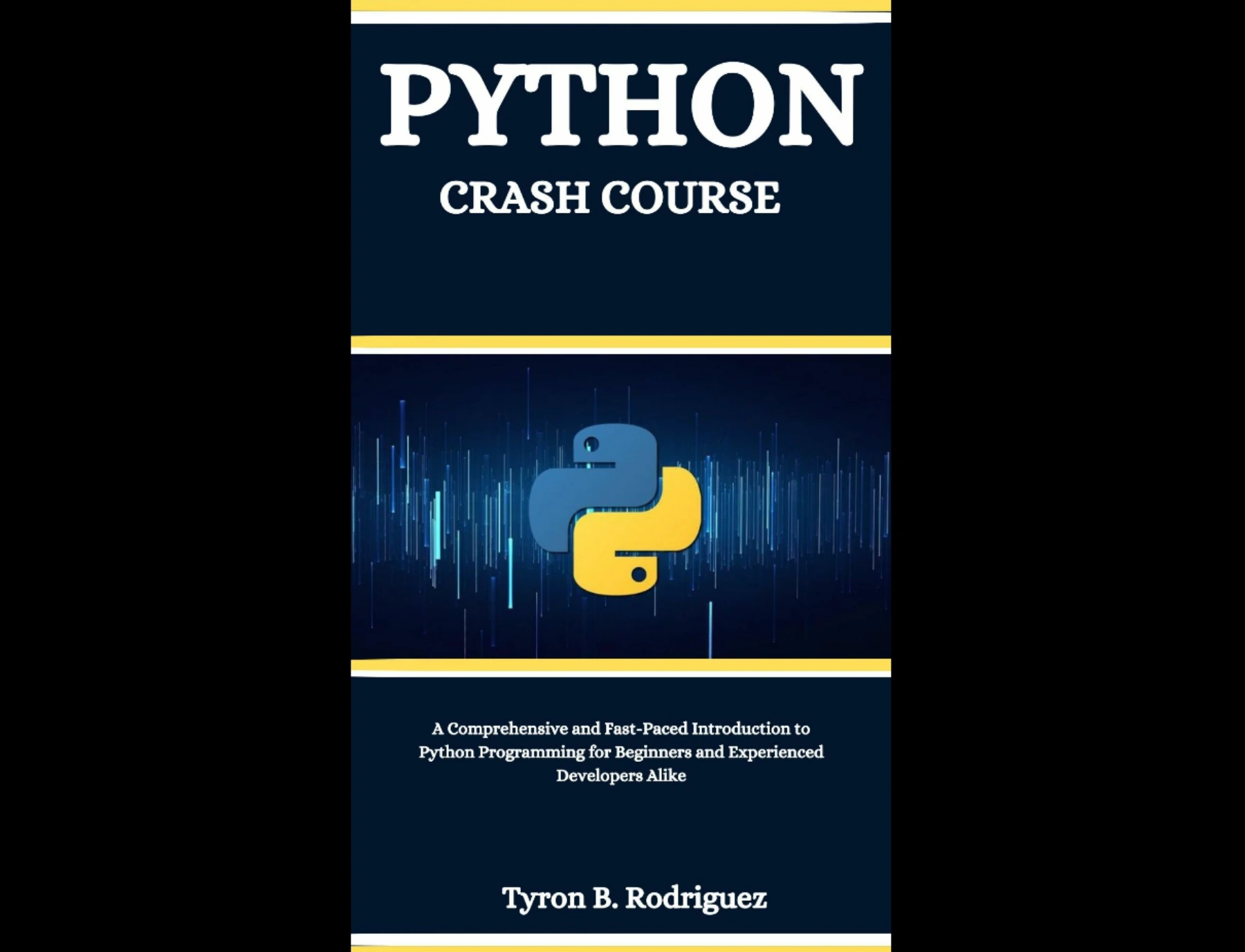
Beginners seeking core Python concepts and project material, including data analysis projects, according to the catalog description.
2. Practise writing code, not just recognizing it
It is easy to follow a tutorial and feel that the code makes sense while it is on screen. A more useful check is whether you can make a small change, explain what the code does, or write a similar solution without copying it.
Try to predict what a short piece of code will produce before running it. When it behaves differently than expected, inspect the values and revise your explanation. A practice-focused resource such as Python Programming Exercises, Gently Explained offers 42 short Python problems, according to its catalog description. It can be a fit for learners who want extra prompts for active practice.
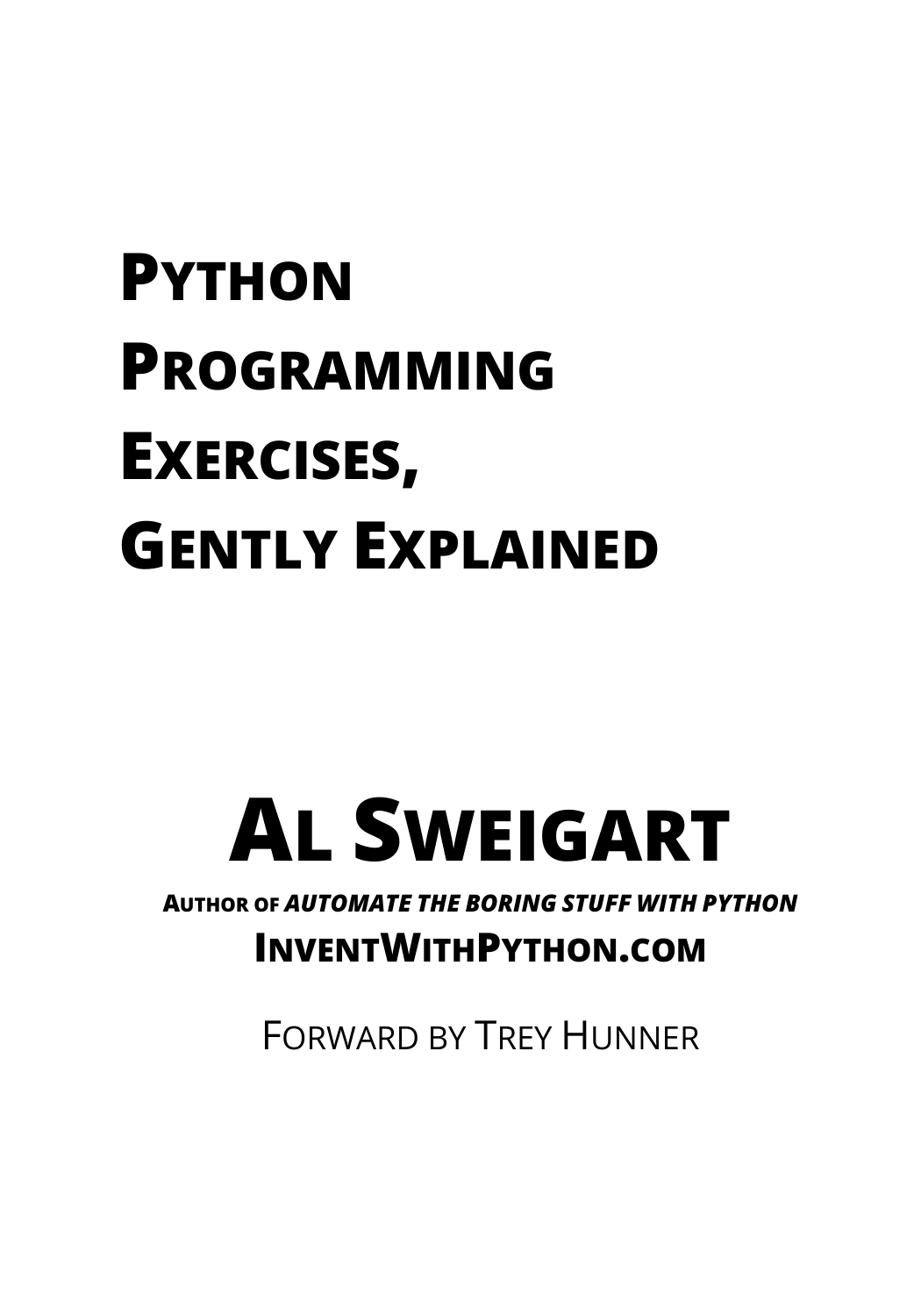
Python Programming Exercises, Gently Explained
By Al Sweigart
Learners who know some Python basics and want additional coding exercises.
3. Get comfortable with notebooks and your working environment
Data work often involves trying an operation, looking at its result, and adjusting the next step. A notebook makes that exploratory process visible by combining code and its output in one document. Learn how to run a cell, change it, and restart or rerun work when earlier changes affect later results.
Keep your learning environment simple. Use a stable Python release and check that the libraries you plan to use support it. The Python downloads page lists stable releases and distinguishes them from pre-release versions; as of October 9, 2026, the research supplied for this article identified Python 3.14.8 as the latest stable release and Python 3.15.0rc3 as a release candidate. Check Python.org’s downloads page for current status rather than treating those version numbers as permanent advice.
4. Learn NumPy and pandas by using them on data
NumPy provides tools for working with arrays of numerical values. pandas is commonly used to organize and manipulate tabular data, such as a CSV file with rows and columns. You do not need to memorize every feature of either library at the start. Learn enough to load data, inspect its shape and columns, select information, and perform a few useful calculations.
Build understanding through small questions: Which columns are present? How many records are there? What values are missing? What is the average or range of a numeric field? Can you group records by a category and compare summaries?
When using older books or tutorials, check their version context. O’Reilly’s Python for Data Analysis, third edition, was published in August 2022 and describes examples updated for Python 3.10 and pandas 1.4. Its topics include Python basics, NumPy, pandas, Jupyter/IPython, and visualization. Those materials can still offer a learning structure, but version-specific setup instructions and examples may need checking against current documentation. See the publisher’s book page for its stated scope and version context.
5. Clean, summarize, and visualize before modeling
Before building a model, learn to inspect and prepare the data. Check whether fields have the types you expect, whether entries are missing, and whether categories or values are inconsistent. Make a few summaries and simple charts so you can see patterns and possible problems.
Visualization is not just a finishing touch. A chart can help you notice unusual values, skewed distributions, or differences between groups that deserve a closer look. Treat those observations as questions to investigate, not automatic explanations.
6. Study useful statistics alongside analysis
You can begin practical data exploration without first completing a full mathematics curriculum. As you work, learn the statistical ideas needed to interpret what you see: averages and spread, distributions, samples, and how relationships between variables should be described. Keep the limits of a dataset in view. A pattern in the data does not, by itself, establish why that pattern occurred.
The material supplied for this article does not establish a single amount of mathematics that every beginner needs. Let the questions in your projects guide which concepts to study next, and be careful not to present a numerical result as more certain than the data supports.
7. Approach machine learning after you can inspect data
Machine learning becomes easier to study when you can load, check, clean, and summarize the data a model will use. Before moving on, make sure you can explain what a dataset contains, identify some limitations, and describe how you would check whether a result is useful.
Then begin with the purpose of a model and the difference between training and evaluation data. Treat the model as one part of an analysis, not a substitute for understanding the data or the question. The order here is practical guidance, not a claim that every learner must follow exactly the same sequence.
Learn by Completing One Small Data Project
A compact project helps tie programming, data handling, and interpretation together. Choose a dataset that is small enough to understand and connected to a question you can state clearly. For example, you might examine daily activity records, a small collection of public measurements, or a personal log with no sensitive information.
- Ask a specific question. Decide what you want to find out before choosing calculations.
- Load the data. Read the file and inspect its rows, columns, and data types.
- Check its condition. Look for missing values, unexpected entries, and fields that need correction.
- Summarize a few fields. Calculate suitable counts, ranges, or averages, and compare groups where appropriate.
- Create one or two charts. Choose a chart that helps answer your question rather than adding one just to decorate the notebook.
- Explain what you found. State the result, what it does not show, and any limitations you noticed.
The finished project does not need a complicated model. A clear analysis that explains its data and limits is a more useful learning exercise than a notebook full of code whose purpose you cannot describe.
For a resource explicitly focused on beginner data science, the catalog includes Python for Data Science: an after-work guide. Its description lists an introduction to data science, NumPy, pandas, visualization with Matplotlib, and machine-learning basics. Treat the catalog description as a guide to its stated topics; it does not independently establish the book’s quality or whether its setup instructions match your current software.
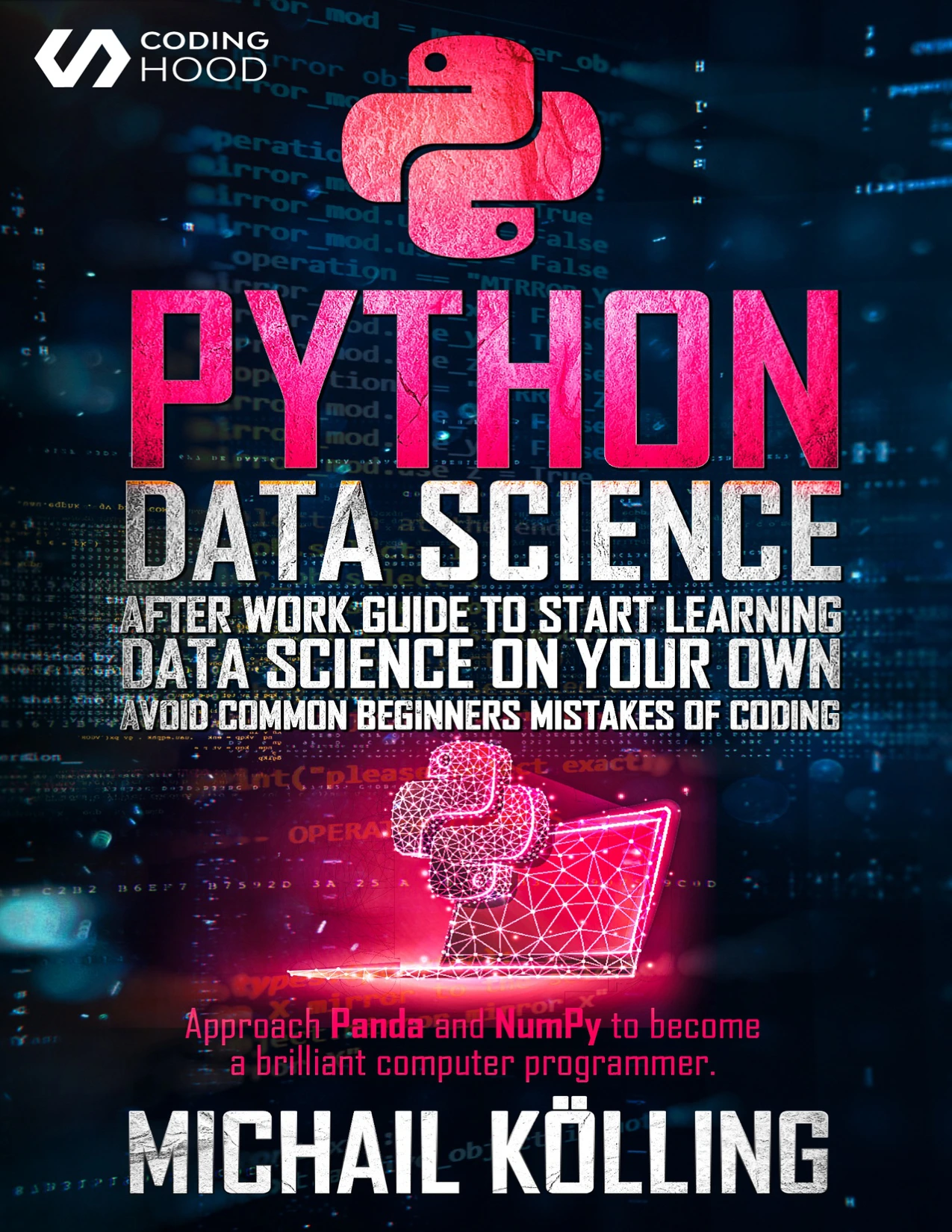
Self-directed beginners interested in the listed topics of NumPy, pandas, Matplotlib, and machine-learning basics.
Common Beginner Missteps to Avoid
- Starting with machine learning alone. A model can run without you understanding the input data. Build skills in inspection and preparation first.
- Copying notebook cells without understanding them. Pause to explain each operation, then change a value or try the same idea on a different column.
- Collecting library names instead of applying them. Choose a small question and use only the tools needed to investigate it.
- Waiting to learn every part of Python. Learn the fundamentals, then expand them as your analysis needs new concepts.
- Assuming there is one correct curriculum. Existing resources differ in their prerequisites and how much Python they introduce. Match your path to your background and goals.
- Following old setup instructions blindly. Tutorials may refer to older Python or package versions. Check current release and compatibility information when instructions no longer work.
How to Choose a Learning Resource
Choose a resource for the next obstacle you need to solve—not for the promise of mastering everything at once. A beginner who has never programmed needs different support from someone who already writes Python but has not analyzed data.
| Your starting point | Resource to consider | Why it may fit |
|---|---|---|
| New to Python and looking for a structured introduction | Python Crash Course | The catalog description covers Python fundamentals and projects, including data analysis. |
| You understand basic syntax but need more coding practice | Python Programming Exercises, Gently Explained | The catalog lists 42 short exercises for practising Python. |
| You want an introduction specifically connecting Python with data science | Python for Data Science: an after-work guide | Its catalog description names NumPy, pandas, Matplotlib, and machine-learning basics. |
These are options matched to their described topics, not quality rankings. Before relying on any book or tutorial for installation steps, check its publication and version context against current Python and library documentation.
Frequently Asked Questions
Can I start data science without knowing Python?
Yes. You can learn data-science ideas while building Python skills. If you are new to programming, begin with small programs and core concepts, then use them in simple data tasks. If you already program, learn the Python details you need and move into data tools sooner.
Should I learn pandas or NumPy first?
There is no single order that suits every project. NumPy is centered on numerical arrays, while pandas is useful for tabular data. Start with the library that fits the kind of data task you are trying, and learn the other as your work calls for it.
Do I need statistics before starting?
You do not need to postpone all data work until you have studied statistics in depth. Start exploring data while learning concepts such as averages, variation, distributions, and samples as they become relevant. The available evidence does not establish one universal mathematics prerequisite for beginners.
When should I begin machine learning?
Begin when you can load and inspect a dataset, prepare basic fields, and describe what question a model is meant to address. You do not need to know every data tool first, but understanding the data and how you will assess a result gives machine-learning lessons useful context.
How should I handle older Python tutorials or package instructions?
Check which Python and library versions the material uses, then compare its instructions with current official release and package information. Older material can still explain concepts, but commands or examples may need adjustment. Use a stable Python release rather than a pre-release for a beginner learning setup, and confirm compatibility for the libraries you plan to use.
Start with the Next Small Step
For Python for data science beginners, a practical starting point is to learn core Python, practise writing short programs, then work with a real dataset using notebooks and data libraries. Add visualization and relevant statistics as you explore; take up machine learning after you can inspect and prepare data.
Choose one modest dataset and complete the full loop: ask a question, load and check the data, summarize it, make a chart, and explain what you learned. That finished piece of work will show you which skill to practise next far better than collecting a long list of tools.
Sources
- Download Python | Python.org — release information; version status cited above reflects the research checked October 9, 2026.
- Python for Data Analysis, 3rd Edition | O’Reilly — publisher description and version context.
- Data Science Bookcamp | Manning — publisher description of prerequisites.
- Python for Data Analysis, 3rd Edition | O’Reilly title page — publisher information about the book’s subject coverage.