
How to Learn Python for Data Science
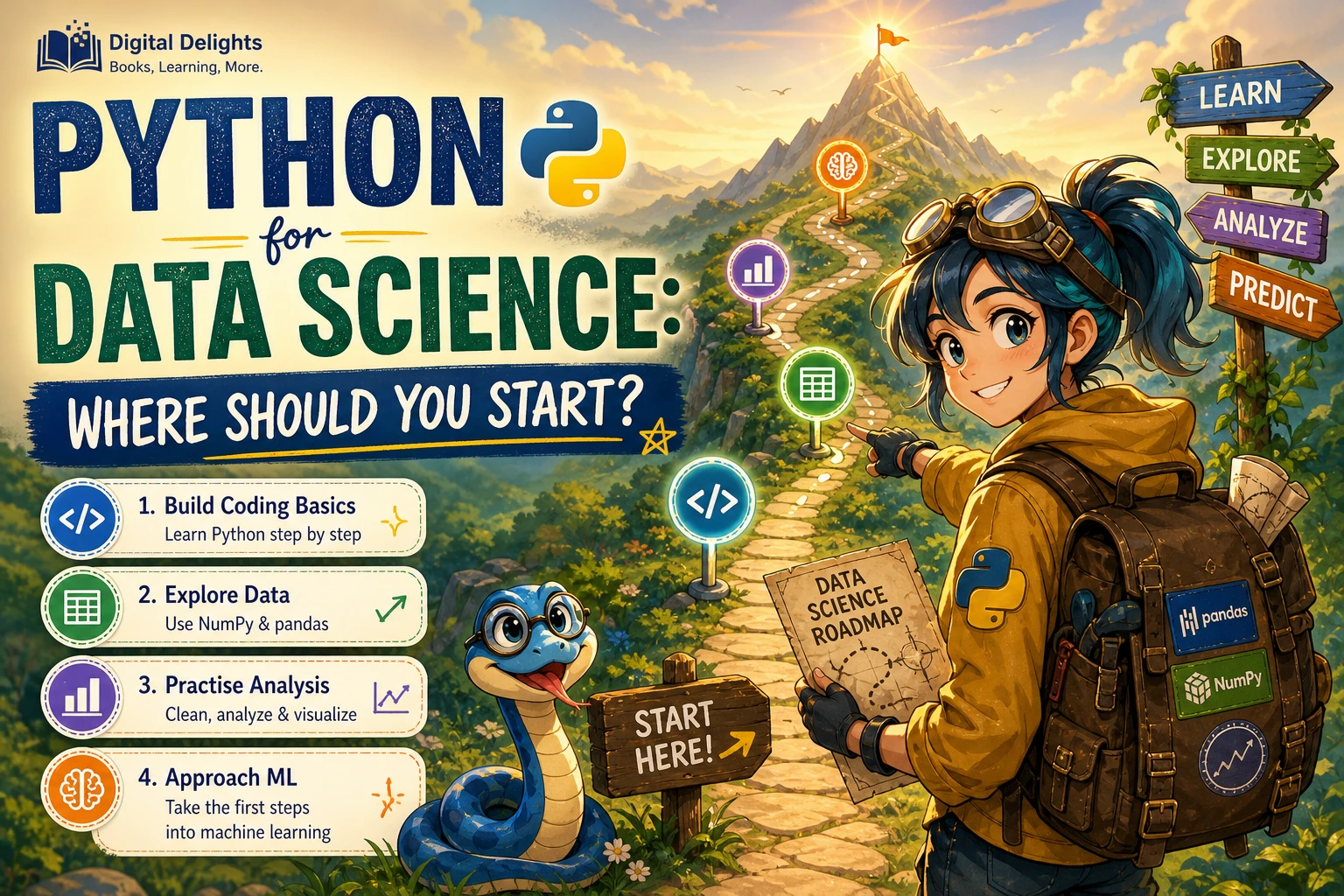
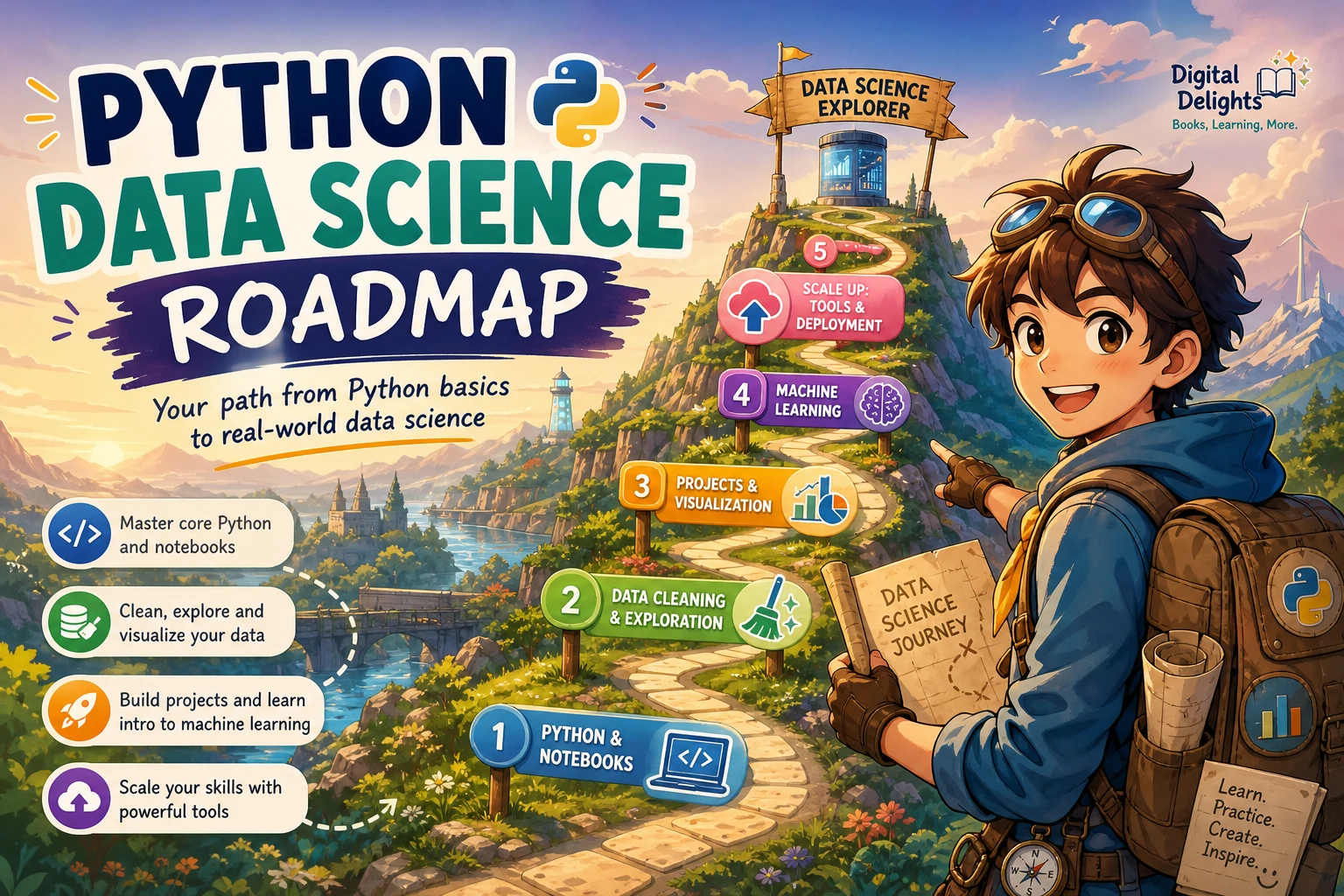
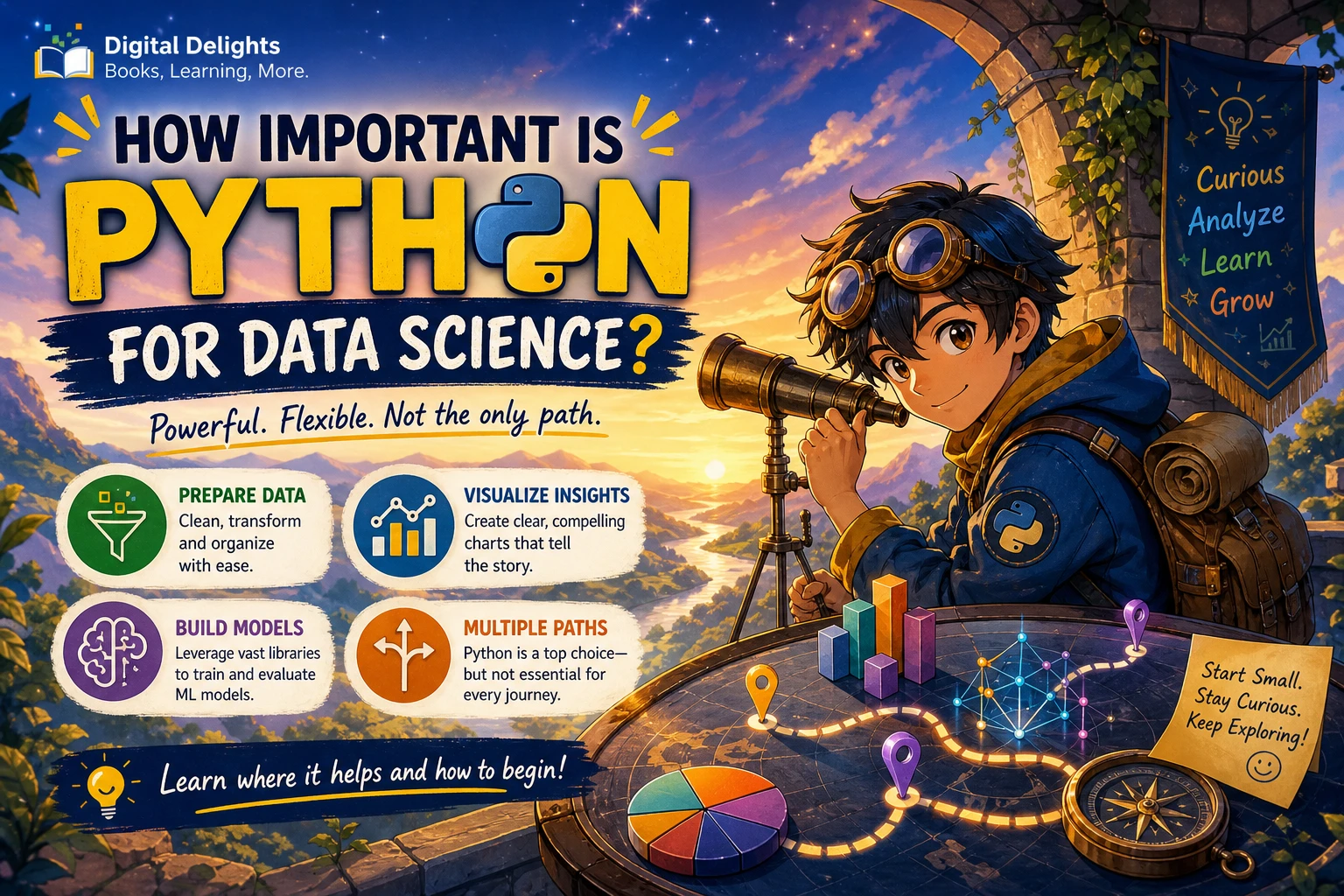
Learning Python for data science is easier when you build skills in the right order. Start with core programming concepts, then use Python to inspect and work with data, create visualizations, and explore introductory machine learning. You do not need to master every part of Python—or settle every question about mathematics—before beginning. The practical goal is to understand enough to complete small, end-to-end analyses and explain what you found.
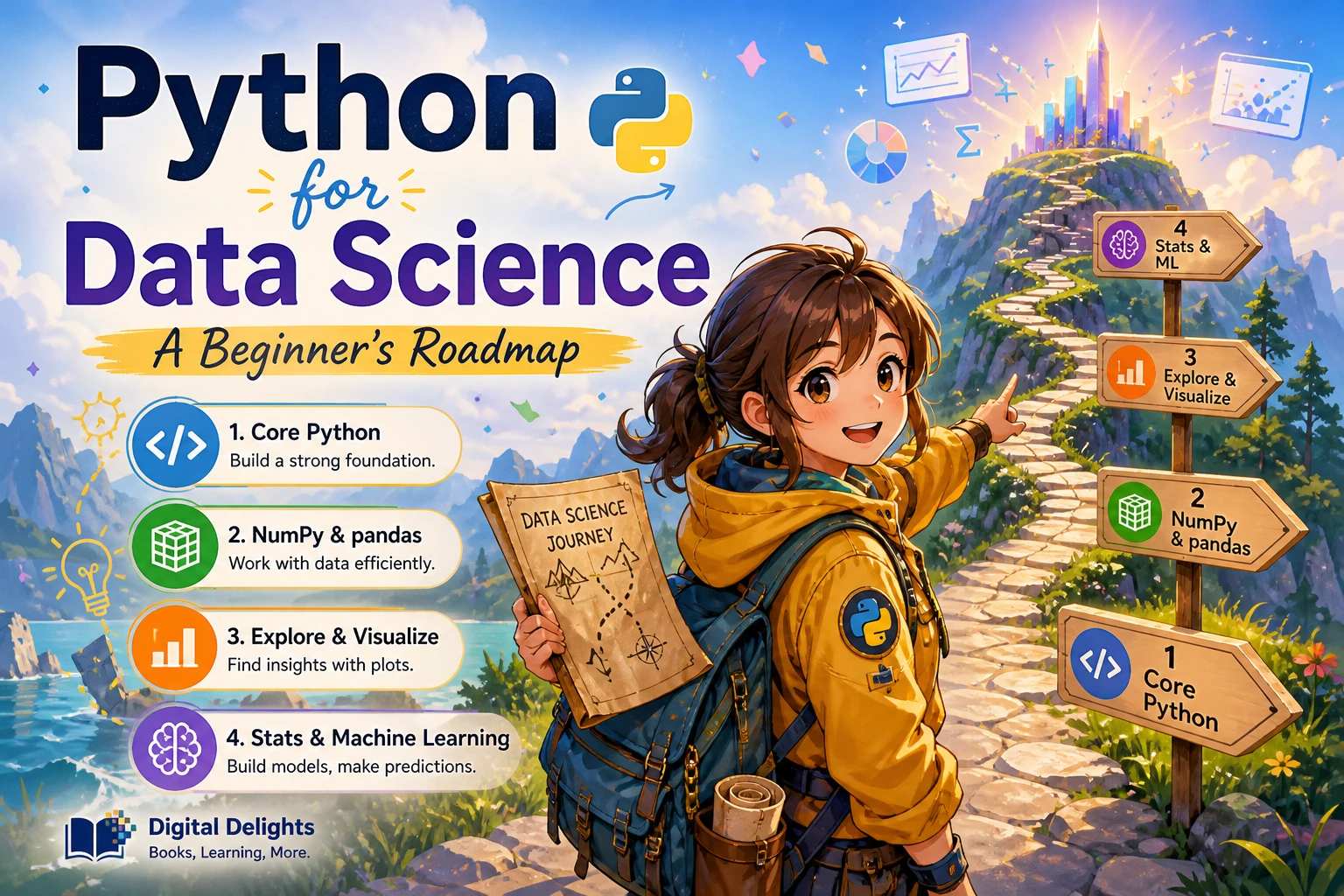
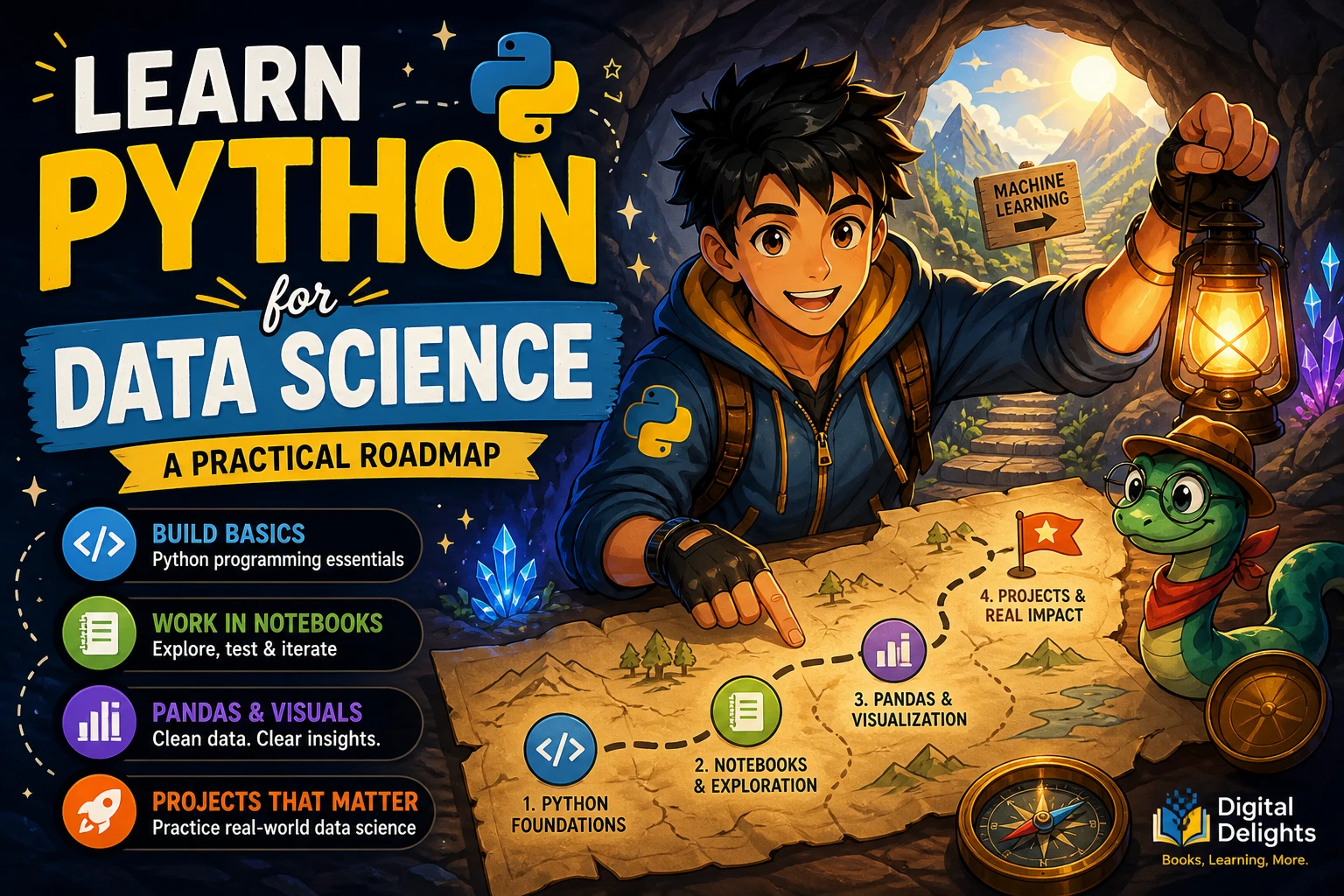
A useful roadmap is: Python fundamentals → data handling and visualization → introductory modeling → independent projects. The sequence is an editorial learning path, not a promise that one method or timetable works for everyone. This guide explains what to learn at each stage, how to set up a workable environment, and how to choose a resource that fits your starting point.
What Should You Learn First?
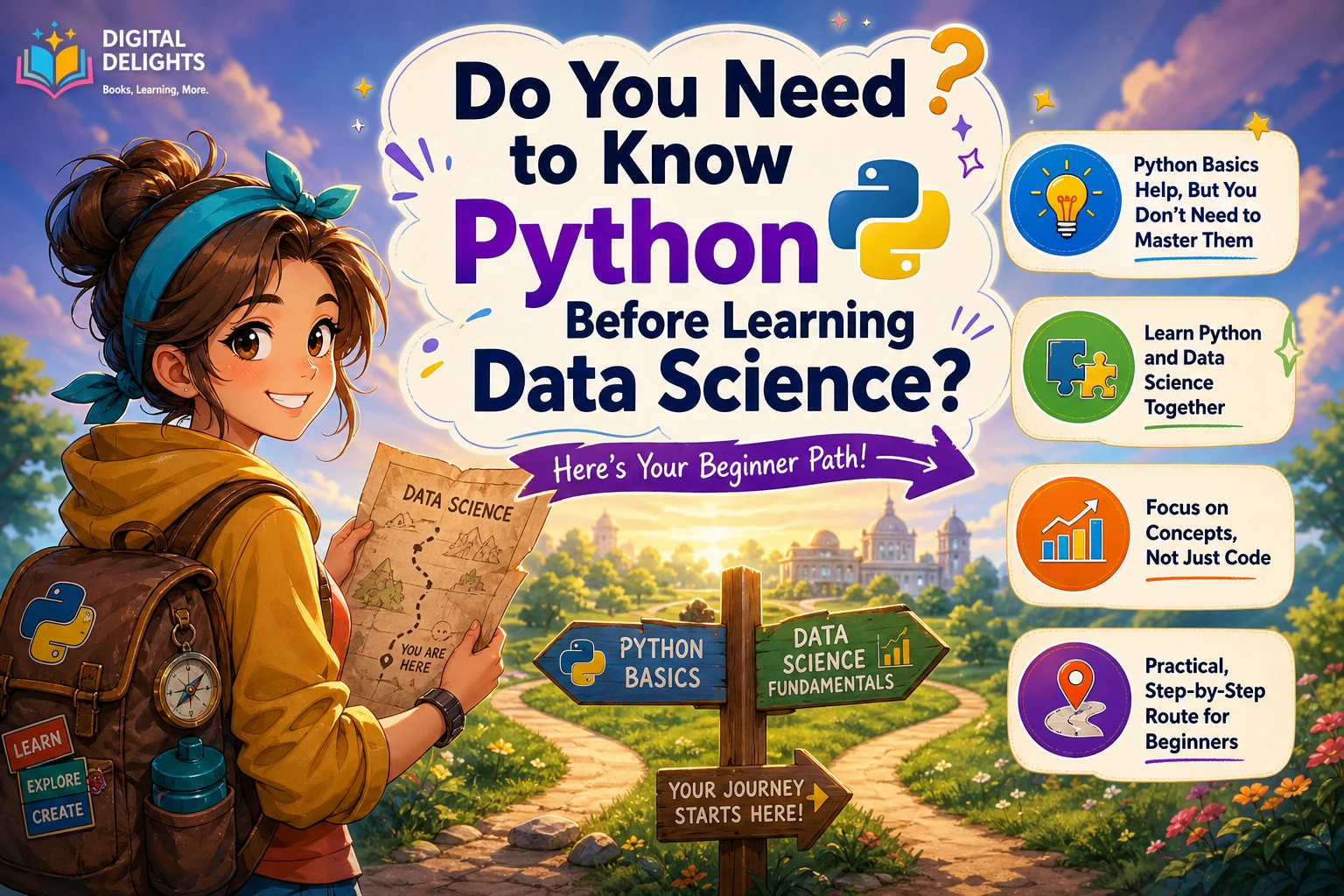
If you are new to programming, learn how Python represents information and controls a program before relying on data-science libraries. If you already code, review Python’s syntax and idioms, then move sooner into data structures, notebooks, and data tools. In either case, build toward projects instead of collecting disconnected tutorials.
- Learn basic Python: values, variables, collections, decisions, loops, and functions.
- Practice reading, changing, and checking code, including how to diagnose errors.
- Use an interactive notebook to explore small datasets.
- Learn NumPy and pandas for numerical and tabular data work.
- Visualize patterns, then study introductory statistics and machine learning as your project needs them.
- Complete projects that take data from an initial question to a clear explanation of the result.
This staged approach separates learning to program from learning statistical methods or machine learning. You can begin writing Python before you know advanced mathematics; add the quantitative concepts relevant to the questions you want to investigate.
What Do You Need Before Starting?
If you have never programmed
Begin with general programming ideas, not a library-heavy data-science tutorial. Focus on writing short programs and understanding why they behave as they do. The official Python tutorial is useful as a reference, but it says that it is intended for people who already have a basic understanding of programming—not as a first programming course. See the official Python tutorial’s audience guidance.
Once basic code feels less unfamiliar, use data examples to make those fundamentals relevant: store observations in a list, write a function to calculate a summary, or use a loop to check values. Small experiments build a bridge from general programming into data work.
If you already know another language
You can usually move through introductory concepts more quickly, but do not assume every language feature transfers directly. Practice Python’s syntax, built-in collections, function conventions, imports, and error messages. Then spend time with the data structures used by the libraries you plan to learn.
Do you need math or statistics first?
There is no evidence in the supplied sources establishing one required level of mathematics or statistics before starting Python. Keep the stages distinct: learn to write and read code first, then study the statistical ideas needed to interpret a particular analysis or understand a model. For data science, knowing how to question a result and describe uncertainty matters more than treating a model’s output as automatically meaningful.
Learn the Python Basics That Matter for Data Work
You do not need to learn every language feature at once. Start with the concepts that help you read data, transform it, and express a repeatable analysis.
- Values and variables: Store numbers, text, and results under names you can reuse.
- Collections: Work with lists and dictionaries, and understand how they hold groups of values.
- Conditionals: Make a program choose different actions based on a condition.
- Loops: Repeat an operation when a task involves multiple items or records.
- Functions: Give a task a name, accept inputs, and return a result so your code is easier to reuse.
- Imports: Bring in standard-library features and third-party packages when you need them.
- Debugging: Read error messages, isolate a problem, and test a small change rather than guessing.
For example, before using a specialized package, you could write a small function that counts how many values meet a condition. The point is not to recreate tools that already exist; it is to understand the flow of a program well enough to inspect and adapt library code later.
As your scripts grow, practice keeping related steps organized and giving variables and functions clear names. Read your code again after a break: if it is difficult to explain what a line does, simplify it or add a brief comment where that would help.
Set Up a Practical Python Learning Environment
Choose a stable Python release and check that the packages you plan to use support it. The Python downloads page changes over time; as of October 9, 2026, the supplied research reports Python 3.14.8 as the latest stable release and Python 3.15 as a prerelease. Check Python.org’s downloads page for current release information rather than relying on a version number in an older guide.
An interactive notebook can be useful for exploring data one step at a time: load a file, inspect a few rows, try a transformation, and view a chart. Jupyter is one common notebook environment. For longer or reusable work, also learn to run a Python script and keep the analysis steps organized.
Use a virtual environment to keep a project’s installed packages separate from other Python projects. Python’s documentation describes venv as the standard tool for creating virtual environments and notes that scientific packages can have complex binary dependencies. Read the Python module installation guide if package installation gives you trouble. An installation error is a setup problem to investigate, not proof that you cannot learn programming.
Move from Python into Data Science Tools
Learn tools as answers to practical needs, not as a checklist to finish before doing any analysis. A reasonable progression is to get comfortable exploring data in a notebook, then add tools as your questions become more specific.
NumPy for numerical data
NumPy provides arrays and operations for numerical work. Learn enough to recognize arrays, inspect their shape, and understand how operations can apply across many values. You can deepen your knowledge when a project calls for more numerical computing.
pandas for tabular data
pandas is widely used for working with tables of data. Practice loading a dataset, selecting columns and rows, checking missing values, filtering records, grouping observations, and summarizing results. Learn to inspect a DataFrame before making assumptions about its contents.
Visualization for exploring and explaining
Use charts to look for patterns and communicate findings. Choose a visual form that suits the question: a time-series line chart for change over time, for example, or a bar chart to compare categories. Label axes and make the takeaway clear; a chart should clarify the analysis, not merely decorate it.
scikit-learn for introductory modeling
Move to scikit-learn when you can describe a prediction or classification question and have prepared data to investigate it. Learn the basic modeling workflow—prepare features and a target, fit a model, evaluate it on appropriate data, and interpret its limits. Do not treat a high score as proof that a model is useful without checking how the evaluation was conducted.
The publisher page for Python Data Science Handbook, 2nd Edition describes coverage spanning IPython and Jupyter, NumPy, pandas, Matplotlib, and scikit-learn, including data cleaning, transformation, visualization, and modeling. It can help you see how these parts fit into a broader data-science toolkit.
Practice with Complete, Manageable Projects
A project makes you connect steps that tutorials often teach separately. Choose a dataset you can understand and a question that can be answered with the available information. Keep the first project narrow enough to finish and explain.
- Ask a specific question. For example: How did a measured quantity change over time, or which categories appear most often?
- Inspect the data. Identify the columns, data types, number of records, and obvious gaps or inconsistencies.
- Clean only what you can justify. Decide how to handle missing values, duplicates, or inconsistent labels, and note the choice.
- Explore before modeling. Calculate simple summaries and look at relevant distributions or relationships.
- Make a small number of useful visuals. Use plots to examine patterns and support your explanation.
- State what the data can and cannot show. Separate observations from assumptions and avoid conclusions broader than the data supports.
- Make the work reproducible. Keep the code and analysis steps together so you can rerun and review them.
For a first project, consider analyzing a public dataset about a subject you understand. You might compare counts by category, examine a time trend, or look for missing information. If you later use machine learning, start with a clear question and a simple baseline before trying more complex methods.
When stuck, reduce the problem. Check the input, inspect a small sample, and run one step at a time. Search documentation for the specific function or error you encountered rather than pasting a full project into a tool and accepting code you cannot explain.
Common Learning Pitfalls to Avoid
- Starting with machine learning before Python basics: Model libraries can hide the code and data decisions that shape results. Build a foundation in data handling first.
- Watching or reading without writing code: Pause to reproduce examples, change an input, and predict what will happen.
- Copying code without understanding it: Explain the purpose of each step and test what changes when you modify it.
- Trying to learn every library at once: Add a tool when it solves a problem in your current project.
- Ignoring errors or setup issues: Read the message, check the environment and package versions, and isolate the smallest failing example.
- Making a project too ambitious: A finished, clearly explained analysis is more useful practice than a large project abandoned halfway through.
- Confusing a model result with a conclusion: Check the data and evaluation, and explain limitations in plain language.
Choose a Learning Resource That Matches Your Next Step
One book does not need to cover every stage. Choose based on the immediate skill you want to build, then use exercises and a small project to apply it. These catalog resources have different emphases:
| Learning need | Resource | Why it may fit |
|---|---|---|
| Build programming foundations | Introduction to Python Programming | Covers Python fundamentals and includes a concluding introduction to data science with NumPy, pandas, exploratory analysis, and visualization. |
| Get an applied introduction to data science | Python for Data Science: A Hands-On Introduction | Focuses on data structures, data sources such as files and APIs, databases, data-science libraries, visualization, and machine learning. |
| Practice data wrangling and analysis | Python for Data Analysis: Data Wrangling with pandas, NumPy, and Jupyter, Third Edition | Emphasizes working with notebooks, NumPy, pandas, data loading and cleaning, reshaping, visualization, and time series. |
| Move into machine-learning projects | Python Machine Learning By Example, Fourth Edition | Uses practical examples to cover data preparation, model training and evaluation, and machine-learning techniques. |
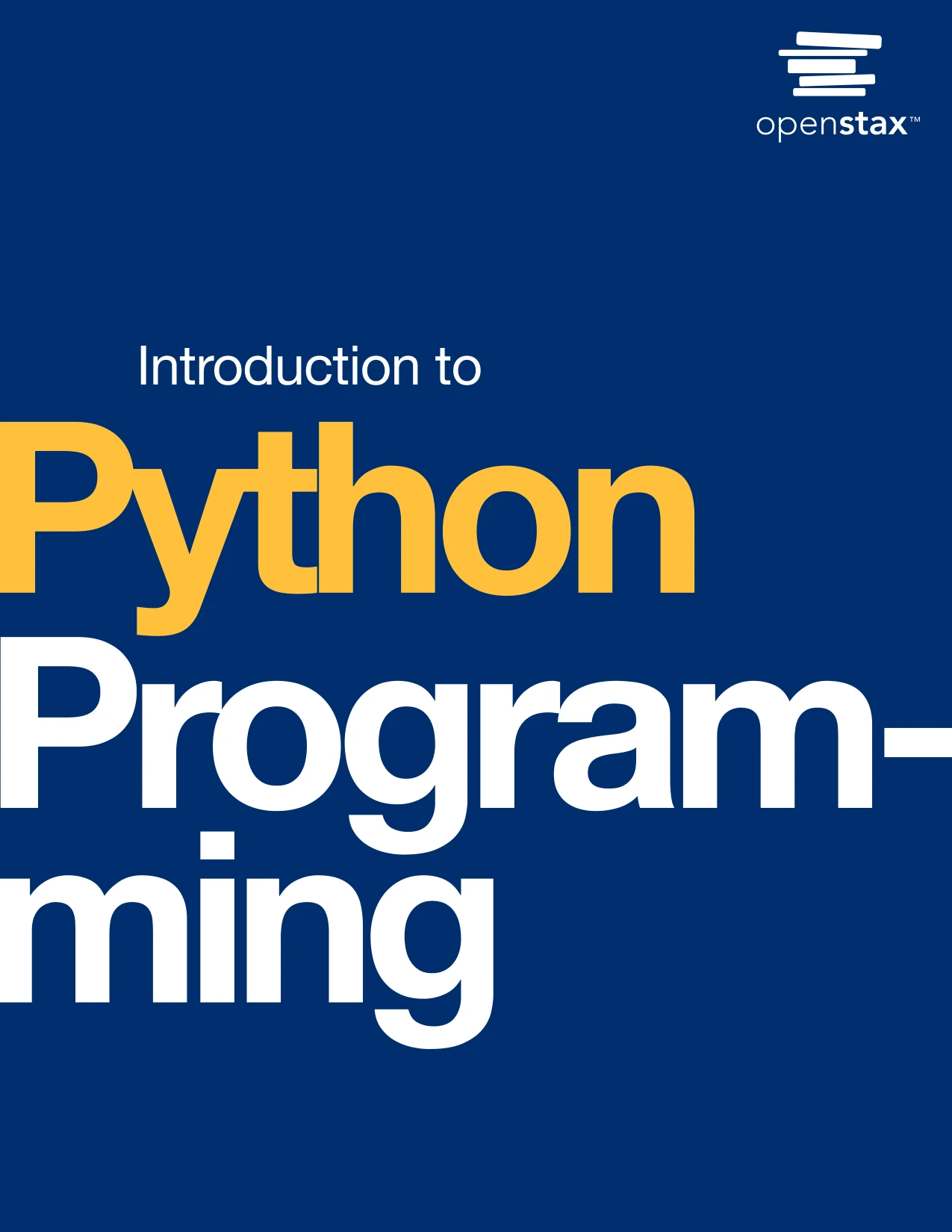
Introduction to Python Programming
By Udayan Das
Learners who want Python foundations and an introduction to NumPy, pandas, exploratory analysis, and visualization.
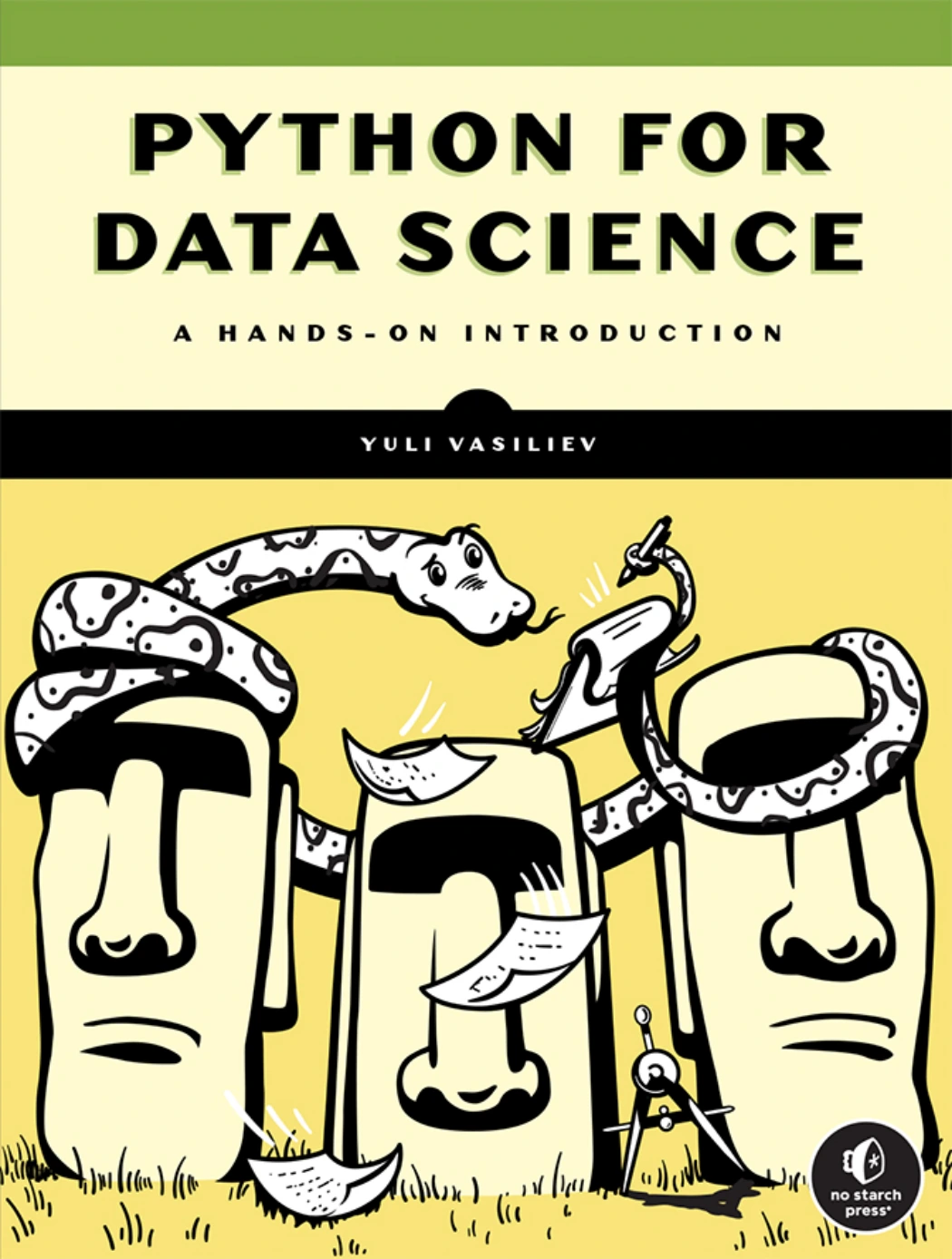
Python for Data Science: A Hands-On Introduction
Readers seeking coverage of data structures, files and APIs, databases, visualization, and machine learning.
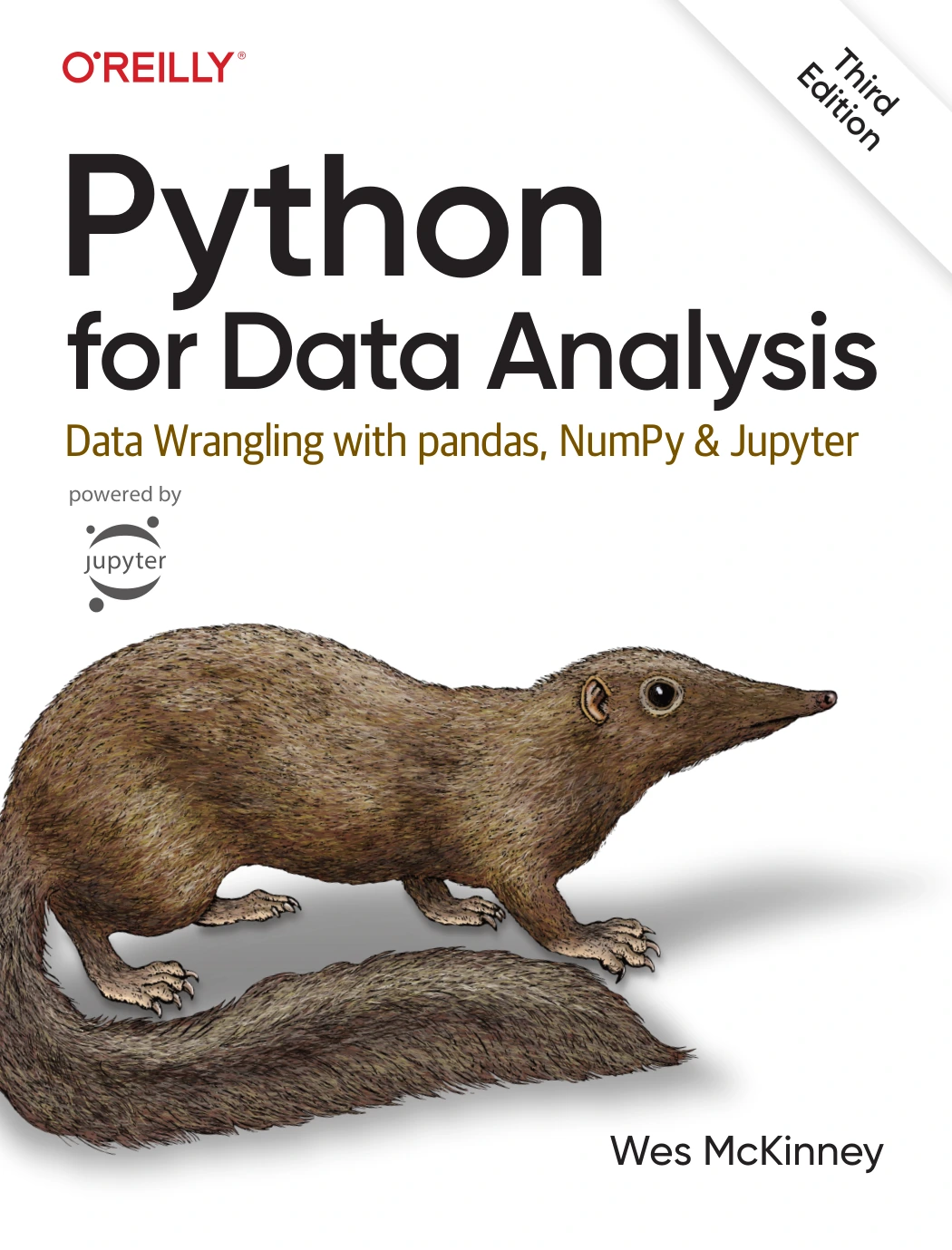
Python for Data Analysis: Data Wrangling with pandas, NumPy, and Jupyter, Third Edition
By Wes McKinney
Readers ready to practice pandas, NumPy, notebooks, data cleaning, visualization, and related workflows.
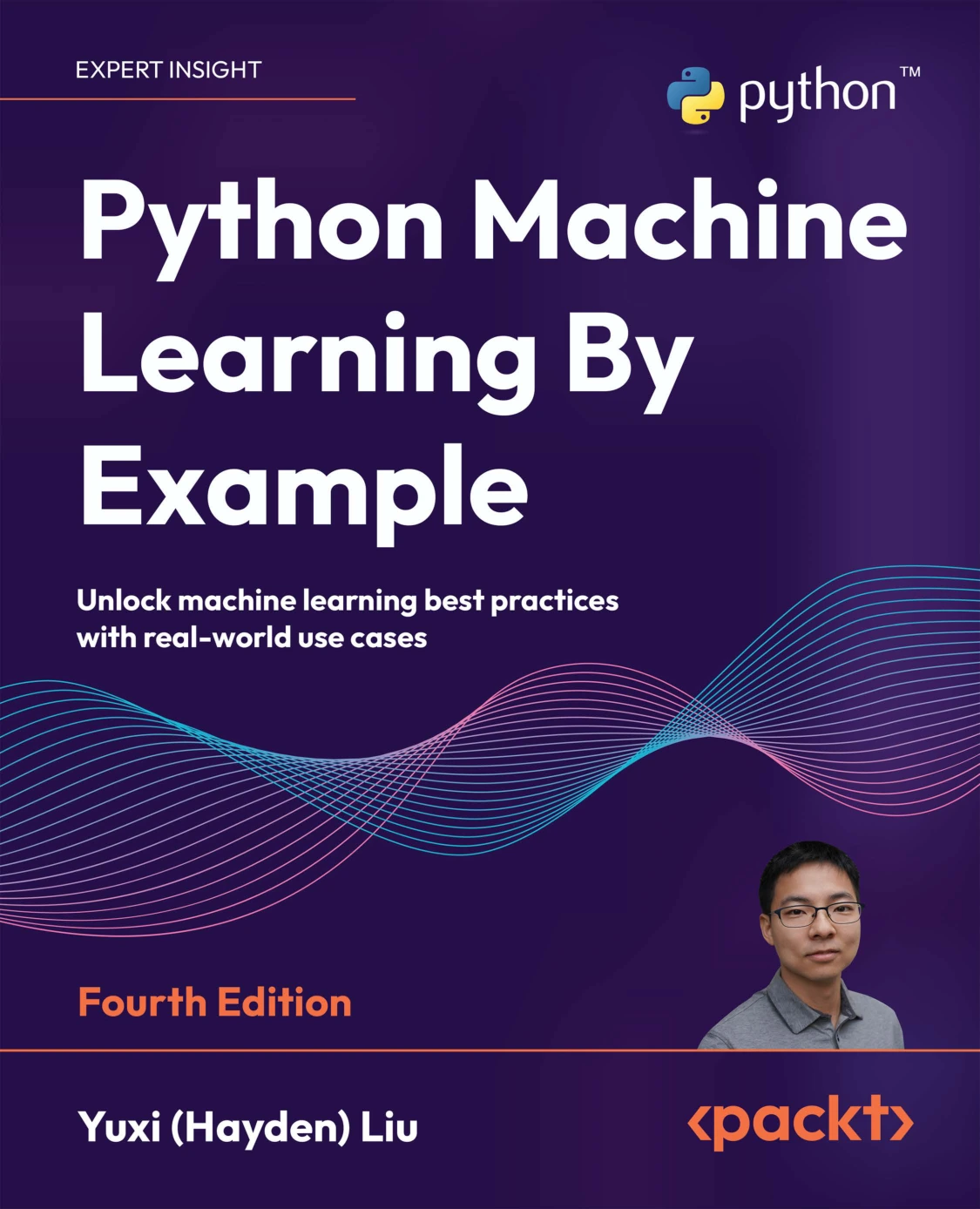
Python Machine Learning By Example, Fourth Edition
Readers seeking project-based coverage of data preparation, model training, evaluation, and machine-learning methods.
For many new programmers, the fundamentals-first route is a sensible starting point. Readers who already write Python may prefer a resource centered on data handling. If your immediate goal is modeling, begin with a project-focused machine-learning resource after you are comfortable preparing and inspecting data. The catalog descriptions can help you compare scope; they do not establish which resource is best for every learner.
Frequently Asked Questions
Do I need to know programming before I learn Python for data science?
No. You can start with programming fundamentals, then apply them to data examples. If you already know another language, review Python’s syntax and data structures before moving into the data-science libraries.
Do I need advanced math before learning Python?
The supplied sources do not establish advanced math as a prerequisite for learning Python. Start with coding, then study the statistical or mathematical ideas relevant to the analysis or models you want to understand.
When should I start using pandas and NumPy?
Start exploring them once you can follow basic Python code and understand variables, collections, functions, and imports. You do not have to master every language feature first. Use a small dataset to learn how arrays and tables work in context.
Should I learn machine learning at the same time as Python?
You can read about machine learning early, but it is easier to work with models after you can inspect and prepare data. Learn the fundamentals first, then explore modeling when you have a question that calls for it.
What is a good first Python data-science project?
Choose a manageable dataset and a narrow question. Inspect and clean the data, calculate summaries, create a relevant chart, and explain what you found along with the limits of the data. You do not need machine learning for a project to be useful practice.
How long does it take to learn Python for data science?
There is no single timetable supported by the supplied evidence. The time depends on your prior programming experience, the amount of practice you can sustain, and the depth of the topics you pursue. Focus on progressing from understandable code to complete analyses rather than relying on a fixed deadline.
Build Skills in Stages, Then Keep Applying Them
To learn Python for data science, begin with the language basics, practice handling data, add visualization, and approach machine learning when your questions require it. Keep projects small enough to finish, make your decisions visible, and build on what each analysis teaches you. That gives you a practical way to develop programming and data skills without mistaking a long list of libraries for learning itself.