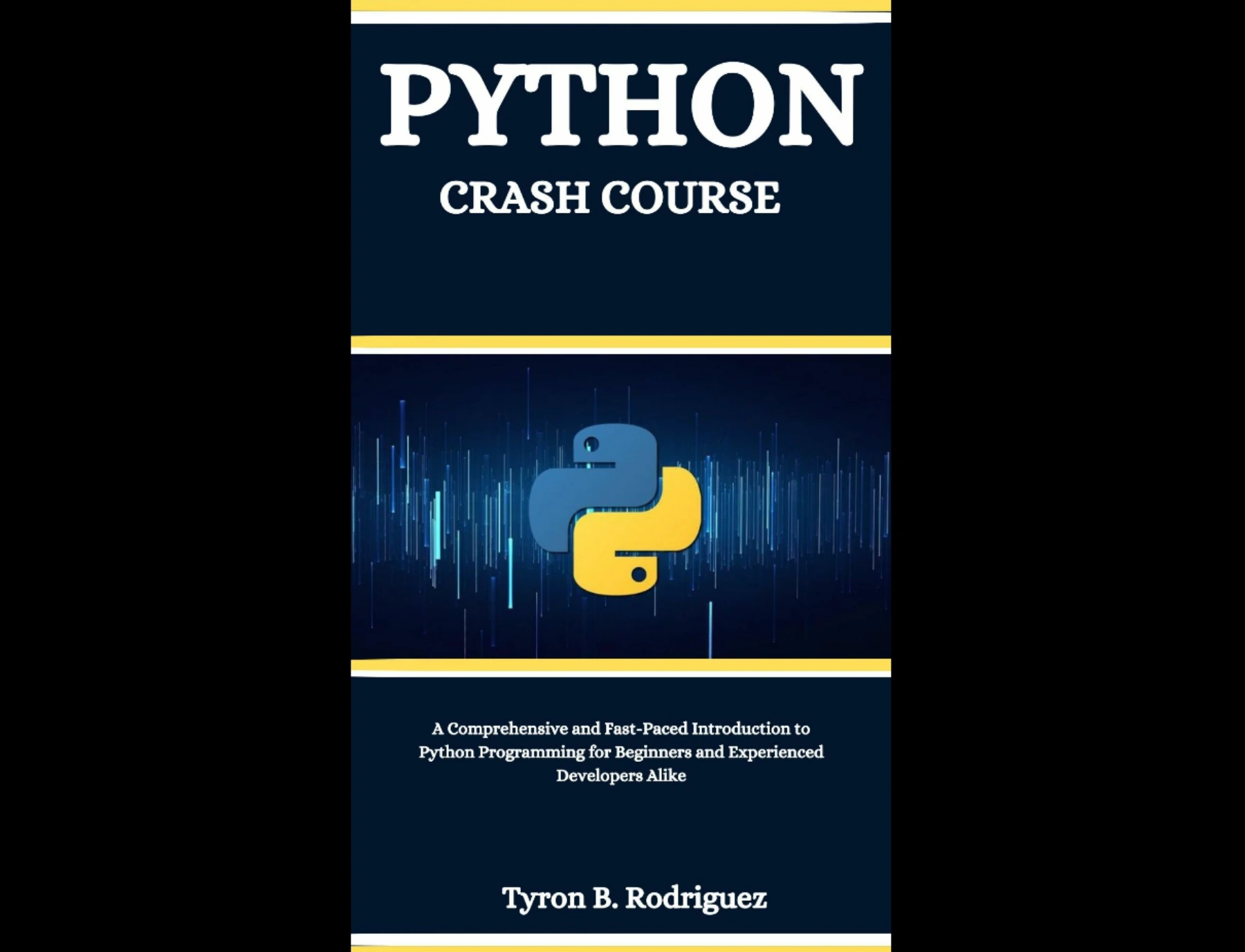
Python Crash Course: A Comprehensive and Fast-Paced Introduction to Python Programming for Beginners and Experienced Developers Alike
Original price was: $5.00.$2.50Current price is: $2.50.

Tyron B. Rodriguez
Product Specs:
- File Type: PDF
- File Size: 42.1 MB
- Book Language: English
- Total Page Count: 141
- Instant Download
Python Fundamentals Without the Slow Build-Up 💻
Tyron B. Rodriguez’s Python Crash Course is built for readers who want to start writing Python soon, not spend weeks on theory before touching real code. The book opens with the reasons Python remains a popular first language, then walks through setting up an environment and writing a first program. From there, it moves into the core building blocks: variables, data types, operators, conditionals, loops, and strings.
The subtitle describes it as a comprehensive and fast-paced introduction for beginners and experienced developers alike. That framing shapes the book’s approach: explanations stay direct, and each concept is presented as part of a working programmer’s toolkit.
What the Table of Contents Covers
The five-part structure gives the material a clear progression rather than a random collection of tips.
- Part I: Python setup, first programs, variables, data types, and operators.
- Part II: Conditional logic, loops, string handling, and an introduction to regular expressions.
- Part III: Lists, tuples, dictionaries, and sets as ways to organize information.
- Part IV: Functions, parameters, return values, scope, and modules.
- Part V: Project chapters that apply Python to games, automation, task management, and data analysis.
From Syntax to Real Programming Habits 🧠
Early chapters explain how Python stores information, evaluates conditions, and repeats work efficiently. Later chapters build on those basics with lists, tuples, dictionaries, and sets. By the time functions and modules appear, readers have already seen why abstraction matters: functions make code reusable, while modules let programmers draw on Python’s standard library and create their own organized files.
The book does not treat these topics as isolated facts. The sequence shows how variables feed conditions, how loops process data structures, and how functions bring repeated logic under control.
Hands-On Projects That Put Python to Work 🛠️
The project section is where the crash-course format becomes especially practical. Chapter 14 builds a number-guessing game with random numbers, user input, feedback, and difficulty levels. Chapter 15 moves into automation with a birthday email sender, covering dates and times, email sending, contact information, and scheduling. Chapter 16 designs a simple to-do list application, including interface decisions and task storage.
These projects are supported by the earlier chapters, but they also show how separate Python ideas combine into complete programs.
Data Analysis With Pandas and Matplotlib 📊
Chapter 17 introduces Pandas for loading and exploring data, then Matplotlib for basic charts and graphs. The table of contents also points to scatter plots and customization, giving readers a first look at how Python can turn raw data into clearer visual information. For readers interested in data work, this section connects programming fundamentals to analysis and presentation.
Who This Python Crash Course Is For
Beginners can follow the progression from setup to first scripts to projects. Experienced developers can use the book as a structured refresher or a quick route through Python’s core syntax and common data structures. The final chapters discuss continued learning, career paths, building a project portfolio, and contributing to open source, which may help readers think beyond the last page.
A Clear Path Into Python ✅
If you want a single guide that starts with the absolute basics and ends with applied project work, this 2024 publication offers a direct path. It covers the language fundamentals and then shows them in use through games, automation, task management, and data visualization. For Digital Delights readers looking to build practical Python confidence, it is a focused place to begin.
User Reviews
Be the first to review “Python Crash Course: A Comprehensive and Fast-Paced Introduction to Python Programming for Beginners and Experienced Developers Alike”
You must be logged in to post a review.
Original price was: $5.00.$2.50Current price is: $2.50.
There are no reviews yet.