
Where Is Python Used in the Real World?
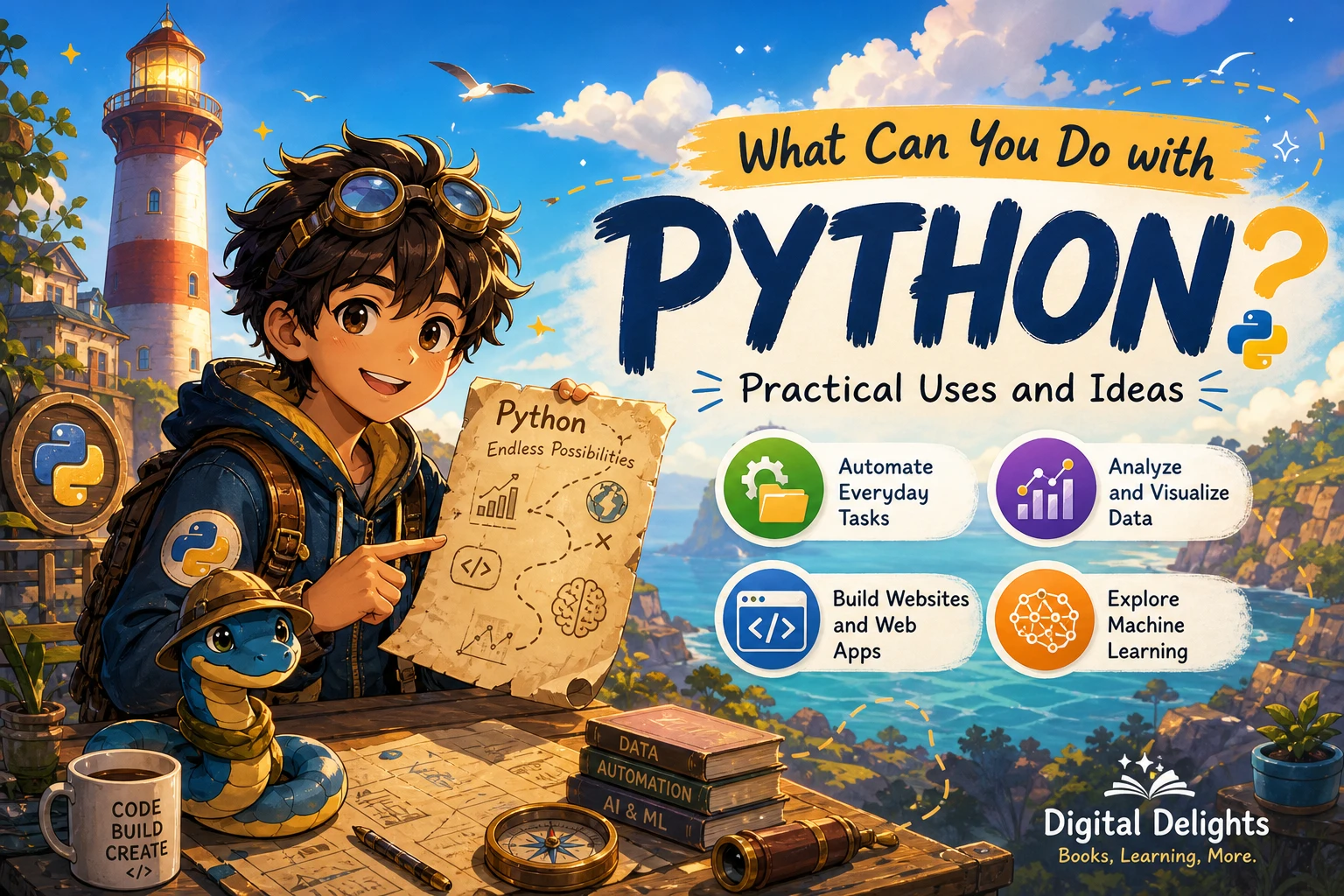
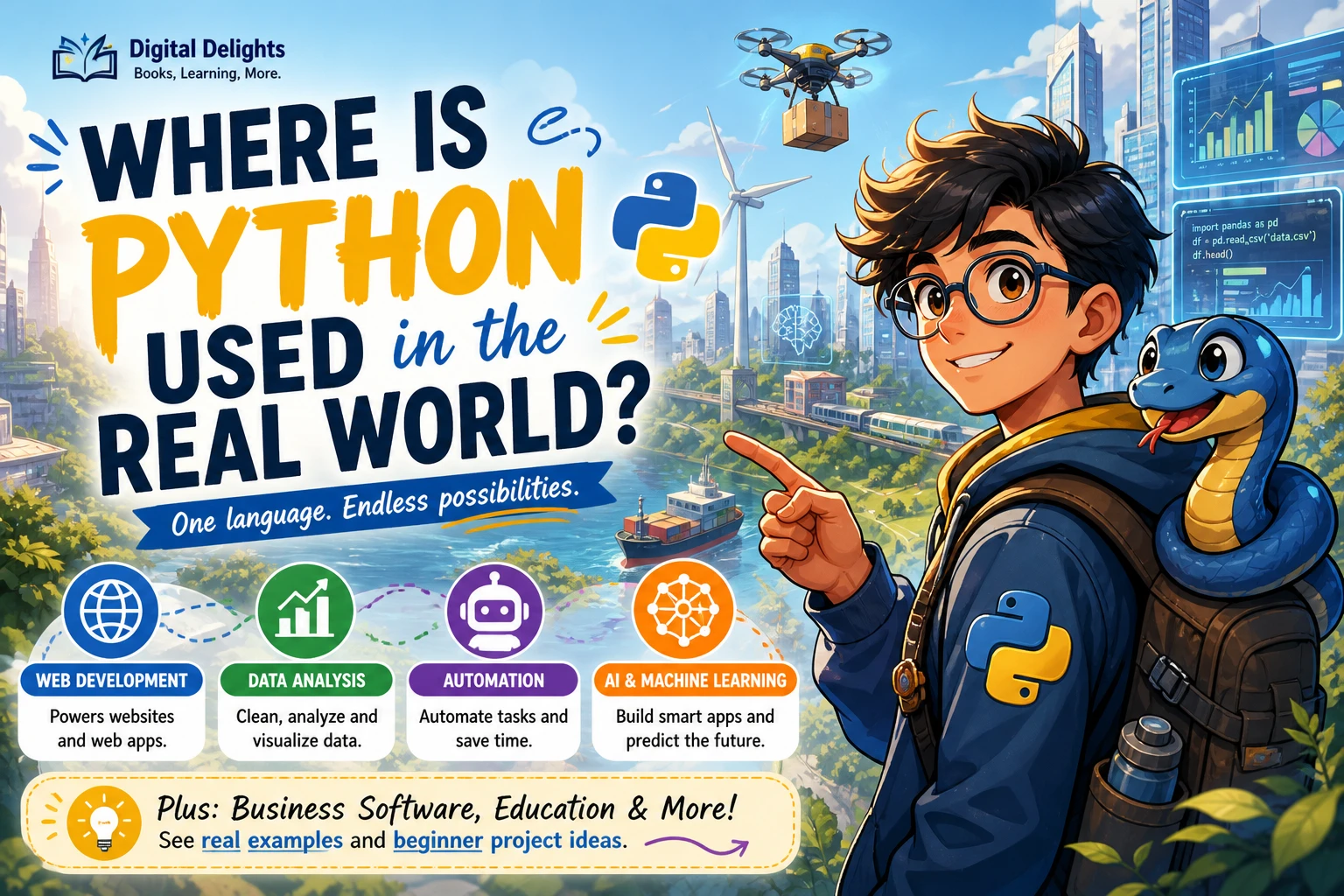
Python is used for much more than data science. Developers use it to build web services, analyze information, automate repetitive tasks, create software tools, and explore machine learning. It also appears in education, desktop applications, and business systems such as e-commerce and enterprise resource planning (ERP). The exact role depends on the project: Python might power an application, support another system behind the scenes, or help a team work with data.
That range makes Python a useful language to explore, but it does not mean every product or organization uses it in the same way. Here are the main real-world uses, an established example from visual-effects production, and some practical ways a beginner can try each area.
Where is Python used?
Python is used across software development, web and internet services, data analysis, scientific work, automation, artificial intelligence, business applications, education, and desktop interfaces. The official Python applications overview describes examples across these areas. This is a useful map of possible uses, not a ranking of industries or a measure of how commonly Python is used in each one.
Common real-world uses of Python
1. Web development and internet services
Python can be used to build the server-side parts of websites and internet services: processing requests, applying application rules, working with stored information, and returning results. It may support a public-facing site, an internal service, or an API that lets different software systems exchange information.
A website is not necessarily written entirely in Python. A project may combine it with browser technologies, a database, and other services. Python is one possible part of the system, rather than a requirement for every web project.
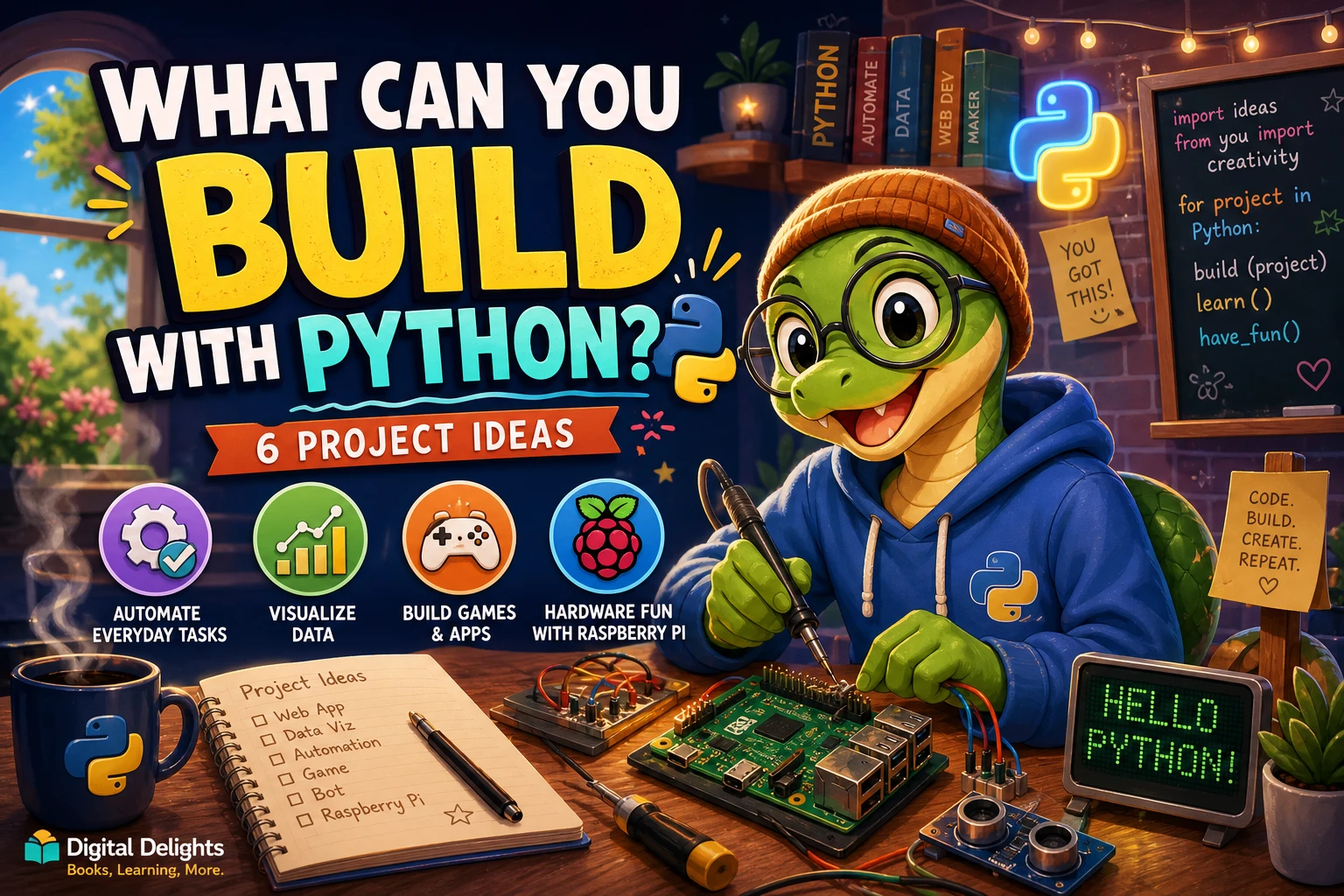
Beginner project: Make a small web app that records and displays a reading list, recipe collection, or personal task list.
2. Data analysis and scientific work
Python can help people load, organize, inspect, transform, and visualize data. In a business setting, that might mean summarizing sales records or comparing monthly activity. In a scientific project, it might mean preparing measurements for analysis or exploring the output of an experiment.
Working with data involves more than writing code. You need to understand what the data represents, notice missing or inconsistent values, and explain what the results can—and cannot—show. Python is a tool for this work, not a substitute for careful reasoning about the information.
Beginner project: Choose a small public dataset or a spreadsheet of your own, calculate a few summaries, and make a chart that answers one clear question.
3. Automation and software development
Python scripts can take care of repeated computer tasks, such as renaming groups of files, checking folders, or transforming information between formats. Software teams also use programming tools for tasks such as testing and build processes. In these cases, Python may not be the main product; it can be a practical helper that makes a workflow repeatable.
Automation works best when the task and its rules are clear. A script that changes hundreds of files, for example, should be tested on copies first and designed to handle unexpected filenames or missing information.
Beginner project: Write a script that sorts a folder of sample files by type, or combines several small text files into one report.
4. Artificial intelligence and machine learning
Python is used in machine-learning and artificial-intelligence work, including preparing data, experimenting with models, and building applications around model output. These projects typically involve more than the language alone: they may require libraries, suitable data, evaluation, and knowledge of the problem being addressed.
It helps to distinguish learning the programming language from learning machine learning. A beginner can start by understanding variables, functions, collections, and file handling, then explore how those ideas support data and model workflows. A model’s output should also be evaluated rather than treated as automatically correct.
For readers ready to explore the topic, Python Machine Learning Projects covers Python basics for machine learning, algorithms, case studies, and project examples. It is a more relevant next step after basic programming than a first introduction to coding.
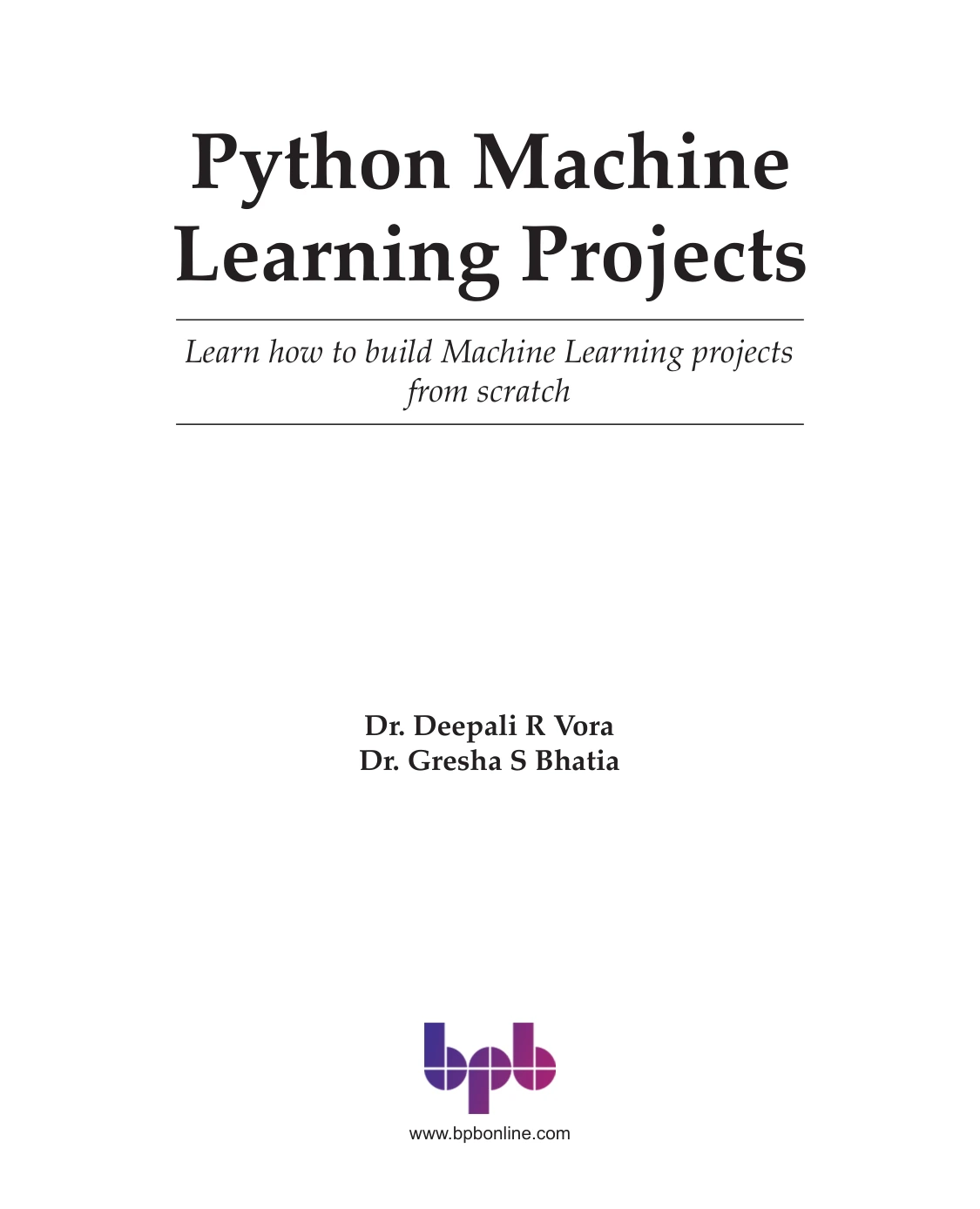
Learners with Python fundamentals who want to explore machine-learning concepts, algorithms, and case studies.
5. Business applications, e-commerce, and finance
Python can be part of business software, including e-commerce and ERP applications. Depending on the system, it may support data processing, application logic, integrations, or internal tools. These are broad categories: the Python.org overview lists business applications, but does not imply that every business system is built with Python.
In finance, Python can also be used for analyzing data, running calculations, and exploring quantitative methods. Readers interested in this focused application can look at Python for Finance: Mastering Data-Driven Finance, Second Edition, which the catalog describes as covering financial data, analysis, numerical methods, and related workflows. It is aimed at readers exploring finance rather than someone seeking only an introductory programming course.
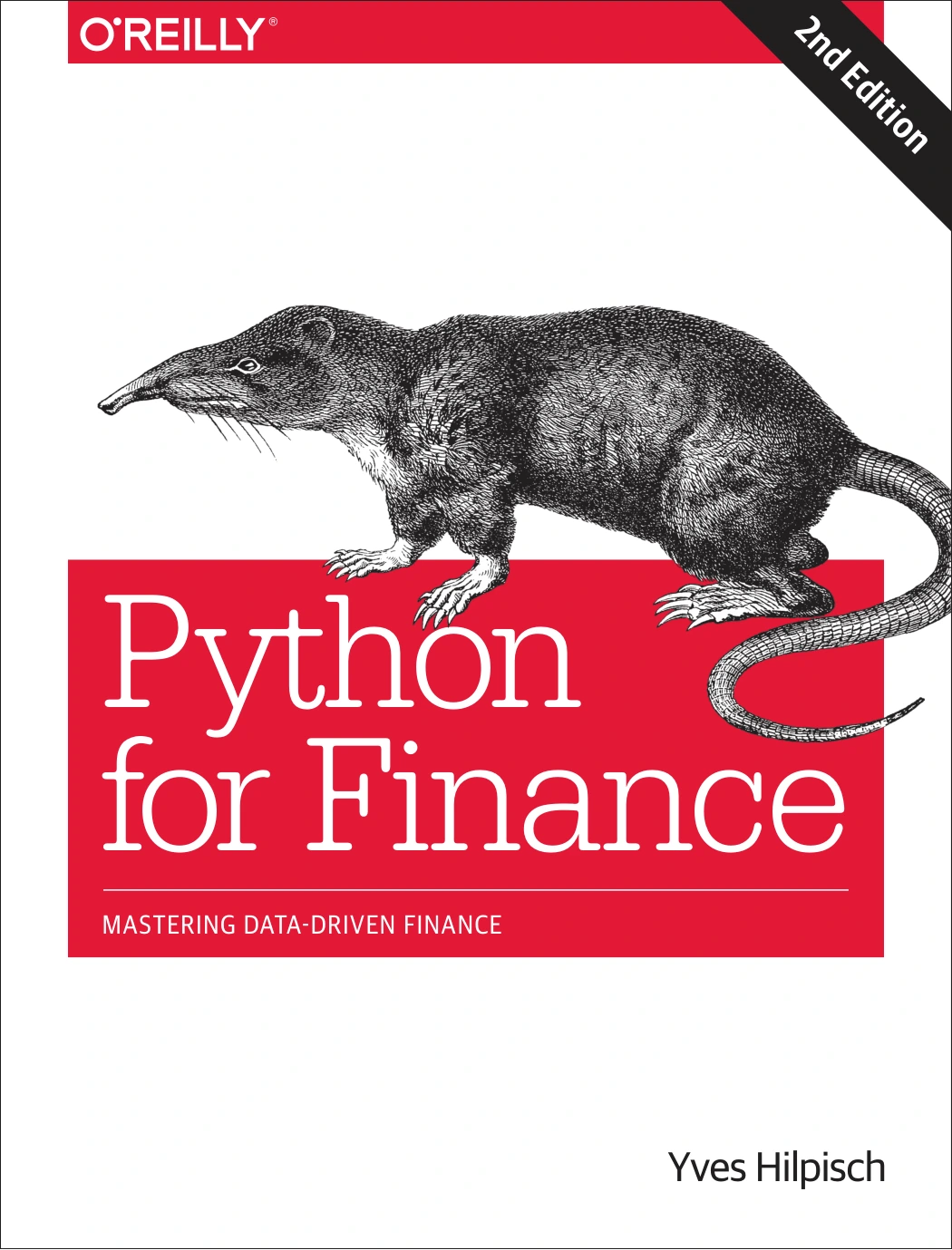
Python for Finance: Mastering Data-Driven Finance, Second Edition
Readers interested in financial data, quantitative analysis, and Python workflows for finance.
6. Education and desktop interfaces
Python is used to teach programming and can also be used to create desktop interfaces. Educational projects might introduce concepts through small programs, while desktop software can present buttons, menus, forms, and other controls for users.
For a hands-on desktop application pathway, Python GUI Programming with PAGE focuses on building interfaces with PAGE and Tkinter. Its catalog description covers work from initial forms through more complex applications, making it more appropriate once a learner has some Python fundamentals.
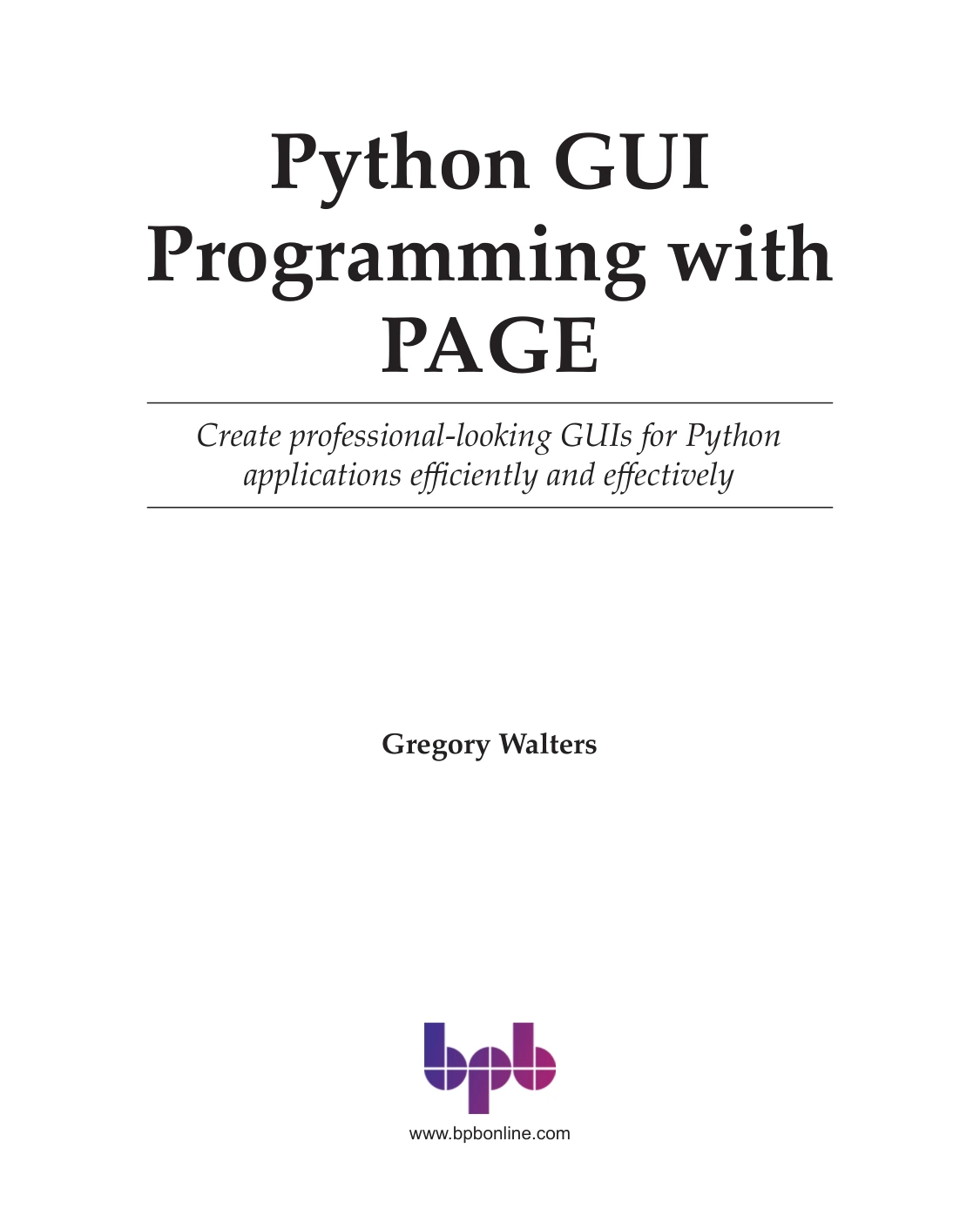
Python GUI Programming with PAGE
Learners with Python fundamentals who want to build desktop interfaces with PAGE and Tkinter.
A concrete example: Python in a visual-effects pipeline
Python.org’s Industrial Light & Magic success story describes Python being used for production-pipeline control, scripting, and database-backed asset tracking. The story says adoption began in 1996. It is a useful illustration of Python supporting behind-the-scenes production workflows, but it is a historical case—not a snapshot of current tools or a representative survey of the visual-effects industry.
The example also shows why “Where is Python used?” does not have to mean “Which consumer app is written in Python?” A language can be valuable inside a larger production process, helping teams coordinate files, assets, and repeatable operations.
Why do teams choose Python, and when might it not be enough?
Teams may choose Python when its ecosystem and the skills available to them fit the task. Its use across web development, data work, software tools, and business applications gives developers options for applying it in different kinds of projects. The official Python success-story collection includes examples from fields such as science, education, government, and software development, but these curated accounts do not establish that Python is always easier, faster, or better than another language.
Python may also be only one component of a solution. A project might combine it with a database, a web interface, a cloud service, or other languages and tools. The right choice depends on the project’s constraints, including existing systems, available libraries, performance needs, and the team’s experience. The supplied evidence does not support a universal comparison or a claim that Python is the best fit for every task.
How beginners can explore Python’s real-world uses
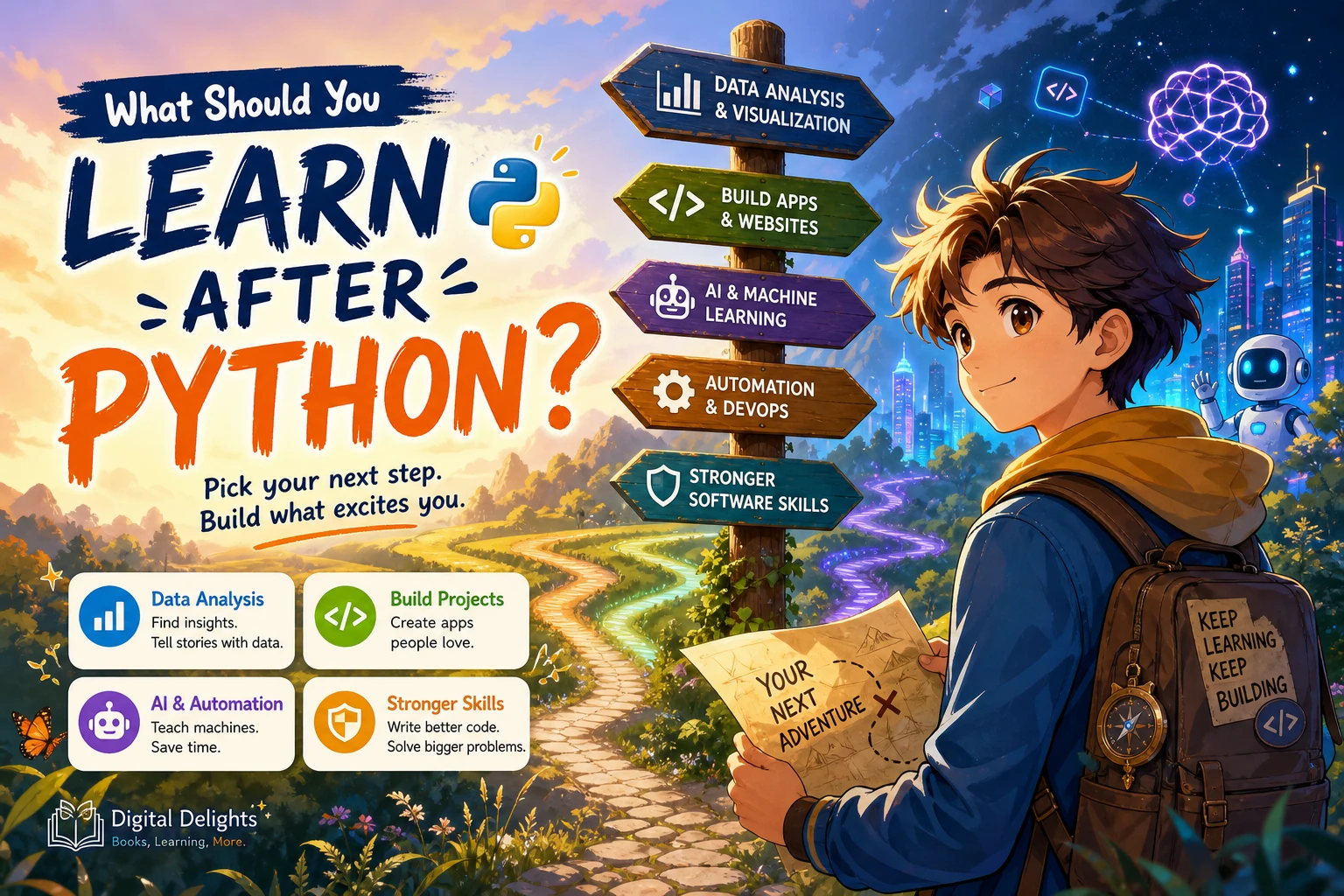
You do not need to choose a career specialization before writing your first program. Start with a small task that interests you, then learn the concepts needed to complete it. A simple project gives you a way to test whether you enjoy working with a particular kind of problem.
- Pick a direction. Choose data, automation, web development, desktop apps, or another area that sounds interesting.
- Define a small result. For example, create one chart, organize a test folder, or build a page that stores a few entries.
- Learn the fundamentals as needed. Variables, conditions, loops, functions, collections, and file handling appear in many beginner projects.
- Build and inspect. Run the program, check whether the result makes sense, and change one thing at a time when it does not.
- Expand only after the first version works. Add features gradually, and learn the libraries or tools required by the particular project.
If you want a structured introduction before choosing a specialization, Coding with Python: A Simple and Straightforward Guide for Beginners to Learn Fast Programming with Python covers fundamentals such as data types, functions, loops, modules, and file handling. For a broader starter collection that also moves into data topics, the catalog offers a four-book Python beginner collection covering coding and data-related subjects.
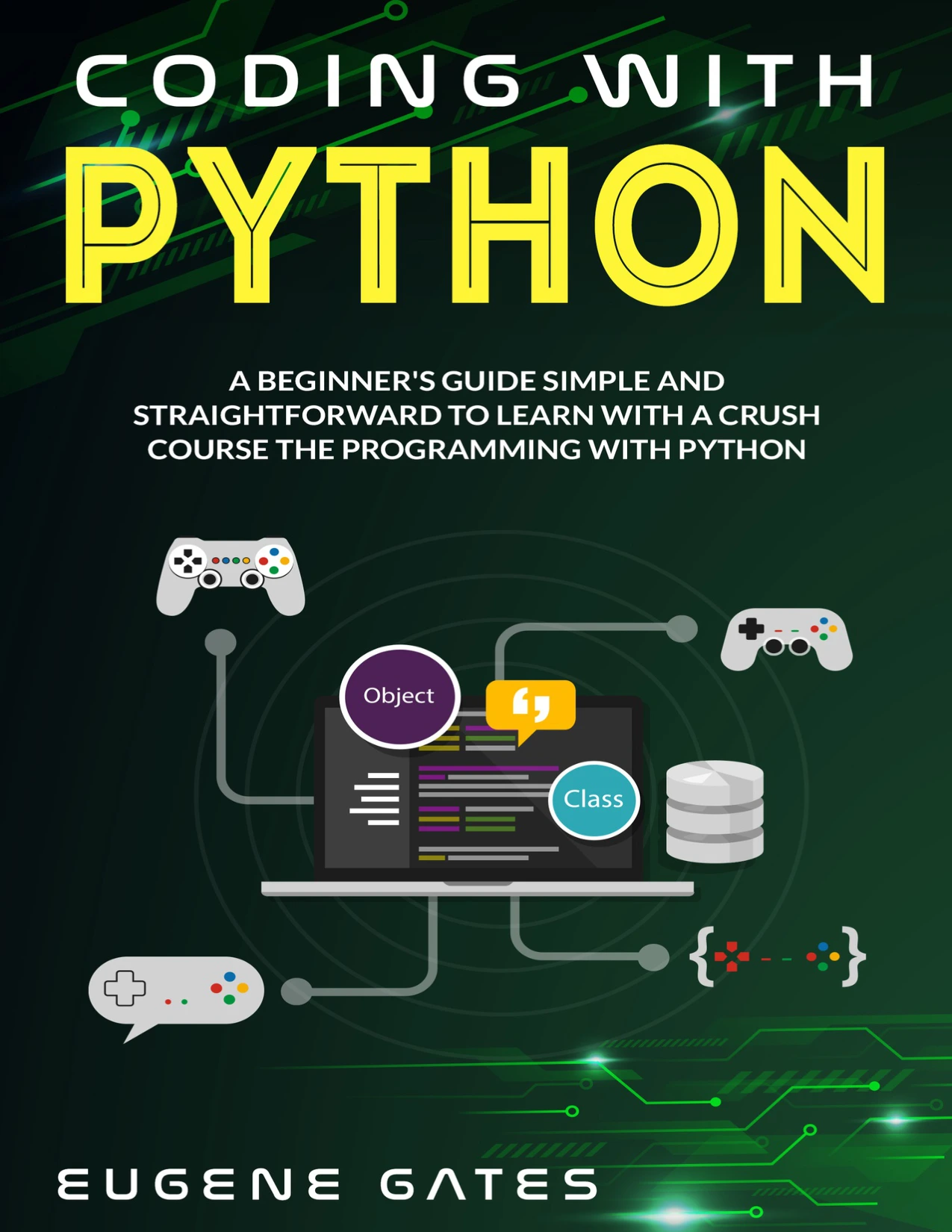
By Eugene Gates
New coders seeking an introduction to Python concepts such as functions, loops, modules, and files.
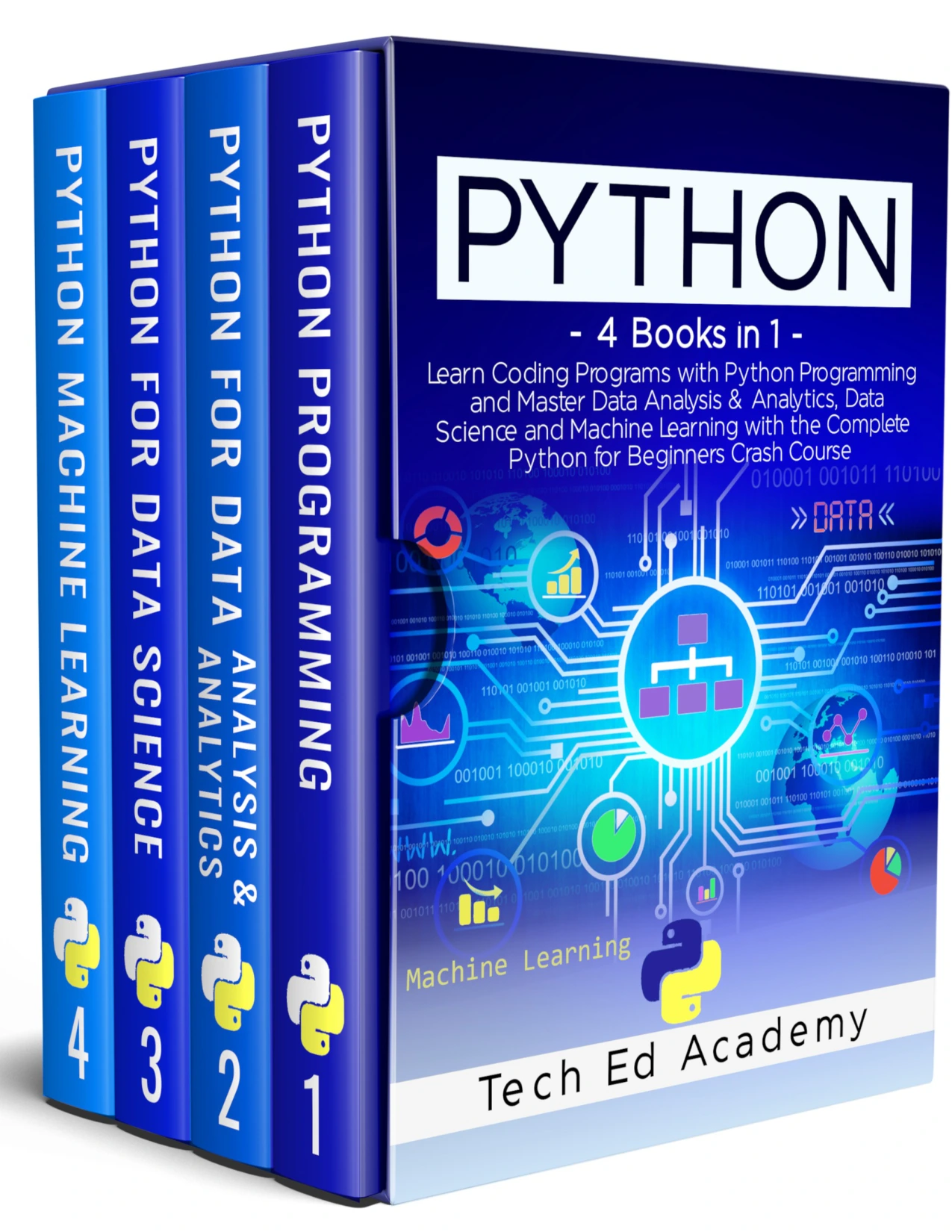
Beginners who want one collection that moves from programming basics toward data analysis and machine-learning topics.
Choosing a Python learning resource for your goal
Choose a resource based on what you want to do next—not just the broadest title or the most advanced topic. These catalog options address different stages and interests:
| Reader goal | Relevant resource | Why it may fit |
|---|---|---|
| Learn general programming fundamentals | Coding with Python | Introduces core concepts, including functions, loops, modules, and files. |
| Explore Python with spreadsheets and repetitive office work | Python for Excel Users: Know Excel? You Can Learn Python | Connects Python fundamentals with spreadsheet-oriented work and automation. |
| Work with tabular data | Python for Data Analysis: Data Wrangling with pandas, NumPy, and Jupyter, Third Edition | Focuses on data loading, cleaning, wrangling, analysis, and visualization. |
| Explore financial analysis | Python for Finance: Mastering Data-Driven Finance, Second Edition | Applies Python to financial data and quantitative workflows. |
| Move from Python basics toward machine-learning projects | Python Machine Learning Projects | Covers machine-learning concepts, Python foundations for ML, and case-study projects. |
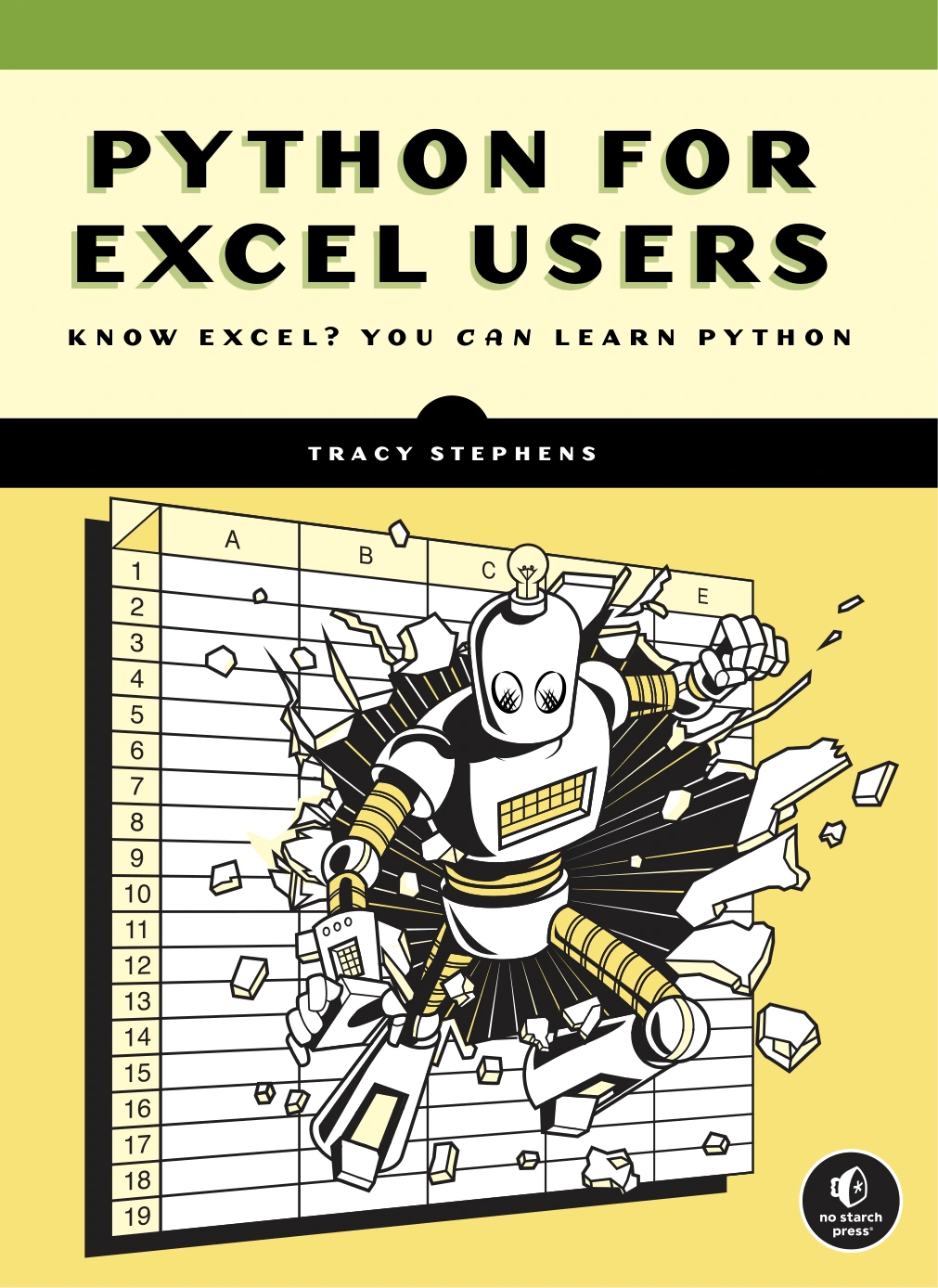
Python for Excel Users: Know Excel? You Can Learn Python
Excel users interested in Python fundamentals, spreadsheet tasks, and automation.
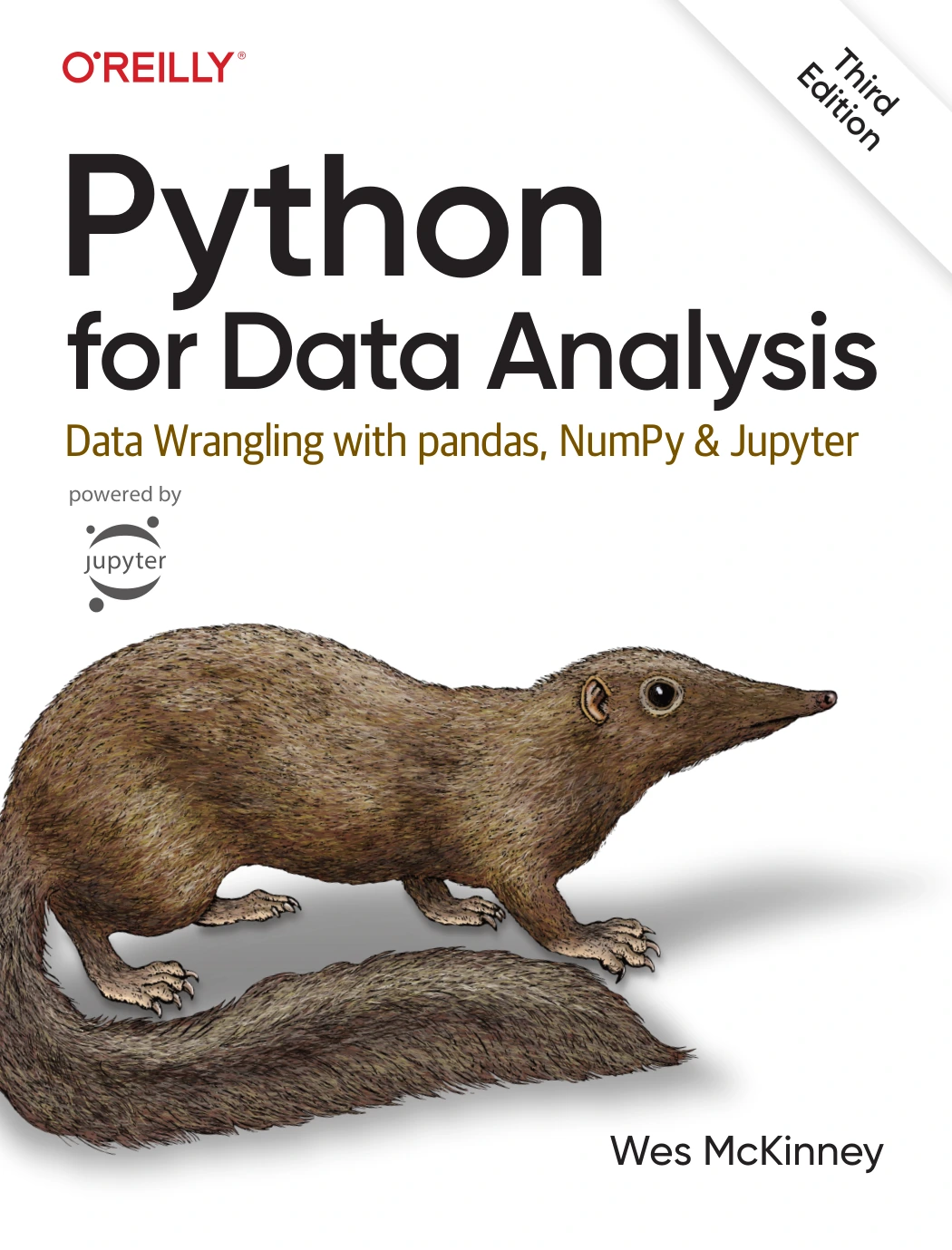
Python for Data Analysis: Data Wrangling with pandas, NumPy, and Jupyter, Third Edition
By Wes McKinney
Readers ready to study data loading, cleaning, wrangling, analysis, and visualization with Python tools.
These are different routes, not a ranked list. A beginner who has never programmed may benefit from starting with fundamentals. Someone already comfortable with Python can choose a resource more closely aligned with a specific interest, such as data analysis or machine learning.
Frequently asked questions
Is Python only used for data science?
No. Data science is one use, but Python is also used in web development, automation, software development tools, business applications, education, scientific work, and desktop interfaces. Its use in a particular project depends on the task and the rest of the technology involved.
Can beginners build useful things with Python?
Yes. Beginners can start with modest projects such as sorting sample files, summarizing a small dataset, or building a basic web or desktop application. Keep the first goal small, and add complexity as you learn the relevant concepts.
Do I need to pick a Python specialization before I start?
No. Start with programming fundamentals and a small project that interests you. A project can help you decide whether you want to continue toward data work, automation, web development, or another area.
Is Python used to build websites?
Yes. Python can be used for server-side web development and internet services. A complete website may also use browser technologies, databases, and other systems, so Python does not have to handle every part.
Does Python replace every other programming language?
No. Different projects have different requirements, and Python may be used alongside other languages and tools. The available evidence here does not establish that one language is universally best or most suitable.
Conclusion
Python is used in a broad range of real-world work: websites and internet services, data and scientific analysis, automation, software tools, machine learning, business applications, education, and desktop interfaces. The most useful way to understand that range is to try one small project rather than assume the language belongs to a single field. Learn the fundamentals, choose a task that matters to you, and then follow the tools and concepts that task requires.
Sources
- Applications for Python | Python.org — overview of application areas.
- Python Success Stories: Industrial Light & Magic | Python.org — historical example of pipeline scripting and asset tracking.
- Our Success Stories | Python.org — curated examples across fields; not a representative usage survey.