Is “Learning Python” by Mark Lutz a Good Book for Beginners?
Yes—Learning Python by Mark Lutz is a good candidate for beginners who want to understand Python thoroughly, rather than take the shortest route to a finished project. Its coverage starts with language fundamentals and develops into functions, modules, classes, exceptions, and more advanced features. Examples, quizzes, and exercises give readers opportunities to practise along the way.
That does not make it the right first book for everyone. Someone who already programs in another language has different needs from someone still learning what a terminal or script is. And a learner who wants to build something immediately may prefer a more narrowly focused introduction.
This assessment focuses on the sixth edition. Below, we separate its documented teaching features from editorial judgments about who is likely to benefit, then suggest a practical way to study it without making completion your first goal.
The short answer: yes, for beginners who want depth
The strongest reason to consider Learning Python is its sustained attention to the language itself. The publisher’s sixth-edition contents show a progression from running Python and using built-in objects to organizing programs and exploring Python’s object model.
That makes it a plausible fit if you often ask, “Why does this code behave that way?” It is less obviously suited to a reader whose main question is, “How can I build a particular application as soon as possible?”
- New to Python, but not programming: you can concentrate on Python’s particular rules and revisit familiar programming concepts selectively.
- New to programming altogether: the early material and practice features provide a starting structure, but you should expect to work slowly and write code alongside your reading.
- Looking for a quick, project-first introduction: a shorter or more guided resource may be a better first step, with Lutz’s book available for deeper study later.
This is a fit assessment based on scope and instructional structure—not evidence that the book produces better results than competing introductions.
What Learning Python by Mark Lutz teaches—and how
From individual values to organized programs
The sixth edition introduces Python’s execution model and ways to run programs before exploring numbers, strings, lists, dictionaries, tuples, files, and dynamic typing. It then moves through statements and control flow toward functions, generators, modules, and packages.
For a beginner, the significance of that sequence is practical: you first learn what your program can work with, then how it makes decisions, repeats actions, and groups instructions into reusable pieces.
Classes, inheritance, composition, exceptions, and development tools extend that foundation. The publisher’s listing and contents document this broad language coverage, along with later topics such as decorators, descriptors, and metaclasses.
Practice is built into the structure
The documented teaching features include examples, quizzes with answers, exercises, and an exercise-solutions appendix. Setup and execution topics include installation, interactive execution, running scripts, command-line variations, and IDLE.
Those features matter because a self-directed learner needs ways to check understanding. Reading an explanation can feel straightforward; predicting an example’s output or solving a variation reveals whether you can use the idea independently.
However, the presence of exercises does not prove that every explanation will suit every novice. Before choosing the book, inspect a sample section and ask whether you can follow its vocabulary and pace while working through the code.
Advanced chapters are not your starting requirements
Decorators and metaclasses belong to the book’s wider scope, not a beginner’s first checklist. You do not need to understand every advanced feature before writing a useful small program.
A sensible distinction is between what you need to use now and what you may want to understand later. The book can serve both purposes without requiring you to master them simultaneously.
Which beginners are likely to find it useful?
The following table offers a decision framework rather than a ranking of learners or books.
| Your starting point | Likely fit | Suggested approach |
|---|---|---|
| Complete programming novice | A possible fit if you want detailed study and can tolerate unfamiliar terminology | Inspect the opening sample, move slowly, and pair reading with small coding tasks |
| Programmer switching to Python | A strong candidate for understanding Python-specific behavior | Review familiar fundamentals selectively and focus on objects, functions, modules, and classes |
| Depth-oriented self-directed learner | Well aligned with a broad language-learning goal | Use quizzes and exercises to check understanding, then revisit difficult sections |
| Project-first learner | Potentially better as a companion than the first resource | Start a small project and consult relevant chapters as questions arise |
| Learner seeking one immediate task | Broader than the task may require | Choose a focused introduction to that task and study language fundamentals alongside it |
There is also an audience-label wrinkle worth knowing about. The supplied publisher research reports an “Intermediate to advanced” classification, while the sixth-edition preface addresses Python newcomers. Neither label alone settles the question. The early chapters, your previous experience, and your response to a sample are more useful decision points.
Does the edition matter?
Yes. Check the edition before applying an older review to your purchase decision. O’Reilly lists the sixth edition as published in February 2025. Its preface describes removing Python 2.x coverage and updating the material through Python 3.12. See the sixth-edition publisher listing and preface.
By contrast, the fifth edition was published in June 2013 and covers Python 2.7 and Python 3.3. Comments about navigating two Python generations therefore need historical context.
That does not mean an older copy has no educational value. It means a new learner using one must distinguish lasting programming concepts from version-specific syntax and behavior. For a fresh start, the sixth edition avoids the older edition’s dual Python 2/Python 3 focus.
What if your installed Python version is newer?
The sixth edition’s stated coverage through Python 3.12 is not a claim that every example has been verified against every later release. Equally, a newer interpreter does not by itself establish that the book is unusable.
When an example behaves differently, check your interpreter version, compare your code carefully with the example, and consult the relevant current documentation. The official Python tutorial is a useful companion for checking language behavior, although it explicitly assumes basic programming knowledge rather than serving as a complete introduction to programming.
How to study it without waiting to finish everything
Treat the book as a route into writing code, not a gate you must pass before you are allowed to build anything. The following is a suggested study method, not the author’s prescribed roadmap.
Use a read–run–change–solve routine
- Read one manageable concept. For example, focus on a list and a loop rather than trying to absorb several unrelated features.
- Run an example. Before executing it, write down what you expect to happen.
- Change one thing. Replace a value, add an item, or alter a condition. Predict the new result.
- Attempt an exercise without copying the solution. If you get stuck, identify the precise concept you need to revisit.
- Explain the result in plain language. Being able to describe the code helps expose gaps that copying can hide.
Build a small expense tracker alongside the basics
A text-based expense tracker offers a simple way to connect concepts without starting with an elaborate application. Begin with amounts written directly in the program:
expenses = [12.50, 8.00, 3.25]
total = 0

for amount in expenses:
    total = total + amount

print("Total spent:", total)
This original practice example gives you a list, a variable, a loop, addition, and output. Before running it, calculate the expected total. Then add another expense and predict how the result changes.
As you encounter more material, expand the same project:
- Dictionaries: give each expense a category and description.
- Conditions: report whether spending exceeds a chosen budget.
- Functions: separate calculating totals from displaying results.
- Files: save records and load them when the program starts.
- Exceptions: handle invalid input rather than assuming every entry is usable.
Classes can wait until you have a reason to explore them. The aim is to make each new concept solve a recognizable problem, not to include every feature because the book covers it.
Measure progress by what you can do
Page completion is an imperfect learning measure. More useful checkpoints include whether you can run a saved script, trace a loop, write a function with a return value, and explain an error well enough to investigate it.
If a later chapter feels overwhelming, narrow the task. A difficult section is a reason to adjust your pace or revisit a prerequisite—not automatic evidence that you cannot learn programming.
When another beginner resource may suit you better
Choose a teaching approach that matches your immediate obstacle. You do not need a stack of introductory books before starting.
Choose Lutz for sustained language study
Digital Delights lists Learning Python: Powerful Object-Oriented Programming, 6th Edition. Its catalog description emphasizes core language concepts, object-oriented programming, quizzes, and exercises. It is the relevant choice here if you want a substantial resource you can study progressively and return to as your questions become more detailed.
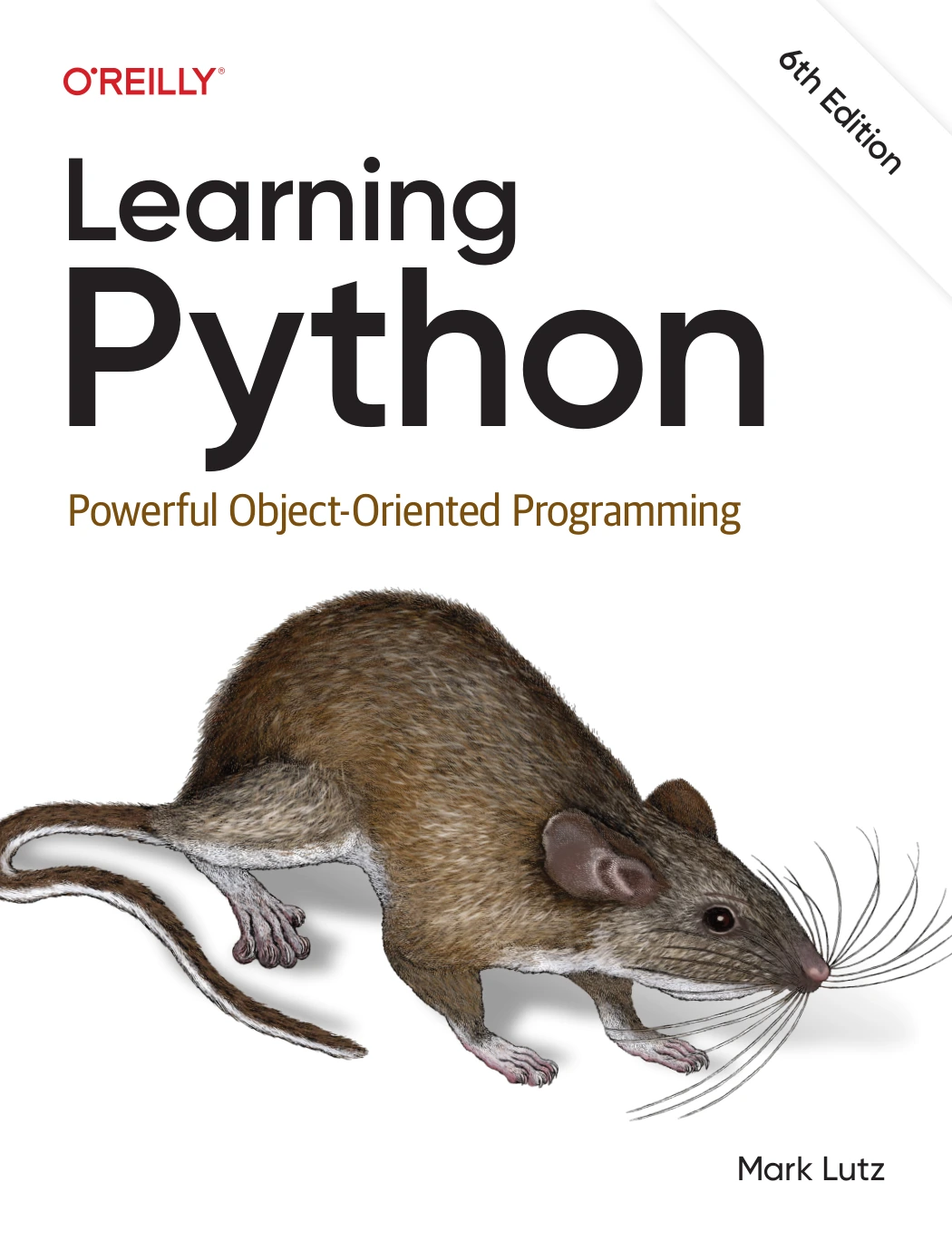
Learning Python: Powerful Object-Oriented Programming, 6th Edition
By Mark Lutz
Learners seeking broad Python language coverage, object-oriented concepts, quizzes, and exercises.
Consider a visual approach if abstract explanations are your obstacle
The Digital Delights catalog describes Python Illustrated as combining step-by-step beginner instruction with visual explanations. Its listed setup topics include the terminal, checking Python installation, running a first program, and using Visual Studio Code.
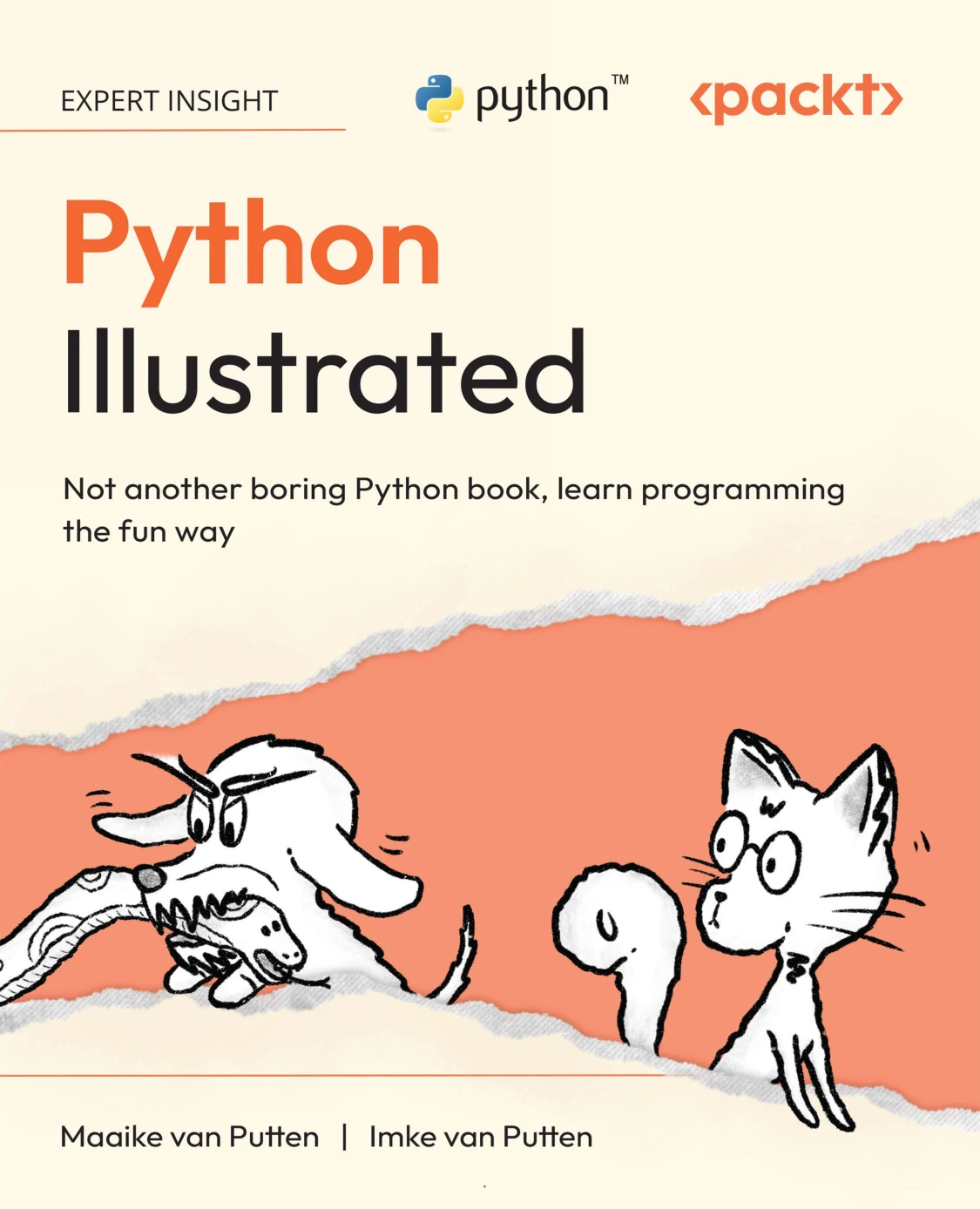
Beginners interested in illustrated explanations and step-by-step setup guidance.
That makes it an alternative worth examining if you prefer concepts presented visually. The description establishes a different approach, not proof that it is easier or more effective for every beginner.
Consider a computing-focused textbook if you want structured problem solving
The Practice of Computing Using Python is described in the catalog as introducing programming without prior experience and pairing concepts with exercises. Its coverage includes algorithm development, data structures, functions, files, classes, recursion, and exceptions.
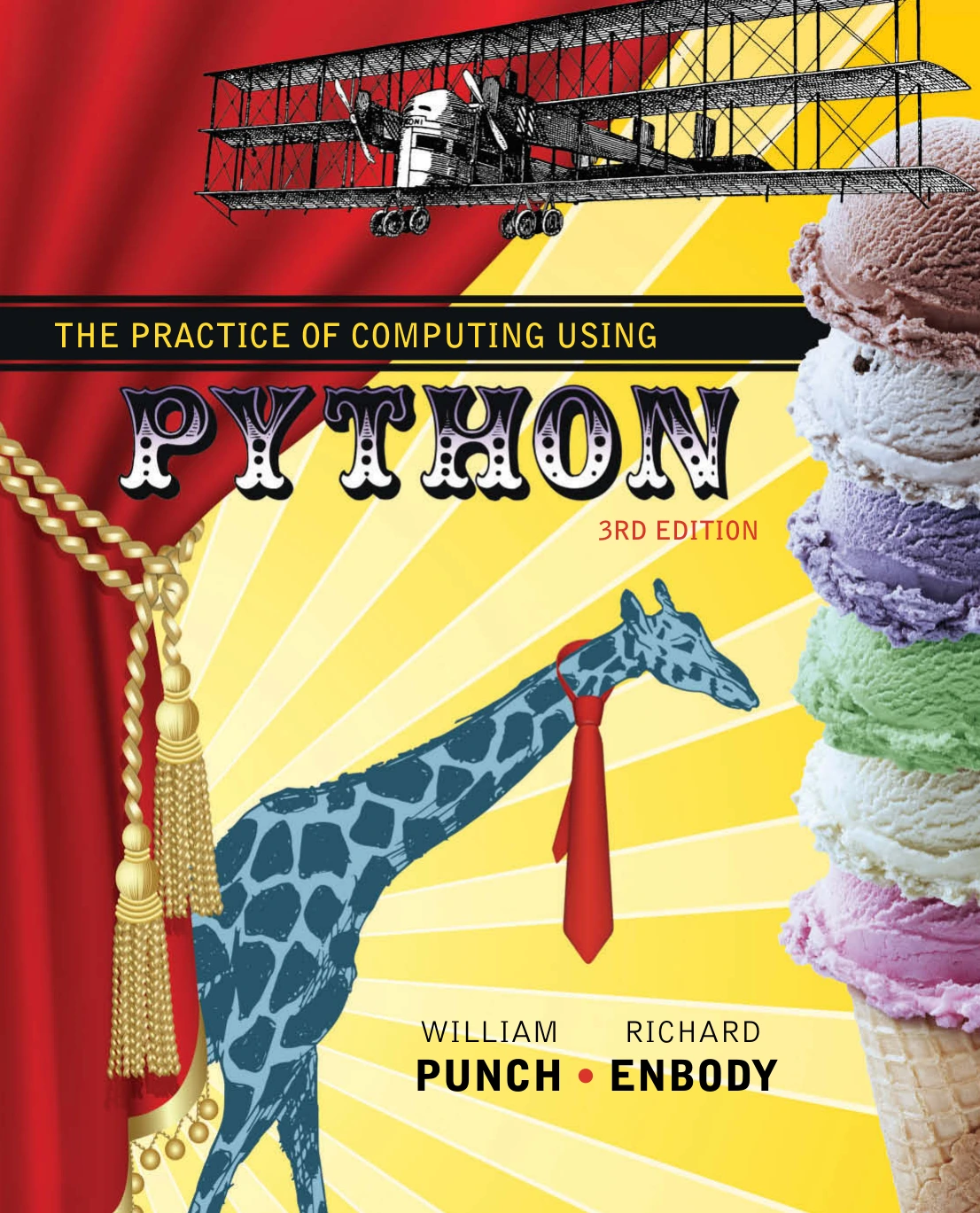
The Practice of Computing Using Python
New programmers who want exercises covering algorithms, data structures, and problem solving.
Consider that approach if your goal is broader computing fundamentals and disciplined problem solving. It is not necessarily a shorter route: the distinction is emphasis, not a claim that one book is universally less demanding.
For further browsing, the Python book collection can help you compare resources by subject. Before choosing another title, identify what you need it to provide: setup guidance, visual explanation, additional practice, or a specific application.
Frequently asked questions
Do I need previous programming experience to read Learning Python?
Not necessarily. The sixth-edition preface addresses Python newcomers, and its contents include setup, basic objects, and ways to run programs. However, complete novices should inspect a sample and expect to practise actively. Being new to Python and being new to programming are different starting points.
Do I need to read every chapter?
No. Work through the foundations you need, start small programs, and return to advanced chapters when they become relevant. Selective study should not mean skipping essential prerequisites: struggling with functions, for example, is a reason to strengthen that foundation before tackling more elaborate designs.
Is it mainly about building applications or understanding Python?
Its documented scope is primarily language-focused. It explains Python’s objects, statements, program organization, and advanced features. That knowledge can support application development, but a reader seeking a narrowly guided app-building course may prefer a project-oriented starting resource.
Can I use a newer Python version with the sixth edition?
A newer version does not automatically make the book unsuitable, but the supplied evidence does not establish compatibility for every example. Check current documentation when behavior differs and note which interpreter version you are using.
How long will it take to work through the book?
There is no supported universal completion time. Your previous experience, study frequency, exercise work, and choice of chapters will affect the commitment. Set goals around demonstrated skills rather than a promised finish date.
Final recommendation: choose it for depth, not speed
Learning Python by Mark Lutz is a defensible choice for a depth-oriented beginner, particularly someone willing to run examples, attempt exercises, and revisit challenging ideas. Its breadth is an advantage when you want to understand the language, but it can be more than you need for an immediate, narrow goal.
- Choose it if: you want detailed language study, prefer explanations supported by practice, and are comfortable learning progressively.
- Consider another starting point if: you need more visual support, a tightly guided first project, or a narrower introduction before undertaking substantial study.
- Whichever route you choose: begin writing small programs before you finish reading. Use the book to improve your code, not postpone it.
Sources and basis for this assessment
The assessment uses publisher information to establish scope, edition differences, and instructional features. Alternative-resource descriptions come from the supplied Digital Delights catalog. No comparative learning-outcome testing or firsthand product testing is claimed.
- O’Reilly: Learning Python, 6th Edition — edition information, contents, and practice features.
- O’Reilly: Sixth-edition preface — intended readership and update scope.
- O’Reilly: Learning Python, 5th Edition — historical publication and version coverage.
- Official Python tutorial — documentation companion and stated programming prerequisites.