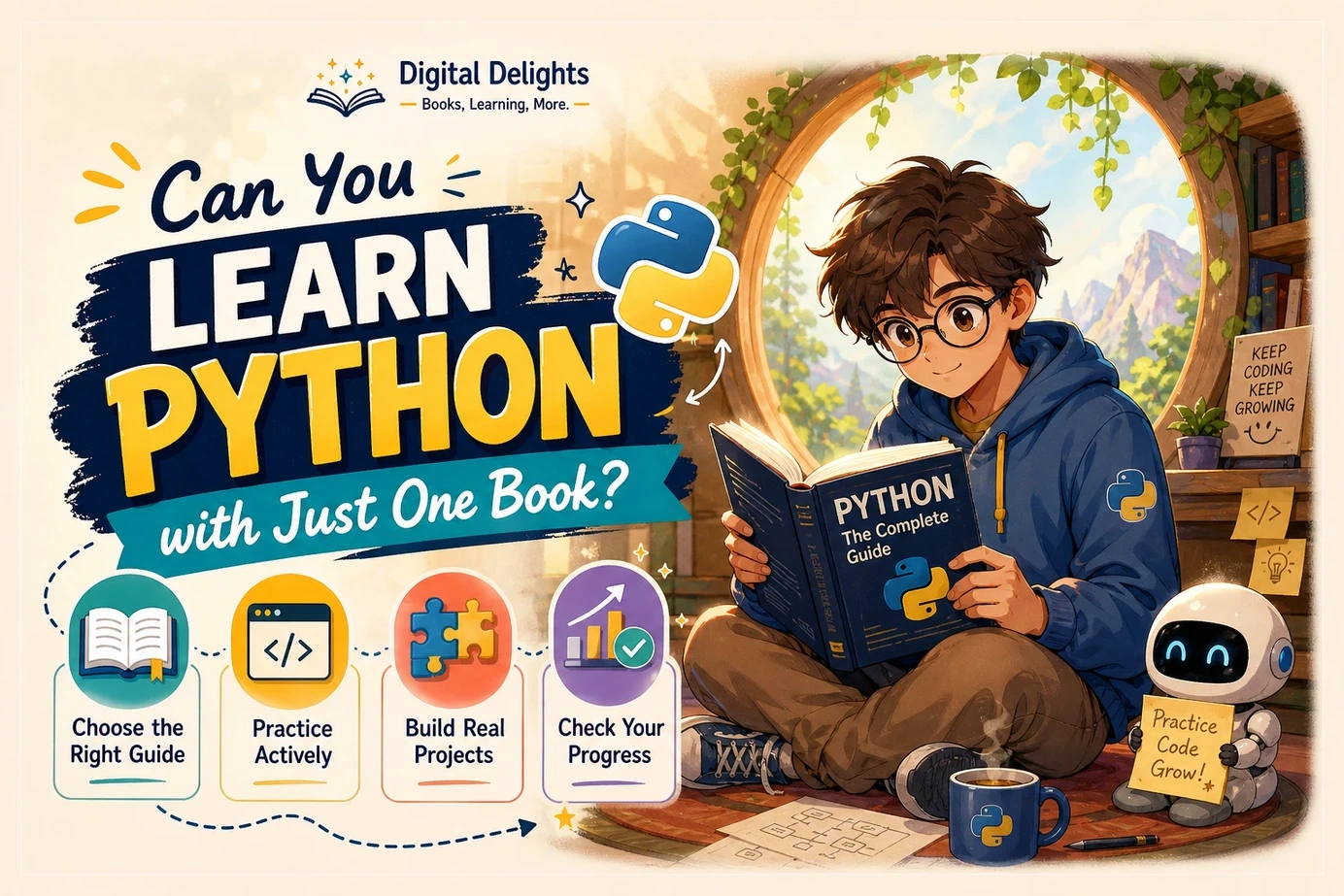
Can You Learn Python with Just One Book?
Yes—one well-matched book can be your main guide to learning Python fundamentals, provided you write, run, change, and debug code as you work through it. That is different from learning through reading alone, or expecting one book to answer every question you will ever have.
If you want to learn Python with one book, the useful question is not whether you can avoid all other resources. It is whether a single, coherent learning path can help you start writing programs independently. Documentation, corrections, and occasional help can support that path without replacing it.
This guide explains how to choose your main book, turn its chapters into practical work, and recognize when you need something more. Finishing the last page is a milestone—not proof of mastery or job readiness.
What does “learning Python” actually mean?
Before deciding whether one book is enough, define what you want to do with the language. Different goals require different kinds of preparation.
| Your goal | What progress looks like | The role of one book |
|---|---|---|
| Understand the basics | You can explain variables, conditions, loops, collections, and functions. | A suitable introductory book can organize these topics into a learning path. |
| Write useful small programs | You can turn a modest requirement into working code and investigate mistakes. | The book needs to be paired with independent exercises and projects. |
| Work in a specialist area | You can use the tools and concepts needed for a particular application. | A general introduction is a foundation; your project may require additional material. |
| Prepare for professional work | You can contribute to projects, understand existing code, and work within a development process. | Completing one book alone does not demonstrate this wider capability. |
A sensible initial goal is to write small programs that you understand and can modify. You do not need to learn every library or advanced feature before reaching that point.
One main curriculum is not one exclusive information source
Think of your book as the route through the subject. It determines what you study next and gives new ideas a context. Other resources can answer narrow questions along the way.
Looking up how a string method works does not mean your book has failed. Neither does checking a corrected example or asking someone to explain an error. The problem is not using help; it is continually replacing your learning path before you apply what it teaches.
How to choose one Python book
Match the book to your starting point
“New to Python” and “new to programming” are not interchangeable. A programmer switching languages may need concise explanations of Python conventions. A complete beginner also needs help with running programs, reading errors, and breaking problems into steps.
This distinction applies even to official resources. The official Python tutorial expects a basic understanding of programming and says it does not attempt comprehensive coverage. It is useful reference material, but its intended audience is not the same as that of a first-programming book.
Before choosing, read the introduction and a sample explanation of a topic you find unfamiliar. Ask whether the author explains the reasoning or simply presents code and moves on.
Look for a workable learning sequence
For a first book, look for clear coverage of:
- Getting started: setting up the required environment, saving a script, and running it.
- Core concepts: values, variables, strings, conditions, loops, collections, and functions.
- Problem solving: translating a task into smaller, manageable steps.
- Errors: understanding failures and checking assumptions.
- Practice: exercises that ask you to do more than copy an example.
- Application: small projects that combine earlier concepts.
- Support: explanations of solutions, example files, or corrections where available.
Not every book needs the same balance. A visual introduction may help you understand unfamiliar ideas; a practice collection may be better once you already recognize the syntax. Neither should be assumed to fill the other’s role.
Check editions and support material
Look for the Python version and library requirements used by the examples. Check whether the publisher provides source code and errata. For installation, consult the official Python downloads page rather than assuming the version named in your book is still the appropriate choice.
A practical approach is to use a supported stable interpreter compatible with the material, then check any project-specific requirements. Do not treat a failed installation or changed library interface as evidence that you cannot learn programming.
Finally, do not use page count or the word “complete” as a substitute for inspecting the contents. Breadth, depth, and suitability are different things.
Compare relevant starting and practice resources
These Digital Delights titles illustrate different approaches. The descriptions below are based on the supplied catalog, not a hands-on review of the full books.
| Resource | Catalog-described approach | Where it may fit | What to check |
|---|---|---|---|
| Python Illustrated | Visual explanations and step-by-step beginner instruction, including terminal basics, setup, and Visual Studio Code. | A possible main guide for readers who want illustrations alongside explanations. | Inspect sample chapters and practice material to judge whether the teaching style suits you. |
| Python Coding & Programming: The Complete Manual | Introductory tutorials covering setup, scripts, variables, functions, loops, collections, files, and error handling. | A possible starting guide for readers seeking a tutorial-led overview. | Check how much independent practice and explanation accompanies the broad topic coverage. |
| Python Workout, Second Edition (MEAP V03) | Exercise-focused material covering topics such as numbers, strings, collections, files, and functions. | An optional practice resource when you need more problems to solve. | This catalog listing is the MEAP V03 early-access version, not the final published edition. |
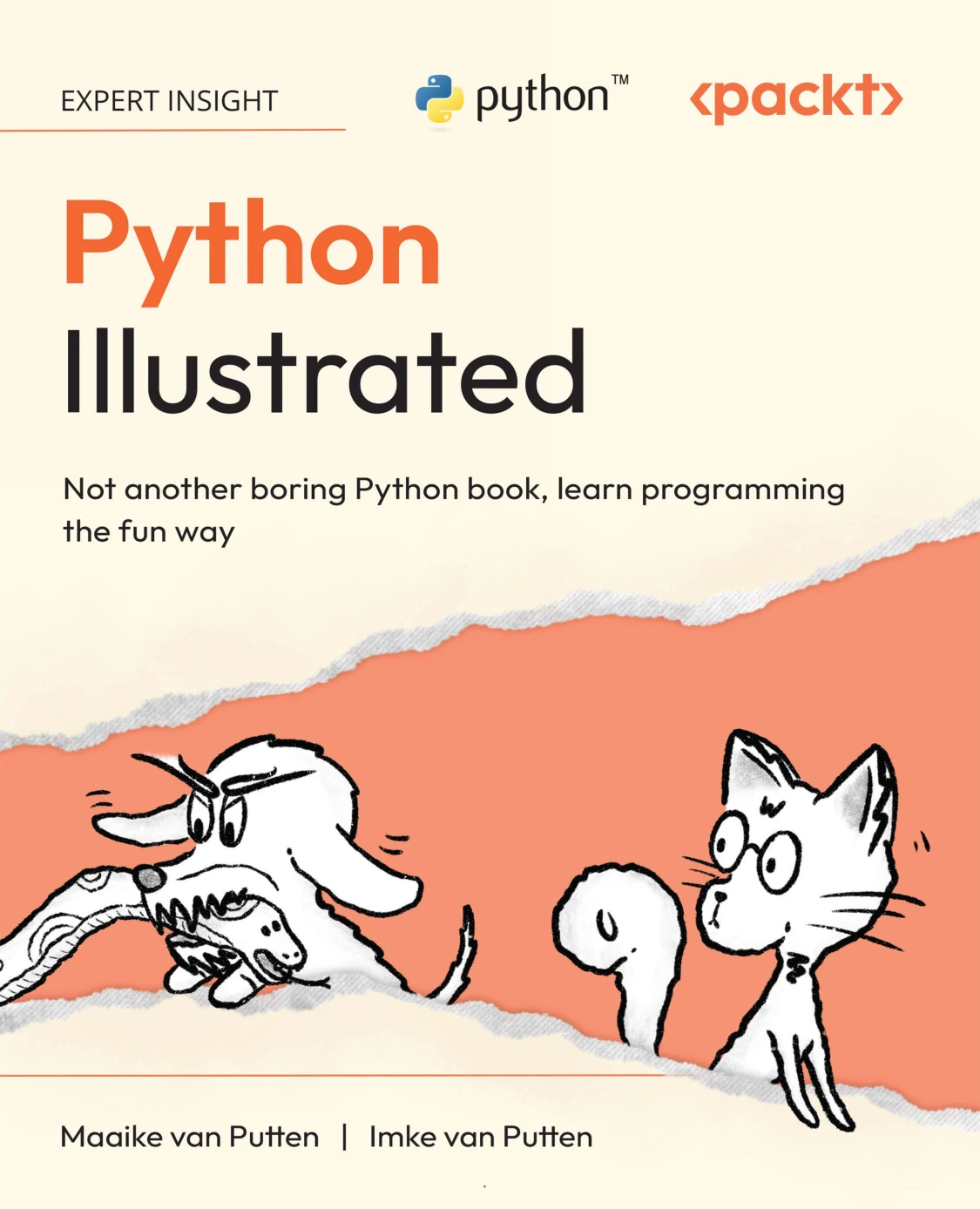
Beginners seeking illustrated explanations alongside step-by-step setup and programming instruction.
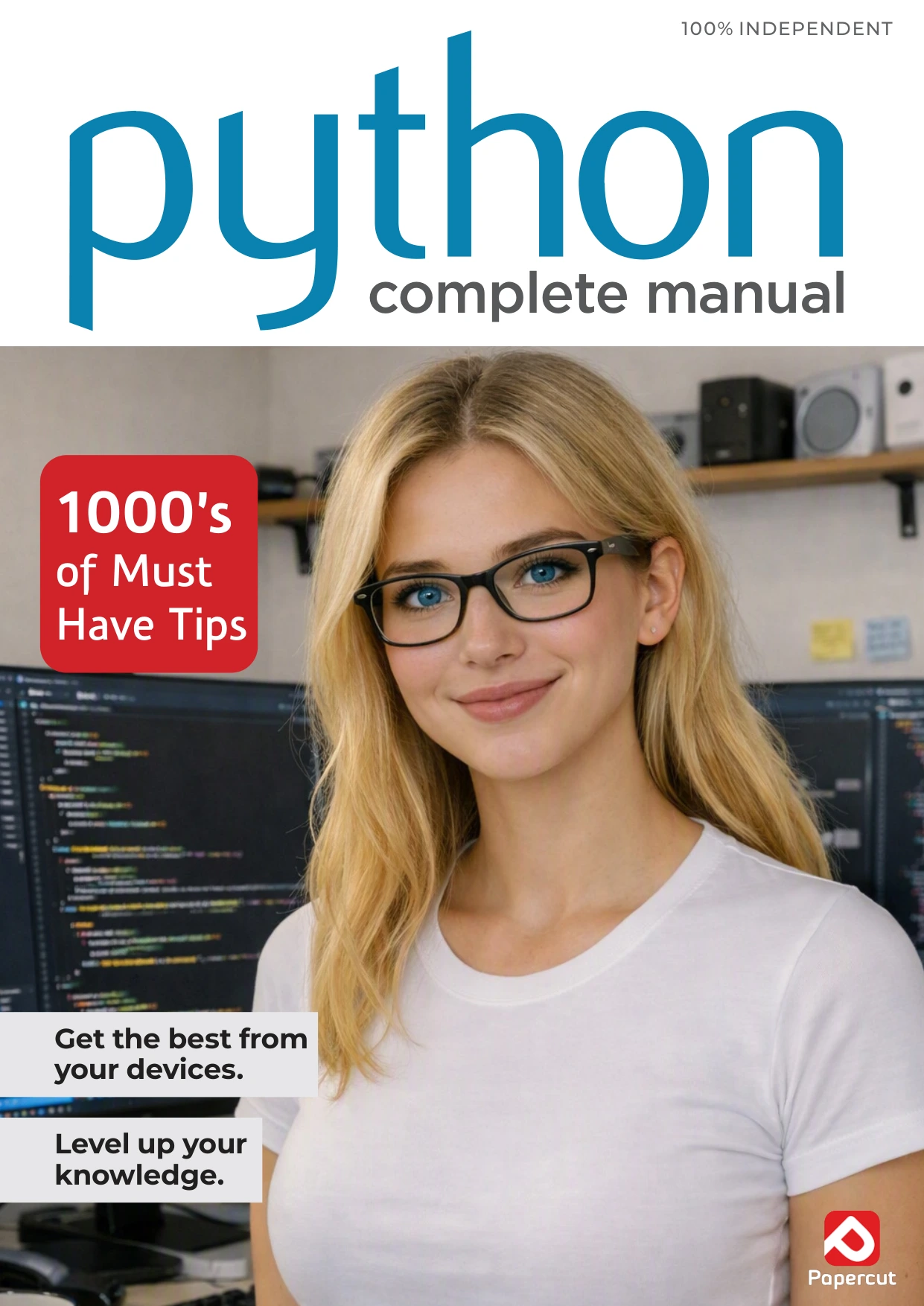
Python Coding & Programming: The Complete Manual
Readers seeking an introductory overview of scripts, control flow, functions, collections, files, and errors.
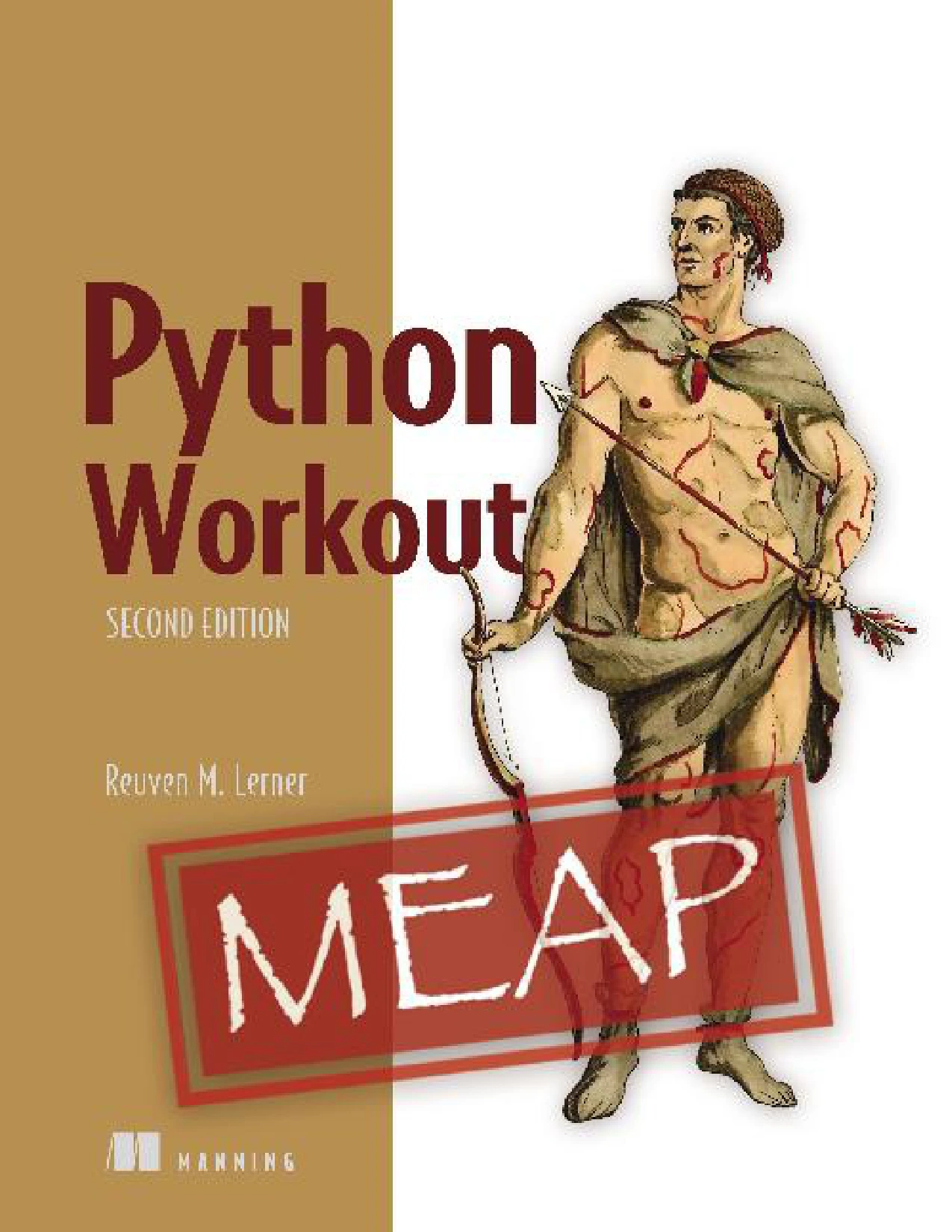
Python Workout, Second Edition (MEAP V03)
Learners who need additional problems involving Python types, collections, files, and functions.
You do not need all three. Choose one main guide that matches your starting point, and consider extra practice only if you identify a specific need.
How to learn Python with one book
Use a repeatable chapter workflow
Turn each section into a cycle of understanding, execution, and independent work:
- Read a manageable section. Stop when you reach a concept you can try, rather than reading several chapters before opening your editor.
- Predict the result. Before running an example, write down what you think it will do.
- Run it and compare. If the result differs, trace the code and identify the mistaken assumption.
- Change something deliberately. Alter an input, condition, collection, or function argument. Predict the effect again.
- Attempt the exercise without the solution. Write a rough plan first. Consult help when needed, but distinguish your work from the supplied answer.
- Rebuild a small version without copying. Use the concept in a slightly different task.
- Record the gap. Note what confused you and what finally clarified it.
For example, after a section on loops, do not stop at printing the same sequence as the book. Try printing only items that meet a condition, counting them, or collecting them into a new list.
Looking up syntax is acceptable. The important distinction is whether you are deciding how the program should work or following someone else’s decisions line by line.
Keep a useful error log
An error log does not need to be elaborate. Record:
- What you expected.
- What happened instead.
- The relevant error message or incorrect output.
- The assumption that turned out to be wrong.
- How you corrected it.
A note such as “I compared text entered by the user with a number” is more useful than “Python did not work.” It gives you something specific to recognize next time.
Build something beyond the book’s examples
A small independent project can reveal gaps that a copied example hides. Choose something with a clear result and few moving parts.
Project idea: a text-based quiz
Start with a program that asks a question, checks an answer, and displays a result. Then extend it as you encounter new concepts:
- Conditions: distinguish correct and incorrect answers.
- Collections: store several questions and answers.
- Loops: ask each question and keep a score.
- Functions: separate asking a question from calculating the result.
- Input handling: decide how to handle blank answers and differences in capitalization.
- Files: load questions or save a result after studying file handling.
Write the requirements in ordinary language before coding. For instance: “A blank answer should prompt the user again.” That requirement gives you something concrete to implement and check.
Project idea: a word-frequency counter
Begin with a short piece of text and count how often each word appears. Later, adapt the program to read a text file, normalize capitalization, and display the most common words.
This project also creates useful design questions. Should “Python” and “python” count as the same word? What about punctuation? Decide your rules and test them with deliberately chosen examples.
These are practice suggestions, not guaranteed learning methods. Their value is that they require you to combine concepts and make decisions the book may not have made for you.
How can you tell whether you are making progress?
Pages completed tell you where you are in the book. They do not tell you everything about what you can do. Use practical self-checks instead:
- Can you explain what each part of a small program does?
- Can you change a requirement without replacing the whole program with a copied solution?
- Can you identify the part of the code associated with an error?
- Can you test an empty input, an unexpected input, and a normal input?
- Can you solve a new, modest problem using concepts you have already studied?
- Can you state what you still do not understand?
These are editorial checkpoints, not validated proficiency tests. You may be comfortable with loops but still need practice with functions or files. That is a reason to target your next exercise, not necessarily to restart from chapter one.
When another resource helps
Add a resource to solve a named problem rather than to escape the discomfort of learning something difficult.
- Setup mismatch: check installation guidance and the book’s environment requirements.
- Possibly incorrect example: look for publisher errata or accompanying code.
- Unclear concept: seek a focused explanation, then return to your exercise.
- Persistent bug: ask for feedback with the relevant code, expected result, and actual result.
- Specialist project: study the particular library or subject your project requires.
The official Python tutorial includes guidance on virtual environments and packages, making it a useful reference when those topics become relevant. You do not need to abandon your main book to consult it.
A helpful rule is: before adding a second book, finish the sentence “I need this resource because I cannot yet…” If the answer is specific, you can choose more deliberately.
Frequently asked questions
Can I learn Python without videos or courses?
Yes, a book can provide your main learning structure. You still need to write and run code, work through problems, and investigate mistakes. Videos or courses are optional formats, not requirements established by the supplied evidence.
Is the official Python tutorial suitable for a complete programming beginner?
It is written for readers with a basic understanding of programming. A complete beginner may find a first-programming book a more suitable starting point, while using the tutorial for reference as their understanding develops.
How long will it take to learn Python from one book?
There is no supported universal timeline. Your starting knowledge, available study time, chosen book, and depth of practice all affect the process. Plan around tasks you can complete independently rather than a promised number of days.
Do I need to memorize Python syntax?
You do not need to remember every method or function before building small programs. Aim to understand the concepts, recognize common patterns, and know how to find details. Repeated practice gives you opportunities to use the syntax instead of only recalling it.
Do I need a second book after finishing the first?
Not automatically. First, build something without following a chapter’s finished solution. If you need more exercises, a practice resource may help. If you need a particular tool, targeted documentation or specialist material may be more useful than another general introduction.
The bottom line: choose one guide, then use it actively
One book can give your Python learning a coherent structure. It cannot do the practice for you, and finishing it does not establish universal proficiency.
Choose a guide that matches your starting point, run examples, change them, attempt exercises, and build a small independent project. Use additional help to address identifiable gaps—not because collecting resources feels like progress.
If you are comparing starting points, browse the Python books at Digital Delights with your learning needs in mind. A suitable next step is one resource you will actively use, not a larger reading pile.
Sources and scope
The Python tutorial supports the audience distinction and reference guidance above. The Python downloads page provides the official starting point for checking available releases. Product comparisons use the supplied Digital Delights catalog descriptions; they do not establish learning outcomes or confirm that any title is sufficient for every beginner.