
Can I Learn Python Using Only Free Resources?
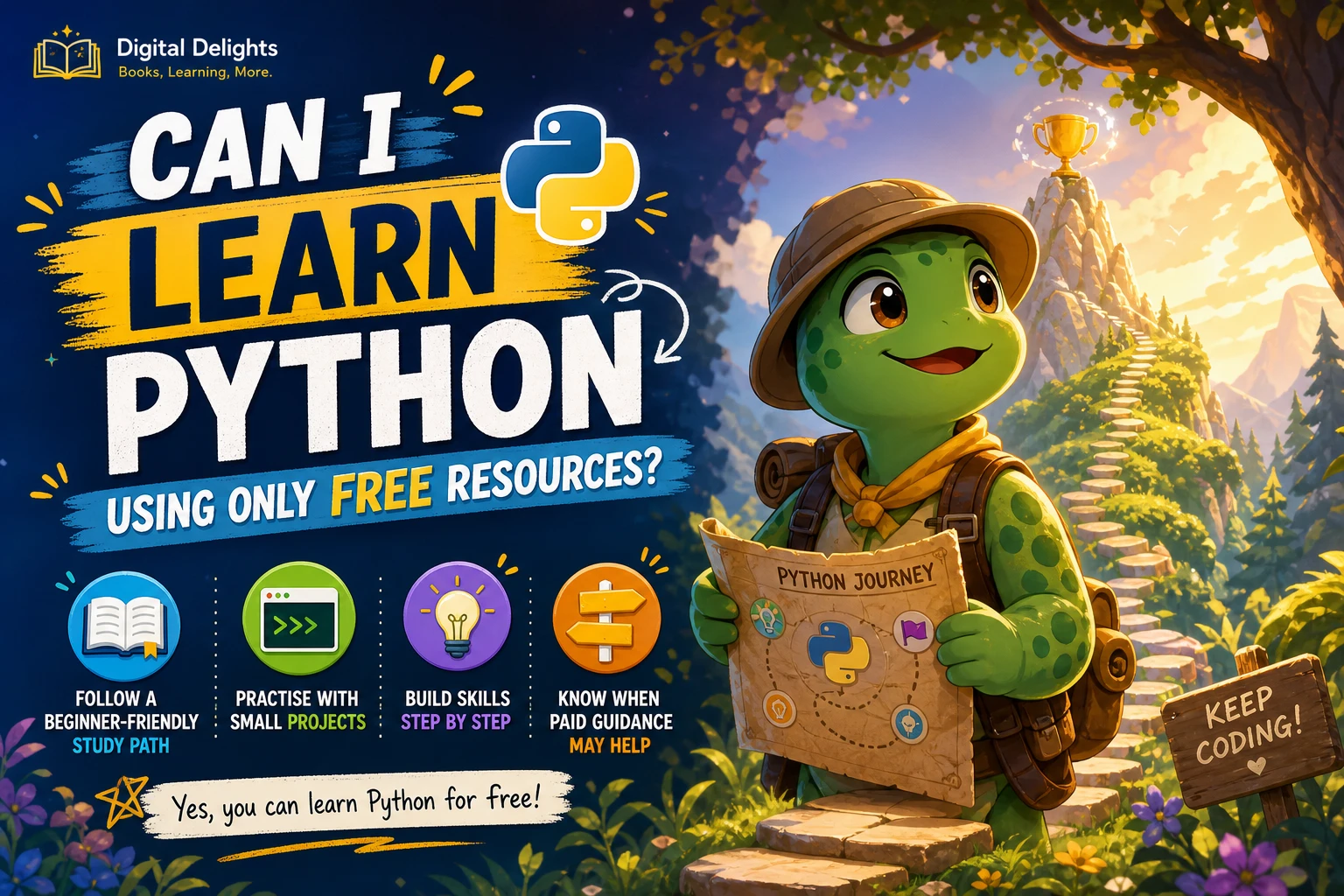
Yes—you can learn Python fundamentals using free resources. Python itself, its standard library and official documentation are available without charge. The bigger challenge is not finding free material; it is following a clear sequence, writing code regularly and finding a way through problems when you get stuck.
“Learning Python” can mean different things: understanding basic syntax, building useful projects or preparing for a particular job. Free study can give you a strong start with the language and help you build practical projects. It does not automatically provide personal feedback, a recognized credential or proof of job readiness. This guide explains what free learning can cover, how to organize your study and when a paid resource might be useful—not essential.
What Can Free Python Resources Provide?
The Python interpreter and its extensive standard library are freely available, and Python.org directs learners to documentation, tutorials and code samples. You do not need to buy Python to start programming with it. The official documentation is especially useful as a reference when you need to check how a feature works.
Free resources can help you study language fundamentals, try code examples and work on independent projects. What they may not provide is an instructor who reviews your code, a structured schedule, individual explanations or external accountability. Those gaps matter differently to different learners: some are comfortable studying independently, while others make progress more easily with a planned course or regular feedback.
One important distinction: Python is often described as approachable for beginners, but the official Python tutorial assumes readers already have some basic understanding of programming. If this is your first time coding, use an introduction written for people new to programming, then treat the official tutorial as a reference and a next step.
A Free Python Learning Path for Beginners
Rather than collecting tutorials without a plan, move through a small set of concepts in order. Learn a topic, write a little code using it, and revisit it when a project exposes a gap in your understanding.
1. Choose one beginner-friendly introduction
If you have never programmed, start with a resource that explains both Python and basic programming ideas. Choose one main guide or course and work through it in sequence. You can consult other explanations when a concept is unclear, but switching between several unrelated tutorials can make it harder to see how the ideas fit together.
2. Learn the building blocks
A useful beginner sequence is:
- Variables, values and basic data types
- Expressions and input/output
- Conditional statements, such as
ifandelse - Loops and repeated tasks
- Functions and how to divide a program into smaller pieces
- Collections such as lists and dictionaries
- Reading error messages and correcting mistakes
Do not worry about memorizing everything. Aim to understand what a concept is for and practise using it without copying a complete solution each time.
3. Use the official documentation as a companion
The official Python tutorial introduces the language and can help you look up topics as your knowledge grows. Keep in mind its stated assumption that readers have some basic programming understanding. If its explanations feel too abrupt at first, continue with a beginner-oriented introduction and return to the tutorial later.
4. Practise each concept in small steps
After reading about a topic, write a short program that uses it. For example, practise conditions by checking whether a number is positive, negative or zero. Practise loops by printing a sequence or asking for input until the user enters a particular answer. Small exercises make it easier to locate misunderstandings than a large project does.
5. Combine the basics in a project
Once you can use variables, conditions, loops and functions, try a small project. A project does not need to be original or complicated; it should give you a reason to connect concepts and solve a sequence of manageable problems.
| Learning stage | Free approach | Useful sign of progress |
|---|---|---|
| First concepts | Follow one beginner introduction and type the examples yourself. | You can explain what the code is doing in your own words. |
| Practice | Write short exercises using one or two concepts at a time. | You can make a small change without needing to copy the whole example. |
| Projects | Build a simple program from a short list of requirements. | You can break the task into steps, test them and fix errors. |
| Further learning | Use documentation to explore a topic needed for your next project. | You can identify what you need to learn instead of studying topics at random. |
How to Practise Python Without Paying
You can practise with core Python by choosing projects that work with text, numbers and simple data. Start small, make the program work, and add features only after the basic version is reliable.
- Number-guessing game: ask the player to guess a number, give higher-or-lower hints and count attempts.
- Quiz: ask questions, check answers and keep a score.
- Text organiser: accept a list of items, sort or search them, and display the result clearly.
- Simple task list: let a user add, view and remove tasks during a session.
When something breaks, resist the urge to replace the entire program with a copied answer. Read the error message, identify the line involved and test one possible fix at a time. Keep a brief learning log with the problem, what caused it, how you resolved it and what you would try next. This turns mistakes into a personal reference rather than a reason to restart from scratch.
If you are stuck, search the official documentation for the feature involved and look for an explanation of the specific error or concept. You can also ask questions in an appropriate programming community, including the smallest code example that shows the problem and what you expected to happen. Avoid sharing private information or credentials in code you post publicly.
Common Challenges When Learning for Free
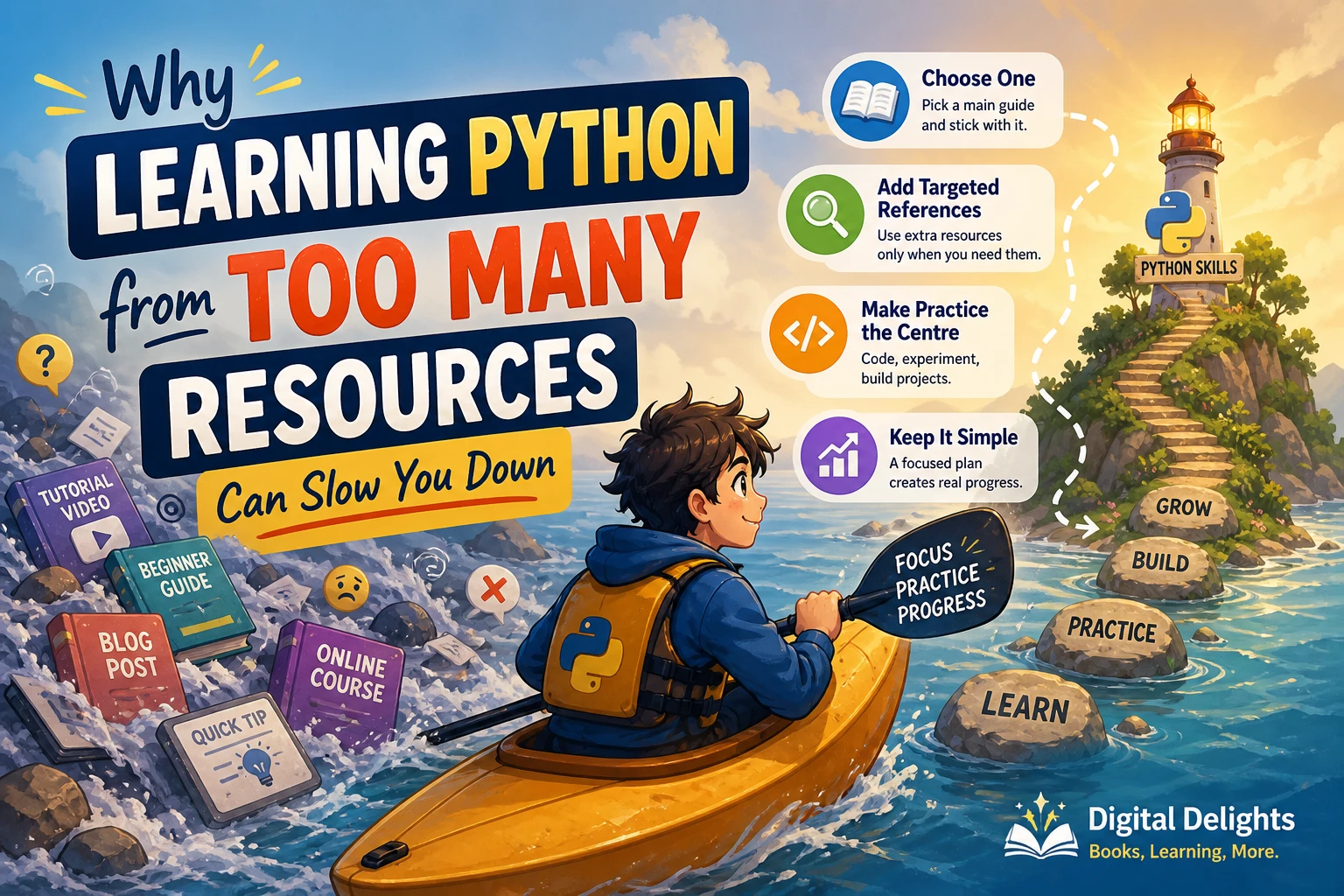
- Following too many tutorials: Choose one main path. Use other explanations to clarify a topic, not to restart your learning every few days.
- Watching or reading without coding: Pause and reproduce examples yourself. Change the inputs or add a feature to check whether you understand them.
- Copying solutions too quickly: First describe the problem in plain language, then try a small part of the solution. Check a reference only after making a genuine attempt.
- Skipping error handling: Errors are part of programming. Practise reading them and narrowing down the cause instead of treating each one as a sign that you cannot code.
- Jumping to advanced topics too early: Data science, machine learning and web development use Python, but they are easier to approach after you are comfortable with basic programming concepts.
When Might Paying for a Python Resource Help?
Paying is optional for getting started. A paid book, course or tutor may be useful if you want a more organized sequence, exercises gathered in one place, explanations that match your learning style or feedback on your work. A credential may be relevant in some situations, but completing a paid resource by itself does not establish job readiness.
If you prefer a single reference to scattered free material, Python Complete Manual – 26th Edition, 2025 covers setup, language fundamentals and additional topics including files and projects, according to its catalog description. It is an optional structured resource, not a requirement for following the free learning path above.
Python Complete Manual – 26th Edition, 2025
Learners who want a single manual covering setup, core language concepts, files and projects.
For readers who want an introduction that also points toward data analysis and machine learning, Python: 2 Bundles in 1 combines beginner Python programming material with data analysis and machine-learning topics. Consider it if those subjects fit your goals; you can also postpone them until you have practised the fundamentals. Browse the Python collection for other catalog resources, and check each title’s description to see whether its level and coverage suit you.
Readers interested in a beginner overview that also introduces data-focused topics.
Frequently Asked Questions
Can a complete beginner learn Python for free?
Yes. You can begin with free learning materials and freely available Python tools. If you have never programmed, choose an introduction designed for first-time coders; the official Python tutorial assumes some prior programming understanding.
Do I need to install Python or buy software?
You do not need to buy Python. The interpreter is freely available. Whether Python is already available on your device depends on the system; consult the official Python downloads page if you need installation guidance. Use a stable release unless a learning resource specifically asks for something else.
Is the official Python tutorial suitable for a first-time programmer?
It is a valuable language reference, but it says it assumes basic programming knowledge. A complete beginner may find it easier to start with a resource that teaches programming concepts from the beginning and return to the official tutorial as a supplement.
Can free resources prepare me for a job?
Free materials can help you learn Python and build projects, but the evidence available here does not establish that free-only study guarantees job readiness or employment. Career preparation depends on the role and the broader skills it requires. Treat projects as a way to practise and demonstrate what you can do, not as a promise of a particular outcome.
Conclusion: Free Python Learning Is a Practical Start
You can learn Python fundamentals without paying for software or instruction. Start with a beginner-appropriate sequence, practise by writing code and build small projects that combine what you have learned. Use official documentation to look things up, and seek structured guidance or feedback if you find that independent study is not enough for your goals.
The most useful next step is simple: choose one starting resource, write your first small program and keep going from there.