
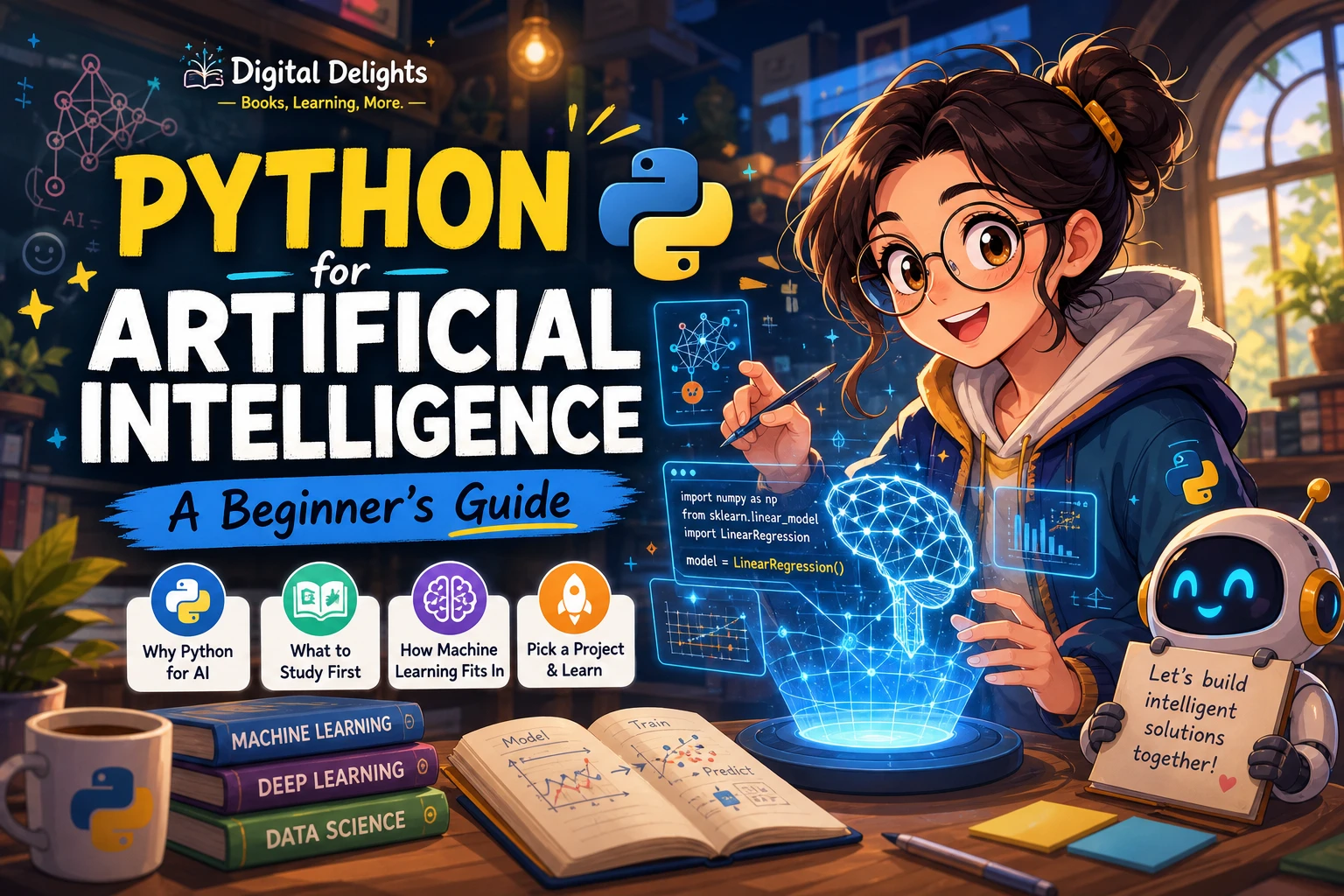
Python is a programming language you can use to build AI applications; it is not artificial intelligence itself. If you are starting from scratch, the clearest route is to learn basic Python first, practise writing small programs, and then explore how data and machine-learning models fit together. If you already know another programming language, you can move more quickly into data handling and machine learning.
This guide lays out a practical beginner’s path, explains the difference between AI, machine learning, and deep learning, and suggests a manageable first project. It also covers how to choose learning resources without assuming there is one required syllabus or tool for everyone.
What to know before learning Python for artificial intelligence
There are two common starting points: learning Python as your first programming language, or learning Python as a new language while already understanding programming. Those are different challenges. The official Python tutorial is intended for readers new to Python, but it expects basic programming knowledge, so an absolute beginner may benefit from a more introductory first step (Python Tutorial documentation).
If you have never programmed before, begin with simple ideas: storing information in variables, using conditions, repeating instructions with loops, writing functions, and understanding error messages. You do not need to master every Python feature before exploring AI, but you should be able to read a short program and explain what its main steps do.
Math is another source of uncertainty. You can start learning the programming workflow without advanced mathematics. Comfort with arithmetic, averages, percentages, charts, and basic algebra will help as you begin interpreting data and model results. More specialized topics may call for additional maths later, depending on what you choose to study.
A beginner’s learning path for Python and AI
There is no universally prescribed beginner curriculum. A useful sequence is to build programming confidence, work with data, learn machine-learning ideas, and then practise training and evaluating a small model. Publisher outlines also vary in emphasis, so treat this as a flexible learning path rather than a fixed standard (Python & AI For Dummies contents).
1. Learn Python fundamentals and set up your environment
Start with the language’s basic building blocks: variables, strings, numbers, lists, dictionaries, conditions, loops, functions, and reading or writing simple files. Learn how to run a script and how to interpret common errors. Choose a stable Python release, then check the installation instructions and compatibility information for any library you plan to use. The official Python downloads page is a suitable place to check release information.
For practice, write a tiny program that asks for a person’s name and prints a greeting, or calculates the average of a few numbers. The aim is to understand how input, variables, and operations work—not to build an AI system on day one.
scores = [72, 85, 91]
average_score = sum(scores) / len(scores)
print(average_score)
2. Practise with small programs
Write and revise short programs before adding machine-learning tools. Try a number-guessing game, a simple expense total, or a script that counts words in a text file. When something goes wrong, read the error and trace the program rather than replacing code at random. This habit makes later data and model workflows easier to understand.
3. Get comfortable handling data
Machine-learning projects use examples represented as data. Learn to inspect a small dataset, distinguish inputs from the result you want to predict, notice missing or inconsistent values, and summarize what the data contains. At this point, focus on asking sensible questions about the data rather than collecting a long list of libraries.
For example, a dataset about flowers might include measurements as inputs and a flower type as the label. Before training anything, check what each column means and whether the examples are understandable and relevant to the question.
4. Learn the basic ideas behind machine learning
Machine learning is one area within AI. In a typical beginner project, you provide examples and a learning method, train a model to find patterns, and examine how well its outputs match the task. Learn the difference between classification (choosing among categories) and regression (estimating a numeric value), along with the general purpose of training data and evaluation.
Keep the first goal modest: understand what the model receives, what it produces, and how you judge its output. A model running without an error is not, by itself, evidence that it is useful.
5. Train and evaluate a small model
Once the basic concepts make sense, follow a small example from data inspection through training and evaluation. Keep a portion of examples separate from the examples used to fit the model, then use that separate portion to check how it performs. Compare the results with a simple baseline or expectation, and look at mistakes as well as correct predictions.
Evaluation gives you a reason to improve a project: perhaps the examples need cleaning, the question needs a clearer definition, or the model’s errors show that it is not suitable for the task. Write down what you tried and what you observed. That record is more useful than simply saving a code snippet that you cannot explain.
AI, machine learning, and deep learning: what is the difference?
These terms are related, but they do not mean the same thing:
- Artificial intelligence (AI) is the broad field of creating computer systems that perform tasks associated with capabilities such as recognizing patterns, making decisions, or understanding language.
- Machine learning (ML) is an approach within AI in which a system learns patterns from examples rather than relying only on a hand-written set of instructions.
- Deep learning is a type of machine learning based on multi-layer neural networks. It is used in areas such as image and language tasks.
Python can be used across these areas, but a beginner does not need to study every branch at once. Starting with general Python and introductory machine learning gives you a foundation for deciding whether to continue toward deep learning, chatbots, computer vision, or another application.
Choose a first AI project you can explain
A small classification exercise is a useful project shape: take a modest dataset, use its features to predict a category, and check the model’s results on examples it did not train on. Keep the question narrow enough that you can explain what the inputs and categories mean.
- State the question. Define the category the program is meant to predict.
- Inspect the examples. Identify the useful columns and check for unclear or inconsistent data.
- Build a simple version. Follow a beginner-level example and make sure you understand each major step.
- Check its predictions. Evaluate examples not used during training and review the errors.
- Describe the limits. Note what your small dataset or simple setup cannot establish.
Other starter ideas include sorting short messages into two categories or estimating a numeric value from a small, clearly described dataset. Choose a task with understandable examples, not simply the most fashionable AI application.
Common beginner pitfalls to avoid
- Skipping Python basics. If variables, loops, and functions are mysterious, AI code can feel like a string of unexplained instructions. Build enough familiarity to follow the program’s flow.
- Copying code without tracing it. Change a small part, predict what will happen, and run it. If you cannot explain the result, pause and investigate.
- Ignoring the data. A model cannot answer a meaningful question if the examples or labels are unclear. Inspect the data before focusing on algorithms.
- Treating one good result as proof. A successful output on a single example does not show how the system behaves more broadly. Evaluate a suitable set of examples and review mistakes.
- Trying to learn every AI topic at once. Pick one path after the fundamentals. Machine learning, deep learning, chatbots, and computer vision have different concepts and project needs.
Choosing books and learning resources
Match a resource to the next thing you need to learn. A Python fundamentals guide is more appropriate if you are new to programming; an introductory machine-learning book makes more sense once you can follow basic code. Broader AI books can help connect the subjects, while an application-focused guide is useful when you have chosen a project area.
| Reader’s next step | Resource | Why it may fit |
|---|---|---|
| Learn Python from the ground up | Python for Beginners 2020: A Step By Step Guide | The catalog describes a step-by-step introduction to setup, programming basics, and error handling. |
| Connect Python fundamentals with introductory machine learning | Machine Learning with Python: A Practical Beginners’ Guide | Its listed topics include data preparation, model design, validation, and foundational algorithms. |
| Explore Python and a broader selection of AI topics | Python & AI For Dummies | The catalog outline spans Python foundations, machine learning, neural networks, and other AI applications. |
| Focus on one applied AI area | The Beginner’s Guide to Creating AI Chatbots | This application-focused guide covers chatbot types, natural language processing, machine learning, and deployment. |
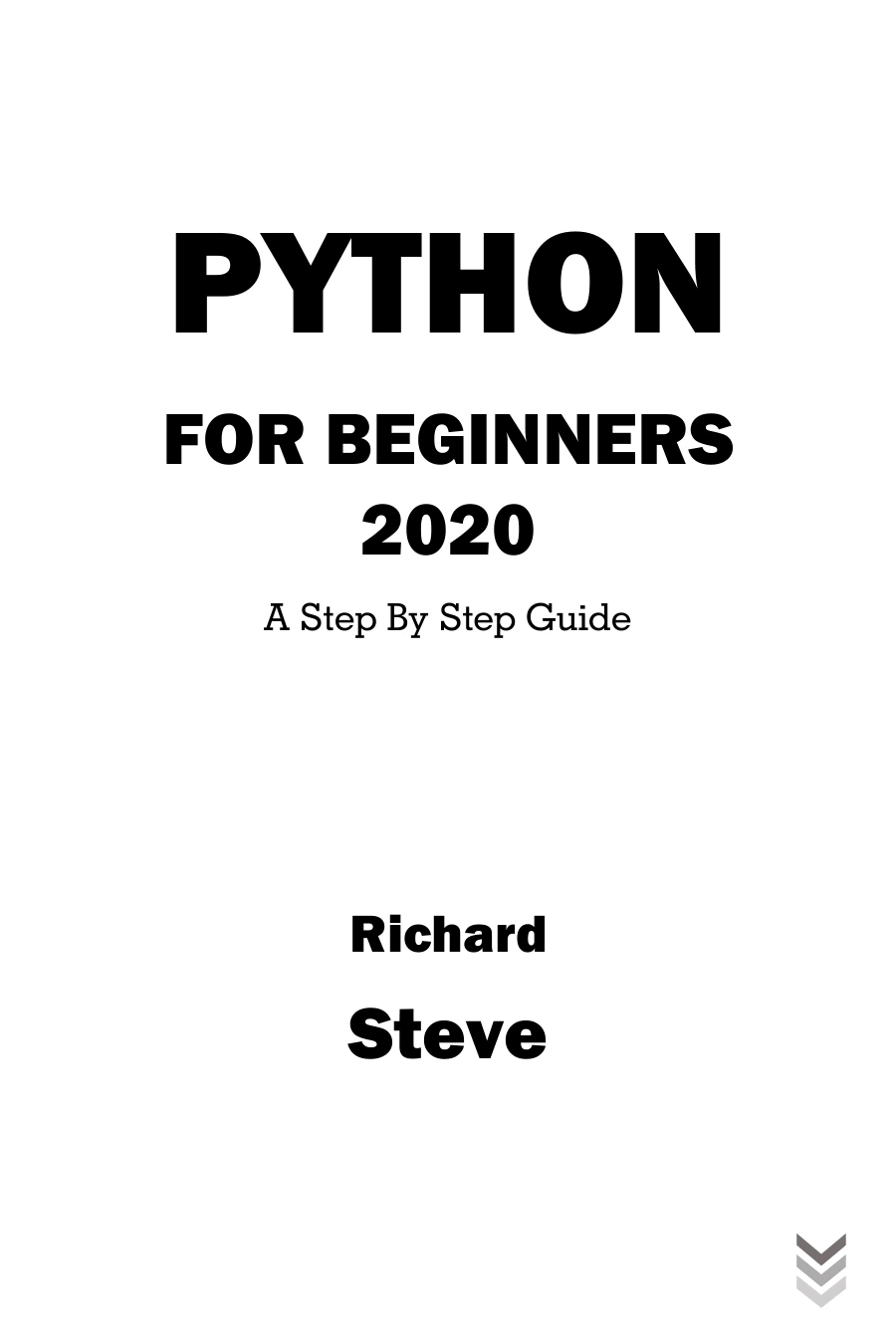
Python for Beginners 2020: A Step By Step Guide
Readers looking for a step-by-step introduction to setup, core programming concepts, and error handling.
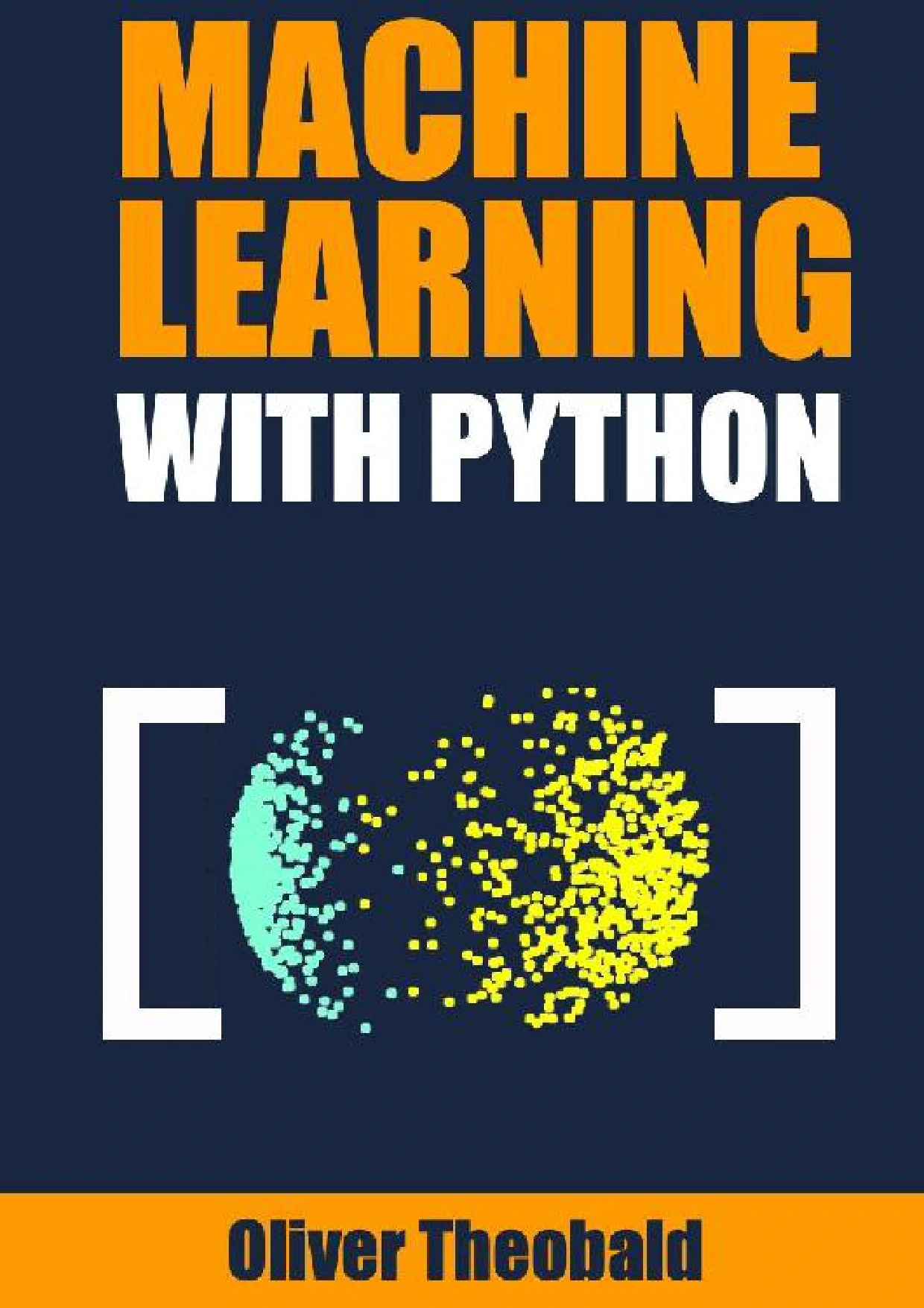
Machine Learning with Python: A Practical Beginners’ Guide
Learners ready to explore data preparation, model design, validation, and foundational algorithms.
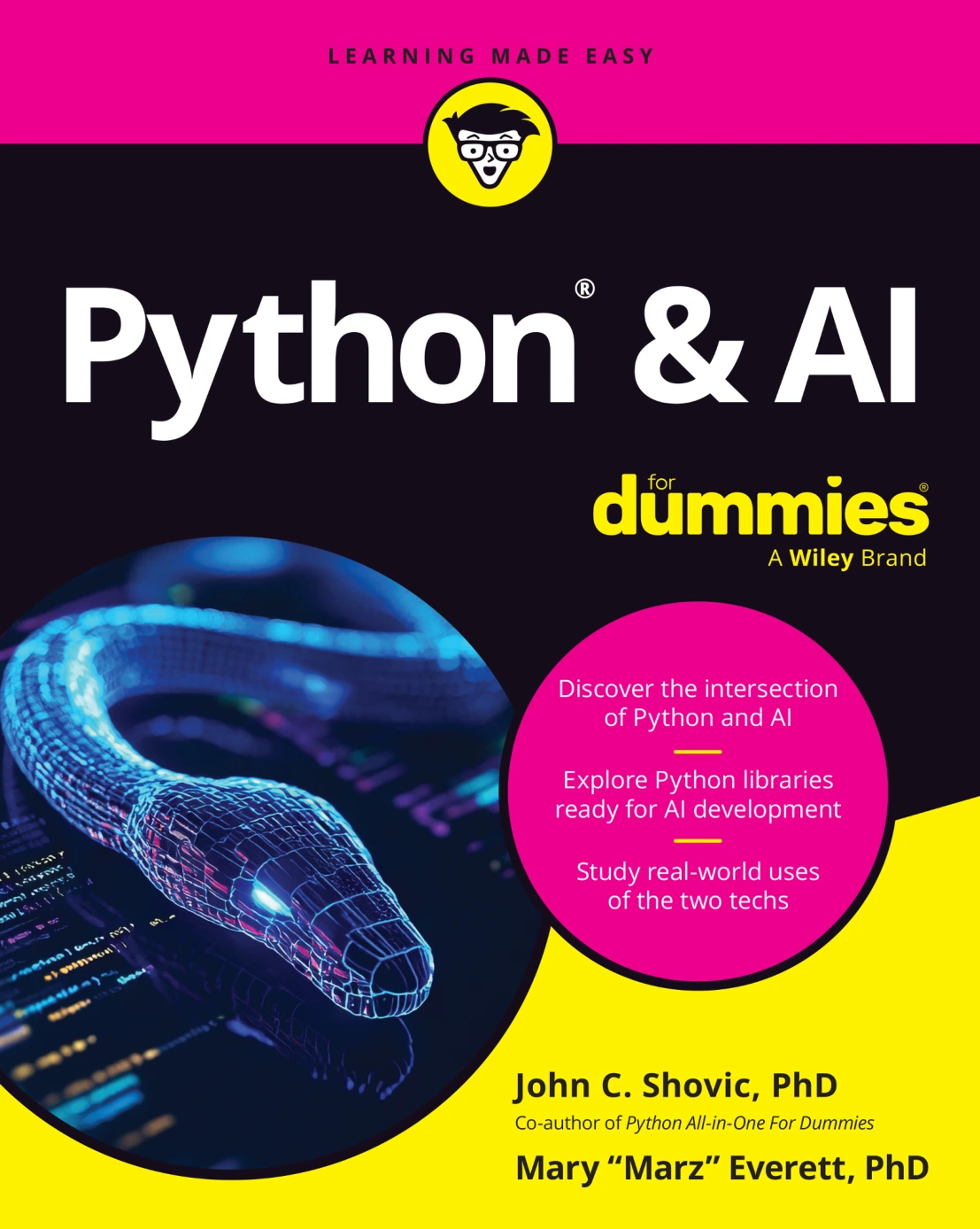
Readers who want a resource covering Python foundations alongside machine learning, neural networks, and other AI applications.

The Beginner’s Guide to Creating AI Chatbots
Learners interested in chatbot types, natural language processing, machine learning, and deployment.
These are different routes, not a ranking. Check the listed contents and intended level before choosing; a catalog description can show a resource’s subject coverage, but it cannot guarantee a particular learning outcome. For more options, browse the Python book category. Technical examples and package instructions can change, so check current documentation when a resource refers to a specific software version.
Frequently asked questions
Can I learn Python for artificial intelligence as a complete beginner?
Yes. Start with basic programming concepts and small Python programs, then move to data and machine-learning ideas. Do not assume that a tutorial written for people new to Python also teaches programming from the beginning; check its stated prerequisites.
Do I need to know Python before learning AI?
You do not need to know all of Python, but basic programming knowledge makes code-based AI material easier to follow. Learn variables, conditions, loops, functions, and how to read errors before relying on machine-learning examples.
Do I need advanced maths to get started?
No advanced maths is needed to begin learning Python or to explore the basic workflow of a small machine-learning project. Arithmetic, averages, percentages, charts, and basic algebra are useful foundations; particular AI topics may call for more later.
Should I start with machine learning or generative AI?
Start with Python fundamentals either way. Introductory machine learning helps explain how models learn from examples and how their results can be assessed. If you are mainly interested in building an application such as a chatbot, you can study that application after learning enough programming to understand its components.
Which Python version should a beginner install?
Choose a stable release from the official Python downloads page, then verify that the libraries in your course or project support it. Compatibility can vary by library, so do not assume that every package supports every Python release.
Conclusion: learn the foundations, then build
Python for artificial intelligence is best approached as a sequence of learnable skills: understand Python, practise with small programs, work carefully with data, and then train and evaluate a modest model. AI is a broad field, so you can specialize later rather than trying to cover every technique at once. Choose a resource that matches your current level, build something you can explain, and use its errors and limits to decide what to learn next.