
How to Learn AI with Python from Scratch
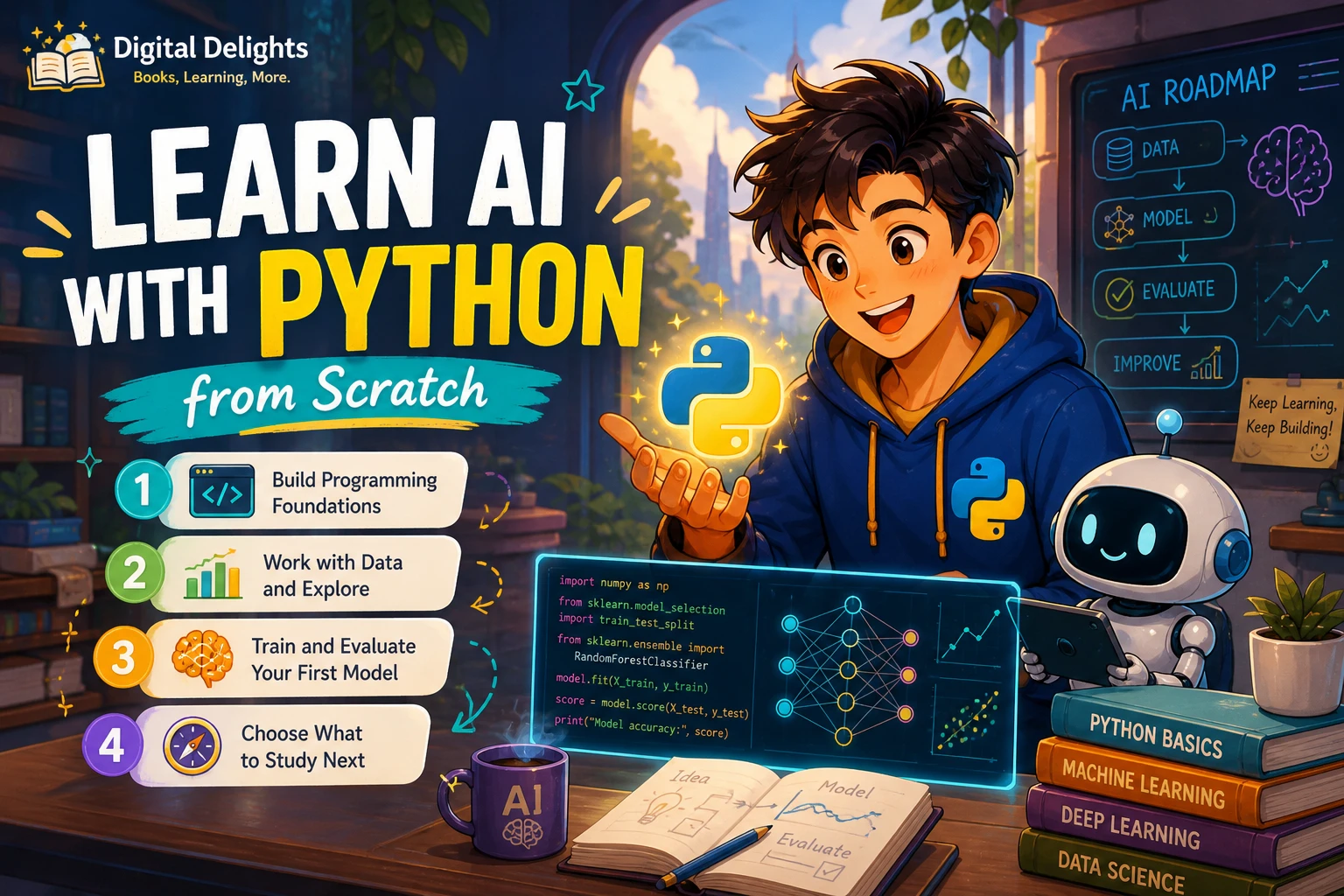
Learning AI with Python is more manageable when you treat it as a sequence of skills rather than a race to build a chatbot. Start with Python fundamentals, learn to work with data, study basic machine-learning ideas, and practise evaluating a small model. That order gives you the tools to understand what your code is doing instead of simply copying a tutorial.
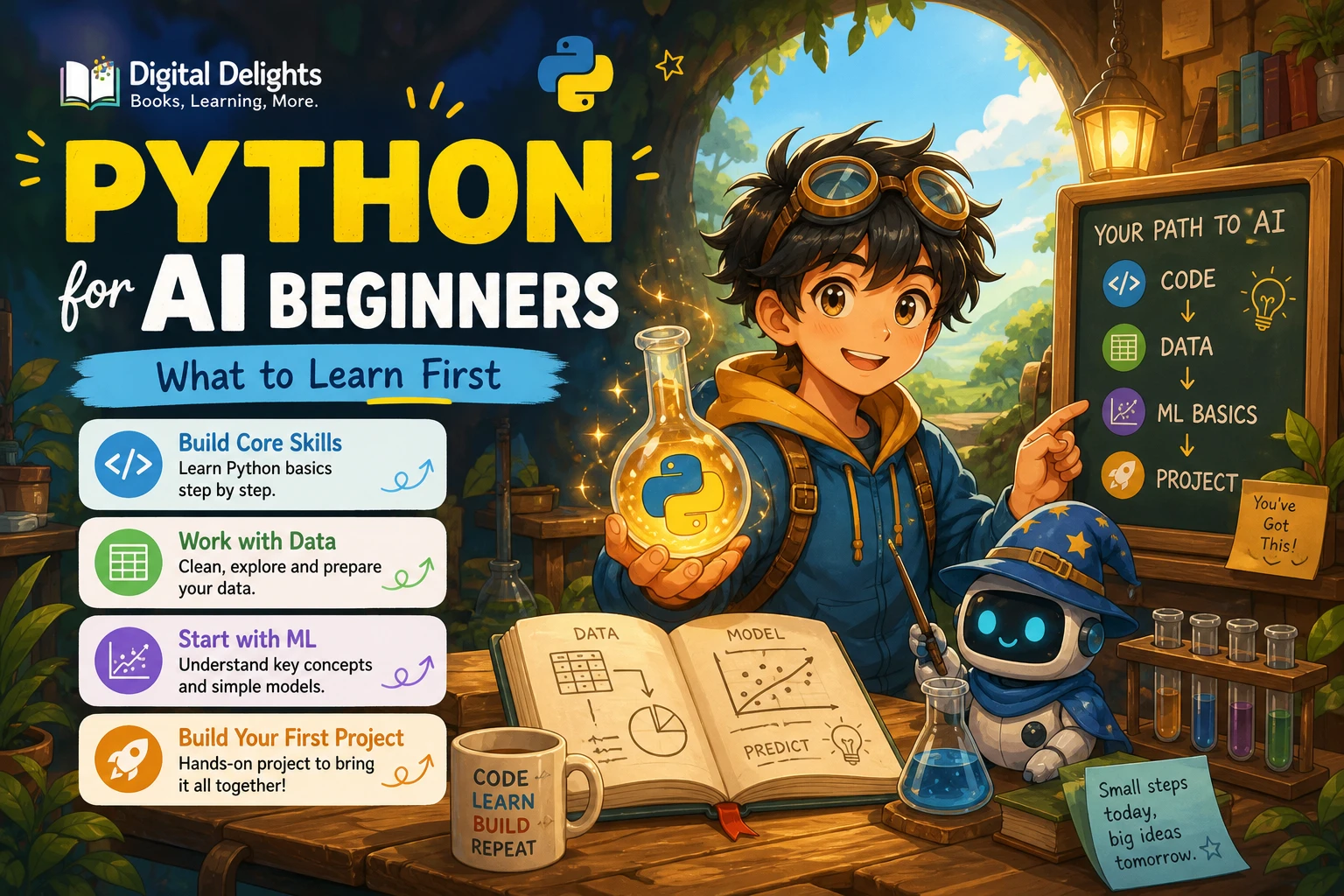
A practical roadmap is: Python basics → data handling → machine learning → model evaluation → a small project. If you are new to programming, build your coding foundation first. If you already know another language, you can move through Python basics more quickly. This guide explains the difference between AI fields, what to learn, how to set up your environment, and how to choose a first project.
What Does “AI with Python” Mean?
Artificial intelligence is a broad term for computer systems designed to perform tasks associated with capabilities such as recognizing patterns, making predictions, or generating content. Python is a programming language used to build and work with many kinds of AI systems, but “AI” does not refer to one specific technique.
- Machine learning uses data to train models to identify patterns or make predictions. A first project might predict a category or estimate a value from examples.
- Deep learning is a type of machine learning based on neural networks. It is used in areas such as image, audio, and language tasks.
- Generative AI produces new outputs, such as text or images. Large language models are one prominent example.
For a beginner learning Python from scratch, applied machine learning is a useful first destination: it teaches you how to prepare data, train a model, and check its results. Deep learning and generative AI can follow once you have a foundation. They are related areas, but you do not need to begin by building a large neural network or language model.
What Should You Learn Before AI?
Before working with machine-learning libraries, learn enough Python to read, write, and troubleshoot small programs. The Python tutorial itself notes that it is intended for people who are new to Python but already have basic programming knowledge, rather than people entirely new to programming. Read the Python tutorial’s introduction when you are ready for that style of reference.
If you are new to programming
Learn the following ideas in small exercises before moving on to model training:
- Variables and basic types: store numbers, text, and true-or-false values.
- Collections: use lists and dictionaries to group and look up information.
- Control flow: use conditions and loops to make a program respond to different situations.
- Functions: package repeatable steps into named blocks of code.
- Debugging: read error messages, test assumptions, and isolate problems instead of restarting from scratch.
You do not need to master every feature of Python before starting AI. You do need to be comfortable enough to follow code, change it, and understand the results.
If you already know another programming language
Focus on Python’s syntax and common data structures, then practise by writing short scripts. You may be able to move faster through variables, loops, and functions, but do not skip the parts of Python that are new to you. AI libraries still depend on understanding data, program flow, and errors.
Set Up a Python Environment Carefully
Use a stable Python release and check the supported Python versions for the libraries you plan to install. The latest release is not automatically the right choice for every package, course, or older book. Python’s download page provides release information; check the relevant download page for your operating system.
It is also helpful to create an isolated environment for each learning project. This keeps that project’s dependencies separate from other Python work and makes it easier to reproduce a setup later. Follow the environment instructions for your chosen platform, and install only the tools required by the next exercise.
When following a book or tutorial, treat setup instructions as tied to the material’s publication context. If a command or package version no longer works, consult current documentation for the library rather than assuming your computer is configured incorrectly.
A Staged Roadmap to Learn AI with Python
1. Learn Python fundamentals
Practise basic syntax, collections, functions, loops, conditions, file handling, and debugging. Aim to write small programs without copying each line from a guide. For example, make a script that reads a list of values, calculates a summary, and prints a clear result.
2. Get comfortable with data
Machine-learning examples usually involve structured data: rows of observations and columns describing them. Learn how to inspect a dataset, identify missing or inconsistent values, select useful columns, and summarize what you find. Data visualization can help you notice patterns or unusual values before you train anything.
A data-science resource can help bridge basic Python and model-building. The catalog-listed Python for Data Science: Step-by-Step Crash Course describes coverage of Python setup, data structures, scikit-learn, and practical exercises.
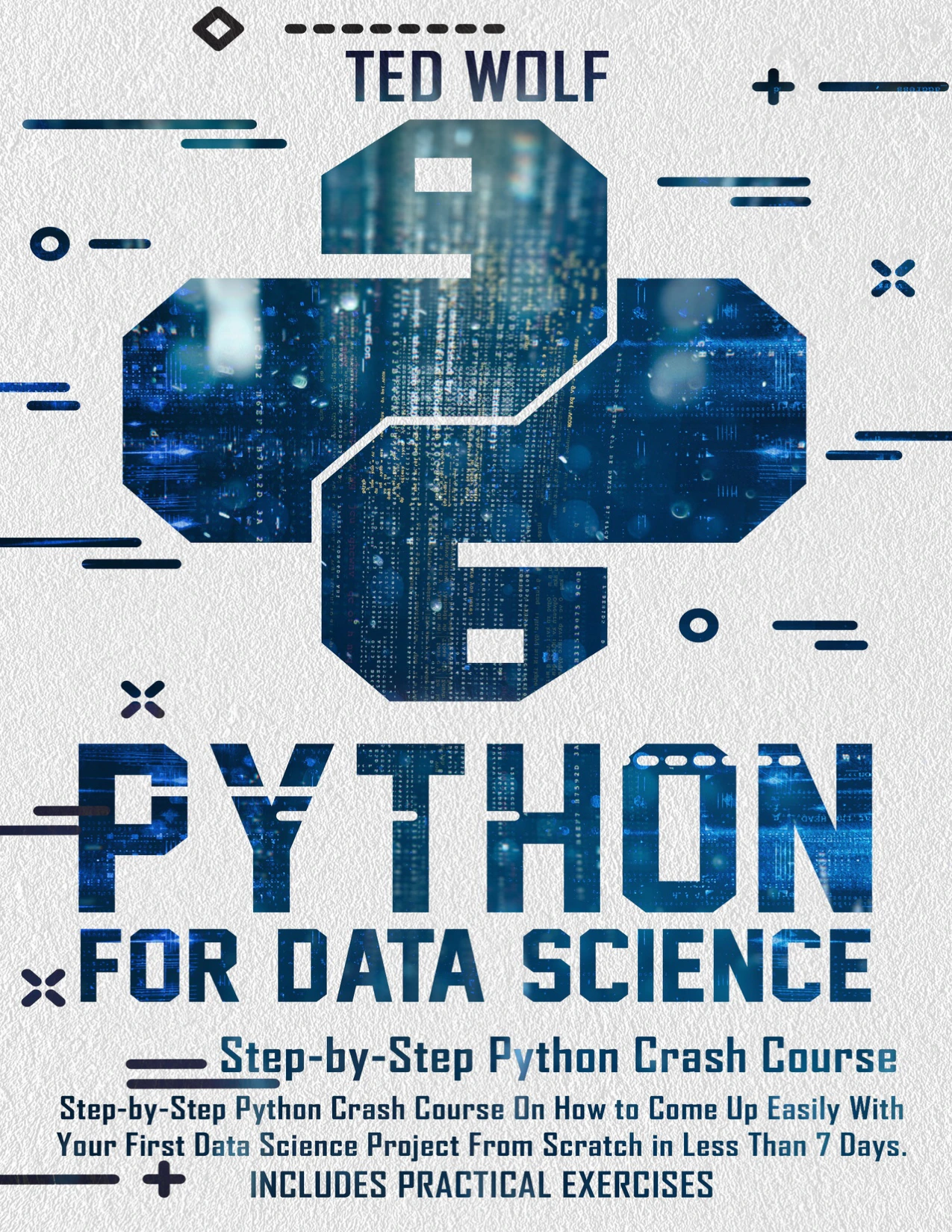
By Ted Wolf
Learners ready to practise Python in a data-science context.
3. Learn core machine-learning concepts
Start with the distinction between examples used to train a model and new examples used to check it. Learn what a feature is, what a target is, and how a model’s settings affect its predictions. Concepts such as overfitting matter because a model can appear to perform well on the examples it has already seen yet be less useful on unfamiliar data.
Move through simple, interpretable methods before trying more complex ones. The goal is not to memorize a long list of algorithms. It is to understand what problem a method addresses, what information it needs, and how you will judge its output.
4. Train, test, and evaluate models
A basic machine-learning workflow has several connected steps:
- Define the question the model should help answer.
- Inspect and prepare the data, including the target you want to predict.
- Separate data for training from data for evaluation.
- Fit a model using the training portion.
- Measure its performance on data it did not train on.
- Review errors and limitations before deciding what to change.
Evaluation depends on the task. A classification model and a model that predicts a numerical value do not necessarily use the same performance measure. Choose a measure that matches the question, and explain in plain language what it does and does not tell you.
5. Choose a specialization after the basics
Once you can complete a small machine-learning workflow, decide which direction interests you. Neural networks are a natural next step for learners who want to study deep learning. Generative AI is another possible direction, but its tools and practices change quickly; choose learning material that matches the specific system and task you want to understand.
Build a First AI Project That You Can Explain
Choose a small prediction task with data you can inspect and a result you can explain. For example, use a suitable labelled dataset to predict one of a few categories. The point is not to pick a supposedly perfect beginner project; it is to complete the full process and understand each step.
Keep a short project record that answers these questions:
- What question is the model attempting to answer?
- What does each row represent, and which columns are inputs or target?
- How did you divide the data for training and evaluation?
- Which measure did you use to evaluate the result, and why?
- What kinds of examples does the model get wrong?
- What does the dataset leave out, and where might the model fail?
Do not judge the project only by whether the model produces an output. A useful beginner project includes a sensible evaluation and an honest note about its limitations. This is more instructive than adding complexity before you know whether the first approach works.
How Much Math Do You Need?
You can begin practical machine learning with basic mathematics and build more theory as your goals require it. Comfort with arithmetic, proportions, graphs, and reading simple formulas is a helpful starting point. You can learn more about probability, statistics, linear algebra, and calculus when a particular model or explanation calls for them.
Expectations vary by course and subject. An introductory applied project may emphasize using and evaluating models, while a deeper study of neural networks may require more mathematical explanation. Avoid treating one universal math threshold as a gate: learn the math connected to the problems you are trying to solve, and return to fundamentals whenever a concept is unclear.
Common Beginner Mistakes to Avoid
- Starting with the most advanced topic: build enough Python and data-handling skill to understand the code before exploring complex neural networks or generative systems.
- Watching without practising: pause to change examples, predict what code will do, and write small programs of your own.
- Skipping data inspection: errors or unexpected patterns in the data can undermine a model regardless of the algorithm.
- Evaluating on training data alone: a model’s performance on examples it has already seen does not show how well it will handle new ones.
- Installing packages without checking compatibility: use current library guidance and an isolated project environment.
- Confusing a working demo with a reliable system: a successful example does not establish that a model will behave well in every setting.
Choosing Books and Learning Resources
Choose a resource for the next skill you need rather than trying to study every AI topic at once. These catalog-listed titles cover different stages; they are examples of topic fit, not a ranking of quality or a promise of learning outcomes.
| Learning stage | Catalog resource | Why it may fit |
|---|---|---|
| New to Python | Python Programming: The Fundamental Beginner’s Guide to Learning Python | The catalog describes a beginner introduction that starts with setup and covers core programming foundations. |
| Moving toward data science | Python for Data Science: Step-by-Step Crash Course | Its listed topics include Python setup, data structures, scikit-learn, and practical exercises. |
| Learning applied machine learning | Python Machine Learning By Example, Fourth Edition | The catalog description emphasizes practical examples and topics such as data preparation, training, evaluation, and tuning. |
| Ready to study neural networks | Programming Neural Networks with Python | This later-stage title covers implementing networks and working with deep-learning topics and tools. |
| Exploring language-model applications | The Practical Guide to Large Language Models | The catalog describes coverage of transformers, model evaluation, retrieval-augmented generation, agents, and model training; it is a specialization resource, not a prerequisite for Python basics. |
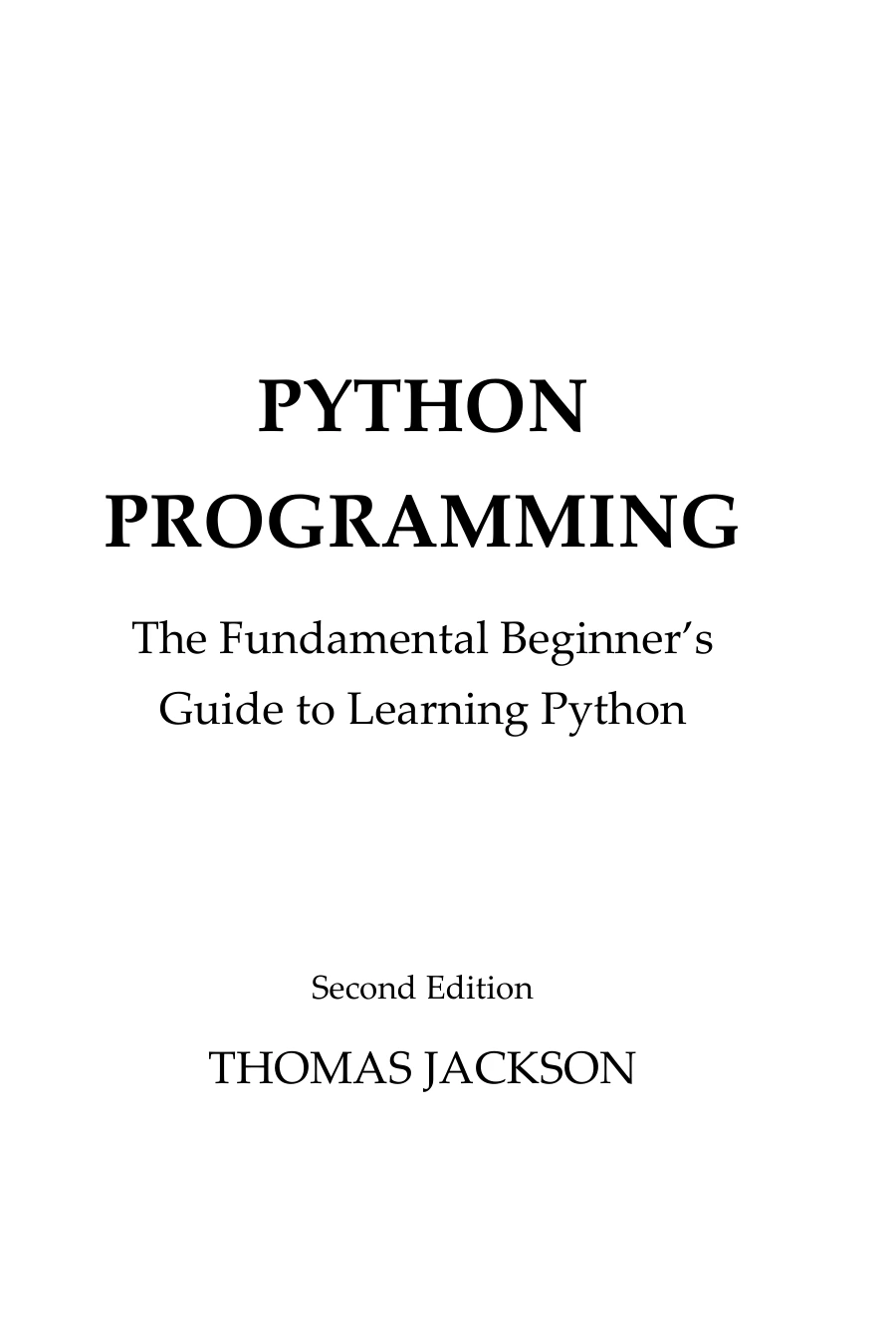
Python Programming: The Fundamental Beginner’s Guide to Learning Python
Readers new to programming who want an introductory path through Python basics.
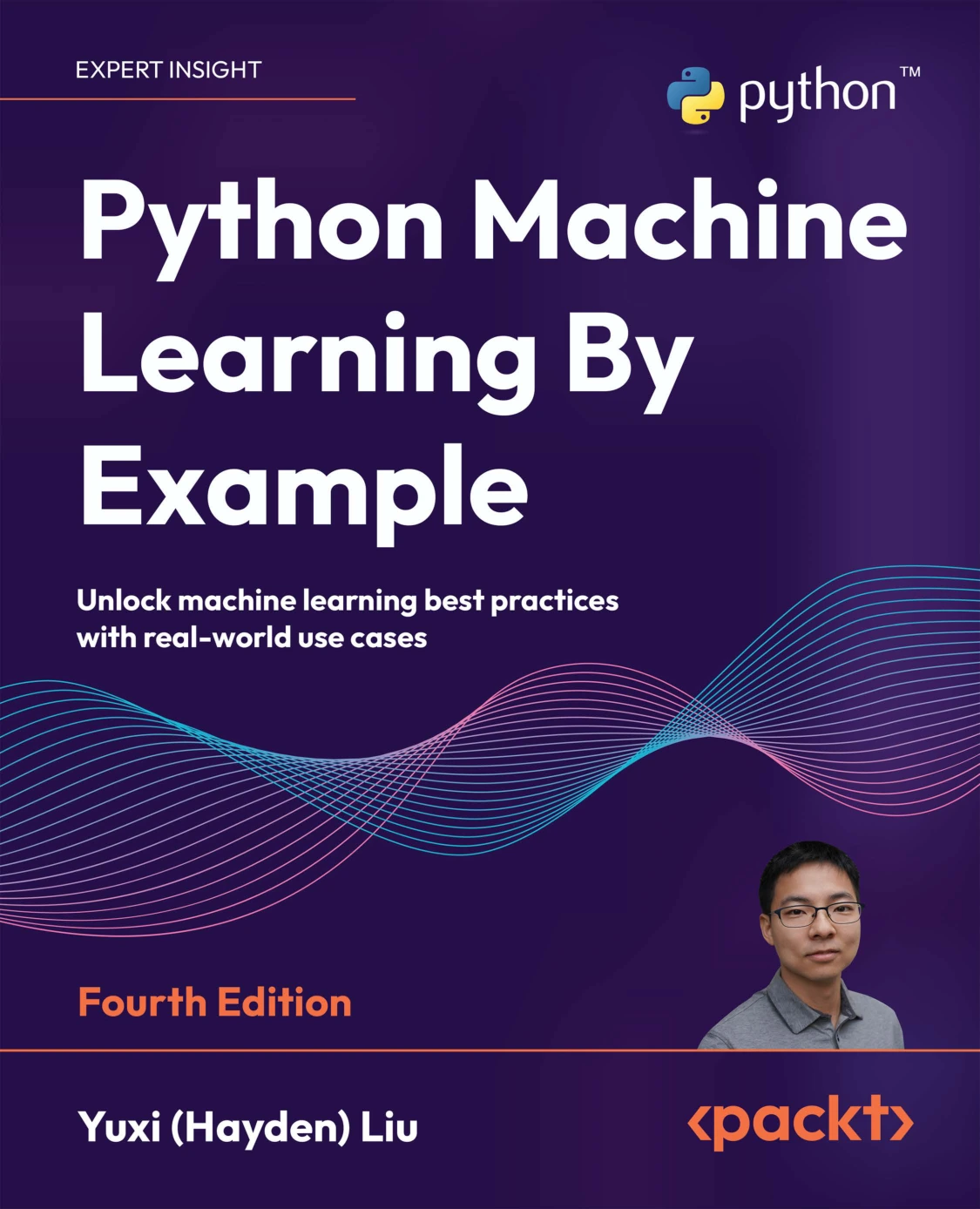
Python Machine Learning By Example, Fourth Edition
Readers with enough Python foundation to begin applied machine-learning examples.
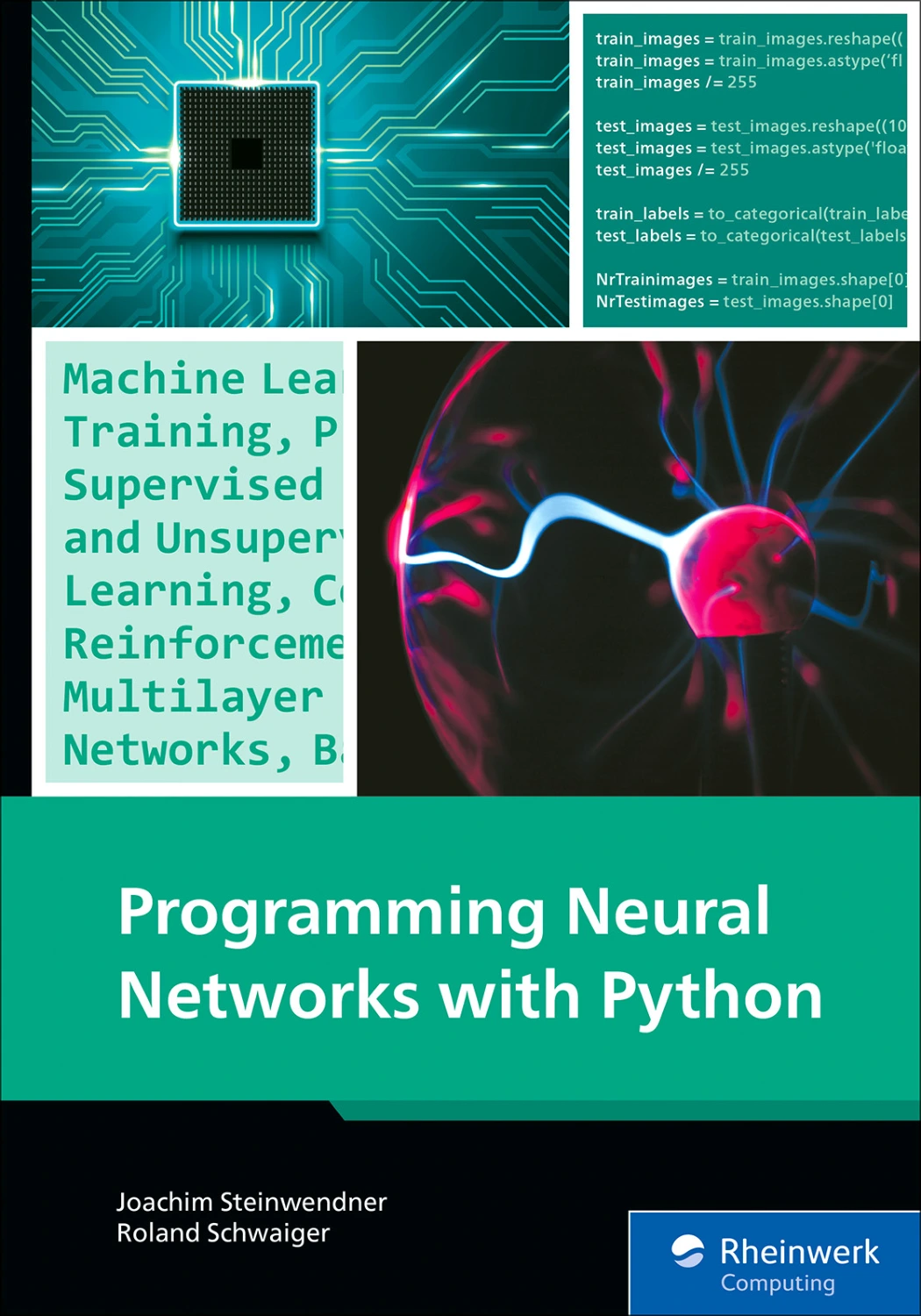
Programming Neural Networks with Python
Learners who have moved beyond Python and basic machine-learning foundations.
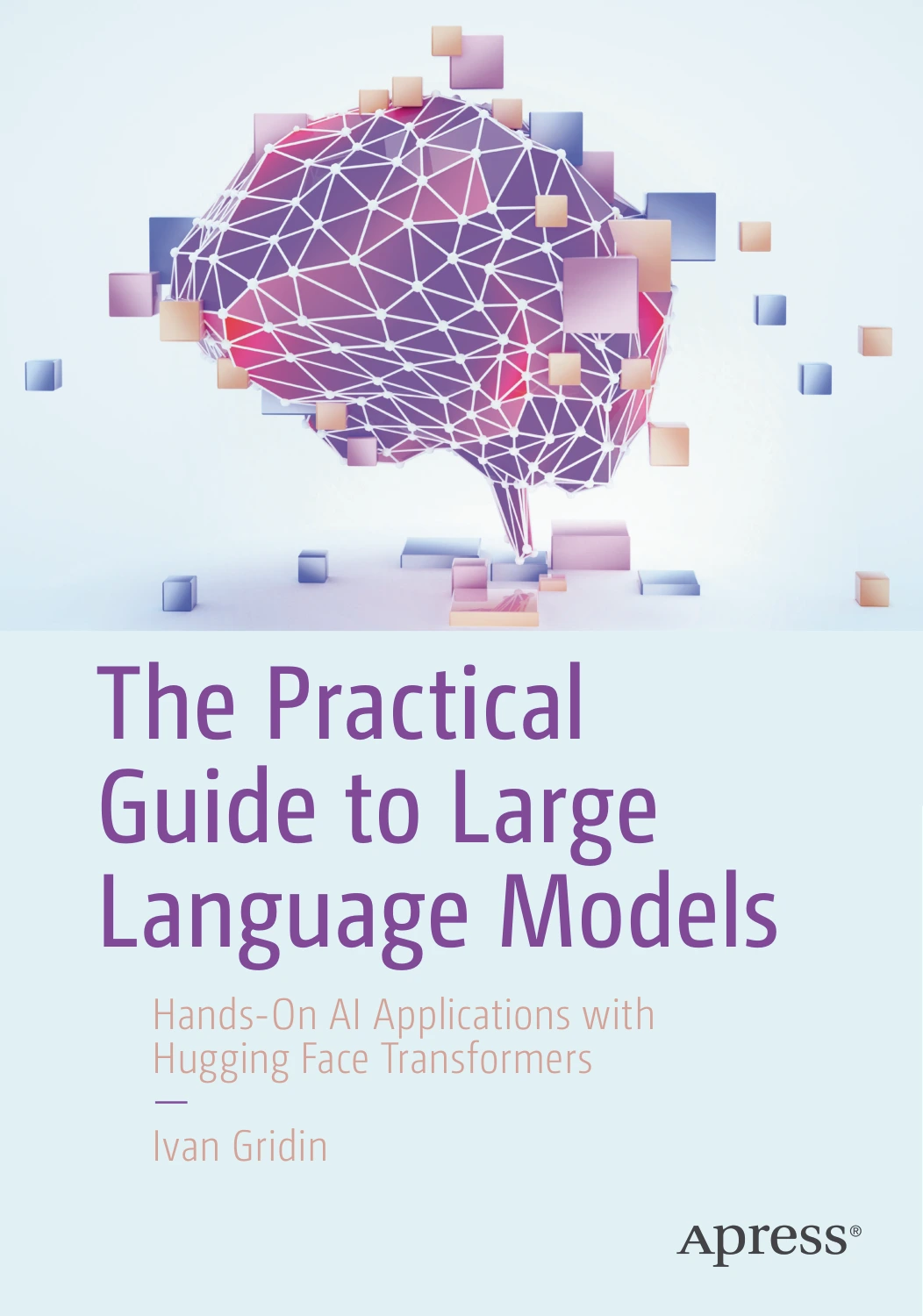
By Ivan Gridin
Readers interested in transformers, RAG, agents, and model training after foundational programming.
If you want to browse more programming titles, the Python books and resources category groups related catalog items. Check each title’s scope against your current level before choosing what to study next.
Frequently Asked Questions
Do I need to learn Python before studying AI?
If you are completely new to programming, learn basic Python first. You do not need to master the whole language, but you should be able to follow small programs, use functions and collections, and debug simple errors. If you already program, learn the Python features needed for your chosen AI material.
How much math do I need to learn AI with Python?
Basic math is enough to begin introductory applied projects. As you study particular models, add the relevant statistics, probability, linear algebra, or calculus. The amount depends on whether your goal is to use models, understand their mechanics, or study them mathematically.
What should my first AI project be?
Choose a small prediction task with understandable data and a clear way to check the result. Complete the full workflow—prepare data, separate training and evaluation data, train a model, measure performance, and describe limitations—before adding more complexity.
Should I start with machine learning or generative AI?
There is no single required starting point for everyone. For someone learning programming from scratch, basic Python and a small conventional machine-learning project provide useful foundations in code, data, and evaluation. If your main interest is generative AI, first learn enough Python to understand the examples, then choose focused material for the particular models or applications you want to explore.
Conclusion: Finish One Small Project First
To learn AI with Python from scratch, build your skills in stages: learn the programming basics, practise working with data, train a small model, and evaluate it on examples it has not seen during training. Keep the first project modest and make sure you can explain its inputs, results, and limits. Once that complete workflow feels understandable, you will have a stronger foundation for exploring neural networks or generative AI.