
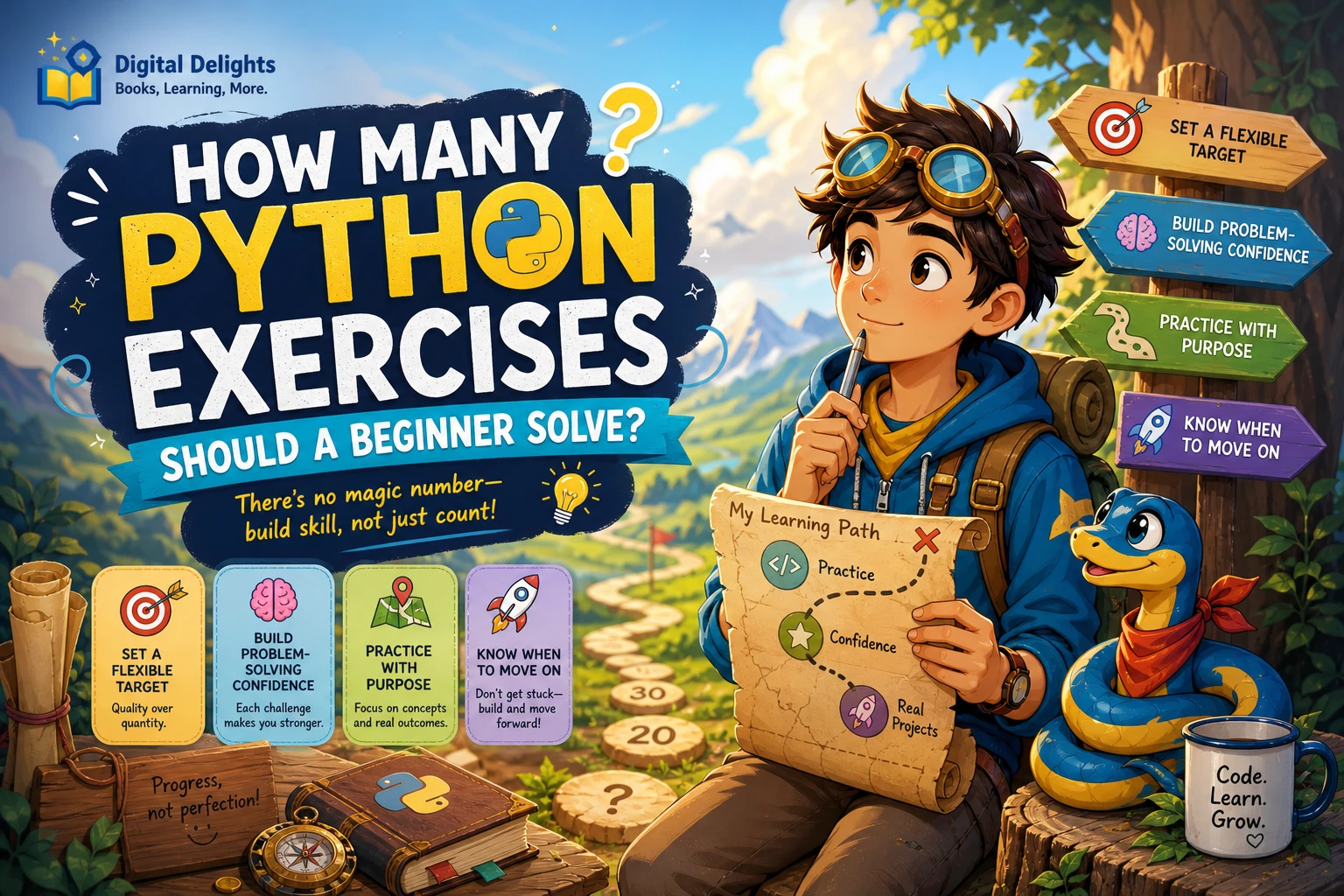
How Many Python Exercises Should a Beginner Solve?
If you are learning Python, it is easy to wonder whether you have solved enough exercises to move on. There is no established number that works for every beginner. A practical starting point is to try a few focused problems on one concept, then change one part of a problem or use that concept in a small program. Treat the number as a planning aid, not a pass mark.
What matters is whether you can work through a problem, explain your approach, and handle a small variation without relying on a copied solution. This guide offers a flexible way to plan practice and decide when to revisit a topic.
How many Python exercises should a beginner solve?
Start with about three to five focused exercises on a topic as a practical session-sized target. This is editorial guidance, not a research-backed quota. If the problems are still unfamiliar or you need substantial help, do fewer and take time to understand them. If you can solve them independently, try a variation or a small project instead of collecting more near-identical answers.
The official Python tutorial encourages hands-on work but does not set an exercise quota. It is also written for people who already have some general programming understanding, rather than as a complete introduction to programming from scratch. That distinction is one reason a single number would not fit every learner (Python Tutorial; Whetting Your Appetite).
Why the right amount varies
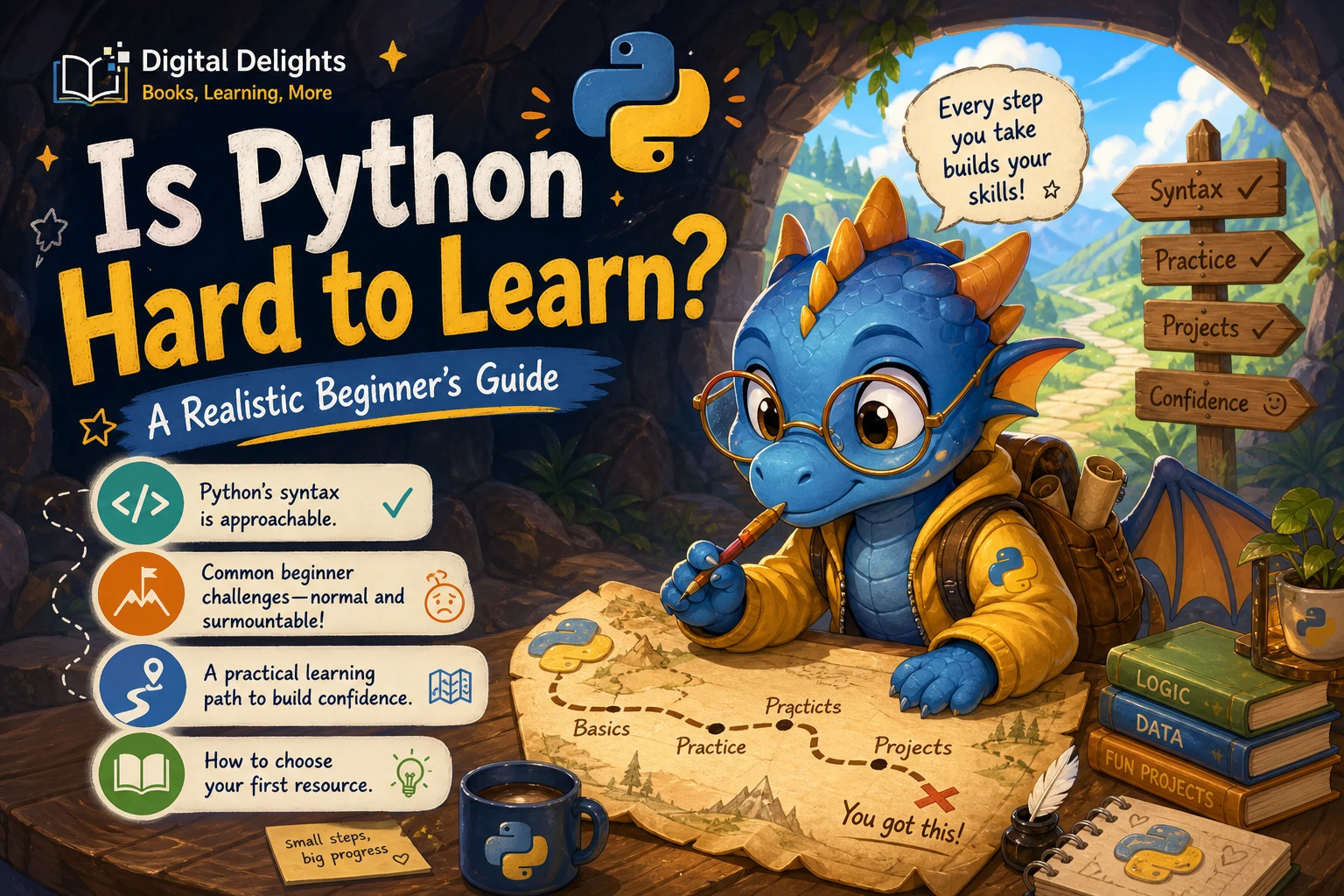
Exercise count is only one part of practice. The time a learner needs depends on what they already know, how challenging the task is, and how much support they use while solving it.
You are new to programming
If variables, conditions, loops, and functions are all new, you are learning both Python syntax and how to break a task into steps. Work through examples slowly. It is normal to need more attempts, hints, or review before a solution feels clear. Make sure you understand what the code does rather than aiming to finish a fixed number of problems.
You already know another language
If you have programmed before, familiar ideas such as loops and functions may come more quickly. You may need fewer introductory problems but still benefit from practicing Python-specific features and habits. Focus on what is genuinely new instead of repeating material you can already apply.
Some topics need more practice than others
A short task using a familiar data type may be straightforward, while a problem that combines loops, lists, and functions can require more thought. The number of exercises is therefore less useful than noticing where your understanding becomes uncertain. Spend extra time on that part and use a simpler example if needed.
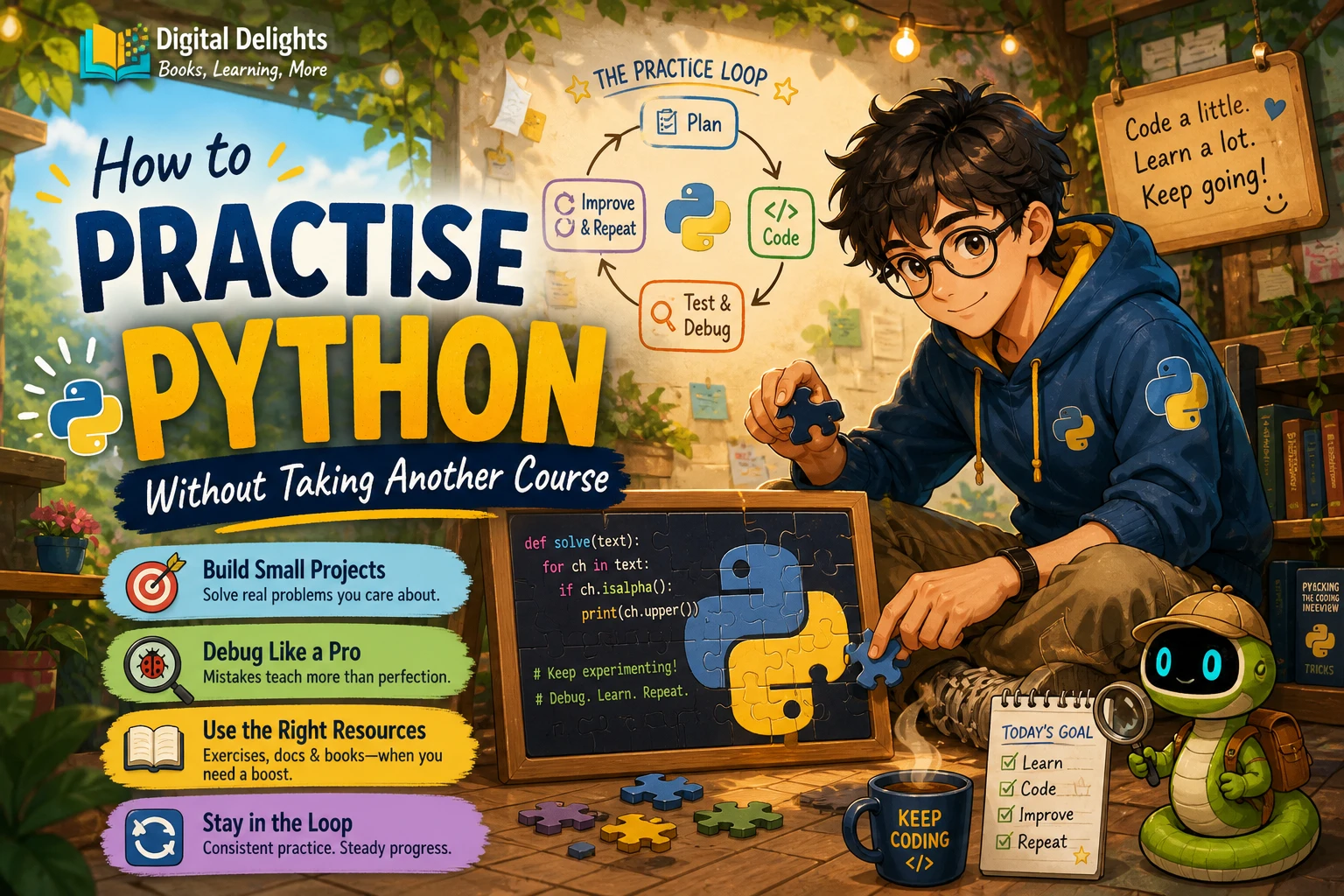
A practical way to structure Python practice
Use this sequence as an adjustable routine. It is a practical planning suggestion, not a scientifically established formula.
- Choose one concept. Pick a specific skill, such as writing a conditional, looping through a list, or defining a function.
- Try a few focused problems. Start with roughly three to five. Read each prompt carefully and attempt a solution before looking at hints.
- Review what happened. If a problem was difficult, identify the exact point where you got stuck. Revisit the relevant concept or make a smaller test case.
- Change one detail. Adjust an input, add a constraint, or handle an extra case. This checks whether you can adapt the idea rather than only repeat a memorized answer.
- Connect concepts. When the basics feel manageable, make a small program that uses more than one skill, such as a number-guessing game or a simple list-based tracker.
Keep the session short enough to stay attentive. A few carefully attempted problems can be more useful than a long set completed while rushing or copying solutions.
How do you know when to move on?
Use independence, not a completed-problem total, as your main signal. Before moving to a new topic, see whether you can:
- Describe what the problem asks in your own words.
- Choose an approach and explain why it should work.
- Write a solution without copying a worked example line by line.
- Test the result with a normal input and at least one different or edge-case input.
- Make a small change to the task and adjust your code accordingly.
You do not need to do all of this perfectly on the first attempt. If you can explain the solution after reviewing it but cannot yet produce it independently, revisit the idea later. Returning to a problem after a break can help reveal whether you understand the method or only remember the previous code.
Common Python practice mistakes
Chasing a large exercise count
A completed total does not show how much you understood. Solving a few varied problems and explaining your reasoning gives you a more useful check than racing through many similar prompts.
Reading the solution too soon
When you get stuck, pause to restate the goal, write down what you know, and try a smaller example. If you do consult a solution, close it afterward and recreate the approach from memory. Then alter the task so you must apply the idea again.
Repeating only familiar problems
Repetition can help, but repeating only comfortable tasks may hide gaps. Include a mix: a problem you can solve quickly, one that makes you think, and a small variation on something you have already learned.
Practising isolated syntax without combining ideas
Individual exercises help you learn specific tools, but small programs show how those tools work together. After practicing a concept, try using it alongside something you already know—for example, a loop that processes a list or a function that checks user input.
Where can you find beginner Python exercises?
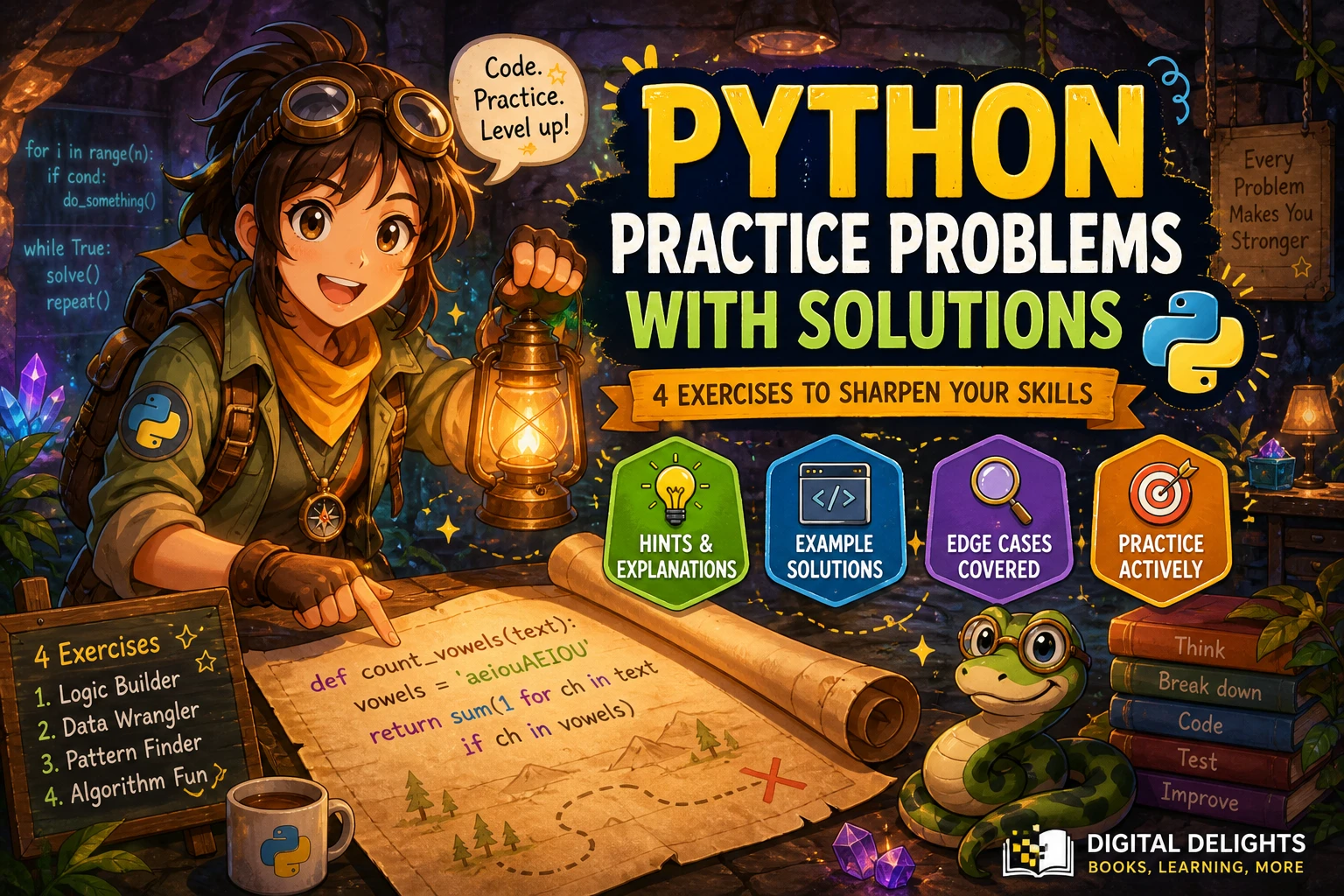
Choose exercises that match what you have learned and provide enough explanation to help you understand errors. If you want a dedicated collection of short practice problems, Python Programming Exercises, Gently Explained is listed as a set of 42 exercises. That number describes the book’s contents; it is not a recommended minimum or a universal learning target.
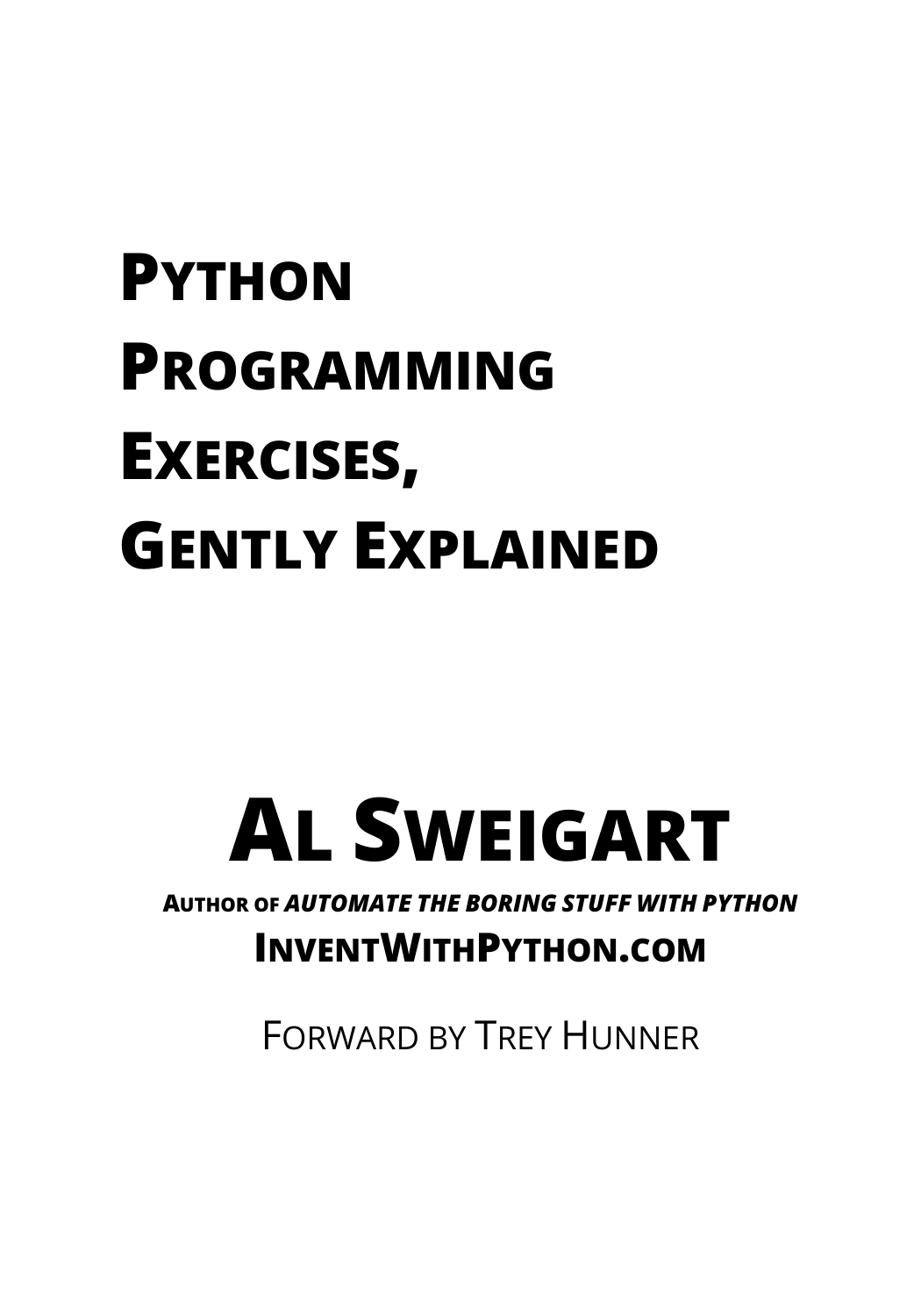
Python Programming Exercises, Gently Explained
By Al Sweigart
Beginners who want a collection of 42 Python exercises; the count is presented as the resource’s scope, not a learning quota.
Use a practice resource selectively: attempt problems before reading guidance, note recurring sticking points, and return to a difficult question after studying the relevant concept. Browse the Python book and learning-resource collection if you are looking for other Python materials.
Frequently asked questions
Is there a minimum number of Python exercises I need to solve?
No established minimum applies to every beginner. Use a few problems to check a concept, then judge your progress by whether you can explain and adapt your solution. If you are still depending heavily on examples, keep practicing that skill before moving on.
Should I repeat Python exercises?
Yes, when repetition serves a purpose. Revisit a problem if you relied on hints, could not explain your approach, or want to test your understanding after a break. Change an input or requirement so you practice adapting the solution rather than simply reproducing it.
How do I know if I am ready to build a small Python program?
You can begin as soon as you can combine a few basics, even if you still need to look things up. Pick a small, clear goal, divide it into steps, and test each part. A project is also practice; you do not have to finish every exercise in a workbook first.
Is three to five exercises a proven target?
No. It is a flexible starting suggestion for planning a practice session, not a threshold validated by the sources cited here. Adjust it to the difficulty of the topic, your prior experience, and how independently you can solve the problems.
Sources and further reading
- The Python Tutorial — describes the tutorial’s intended audience and encourages practical engagement with Python.
- Whetting Your Appetite — introductory documentation that points readers toward trying Python hands-on.
These documentation sources do not establish a universal exercise count or compare practice routines. The suggested session size and move-on checklist in this article are practical editorial guidance, not research findings.
Conclusion
There is no fixed number of Python exercises every beginner must solve. Try a few focused problems, review where you struggled, and test your understanding with a variation or small program. Move on when you can explain your approach and adapt it; revisit a topic when you still need to follow a solution closely. A useful practice target is one that supports understanding, not one that simply increases your count.