
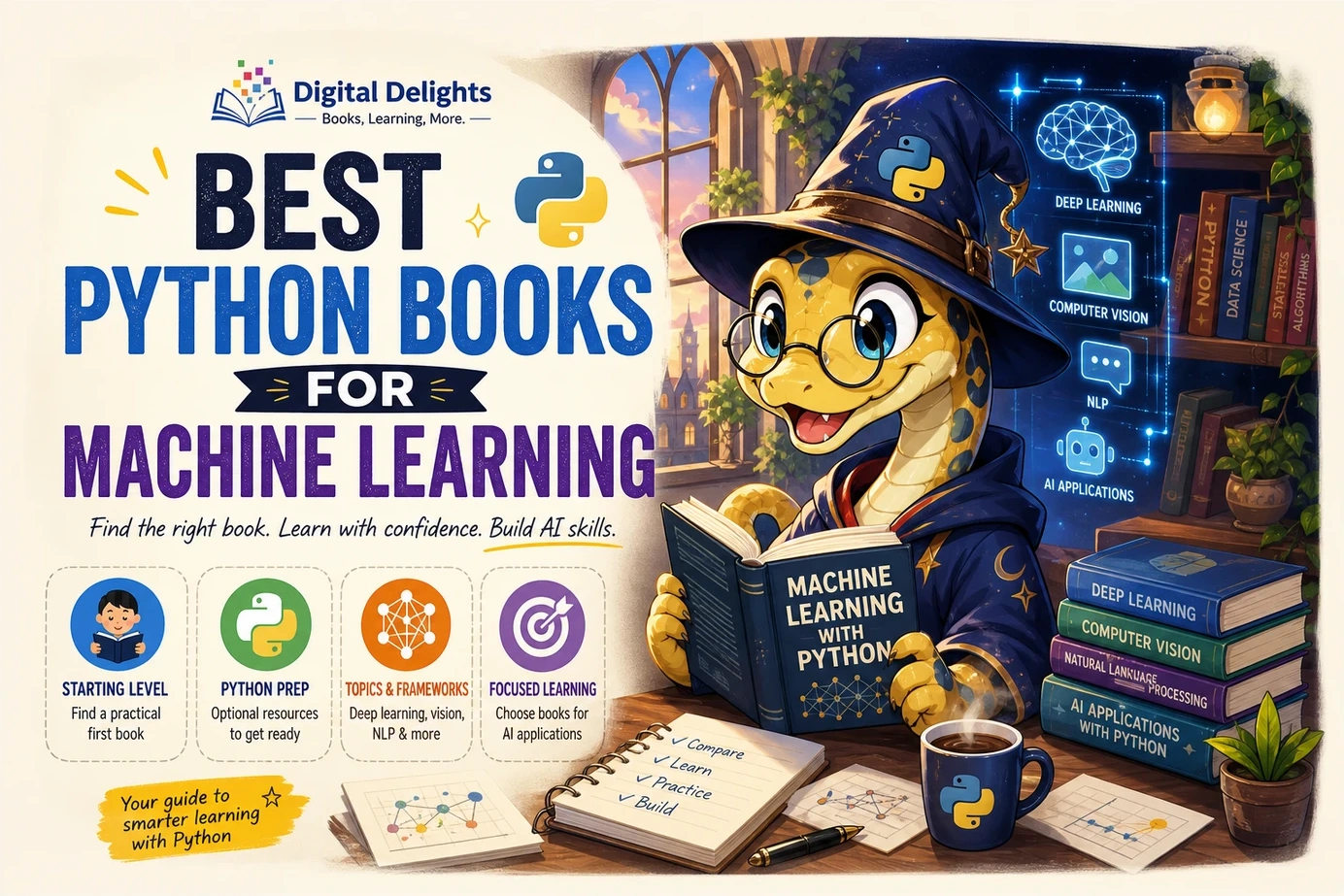
Best Python Books for Machine Learning
The best Python books for machine learning are the ones that start where your current skills end. A book that introduces regression and data preparation can help a Python learner build a first model; a deep-learning text may be a better fit for someone ready to work with neural networks. Neither is automatically the right choice for a complete programming beginner.
For a practical introduction to conventional machine learning, consider Oliver Theobald’s Machine Learning with Python: A Practical Beginners’ Guide. For a dedicated deep-learning path, consider Deep Learning with Python, Third Edition by François Chollet and Matthew Watson—provided you already have intermediate Python skills.
This guide compares relevant Digital Delights catalog titles by scope and reader needs, then explains how to choose an edition and turn your reading into practical work. These are editorial fits based on documented coverage, not tested rankings or claims of superior learning outcomes.
Best Python books for machine learning at a glance
Start by identifying whether you need programming preparation, a first machine-learning workflow, or a specialist subject. The prerequisites below distinguish stated requirements from suggested preparation.
| Book and edition | Suitable reader | Main focus | Preparation | Main caveat |
|---|---|---|---|---|
| Machine Learning with Python: A Practical Beginners’ Guide, first edition — Oliver Theobald | Python learners beginning machine learning | Data preparation, validation, regression, classification, and tree-based methods | Basic Python is sensible preparation; a Python appendix is included | Current example compatibility is not established here |
| Python Bootcamp: A Rapid Crash Course Featuring Q&A Sessions, Exercises, and Projects — Vaskaran Sarcar | Readers new to programming | Python foundations through explanations and practice | Beginner-oriented | A preparation resource, not a dedicated ML book; opening setup coverage focuses on Windows |
| Deep Learning with Python, Third Edition — François Chollet and Matthew Watson | Python users starting neural-network work | Keras, neural networks, vision, language, and generative AI | Publisher states intermediate Python; no prior ML or linear-algebra experience required | Deep-learning-focused rather than a first survey of conventional ML |
| Deep Learning with Structured Data — Mark Ryan | Intermediate learners interested in tabular projects | Data preparation, Keras modeling, experimentation, and deployment | Intermediate Python and ML experience | A specialized project path, not general programming preparation |
| Deep Learning for Vision Systems — Mohamed Elgendy | Learners interested in image-based problems | Neural networks, CNNs, image classification, and object detection | Python fluency is sensible preparation | Check the file edition: the catalog also contains a separate early-access manuscript |
| Deep Learning for Natural Language Processing — Stephan Raaijmakers | Learners focusing on text and language | Embeddings, sequence models, attention, Transformers, and BERT | Python and basic neural-network familiarity are sensible preparation | Specialist NLP coverage rather than a general ML introduction |
| Hugging Face in Action — Wei-Meng Lee | Python developers building AI applications | Pretrained models, datasets, fine-tuning, language, vision, and application workflows | Catalog identifies Python developers familiar with NumPy and pandas | Application-oriented; not a substitute for learning model evaluation fundamentals |
You do not need all seven. For most self-directed learners, one core book and an independently completed project are a more manageable starting point than a stack of overlapping resources.
Choose a book that matches your starting point
If you are new to programming, build Python skills first
“Beginner machine learning” does not always mean “beginner programming.” A chapter can explain a model from scratch while still expecting you to understand functions, imports, indexing, and error messages.
Python Bootcamp: A Rapid Crash Course Featuring Q&A Sessions, Exercises, and Projects by Vaskaran Sarcar is an optional preparation choice. Its catalog description emphasizes Python setup, runnable examples, Q&A sessions, exercises, and projects. That makes it relevant when syntax and basic execution—not algorithms—are your immediate obstacle.
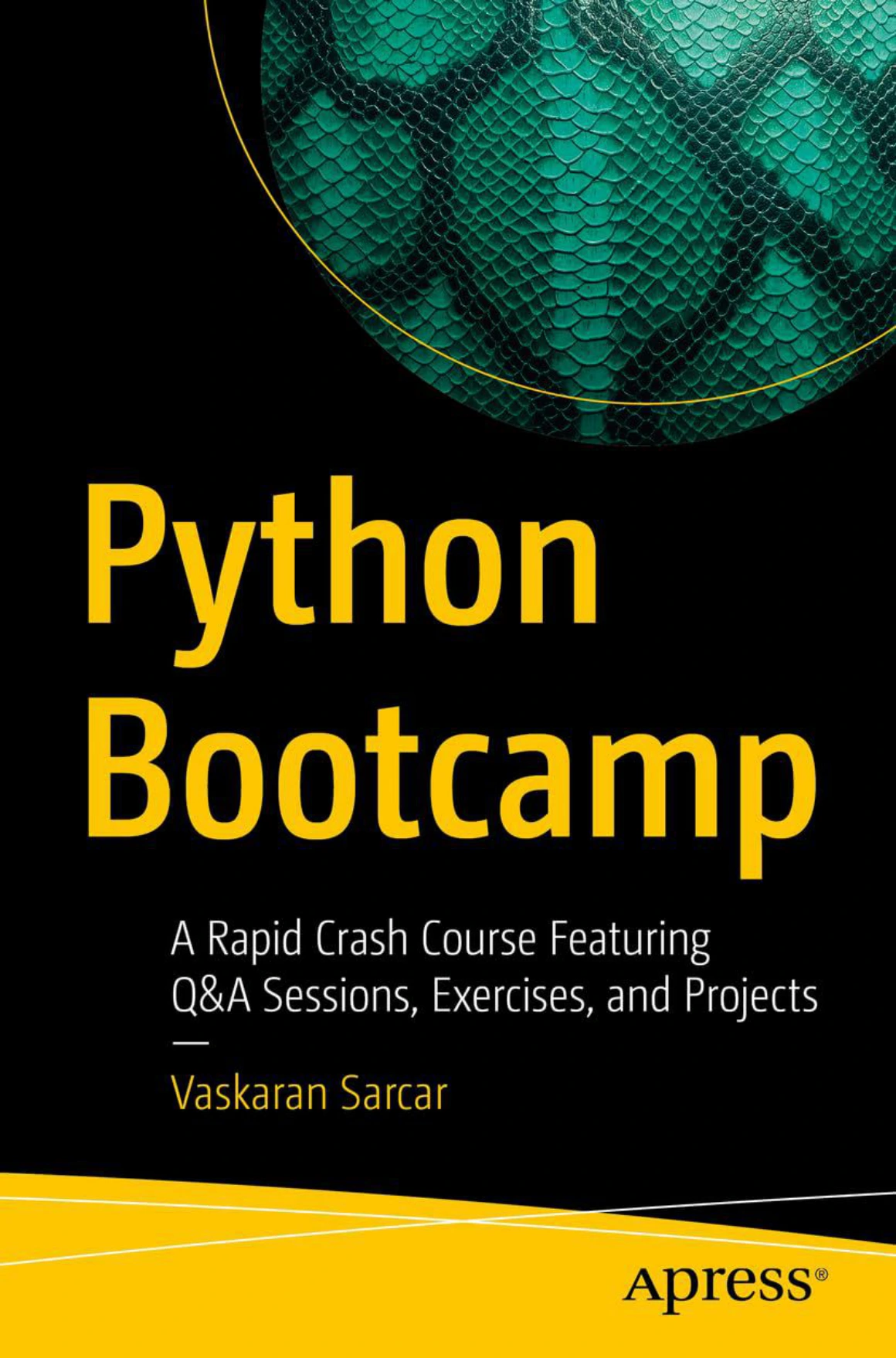
Python Bootcamp: A Rapid Crash Course Featuring Q&A Sessions, Exercises, and Projects
New programmers who want explanations, runnable examples, Q&A sessions, exercises, and projects.
Before moving into ML, try to complete these tasks without copying an entire solution:
- Write a function that accepts inputs and returns a result.
- Use lists and dictionaries to organize small collections of data.
- Read a file and inspect its contents.
- Import a package and understand how it is being used.
- Read an error traceback and locate the line that needs attention.
This is a readiness checklist, not a demand to master every part of Python. You can continue improving your programming while learning to work with data.
If you know basic Python, start with the modeling workflow
Machine Learning with Python: A Practical Beginners’ Guide by Oliver Theobald is the clearest practical starting option in this catalog selection for conventional machine learning. Its documented sequence moves from the development environment into exploratory data analysis, data cleaning, split validation, and model design.
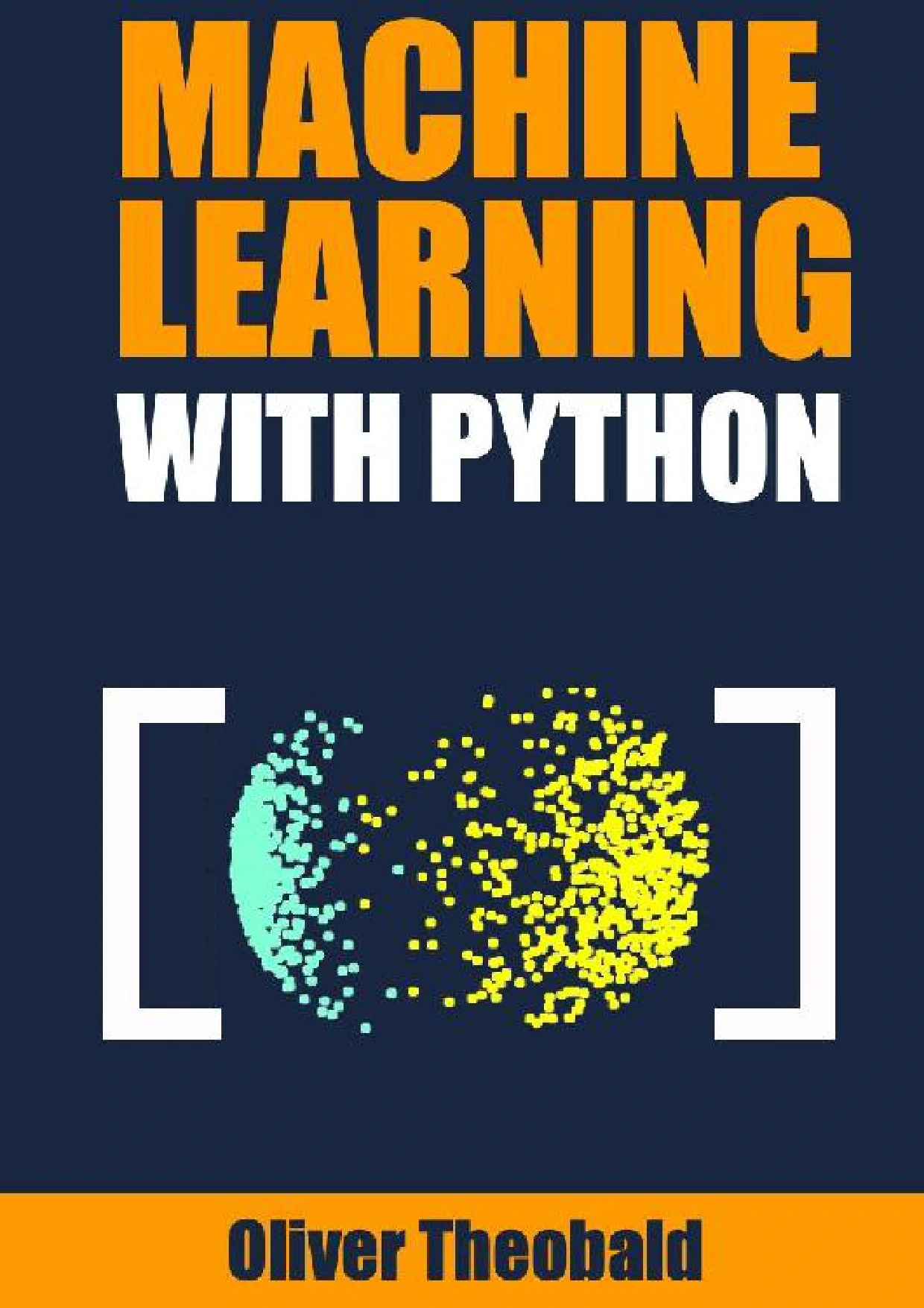
Machine Learning with Python: A Practical Beginners’ Guide
Python learners ready to connect data cleaning, validation, and model design with foundational algorithms.
The algorithm coverage includes linear regression, logistic regression, support vector machines, k-nearest neighbors, and tree-based learning methods. This gives a beginner several approaches to compare while keeping the surrounding workflow visible.
Why that matters: choosing an algorithm is only one part of an ML project. You also need to decide what the target represents, which data is available when a prediction is made, and how to evaluate the result. A workflow-led introduction helps you ask those questions before treating model training as the whole task.
The book includes a Python appendix, but that does not establish that it replaces a full programming course. Choose it when you can already follow basic scripts, or pair your reading with focused Python practice. Check the example environment before assuming that every older code snippet will run unchanged.
If you want neural networks, choose a deep-learning introduction
Deep Learning with Python, Third Edition by François Chollet and Matthew Watson is a suitable core choice when your goal is specifically deep learning. The catalog describes a progression from tensors, gradients, and model evaluation to vision, time series, language models, and generative AI.
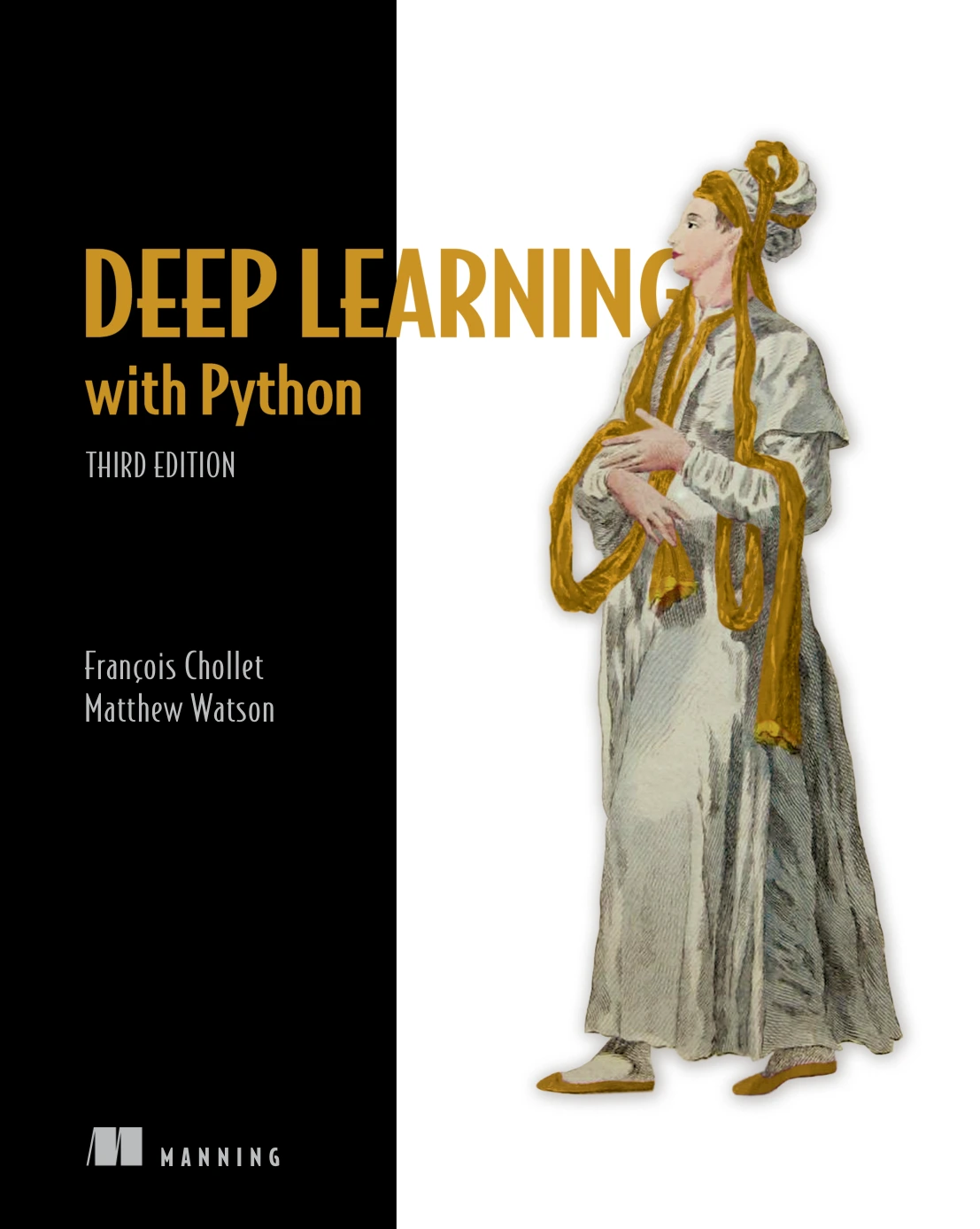
Deep Learning with Python, Third Edition
Intermediate Python users seeking a progression from deep-learning foundations to vision, language, and generative applications.
The publisher’s description of the third edition states that readers need intermediate Python, but not previous machine-learning or linear-algebra experience. It also identifies Keras 3 coverage and introductions to PyTorch, JAX, and TensorFlow. Those details are more useful for choosing the book than the word “beginner” alone.
This is not necessarily the first purchase for someone who wants to learn straightforward classification or regression on spreadsheet-like data. It becomes a stronger fit when you want to understand neural-network training and work toward image, text, or generative tasks.
Do not interpret the framework coverage as a requirement to learn every tool at once. Follow the book’s main learning path before branching into another implementation stack.
Which specialist book should you read next?
A specialist resource makes sense when you can name the kind of problem you want to solve. Choose by data type and project goal, rather than by how advanced a title sounds.
For tabular-data projects: Deep Learning with Structured Data
Deep Learning with Structured Data by Mark Ryan follows a Toronto transit dataset and a streetcar-delay prediction project. Its documented coverage connects exploration, cleaning, transformation, Keras model construction, experimentation, and deployment.
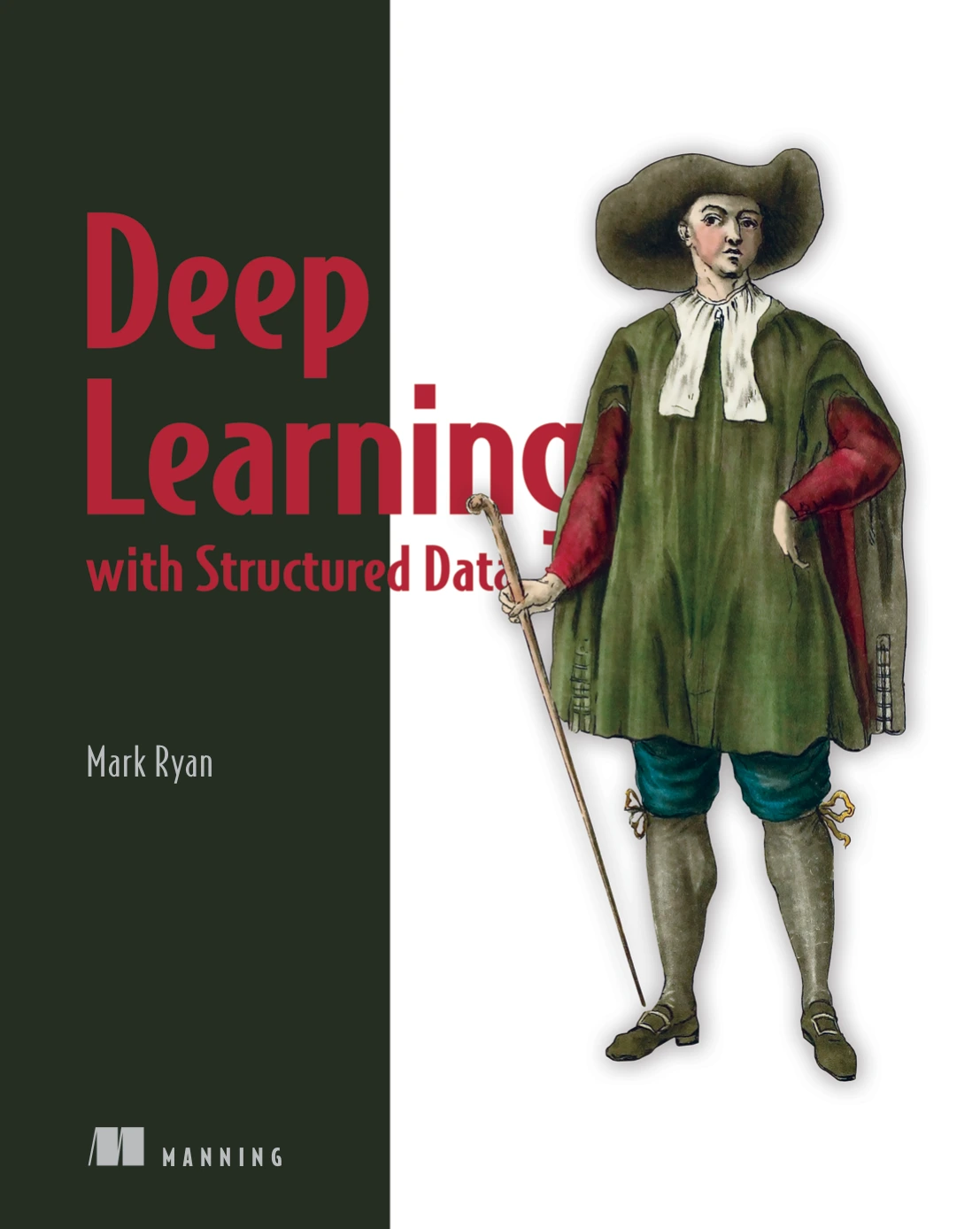
Deep Learning with Structured Data
By Mark Ryan
Readers with intermediate Python and ML experience who want a Keras project spanning preparation, experimentation, and deployment.
This can suit readers with intermediate Python and machine-learning experience who want to follow an applied project across several stages. It is not the first choice for learning Python syntax, and its focus should not be mistaken for evidence that neural networks are always the best approach to tabular data.
A useful companion exercise is to build a simpler baseline for your own dataset before deciding whether a more complex model is worth investigating.
For images: Deep Learning for Vision Systems
Deep Learning for Vision Systems by Mohamed Elgendy connects image preparation, neural-network foundations, convolutional networks, training decisions, and practical vision tasks. The catalog describes guided projects alongside coverage of image classification, transfer learning, and object detection.
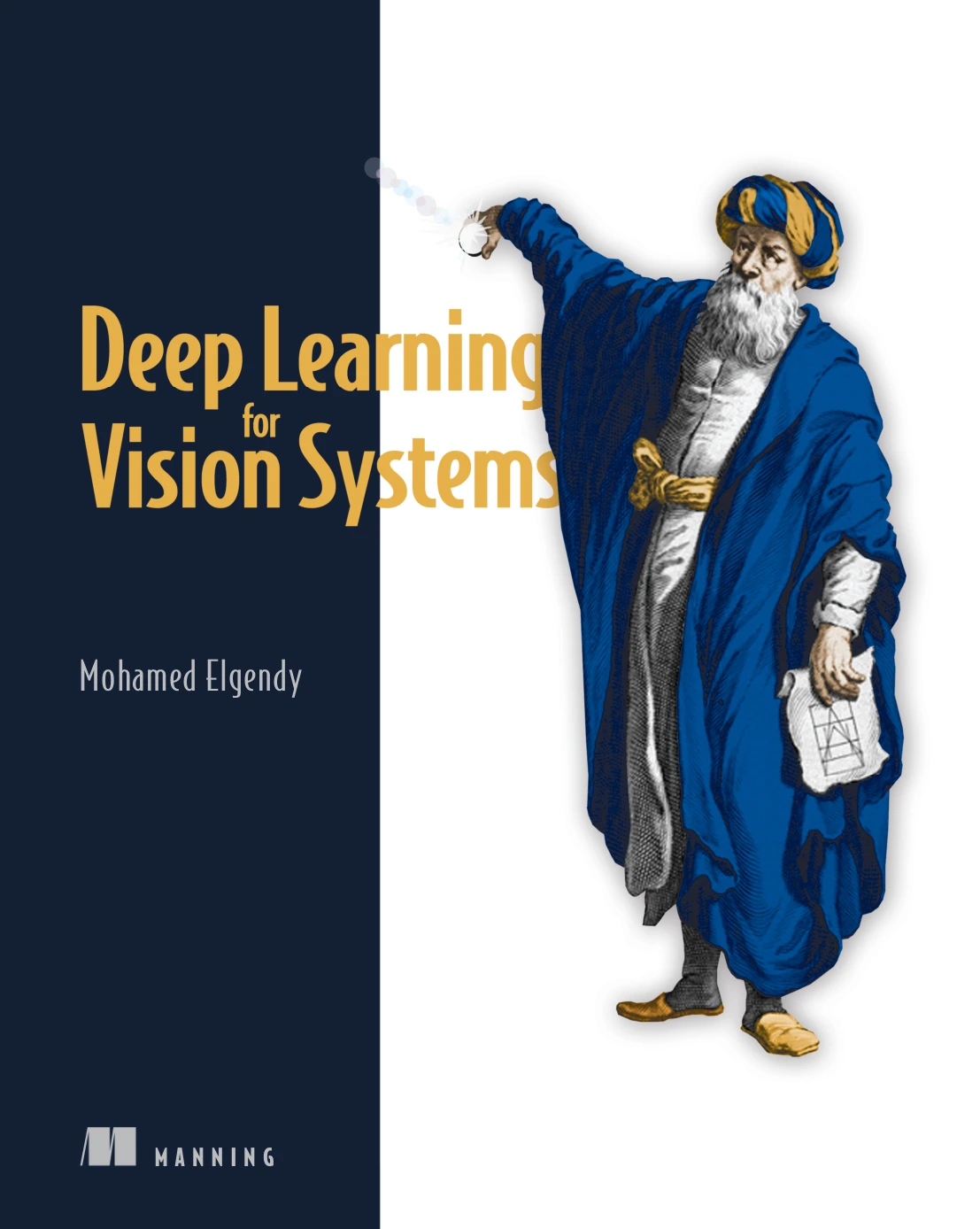
Deep Learning for Vision Systems
Learners interested in image preparation, convolutional networks, classification, transfer learning, and object detection.
Choose it when your questions concern images: how to prepare them, how models learn useful representations, and how to evaluate predictions. Python fluency is sensible preparation, though a precise publisher prerequisite was not established in the supplied research.
Edition caution: the catalog contains a separate Manning Early Access Program Version 6 manuscript with the same title. The link above points to the completed-book listing, not that early-access file. Do not assume the two files have identical contents.
For language models and text tasks: Deep Learning for Natural Language Processing
Deep Learning for Natural Language Processing by Stephan Raaijmakers develops language representations and neural approaches through topics including Word2Vec, Doc2Vec, sequence models, attention, Transformers, and BERT.
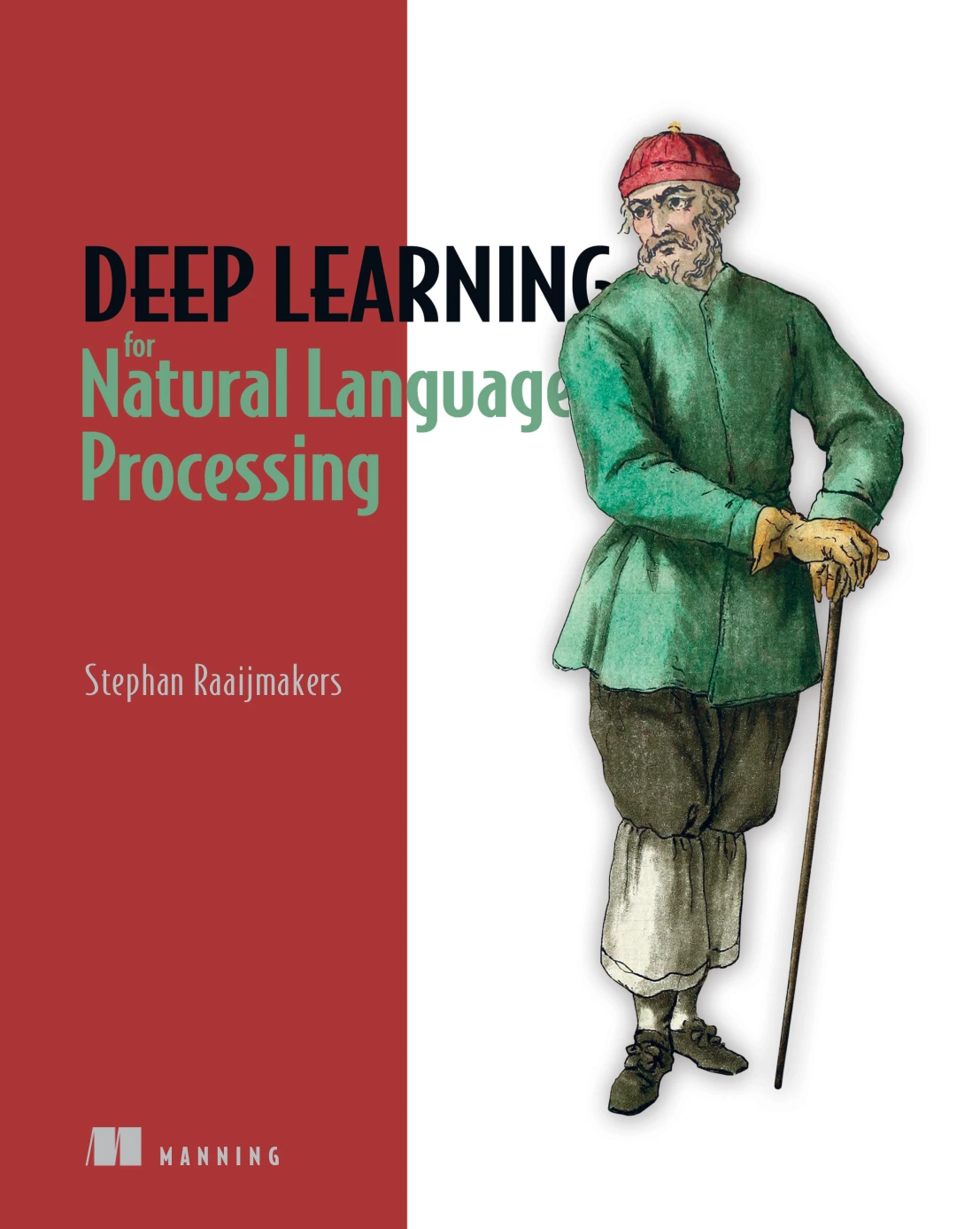
Deep Learning for Natural Language Processing
Readers who want to connect embeddings, attention, Transformers, and BERT with text-focused tasks.
Its documented applications include question answering, text classification, authorship analysis, and linguistic tagging. That makes it relevant when you want to understand how language is represented and modeled, rather than simply connect an application to a text-generation service.
It is a specialist next step. Familiarity with Python and basic neural-network concepts is useful preparation, not a verified formal prerequisite from the supplied research.
For pretrained models and applications: Hugging Face in Action
Hugging Face in Action by Wei-Meng Lee focuses on using the Hugging Face ecosystem across models, datasets, language, vision, and application development. The catalog identifies Python developers who know NumPy and pandas as its audience.
Coverage includes pipelines, dataset preparation, fine-tuning, multimodal models, and application tools such as LangChain and LlamaIndex. Consider it when you want to build with pretrained models and connect them to useful workflows.
Its role differs from a first ML textbook: learning how to assemble an AI application is not the same as learning how to assess whether its outputs are reliable. Keep evaluation and error analysis in your project plan.
What should you check before choosing an edition?
A book can have an appropriate subject and still be awkward for your current setup. Inspect what is available before committing.
- A sample chapter: can you follow the explanations and code without repeatedly stopping to learn assumed concepts?
- Mathematical depth: does it explain notation, derive methods, emphasize implementation, or combine those approaches?
- Exercises: look for opportunities to make decisions yourself, not only reproduce finished examples.
- Companion code: check whether a repository or download is actually provided. Do not assume one exists.
- Environment instructions: look for package versions, dependency files, and a clear setup process.
- Errata: check for corrections to code and explanations.
- Hardware requirements: establish whether the exercises need local acceleration, a hosted environment, or paid services.
- Exact edition: confirm that the file, sample, and companion resources all refer to the same version.
A newer edition may cover different tools, but recency alone does not establish teaching quality. An older book may still explain valuable concepts while requiring more care with its environment. Current code compatibility and total compute costs have not been verified for these selections.
Turn one book into a practical learning plan
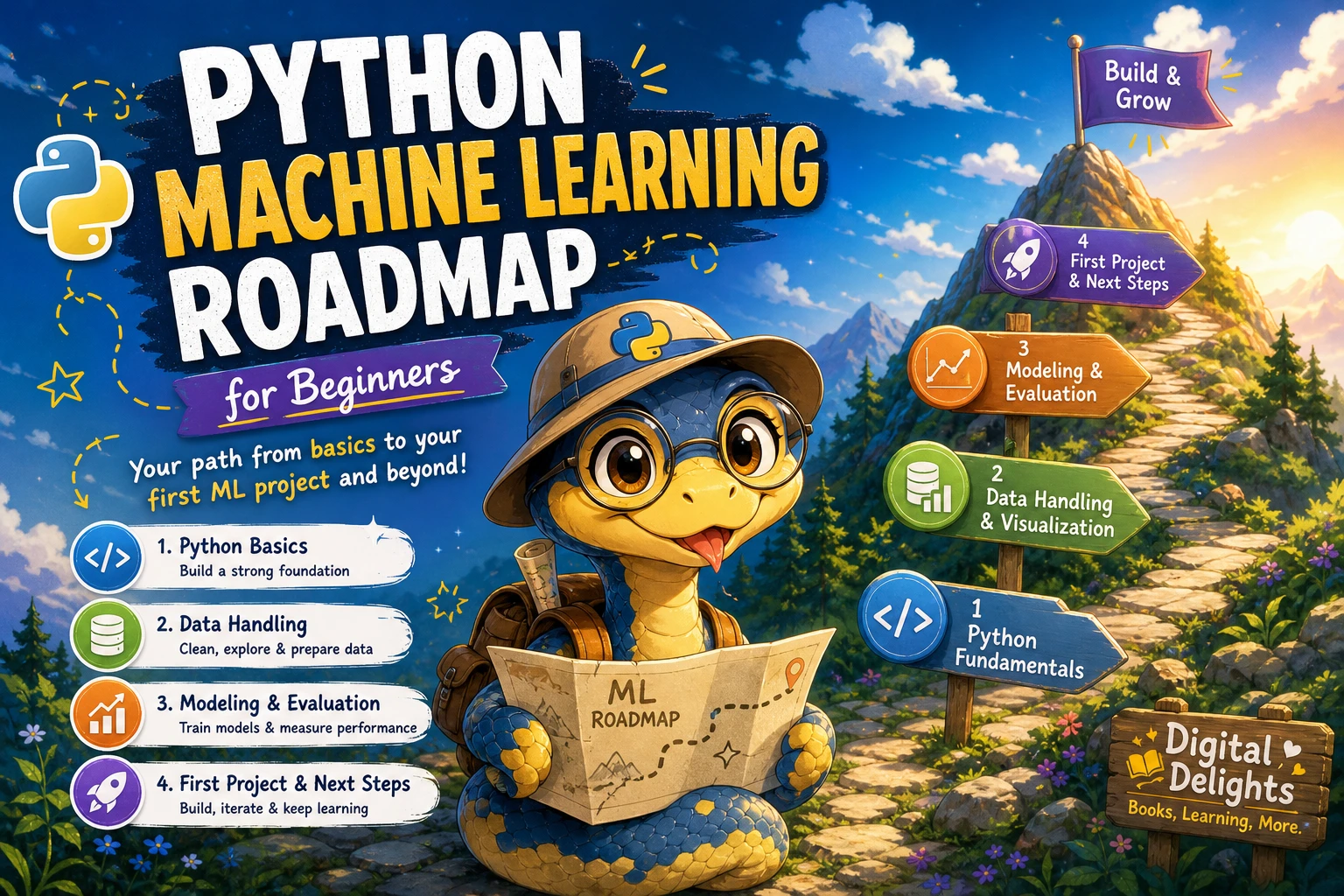
Use progress milestones rather than a fixed promise about how quickly you will learn. Each stage should leave you with something you can explain or reproduce.
- Establish Python readiness. Write small scripts and functions, load data, and resolve basic errors.
- Prepare a dataset. Identify the target, inspect columns, and document missing or questionable values.
- Build a baseline. Establish a simple reference result before experimenting with more elaborate models.
- Evaluate and inspect errors. Explain your data split, metric, and the kinds of predictions that went wrong.
- Choose a specialization. Move toward structured data, vision, NLP, or pretrained-model applications only when that direction serves your goal.
An illustrative first project: classify messages by topic
This is a suggested practice project, not a claim that every recommended book includes it. Use a small labeled dataset that you have permission to use, and avoid publishing private messages.
- Define the task: assign each message to a topic such as account access, billing, or technical support.
- Inspect the examples: look for inconsistent labels, duplicate messages, and ambiguous categories.
- Plan the split: decide how to keep related or duplicate examples from misleading your evaluation.
- Set a baseline: record what happens if you always predict the most common category.
- Train a simple model: use the relevant workflow from your core book.
- Review mistakes: examine which topics are confused and whether the labels themselves need clarification.
- Document the result: save your environment details, decisions, limitations, and reproducible steps.
The learning value comes from explaining your choices. A notebook that runs is useful; a notebook whose assumptions you understand is a stronger foundation for the next project.
Common mistakes when choosing machine-learning books
- Buying for an imagined future skill level. Choose a book you can work through now, with a manageable stretch.
- Confusing Python instruction with ML instruction. A general programming book can prepare you without being your main modeling resource.
- Starting several overlapping books. Finish a meaningful section and project before switching approaches.
- Skipping data preparation and evaluation. Do not read only the chapters with impressive model names.
- Treating copied code as understanding. Change an input, explain a parameter, or rebuild a small step independently.
- Assuming every example is inexpensive to run. Check hardware and service requirements before launching experiments.
Frequently asked questions
Can I start machine learning without knowing Python?
You can begin learning concepts, but a code-focused Python book will be easier to use after you understand basic scripts, functions, collections, and imports. If those are unfamiliar, use a programming preparation resource before making model-building your main focus.
How much mathematics do I need?
That depends on the book’s approach. You should be willing to work with notation and connect quantities to code. For Deep Learning with Python, Third Edition, the publisher explicitly states that previous linear-algebra experience is not required. That is a prerequisite statement, not a promise that the material contains no mathematics.
Should I choose scikit-learn, PyTorch, or Keras?
Choose the learning task first, then the stack. For conventional ML, investigate resources that teach data preparation, baseline models, and evaluation, including scikit-learn-focused material. For neural networks, choose a path organized around the framework you want to use. The third edition of Deep Learning with Python centers Keras and introduces several underlying framework options. Avoid learning multiple stacks simply to complete a checklist.
Are older machine-learning books still useful?
They can be useful for understanding algorithms and workflows, but separate conceptual value from executable-code compatibility. Check dependency instructions and errata, and do not assume older examples will run unchanged with your installed packages.
Do I need a GPU to learn from these books?
No single hardware requirement applies to the whole selection. Check the specific exercises and edition. The supplied evidence does not establish GPU needs or cloud costs for every title, so do not plan purchases or paid services around an assumed requirement.
Choose one core book, then practise
If you already understand basic Python and want a first practical ML workflow, start by considering Theobald’s guide. If neural networks are your goal and you meet the intermediate-Python requirement, consider Chollet and Watson’s third edition. If programming itself is still the obstacle, prioritize Python practice first.
The specialist titles at Digital Delights become more useful once you have a defined direction. Choose one core resource, keep notes on your decisions, and complete a project you can explain before adding another book.
Sources and selection notes
Book scope, authorship, and catalog edition distinctions are drawn from the supplied Digital_Delights_product_1008_1235.xlsx catalog; the individual product listings are linked where discussed. The intermediate-Python requirement and Keras 3 details for Deep Learning with Python, Third Edition are supported by the linked Manning publisher research.
These sources establish documented coverage and stated audience, not comparative learning outcomes. No firsthand testing, universal ranking, or verification that all examples run in current environments is claimed.