
How Important Is Python for Data Science?
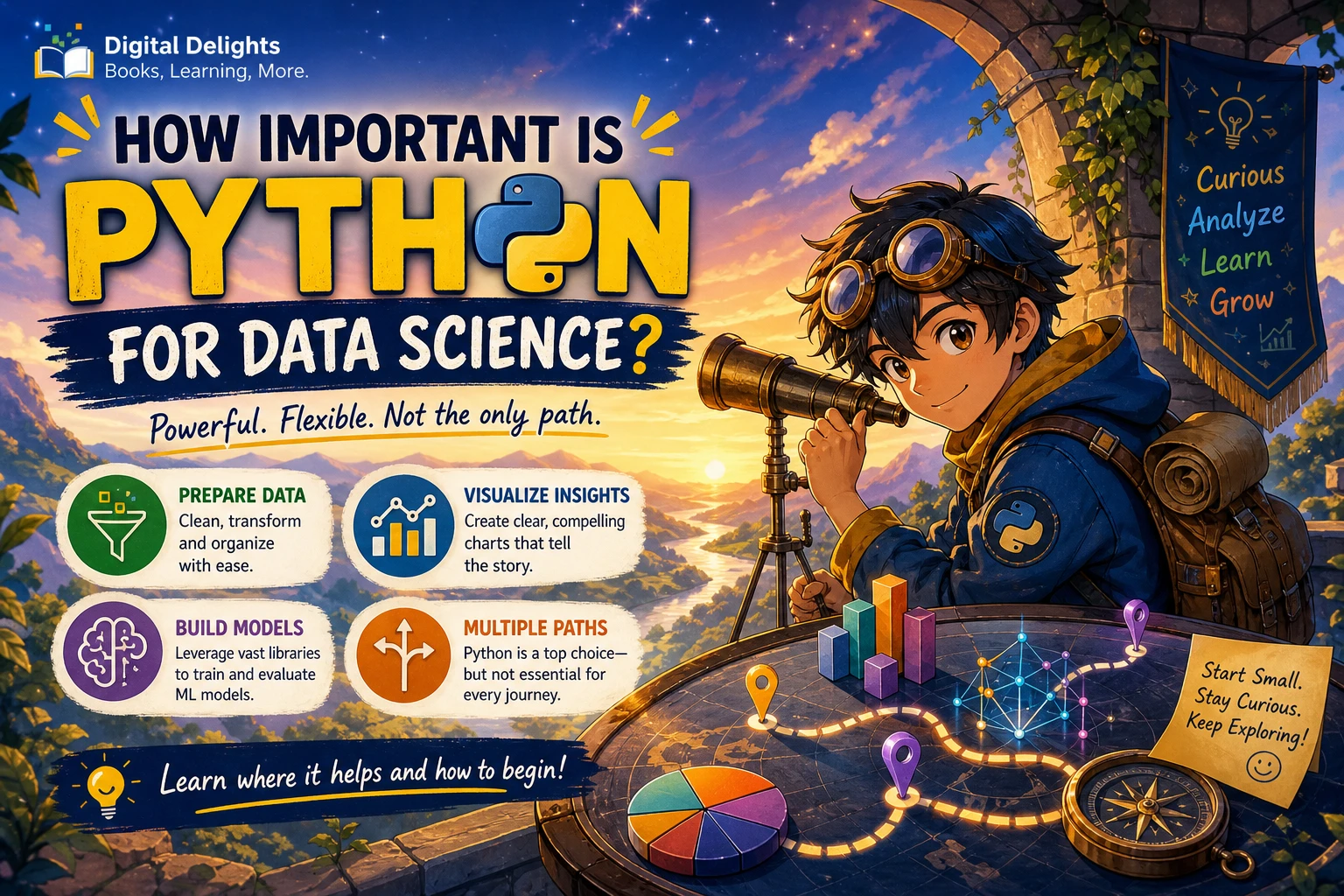
Python is highly useful for data science, but it is not a universal prerequisite for every role or task. It can connect data preparation, analysis, visualization, and machine learning in one flexible programming language. That makes it a practical choice for learners who want to build a broad technical toolkit. But Python does not replace statistics, subject knowledge, sound judgment, or the ability to explain results—and some work may call for other tools.
If you are deciding whether to learn Python, the useful question is not whether every data scientist must know it. It is whether Python fits the kind of data work you want to do. This guide explains where it helps, what it cannot do for you, and how a beginner can start learning it for data science.
What makes Python useful in data science?
Data science involves a sequence of tasks: bringing data into a usable form, exploring it, communicating patterns, and sometimes building models. Python can support all of these stages, with libraries adding capabilities beyond the language itself.
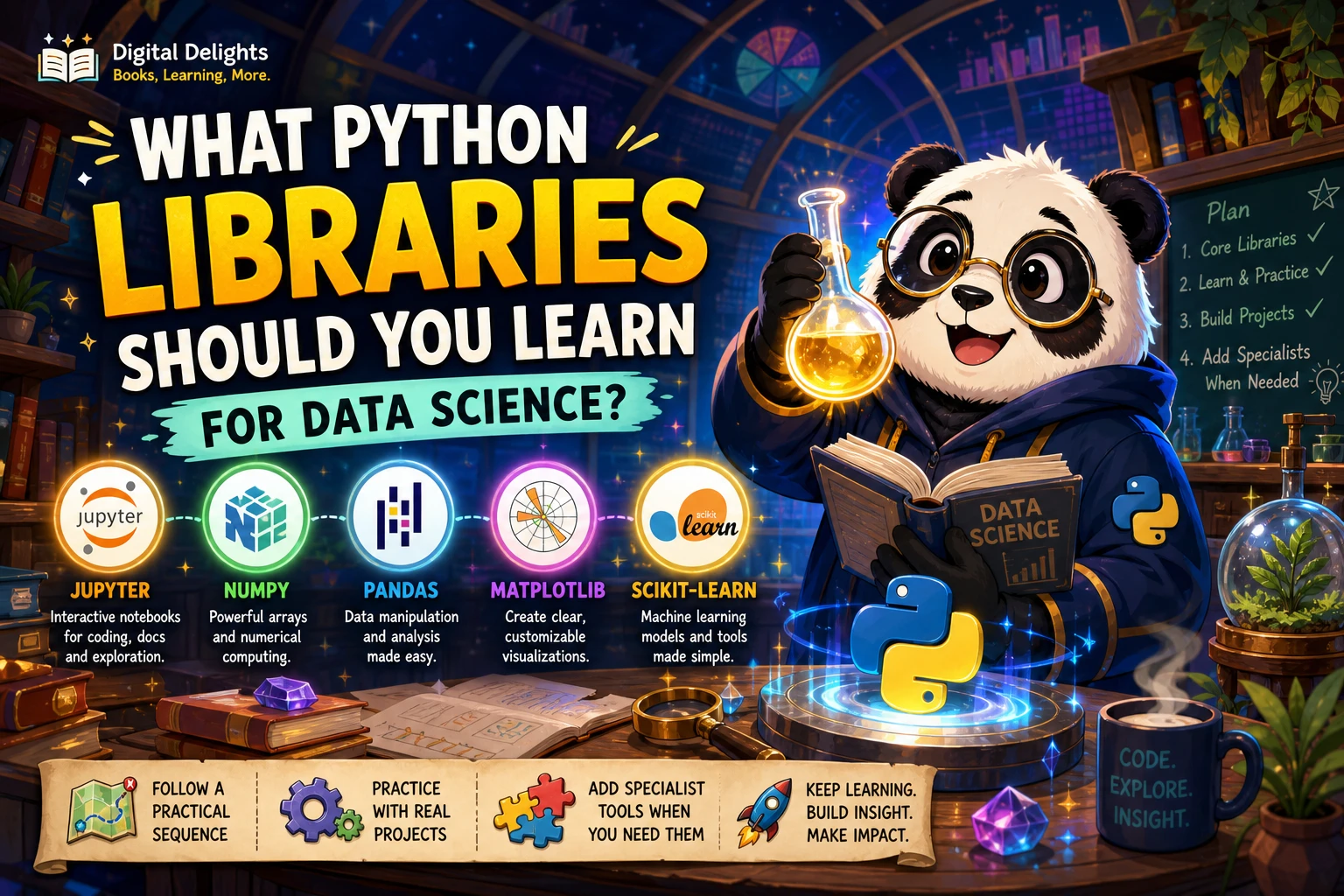
- NumPy supports numerical work and array-based operations.
- pandas provides tools for organizing, transforming, and analyzing tabular data.
- Matplotlib helps create charts and other visualizations.
- scikit-learn offers tools for common machine-learning workflows.
These libraries illustrate how Python can provide a connected path from working with data to visualizing it and exploring models. The Python Data Science Handbook, Second Edition covers IPython and Jupyter alongside NumPy, pandas, Matplotlib, and scikit-learn. That is an example of a coherent learning sequence, not proof that every workplace uses the same tools.
Python is also a general-purpose language. Once you know its fundamentals, you can use the same core skills in data analysis, automation, scientific computing, and other programming tasks. That flexibility is useful when your interests change or a project needs more than a spreadsheet.
What Python does—and what it does not replace
Python helps you express steps in a repeatable way: load a file, correct inconsistent values, calculate summaries, make a chart, or fit a model. It can make a workflow easier to rerun and adapt. The quality of the result, however, still depends on the questions you ask and the decisions you make.
Learning Python does not automatically teach you to:
- Choose an appropriate statistical method or interpret uncertainty.
- Recognize when data is incomplete, biased, or poorly suited to a question.
- Understand the subject area well enough to assess whether a result makes sense.
- Explain findings clearly to people who do not work with code.
These abilities develop alongside programming, not as a consequence of it. Treat Python as one part of a data-science toolkit rather than a substitute for analytical thinking.
Do beginners need programming experience before learning Python?
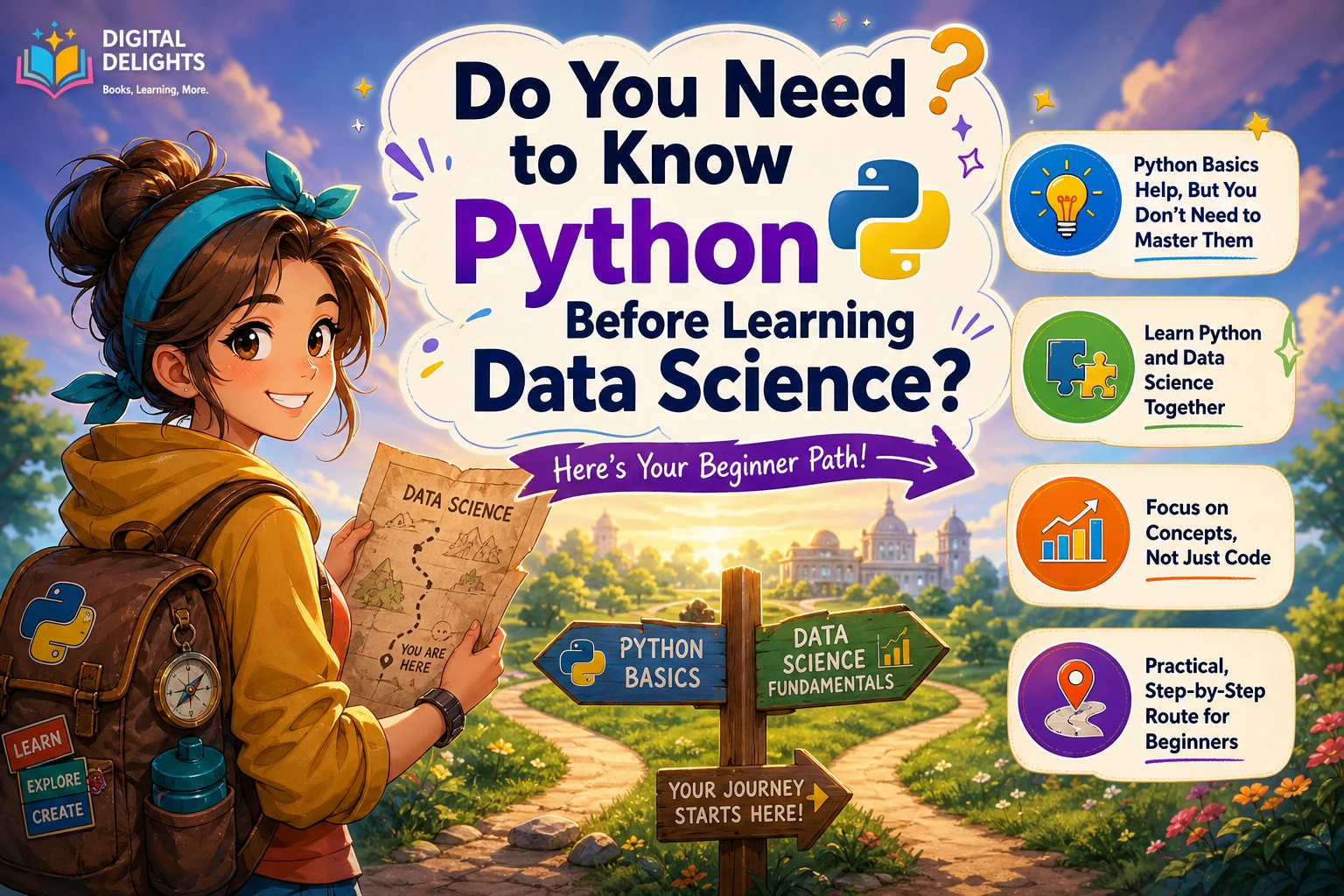
No prior programming experience is needed to begin learning Python. However, learning a programming language and learning programming concepts are slightly different tasks. If Python is your first language, you will be learning both at once: syntax and ideas such as variables, conditions, loops, functions, and data structures.
The official Python Tutorial introduces the language and its built-in data structures, but states that it assumes readers have a basic understanding of programming. Beginners can still use it as a reference; a step-by-step introductory course or book may be easier for learning programming from scratch.
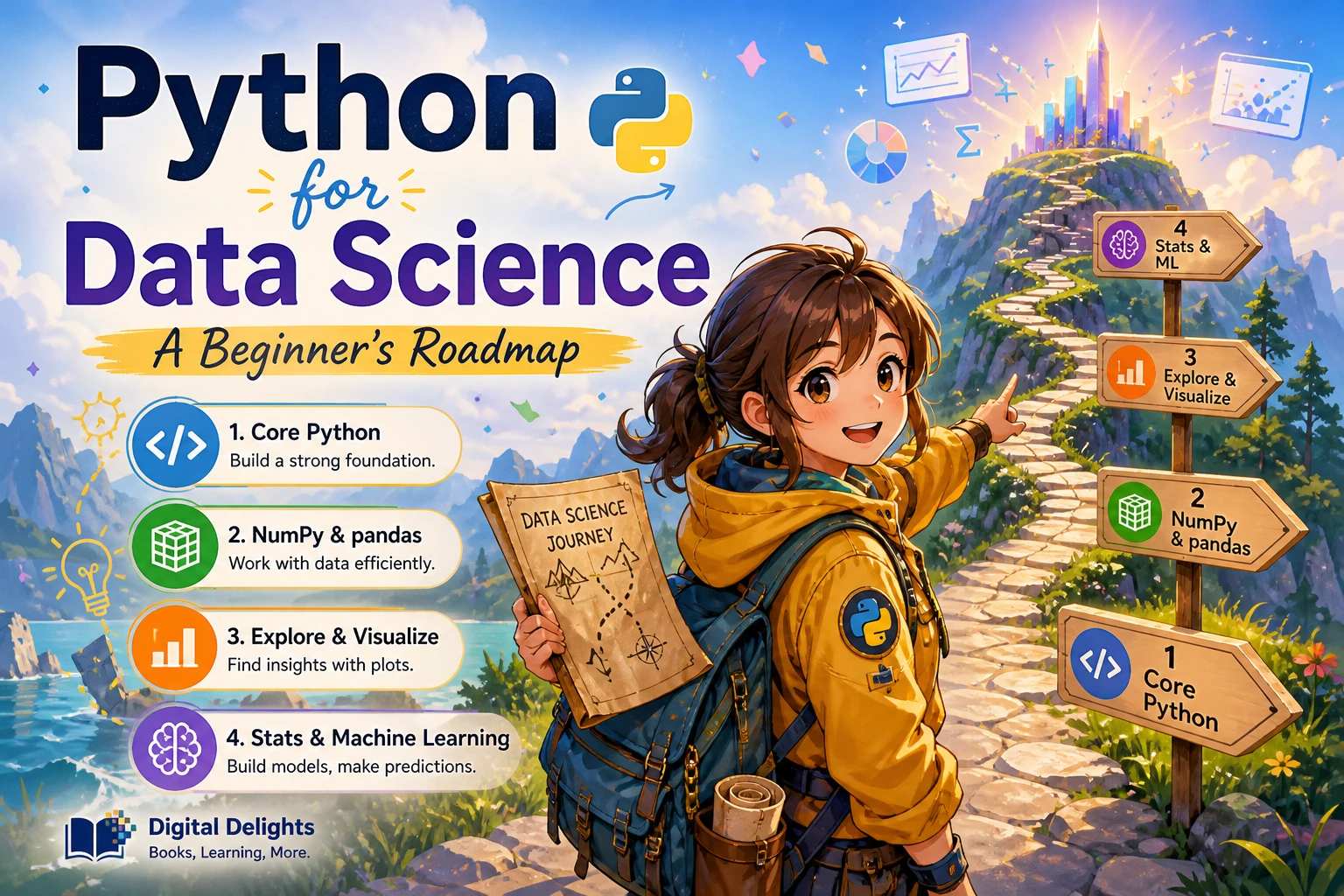
A practical learning sequence is:
- Learn programming fundamentals. Practice variables, strings, numbers, conditions, loops, functions, and error handling.
- Get comfortable with Python collections. Work with lists, dictionaries, tuples, and sets, and learn to read and write files.
- Practice with small datasets. Load data, inspect columns, filter records, handle missing values, and calculate summaries.
- Add data-focused libraries. Learn pandas and NumPy for data handling, then a plotting library for visualization.
- Explore modeling only when ready. Learn basic statistical ideas before using a machine-learning library to fit models.
For a general introduction to programming with examples, Python by Example covers Python fundamentals and a range of programming topics. If you want a resource centered more directly on working with data, Python for Data Science: A Hands-On Introduction covers data structures, data access, and data-science tools. The right starting point depends on whether you need to learn programming basics first or are ready to focus on data workflows.
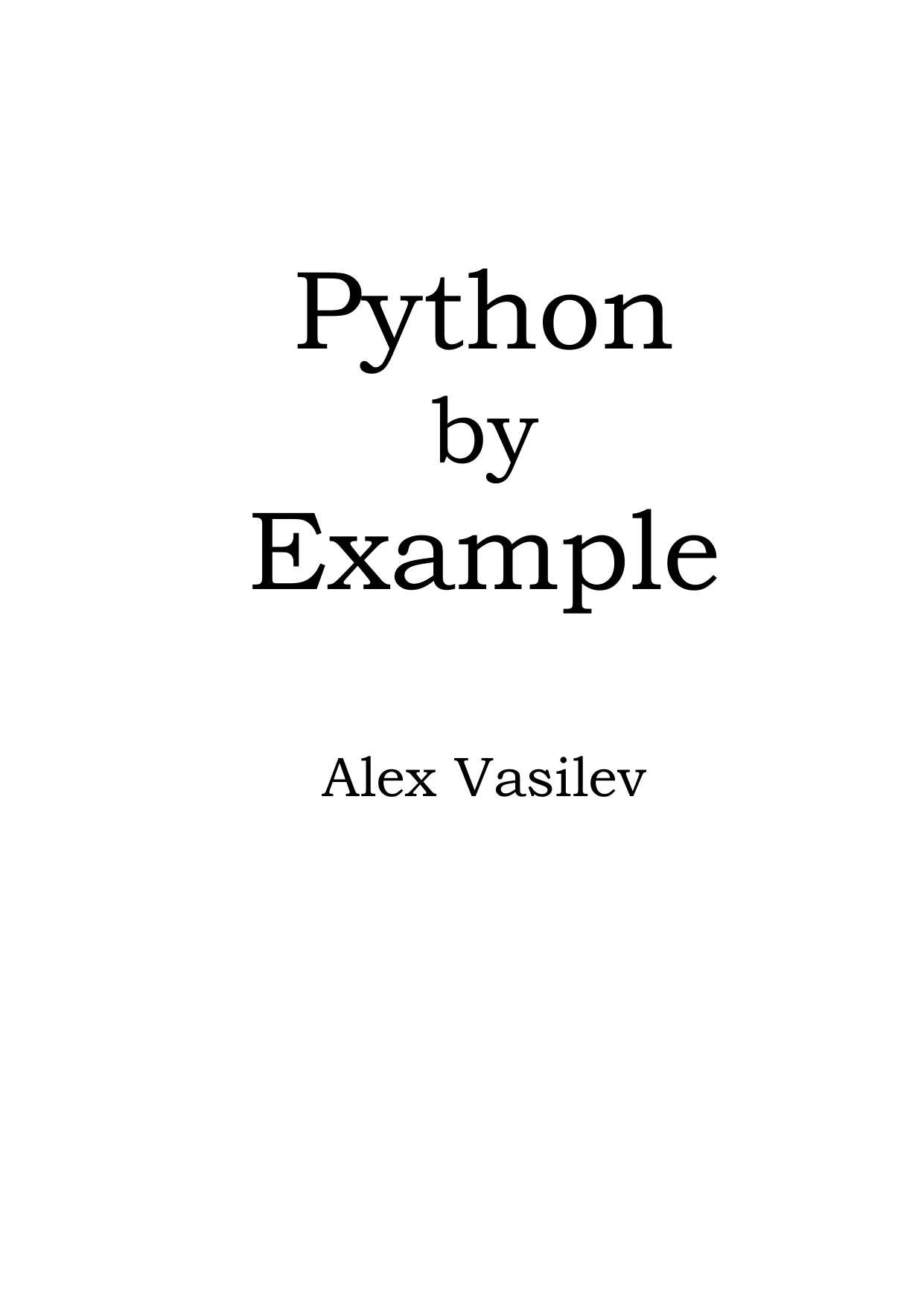
By Alex Vasilev
Learners who want practice with Python fundamentals and broader programming topics.
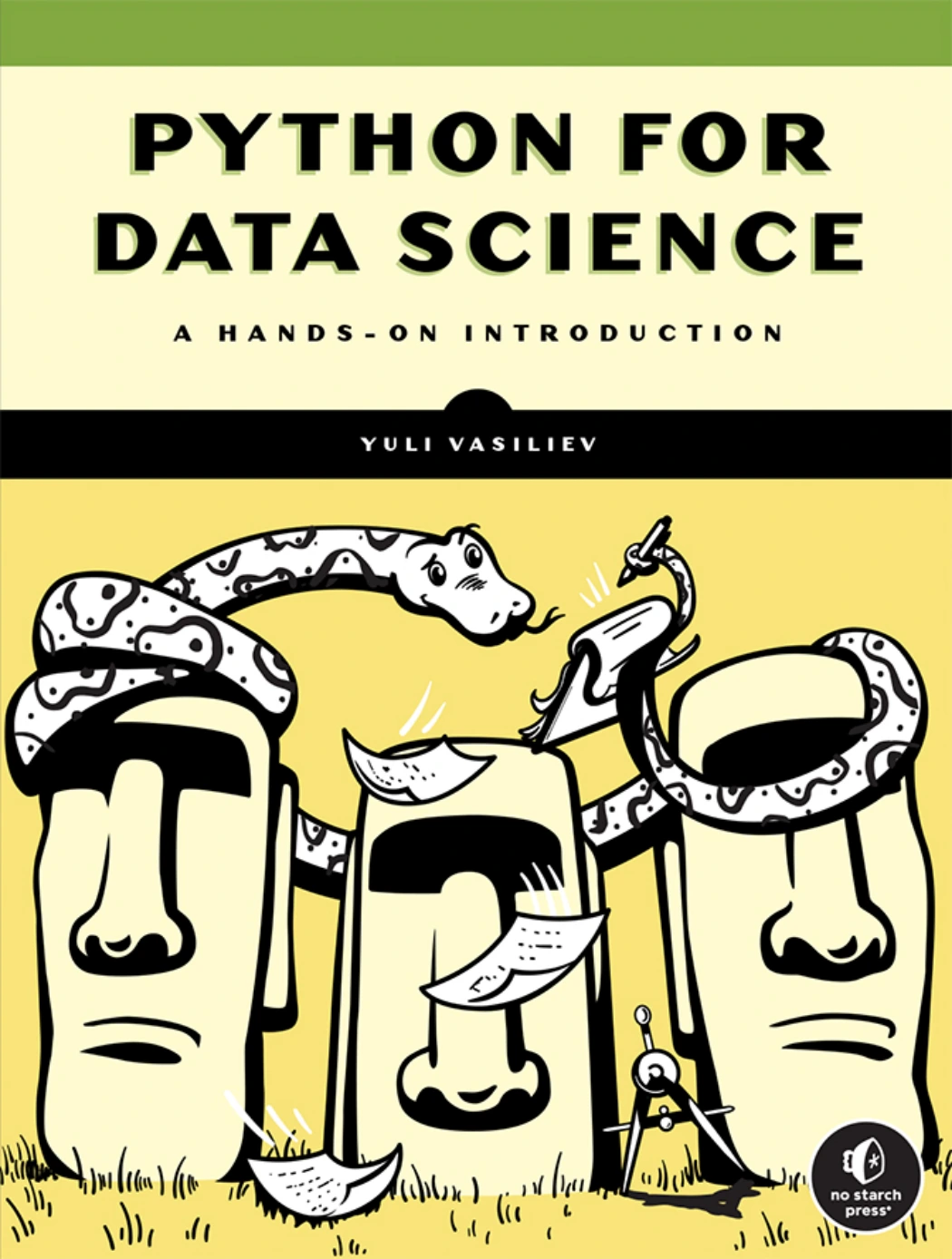
Python for Data Science: A Hands-On Introduction
Readers who know some Python and want to apply it to data workflows.
When might Python not be the only tool you need?
Data work does not happen in one language or environment. The right tool depends on the task, the existing workflow, and the skills a role calls for. SQL, spreadsheets, R, and specialized applications may all be relevant in different settings. The sources reviewed here do not establish that Python is more effective than these alternatives or required across data-science jobs.
For example, a task may involve querying a database, preparing a quick spreadsheet summary, using an established statistical workflow, or applying a domain-specific tool. Python can complement such tools, but there is no need to assume it must replace them. If you are choosing what to learn, start with the work you want to do and identify the tools used in that context.
Also check software compatibility when following a book or tutorial. The third edition of Python for Data Analysis describes its setup as updated for Python 3.10 and pandas 1.4. Those details identify the versions covered by that edition; they should not be treated as a universal current requirement. Check the current documentation for the packages and environment you plan to use.
A practical Python learning path for data science
You do not need to learn every Python feature before trying useful data work. Build a foundation, then use small projects to connect programming concepts to questions about data.
Start with core Python
Write short programs using variables, conditions, loops, functions, and common data structures. Aim to understand what each step does instead of copying code without being able to change it.
Work with a small dataset
Choose a dataset with clear columns and a question you can explain. Load it into a table, check the column names and data types, and look for missing or inconsistent values. Keep notes about any cleaning choices so you can explain how they affect the result.
Summarize and visualize
Calculate a few basic summaries and make charts that answer specific questions. A chart should clarify a pattern or comparison, not simply decorate the analysis. Check that labels and scales make the result understandable.
Try a small end-to-end project
For example, take a public dataset of daily temperatures or monthly expenses. Clean inconsistent dates, calculate a monthly summary, and create a chart showing how the measure changes over time. Write a short explanation of what the chart shows and what it cannot establish. This project practices data preparation, basic analysis, visualization, and communication without requiring a machine-learning model.
After that, you can explore statistics and introductory modeling if they fit your goals. A broad survey such as Data Science Fundamentals and Practical Approaches covers data preparation, visualization, statistics, machine learning, and related topics. For readers ready to focus on model-building, Python Machine Learning By Example, Fourth Edition is described in the catalog as a practical, project-based introduction to machine learning with Python. Neither needs to be the first step if you are still learning basic programming or data analysis.
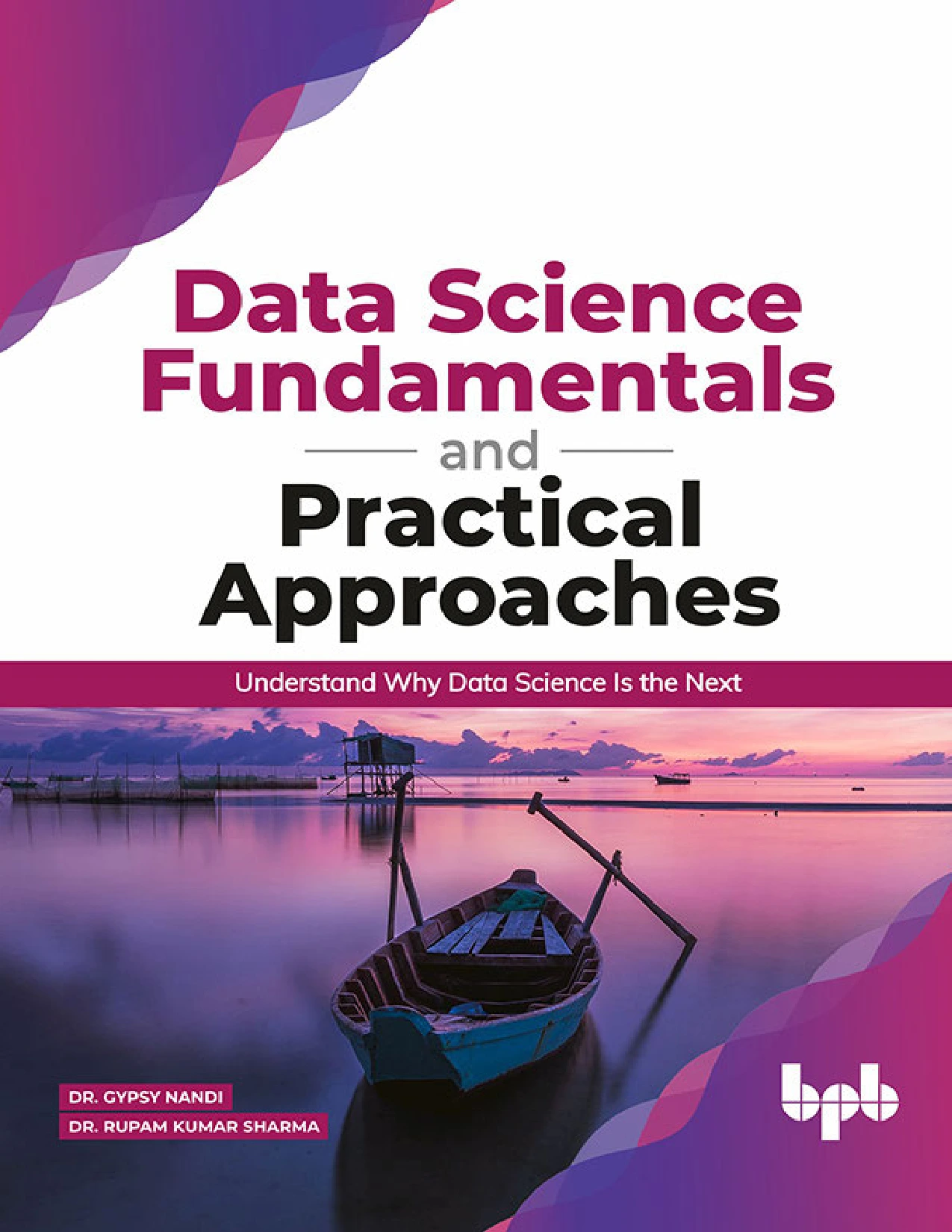
Data Science Fundamentals and Practical Approaches: Understand Why Data Science Is the Next
Learners who want to understand data science as a workflow beyond Python syntax.
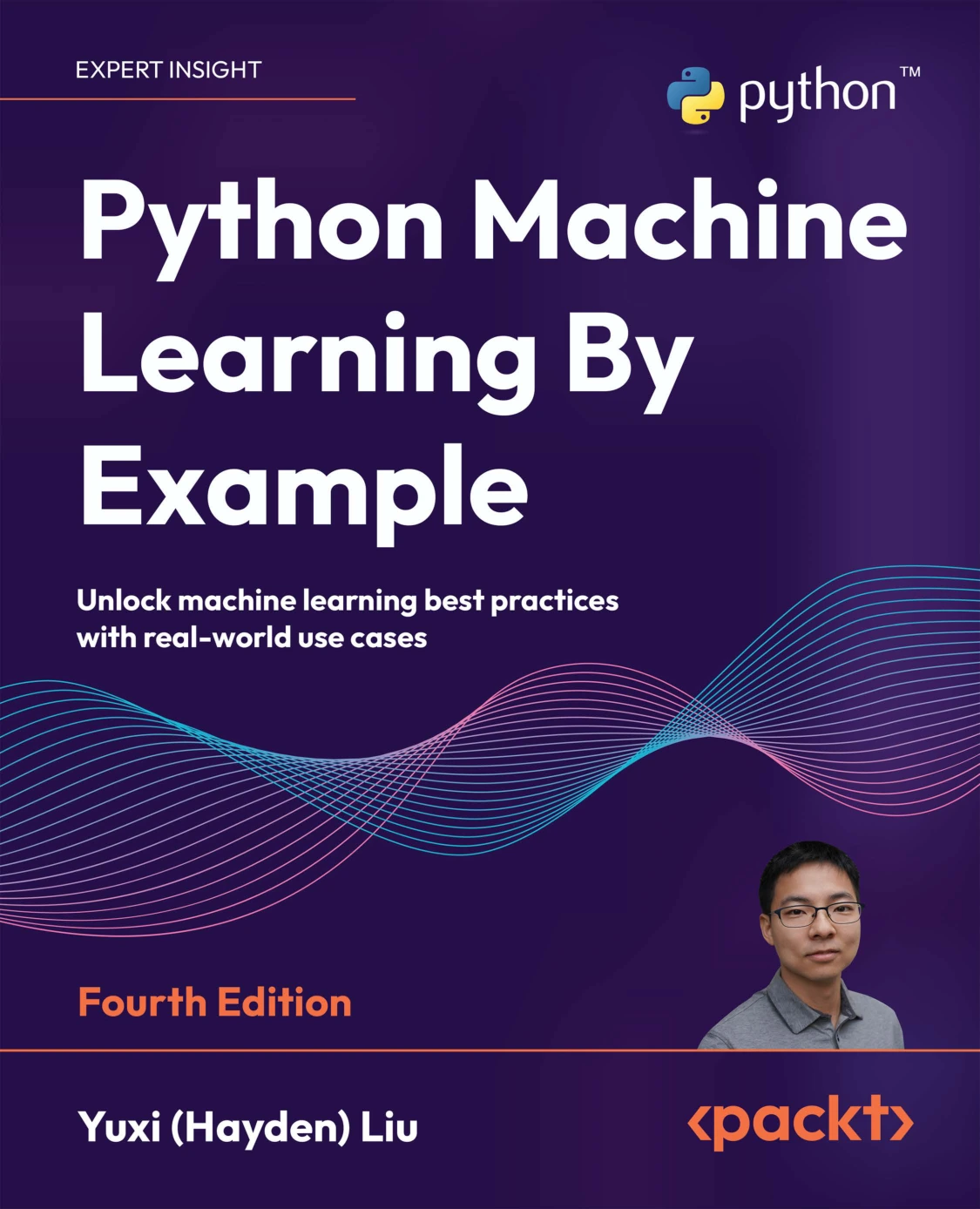
Python Machine Learning By Example, Fourth Edition
Readers ready to explore machine-learning workflows using Python.
How to choose a Python learning resource
Match the resource to the skill you need next. A beginner programming guide can help you understand syntax and problem-solving; a data-analysis resource can focus on datasets and libraries; a machine-learning title is more appropriate once you have a foundation in programming and data handling.
| Your current need | Resource type to look for | Catalog example |
|---|---|---|
| Learning programming from the beginning | Structured Python fundamentals and practice | Python by Example |
| Moving from Python basics to data workflows | Hands-on data handling and analysis | Python for Data Science: A Hands-On Introduction |
| Building a wider picture of data science | Coverage of preparation, statistics, visualization, and modeling | Data Science Fundamentals and Practical Approaches |
| Exploring machine learning after learning data fundamentals | Practical examples of model workflows | Python Machine Learning By Example, Fourth Edition |
Before choosing a book or course, check its stated prerequisites, the subjects it covers, and the software versions used in its examples. A focused resource that matches your next learning goal is usually more useful than trying to study every part of data science at once.
Frequently asked questions
Can I learn data science without Python?
Yes. Python is one useful route into data science, not a universal requirement established for every role or task. Depending on the work, other languages or tools may be relevant. If your goals involve Python-based data workflows or machine learning, learning Python can be a practical choice.
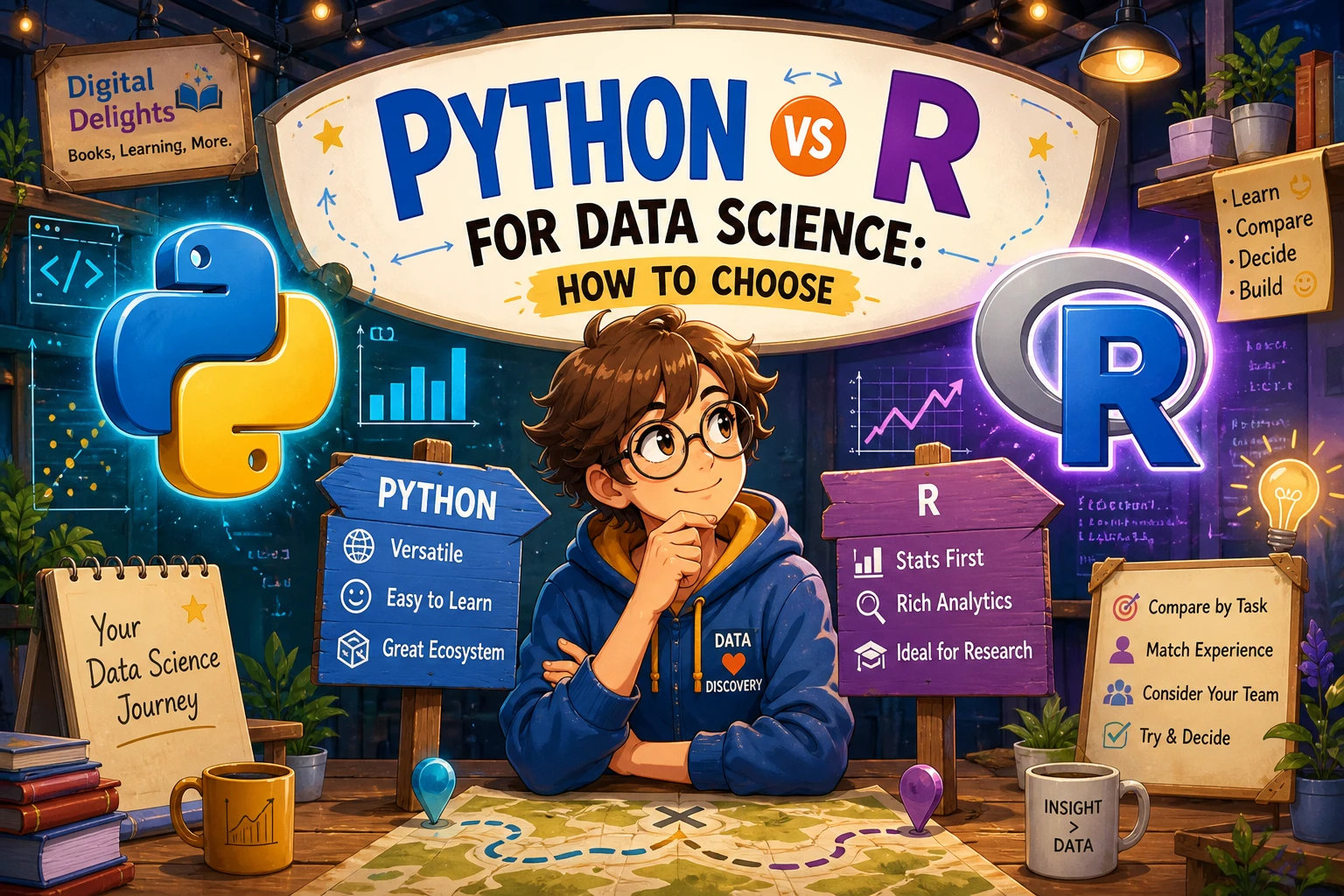
Should I learn Python or R first?
Choose according to the work you want to do, the tools used in your target area, and the learning materials available to you. The sources cited here do not provide a direct comparison proving one language is universally better. Python offers a broad programming path; research the requirements and workflows relevant to your particular goals before deciding.
Do I need to learn machine learning to start data science?
No. Begin with programming basics, data handling, summaries, visualization, and statistical reasoning. Machine learning is one area of data science, not the starting point for every data task.
Which Python version should I learn?
There is no single version requirement established for all data-science projects. Use a supported Python version that works with the libraries and environment you plan to use, and check their current documentation. Older books may refer to earlier package versions, so verify their setup instructions before following them.
The bottom line
Python matters in data science because it can connect programming, data preparation, visualization, and modeling through a flexible set of tools. It is a strong option for self-directed learners, but it is not a substitute for statistics, domain understanding, or clear communication—and it is not proven to be mandatory for every role. Start with programming fundamentals, practice on small datasets, and add libraries as your projects require them.