
Python vs C: Which Should You Learn First?
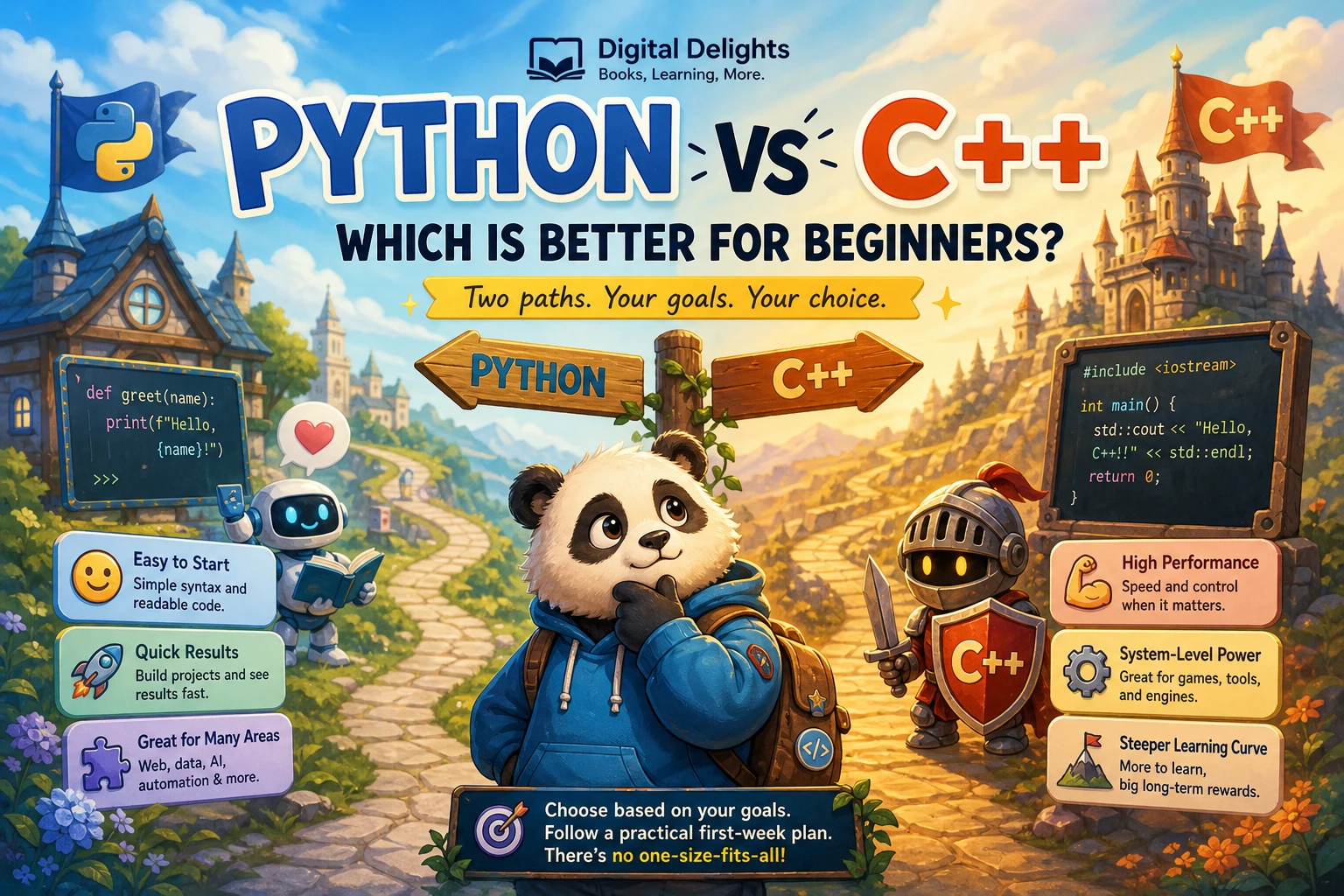
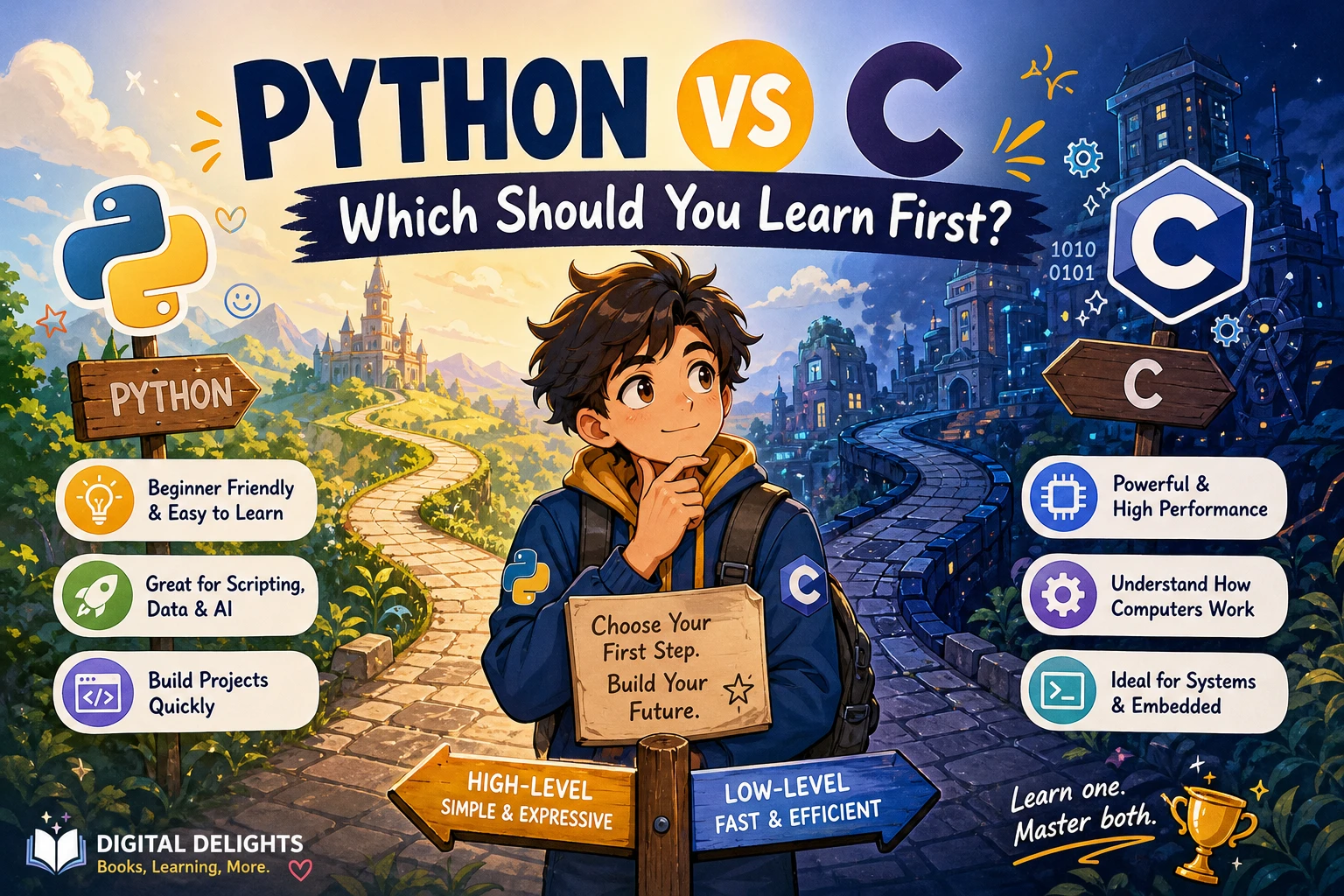
If you are choosing between Python and C as your first programming language, start with the kind of programming you want to do. If you have no specific goal yet, Python is a practical starting point: it lets you focus on writing scripts and applications while learning core programming ideas. If you are especially interested in pointers, memory, or lower-level systems concepts, beginning with C may make more sense.
That is a goal-based recommendation, not proof that one learning sequence works best for everyone. C can be taught to beginners, and Python still takes practice. This comparison explains what each language asks you to learn, how to choose, and how to approach both without treating the decision as permanent.
Python vs C at a glance
Python and C are both programming languages, but they lead beginners toward different parts of programming. Python is described in its official tutorial as a high-level, dynamically typed, interpreted language, with an emphasis on scripting and rapid application development. C study can involve more direct attention to pointers and memory. These differences affect what you focus on as you learn—not whether one language is universally better.
| Question | Python | C |
|---|---|---|
| What might attract a beginner? | Writing scripts and applications while learning programming fundamentals. | Exploring pointers, memory, and lower-level programming concepts. |
| What is a central learning emphasis? | Using a high-level language with dynamic typing and an interpreter. | Understanding how programs work with memory, including pointers. |
| What practical setup should you expect? | Access to a Python interpreter and a place to write and run code. | A C compiler and a way to build and run programs. |
| Who might prefer it first? | Learners who want a general-purpose introduction or a route into scripting. | Learners whose immediate interest is memory or systems-level ideas. |
The table is a guide to learning emphasis, not a difficulty score. Your previous experience, learning materials, and reasons for studying will shape how challenging either language feels.
When should you learn Python first?
Consider starting with Python if you want to begin writing programs without making memory management the first major topic you encounter. Its high-level, interpreted design is suited to hands-on scripting and rapid application development, according to the official Python tutorial.
Python is a sensible choice when you are still exploring what programming can do. You can learn foundational ideas such as variables, conditions, loops, functions, and data structures, then apply them in small scripts or projects. The language’s reputation as approachable should not be mistaken for learning without effort: you still need to write code, understand errors, and practise problem-solving.
A structured beginner resource can help organize those first concepts. For example, A beginner’s guide to Python covers foundational topics including variables, conditionals, loops, functions, file handling, and data structures. Once you have a grasp of the basics, short problems can help turn reading into active practice. Python Programming Exercises, Gently Explained offers 42 practice problems, according to its catalog description.
New learners looking for a sequential introduction to variables, conditions, loops, functions, and data structures.
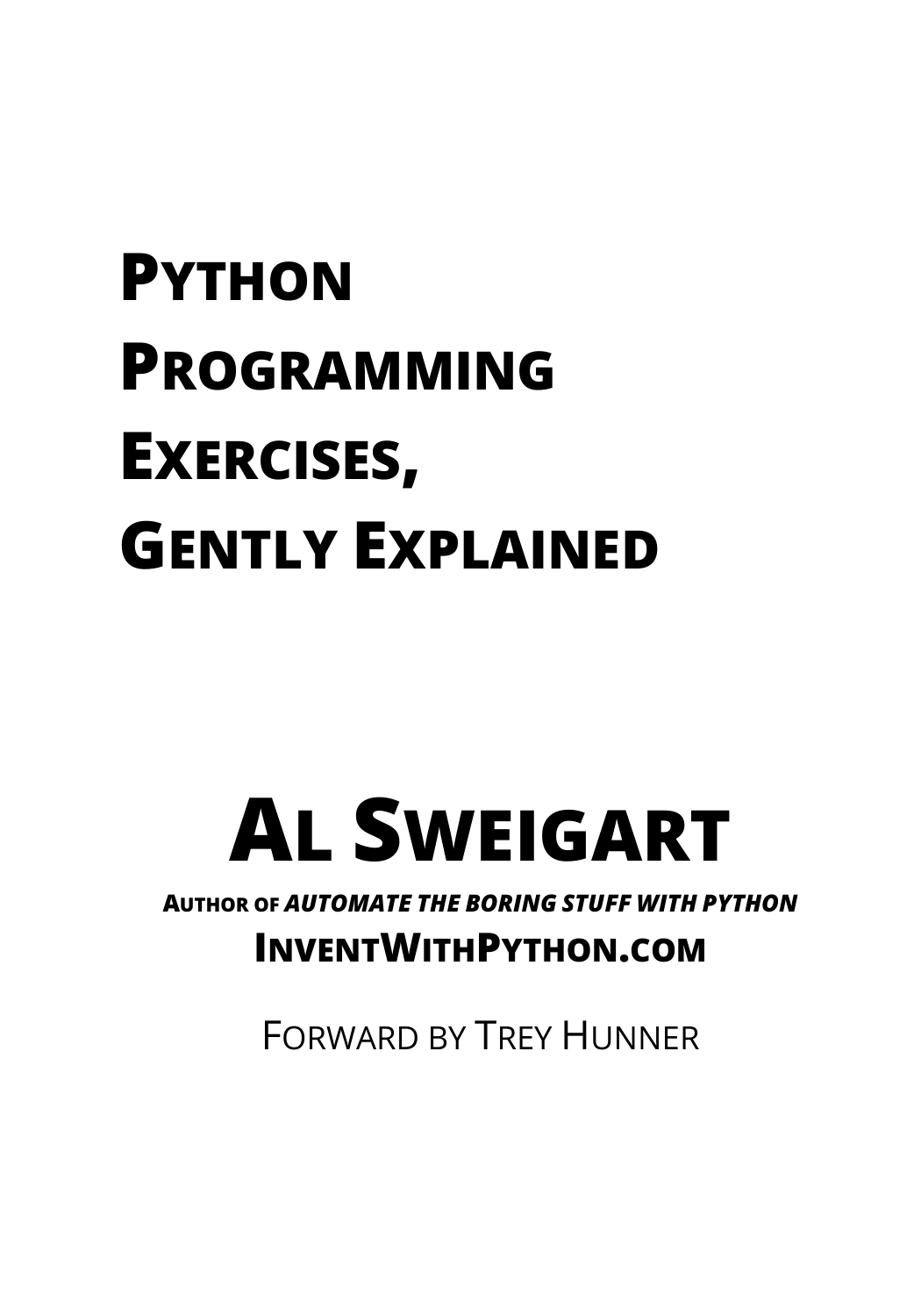
Python Programming Exercises, Gently Explained
By Al Sweigart
Learners who know some basics and want to reinforce them by solving exercises.
Python may suit you if you want to
- Explore programming before committing to a specialized area.
- Practise writing scripts and small applications.
- Learn core programming concepts before focusing on pointers and memory.
- Build a foundation you can later connect to another language.
Browse the Python book collection if you want to compare available learning resources by topic.
When should you learn C first?
Choose C first if your main reason for learning programming is to investigate lower-level concepts, especially pointers and memory. C learning materials often give these ideas dedicated attention; for example, the publisher’s chapter on memory and pointers in Head First C treats them as substantial topics.
That does not make C off-limits to newcomers. A beginner-oriented course or book can introduce the fundamentals in stages. The practical consideration is that learning C may ask you to manage additional concepts earlier, and you should expect to install or access a compiler and learn the build-and-run workflow for your environment.
Choose a C learning resource that clearly identifies the tools and language standard it uses. Setup instructions can differ, so check that they match your computer and follow the same version throughout your exercises.
C may suit you if you want to
- Study pointers and memory as part of your programming education.
- Explore lower-level programming rather than beginning with general scripting.
- Follow a course, project, or personal goal that specifically uses C.
- Spend time understanding how your tools compile and run a program.
A decision guide for choosing your first language
Start with your goal rather than trying to settle which language is “best.” Use this quick guide to make a first choice:
- You are exploring programming and have no specific destination: Start with Python, then reassess after you have written a few small programs.
- You want to practise scripting and build small applications: Python is a practical first option.
- You are drawn to pointers, memory, or low-level systems concepts: Start with C and choose a beginner resource that teaches those ideas progressively.
- You need a particular language for a class or project: Learn the language the work requires, even if you later study the other one.
If you remain unsure, try the same small task in each language. For instance, write a program that asks for a name and prints a greeting, or one that totals a short list of numbers. Use beginner instructions for both, and compare how the setup, code, errors, and explanations feel. This is a personal decision aid, not a controlled test of which language is easier to learn.
A practical path for learning Python and C
You do not have to treat this as a permanent either-or choice. The Python tutorial notes that C or C++ can be used to implement extensions for Python, so the languages can also connect in later work. That does not mean you need both at the start; it simply leaves room to add the second language when it supports a real learning goal.
Path A: Python first, then C
- Learn Python basics: variables, conditions, loops, functions, and common data structures.
- Write small programs and practise solving problems without copying a complete solution.
- When you want to study pointers, memory, or lower-level programming, begin a structured C course.
- Compare a familiar idea or small task in both languages to notice how the code and workflow differ.
This route is useful if you want to begin with general programming practice and later explore more explicit memory concepts. It is a suggested sequence, not a guarantee of faster progress.
Path B: C first, when you have a clear low-level goal
- Set up the compiler and follow the instructions for your chosen learning resource.
- Work through foundational C topics in order, giving pointers and memory concepts time to make sense.
- Build small programs and use compiler messages and debugging as part of your practice.
- Add Python later if scripting, rapid application development, or Python-based tools become relevant to your goals.
Whichever route you take, keep your first projects small. A program that reads input, makes a decision, and prints a result can teach more than passively reading several chapters without writing code.
Common misconceptions about Python and C
“Python requires no prior learning.”
Python can be a practical starting point, but it is still programming. You will need to learn how to express logic, organize data, interpret errors, and test your ideas. An approachable first step is not the same as an effortless one.
“C is unsuitable for beginners.”
C can be taught to beginners. The more careful point is that pointers and memory can add topics to learn, so a clear, gradual resource and consistent practice matter.
“I have to choose only one language.”
You can learn both over time. Start with the language that best matches your current goal, then add the other when you have a reason to do so. Python and C can be complementary rather than competing choices.
Frequently asked questions
Is C harder to learn than Python?
There is no single difficulty ranking that applies to every learner. C introduces pointers and memory as important learning topics, while Python’s high-level and interpreted design supports a different kind of starting experience. Your goals, background, and learning materials affect how each feels. The available sources do not compare beginner learning outcomes or time to competence for Python-first and C-first paths.
Is Python a good first programming language?
It can be a practical first choice if you want to explore programming, write scripts, or build applications without making memory concepts your initial focus. You will still need to study fundamentals and practise by writing code.
Can I learn C as my first language?
Yes. Beginners can learn C, particularly with a resource that introduces concepts progressively and provides setup instructions for their operating system. Be prepared to spend time with the compiler workflow and topics such as pointers and memory.
Should I learn Python or C for systems programming?
If your immediate goal is to study lower-level systems concepts, C is a reasonable place to start because pointers and memory are central topics in C learning materials. If you are still exploring programming or want to begin with scripting, start with Python and move to C when that goal becomes clearer.
Is it worth learning both Python and C?
It can be worthwhile when each language serves a purpose for you. Python can support scripting and applications, while C can help you study lower-level concepts. You do not need to learn both at once; build a foundation in one and add the other when it becomes useful.
Conclusion: choose for your goal, not a universal ranking
For beginners without a specific destination, Python is a practical starting recommendation. Choose C first if your main interest is pointers, memory, or lower-level programming. Either language can be learned from scratch, and neither is automatically the right choice for everyone.
Pick one small project, follow a resource that matches your experience, and write code regularly. If your interests change, learning the second language remains an option—not a reason to delay getting started.
Sources and evidence
- The Python Tutorial — Python 3.12.14 documentation, for Python’s high-level, dynamically typed, interpreted description and scripting and rapid-development context.
- “Memory and Pointers,” Head First C, for pointers and memory as topics in C instruction.
These sources do not establish that Python-first or C-first produces better learning outcomes, faster progress, or stronger retention. The recommendation above is editorial guidance based on the learner’s stated goals.