Python Libraries for Machine Learning Beginners
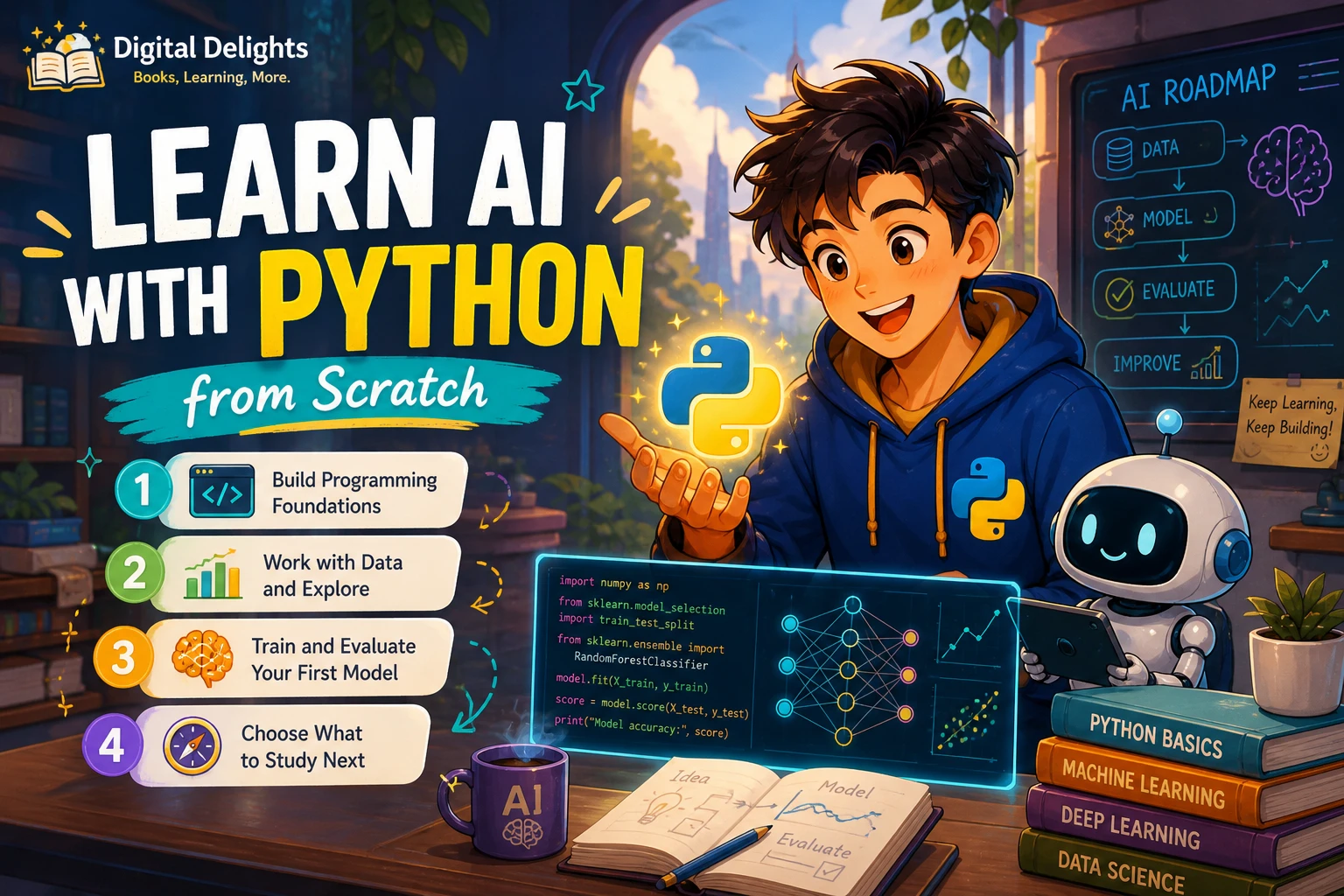
Choosing Python libraries for machine learning can feel like choosing from a wall of unfamiliar tools. The useful starting set is smaller than it first appears: learn NumPy for numerical arrays, pandas for tabular data, Matplotlib for charts, and scikit-learn for common machine-learning workflows. Add PyTorch or TensorFlow later if your goals call for neural networks and deep learning.
The order matters more than collecting packages. A beginner who can prepare and inspect a dataset, build a simple model, and evaluate its results will have a stronger foundation than someone who installs several advanced frameworks without understanding the workflow. This guide explains what each library is for, what to learn first, and how to get started without turning setup into the whole project.
Which Python libraries should a machine-learning beginner learn?
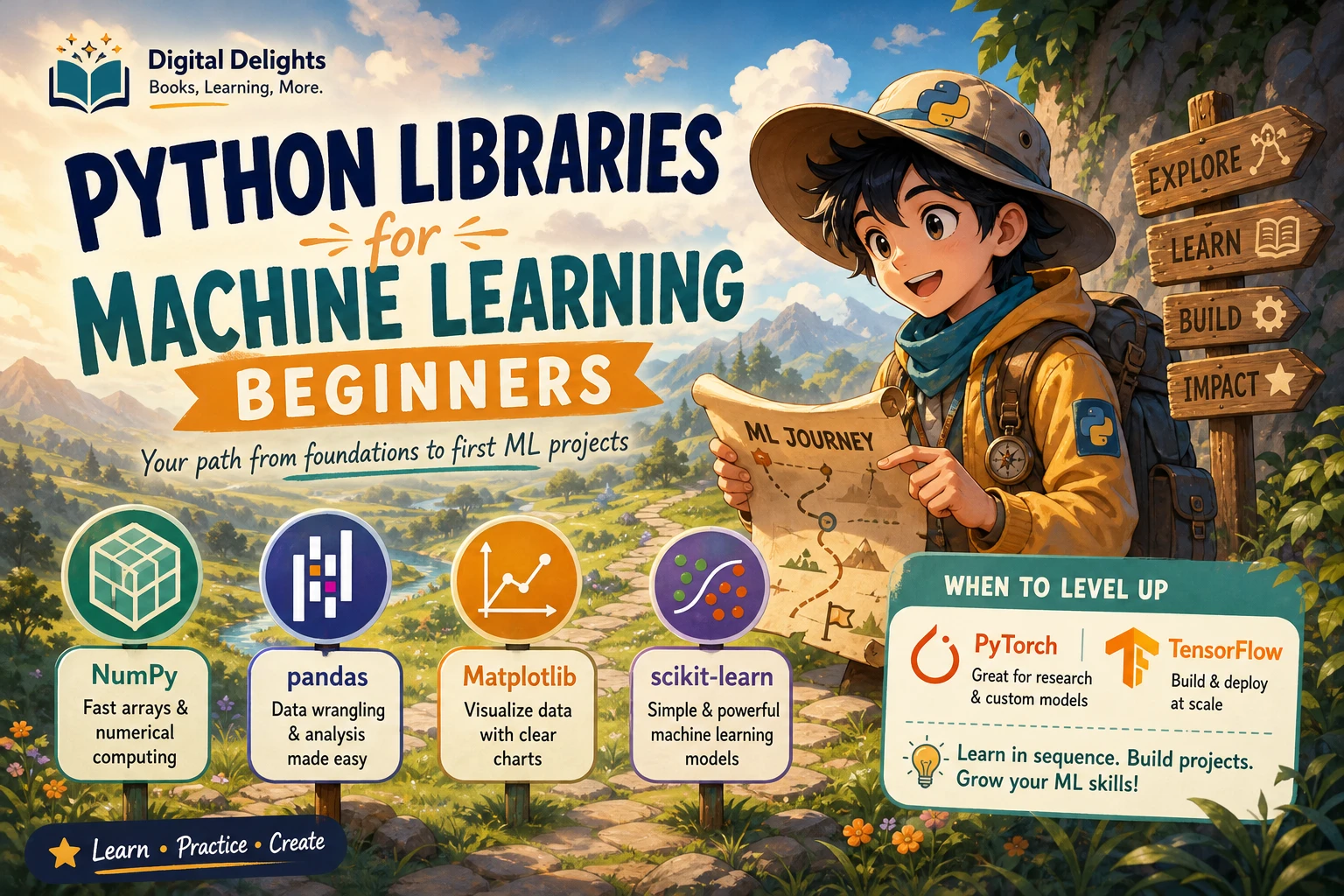
Start with the tools that support a complete small-scale workflow: NumPy, pandas, Matplotlib, and scikit-learn. NumPy and pandas help you work with data; Matplotlib helps you inspect it visually; and scikit-learn provides tools for building and evaluating many established machine-learning models. PyTorch and TensorFlow are useful options for deep learning, but most beginners do not need to begin with them.
This is a practical learning sequence, not a claim that one library is objectively best. A common data-science learning stack pairs NumPy, pandas, and visualization tools with scikit-learn for machine learning (Python Data Science Handbook, 2nd Edition).
What does each Python library do?
| Library | Typical role | When to learn it |
|---|---|---|
| NumPy | Numerical arrays and calculations | Early, as you begin working with data |
| pandas | Loading, inspecting, cleaning, and transforming tabular data | Early, before fitting your first model |
| Matplotlib | Creating charts to explore and explain data | Alongside data preparation |
| scikit-learn | Common machine-learning methods and model workflows | After you can work with a dataset in Python |
| PyTorch or TensorFlow | Building and training neural networks | Later, if a project calls for deep learning |
NumPy: numerical arrays and calculations
NumPy provides tools for working with arrays of numbers and performing calculations on them. You do not need to master every feature before studying machine learning. Begin by recognizing arrays, understanding their shapes, and practising basic operations. That foundation makes it easier to understand how data is represented and passed between tools.
pandas: working with tabular data
Many beginner projects use data arranged in rows and columns. pandas helps you inspect and manipulate that kind of data: for example, checking column names, selecting records, handling missing values, and creating a useful set of input columns. These preparation steps are part of the machine-learning workflow, not chores to skip on the way to the model.
Matplotlib: seeing what is in your data
Charts can make patterns, unusual values, and uneven distributions easier to notice. Matplotlib is a library for creating visualizations in Python. For a first project, focus on a few useful plots—such as a histogram or a scatter plot—rather than trying to learn every chart style at once.
scikit-learn: classical machine learning
scikit-learn is a practical place to explore established machine-learning methods and their surrounding workflow. Beginner-oriented learning material commonly introduces tasks such as classification, datasets, and model evaluation through the library (scikit-learn: Machine Learning Simplified, table of contents).
For your first model, concentrate on the process: define the question, prepare the data, separate training data from evaluation data, fit a simple model, and examine appropriate evaluation measures. Learning that sequence gives you context for later algorithms and frameworks.
PyTorch and TensorFlow: neural networks and deep learning
PyTorch and TensorFlow are associated with building neural-network and deep-learning systems. They can be valuable when a project requires those methods, but they add concepts and tooling that are not necessary for every first machine-learning exercise. A sensible approach is to learn a basic data-to-model workflow first, then choose a deep-learning framework based on what you want to build.
Some learning resources combine scikit-learn with a later move into PyTorch and more advanced neural-network topics. That is a different learning stage from simply learning how to prepare a dataset and evaluate a first model (Hands-On Machine Learning with Scikit-Learn and PyTorch).
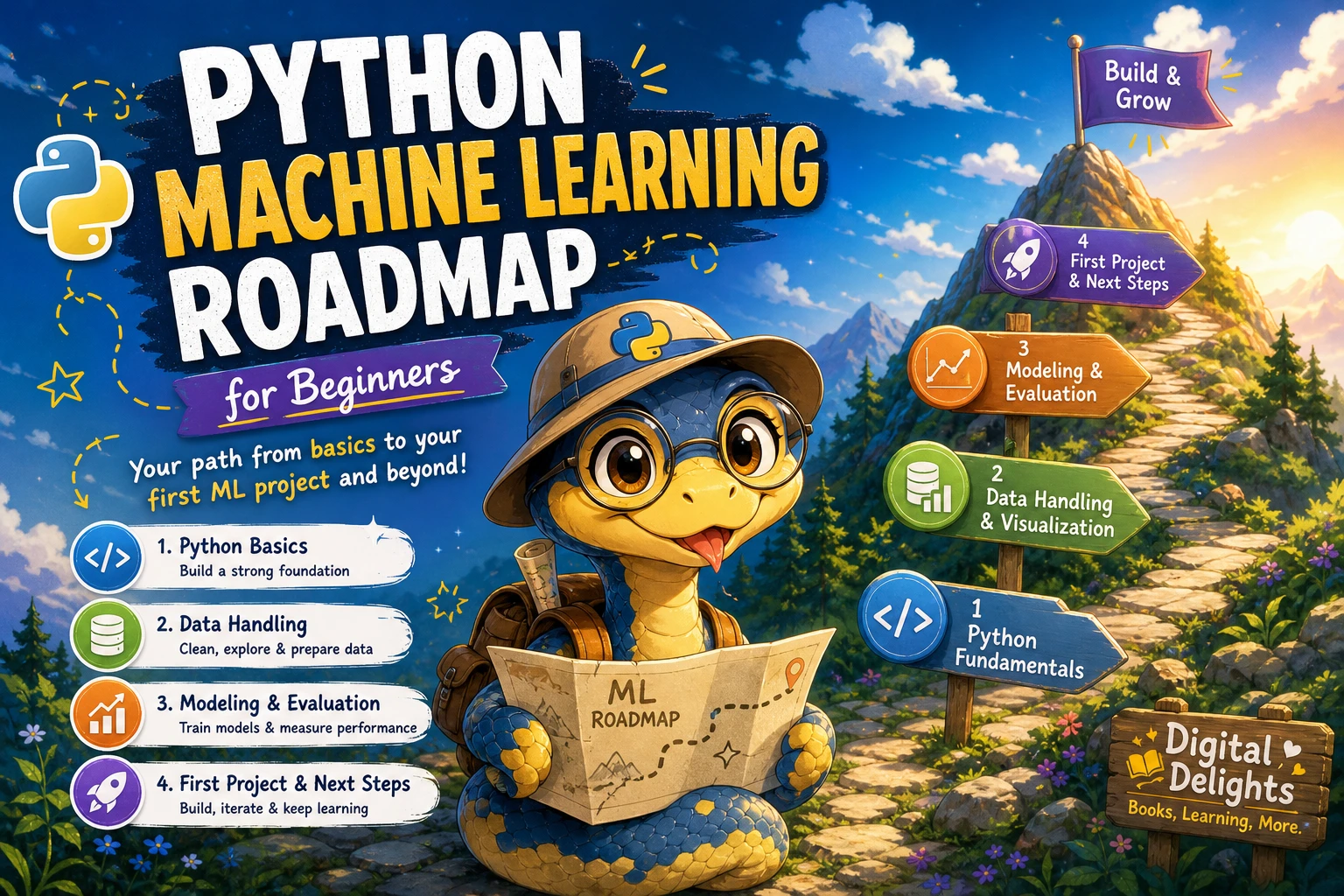
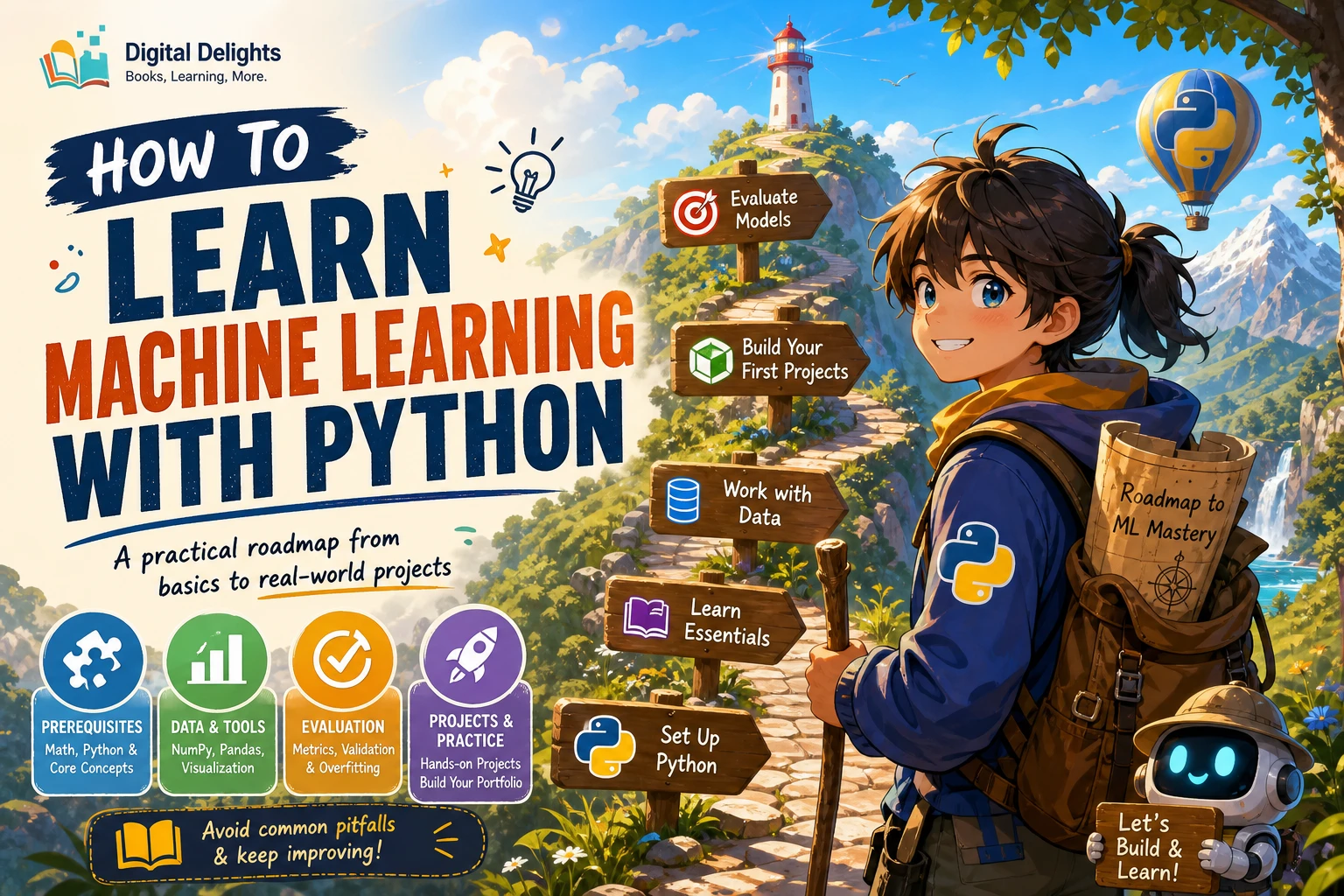
A beginner-friendly order for learning the libraries
- Build basic Python fluency. Practise variables, collections, functions, loops, imports, and reading error messages. You should be able to understand and modify short programs.
- Explore data with pandas and NumPy. Load a small dataset, inspect its columns and values, and practise basic cleaning and numerical operations.
- Make a few visualizations. Use Matplotlib to examine distributions and relationships that may be relevant to your question.
- Fit a simple scikit-learn model. Begin with a straightforward classification or regression task, depending on what you are trying to predict.
- Evaluate before adding complexity. Check how the model performs on data it was not trained on and learn what the chosen evaluation measure does—and does not—tell you.
- Explore deep learning if it fits your aim. Consider PyTorch or TensorFlow after you understand the basic workflow or when your project specifically requires neural networks.
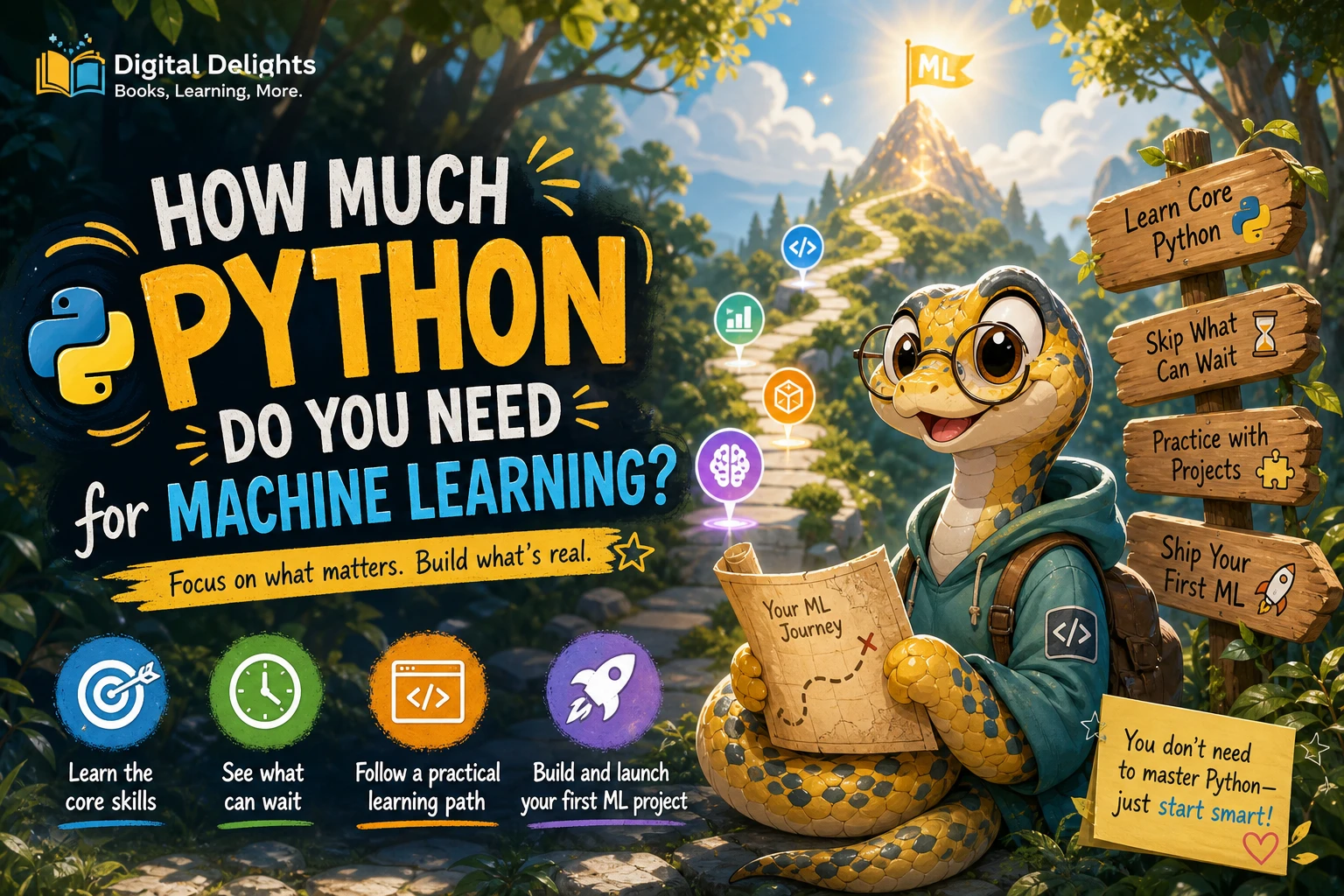
You do not need to learn every function in each library before making progress. Work through a small task, look up the features you need, and return to the concepts when you encounter them in context.
What should you know before starting?
Basic Python fluency is a helpful starting point, but the exact preparation expected varies between books and courses. Some learning materials ask readers to know basic Python, while others are written for people who are comfortable reading and writing code. These are differences in teaching scope, not universal entry rules (Data Science Bookcamp: Five Python Projects).
It is also useful to understand basic descriptive statistics and the idea of comparing a model’s predictions with known answers. You can learn more statistics as you go; the important habit is to ask what an evaluation result represents rather than treating a score as a complete verdict on a model.
How to avoid Python library setup problems
Keep each project’s packages separate from other Python work. Python’s venv tool creates virtual environments so projects can have their own installed packages; package requirements can vary from one application to another (Python documentation: venv).
- Create a separate environment for a new project instead of installing everything into one shared environment.
- Install only the packages the project needs, then record the package versions used.
- Before installation, check each library’s current official installation instructions and Python compatibility information.
- If an installation fails, check the active environment and the library’s supported Python versions before changing unrelated packages.
Library compatibility changes over time, so avoid relying on old setup commands or assuming that every release works with every Python version. The current project documentation is the right place to check version-specific details.
Common beginner mistakes to avoid
- Installing too many libraries at once. Begin with the tools needed for one small project. Add others when you can explain what they will help you do.
- Skipping data inspection and preparation. A model cannot make a poorly understood dataset meaningful by itself. Check values, columns, missing data, and the relationship between inputs and the outcome.
- Jumping to deep learning immediately. Neural networks are not required for every prediction task. Learn a basic modeling and evaluation process before taking on extra complexity.
- Judging a model only by its training results. Check performance on data that was held out from fitting. Otherwise, you may get an overly optimistic picture of how the model handles unfamiliar examples.
- Using a metric without understanding it. Choose evaluation measures that fit the task, and learn what they reveal and what they leave out.
A first practice project: predict a category from a small dataset
Choose a small, clearly labelled dataset and ask a focused question—for example, whether a record belongs to one category or another based on a few available measurements. The point is not to build a sophisticated system; it is to practise the full workflow.
- Use pandas to inspect the columns, values, and missing data.
- Choose a prediction target and a small set of relevant input features.
- Separate the data for model training from the data you will use for evaluation.
- Use a simple scikit-learn classification method as a starting point.
- Evaluate predictions on the held-out data with a suitable measure, then inspect examples the model gets wrong.
- Use a Matplotlib chart where it helps you understand the data or communicate a result.
Keep the first version deliberately small. Once you can explain what each stage does, try a reasonable change—such as improving data preparation or comparing another suitable model—and see how the evaluation changes.
Choosing a learning resource to accompany your practice
If you would like a structured reading resource, Machine Learning with Python: A Practical Beginners’ Guide is listed in the Digital Delights catalog as covering data preparation, model design, validation, and foundational algorithms, with an appendix introducing Python. Treat it as a study companion rather than a guarantee of current code compatibility: check the relevant library documentation when following installation steps or code examples.
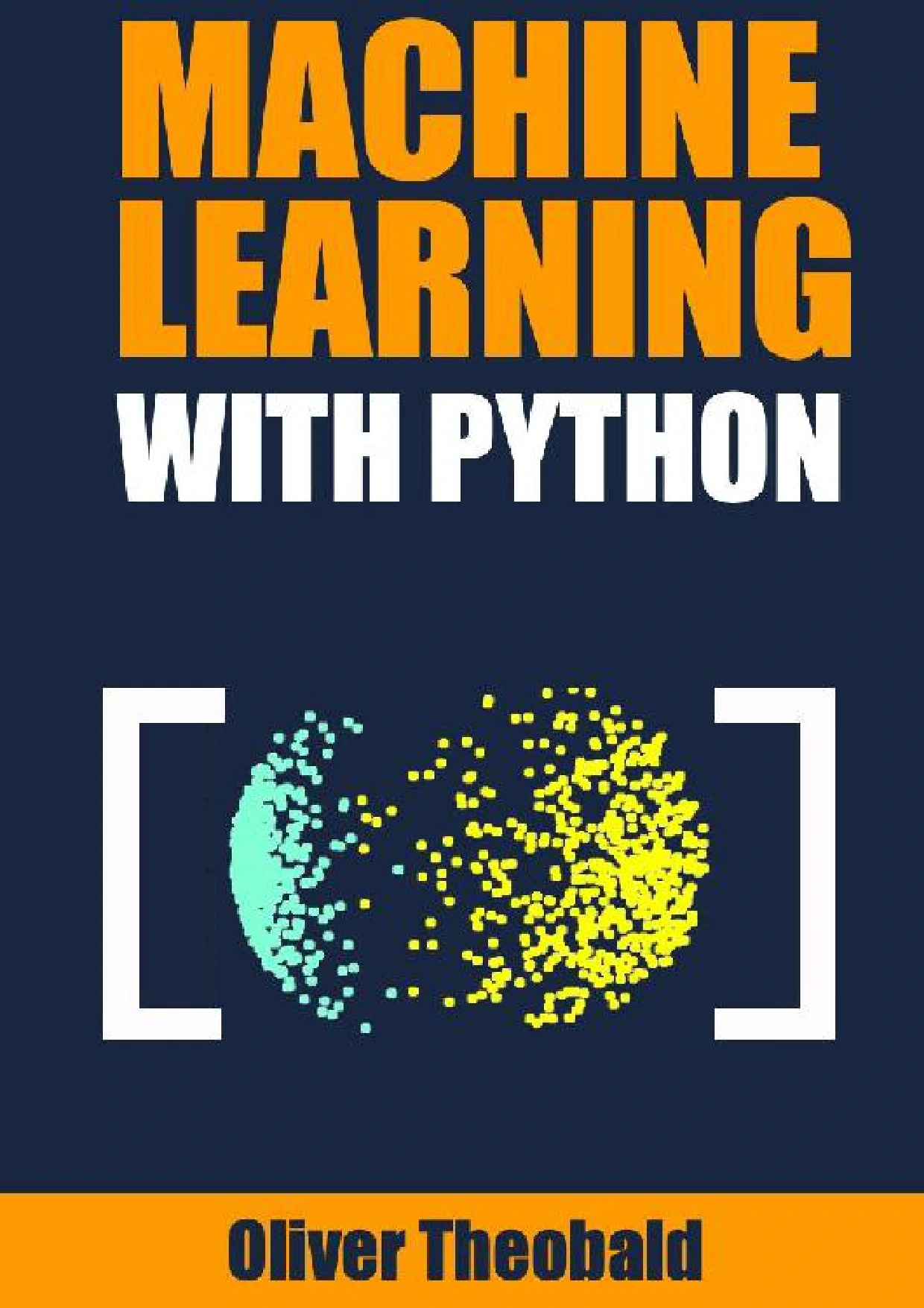
Machine Learning with Python: A Practical Beginners’ Guide
Beginners seeking a structured guide that the catalog describes as covering data preparation, model design, validation, and foundational algorithms.
For readers who want to browse related titles, Digital Delights also has a Python books and resources category. Compare a resource’s stated topics with your current goal—Python foundations, data work, or machine learning—before choosing one.
Frequently asked questions
Which Python library should I start with for machine learning?
Start with pandas and NumPy for working with data, then use scikit-learn to explore a basic machine-learning workflow. Matplotlib is useful for visual inspection. The most suitable first step depends on what you already know, but learning the data-to-model sequence is more useful than installing every framework at once.
Do I need advanced math to begin machine learning with Python?
Not necessarily for an introductory practical project. Basic statistics and the ability to interpret an evaluation result are useful, and deeper mathematical understanding becomes more important as you study particular methods. Requirements differ between learning resources, so check their stated prerequisites rather than assuming one rule applies to every course.
Should beginners learn PyTorch or TensorFlow first?
Neither needs to be your first machine-learning library. Begin with data handling and a simple model workflow; then choose PyTorch or TensorFlow if you want to study neural networks or your project calls for deep learning. The best choice depends on your learning material and project, so compare their current documentation and examples.
Do I need to learn all these libraries before building a project?
No. Start with the smallest toolset that supports your question. A small project using pandas, a little NumPy, and scikit-learn can teach you how the parts fit together; add visualization or deep-learning tools when they serve a clear purpose.
Conclusion
For most beginners, the useful path is Python fundamentals, then NumPy and pandas for data, Matplotlib for exploration, and scikit-learn for a first model and its evaluation. PyTorch and TensorFlow can come later if deep learning is relevant to your goals. Keep the first project small, use a separate environment, and check current compatibility guidance before installing packages. That approach builds understanding of the workflow—not just a list of library names.
Sources and further reading
- Python Data Science Handbook, 2nd Edition — reference for the roles of common Python data-science tools.
- scikit-learn: Machine Learning Simplified, table of contents — example of a learning sequence covering datasets, classification, and evaluation.
- Data Science Bookcamp: Five Python Projects — an example of stated prerequisites in a learning resource.
- Python documentation: venv — official explanation of Python virtual environments.