
How to Learn Machine Learning with Python
To learn machine learning with Python, follow a practical sequence: get comfortable with Python, learn to work with data, study core machine-learning ideas, then build and evaluate small projects. You do not need to master every branch of mathematics or start with neural networks. A solid first goal is to prepare a dataset, train a basic model, check how it performs on data it did not train on, and explain what its results do—and do not—show.
This roadmap covers the skills to learn first, how to choose a working environment, what to practise at each stage, and how to choose a learning resource that fits your starting point.
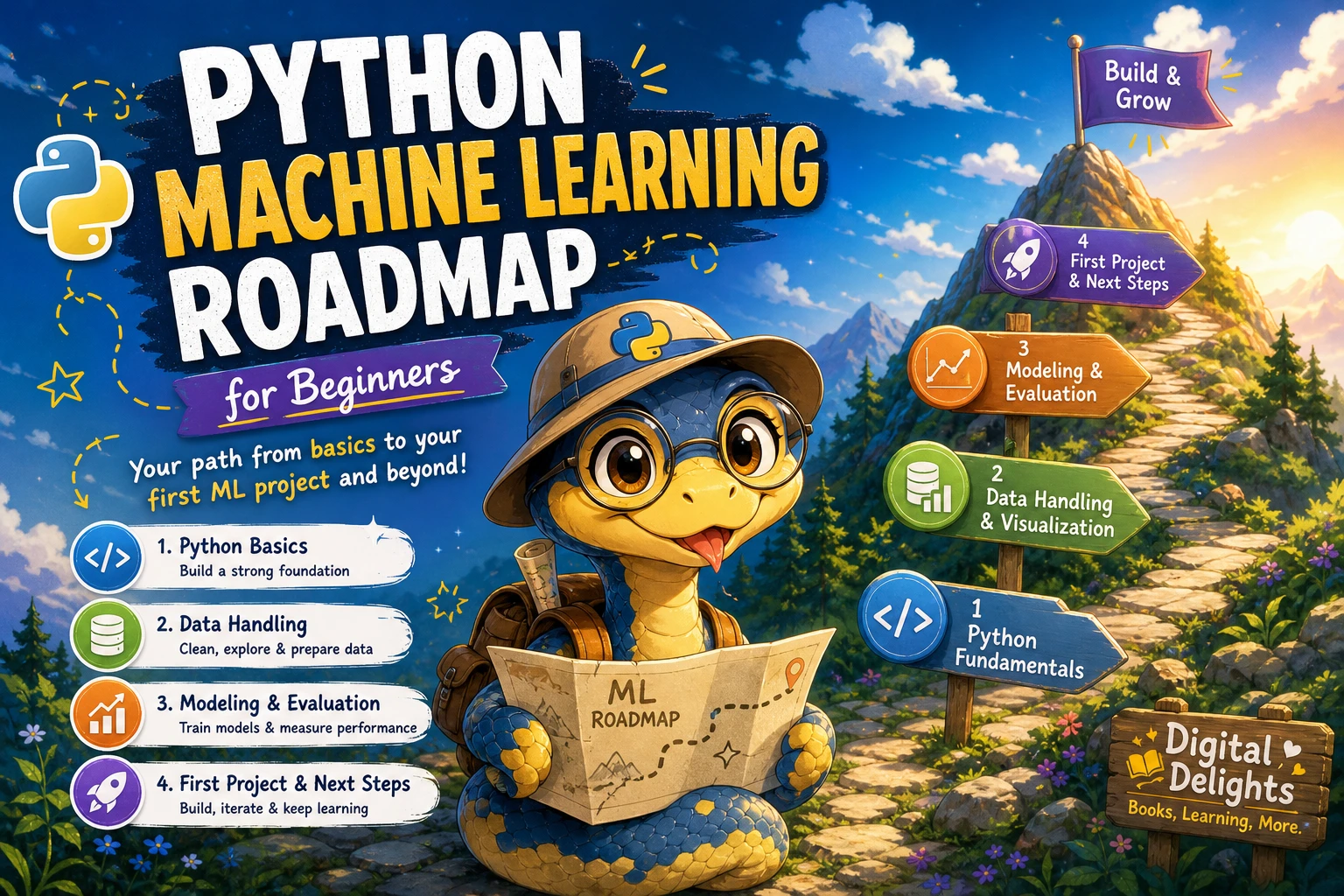
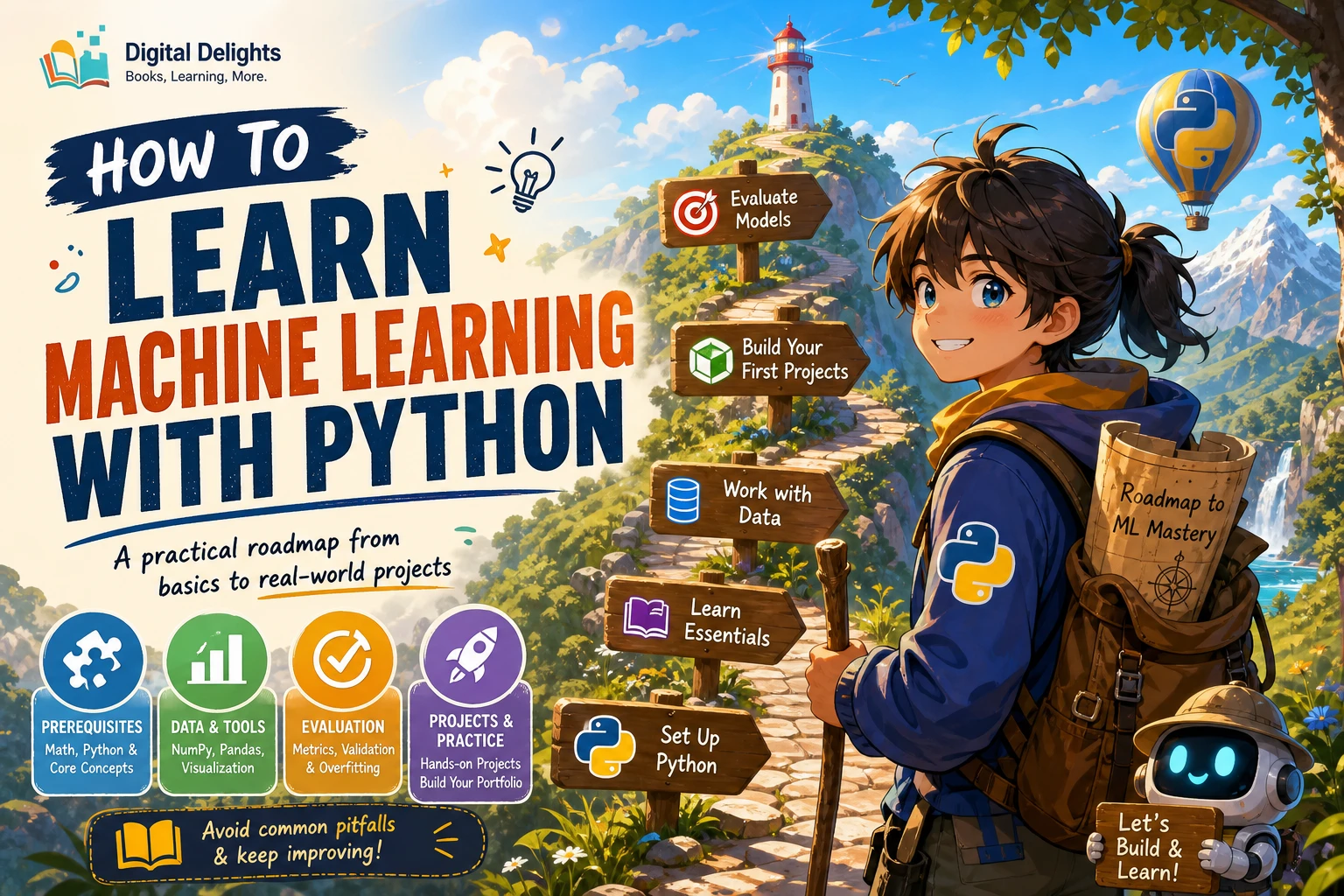
The learning path at a glance
- Practise Python fundamentals and basic problem-solving.
- Learn to inspect, clean, and visualize data.
- Study supervised learning and evaluate models with held-out data.
- Explore preprocessing and unsupervised learning.
- Build a small project and document its limits.
- Move into neural networks or a specialist topic when your goals call for it.
This is a useful sequence, not the only possible one. A project may send you back to review Python, statistics, or data preparation; that is part of learning rather than a sign that you have failed to follow the plan.
What should you know before starting?
Python basics
You should be able to read and write short Python programs, use variables and common data structures, work with conditions and loops, define functions, and understand how to import a library. You do not need to be an expert programmer before trying your first model, but basic fluency makes it easier to understand examples and troubleshoot errors. The Python Tutorial introduces core language concepts and helps readers progress toward writing programs; it describes itself as an introduction rather than a complete reference.
Statistics and mathematics
For an introductory machine-learning project, begin with practical ideas such as averages, variation, distributions, probability, and the difference between a relationship and a cause. Linear algebra and calculus become more useful as you study how particular models work, especially neural networks. How much mathematics you need depends on whether your goal is to use established tools, understand algorithms in depth, or develop new methods. There is no universal prerequisite level established by the supplied sources.
Do not treat a gentle first introduction as proof that mathematics never matters. One introductory book emphasizes practical work over mathematical derivation, while deep-learning material may assume calculus and matrix knowledge. These approaches serve different learning goals.
Set up a practical Python environment
Machine-learning work often combines a place to run code with libraries for numerical computing, data handling, visualization, and model building. Jupyter notebooks are useful for exploring data in small steps. Common tools in introductory learning routes include NumPy, SciPy, pandas, matplotlib, and scikit-learn. The publisher outline for Introduction to Machine Learning with Python moves from a first classification task and train/test evaluation through supervised learning, preprocessing, and unsupervised learning.
Before installing packages, check the current documentation for the Python version and library releases you plan to use. Compatibility changes over time, and the supplied research does not verify which current releases work together. Keep notes on your interpreter and package versions so you can reproduce your setup. Avoid assuming that an older book’s minimum Python version is a current recommendation.
A step-by-step roadmap to learn machine learning with Python
1. Practise core Python through small tasks
Write short programs that use strings, lists, dictionaries, loops, conditionals, and functions. Practise reading a file, transforming values, and printing a clear result. You will use these skills to inspect data and understand machine-learning examples. If your Python is very new, spend time on fundamentals before adding several technical libraries at once.
2. Learn to inspect and prepare data
Models depend on the data supplied to them, so learn how to inspect rows and columns, identify missing or inconsistent values, and understand what each feature represents. Practise simple summaries and visualizations before fitting a model. With pandas, you can explore tabular data; NumPy supports numerical operations; matplotlib can help display patterns. The goal is not to memorize every method, but to know how to ask useful questions about a dataset.
3. Understand supervised learning and evaluation
In supervised learning, examples include a target value or label that a model tries to predict. Classification predicts a category; regression predicts a numeric value. Learn the basic workflow: define the prediction task, separate data used for training from data used for evaluation, fit a model, and compare its predictions with known outcomes.
Do not judge a model only by how well it performs on the examples it has already seen. That can give an overly optimistic picture of its usefulness on new data. Choose an evaluation measure that matches the task, and explain what the measure says in plain language. Introductory learning paths commonly introduce train/test evaluation early, before moving into a wider selection of supervised methods.
4. Study preprocessing and unsupervised learning
Preprocessing means preparing inputs in a form a model can use. Depending on the data and method, this may involve handling missing values, encoding categories, or scaling numerical features. Learn why these steps matter rather than applying them automatically. Also explore unsupervised learning, where the data has no supplied target labels and the aim may be to find structure or groupings. Treat discovered groups as patterns to investigate, not automatically as meaningful explanations.
5. Explore neural networks when your project needs them
Neural networks and deep learning are important areas, but they do not need to be the first stop for every learner. First gain experience with data preparation, simpler models, and evaluation. Then choose a deeper-learning topic based on a real interest—such as working with images, text, or complex data patterns. A clear reason to study a technique makes it easier to connect the new concepts to work you already understand.
Build a first machine-learning project
Choose a small, clearly scoped question rather than a project that promises to solve a broad real-world problem. You could explore a modest tabular dataset or generate a simple practice dataset yourself. If you use data from elsewhere, check its source, terms, and license before using or sharing it.
- Write down the question. State what the model is meant to predict or what pattern you want to explore.
- Inspect the data. Check what the columns mean, what is missing, and whether the examples make sense for your question.
- Prepare a simple baseline. Make a straightforward first attempt so you have a point of comparison.
- Train and evaluate carefully. Keep evaluation data separate from training, and describe the measure you use.
- Review errors and limitations. Note where predictions are wrong, what information is absent, and what the dataset cannot establish.
- Document the work. Record your question, preparation steps, model choice, evaluation, and next improvement.
A useful project is not defined by an impressive-sounding algorithm. It is one where you can explain the task, show your reasoning, and be honest about the result.
Common learning pitfalls to avoid
- Skipping data preparation: Learn to inspect data before assuming it is ready for a model.
- Following tutorials without changing anything: Recreate an example, then vary a sensible part of the question or data and explain what changed.
- Evaluating on training examples alone: Use data the model did not train on to get a more useful check of its performance.
- Starting with deep learning by default: Understand the basic workflow and simpler models before adding another layer of complexity.
- Copying code without understanding inputs and outputs: For each step, ask what goes in, what comes out, and why that operation is needed.
- Expecting a fixed learning timeline: Progress depends on your starting skills, study habits, and project goals; the supplied evidence does not support a guaranteed schedule.
Choosing a machine-learning book or learning resource
Match a resource to the skill you need next rather than choosing only by title. A fundamentals text can help organize key ideas; a hands-on guide can provide a structured path through code and projects. Catalog descriptions support the topic coverage below, but do not establish comparative quality or guarantee learning outcomes.
| Reader or goal | Catalog resource | Why it may fit |
|---|---|---|
| Want a structured overview of AI and machine-learning methods in Python | Artificial Intelligence and Machine Learning Fundamentals | The catalog describes Python examples, exercises, and coverage including regression, classification, clustering, and neural networks. Its stated audience includes readers with some programming comfort. |
| Ready to learn through practical implementations and projects | Python Machine Learning By Example, Fourth Edition | The catalog describes a practical progression involving data preparation, model training, evaluation, and examples such as recommendation and prediction tasks. |
| Looking for a scikit-learn-centered, hands-on guide | Hands-On Machine Learning with scikit-learn and Scientific Python Toolkits | The catalog describes coverage of supervised and unsupervised learning, data preparation, model evaluation, and scientific Python tools. |
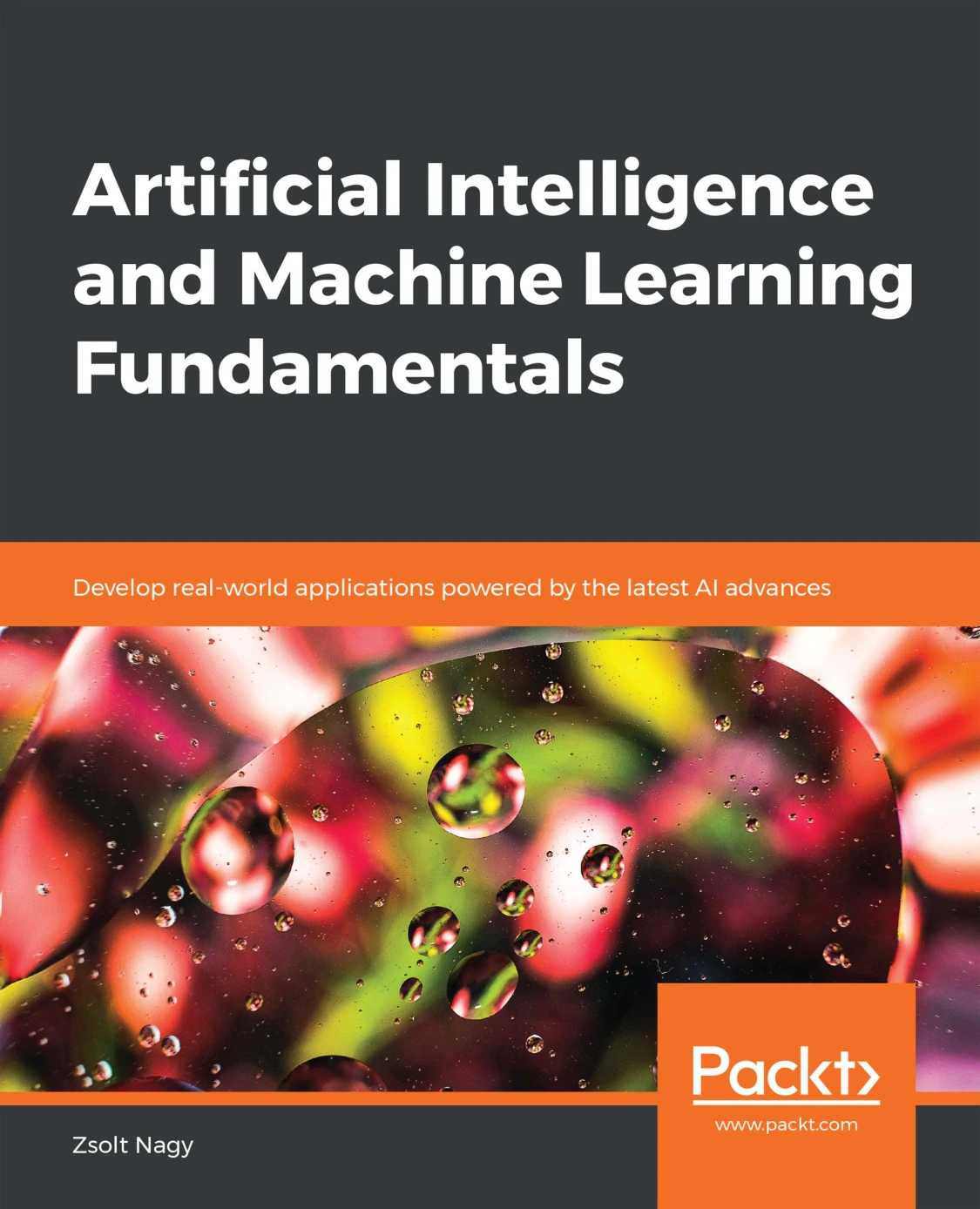
Artificial Intelligence and Machine Learning Fundamentals
By Zsolt Nagy
Learners with some programming comfort who want an organized introduction to regression, classification, clustering, and neural networks.
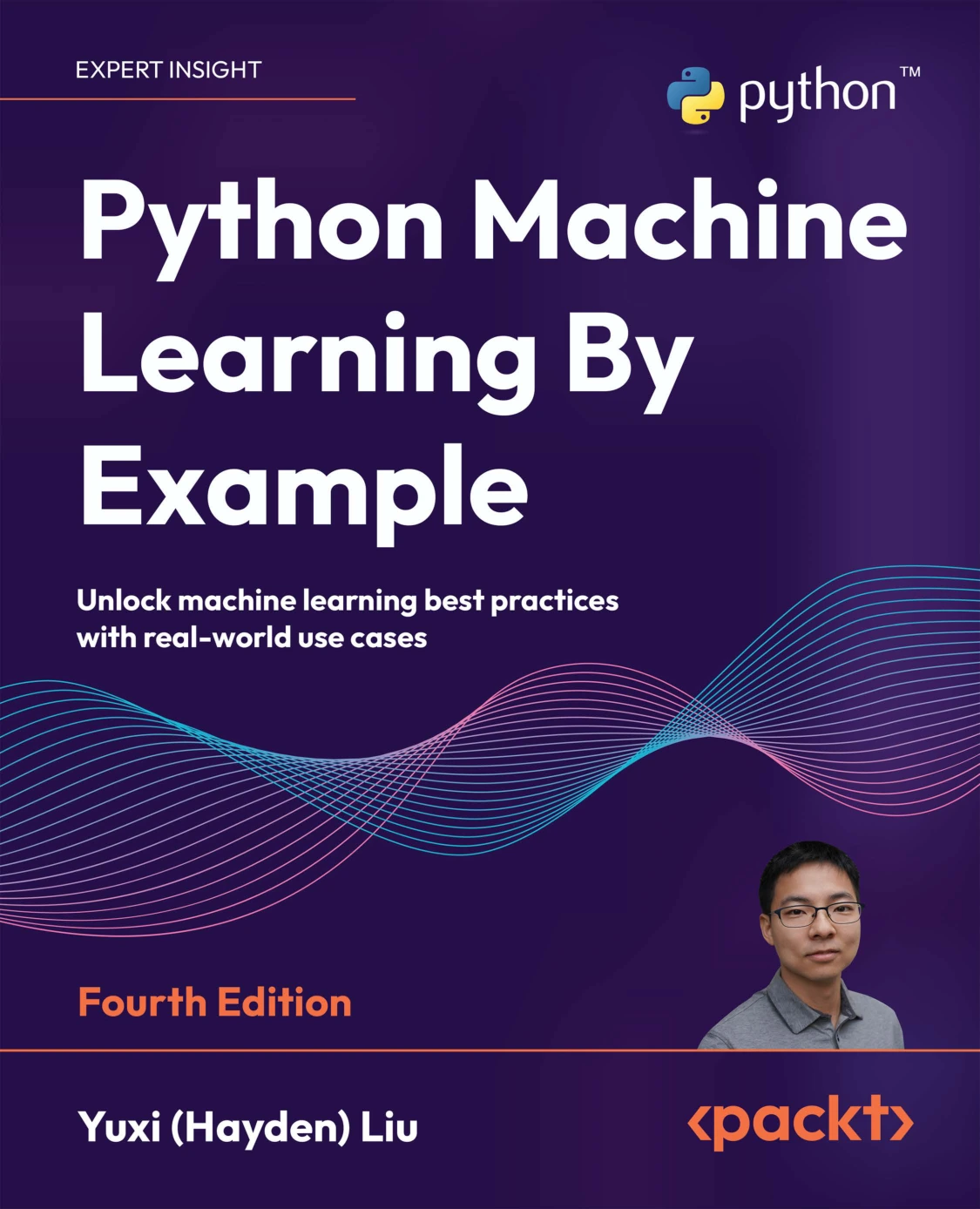
Python Machine Learning By Example, Fourth Edition
Readers ready to learn machine learning by following implementation examples and projects.
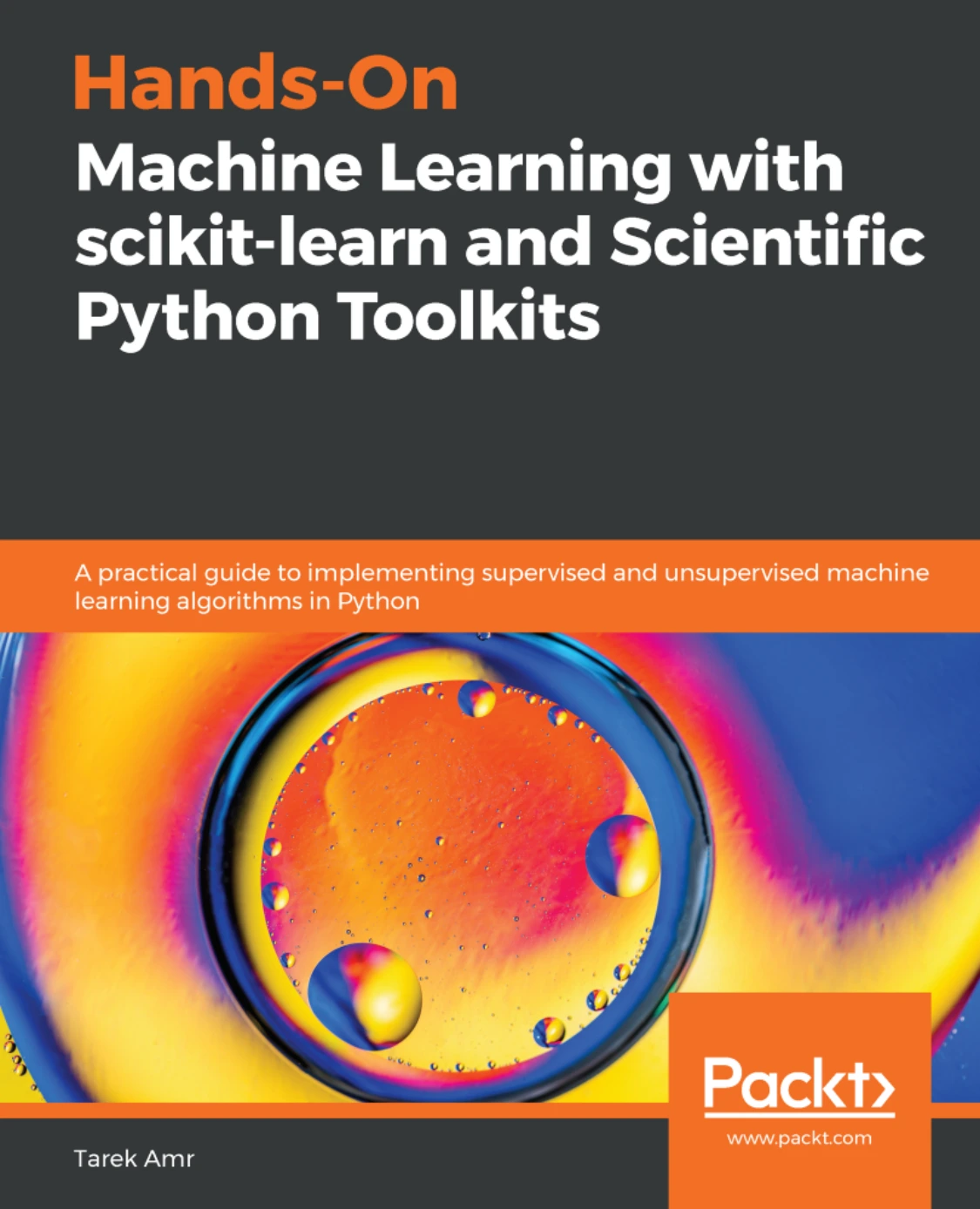
Hands-On Machine Learning with scikit-learn and Scientific Python Toolkits
By Tarek Amr
Learners seeking practical coverage centered on scikit-learn and scientific Python.
Choose one resource that fits your current stage and pair it with regular coding practice. Recipe-based problem solving tends to make more sense after you are comfortable with Python, pandas, and scikit-learn; the publisher description for Machine Learning with Python Cookbook, 2nd Edition identifies those as existing skills for its intended readers.
Frequently asked questions
What Python should I know to learn machine learning?
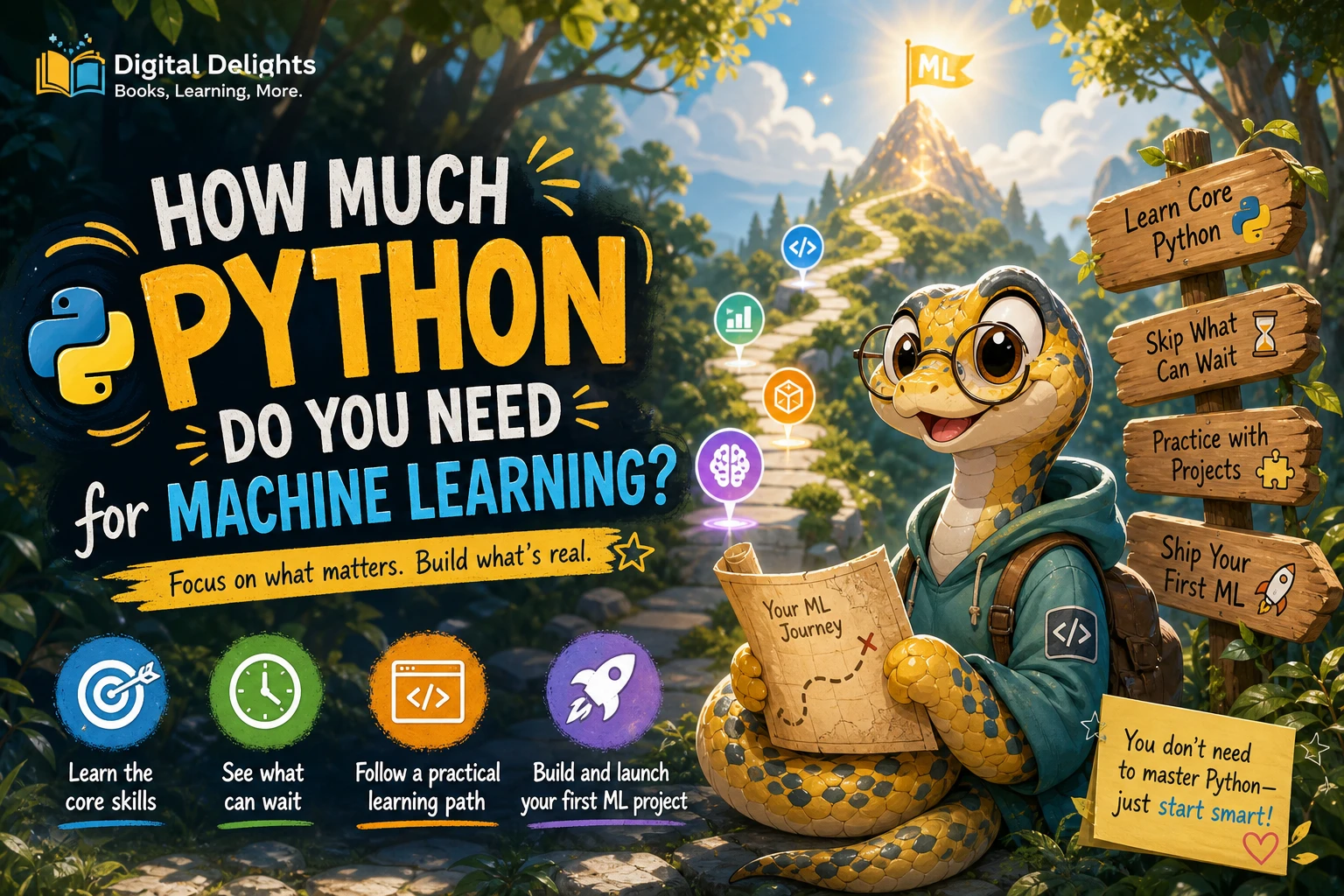
Start with variables, common data structures, loops, conditionals, functions, imports, and basic file handling. You can learn more advanced Python as projects require it; you do not need to master the entire language first.
How much math do I need for machine learning?
For a practical introduction, build familiarity with basic statistics, probability, and interpreting data. Linear algebra and calculus are increasingly useful for understanding some algorithms in depth, particularly neural networks. The right level depends on your goal, and the supplied sources do not establish one minimum for everyone.
What should I build first?
Start with a small prediction or pattern-finding task using data you can understand. Define the question, inspect and prepare the data, create a simple starting point, and evaluate results on examples not used for training. Check the data’s source and terms if you use an external dataset.
When should I learn deep learning?
Consider it after you understand the basic machine-learning workflow and can prepare data and evaluate a model. Move on when a project or area of interest gives you a reason to study neural networks, rather than treating deep learning as a required first step.
Conclusion: learn by building and checking
The most dependable route to learning machine learning with Python is incremental: practise Python, become comfortable with data, learn core models and evaluation, then build small projects and explore deeper topics as needed. Keep your work reproducible, question your results, and record limitations as carefully as successes. A well-explained modest project is a stronger learning exercise than a complex model you cannot evaluate or describe.