How Long Does It Take to Become Good at Python?
There is no reliable, evidence-based number of days or study hours that makes someone “good” at Python. The answer depends on what you mean by good: understanding basic syntax, writing useful programs without step-by-step instructions, or working comfortably in a larger codebase are different goals.
A more useful measure is what you can do independently. You might learn the fundamentals relatively quickly, then spend much longer improving your debugging, project-building and design skills. This guide explains the milestones to aim for, what can affect your progress, and how to practise without treating a calendar deadline as a guarantee.
What does “good at Python” mean?
Python skill is not a single pass-or-fail level. A learner can be comfortable with basic syntax and still need help planning a project or tracking down a difficult bug. Consider these three practical levels:
- Comfortable with the fundamentals: You can read and write basic expressions, use variables and common data structures, make decisions with conditions, repeat work with loops, and organize code into functions.
- Independent with small programs: You can turn a modest idea into a working script, look up unfamiliar details, interpret common errors, test changes and revise your code when the first approach fails.
- Confident in a chosen area: You can build and maintain more substantial work related to a goal such as data analysis, automation or web development. You also understand that larger projects involve tools and practices beyond Python syntax.
These are descriptions of observable abilities, not standardized proficiency levels. The official Python tutorial covers topics including expressions, control flow, functions, data structures, modules, errors, classes and packages. It describes an introduction to the language, not a timetable for mastery.
How long does it take to learn Python? A practical planning guide
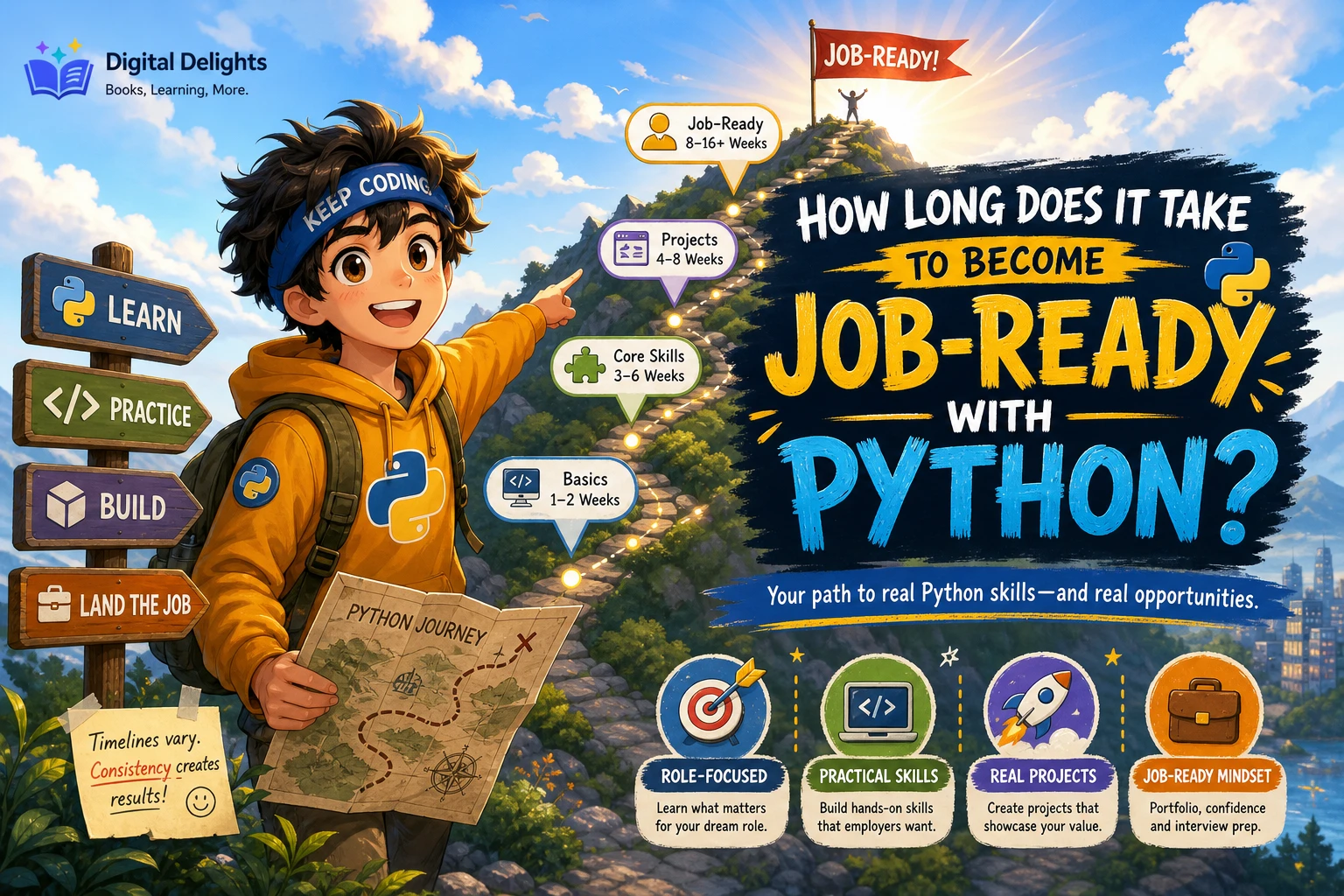
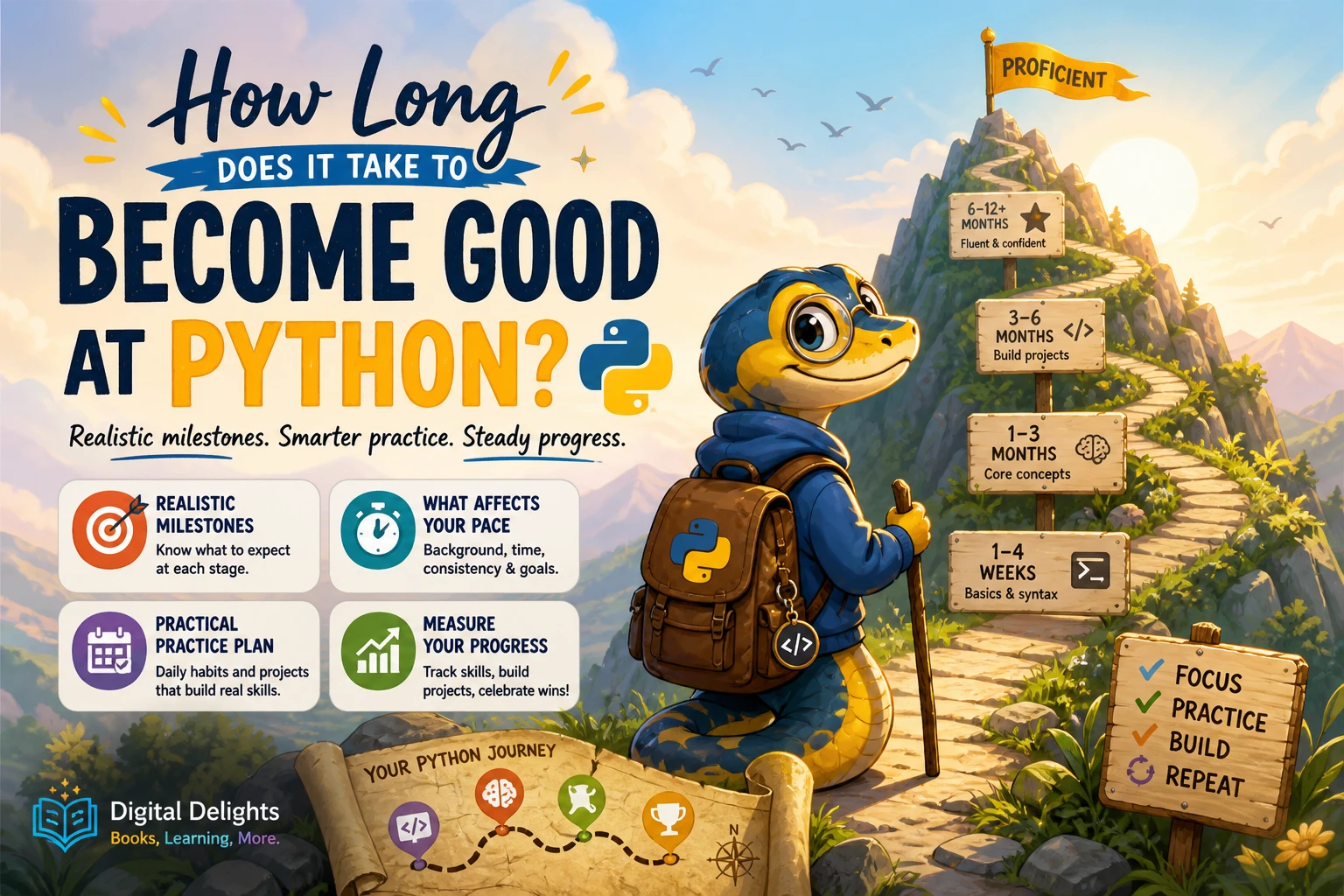
There is no validated benchmark that connects a particular amount of study to a defined level of Python ability. The schedule below is an illustrative planning estimate, not a measured average or promise. It assumes a beginner studies for roughly 30–60 minutes on four or five days most weeks, writes code during study sessions, and builds small projects along the way. Your experience, schedule and target can shift the pace substantially.
| Learning milestone | Illustrative planning window | What to look for |
|---|---|---|
| Core foundations | First few weeks | You can explain and use basic data types, conditions, loops and functions in short exercises. |
| Small scripts and debugging | Following weeks | You can adapt examples, read error messages and make a simple script handle ordinary inputs. |
| Independent small projects | Over the next several weeks or months | You can plan a modest project, divide it into steps, test it and find information when you get stuck. |
| Deeper skills in a chosen area | Ongoing | You can apply Python to a specific kind of work and learn the tools and practices that area requires. |
Use the windows to organize your effort, not to judge yourself. If a milestone takes longer, that does not mean you are failing; if you move faster through syntax, it does not mean you have mastered programming. Progress is better reflected in the problems you can solve and the code you can explain.
What affects how quickly you improve?
Previous programming experience
If you have programmed before, ideas such as variables, loops and functions may already be familiar. You will still need to learn Python’s syntax and conventions, but you may spend less time learning what those concepts mean. If Python is your first language, give yourself room to learn both the language and the general habit of breaking problems into steps.
Consistency and active practice
Regular sessions make it easier to return to a problem and notice patterns. The important part is not simply keeping a streak: use some of each session to write or change code. Reading explanations can introduce a concept, but trying it yourself reveals which parts you can actually use.
The quality of the challenge
Repeating familiar exercises can build fluency, but growth also comes from tasks that require you to make a decision. Try changing an example, combining two concepts, or adding a feature that was not shown in a lesson. Choose challenges that stretch you without requiring you to solve an entire unfamiliar field at once.
Feedback and debugging
Useful feedback helps you distinguish a misunderstanding from a small typo or a flawed assumption. Run your code often, check its output and read error messages carefully. When possible, ask someone to review your approach or compare your result with a well-explained example.
Your end goal
“Good enough” depends on what you want to do. A short script that renames files has a different scope from a data-analysis workflow or a web application. Once you know your intended use, you can focus on the libraries, tools and project skills relevant to it instead of trying to learn every Python topic at once.
A roadmap from Python basics to independent projects
1. Learn the building blocks
Start with values and variables, strings and numbers, conditions, loops, lists and dictionaries, and functions. Practise each idea in short programs. For example, write a script that asks for a few expenses and prints their total, then change it to handle an empty list or display the largest expense.
2. Get used to reading and changing code
Do not only type examples exactly as written. Predict what a small program will do, run it, then change one detail and observe the result. When you see an error, identify the line involved and test a small correction. This develops the ability to work with code that is not a perfect copy of a lesson.
3. Build projects small enough to finish
Choose a project with a clear, limited outcome. A quiz, a basic budget tracker or a script that organizes a folder can all provide practice. Write down what the program should do, split it into a few steps, and get a simple version working before adding optional features.
4. Choose a direction and learn its tools
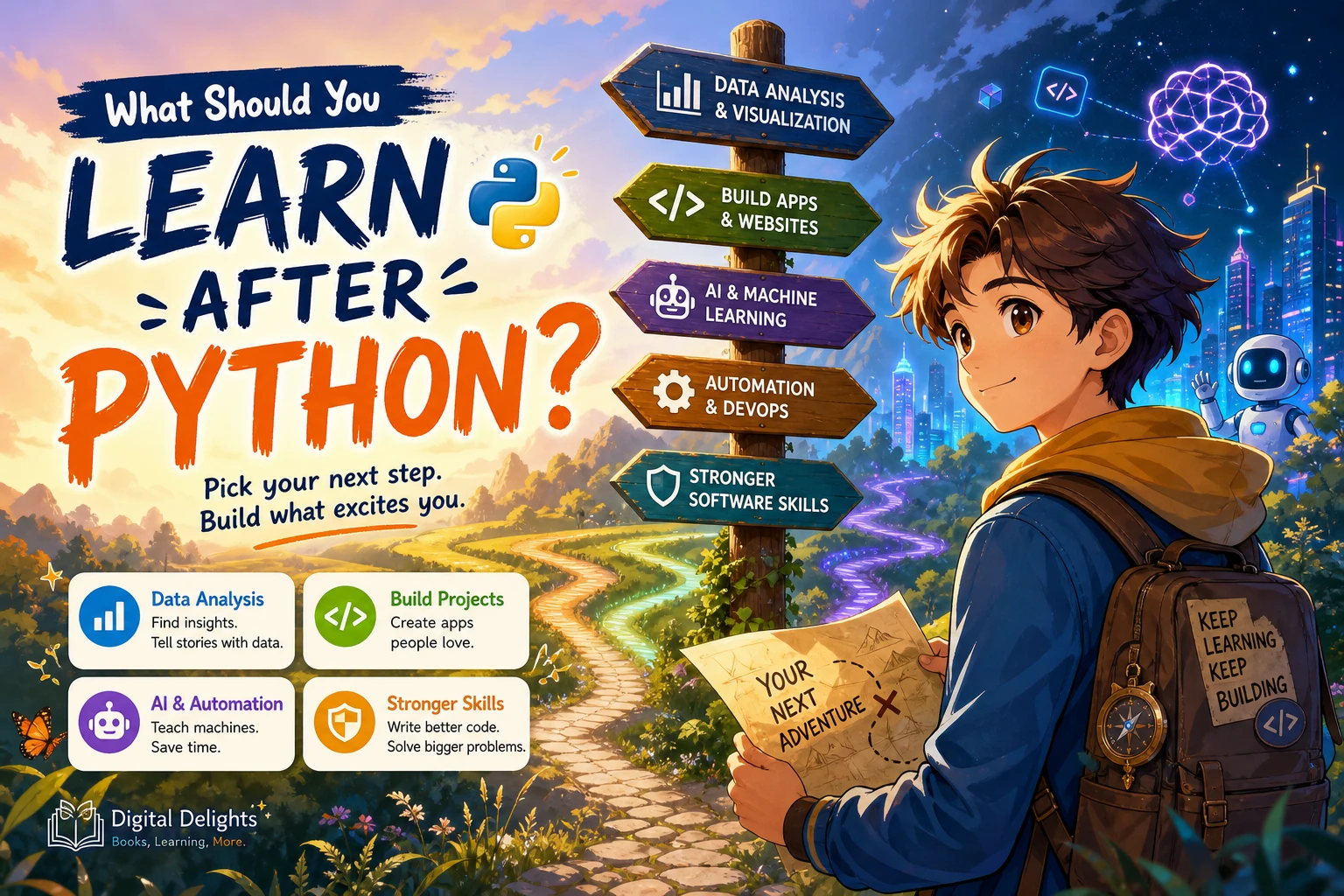
After you can make small programs, decide what you want Python to help you do. Data-focused learners might explore tables and analysis; automation learners might work with files and repetitive tasks; web learners will need to study web frameworks and application structure. The language is a starting point, not the whole specialization.
5. Revisit fundamentals in new situations
Return to familiar concepts as projects become more complex. Functions, data structures, exceptions and modules will make more sense when you see how they help solve a real problem. The official Python tutorial offers a reference for many of these core topics, but it is not a substitute for practising with your own code.
How to practise Python effectively
- Write code in every study session. Even a short exercise gives you a chance to recall and apply an idea.
- Modify working examples. Change inputs, add a condition or reorganize a function so that you learn how the parts behave.
- Make errors useful. Read the message, isolate the relevant code and test one change at a time rather than rewriting everything at once.
- Keep a small project list. Record ideas that are specific enough to finish, and start with the simplest version.
- Explain your code. If you cannot describe what a section does, pause and trace it with a small example.
- Review old work. After learning something new, revisit an earlier script and see whether you can make it clearer or more reliable.
A practical weekly rhythm could combine focused lessons, short exercises and one session working on a personal project. Adjust the amount to fit your life; the goal is regular contact with problems, not a rigid hour quota.
Expectations that can slow learners down
- Finishing a tutorial is not the same as proficiency. A tutorial can show you how ideas work; independent use requires practice recalling and combining them.
- You do not need to master everything before building. Start small projects while learning fundamentals, then look up concepts as they become relevant.
- Getting stuck is part of the work. Debugging and revising are programming skills, not signs that you are unsuited to coding.
- Do not compare unlike schedules. People bring different experience, goals and available practice time. Someone else’s timeline is not a reliable forecast for yours.
- “Good” is not the same as knowing every library. Python is used in many areas; choose a useful direction rather than treating the entire ecosystem as one course to finish.
Choosing a beginner Python learning resource
A structured book or course can provide sequence and explanations, especially when you are unsure what to learn first. It should support active coding rather than replace it. As you compare beginner resources, look for clear setup guidance, coverage of foundational concepts and practice that invites you to write code yourself.
- Python for the Greenhorns Book-1 is described in the catalog as an introductory resource for people new to coding, with coverage of Thonny, variables, constants and exercises.
- Python Illustrated uses visual explanations and step-by-step instruction for beginner concepts, according to its catalog description.
- Python Coding & Programming: The Complete Manual covers a wider range of topics, including functions, conditions, loops, data structures, files and error handling.
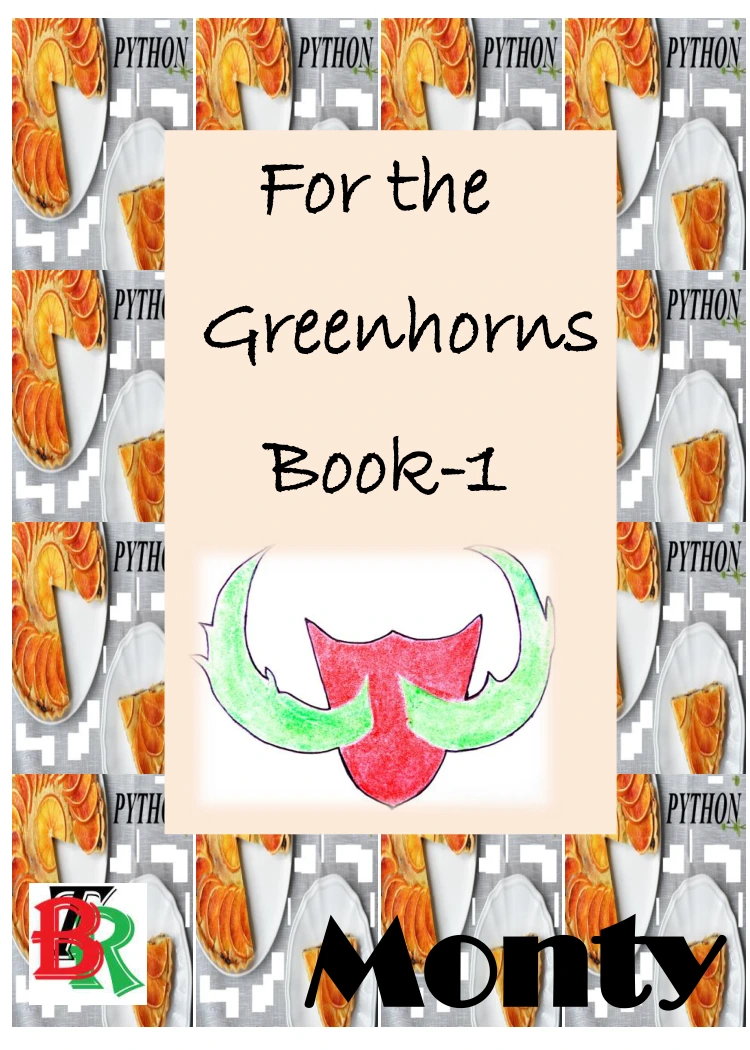
Python for the Greenhorns Book-1
By Monty
Beginners who want an introductory guide covering Thonny, variables, constants and exercises.
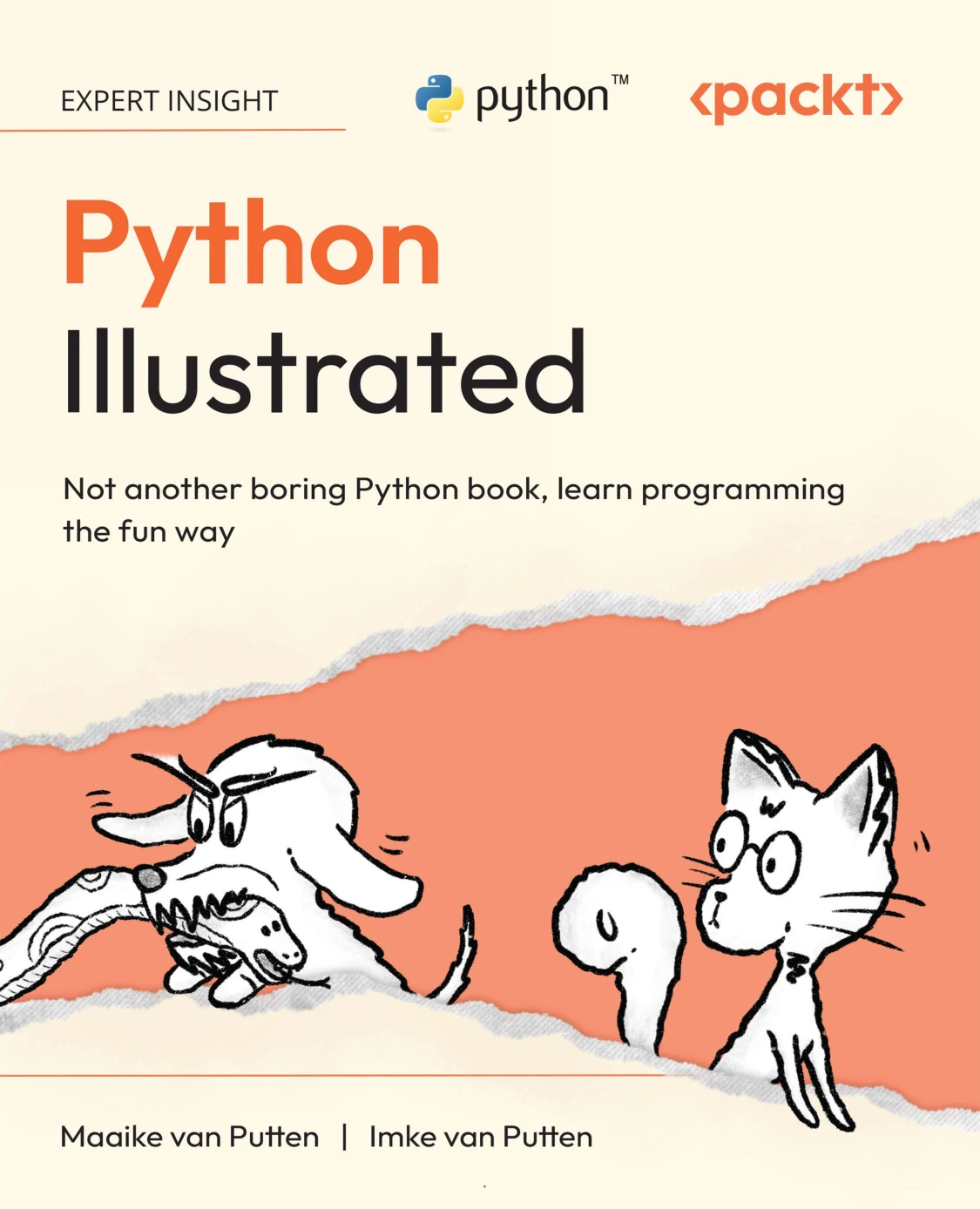
Beginners who may benefit from illustrated explanations and step-by-step instruction.
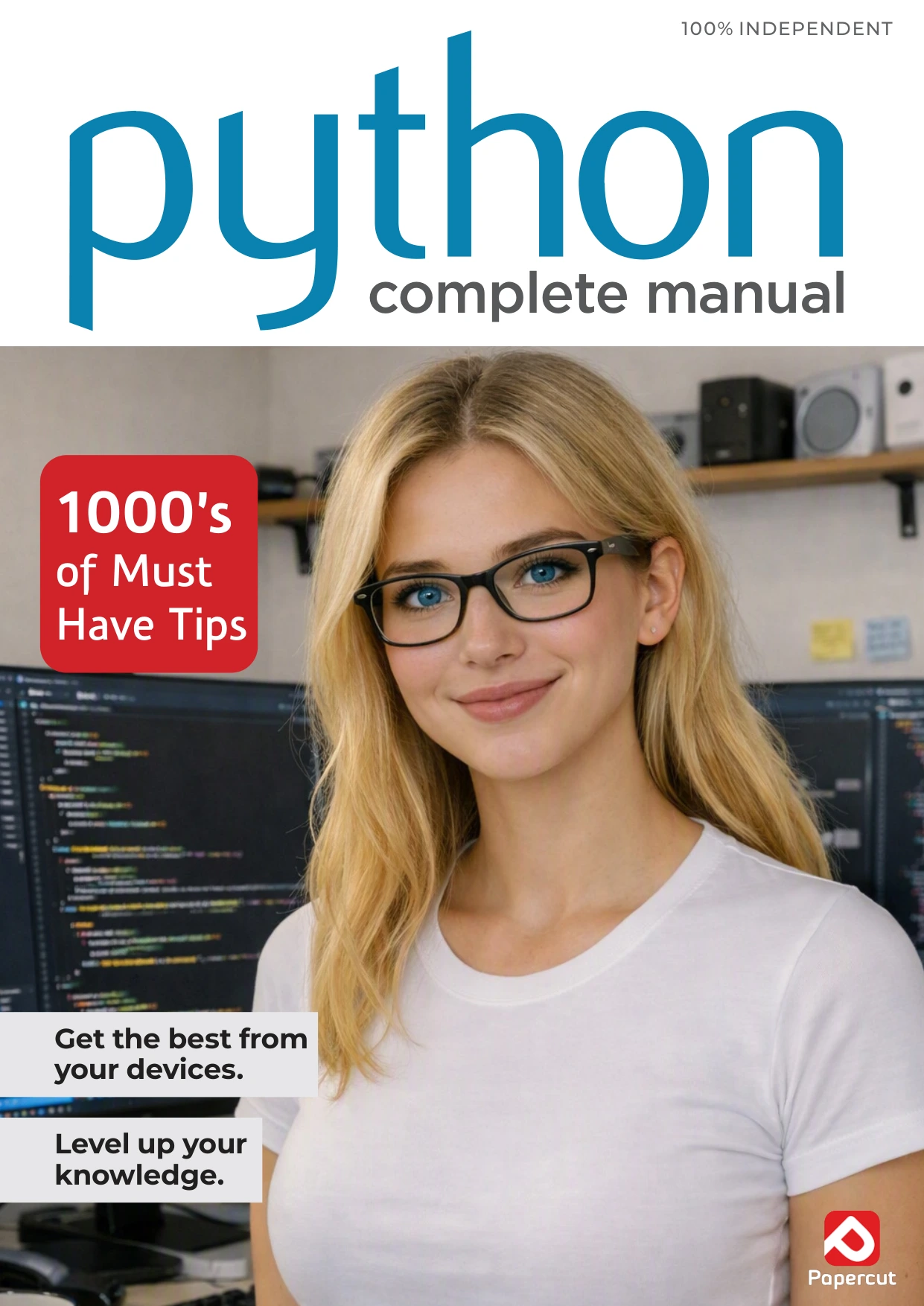
Python Coding & Programming: The Complete Manual
Learners looking for a wider survey that includes functions, loops, data structures, files and error handling.
These are examples of possible study aids, not shortcuts or guarantees. Choose one whose approach suits you, then make sure your learning includes exercises and projects. You can also browse the Python collection for other relevant resources.
Frequently asked questions
Can I learn Python with no programming experience?
Yes. You can begin with basic concepts and small exercises without having studied another programming language. Expect to learn problem-solving habits alongside Python syntax, and take time to practise each idea before moving on.
How much should I practise?
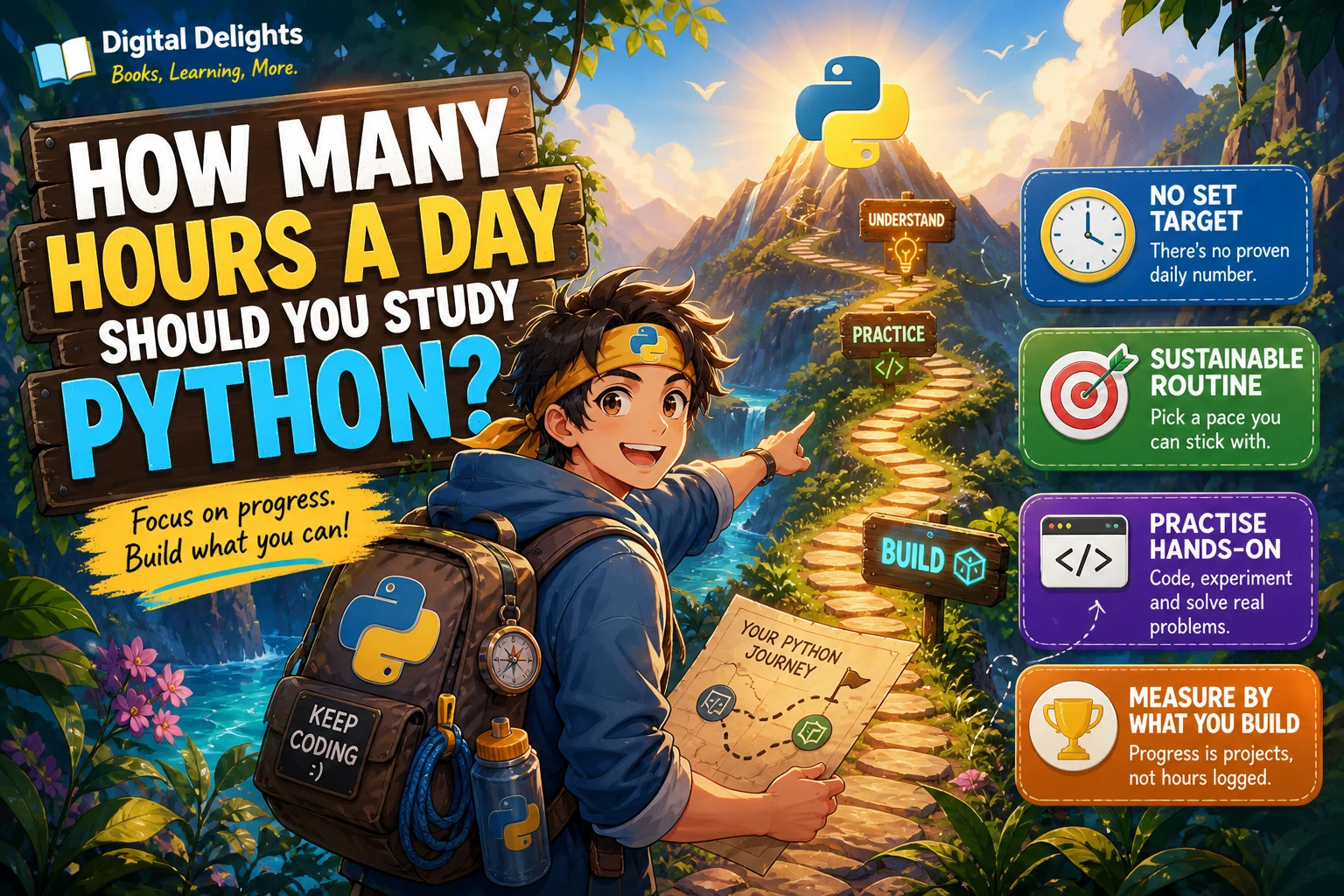
There is no established number of practice hours that guarantees a particular skill level. Choose a repeatable schedule you can sustain, and use a meaningful portion of it to write, test and revise code. Consistency matters more than following an unsupported universal quota.
When can I start building projects?
You can start with very small projects as soon as you understand a few basics, such as variables, conditions and input or output. Keep the first goal modest, then add features as you learn. Projects are a way to practise, not a final exam you must pass before you begin.
How do I know I’m improving?
Look for signs such as solving a new exercise with less guidance, understanding an error message, explaining your code, and completing a small project you planned yourself. Track these abilities over time rather than relying only on pages read or hours logged.
Set a goal you can demonstrate
Instead of asking only how long it takes to become good at Python, define one task you want to be able to complete. Then work through the fundamentals, practise debugging and build a small version of that task. There is no evidence-based deadline for proficiency, but a concrete project gives you a clear way to see what you can do now—and what to learn next.
Sources
- The Python Tutorial — Python 3.10 documentation. Used for the scope of topics covered in the tutorial; it does not establish a time to proficiency.