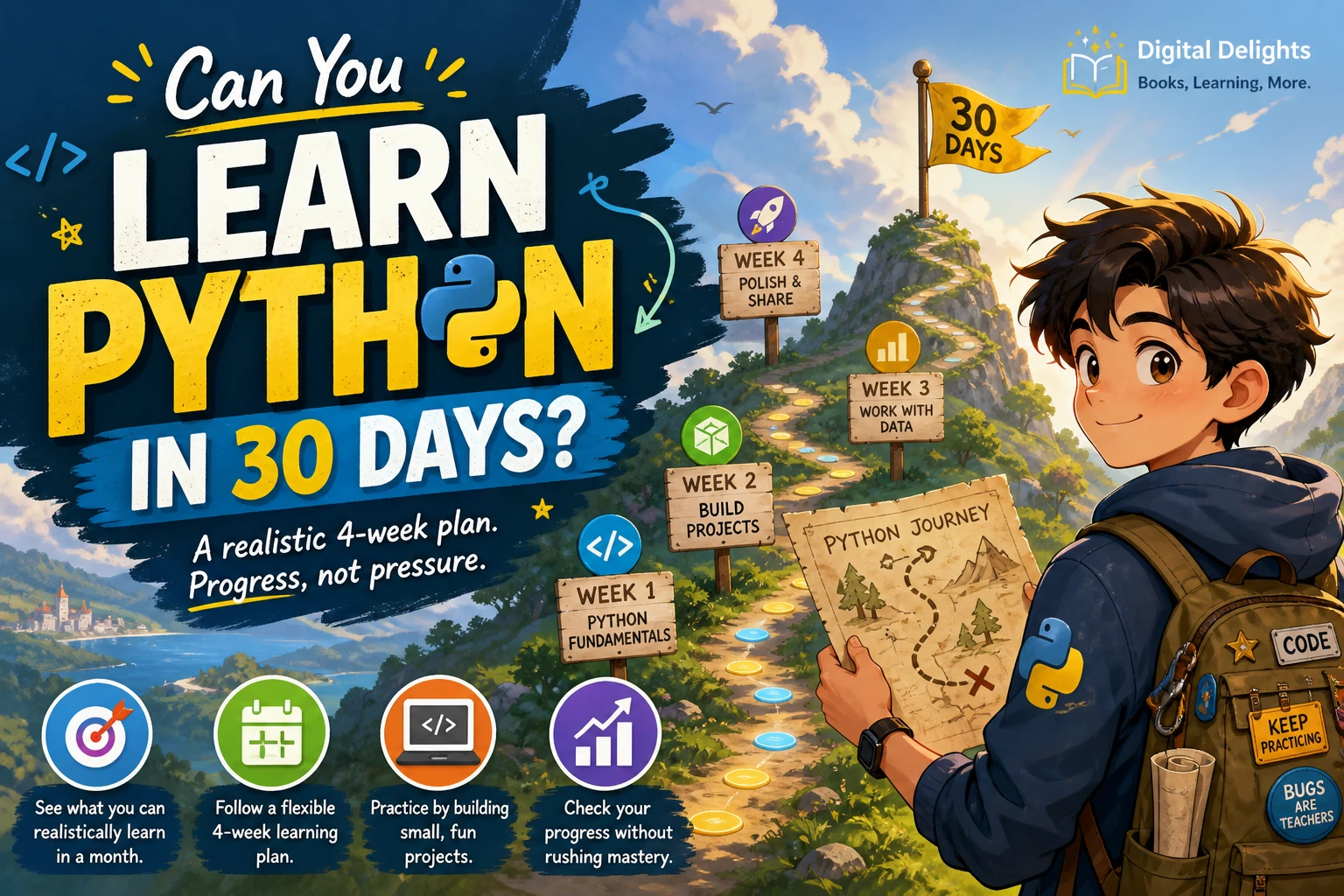
Can You Learn Python in 30 Days?
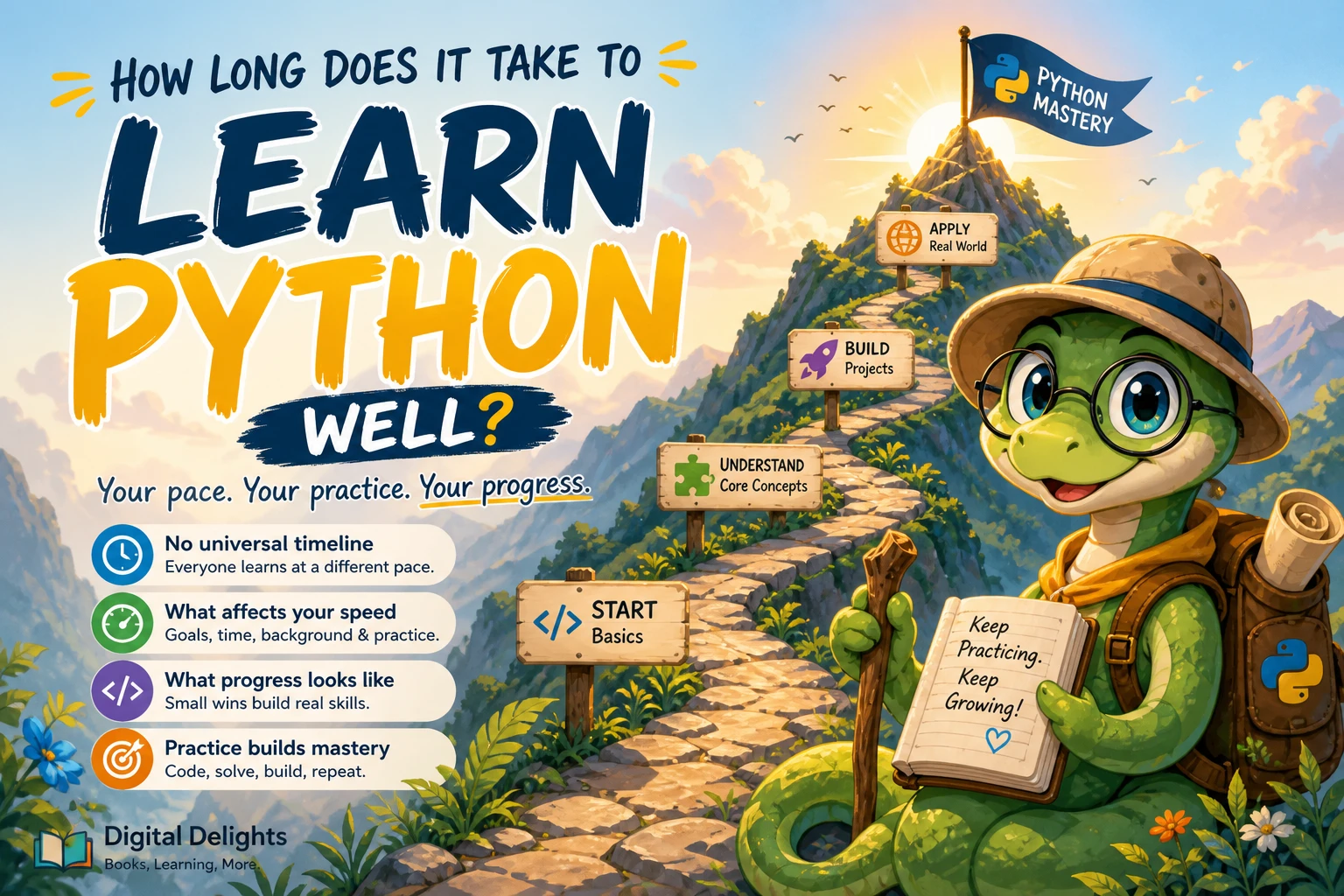
Yes—you can make meaningful progress with Python in 30 days. A month of steady practice may be enough to learn foundational concepts and build a small program, but it is not a reliable promise of mastery or job readiness. What you can accomplish depends on your starting point, how consistently you practise, and what you mean by “learn.”
A useful goal is not to finish every Python topic. It is to write and understand simple programs, solve small problems without copying a complete answer, and complete a modest project you can explain. This guide sets out a realistic month-long learning plan, ways to check your progress, and common traps to avoid.
What Does “Learning Python” Mean?
People use “learn Python” to describe very different outcomes. It might mean recognizing basic syntax, writing small scripts, using Python in a particular field, or being prepared to contribute to professional software. Those goals require different levels of knowledge and practice.
- Learning the foundations: understanding core syntax and writing short programs using variables, conditions, loops, and functions.
- Building simple projects: combining those skills to make a small tool, then finding and correcting basic mistakes.
- Working in a specialization: learning additional tools and concepts for areas such as data analysis, web development, or automation.
- Professional readiness: developing broader skills that may include software design, testing, collaboration, and experience with a specific technical stack.
A 30-day plan is most realistic when “learn Python” means reaching the first or beginning stages of the second goal. It should not be treated as a deadline for mastering the language.
Can a Complete Beginner Learn Python in a Month?
Prior programming experience can make some ideas easier to recognize, but it is not a prerequisite for beginning. A new learner can start with a Python interpreter and a way to write and run code. The official Python tutorial introduces the language’s core concepts and is designed for hands-on use; it does not set a time limit or promise mastery.
There is no established, universal 30-day result. The research available for this article did not identify controlled evidence showing what a typical beginner will learn in a month, nor a standard daily study time or threshold for saying someone has “learned Python.” Treat the plan below as a practical framework to adapt, not a validated timetable or guaranteed outcome.
What You Could Aim to Do After 30 Days
Rather than measuring progress by how many lessons you have watched, define a few skills you want to practise. By the end of the month, a reasonable target might be to:
- Run Python code and make small changes to a script.
- Use variables and common data types, including numbers, strings, and Boolean values.
- Use conditional statements to make a program respond to different inputs.
- Use loops and basic collections, such as lists and dictionaries.
- Write a simple function and use it to organize repeated work.
- Recognize basic errors, read the message, and try a fix.
- Complete a small project and describe how its main parts work.
These are suggested learning objectives, not outcomes that every learner will reach on the same schedule. If a topic takes longer than expected, continuing to practise it is more useful than rushing ahead just to keep pace with a calendar.
A Practical 30-Day Python Learning Plan
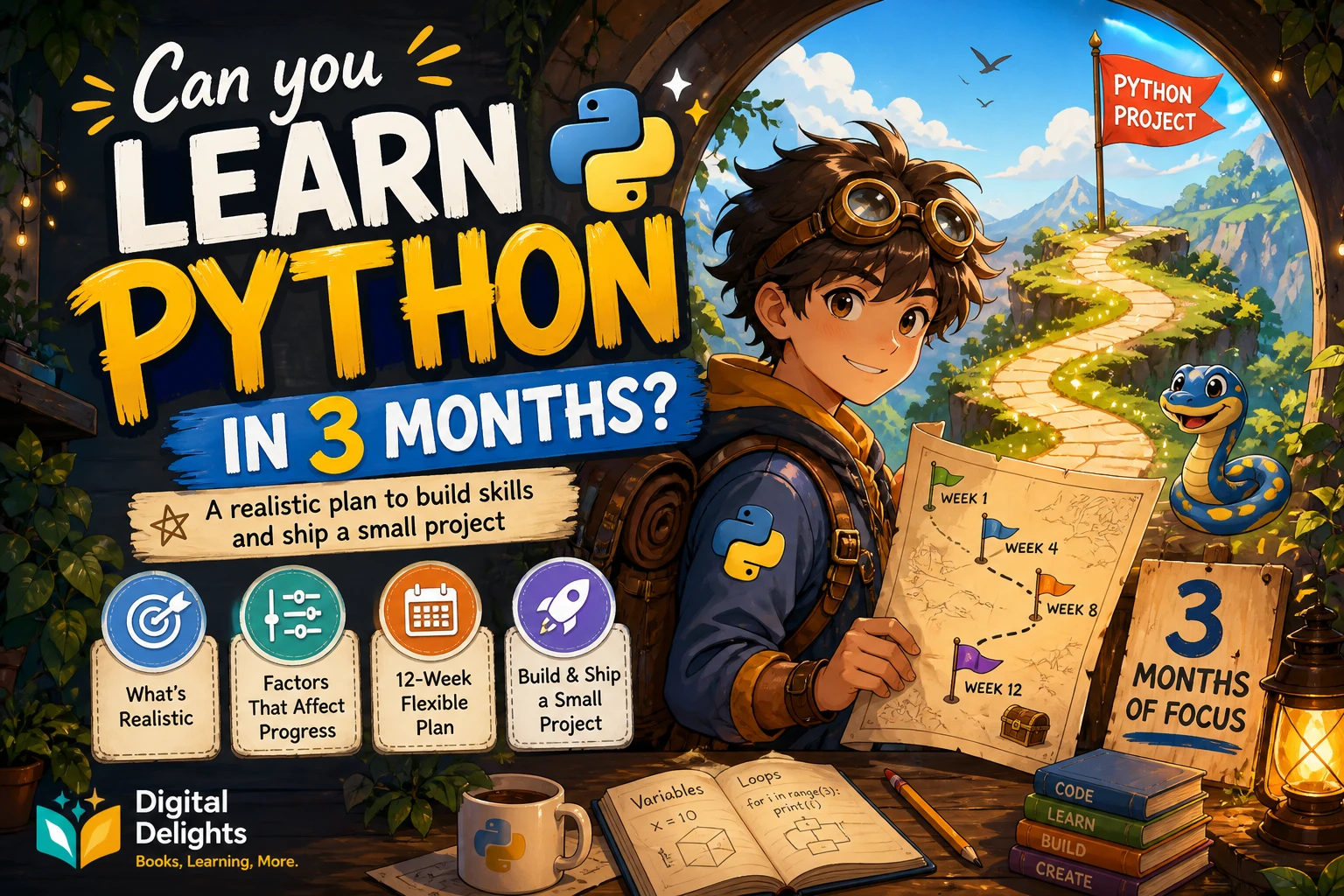
Use the four weeks as broad stages, not strict deadlines. The important habit is to type, run, change, and debug code—not only read about it. When a task feels difficult, reduce its scope and work through one small part at a time.
Week 1: Set Up and Learn the Basics
Start by getting a working Python setup and running a few simple statements. Then learn how Python represents information and how a program receives or displays it.
- Run a short script and try simple expressions.
- Practise variables, numbers, strings, and Boolean values.
- Use basic input and output.
- Change examples: edit a message, calculate a different value, or ask for a different input.
End-of-week practice: write a tiny program that asks for information, stores it, and displays a result. Keep it simple enough that you can explain each line.
Week 2: Add Decisions, Loops, and Collections
Programs become more useful when they can choose between actions, repeat a task, and keep related values together. Practise these ideas with small examples before combining them.
- Use
if,elif, andelseto handle different cases. - Use loops to repeat a calculation or process several items.
- Practise working with strings and basic lists or dictionaries.
- Test your code with different inputs, including unexpected ones.
End-of-week practice: create a short quiz, a number-guessing game, or a simple list-based tracker. Focus on understanding the decisions and repetitions in your code.
Week 3: Organize Code and Work with Errors
As scripts grow, it helps to divide work into functions and practise how a program handles common problems. The aim is not to memorize every feature; it is to get comfortable reading, changing, and checking your own code.
- Write functions with inputs and return values.
- Break a larger task into smaller steps before coding.
- Practise reading error messages and checking the line they identify.
- If you are ready, try reading from or writing to a simple text file.
End-of-week practice: take a script from the previous week and reorganize one repeated task into a function. Add a check for one likely error or unexpected input.
Week 4: Build, Review, and Explain a Small Project
Choose a project small enough to finish with the skills you have practised. Make a basic version first, then add one improvement if time and understanding allow.
Possible first projects include:
- A quiz that keeps score.
- A to-do list that adds and displays items.
- A basic expense or habit tracker.
- A text-based menu that performs a few simple calculations.
- A script that reads a small text file and summarizes its contents.
Write down what the program should do before you start. After it works, test a few different situations, tidy up confusing parts, and explain the main steps in plain language. If you cannot explain a section yet, use that as a guide for what to review.
How to Judge Your Python Progress
Finishing chapters can feel satisfying, but it does not necessarily show whether you can use what you read. Try these checks instead:
- Can you start from a small problem? Write down the expected input, steps, and output before looking for a complete solution.
- Can you make a small change? Alter an example’s input, condition, or output and predict what should happen.
- Can you explain the code? Describe what each important section does without relying on a memorized definition.
- Can you investigate a basic error? Read the message, locate the relevant code, and test a possible correction.
- Can you adapt a project? Add a small requirement, such as allowing another quiz question or keeping an extra piece of information.
Needing documentation or notes is normal. The goal is not to remember every detail; it is to build enough understanding to find, test, and apply information responsibly.
Why a 30-Day Python Plan Can Fall Short
- Watching lessons without writing code: explanations can make a concept feel familiar, but you still need to practise using it.
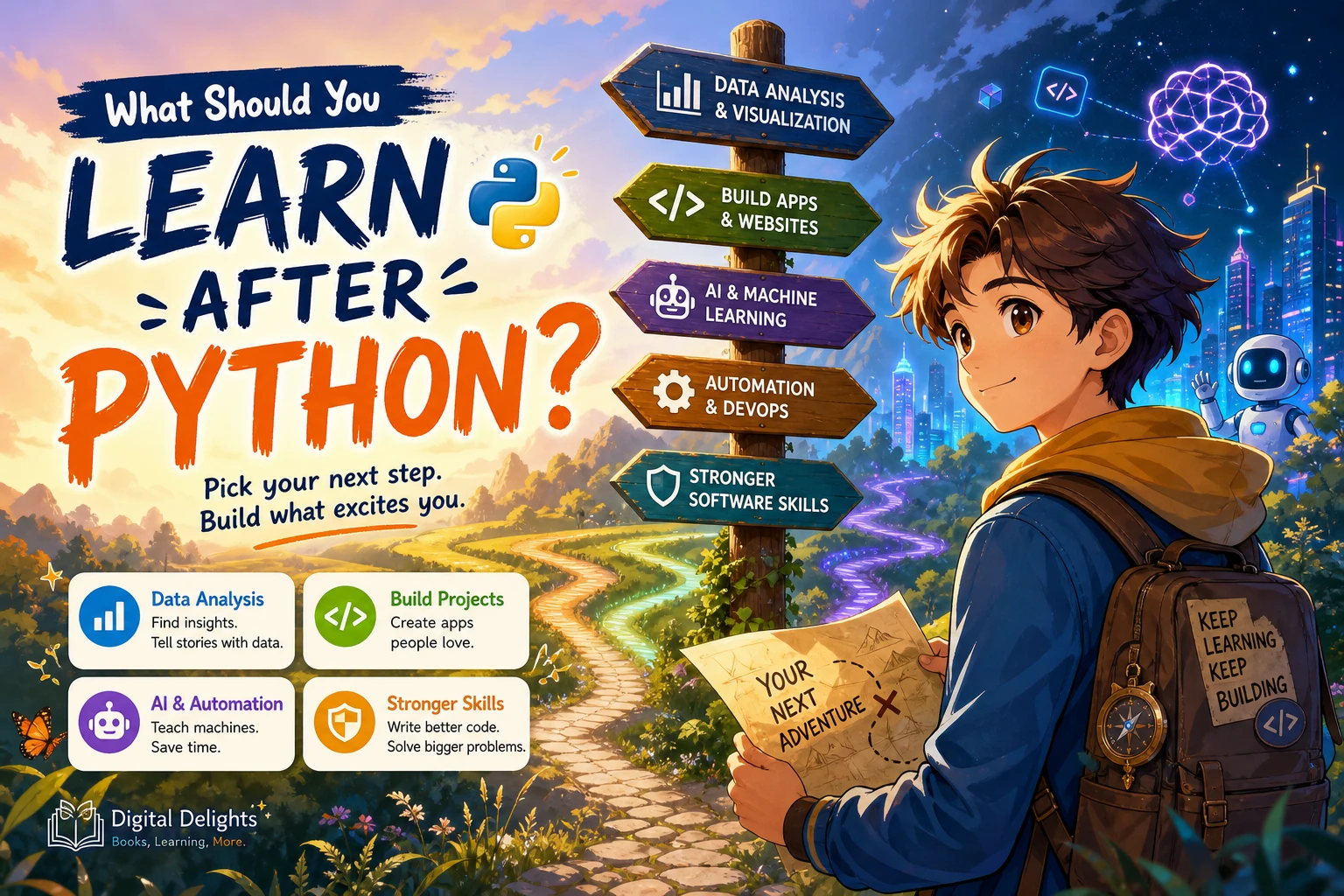
- Trying to learn every specialty at once: data science, web development, automation, and machine learning each involve additional tools and concepts. Start with the language basics before choosing a direction.
- Copying solutions line by line: after following an example, close it and try to recreate the idea or change one requirement.
- Starting a project that is too large: reduce the first version to a few essential features, then expand only after those work.
- Treating the deadline as proof of mastery: a calendar can help organize practice, but it cannot certify what you understand.
- Skipping review: revisit confusing concepts and earlier code. Review is part of learning, not wasted time.
Choosing a Beginner Resource for the Month
A structured guide can give your practice a sequence, while exercises give you a reason to write code rather than only read. Choose a resource whose contents match your current goal: first-language fundamentals, practice problems, or an introduction to a specific application area.
For a beginner-oriented overview, Python for Beginners: A Crash Course Guide to Learn Coding and Programming With Python in 7 Days is listed with topics including data types, control flow, functions, modules, file handling, classes, and exceptions. Its “7 Days” wording is part of the title, not evidence that a reader will master Python within that period. Use it as one possible structure for study, and make time to type and adapt examples yourself.
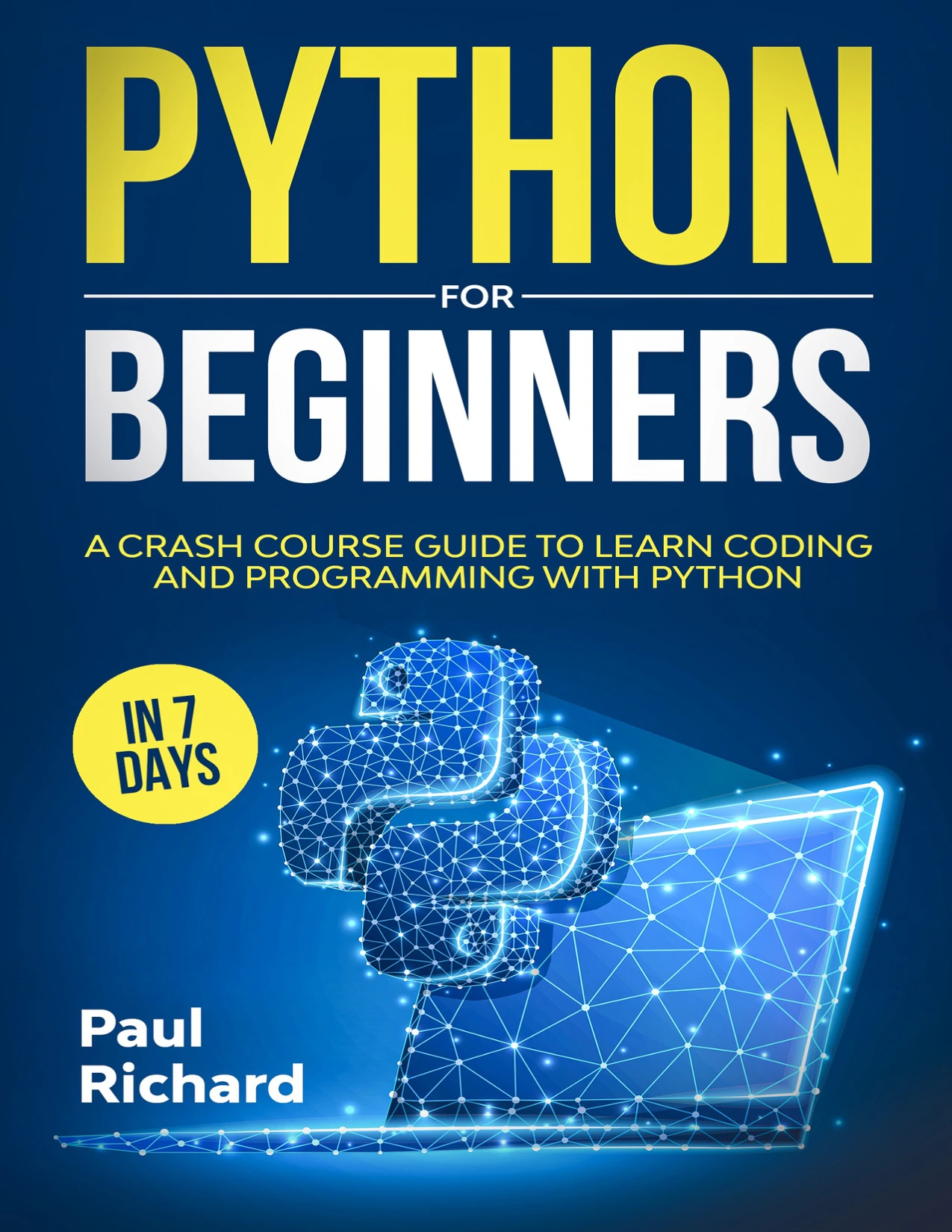
Python for Beginners: A Crash Course Guide to Learn Coding and Programming With Python in 7 Days
By Paul Richard
New learners seeking coverage of data types, control flow, functions, files, classes, and exceptions.
Published course outlines also show why “learning Python” can mean more than one month of fundamentals: introductory curricula may progress from basic syntax to functions, files, testing, and larger projects. For example, the Python Crash Course, 3rd Edition overview describes a course scope that extends into projects. A syllabus describes what material is covered; it does not establish how quickly an individual will learn it.
Frequently Asked Questions
Is Python hard to learn in a month?
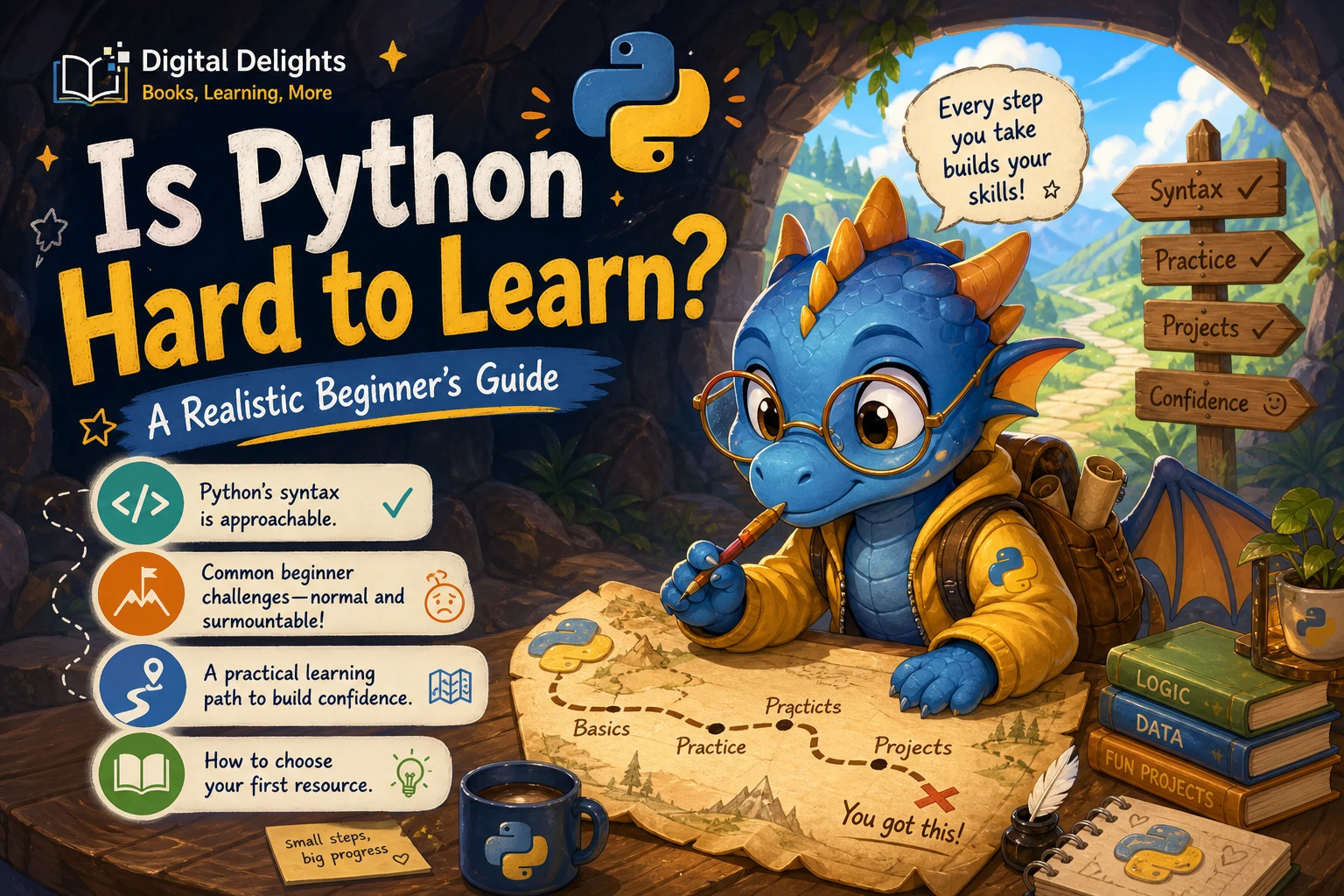
Python’s basic syntax can be approachable for new programmers, but learning to write programs still takes practice. A month can be a useful period for working on foundational skills; how challenging it feels depends on your starting point, pace, and goal. It is sensible to aim for small programs rather than mastery.
How much should I practise each day?
The available evidence does not establish a single daily time that works for everyone. Choose a routine you can sustain and use the time actively: write code, test changes, and review mistakes. If your schedule is limited, consistent short sessions may be more practical than an ambitious plan you cannot maintain.
Can I get a programming job after 30 days?
A 30-day learning period should not be treated as a job-readiness guarantee. Professional roles can call for more than basic Python syntax, including problem-solving, project experience, and tools or practices relevant to the position. Use the month to build a foundation, then compare your skills with the requirements of the roles you are considering.
What should I build as my first Python project?
Choose something small with a clear outcome, such as a quiz, number-guessing game, or basic to-do list. Start with the simplest working version. Once you can explain it, add one feature and test whether the program still behaves as expected.
The Bottom Line
You can make worthwhile progress learning Python in 30 days, especially if you define success as understanding core concepts and completing a small program. You should not assume that one month guarantees mastery or professional readiness. Set a modest goal, practise by writing and changing code, and let your project reveal what to study next.