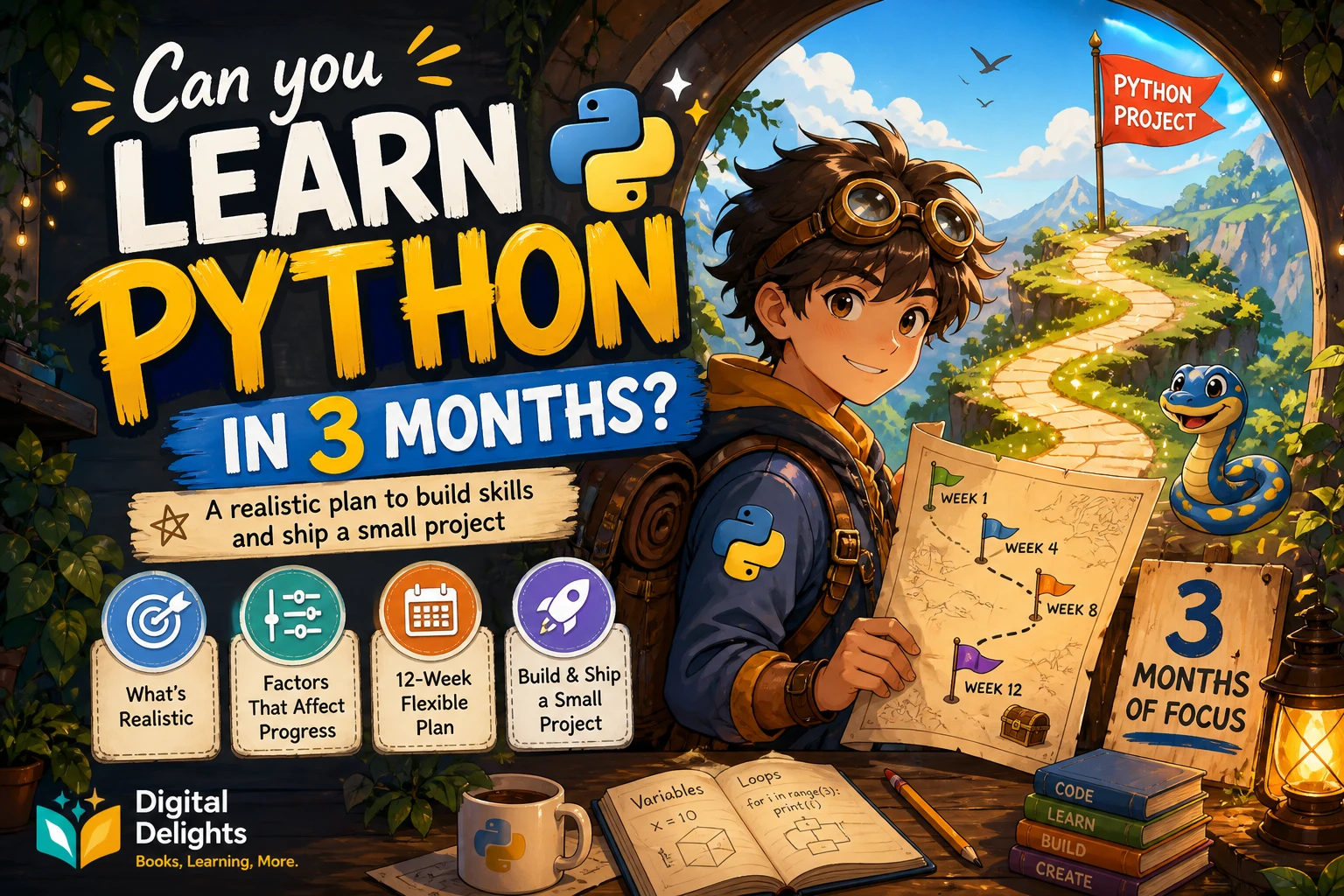
Can You Learn Python in 3 Months?
Yes—you can build useful Python foundations and make a small project in three months. But that does not mean everyone will become fluent, qualify for a programming job, or master every part of the language in that time. “Learn Python” can mean anything from understanding basic syntax to developing and maintaining substantial software, so the answer depends on what you want to do and how consistently you practise.
A practical three-month goal is to become comfortable with core concepts, solve beginner-level problems, and create a modest program without following a tutorial line by line. This guide explains what influences progress, suggests a flexible 12-week roadmap, and helps you choose a starting resource.
What does it mean to learn Python?
Before setting a deadline, decide what success would look like for you. A beginner might mean being able to write a short script, automate a repetitive task, or build a simple project. Someone aiming for professional software work will need more: deeper programming skills, experience with relevant tools, and the ability to work on larger codebases.
Those are different goals. Three months can be a useful period for building a foundation, but it is not a reliable promise of fluency or job readiness. The official Python tutorial also notes that it is intended for people new to Python who already have some general programming understanding. If you have never coded, start with material designed to introduce programming from the ground up.
What affects your progress?
There is no single pace that applies to every learner. These factors can change what is realistic for you:
- Previous programming experience: If you already understand ideas such as variables, loops, and functions, learning Python’s syntax may be more familiar. Starting with no coding background means learning those general ideas as well.
- Consistency: Regular study and coding sessions make it easier to revisit concepts and spot what you have forgotten. A sustainable routine is more useful than an ambitious schedule you quickly abandon.
- Your goal: A simple automation script calls for a different learning path from a web application or a data science project. Choose a direction after you understand the fundamentals.
- Practice quality: Reading explanations is useful, but you also need to write code, change examples, interpret errors, and try problems before looking at solutions.
- Independent problem-solving: Following a worked example can teach you a pattern. Trying to adapt it to a slightly different problem shows whether you can use the idea yourself.
Instead of measuring progress only by chapters completed, ask whether you can explain a concept and use it in a new example without copying the original code.
What could you learn in three months?
With a steady routine, a reasonable set of early milestones might include:
- Writing and running Python code, and understanding basic values and variables.
- Working with strings, numbers, lists, dictionaries, and other common data structures.
- Using conditions and loops to control what a program does.
- Writing functions to organize reusable steps.
- Reading and writing files, importing basic modules, and responding to common errors.
- Planning and completing a small project that uses several of these ideas together.
Treat these as possible targets, not guaranteed results. If you are learning programming for the first time, you may need more time with the fundamentals. If you have coded before, you may move through introductory material faster, but you will still need practice with Python-specific tools and habits.
A flexible 12-week Python learning roadmap
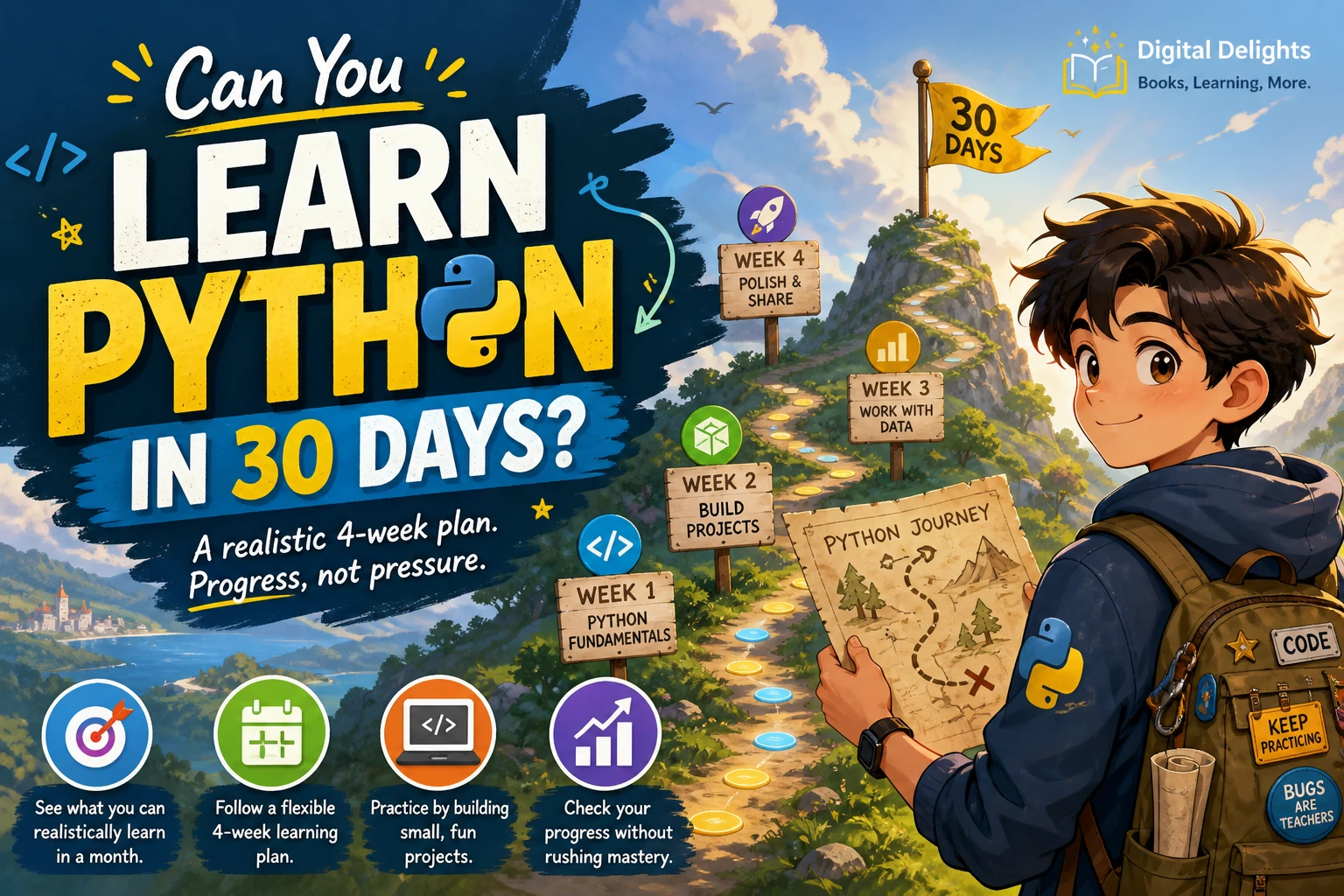
This roadmap is a starting framework, not a fixed curriculum. Spend longer on a topic when you need to, and adjust the project to match your interests. Each phase should include both learning and hands-on coding.
Weeks 1–4: Learn the fundamentals
Get set up with a stable Python installation that works with your chosen learning material. Then practise the basic building blocks: values, variables, strings, numbers, input and output, conditions, and loops.
- Type and run short examples rather than only reading them.
- Change an example’s inputs or rules and predict what will happen.
- Write small programs, such as a number guessing game or a simple menu.
- When something fails, read the error message and investigate where the program stopped.
Move on when you can write a few short programs using these ideas and explain what the main lines do. You do not need to memorize every detail before continuing.
Weeks 5–8: Organize code and work with data
Build on the basics with lists, dictionaries, functions, files, modules, and exception handling. Practise breaking a longer task into smaller parts and giving those parts clear names.
- Write functions that take inputs and return results.
- Store and retrieve information using suitable collections.
- Try a small task that reads from or writes to a file.
- Practise tracing a bug instead of rewriting the whole program immediately.
At this stage, start thinking about a project you can finish with the skills you have. Keep its first version small; extra features can come later.
Weeks 9–12: Build, test, and explain a project
Choose a project with a clear purpose and a manageable scope. For example, create a command-line expense log, a quiz, a reading tracker, or a script that organizes a folder of files. Pick something that interests you, but avoid adding a complicated framework or advanced feature just to make the project sound impressive.
- Define the smallest useful version. Write down what the program should do and what information it needs.
- Break the work into steps. Turn the task into smaller functions or milestones.
- Build one feature at a time. Run the program frequently so problems are easier to isolate.
- Try different inputs. Check ordinary cases and consider what should happen when information is missing or unexpected.
- Explain your code. Describe how it works without relying on the tutorial or notes you followed.
Finishing a small project and understanding its code is a more useful learning milestone than starting a large project you cannot yet manage.
How to practise so Python sticks
Make coding an active part of your learning from the beginning. A useful study session might involve reading one concept, typing a small example, changing it, and then solving a related problem without looking at the answer straight away.
- Recreate examples from memory: If you get stuck, check the explanation, close it, and try again.
- Change one thing at a time: Alter a condition, input, or data structure and observe the result.
- Keep a short error log: Note what went wrong, how you diagnosed it, and what fixed it.
- Return to earlier ideas: Use loops, functions, and collections together in new exercises rather than leaving each topic behind.
- Choose a personal project: A task connected to work or a hobby gives you a reason to keep refining your code.
If you prefer a structured starting point, Python Programming for Beginners: Learn Python in a Step by Step Approach, Complete Practical Crash Course to Learn Python Coding is described in the Digital Delights catalog as covering fundamentals such as data types, control flow, functions, classes, files, and modules. For more practice-oriented study, Python Bookcamp: Exercises and Projects covers core topics through exercises, case studies, and projects. Neither resource guarantees a particular outcome or completion time; choose the one whose structure fits how you prefer to learn.
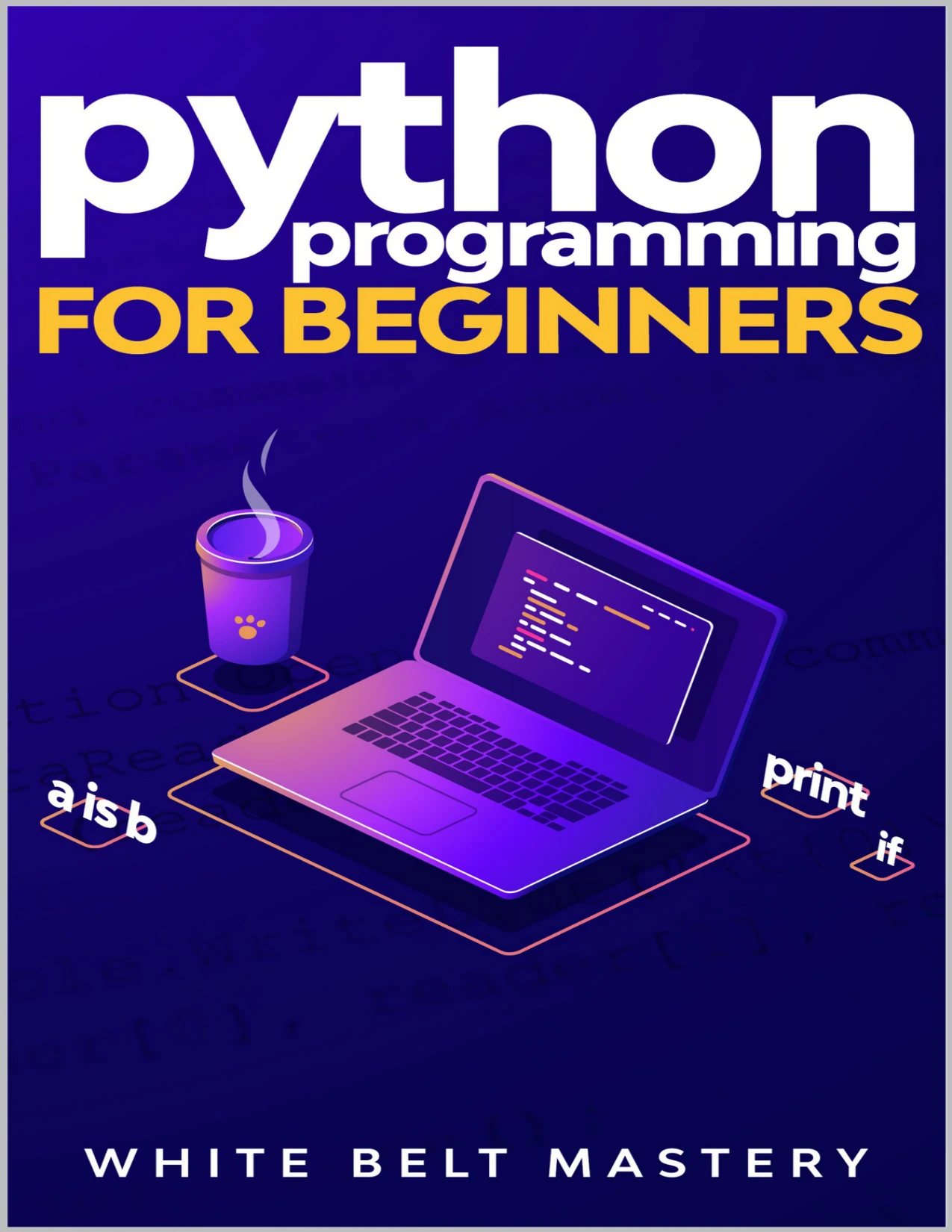
Beginners seeking an ordered introduction covering fundamentals, functions, classes, files, and modules.
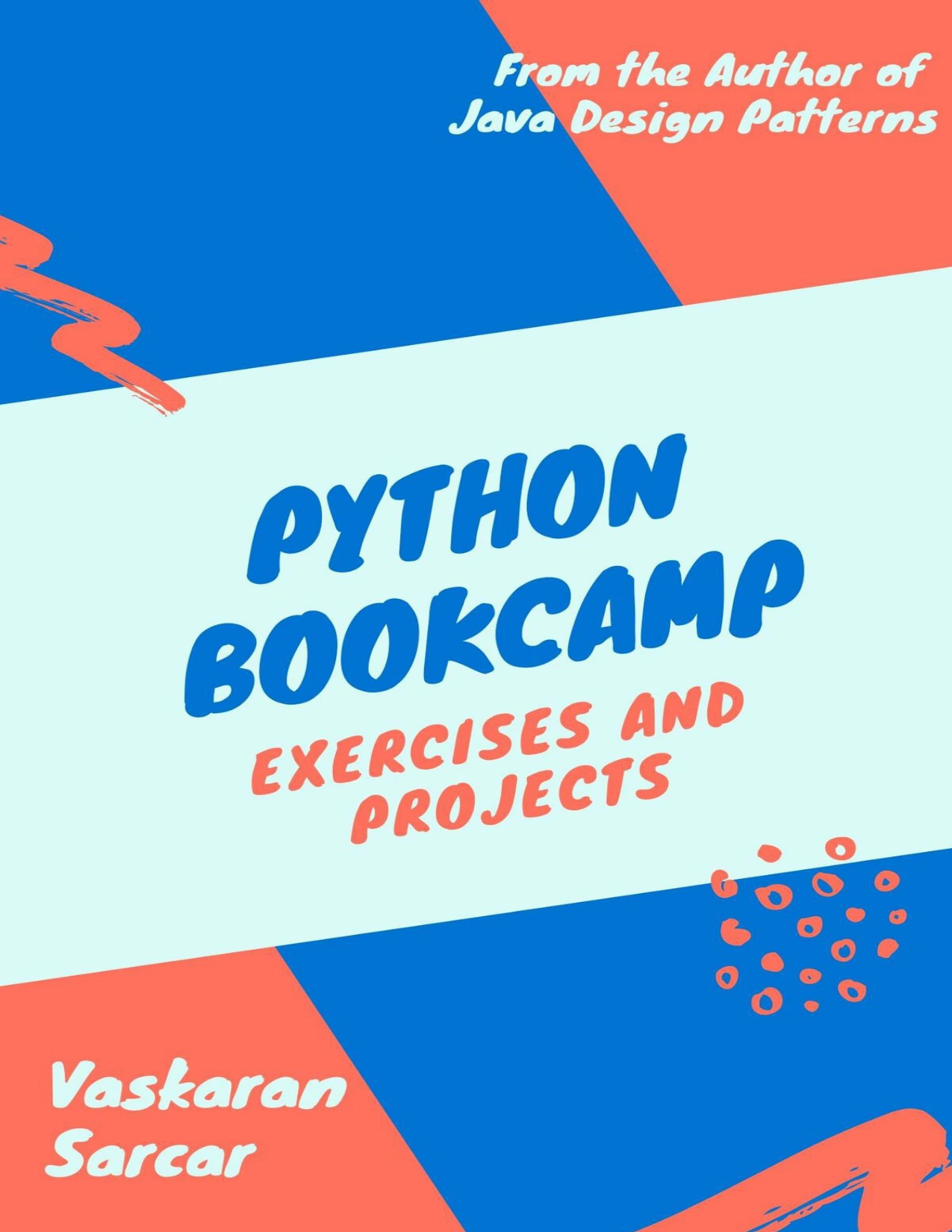
Python Bookcamp: Exercises and Projects
Learners who want to reinforce Python basics with exercises, case studies, and projects.
Common mistakes that slow beginners down
- Watching or reading without writing code: Understanding an explanation while reading does not necessarily mean you can apply it. Pair study with small coding tasks.
- Copying a solution without tracing it: Before moving on, explain what the important lines do and try changing the result or input.
- Switching resources whenever a topic feels difficult: Some confusion is normal. Stick with one main learning path long enough to practise its ideas, and consult another explanation only when it helps clarify a specific point.
- Rushing into advanced specializations: Machine learning and other focused areas build on programming foundations. You do not need to learn them before you can write useful beginner programs.
- Making the first project too large: Start with a small working version. A finished, understandable program gives you a base for adding features.
Choosing a starting resource and next step
Choose a resource based on how it teaches, not on a promise to make you proficient by a deadline. A step-by-step introduction can help if you are new to programming and want concepts presented in sequence. If you learn by doing, exercises and small projects can help you turn explanations into code. You can browse the available Python learning resources to compare options by subject and approach.
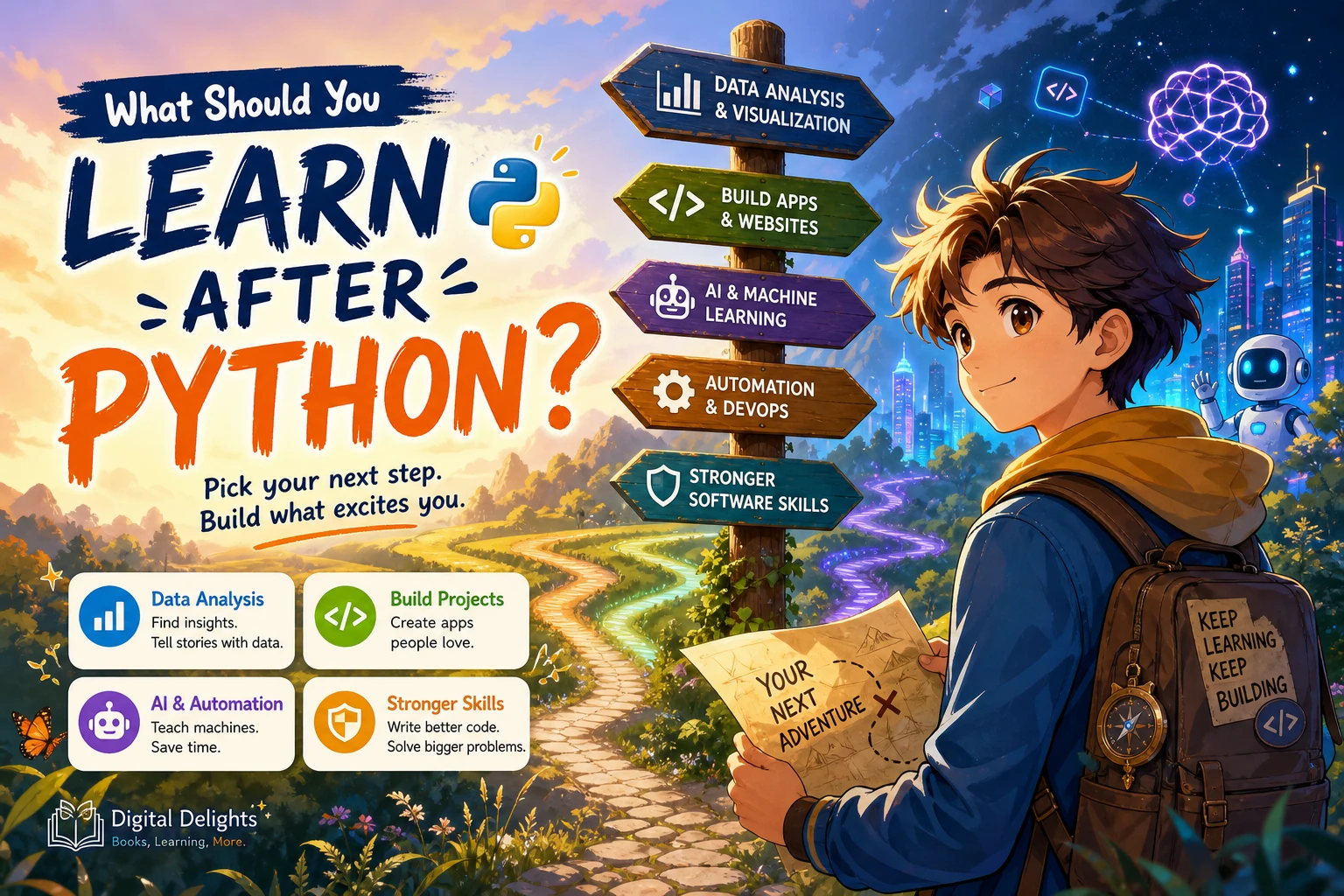
Once you can write small programs, choose a direction based on what you want to make. For example, data analysis uses different tools from web development or automation. Build on Python fundamentals first, then select a focused resource that matches your next project rather than treating every specialization as part of the first three months.
Frequently asked questions
Is three months enough to learn Python from scratch?
It may be enough to build a foundation and complete a modest project if you practise consistently, but the outcome varies with your schedule, prior experience, and goals. It is not a dependable timeline for fluency or professional readiness.
How much should I practise?
There is no single number of hours that guarantees progress. Choose a routine you can maintain, make sure it includes writing code, and review what you can do independently. If you repeatedly have to copy examples, spend more time practising and adapting them.
Can I get a programming job after three months?
Three months of Python study alone cannot establish that you are ready for a programming job. Employers and roles vary, and professional work can require broader skills than basic Python syntax. Treat the period as a chance to build foundations and a project, then assess the requirements of the specific roles you are considering.
What should I build after learning the basics?
Pick a small project that uses concepts you have practised: a quiz, tracker, simple text-based game, or file-organizing script. Aim to make it work, test it with different inputs, and explain how it is structured. You can add features after the first version is clear and reliable.
The realistic answer
You can learn useful Python in three months, especially if you set a modest goal and make regular practice part of the plan. Focus on the fundamentals, write code rather than only consuming lessons, and finish a small project you can explain. If you need more time, that is not failure; it is information about what to practise next. Let your ability to solve and explain problems—not the calendar alone—guide your progress.
Sources
- The Python Tutorial — Python 3 documentation. Consulted for the tutorial’s stated audience and prerequisite background.