Best Resources to Learn Python from Scratch
Choosing a Python resource is easier when you first ask whether you are new to programming or simply new to Python. A person learning their first language usually needs plain explanations, a guided sequence, and frequent chances to write code. Someone who already programs may be ready to use the official Python tutorial as a quicker reference.
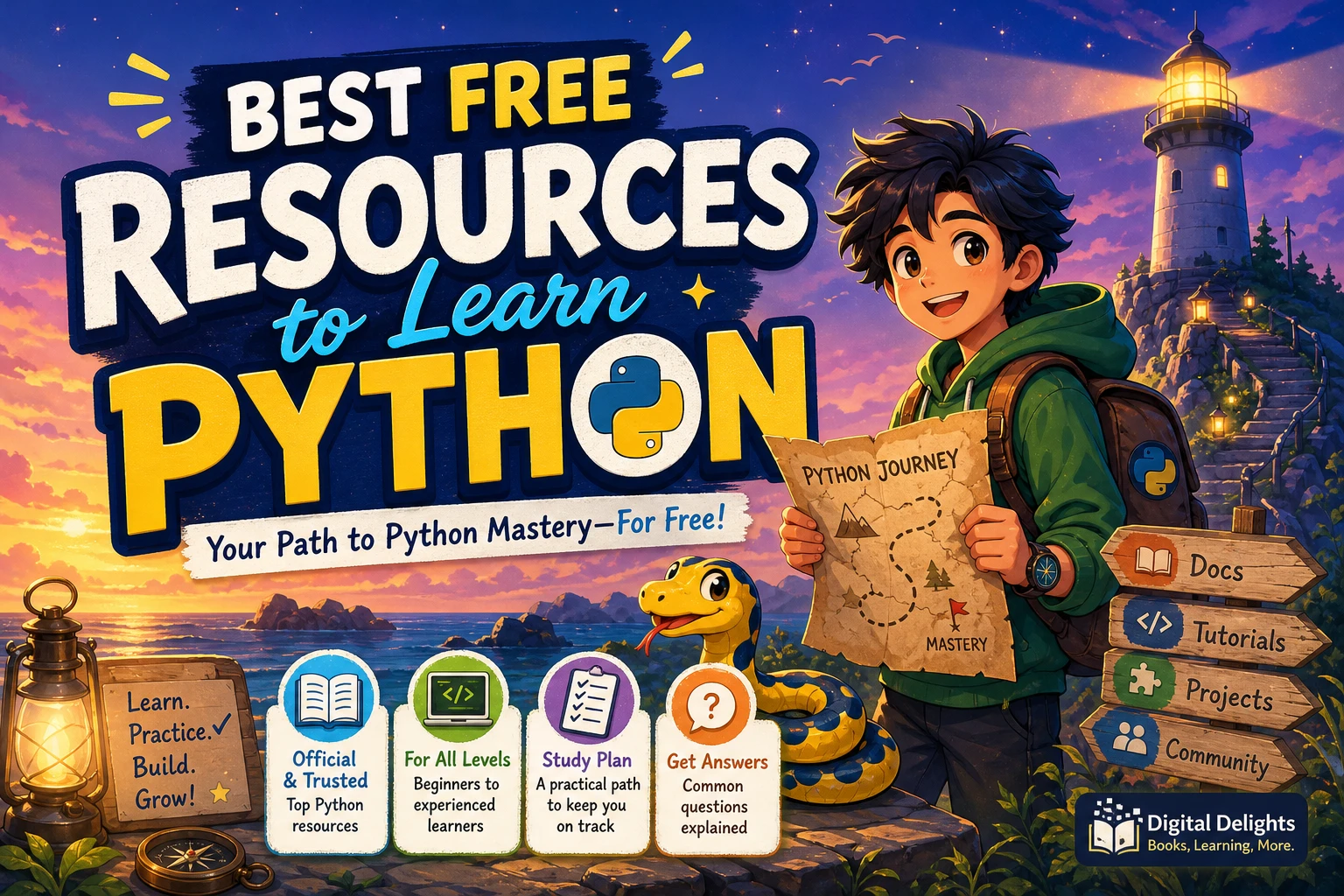
For most self-directed beginners, a practical toolkit is simple: choose one structured introductory resource, practise its ideas in your own code, and keep the official documentation nearby when you need to check a detail. This guide compares resource types, outlines a sensible learning path, and explains how to choose a beginner book without assuming that one title suits everyone.
The short answer: Build a small learning toolkit
Start with one beginner-friendly book or course that matches your experience. Work through it actively rather than reading straight through, and use official documentation as a reference or companion. Once the basics feel familiar, build small programs and then choose a direction—such as data analysis—based on what you want to make.
If you are completely new to coding, look for a resource that begins with setup and first programs before introducing variables, decisions, loops, collections, and functions. For example, Python Coding for Beginners (19th Edition) covers installation, running code, core language topics, files, and examples. Another option, Python Programming: The Fundamental Beginner’s Guide to Learning Python, starts with installation and a first program, then moves through foundational programming concepts.
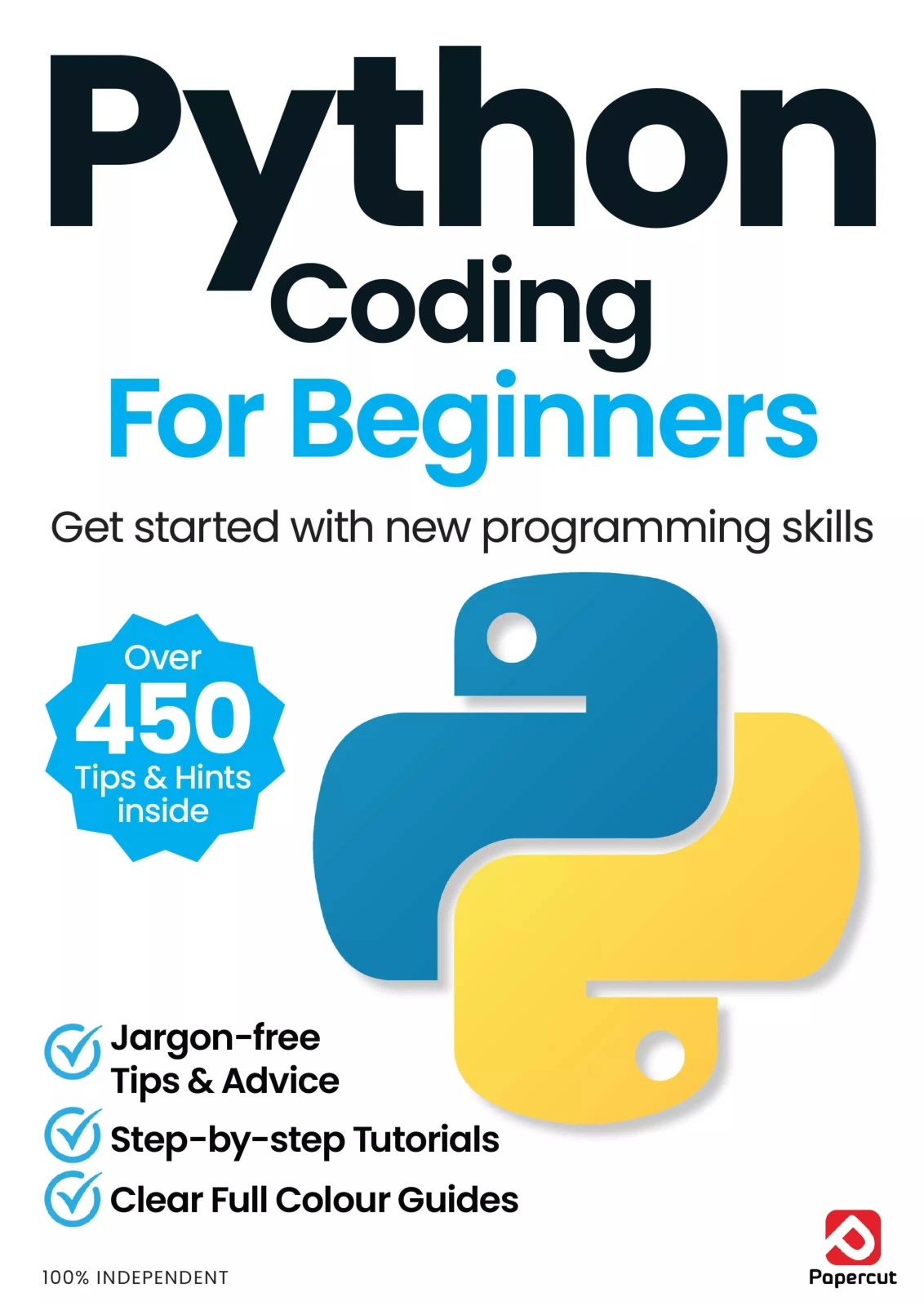
Python Coding for Beginners (19th Edition)
By Papercut
New programmers looking for setup guidance, core Python topics, and examples.
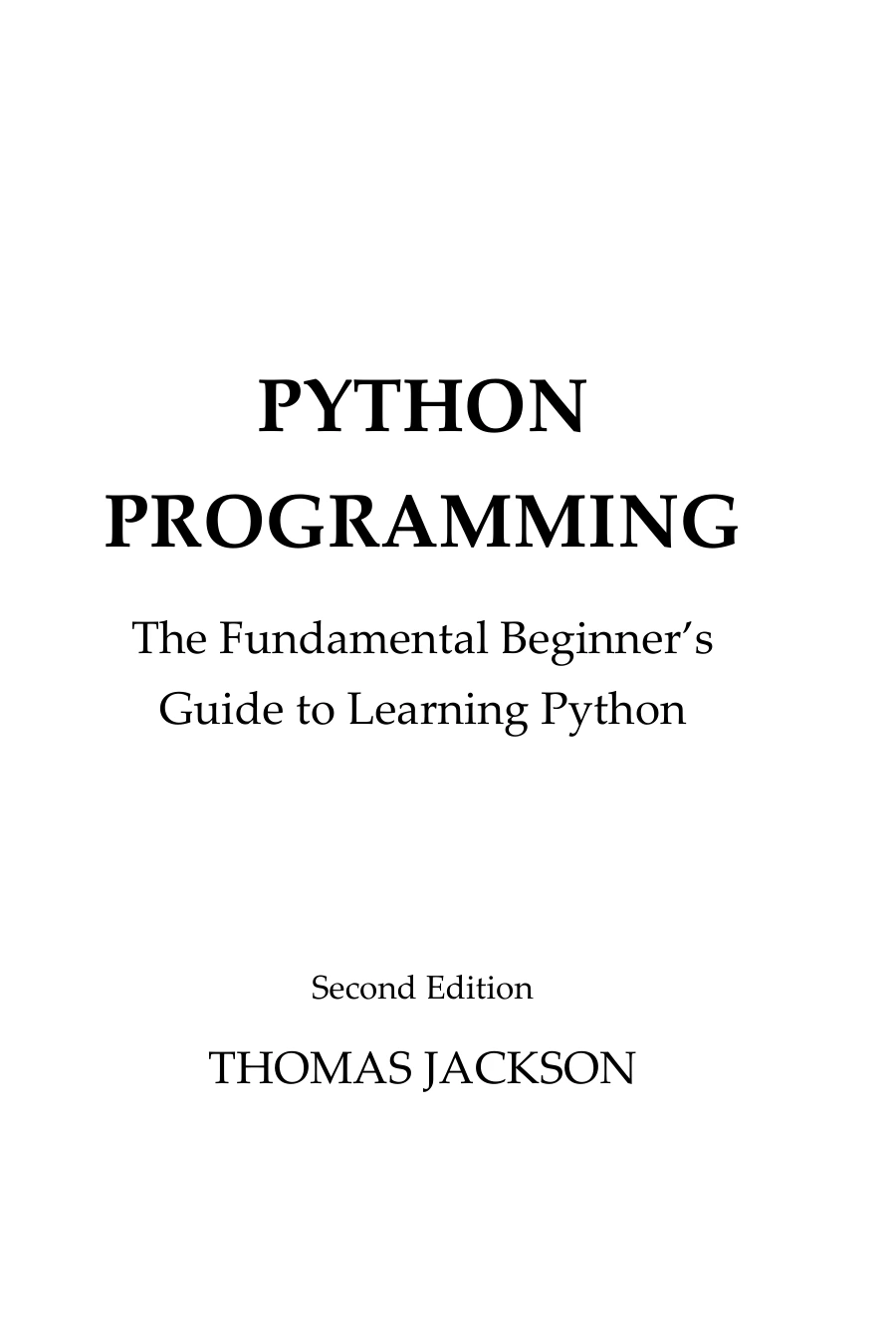
Python Programming: The Fundamental Beginner’s Guide to Learning Python
Readers new to programming who want an introduction that starts with installation and a first program.
Best resource types for learning Python
There is no evidence here that one format consistently teaches faster or better. Instead, choose based on the structure and support you need. A book can provide a planned sequence; documentation can answer specific questions; and practice turns explanations into skills.
Beginner books: a guided route through the basics
A beginner book can be a helpful main resource if it explains prerequisites clearly and introduces ideas in a sequence you can follow. Check its contents before choosing: does it cover setup, basic syntax, decisions, loops, data structures, and functions? Does it explain how to run examples in your environment?
The catalog descriptions make two titles worth considering for different preferences:
- Python Coding for Beginners (19th Edition) covers installation on Windows and Linux, saving and running code, variables, conditions, loops, collections, files, and troubleshooting. Its description also mentions graphics and gaming topics.
- Python Programming: The Fundamental Beginner’s Guide to Learning Python begins with setup and a first program, then covers core syntax, data structures, functions, files, and other concepts. Its description positions it as an introduction for people with no programming experience.
- Coding for Beginners Using Python covers Python essentials, including variables, lists, input, conditions, functions, and loops, and connects the introduction to data analysis.
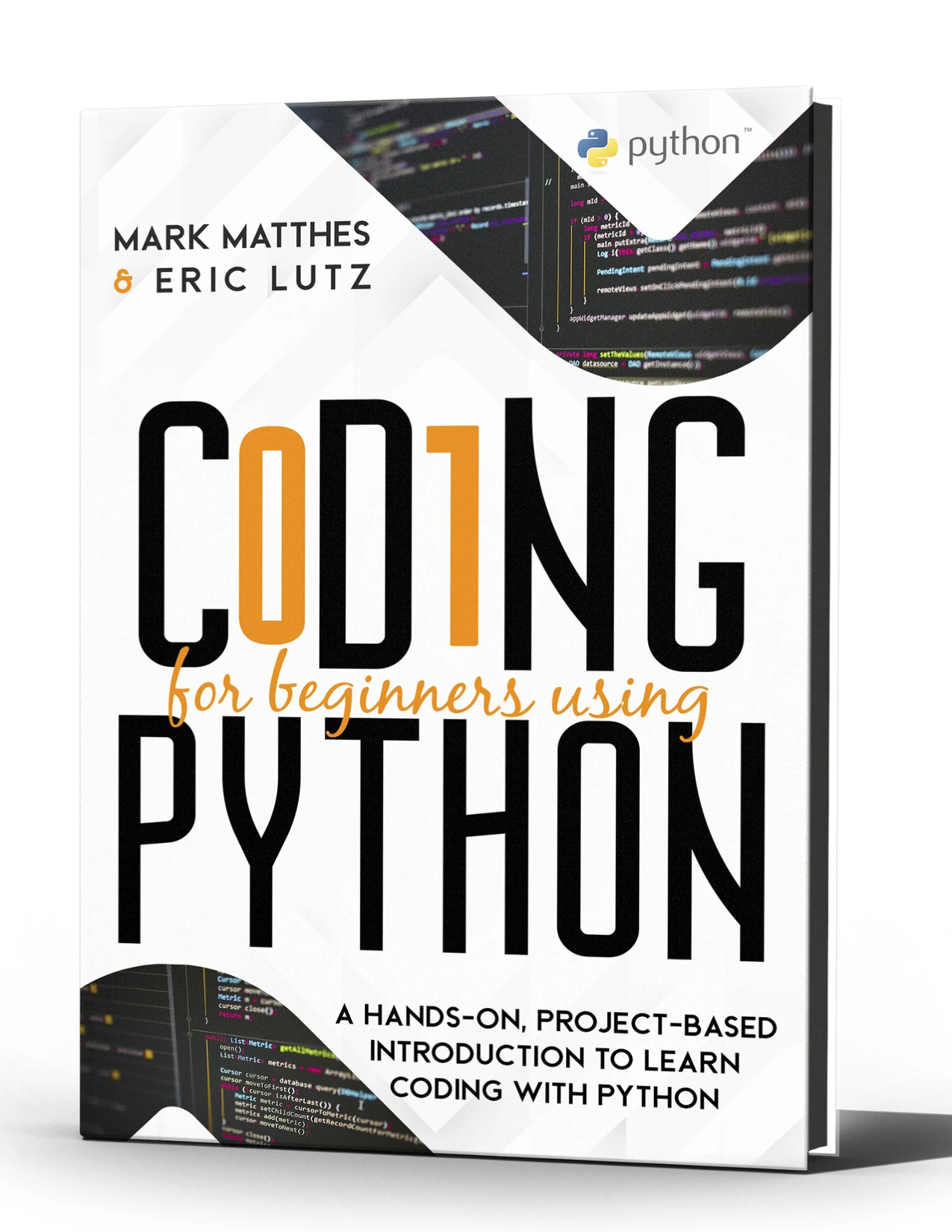
By Mark Matthes
New learners interested in Python basics and an introduction to data analysis.
These descriptions indicate subject coverage, not independently measured teaching quality or learning outcomes. Use the contents and stated prerequisites to decide whether a title matches your needs.
Project-based learning: make concepts do something
Projects help you combine concepts, but a project label alone does not tell you how much guidance or practice a resource provides. Check for actual walkthroughs, examples, or exercises before choosing a title specifically for project work.
You can also create small practice tasks alongside any book: ask for a name and display a greeting, convert a temperature, count items in a list, or make a simple number-guessing game. Start with a tiny goal, then add one feature at a time. For instance, after writing a greeting program, add input validation or let the user repeat the action.
Official Python documentation: useful, with an important caveat
The official Python tutorial says it is intended for people new to Python who already have a basic understanding of programming. It is not designed as a complete first course for someone who has never coded. That makes it a useful reference or next step for many learners, but not necessarily the easiest standalone starting point for an absolute beginner. See the official Python tutorial for its stated audience and scope.
How the options compare
| Resource | Best fit | What to check |
|---|---|---|
| Beginner book or course | First-time programmers who want a planned sequence | Prerequisites, setup help, topic coverage, and practice opportunities |
| Official Python tutorial | Learners who already understand basic programming, or beginners using it as a reference | Its stated prerequisites; it is not a comprehensive course |
| Small self-directed projects | Learners ready to apply concepts and find gaps in their understanding | Keep the first project small enough to finish and explain |
| Goal-specific book | Learners who have the fundamentals and a defined direction, such as data work | Whether it assumes Python knowledge and includes the tools you want to use |
A practical learning path from first code to projects
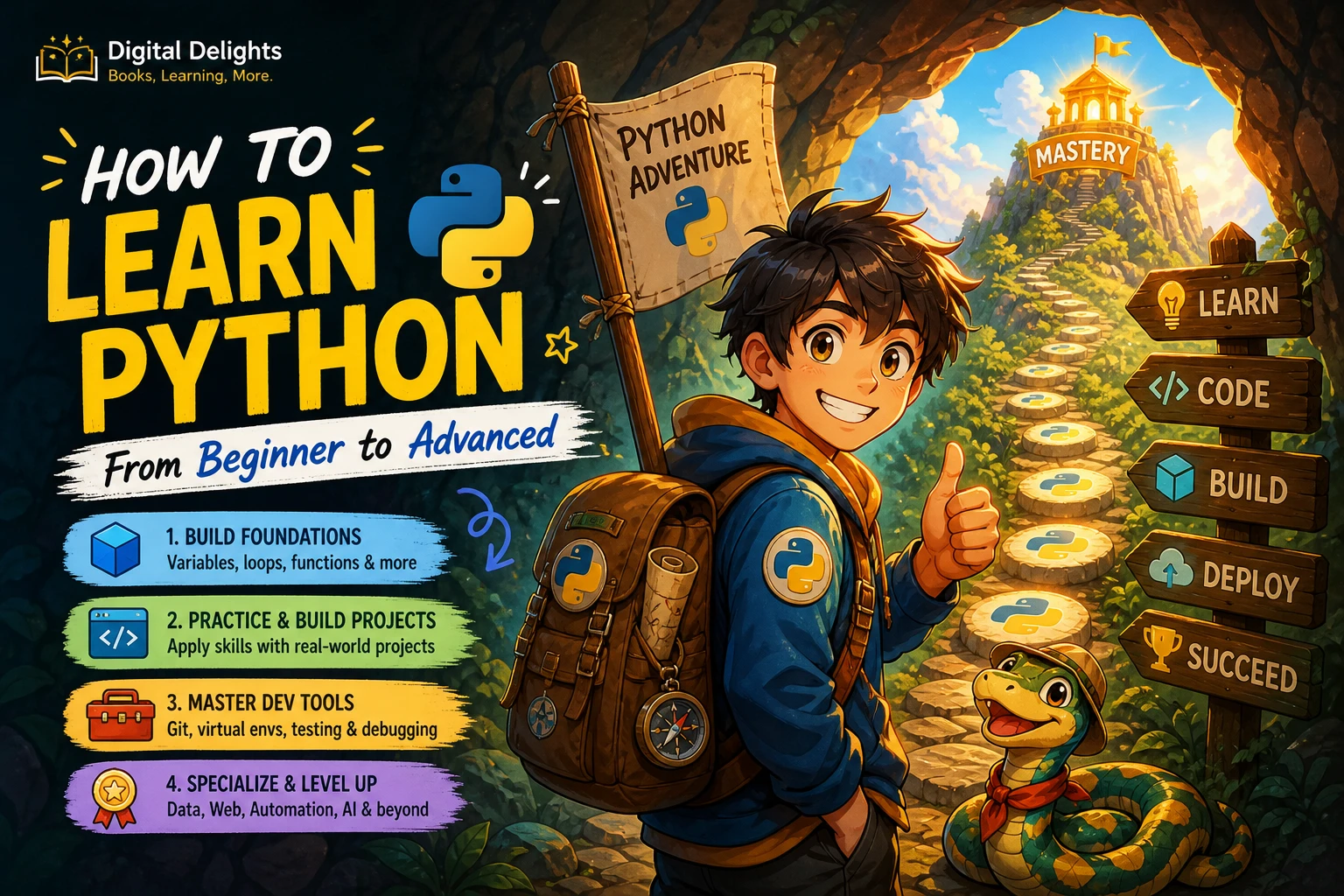
Use this sequence as a flexible roadmap, not a deadline. Move on when you can use a concept in a small program and explain what it does.
- Set up Python and run a first program. Follow your chosen resource’s installation instructions. Run a short program, change it, and run it again so you know how the editing and execution cycle works.
- Learn the basic building blocks. Practise variables, common data types, expressions, and simple input and output. Focus on understanding what values your program is working with.
- Make programs choose and repeat. Use conditional statements to respond to different situations, and loops to repeat a task. Try changing the conditions and inputs to see how the result changes.
- Work with collections and functions. Practise lists and dictionaries, then write functions that give repeated tasks a clear name. Break a longer program into smaller pieces.
- Build small projects and revise them. Try a quiz, a basic to-do list, or a text-based guessing game. Add a feature, test it, and fix errors rather than only copying a finished example.
- Continue into files, exceptions, and modules. These topics help you handle saved information, respond to problems, and organize code as programs grow.
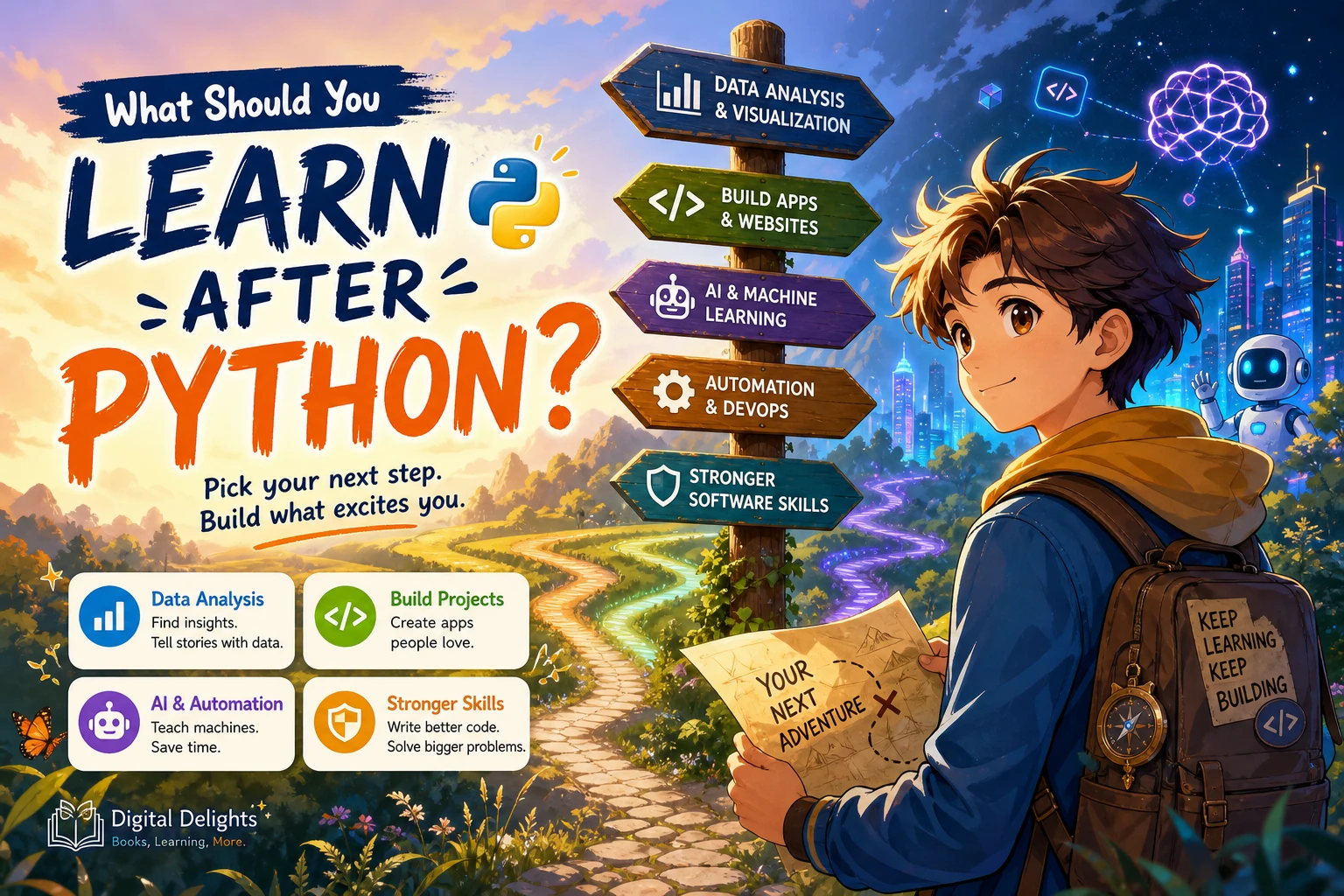
- Choose a specialization after the fundamentals. If data interests you, for example, a goal-focused resource such as Python for Data Science covers Python foundations alongside data science topics and practical exercises. Check its prerequisites and scope against what you have already learned.
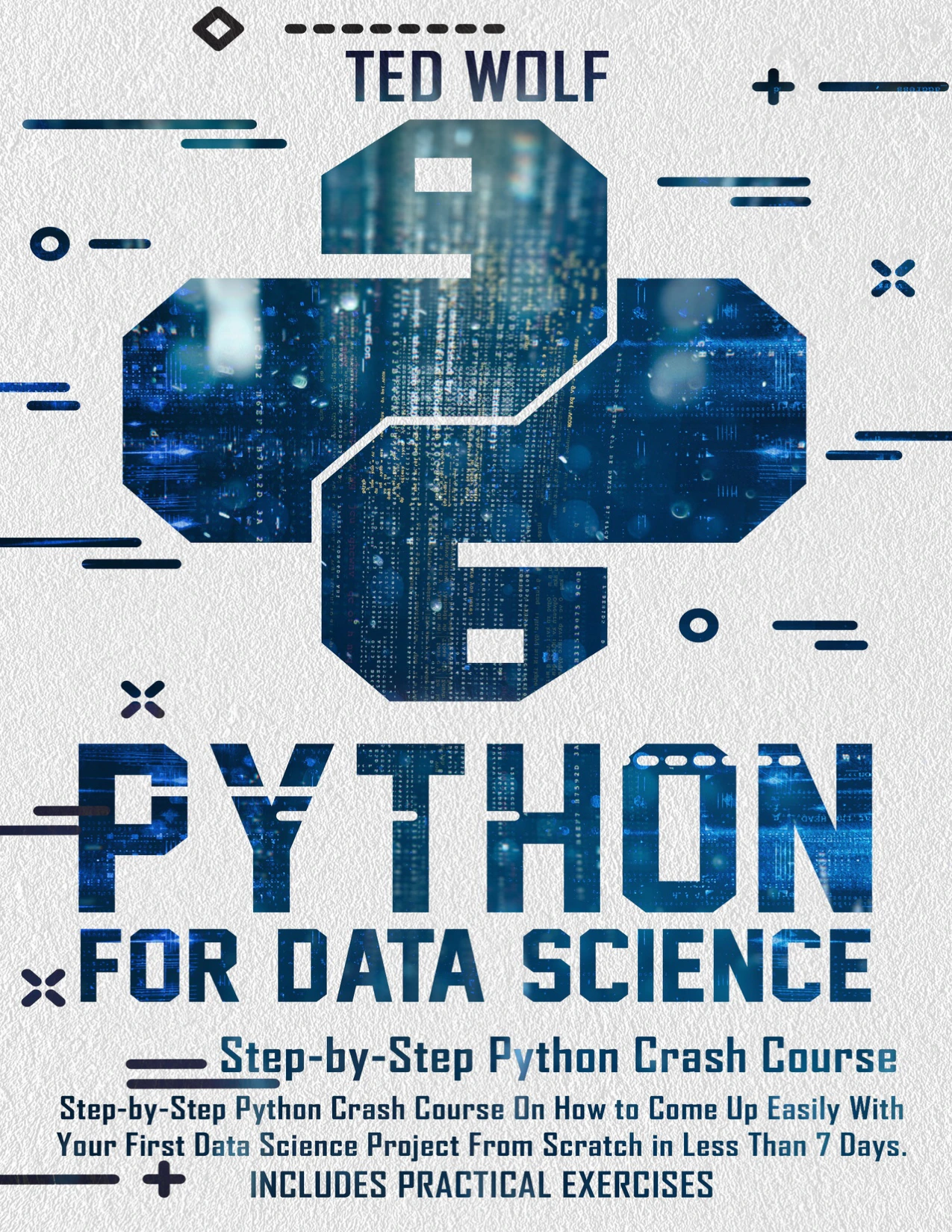
By Ted Wolf
Learners interested in data science who want a resource covering Python basics alongside data topics and practical exercises.
How to choose a Python book or course
Before committing to a resource, scan its description or contents with these questions in mind:
- Who is it for? Check whether it welcomes people new to programming or assumes experience with another language.
- Does the sequence make sense? A beginner resource should explain how to get started before expecting you to understand larger programs.
- What kind of practice does it offer? Look for examples, exercises, or projects in the actual contents. Do not assume that a title promising a crash course or projects provides the amount of practice you prefer.
- Does the version fit your environment? Follow the resource’s stated Python version requirements and check whether its instructions match your setup. The official Python downloads page is the place to find current releases.
- Does it serve your immediate goal? If you want to learn general programming, start with core Python. If your goal is data analysis, first check whether the resource also teaches the Python fundamentals it expects you to know.
You can browse the Python book collection to compare available digital resources by topic. Treat product descriptions as a guide to coverage, then choose according to your starting point and preferred learning style.
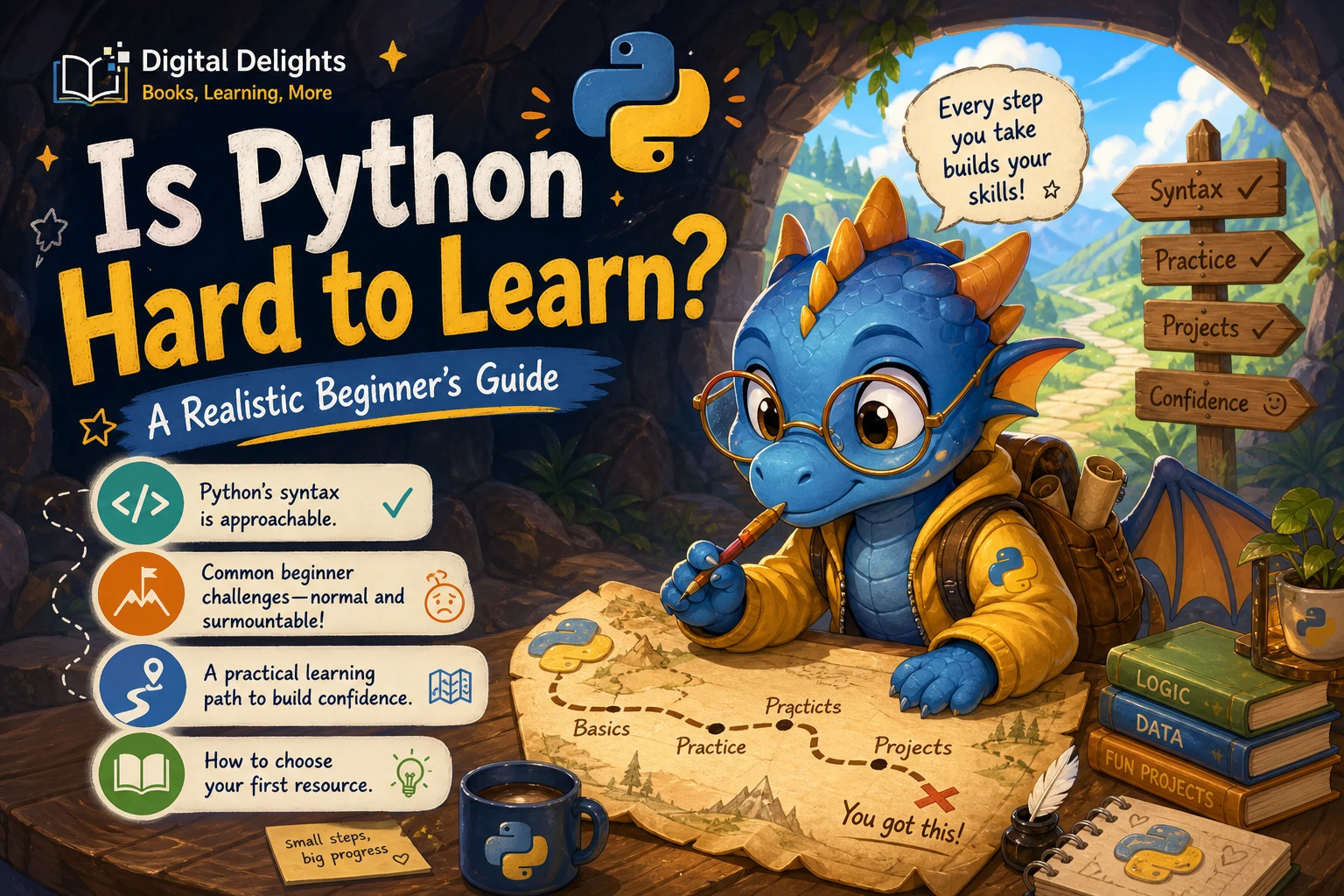
Common beginner pitfalls to avoid
- Reading without writing code: Pause after each new idea and type a short example yourself. Change a value or condition to see what happens.
- Switching resources too often: Give one structured resource enough time to build a foundation. Use another source to clarify a specific question, rather than restarting from scratch whenever a topic feels difficult.
- Copying code without investigating it: Predict what a line will do, run the program, and then modify the line. Errors can point to a misunderstanding worth resolving.
- Starting with advanced specializations too early: Machine learning and other specialist subjects can involve substantial new concepts. Learn enough Python basics to read and adapt simple programs first.
- Expecting every example to match your computer exactly: Setup steps and software versions can change. Check the resource’s version notes and consult current documentation when instructions differ.
Frequently asked questions
Do I need coding or math experience to learn Python?
You can begin with a resource designed for people new to programming; the catalog includes beginner titles whose descriptions state that they assume no prior coding experience. The official Python tutorial, by contrast, says it expects a basic understanding of programming. Math needs depend on what you plan to do later, so start with general programming foundations unless your specific goal calls for additional mathematics.
Is official documentation enough for a complete beginner?
It may not be the most approachable sole resource if you have never programmed. The official tutorial identifies its audience as people new to Python who already know basic programming, and describes itself as introductory rather than comprehensive. Pair it with a beginner-oriented course or book if you need more step-by-step guidance.
How can I tell whether a resource includes enough practice?
Inspect its contents, sample material, or publisher description for named exercises, worked examples, and projects. The available catalog descriptions establish topic coverage for the titles mentioned here, but do not independently verify how many exercises they contain or how deeply they guide practice. If the evidence is unclear, plan to add your own small programs.
Should I start with general Python or a goal-specific book?
If you are new to programming, begin with core syntax and basic problem-solving, then move toward a goal-specific subject. If you already code, a focused resource may be appropriate sooner, but check its prerequisites. A data-science title, for example, is most useful when you can follow the Python it uses.
Sources and further reading
Conclusion
The best resources to learn Python from scratch depend on whether you are new to programming, what kind of instruction helps you, and what you hope to build. Choose one beginner-friendly guide that fits your starting point, practise by changing and writing code, and use official documentation with its prerequisites in mind. Once the fundamentals feel usable, choose projects or a specialization that gives your learning a clear direction.