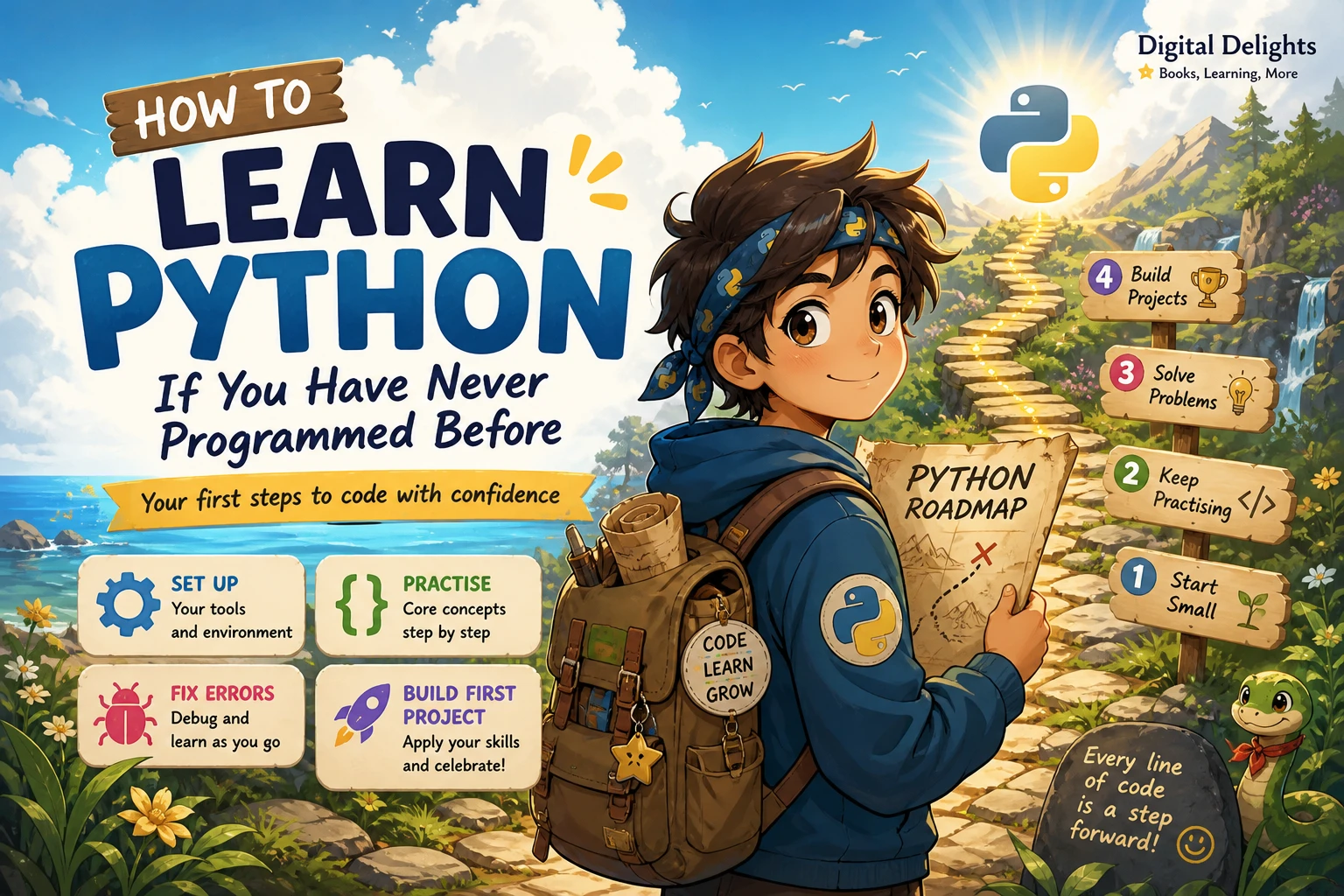
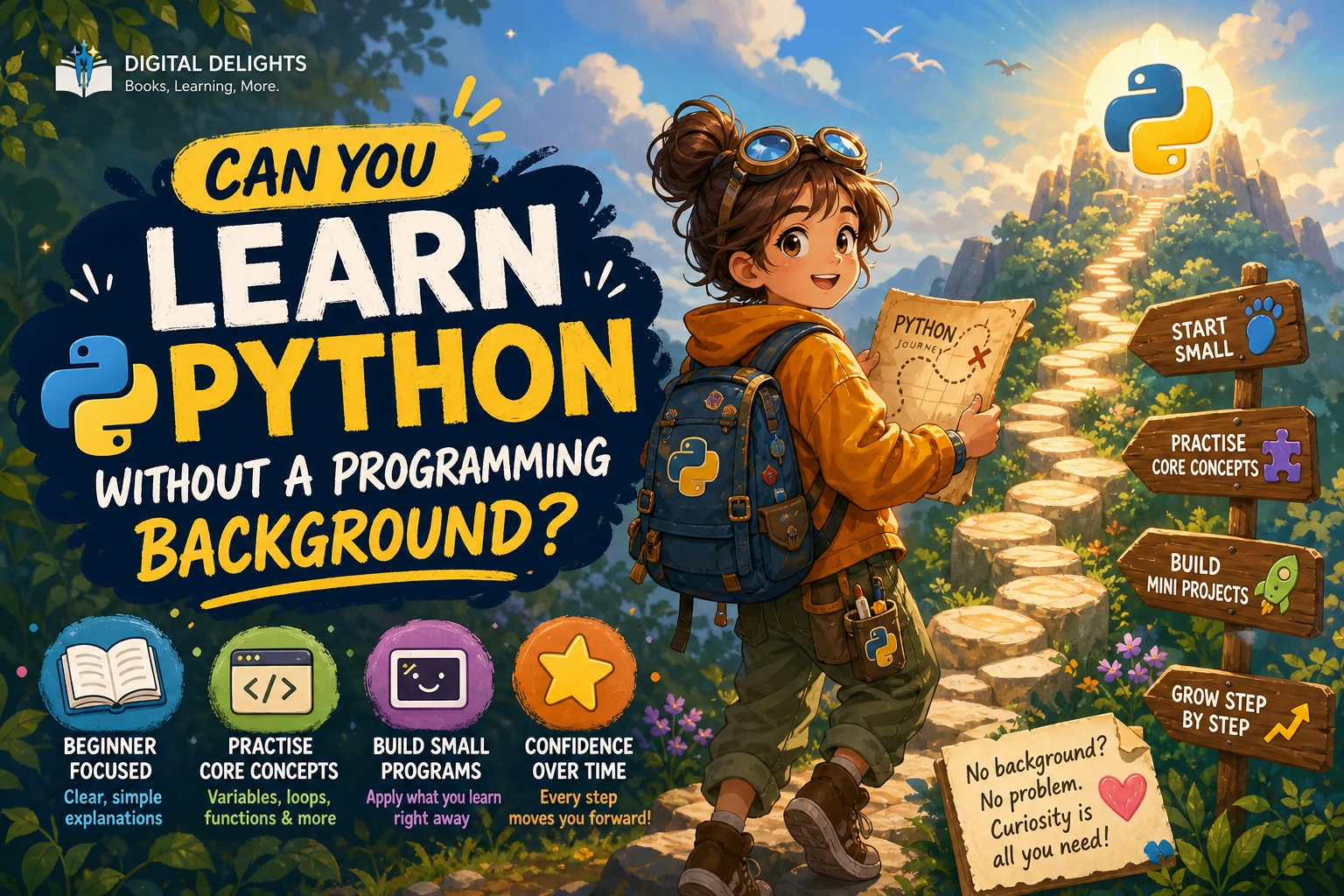
Yes—you can learn Python without a programming background. You do not need to know another language first, but you will need to learn basic programming ideas alongside Python’s syntax: how to store information, make decisions, repeat actions, and break a problem into steps.
The best starting point is a beginner course or book that explains those ideas from the ground up, then gives you chances to write and run code. Python’s beginner resources welcome people who are new to programming, while its official tutorial is aimed at readers who already have some basic programming understanding. Those resources serve different purposes, so choosing the right starting material matters. Python’s beginner page and the official Python tutorial make that distinction clear.
What do you need to start learning Python?
You do not need prior coding experience. It helps to be comfortable with everyday computer tasks—creating and saving a file, opening an application, and following setup instructions—but these are practical skills you can learn as you go, not reasons to postpone programming.
You will also need a way to run Python code. The official documentation explains that Python’s interpreter and standard library are freely available. You can begin with a suitable local setup or use an environment recommended by your learning resource. The important thing is to run examples yourself rather than only reading them.
Expect to encounter unfamiliar terms and error messages. At first, focus on identifying what the message points to, checking the relevant line, and changing one thing at a time. Learning to investigate errors is part of programming, not evidence that you are unsuited to it.
Choose beginner instruction, not just a reference manual
A reference guide is useful when you already know roughly what you want to do and need to look up a command. It may be frustrating as a first resource if it assumes you understand programming concepts already.
The official Python tutorial is valuable, but it explicitly expects readers to have a basic understanding of programming. If you are completely new, begin with instruction designed for that audience; return to the tutorial later as a reference or next step. The Python beginner page is a better place to explore resources intended for newcomers.
Look for learning material that introduces concepts in a deliberate order, explains how to run code, and includes exercises or small projects. A book that teaches only what a command looks like may leave you unsure how to use it to solve a problem.
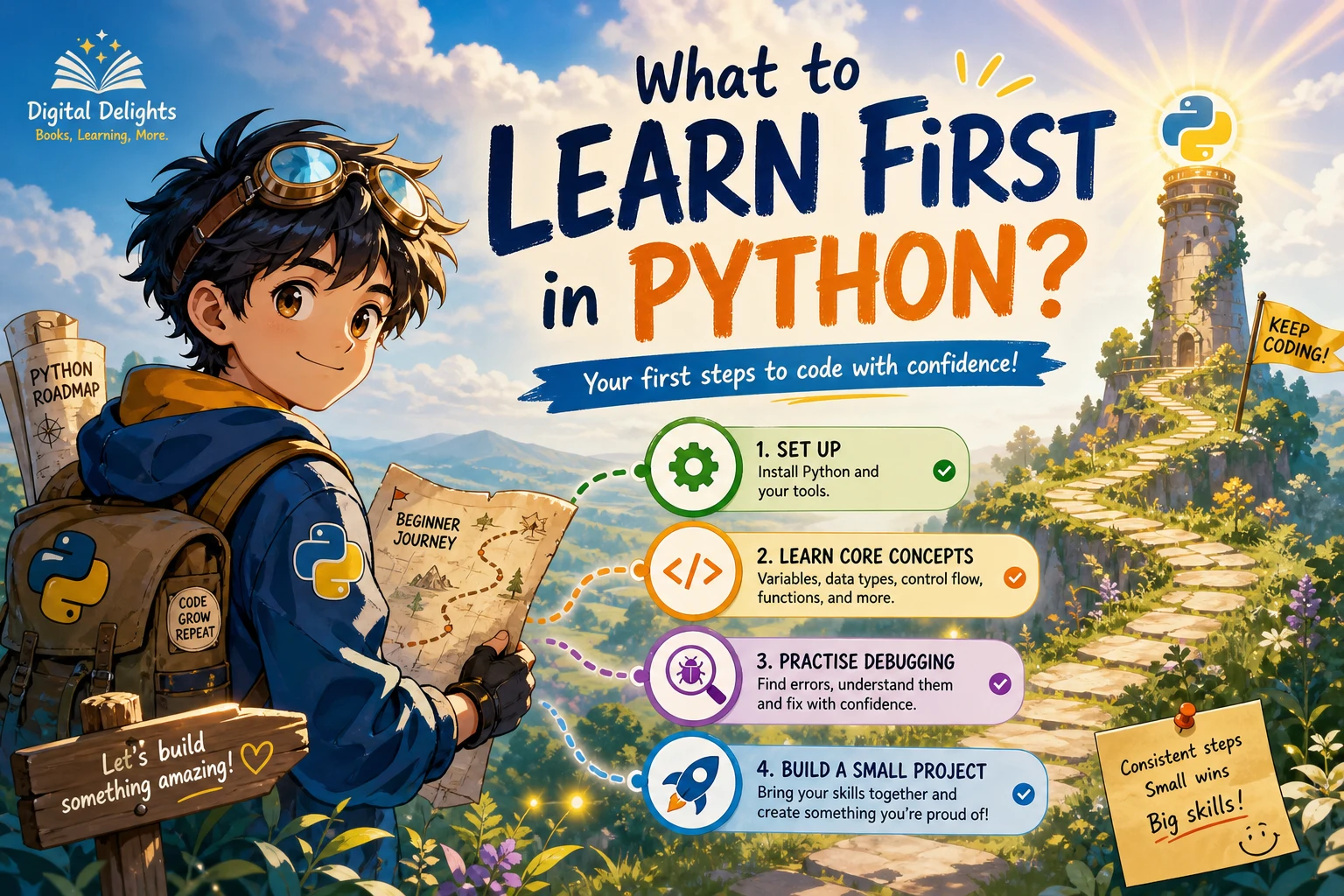
A practical learning sequence for Python beginners
You do not need to memorize the whole language before building anything. Learn a small set of fundamentals, practise them, and combine them in simple programs.
- Run a first program. Learn how to open the recommended environment, run a short script, and see its output.
- Use variables and basic data types. Store and work with text, numbers, and values such as true or false.
- Make decisions. Use conditional logic to have a program respond differently depending on its data.
- Repeat work with loops. Practise carrying out an action for each item or until a condition changes.
- Organize collections. Learn when lists and dictionaries help you work with several related values.
- Write functions. Give a reusable task a name, provide any information it needs, and use its result.
- Read and improve small programs. Practise tracing what the code does, spotting errors, and making a modest change.
- Build a small project. Combine the concepts in something you can explain, such as a quiz, a simple text-based task list, or a program that totals expenses entered by the user.
For each new idea, type the example, run it, and then change one detail. For instance, alter a message, change a number, or add another item to a list. Predict what will happen before running the code, then compare your prediction with the result. That cycle builds understanding more actively than copying examples without experimenting.
How should you handle Python setup and version differences?
Follow setup instructions that match your computer and check which Python version the resource uses. If instructions refer to a different version or to an older tool, do not assume they are automatically unusable—or that every step will work unchanged. Check the resource’s notes and, when needed, consult current guidance on Python’s official site.
Keep your first setup simple. Use the environment recommended by your course or book, and avoid installing extra libraries until a lesson needs them. If a command fails, compare your setup with the resource’s instructions and read the error message before changing several things at once.
Common concerns about learning Python from scratch
Do I need to be good at math?
You can begin learning basic Python without first mastering advanced mathematics. The math involved depends on what you later want to do: a simple script, a data analysis task, and a machine-learning project do not all call for the same background. Start with programming fundamentals and learn any additional math when your chosen area requires it.
How long does it take to learn Python?
There is no reliable universal timeline. Progress depends on what you mean by “learn,” how regularly you practise, and what you want to build. Instead of measuring yourself against a deadline, set a concrete first goal—such as writing a program that asks a question and responds to the answer—and build from there.
Is making mistakes a sign I am not suited to coding?
No. Errors are a routine part of writing programs. Learning to read an error, isolate the relevant part of your code, and test a correction is one of the skills you are developing. Work through one problem at a time rather than expecting every program to run correctly on the first attempt.
Will knowing Python basics make me job-ready?
Not by itself. Basic syntax is a foundation, not a universal employment qualification. Work expectations vary by role and may include writing and maintaining projects, using relevant tools, and demonstrating skills in a particular area. Treat job preparation as a separate goal to investigate once you know which kind of work interests you.
Choosing a first Python learning resource
Match the format and teaching approach to what would help you keep practising. These catalog resources offer different starting points; their descriptions indicate their coverage and intended audience, but do not establish that one format is effective for every learner.
| Resource | What its catalog description covers | May suit you if |
|---|---|---|
| Python for Beginners: A Complete Beginner’s Guide to Learning Python Quickly | A ground-up introduction covering setup, fundamentals, conditions, loops, functions, and files. | You want a structured introduction and a resource whose description is aimed at readers with no coding experience. |
| Python Practice Lab: Learn How to Code through Interactive Examples | Interactive examples and projects, including chatbots, recommendation systems, and image-related work. | You prefer learning concepts through project-led examples and want to practise beyond isolated syntax. |
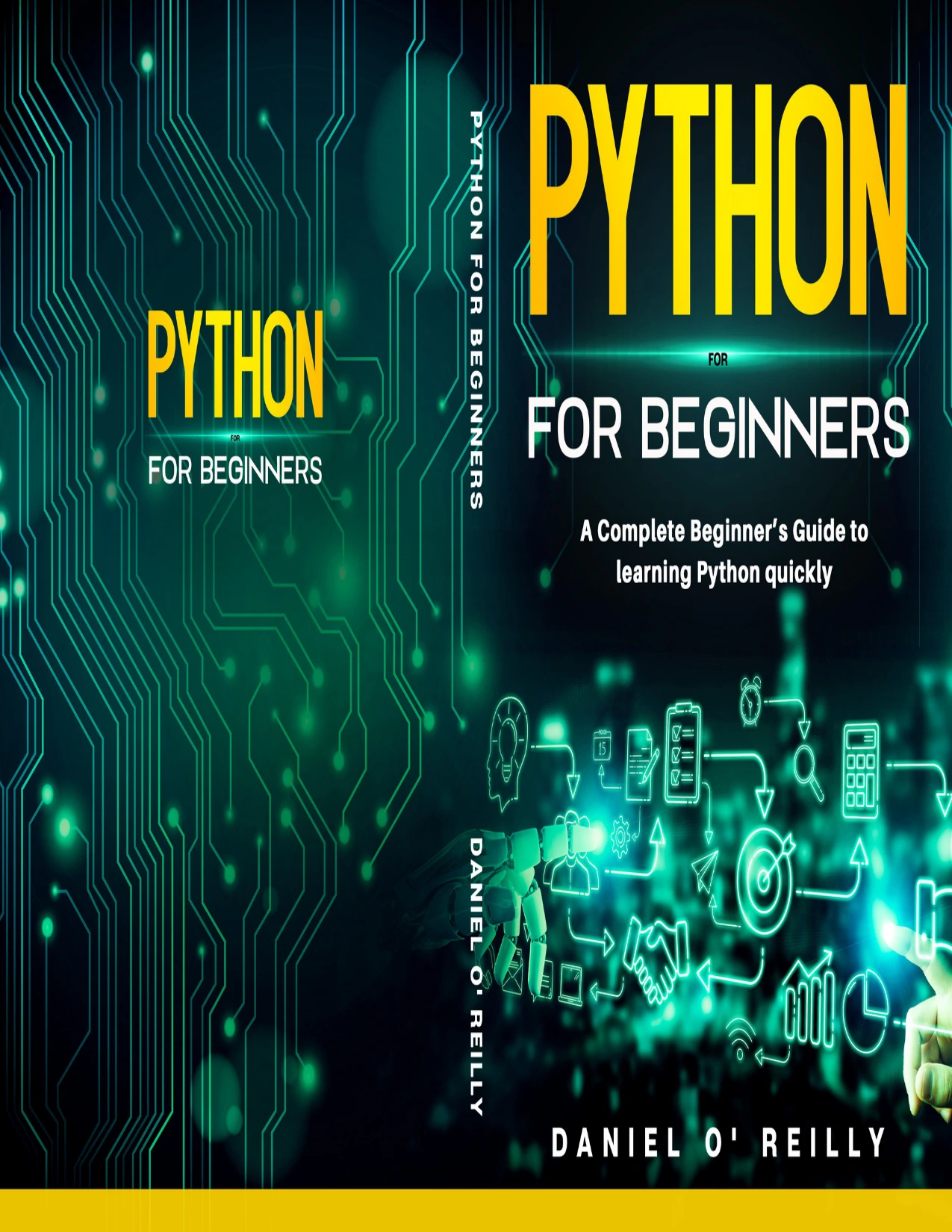
Python for Beginners: A Complete Beginner’s Guide to Learning Python Quickly
Readers seeking a structured start with setup and core programming fundamentals.
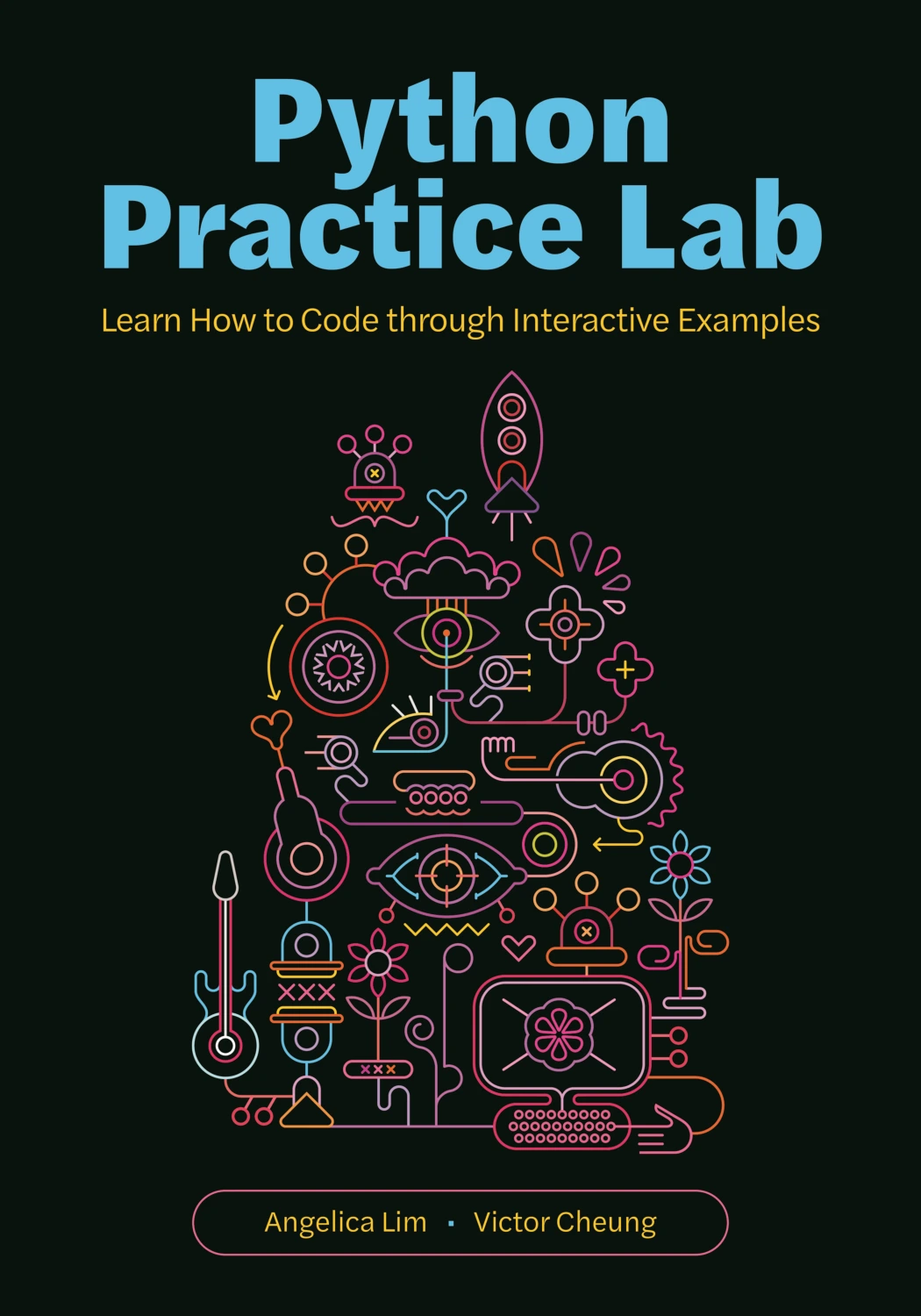
Python Practice Lab: Learn How to Code through Interactive Examples
By Angelica Lim
Learners who prefer interactive examples and project-based practice.
Whichever resource you choose, check its setup guidance and Python version before following along. Give yourself room to type the examples, make small changes, and work through exercises. Browse the Python Programming collection if you want to compare more learning resources.
Frequently asked questions
Can Python be my first programming language?
Yes. Python’s beginner page is intended for people new to programming. Choose a resource that teaches programming concepts as well as Python syntax, and practise by running and modifying code.
Should a complete beginner start with the official Python tutorial?
It can be useful, but the tutorial assumes basic programming knowledge. If you have never coded, begin with novice-oriented instruction and use the official tutorial when you are ready for material written for readers with some programming background.
Can I learn Python without paying for a course?
Yes. Python’s interpreter and standard library are freely available, and the official Python site provides learning information. A paid book or course is optional; it may offer a structured learning path, but you do not need to buy access to the language itself.
What should I do first?
Choose a resource intended for complete beginners, follow its setup instructions, and run a short program. Then change one part of the example and run it again. That gives you a practical first step without requiring any previous programming experience.
Start with one small program
You can learn Python without a programming background. Begin with instruction that explains fundamentals, practise by running and changing examples, and build small projects before moving to more specialized topics. You do not need to know everything before starting; you need a clear first lesson and a willingness to work through the next problem.