
Is Python Easier to Learn Than Other Programming Languages?
Short answer: Python is often easier to start with, but it is not automatically the easiest language for every learner or every project. Its compact, readable syntax can make early examples less intimidating than equivalent code in some other languages. But learning to program still means understanding variables, decisions, repetition, functions, errors, and how to organize a solution.
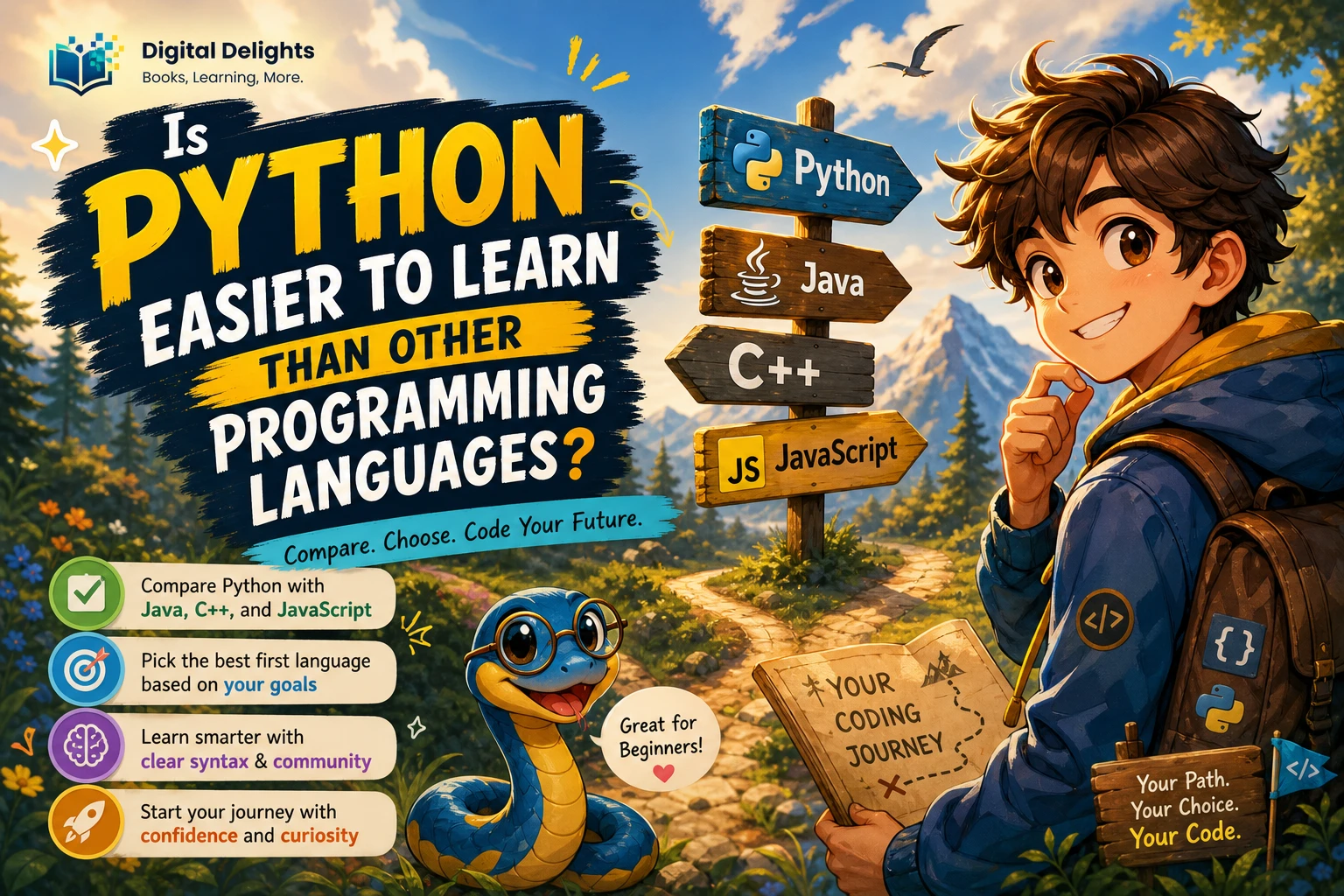
“Easier” can mean several things: fewer syntax hurdles, a quicker first script, simpler setup, or a smoother path to building a particular kind of project. This guide compares Python with C/C++, Java, and JavaScript in those practical terms, explains what Python still asks you to learn, and offers a way to choose a first language that fits your goals.
What can make Python easier to start?
Python is designed to make code relatively readable. Its syntax is compact, and indentation shows how statements belong together. You can often express an idea with less visible scaffolding than in an equivalent C, C++, or Java example. Python’s official tutorial describes these features and also notes that the language supports interactive experimentation and high-level data structures (Python documentation: Whetting Your Appetite).
For a beginner, that can make it easier to focus on what a program is doing rather than on extra punctuation or declarations. You can try a small expression, inspect the result, and adjust it without first building a large application.
- Readable examples: Python code is often compact enough for a beginner to see the main steps at a glance.
- Interactive practice: Trying small snippets can give quick feedback while you learn.
- Built-in data structures: Lists and dictionaries, for example, let learners work with collections of information without immediately implementing those structures themselves.
- Useful across several goals: Python is used for scripting, data tasks, web development, and other kinds of work, so a first language can also support later projects.
These are reasons Python may feel approachable—not proof that it is objectively easiest. The official tutorial itself is aimed at readers who are new to Python but already understand basic programming ideas. It is not presented as a complete course for someone learning programming for the first time (The Python Tutorial).
Python compared with other programming languages
There is no useful universal ranking unless “easy” is defined and the learner’s goal is known. The table below compares common first impressions and learning considerations, not measured learning outcomes. Setup also depends on the operating system, tools, and course or project you choose.
| Language | What may feel approachable | What may add friction | May suit learners whose goal is… |
|---|---|---|---|
| Python | Compact syntax and readable examples can make basic scripts easier to follow. | Indentation is meaningful, and learners still need to understand program structure, environments, and debugging. | Automation, introductory data work, scripting, or exploring programming fundamentals. |
| C or C++ | These languages can make more of the machine-level details and program structure visible. | More syntax and lower-level concepts may compete for attention when a beginner is still learning basic logic. | Learning about systems, performance-sensitive software, or a course that specifically uses them. |
| Java | Its structured approach can make organization and types explicit in many beginner examples. | That structure can mean more code and concepts to manage before a small program feels complete. | Following a Java-based course or exploring software built around the Java ecosystem. |
| JavaScript | It can be a direct route to experimenting with interactive behavior in web pages. | Learning the language may also involve understanding how it runs in a browser or another environment. | Building interactive websites or following a web-development learning path. |
These are broad teaching considerations, not rules. A learner may find explicit structure helpful, while another may prefer to write a short working script quickly. The right comparison is between languages used for a similar project, with learning materials suited to the same level.
What Python still requires you to learn
A friendly syntax does not remove the core work of programming. Whichever language you choose, you will need to learn how to break a problem into steps and check whether those steps produce the intended result.
- Values and variables: how a program stores and uses information.
- Conditions and loops: how it makes decisions and repeats actions.
- Functions: how to group instructions into reusable pieces.
- Errors and debugging: how to interpret a failure, locate its cause, and test a fix.
- Program structure: how to organize code as a task becomes larger than a short example.
- Libraries and environments: how to use external tools and run code in the right setup.
Python also uses indentation to define blocks of code. That can help make structure visible, but it means indentation must be consistent. Learners can also encounter confusing errors, unfamiliar terminology, and differences between a tiny exercise and a larger application. Those challenges are part of learning to program, not evidence that Python is a poor first choice.
Who might find Python a good first language?
Python is a practical starting point if you want to experiment with scripts, automate repetitive tasks, explore data, or learn general programming concepts with relatively compact examples. It can also be a sensible option when a course or project you care about already uses Python.
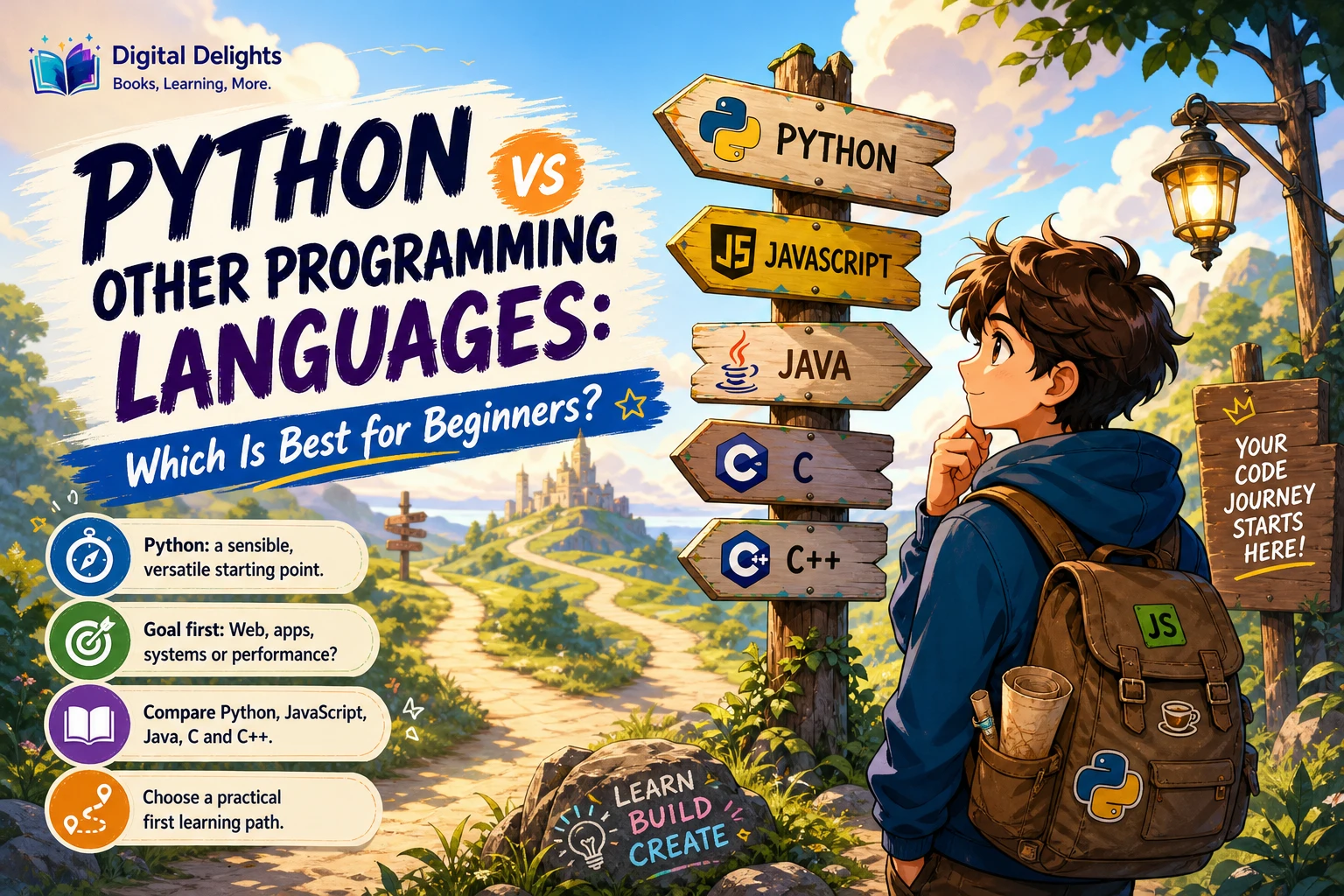
You might choose another language first if your immediate goal points clearly elsewhere: JavaScript for browser-based interaction, for example, or C/C++ or Java when a course, project, or environment specifically calls for them. Starting with a different language does not prevent you from learning Python later. Many of the underlying ideas—variables, conditions, loops, functions, and debugging—carry across languages, even though the syntax and tools change.
Prior experience matters, too. Someone who has written code before may find a new language’s syntax straightforward while needing time to learn its libraries and conventions. A complete newcomer is learning both the language and the habit of expressing a problem as precise steps. Your preferred style of explanation and the quality of the exercises you use can also affect how difficult the experience feels.
How to decide which language to learn first
- Name a small goal. Choose something concrete, such as sorting a list of expenses, renaming files, analyzing a small dataset, or changing an element on a webpage.
- Match the language to the goal. Look at what language is used in the relevant course, tool, or project. If you have no specific constraint, Python is a reasonable language to try first.
- Use a beginner-focused resource. Make sure it explains the basics and gives you small tasks to solve, rather than expecting you to already know programming.
- Write and modify code yourself. Reading examples can introduce ideas, but changing an example and explaining what changed helps reveal what you understand.
- Notice the kind of difficulty. Are you stuck on syntax, setup, or the logic of the problem? Those are different obstacles and may call for different help.
- Reassess after a small project. If your goal changes, you can add another language later instead of trying to predict the perfect choice in advance.
If you want a structured Python introduction, Python Programming for Beginners by Mark Zane is described in the Digital Delights catalog as covering setup and core topics including variables, loops, and functions. For readers who want to compare programming across languages while learning broader habits such as testing and debugging, How to Write Good Programs: A Guide for Students includes examples in Python, Java, and Haskell. Neither resource makes learning effortless; choose based on the explanations and scope that fit your needs.
By Mark Zane
Readers looking for a step-by-step introduction covering Python setup and fundamentals such as variables, loops, and functions.
How to Write Good Programs: A Guide for Students
Learners who want practical guidance on testing, debugging, and clear code, with examples in Python, Java, and Haskell.
Frequently asked questions
Is Python a good first programming language?
It can be. Python’s readable, compact syntax may help beginners focus on basic programming ideas, and it is useful for a range of projects. Whether it is the right first language depends on your goal, learning materials, and personal preference.
Is Python easier than Java or C++?
Python often requires less visible syntax for simple examples, which may make it easier to begin writing small programs. Java and C++ make different structures and concepts more explicit in many learning contexts. That does not establish that every learner will find Python easier, or that it is the better tool for every task.
Is Python’s syntax enough to make programming easy?
No. Readable syntax can reduce one kind of friction, but programming also involves problem-solving, testing, debugging, and organizing code. Those skills take practice in any language.
Do you need prior coding experience to start learning Python?
No. You can begin with a resource designed for complete beginners. Check its stated prerequisites: the official Python tutorial, for instance, is intended for people new to Python who already have basic programming knowledge, so a first-time coder may prefer a beginner-oriented introduction.
Conclusion: choose for your goal, not a universal ranking
Python is often approachable because its syntax is compact and readable, and it supports quick experimentation. But “easier” depends on what you want to build, what you already know, and which parts of programming you find challenging. Choose a language that connects to a real goal, start with suitable beginner material, and make a small project. If Python fits that goal, it is a strong option to try—not a guarantee that every step will be easy.