
Best Python Books for Data Science
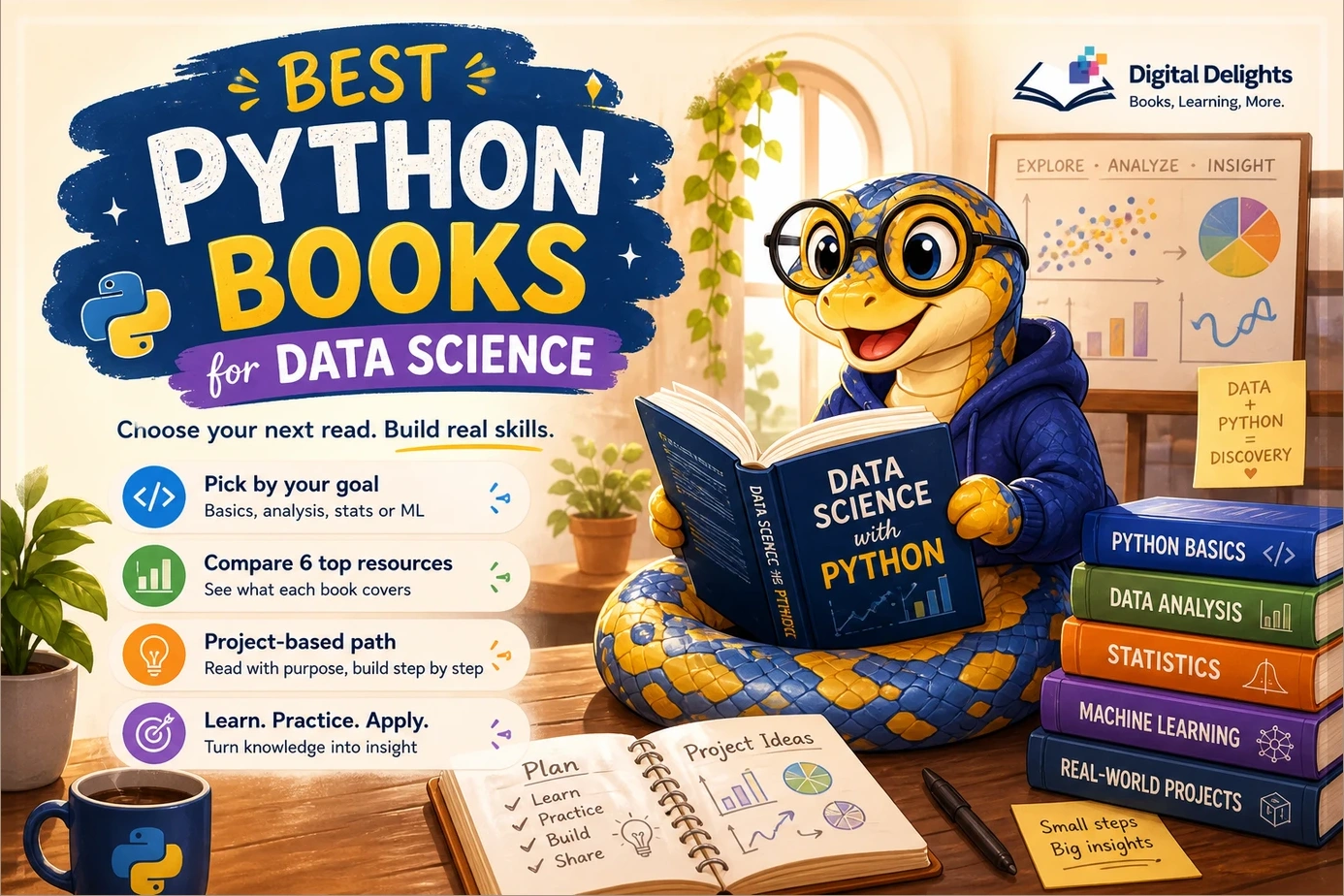
The best Python books for data science solve different problems. A programming introduction helps you understand functions and loops; a data-analysis guide helps you work with messy tables; a statistics book helps you decide what your results actually mean. Buying the broadest book is not necessarily the best next step.
For a complete beginner, 100 Days of Coding in Python offers a structured programming foundation. For a beginner resource that also introduces data-analysis tools, consider Dylan Penny’s Python Programming: 3 Books in 1. If you already write basic Python, the more useful choice may be a focused statistics or machine-learning resource instead.
This guide compares catalog-listed books by learning goal, explains their limitations, and gives you a practical reading path. The selections are editorial matches based on supplied descriptions—not a tested ranking or a claim that one book works best for everyone.
Best Python Books for Data Science: Quick Picks
Start with the row that describes your next learning need. The readiness guidance below is editorial advice based on subject coverage, not a standardized publisher prerequisite assessment.
| Book | Suitable reader | Main focus | Suggested readiness | Scope limitation |
|---|---|---|---|---|
| 100 Days of Coding in Python — Giuliana Carullo | Beginners who want a paced learning plan | Python fundamentals, exercises, algorithms and data structures | A starting point for new programmers | Programming foundation rather than a dedicated analysis curriculum |
| Python Programming: 3 Books in 1 — Dylan Penny | Beginners interested in moving toward data work | Python basics and introductory data analysis, including NumPy, pandas and Matplotlib | No prior coding experience assumed in the catalog description | Broad introduction; not evidence of advanced statistical or modeling depth |
| Modern Statistics: A Computer-Based Approach with Python | Learners whose main gap is statistical understanding | Probability, inference, regression, sampling and time series | Basic Python fluency; inspect mathematical examples before choosing | Not a replacement for a first programming course |
| Machine Learning with Python: A Practical Beginners’ Guide — Oliver Theobald | Learners beginning predictive modeling | Data preparation, validation and foundational algorithms | Basic Python is a useful head start | Introductory modeling rather than an advanced deep-learning reference |
| Advanced Python Tips — Rahul Agarwal | Readers who can write Python but want clearer code | Python idioms, collections, decorators and generators | Comfort with Python fundamentals | A programming supplement, not a complete data-science course |
| Deep Learning with Structured Data — Mark Ryan | Intermediate learners pursuing a tabular-data project | Data preparation, Keras modeling, experimentation and deployment | Intermediate Python and machine-learning experience | Specialized next step, not a beginner starting point |
You do not need all six. Choose one main learning resource and add another only when you can identify a specific gap.
How to Choose a Book for Your Starting Point
Identify whether the obstacle is Python or data science
Try a small readiness check: can you write a function, use a dictionary, loop through records, import a module and read a simple error message? If those tasks still feel unfamiliar, start with programming foundations. Otherwise, another syntax-first book may repeat material you already know.
Next, name the task you want to perform:
- Clean and summarize spreadsheets: prioritize loading data, handling missing values, grouping, joining tables and visualization.
- Understand uncertainty: prioritize probability, sampling, statistical inference and regression interpretation.
- Build predictive models: prioritize data preparation, validation, baseline models and evaluation.
- Improve reusable analysis code: prioritize functions, modules, readable transformations and appropriate Python idioms.
Match the format to how you learn
A structured course is useful when you need someone to decide what comes next. A reference is useful when you already have a question and need to find a technique. A project-led book is useful when you want to see how individual decisions connect across an entire workflow.
Before choosing, inspect a sample chapter if one is available. Ask whether you can explain the first example, whether exercises require independent work, and whether the book provides the data and setup information needed to reproduce its examples.
Distinguish breadth from depth
Publisher research illustrates why similarly named books can serve different purposes. Eric Matthes’s Python Crash Course, third edition covers programming foundations and projects involving games, visualization and web applications, according to No Starch Press’s description. That is a broader programming scope than a dedicated data-analysis text.
By contrast, O’Reilly’s description of Python for Data Analysis, third edition emphasizes loading, cleaning, reshaping, grouping and analyzing data with tools including NumPy and pandas. Its description of Python Data Science Handbook, second edition spans Jupyter, NumPy, pandas, visualization and machine learning.
These titles are scope examples from the supplied publisher research, not Digital Delights catalog recommendations: they were not present in the supplied product rows. The useful distinction is focused analysis workflow versus broader scientific-Python coverage. A long list of topics alone does not establish teaching quality.
Books for Building Your Python Foundation
100 Days of Coding in Python: For a structured practice routine
100 Days of Coding in Python by Giuliana Carullo follows a day-by-day structure with theory and coding practice. The catalog describes coverage of fundamentals, modular programming, error handling, documentation, algorithms, data structures and design patterns.
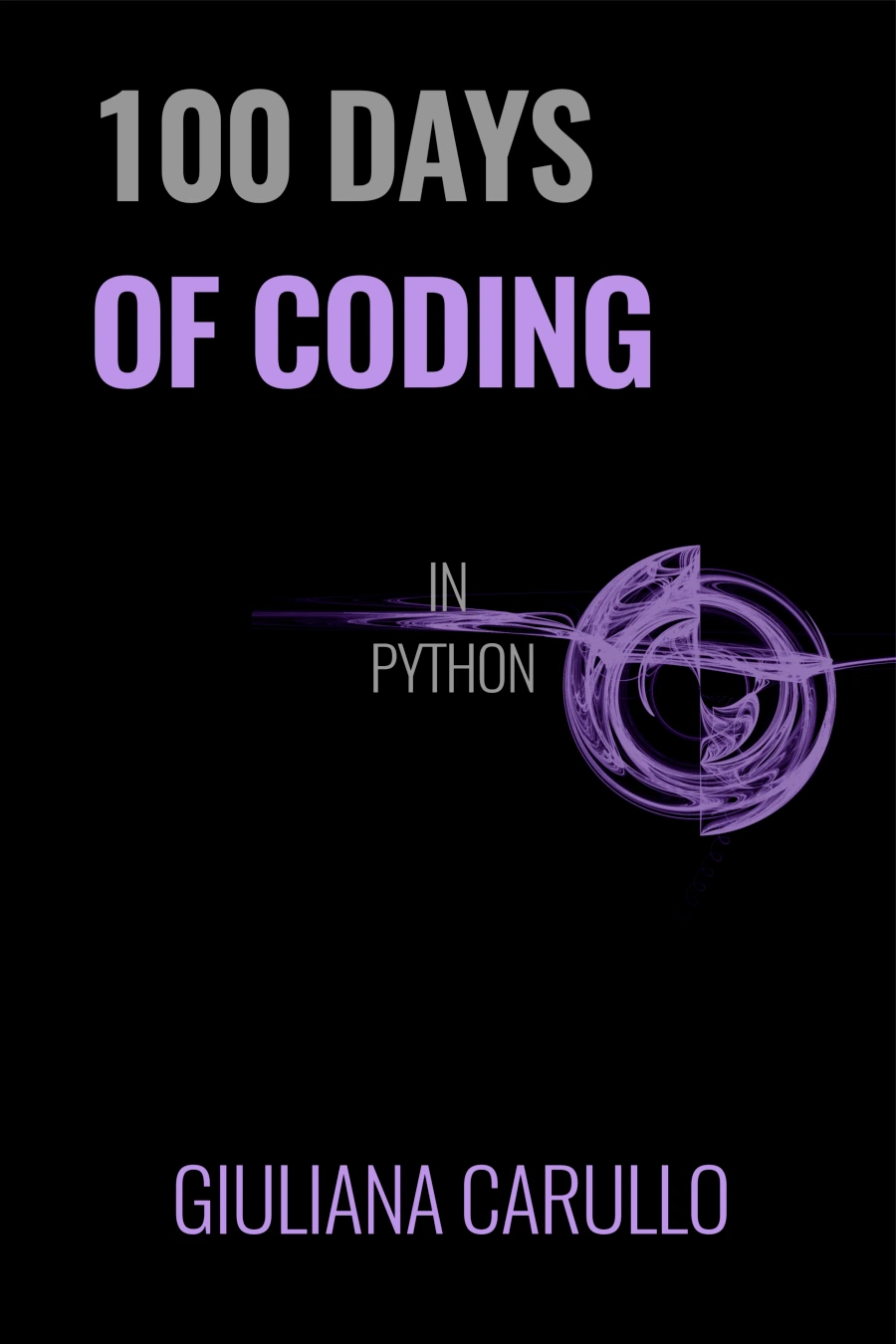
New programmers who want a day-by-day structure with theory, practice and broader programming concepts.
This is a sensible foundation choice if your immediate challenge is writing programs independently. It also gives you material beyond isolated syntax examples, which matters when an analysis grows from a few commands into several reusable steps.
Choose it when: you want a learning sequence and repeated practice. Look elsewhere first when: you already know Python and mainly need to clean or analyze tables.
Treat the title as an organizational format, not a deadline. Move on when you can adapt an example without copying it, rather than when a calendar says you should.
Python Programming: 3 Books in 1: For basics with a data-analysis direction
Dylan Penny’s Python Programming: 3 Books in 1: The Complete Beginner’s Guide to Learning the Most Popular Programming Language combines beginner instruction with applied data-analysis material. The supplied catalog identifies Python fundamentals alongside NumPy, pandas and Matplotlib.
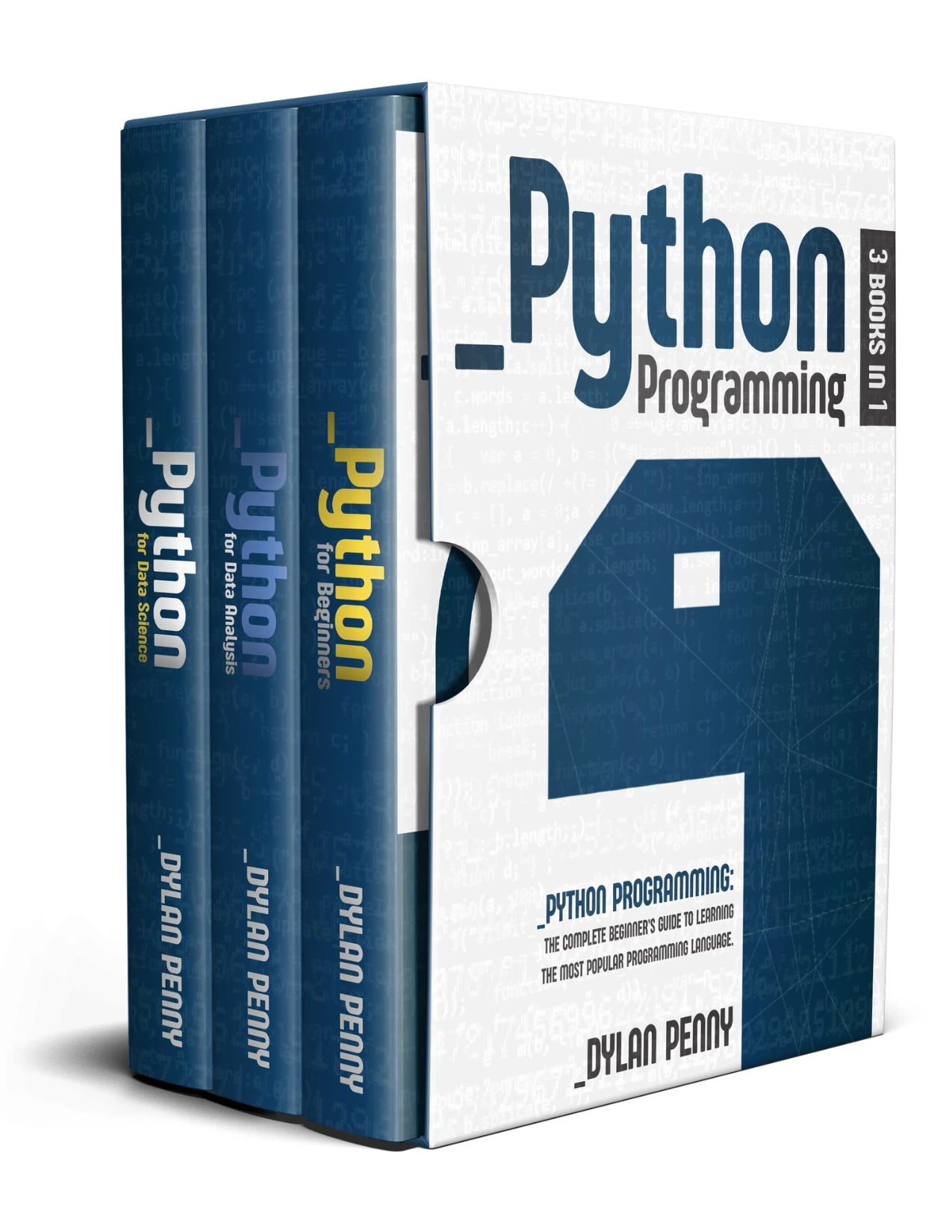
By Dylan Penny
Beginners seeking language fundamentals alongside catalog-described NumPy, pandas and Matplotlib material.
Compared with the practice-led programming route above, its appeal is the connection between language basics and data tools within one collection. That can suit a learner who already knows that data analysis is the destination.
Choose it when: you want an introductory bridge into data work. Keep the limitation in view: a combined volume is not evidence that every included subject receives specialist depth. Check the available contents or sample against the tasks you want to learn.
Books for Data Analysis and Statistical Understanding
Working with a dataset and drawing a defensible conclusion from it are separate skills. You might successfully calculate a group average while overlooking missing records, unusual observations or a biased sample.
For an analysis-focused resource, look for practical treatment of data types, missing values, joins, grouping and visualization. For statistical understanding, look for explanations of assumptions, uncertainty and interpretation—not just commands that produce a result.
Modern Statistics: A Computer-Based Approach with Python: For interpreting results
Modern Statistics: A Computer-Based Approach with Python, by Ron S. Kenett, Shelemyahu Zacks and Peter Gedeck, connects statistical methods with Python computation. The catalog describes descriptive statistics, exploratory analysis, probability models, inference, bootstrapping, regression, sampling and time series.
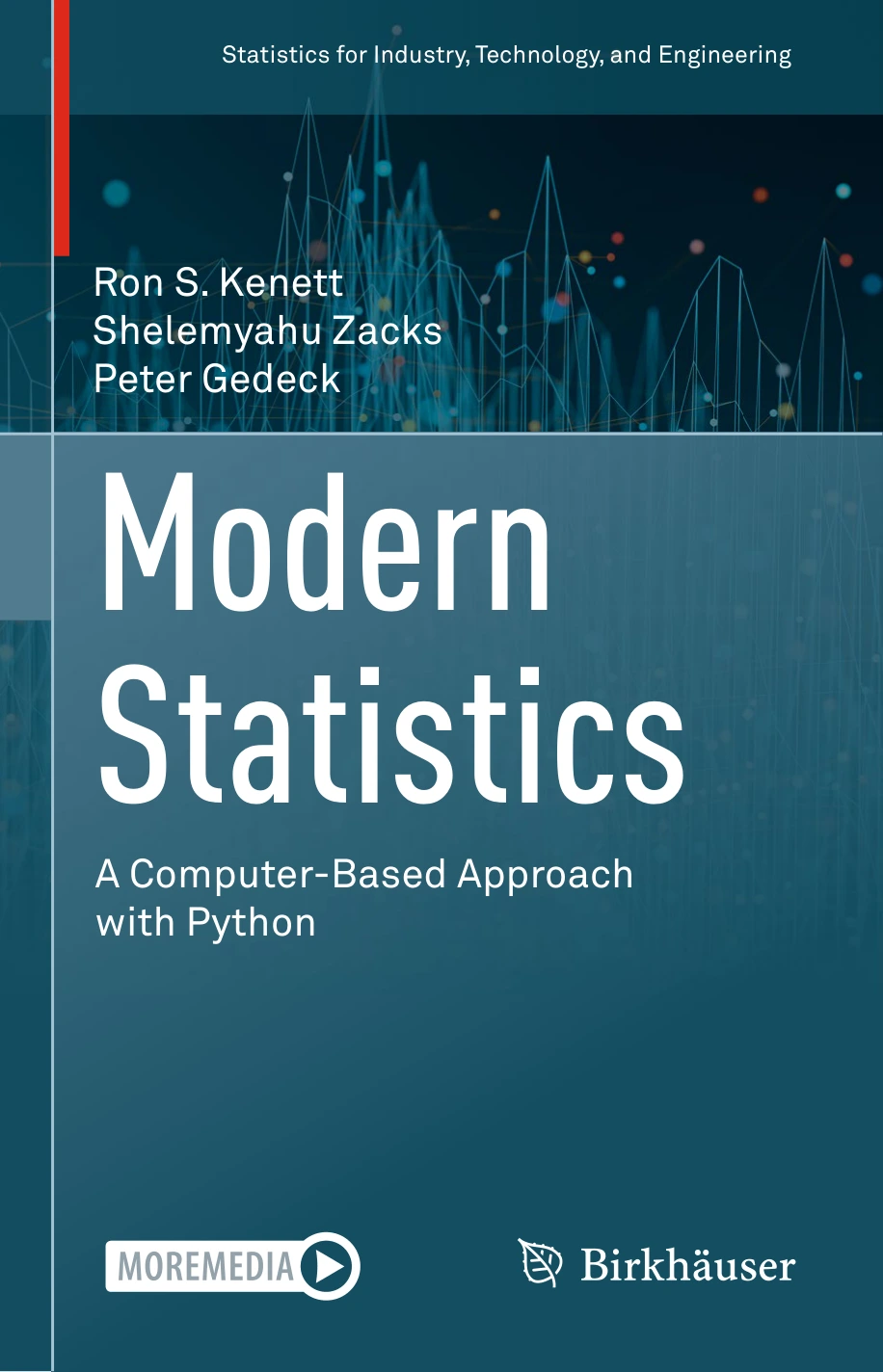
Modern Statistics: A Computer-Based Approach with Python
Learners interested in probability, inference, regression, sampling and time series through Python computation.
This is the most directly statistics-focused selection in this guide. Its role is different from that of a syntax introduction or a pandas-centered analysis resource: it addresses how to reason about evidence.
Choose it when: you can manipulate data but want to understand what an estimate, comparison or model says. Prepare first when: Python examples or mathematical notation prevent you from following the explanation. The supplied material does not establish a precise prerequisite threshold, so inspect a sample rather than relying on a difficulty label.
A useful companion exercise is to write two interpretations of the same result: one describing what the data shows, and one stating what the data does not establish. That separates calculation from overclaiming.
Books for Moving into Machine Learning
Machine Learning with Python: A Practical Beginners’ Guide: For the modeling workflow
Oliver Theobald’s Machine Learning with Python: A Practical Beginners’ Guide organizes its material around preparation, model design and evaluation. The catalog lists exploratory data analysis, data scrubbing, split validation, linear and logistic regression, support vector machines, k-nearest neighbors and tree-based methods.
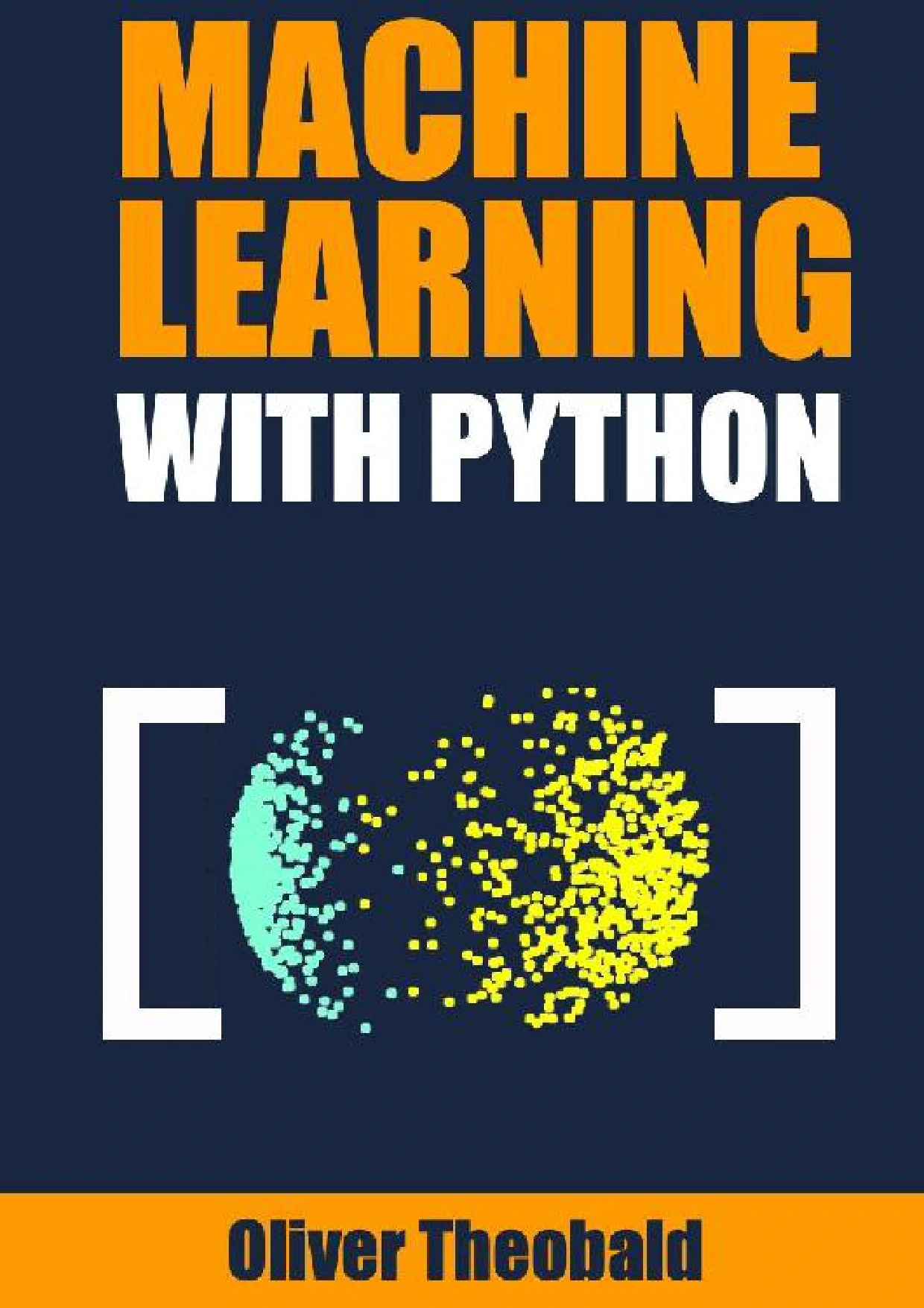
Machine Learning with Python: A Practical Beginners’ Guide
Readers beginning data preparation, validation and foundational machine-learning algorithms.
That makes it a relevant next step when your question changes from “What happened in this dataset?” to “Can these inputs help predict an outcome?” The catalog also notes a Python appendix, but an appendix should not automatically be treated as a substitute for sustained programming practice.
Choose it when: you want an introduction to foundational algorithms within a practical workflow. As you read, explain what each input represents, why you chose an evaluation measure and what information would actually be available when making a prediction.
Deep Learning with Structured Data: For an intermediate project
Mark Ryan’s Deep Learning with Structured Data follows a Toronto transit dataset and a streetcar-delay prediction project. Its catalog description covers exploration, cleansing, transformation, Keras model construction, training, experimentation and deployment.
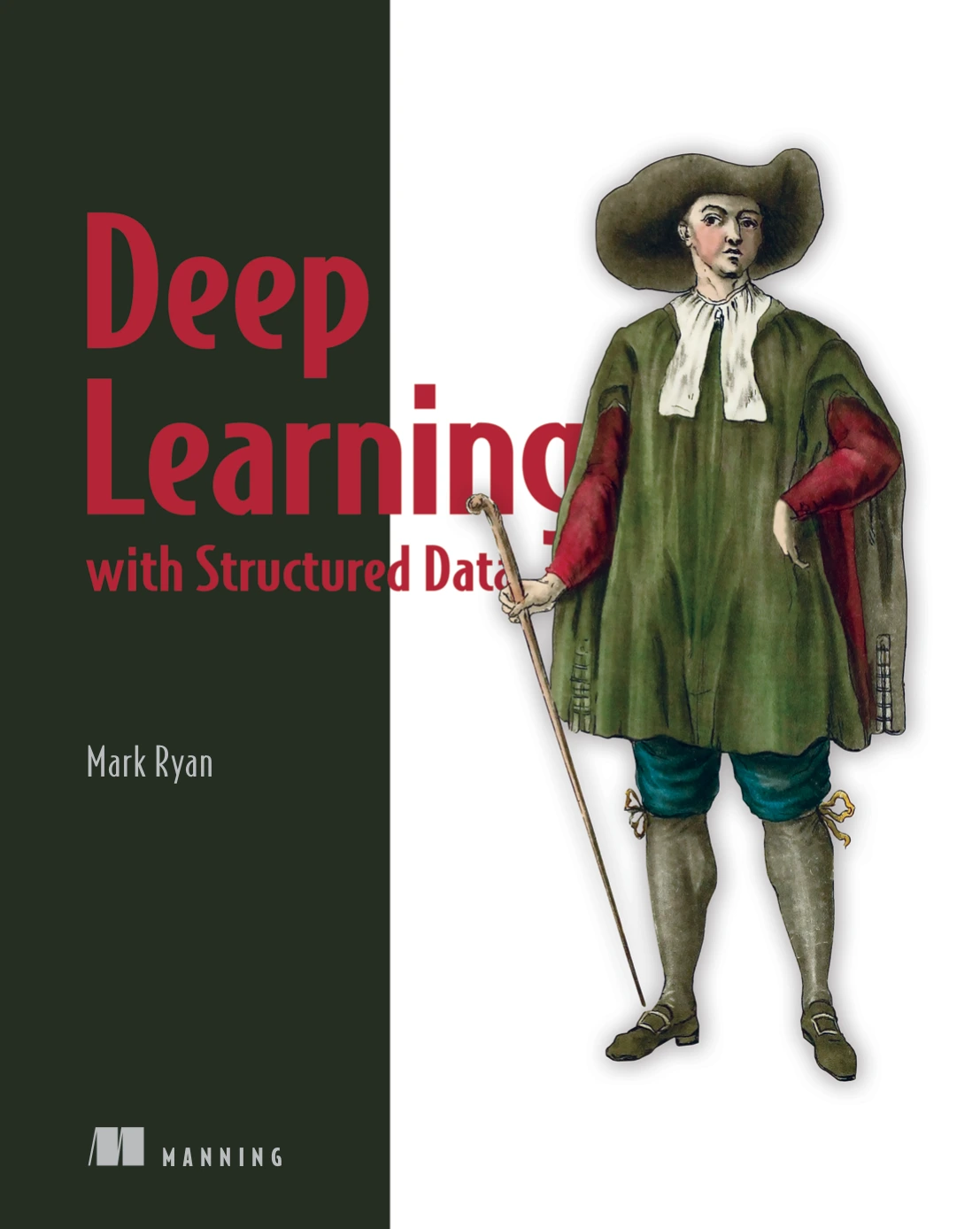
Deep Learning with Structured Data
By Mark Ryan
Readers with intermediate Python and machine-learning experience who want a Keras project spanning preparation through deployment.
Its value for this reading path is continuity: you can study how decisions made during preparation connect with modeling and later use. The catalog positions it for readers with intermediate Python and machine-learning experience.
Choose it when: you have introductory modeling knowledge and want a project-led structured-data example. Do not interpret its inclusion as a reason to use deep learning for every table. Keep a simple comparison model in your own project so that added complexity has something meaningful to justify.
A Supplement for Writing Clearer Python
Advanced Python Tips: For improving code you already understand
Advanced Python Tips by Rahul Agarwal focuses on Python patterns such as defaultdict, Counter, decorators, iterators, generators and f-strings. It is a focused programming supplement rather than a statistics or modeling course.
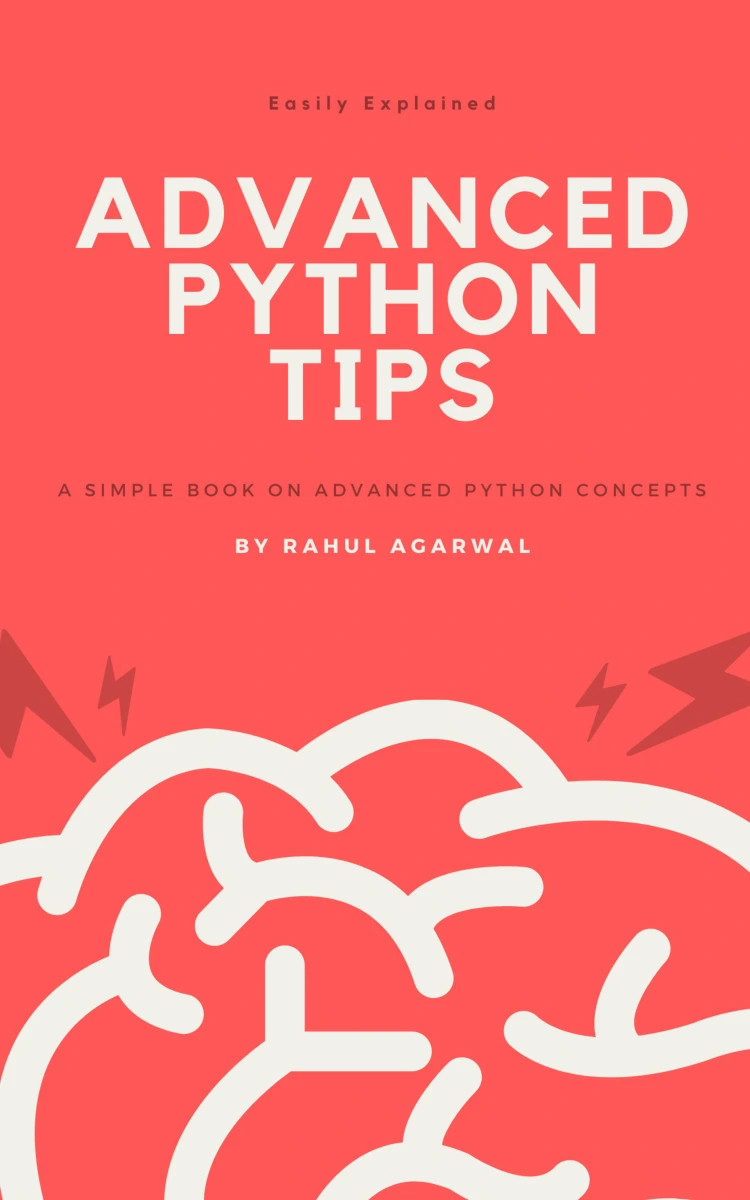
Readers who already know Python basics and want focused coverage of collections, decorators, iterators and generators.
Consider it when you can already complete an analysis but find your code repetitive or difficult to reuse. For example, counting categories can become an opportunity to understand collection tools, while a repeated transformation can become a small function with a clear purpose.
Avoid rewriting working code merely to make it shorter. Prefer an improvement you can explain and check over an unfamiliar one-line expression.
A Practical Reading Path: One Dataset, Several Skills
Use a small CSV with clearly defined columns and permission to use it. A table of expenses, public-service records or non-sensitive survey responses can provide a manageable starting point.
- Build the programming foundation. Practise reading a file, inspecting records and writing a function. Explain the result of each step.
- Inspect the data. Identify column meanings, data types, missing values, duplicates and implausible entries. Keep notes on unresolved questions.
- Clean deliberately. Record each transformation and its reason. Do not silently discard inconvenient observations.
- Summarize and visualize. Compare groups and make a chart that answers a specific question. Check whether the comparison groups are meaningfully comparable.
- Interpret cautiously. Explain the population represented, possible sampling problems and limits of the findings.
- Add prediction only if useful. Define the target and how performance will be evaluated. Keep evaluation data separate from model fitting, and avoid using information that would not exist at prediction time.
- Make the work repeatable. Re-run the analysis from the original file. Keep setup notes, dependency information and a short explanation of the results.
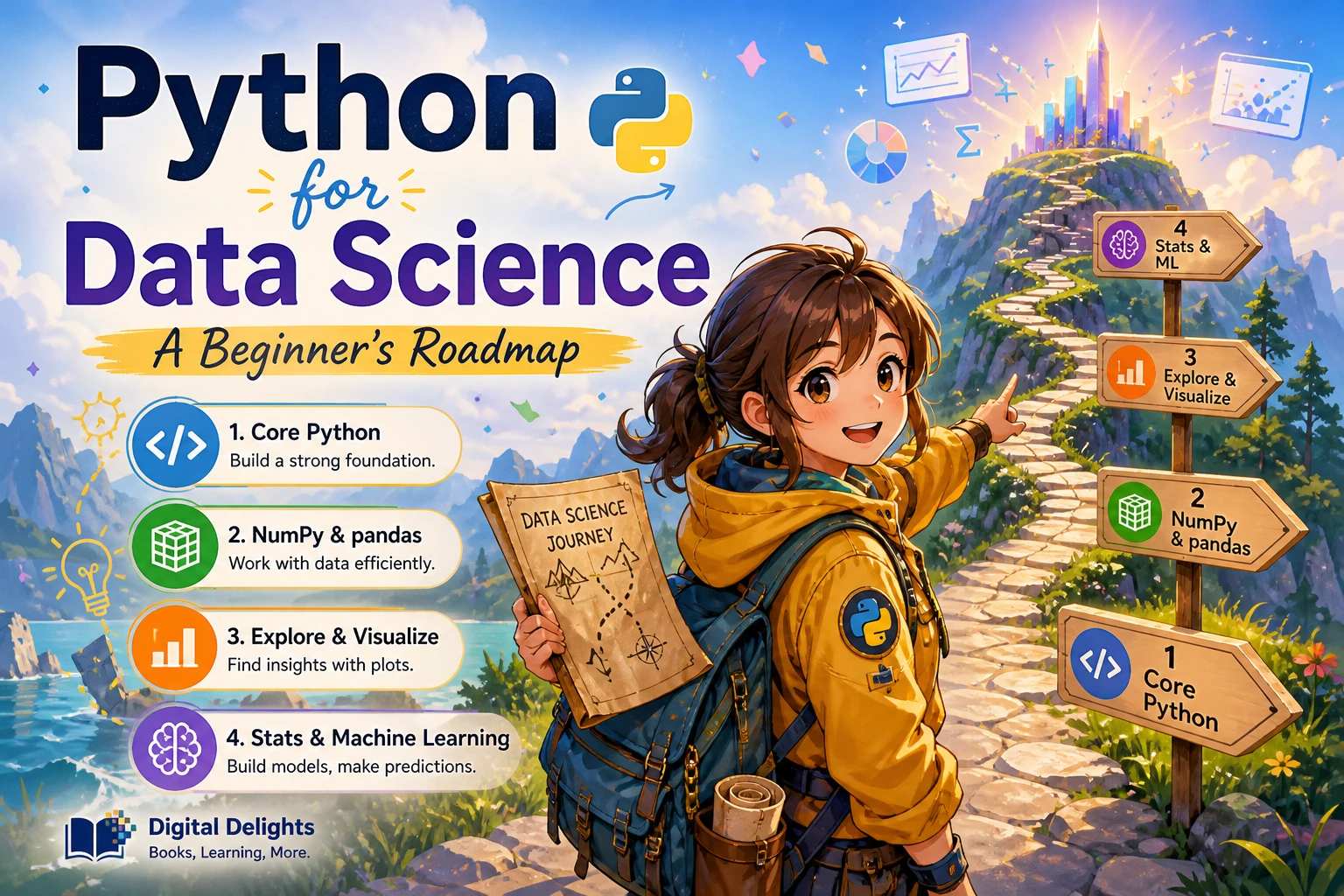
This sequence gives each book a job. Programming resources support the first stage; analysis resources support inspection and cleaning; statistics supports interpretation; modeling resources support prediction and evaluation.
Common Book-Selection Mistakes
- Choosing by page count: more pages do not establish a better fit for your question.
- Collecting overlapping introductions: finish a small independent task before buying another book that repeats the same basics.
- Jumping straight to neural networks: data understanding and evaluation still need attention.
- Assuming code compatibility: a book’s examples may depend on particular library versions.
- Reading without changing examples: vary an input, predict what will happen and explain any unexpected result.
Frequently Asked Questions
Should I learn Python before studying data science?
Learn enough Python to follow and adapt examples: variables, collections, loops, functions, imports and basic file handling. You do not need to master every language feature before exploring data, but unfamiliar syntax should not obscure the analysis.
Do I need more than one book?
Not initially. Choose one resource for your current goal and use a project to reveal what is missing. A second book is more useful when it addresses a distinct need, such as statistical interpretation rather than another introduction to syntax.
How much mathematics should I know?
The answer depends on the work. Begin with comfort interpreting quantities, averages, percentages and graphs. Add probability and statistical reasoning for inference, and investigate the mathematical requirements of the particular modeling book you choose. Mathematical readiness and Python fluency are separate questions.
Will older Python book examples still work?
Do not assume they will work unchanged. Check companion setup instructions, dependency versions and errata where available. O’Reilly states that Python for Data Analysis, third edition targets Python 3.10 and pandas 1.4; those are the book’s stated baselines, not a recommendation for every new environment. Keep a book-specific environment separate when necessary.
Are these books proven to be better than other options?
No comparative learner study or firsthand testing was supplied. The selections reflect documented subject coverage and editorial judgments about fit. Use sample chapters and your own learning goals to make the final decision.
Make Your Final Choice by the Next Task
If you cannot yet write small programs independently, begin with a foundation resource. If your goal is working with datasets, choose an introduction that connects Python to analysis tools. If you can already calculate results but struggle to interpret them, prioritize statistics. Move into modeling when you can describe the data, the question and the evaluation plan.
The Digital Delights resources linked above serve different stages of that path. Choose the one that addresses your present obstacle, then use it to complete an explainable project before expanding your reading list.
Sources and Selection Basis
Catalog selections are based on the supplied Digital Delights product descriptions, linked at each recommendation. The following publisher sources support the scope comparisons and edition-specific information discussed in this article:
- No Starch Press: Python Crash Course, third edition — programming foundations and project coverage.
- O’Reilly: Python for Data Analysis, third edition — data-analysis scope, intended readership and stated software baselines.
- O’Reilly: Python Data Science Handbook, second edition — scientific-Python, visualization and machine-learning coverage.