What’s the Best Book for Learning Python?
For a beginner who wants explanations followed by hands-on practice, Python Bootcamp: A Rapid Crash Course Featuring Q&A Sessions, Exercises, and Projects is a sensible starting candidate. If you prefer a more substantial textbook that teaches problem-solving alongside the language, consider The Practice of Computing Using Python instead.
The best book to learn Python depends on what you already know and what you want to build. A spreadsheet user may benefit from familiar data examples, while someone preparing for computer science study may want a broader foundation. This guide compares relevant titles in the Digital Delights catalog, explains their advertised scope, and gives you a practical way to choose. These are recommendations based on catalog descriptions—not a claim that the books have been personally tested or that one is universally superior.
Quick answer: The best book to learn Python for your goals
Start by choosing the kind of learning experience you need:
- You want a practice-led introduction: consider Python Bootcamp: A Rapid Crash Course Featuring Q&A Sessions, Exercises, and Projects.
- You want programming and computing fundamentals: consider The Practice of Computing Using Python.
- You already work confidently in Excel: consider Python for Excel Users: Know Excel? You Can Learn Python.
- You want to work with datasets: investigate Python for Data Science: A Hands-On Introduction, checking its prerequisites before choosing it as your first programming book.
- You can already write small Python programs: consider Python How-To: 63 Techniques to Improve Your Python Code as a follow-on resource.
If you are completely new to programming and have no specific application in mind, narrow your decision to the first two. Choose the practice-led guide if you want a quicker route into runnable examples; choose the textbook if you want more extensive study of algorithms, data structures, and program design.
Before committing, inspect a sample chapter if available. A description can tell you what a book covers, but only the actual pages can show whether its explanations and pace suit you.
What makes a good Python book for beginners?
A useful beginner book does more than introduce syntax. It helps you run code, understand its behavior, and recover when something goes wrong. Use the following checklist to evaluate a prospective book.
Clear prerequisites and setup instructions
Look for an explicit statement about prior programming knowledge. “Beginner” can mean new to Python rather than new to coding. Also check whether installation instructions match your operating system and whether the examples identify the Python version they use.
Your first practical milestone is simple: you should be able to save a short script, run it, edit it, and run it again. A book that assumes you already know how to do this may need an additional setup resource.
A connected sequence of fundamentals
For a general introduction, look for coverage of:
- Variables, numbers, strings, and basic input and output.
- Conditions and comparisons.
- Loops and repeated work.
- Collections such as lists and dictionaries.
- Functions, parameters, and return values.
- Files, exceptions, and basic debugging.
The connections matter as much as the topic list. An expense tracker, for example, can combine numbers, lists, loops, conditions, and functions. That is more useful practice than memorizing each feature separately.
Practice that asks you to make decisions
Typing a provided example is a useful first step, but an exercise should eventually ask you to choose the approach yourself. Look for tasks that move from modifying existing code to solving a fresh problem.
If you are studying independently, check what feedback is available. Selected answers, worked explanations, hints, or tests can help you diagnose mistakes. Do not assume a book includes full solutions simply because it advertises exercises.
A pace you can sustain
A short guide is not automatically easier, and a long textbook is not automatically better. A compact book may introduce several ideas quickly; a substantial textbook may give you more explanation and practice than you need for a particular project.
Try reading one unfamiliar concept in a sample chapter. Then close the sample and explain the idea in your own words. If the explanation makes sense but the exercise remains challenging, that can be a productive fit.
Compare Python books by learning goal
The table below summarizes the supplied catalog coverage. Its limitations column highlights what to check or where the book fits—not defects established through testing.
| Reader type | Book | Catalog-supported coverage | Limitation or check |
|---|---|---|---|
| Practice-led beginner | Python Bootcamp: A Rapid Crash Course Featuring Q&A Sessions, Exercises, and Projects | Python 3 setup, runnable examples, Q&A sessions, exercises, and projects. | The description emphasizes Windows setup; check guidance for your system and available solutions. |
| Computing fundamentals learner | The Practice of Computing Using Python | Algorithms, collections, functions, files, classes, recursion, exceptions, and exercises. | A substantial textbook commitment; check older setup instructions and software examples. |
| Spreadsheet user | Python for Excel Users: Know Excel? You Can Learn Python | Python fundamentals framed around spreadsheet work, data handling, and automation. | Most relevant when Excel experience is part of your starting point. |
| Data-focused learner | Python for Data Science: A Hands-On Introduction | Data structures, files, APIs, databases, aggregation, visualization, and introductory machine learning. | Confirm prerequisites before treating it as a complete first course in programming. |
| Learner beyond the basics | Python How-To: 63 Techniques to Improve Your Python Code | Text processing, containers, iteration, function design, type hints, and decorators. | Better positioned as a follow-on resource than as the default first book. |
For a practice-led start: Python Bootcamp
Python Bootcamp: A Rapid Crash Course Featuring Q&A Sessions, Exercises, and Projects by Vaskaran Sarcar is aimed at new programmers and self-directed learners. Its catalog description emphasizes Python 3, installation, running code through the command prompt or IDLE, and practical issues such as PATH configuration and multiple installed versions.
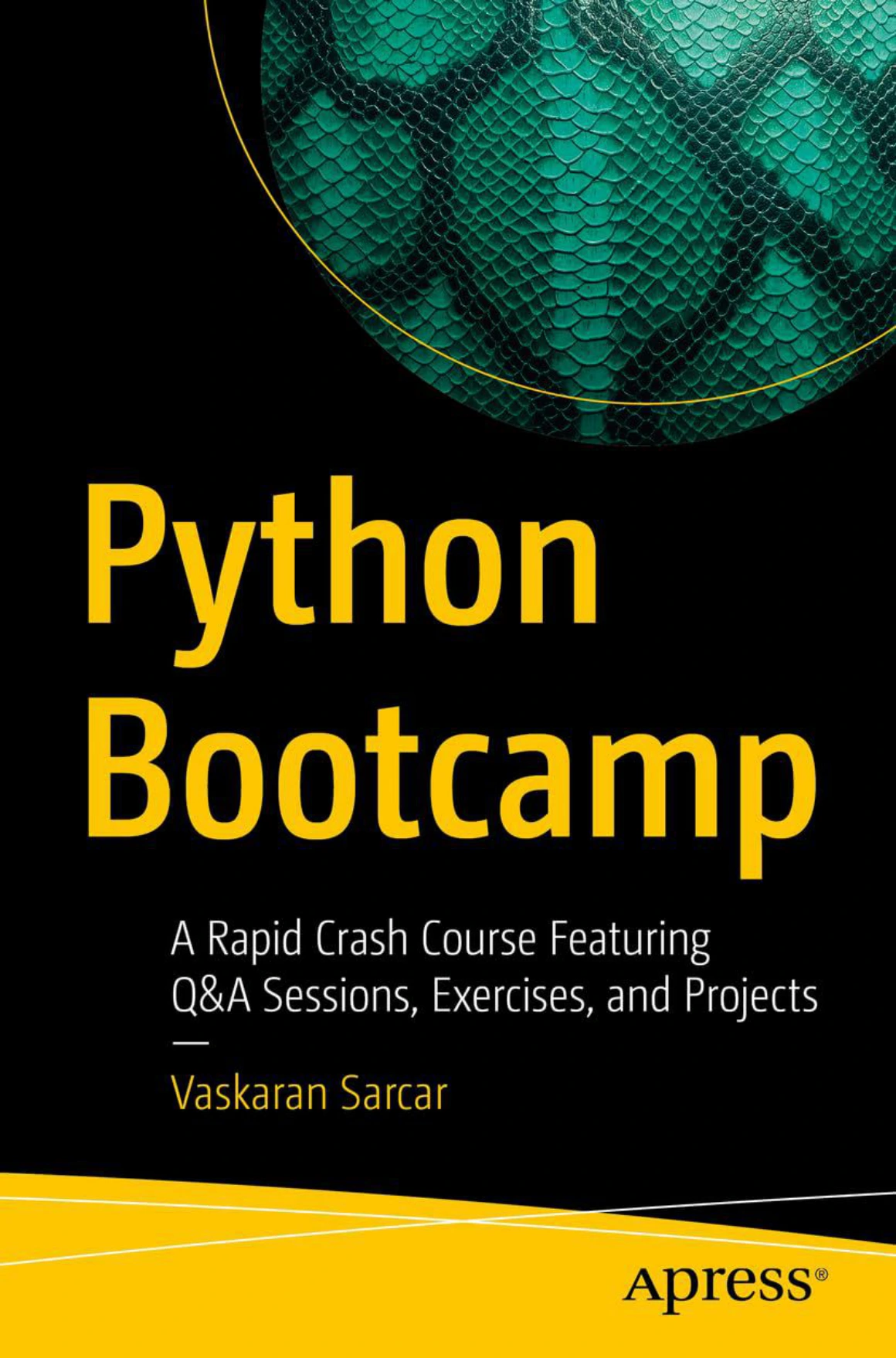
The combination of explanation, questions, and practice makes it a candidate for readers who want to start doing rather than read long stretches before writing code. Check the sample material for exercise difficulty and project depth; those details are not established by the description alone.
For a broader foundation: The Practice of Computing Using Python
The Practice of Computing Using Python by William Punch and Richard Enbody takes a wider computing perspective. The supplied listing identifies the third edition and describes a progression from beginner material into algorithms, collections, functions, file handling, classes, recursion, and exceptions.
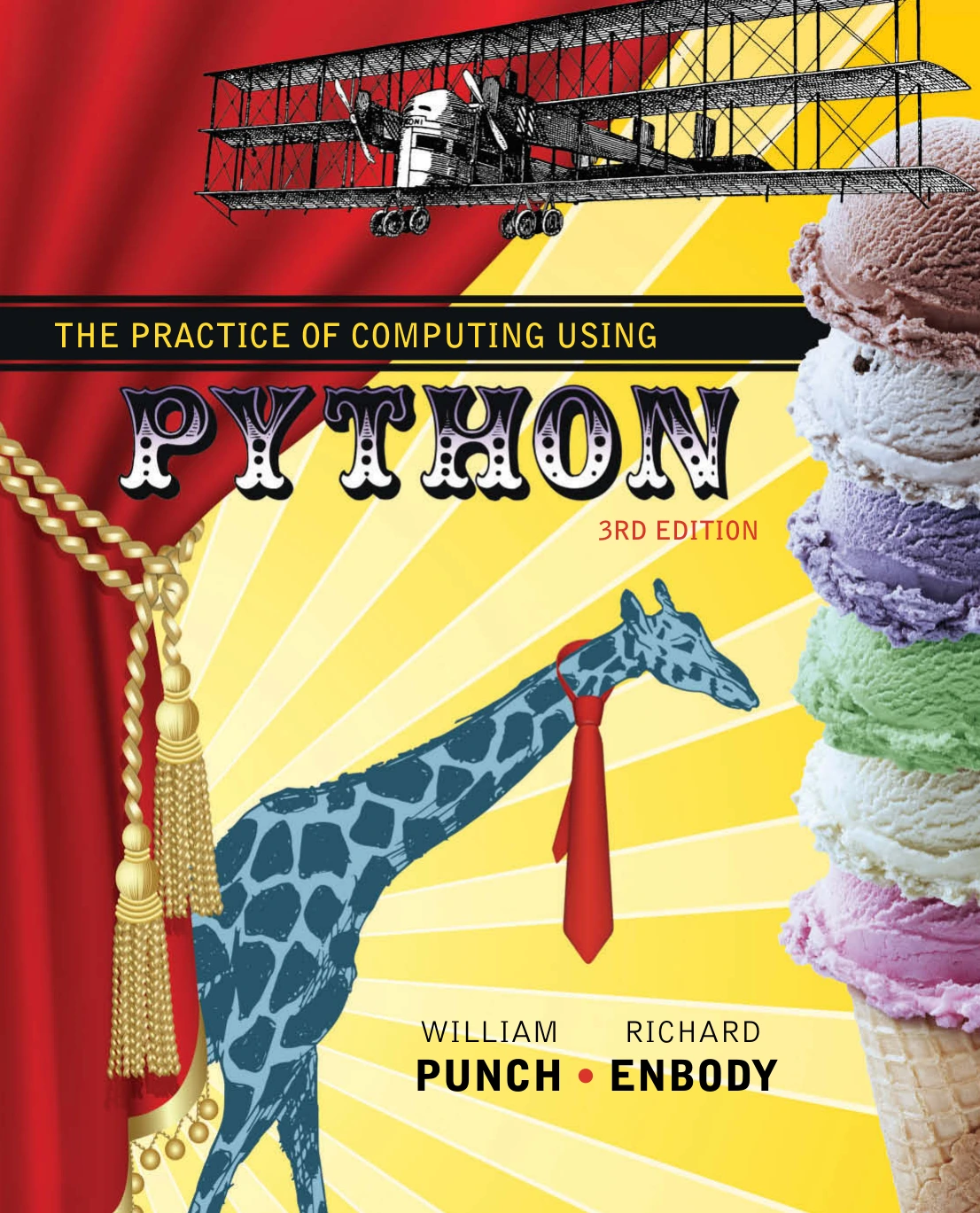
This is the more natural candidate if you want to study how programs are designed, not just learn enough syntax to finish one task. Its extensive scope also means you should approach it as a course of study rather than something to rush through. Because this is an older edition, check setup instructions and any library-dependent examples against the software you use.
For an Excel-based starting point: Python for Excel Users
Python for Excel Users: Know Excel? You Can Learn Python by Tracy Stephens connects Python fundamentals to spreadsheet-oriented work. The catalog describes variables, data structures, loops, functions, and scripts through examples intended for people familiar with rows, columns, and data tasks.
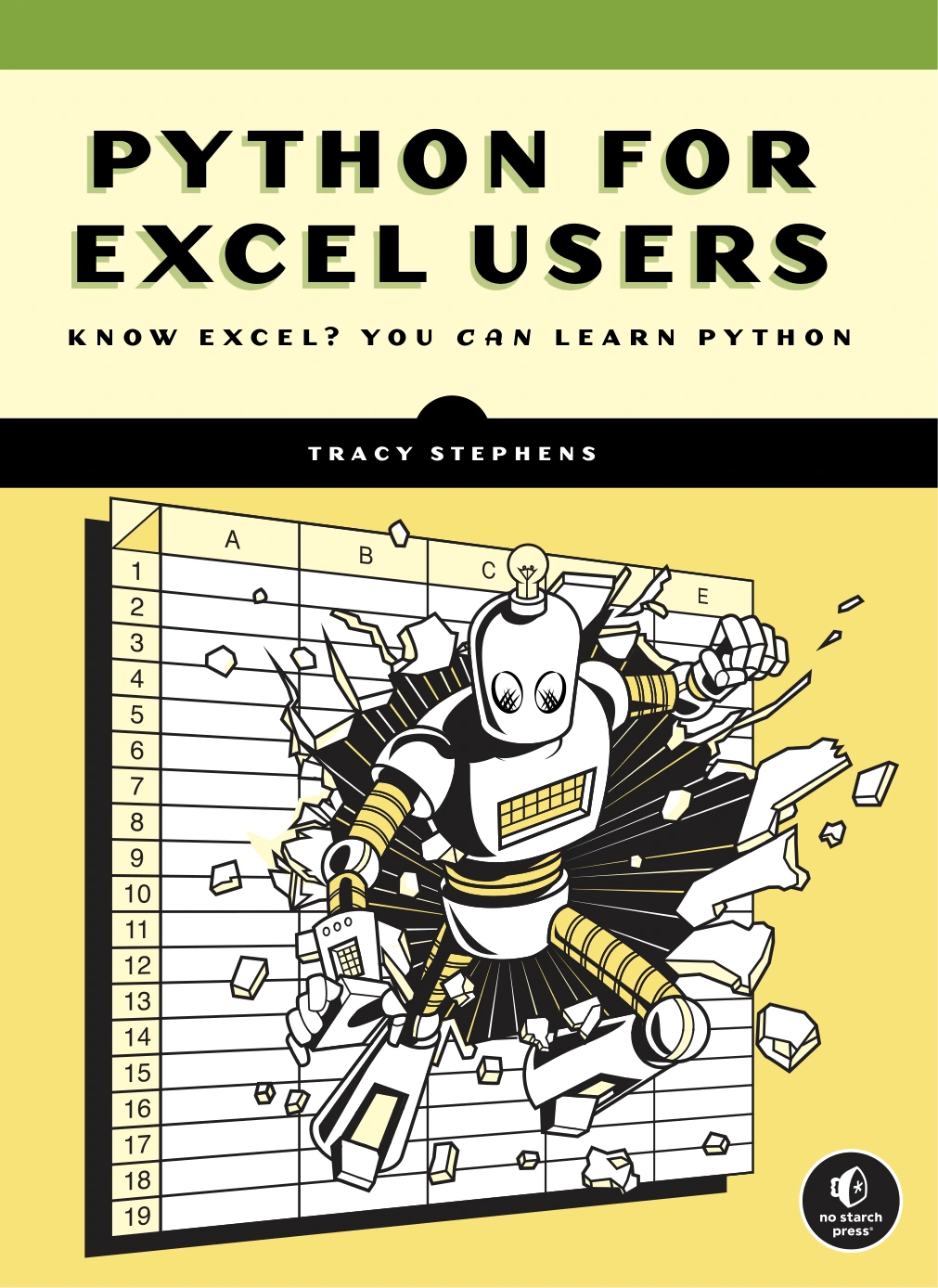
That framing may help if your motivation is reducing repetitive reporting or processing tabular information. Familiar subject matter gives you one less thing to learn while you are working out the programming concepts. Still, verify that the sample tasks resemble your needs rather than assuming every Excel workflow is covered.
For a data-focused path: Python for Data Science
Python for Data Science: A Hands-On Introduction by Yuli Vasiliev focuses on working with data. Its listed topics include Python data structures, files and APIs, databases, aggregation, combining datasets, visualization, location data, time series, and an introduction to machine learning.
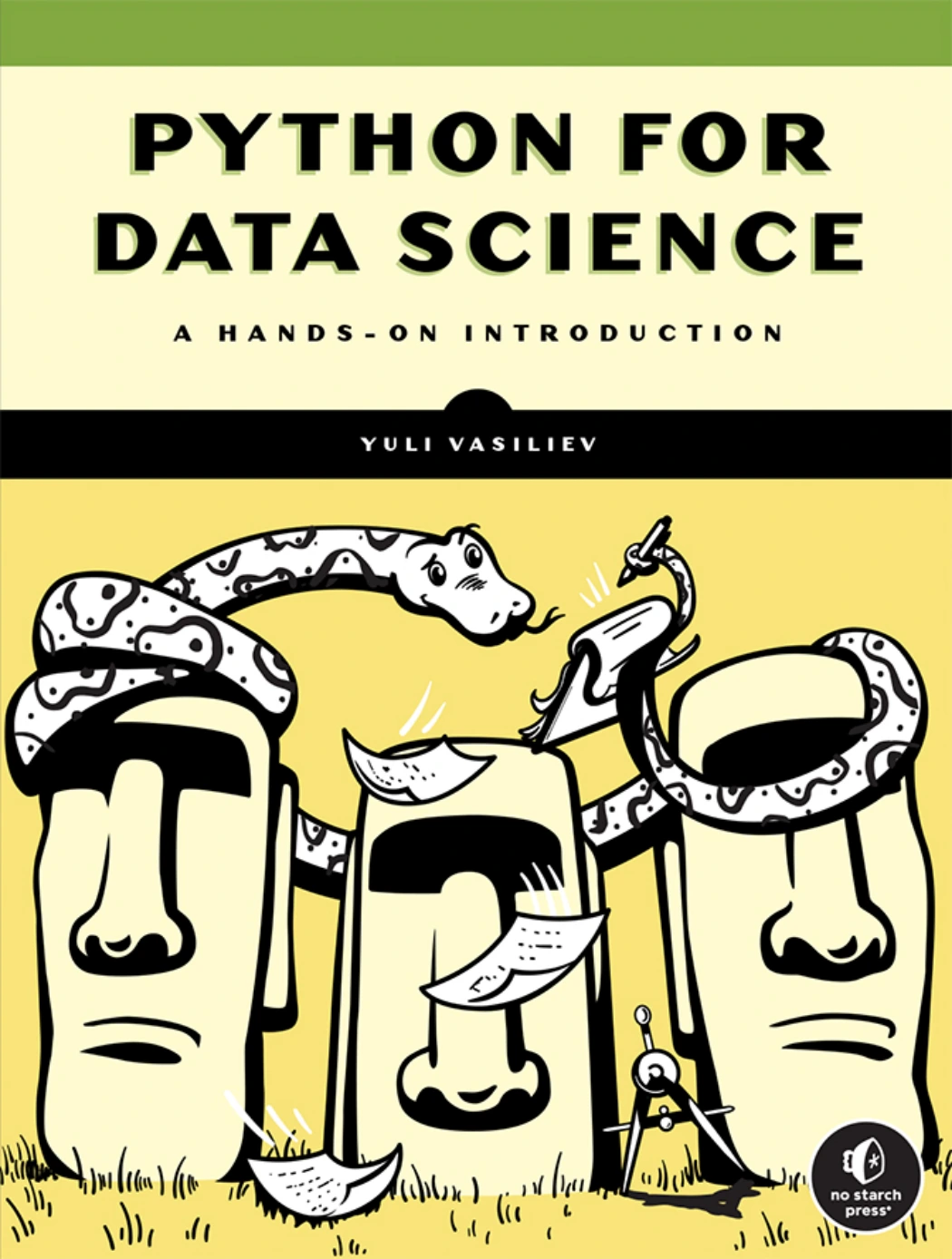
Consider it when you want your learning to lead toward data retrieval and analysis. However, a book that introduces data structures is not necessarily a complete introduction to programming. Check its opening chapters and prerequisites. If loops, functions, and errors are still unfamiliar, you may benefit from a general beginner book first.
For improving existing skills: Python How-To
Python How-To: 63 Techniques to Improve Your Python Code by Yong Cui addresses decisions that arise once you are writing programs: choosing containers, processing text, working with iterables, and designing functions. The description also lists type hints, comprehensions, and decorators.
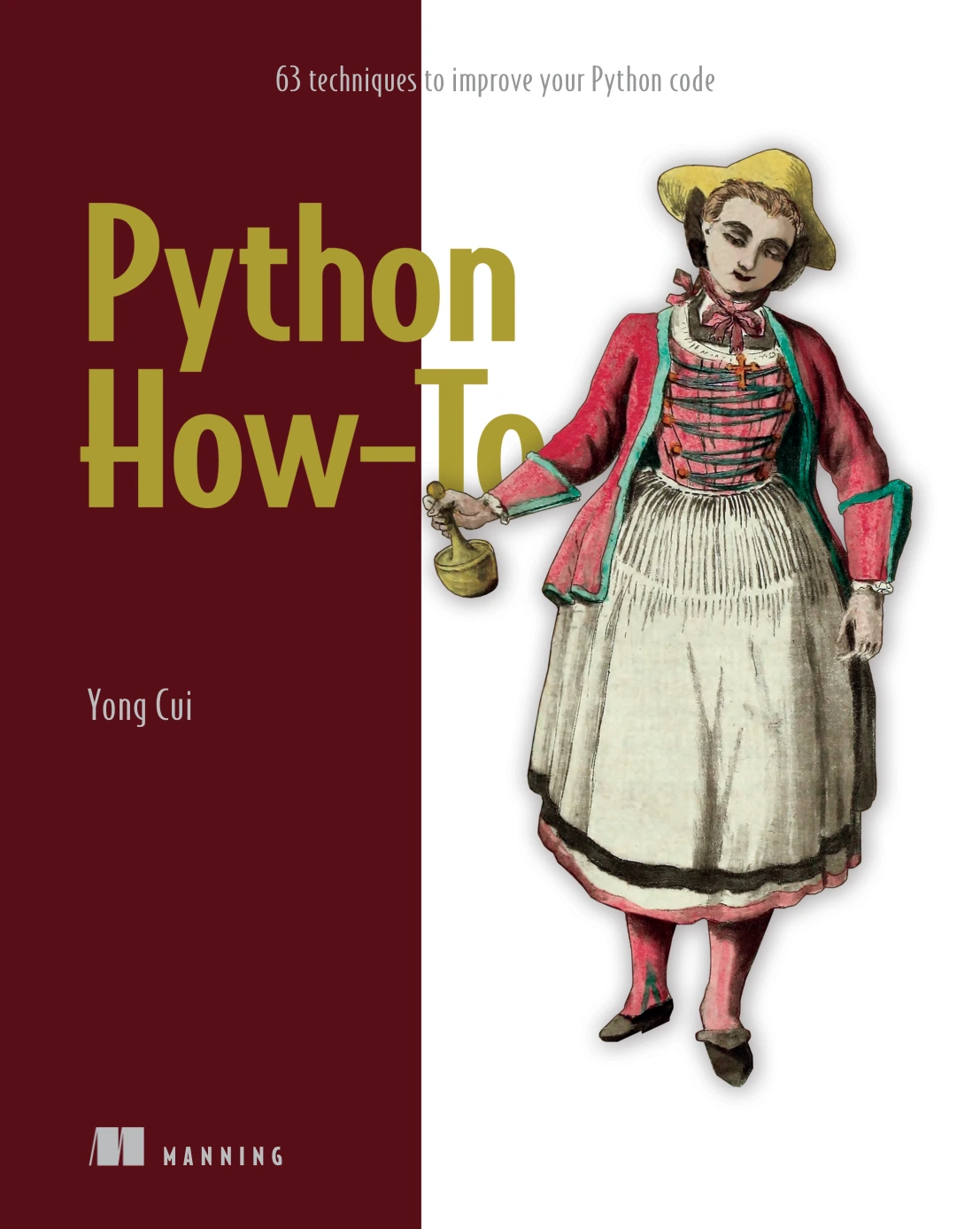
This makes it a useful follow-on candidate when your question changes from “How do I write a loop?” to “How should I organize this code?” You do not need to master every advanced feature before starting it, but familiarity with basic syntax and small programs will give the techniques more context.
How to learn effectively from your chosen book
Use the book as a sequence of programming sessions, not just a reading assignment. For each new concept, follow this cycle:
- Read a short section. Identify the problem the feature solves.
- Predict the example’s output. Make a guess before running it.
- Run the code. Compare its behavior with your prediction.
- Change one thing. Alter a value, condition, input, or collection.
- Solve a related task without copying. Refer back only when you get stuck.
- Explain your solution. Describe what each part does and why you used it.
For example, after learning loops and conditions, you could write this small expense summary:
expenses = [12.50, 8.00, 24.75]
large_expenses = []

for amount in expenses:
    if amount > 10:
        large_expenses.append(amount)

print("Total:", sum(expenses))
print("Over 10:", large_expenses)
Before running it, predict which amounts will appear in large_expenses. Then change the threshold. Next, put the filtering logic inside a function that accepts both the expenses and the threshold. These small variations reveal whether you understand the example or only recognize it.
Build one small project in stages
The following are independent practice ideas, not claims about projects included in the recommended books:
- Number-guessing game: start with a fixed target and user input, then add repeated guesses, feedback, and input validation.
- Expense summary: total a list of amounts, then introduce categories and eventually read records from a file.
- Text-file analyzer: count lines and words, then add a search term and handle a missing file.
Keep the first version small enough to explain completely. Adding features is useful only when you understand the existing program.
Avoid common learning traps
- Reading without running code: test ideas while they are fresh.
- Switching books at every difficult chapter: first isolate the confusing concept and try a smaller example.
- Copying solutions too early: write down your attempted approach before looking for help.
- Starting with too many libraries: distinguish a Python language problem from a package installation problem.
- Measuring progress only by pages: track what you can build and explain without following a script.
Questions beginners ask
Can I learn Python from a book alone?
A book can provide the main structure, but reading alone is not enough. You need to write, run, and debug programs. For self-study, check whether the book provides answers, hints, or worked examples, and expect to consult documentation when your environment differs from the book’s.
Should I choose a textbook or a project-based guide?
Choose a textbook if you want a broader computing foundation and substantial topic-by-topic study. Choose a project-led guide if making something concrete helps you stay engaged. Either approach should include explanations and independent practice; the distinction is emphasis, not a guarantee of quality.
Does an older edition still help?
It can, particularly for concepts such as conditions, loops, collections, and functions. Installation instructions and third-party library examples require closer checking. When an example fails, compare the expected Python and package versions before concluding that you misunderstood the lesson.
When should I move into data science or machine learning?
A useful checkpoint is being able to write functions, process collections, read a simple file, and investigate common errors. Data-oriented projects can then give those skills a purpose. For machine learning, also consider the mathematical prerequisites of the specific resource rather than assuming Python basics are the only preparation needed.
How many Python books do I need?
Begin with one core book. Add a second when you can identify a specific gap, such as more exercises, spreadsheet applications, data analysis, or cleaner code. Several overlapping introductions can create more decisions without giving you more practice.
Final recommendation: Choose a fit, then start coding
For a practice-led beginner, Python Bootcamp is the starting candidate in this shortlist. For a broader programming education, consider The Practice of Computing Using Python. If your background is in spreadsheets, Python for Excel Users offers a more familiar application context.
Choose Python for Data Science when its prerequisites and data focus match your needs, and save Python How-To for improving code you can already write. None of these choices removes the need to practise.
Your next step is to inspect a sample, choose one core resource, and complete an exercise before moving on. If you want to explore further, browse the Python books and learning resources at Digital Delights with that goal in mind. The most useful choice is the one that matches your starting point and gets you writing programs you understand.