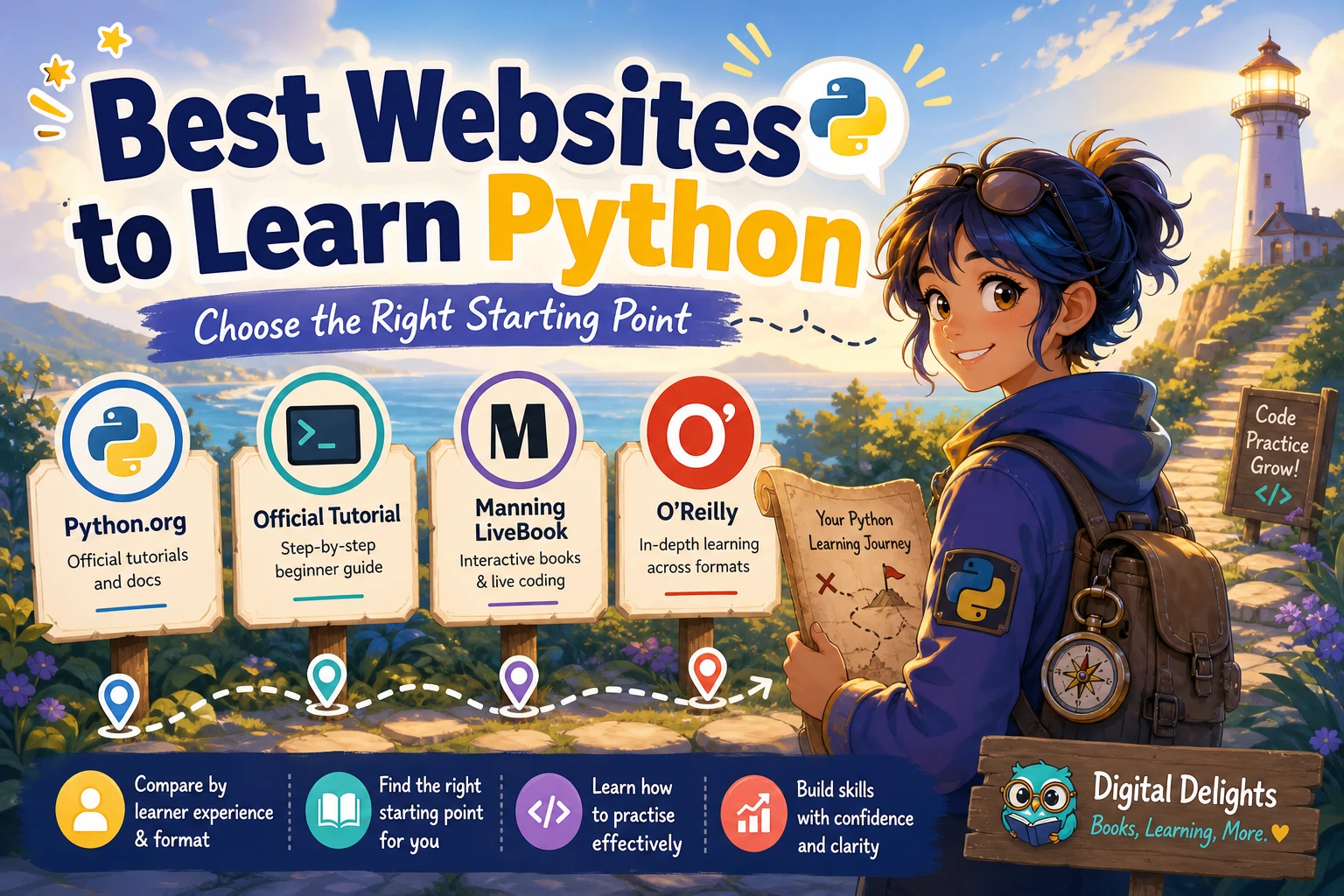
Best Websites to Learn Python: Choose the Right Starting Point
The best website to learn Python depends on what you already know and how you prefer to study. A first-time programmer may need a gentle introduction and regular practice; someone who knows another language may prefer concise technical documentation. Video learners have different needs again.
There is no evidence here to declare one site the universal winner. This guide compares four options by audience and format, then offers a practical way to choose and use one. The shortlist includes official Python resources, a text-based book platform, and a video-course platform.
Best websites to learn Python at a glance
| Resource | Best fit | Format | Access notes |
|---|---|---|---|
| Python.org: Python for Beginners | New learners who need a starting point and links to resources | Resource hub | Check the linked materials to find the format and setup guidance that suits you. |
| Official Python tutorial | Learners comfortable with technical written material | Documentation and examples | The supplied link is for Python 3.10 documentation; check version notes when following it. |
| The Quick Python Book, Fourth Edition, on Manning LiveBook | People who have programmed before and want to learn Python | Text-based book | Check the publisher’s current access options. |
| Python for Everybody: The Ultimate Python 3 Bootcamp on O’Reilly | Learners looking for video lessons | Video course | The listing indicates membership-based access. Verify current terms and compatibility before starting. |
This is a shortlist by learning preference, not a ranking based on independent outcome comparisons. The available sources do not provide comparable data on learning gains, completion, accessibility, or teaching quality.
How to choose a Python learning website
Are you new to programming, or just new to Python?
If you have never programmed, look for a resource that explains basic ideas—such as variables, conditions, loops, and functions—in a clear sequence and gives you opportunities to try them. If you already know another language, you may be able to move faster through general programming concepts and focus on Python’s syntax and conventions.
Python.org separates guidance for people who are new to programming from material for experienced programmers. That makes its beginner resources a useful place to orient yourself before choosing a specific learning path (Python.org’s overview of Python).
Do you learn better from text, video, or interactive practice?
- Text and examples: Useful if you like to read at your own pace, search for a topic, and revisit specific sections. The official tutorial and Manning’s book are text-first options.
- Video: A good format to consider if you prefer to watch explanations and demonstrations. Check whether lessons include exercises, whether you can access them under the current terms, and whether the setup instructions still match your environment.
- Interactive practice: If a resource offers runnable exercises or a coding environment, try it before committing to a long course. The sources reviewed here do not establish how much hands-on practice each option provides, so check the actual lesson structure.
Regardless of format, reading or watching alone is not enough to build coding fluency. Make sure you will write and run code as you learn.
Do you need lessons, exercises, projects, or a reference?
A course or structured book can guide you through topics in order. Exercises help you test whether you can use an idea without simply following an example. Small projects bring several concepts together. Documentation is most useful when you need to look up details or understand a language feature; it may not provide the same step-by-step support as a full beginner course.
Best websites to learn Python
1. Python.org: a useful starting hub
Python.org’s Python for Beginners page directs newcomers to setup guidance, tutorials, documentation, and other learning resources. Think of it as a place to find your bearings and follow links to material that matches your experience, rather than as one single course with a fixed lesson sequence.
Choose it if: You are unsure where to begin, want to find official learning materials, or need guidance aimed at your previous coding experience.
Keep in mind: A resource hub can send you to several different kinds of material. Decide on one learning path and stick with it long enough to make progress instead of collecting links without practising.
2. The official Python tutorial: a direct route into language fundamentals
The official Python tutorial introduces core language topics and points readers toward the language and standard-library references. The documentation describes it as an introduction, not a comprehensive treatment. It is therefore better treated as a structured technical resource than as a complete beginner course.
Choose it if: You are comfortable learning from written technical explanations and want a direct introduction to Python’s language features.
Keep in mind: The supplied tutorial URL covers Python 3.10. Check the documentation version and any course setup notes before copying commands or expecting a particular tool to work. Pair the tutorial with exercises or a small project if you need more practice.
3. Manning LiveBook: The Quick Python Book, Fourth Edition
Manning describes The Quick Python Book, Fourth Edition as a book for people with programming experience who want a solid grounding in Python. Its contents move from syntax and built-in types to functions, classes, and packages.
Choose it if: You have coded before and prefer to learn from a text that develops Python concepts in sequence.
Keep in mind: The publisher’s stated audience is experienced programmers. If this is your first time programming, you may find a resource that explains broader coding concepts from the beginning more suitable. Confirm the publisher’s current access options before deciding.
4. O’Reilly: Python for Everybody: The Ultimate Python 3 Bootcamp
The O’Reilly listing for Python for Everybody: The Ultimate Python 3 Bootcamp presents a beginner-level video course covering fundamentals, intermediate topics, and a project. The listing indicates membership-based access and dates the course to 2020.
Choose it if: Video instruction is your preferred format and you want a course that is presented as a progression from fundamentals to a project.
Keep in mind: Check the current access terms and compare the course’s version, tools, and instructions with your own setup. A course’s publication date does not by itself tell you whether its examples will or will not work today, so verify the details that matter to your learning environment.
Which option fits your goal?
- Complete beginner: Start with Python.org to find guidance suited to new programmers. Choose a structured course or book that explains programming basics, and check that it includes practice.
- Programmer learning Python: Consider Manning’s text-first The Quick Python Book or the official tutorial if you are comfortable with technical documentation.
- Video learner: Review the O’Reilly course listing, then check current access, course contents, and setup compatibility before beginning.
- Not sure yet: Try a small section of a written resource and a video lesson if available. Pick the format that makes you more likely to write code consistently.
For more book-based options, browse Digital Delights’ Python collection. A book can complement an online course by giving you another explanation or a longer reference to revisit; choose one that fits your current level and goal.
A practical way to learn from any site
- Choose one main resource. Avoid switching between several beginner courses before completing the basics.
- Set up Python using the resource’s instructions. Setup steps can differ by operating system and course, so follow the guidance for the material you are using.
- Type and run the examples. Do not only read or watch them. Change a value, test a different input, and observe what happens.
- Attempt exercises before viewing solutions. Getting stuck is useful practice in translating an idea into code.
- Build a small project. Try a simple quiz, a number-guessing game, or a script that organizes a set of sample files. Keep the scope small enough to finish.
- Use documentation to answer specific questions. Look up a function or language feature when you need it, then return to your exercise or project.
A book can provide an additional structured route alongside a website. For example, Automate the Boring Stuff with Python, 2nd Edition covers Python basics and practical tasks such as working with files, spreadsheets, PDFs, and web scraping. It may suit learners who want to connect introductory programming with automation projects. If you prefer a broader beginner guide that also covers data handling and web topics, Head First Python, Third Edition covers fundamentals, data manipulation, web development, scraping, and databases, according to its catalog description.
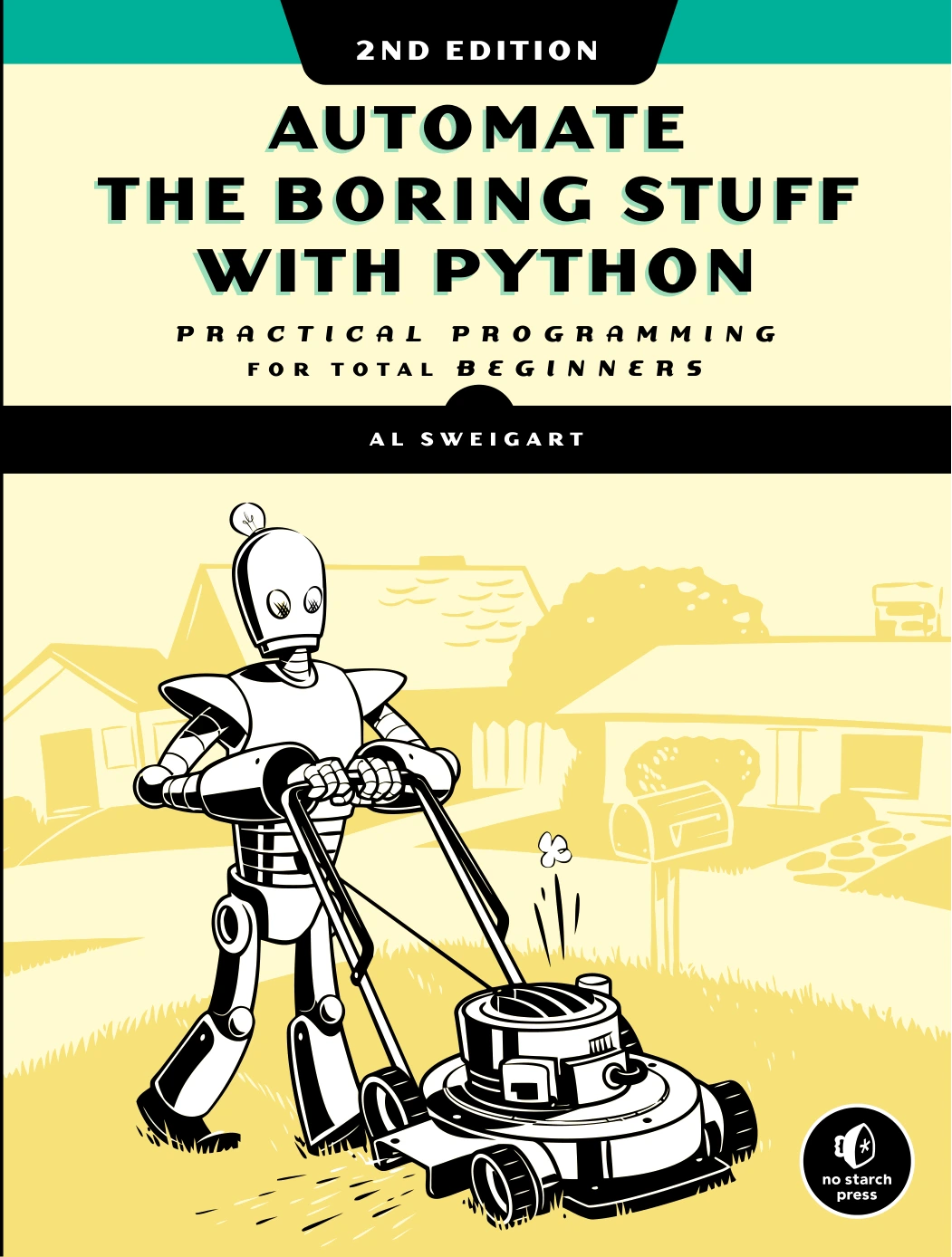
Automate the Boring Stuff with Python, 2nd Edition
By Al Sweigart
Learners who want to apply introductory Python to file handling, spreadsheets, PDFs, and web scraping.
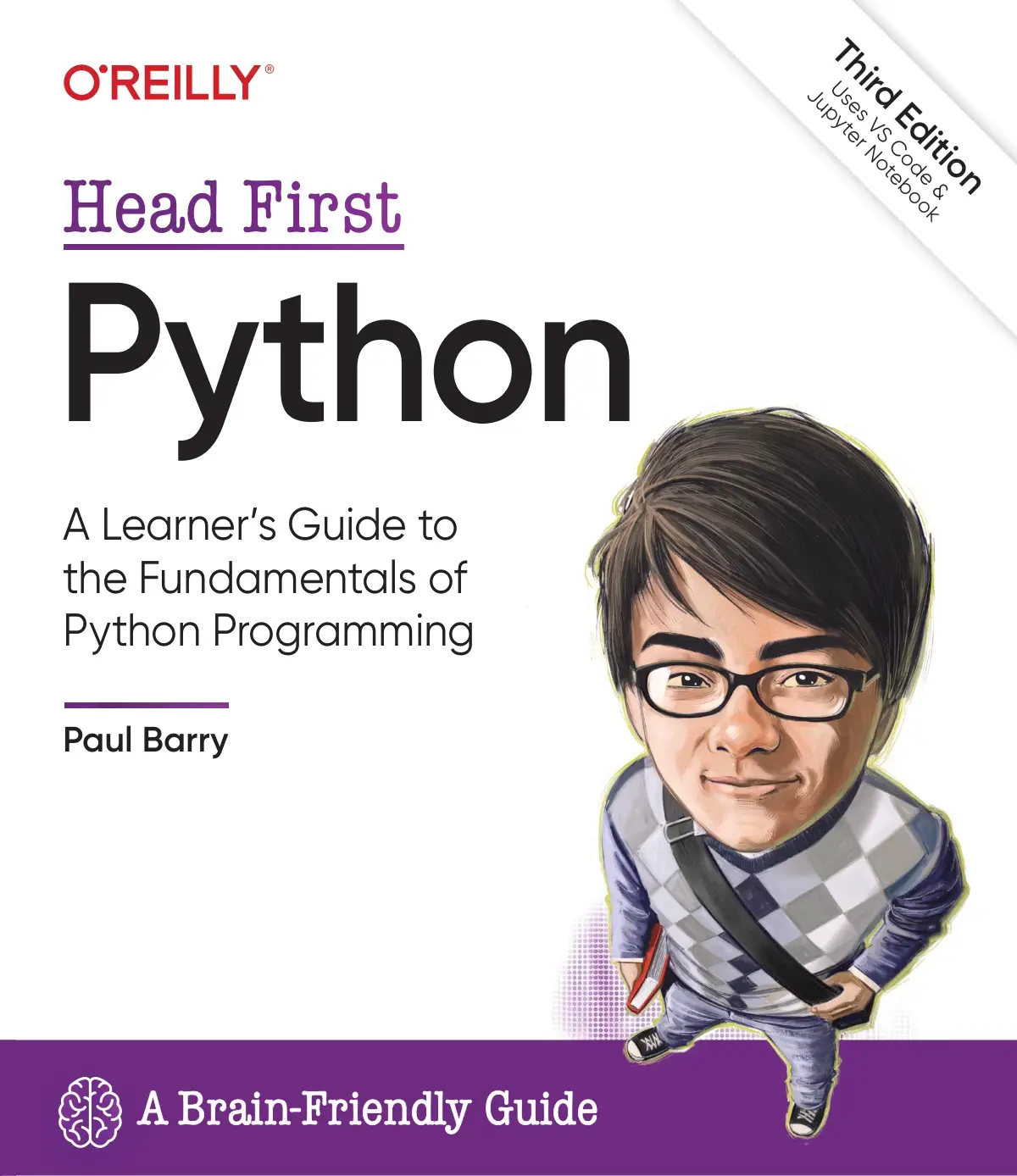
By Paul Barry
Readers who want a text resource spanning core Python, data manipulation, web development, scraping, and databases.
Python version and setup: what to check
Learning materials may have been written for different Python versions, editors, or libraries. Follow the installation instructions supplied with your chosen course, and check the resource’s version notes before assuming that an older command or screenshot matches your current setup.
Python.org’s release page lists Python 3.14.8 as released on September 30, 2026. This is a dated detail, not a recommendation to install a particular version regardless of your course or operating system. Check the Python.org release information and follow the instructions appropriate to the resource you are using.
Frequently asked questions
Is Python.org enough to learn Python?
Python.org is a useful starting hub for finding beginner guidance, documentation, and tutorials. Whether it is enough depends on the linked material you choose and how much practice you do. If you need a guided sequence, select a course or book and use the site’s resources to support it.
Should beginners use the official Python tutorial?
They can, especially if they are comfortable with technical written material. The tutorial is an introduction to the language, not a complete course. A learner who is new to programming may want to pair it with beginner-focused explanations and exercises.
Do you need prior coding experience to learn Python?
No. The resources differ in their intended audience: Python.org provides guidance for both new and experienced programmers, while Manning describes The Quick Python Book as intended for people who already have programming experience. Choose material that matches what you already know.
Should you pay for a Python course?
Not necessarily. The options in this comparison include official documentation and publisher-hosted learning materials with different formats and access arrangements. Before paying or subscribing, check the current terms, review the course outline, and make sure it offers the kind of explanations and practice you need.
Conclusion: choose a resource you will actively use
The best websites to learn Python are not interchangeable: Python.org is a starting hub, the official tutorial is a technical introduction, Manning’s book targets people with programming experience, and O’Reilly’s listing offers a video-course format. Choose according to your background and preferred way to learn, then spend more time writing code than browsing for the perfect resource.
Start with one path, practise each new idea, and build a small project. If you want a book alongside your online learning, browse the Digital Delights Python collection for options that fit your next step.
Sources
- Python For Beginners | Python.org
- The Python Tutorial — Python 3.10.21 documentation
- “About Python,” The Quick Python Book, Fourth Edition, Manning LiveBook
- O’Reilly course listing: Python for Everybody: The Ultimate Python 3 Bootcamp
- About Python | Python.org
- Python Release Python 3.14.8 | Python.org