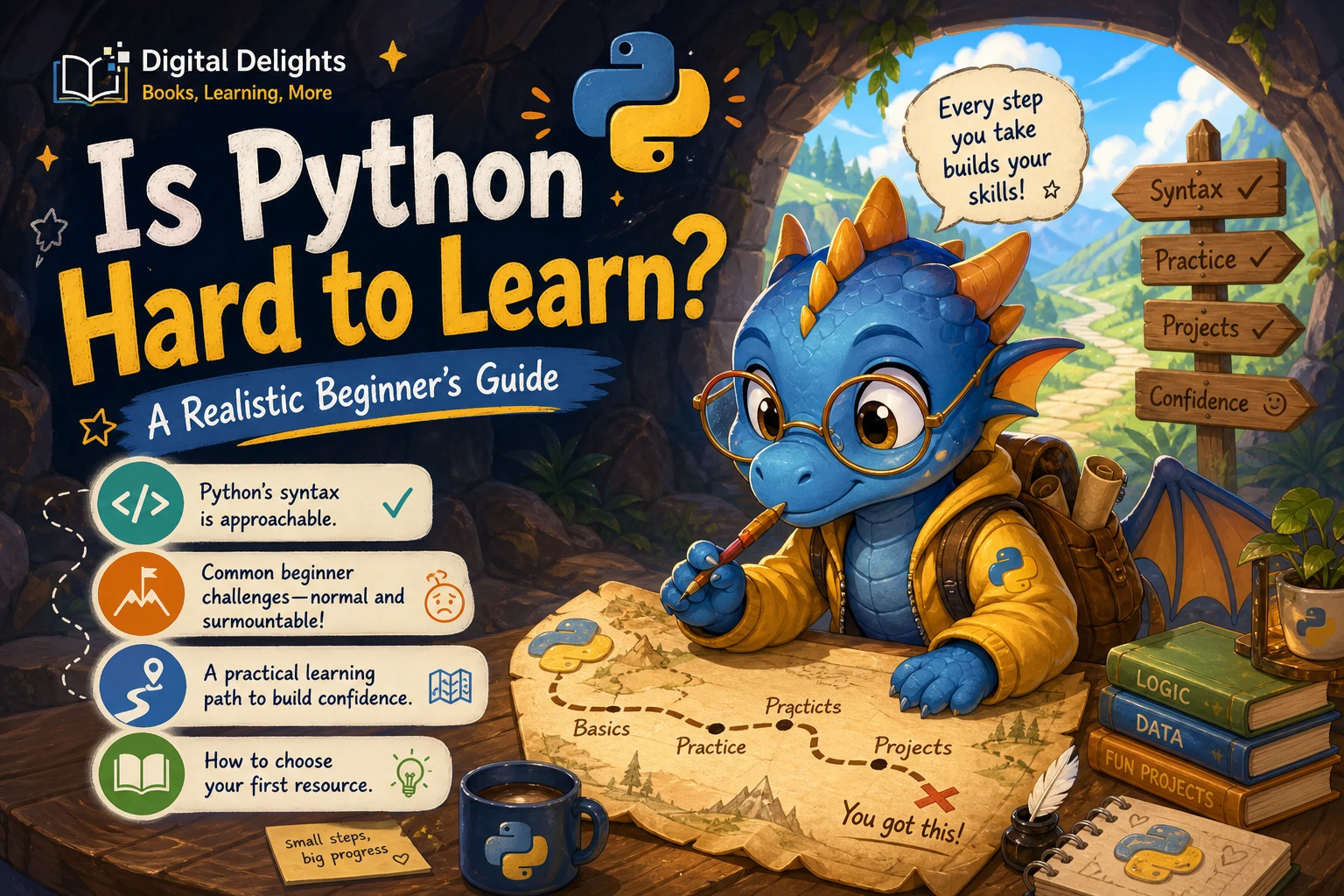
Is Python Hard to Learn? A Realistic Beginner’s Guide
Short answer: Python’s basic syntax is approachable, but learning to program takes practice. You can start with small commands and readable code, yet you will still need to learn how to break a problem into steps, work with data, and track down mistakes. Building a larger project adds further concepts and tools.
How difficult Python feels depends on what you already know, how you practise, and what you hope to build. This guide explains what makes Python accessible, where beginners commonly get stuck, and a practical way to begin without expecting instant mastery.
What makes Python approachable?
Python code is often readable enough that a beginner can focus on what a program is doing instead of first decoding a dense collection of symbols. You can also try simple expressions in Python’s interactive interpreter, much like entering a calculation. The official introduction to Python demonstrates this interactive approach and introduces foundational features such as numbers, text, lists, and indentation.
For example, you can start with a calculation:
minutes_per_day = 20
minutes_per_week = minutes_per_day * 7
print(minutes_per_week)
This short program stores a value, multiplies it, and displays the result. It is a manageable first step—but understanding why it works is part of learning programming. You need to grasp variables, expressions, and the order in which instructions run, then practise applying those ideas in new situations.
Python’s accessibility is therefore best understood as a friendly starting point, not a promise that every programming task will be easy.
What can beginners find challenging?
Most early difficulties are not about memorizing Python commands. They come from learning how to reason about a task and express that reasoning precisely. A few areas tend to require patient practice:
- Variables and data: deciding what information to store and how to represent it.
- Conditions: describing what a program should do when different situations arise.
- Loops: repeating work without accidentally creating an endless loop or skipping an important case.
- Functions: grouping instructions into reusable pieces and choosing what information they need.
- Data structures: choosing a useful way to organize related information, such as a list or dictionary.
- Indentation: keeping code blocks consistently indented so Python can identify which instructions belong together.
- Errors and debugging: interpreting an error message, locating the cause, and testing a correction.
It is also normal to find it hard to turn a broad goal into precise steps. “Organize these files,” for instance, sounds simple to a person but leaves a program with questions: Which files count? Where should they go? What should happen if a file with the same name already exists? Learning to ask and answer questions like these is a central part of programming.
The Python tutorial covers a progression from expressions and data types to control flow, functions, and data structures. It also makes an important distinction: it is for people new to Python, but it assumes readers already know basic programming concepts. Read the Python tutorial’s introduction and scope before treating it as a complete first programming course.
Is Python suitable if you have never coded?
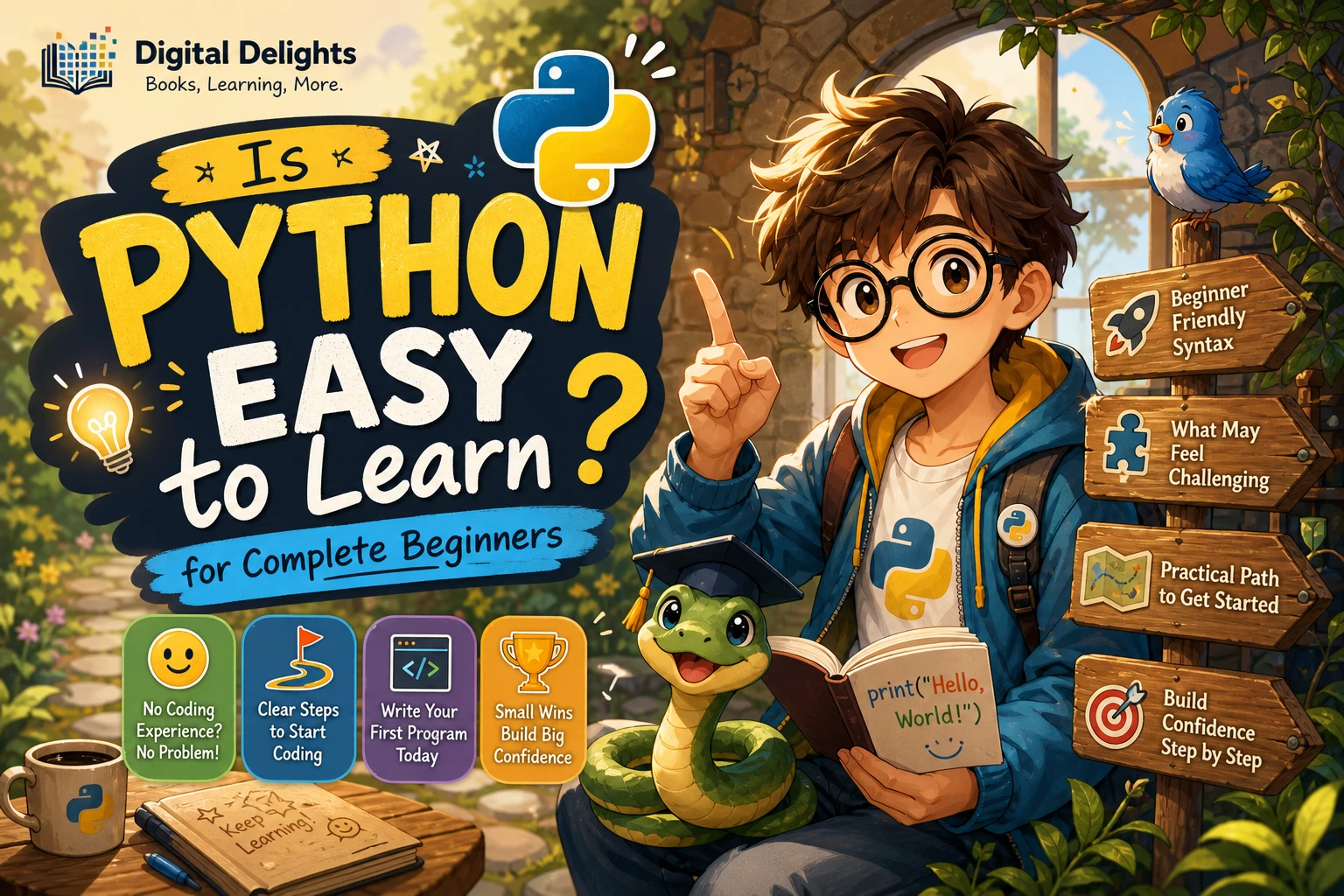
Yes. You can begin Python without previous coding experience, provided you choose learning material that teaches programming fundamentals rather than assuming you already know them.
The word “beginner” can mean two different things: new to Python, or new to programming altogether. Someone who already knows another language may mainly need to learn Python’s syntax and conventions. A first-time programmer must also learn ideas such as variables, conditionals, loops, and functions. That difference can make a tutorial seem unexpectedly difficult even when the language itself is described as approachable.
If you are new to coding, look for a resource that introduces concepts in sequence, explains what the code does, and gives you opportunities to practise. Do not worry if you need to repeat a chapter or look up a term. Understanding grows by connecting ideas over time, not by reading a single explanation once.
How can you make learning Python less overwhelming?
A steady routine is more useful than trying to learn every feature at once. Try this approach:
- Learn one core idea at a time. Start with expressions and variables, then move to conditions, loops, functions, and common data structures.
- Run the examples yourself. Change a value, alter a condition, or add another item and observe what happens.
- Write short programs from memory. A small task—such as converting a temperature or counting items in a list—helps reveal what you understand and what still feels unclear.
- Read error messages as clues. Check the line mentioned, nearby punctuation, spelling, and indentation. Change one thing at a time so you can see whether it helped.
- Build a small project. Choose something modest, such as a quiz, a simple expense summary, or a script that renames files. Expand it only after the basic version works.
- Add libraries when you have a reason. First understand the standard language features you need; then learn an additional library or framework to solve a specific problem.
Try to explain each program in plain language before running it: what information goes in, what steps happen, and what result should come out? That habit helps with problem-solving and makes debugging less like guessing.
How hard is Python to learn for different goals?
The language’s fundamentals are only one part of the learning curve. Your goal determines what else you will need to study.
| Goal | What you will need beyond basic syntax | What to expect |
|---|---|---|
| Small scripts and simple programs | Variables, conditions, loops, functions, and basic data structures | A reasonable first destination for practising core programming ideas. |
| Automation | File handling, operating-system concepts, and libraries relevant to the task | Python basics help, but real files and different situations introduce extra decisions. |
| Data analysis | Working with datasets, relevant Python libraries, and some understanding of the questions being asked | There is more to learn than the language; data preparation and interpretation matter too. |
| Web development | A web framework plus concepts such as requests, databases, and application structure | You will be learning a broader toolkit, not just Python syntax. |
| Machine learning | Data preparation, model concepts, appropriate libraries, and often mathematical ideas | This is a specialization to approach after building a programming foundation. |
These paths are not fixed ladders, and the table is not a promise about how quickly anyone will progress. It shows why “learn Python” can mean anything from writing a short personal script to developing a much larger software system.
A practical starting path for learning Python
- Choose a current stable Python release. Check the official Python downloads page and follow setup instructions that match your operating system. If a course or project specifies a version, follow its instructions.
- Get comfortable with the basics. Work through expressions, variables, strings and numbers, conditions, loops, functions, and lists or dictionaries.
- Practise each concept in small exercises. Make a prediction, run the code, and compare the result with what you expected.
- Build one modest project. Keep the first version small enough to finish. Add features gradually as you learn what the program needs.
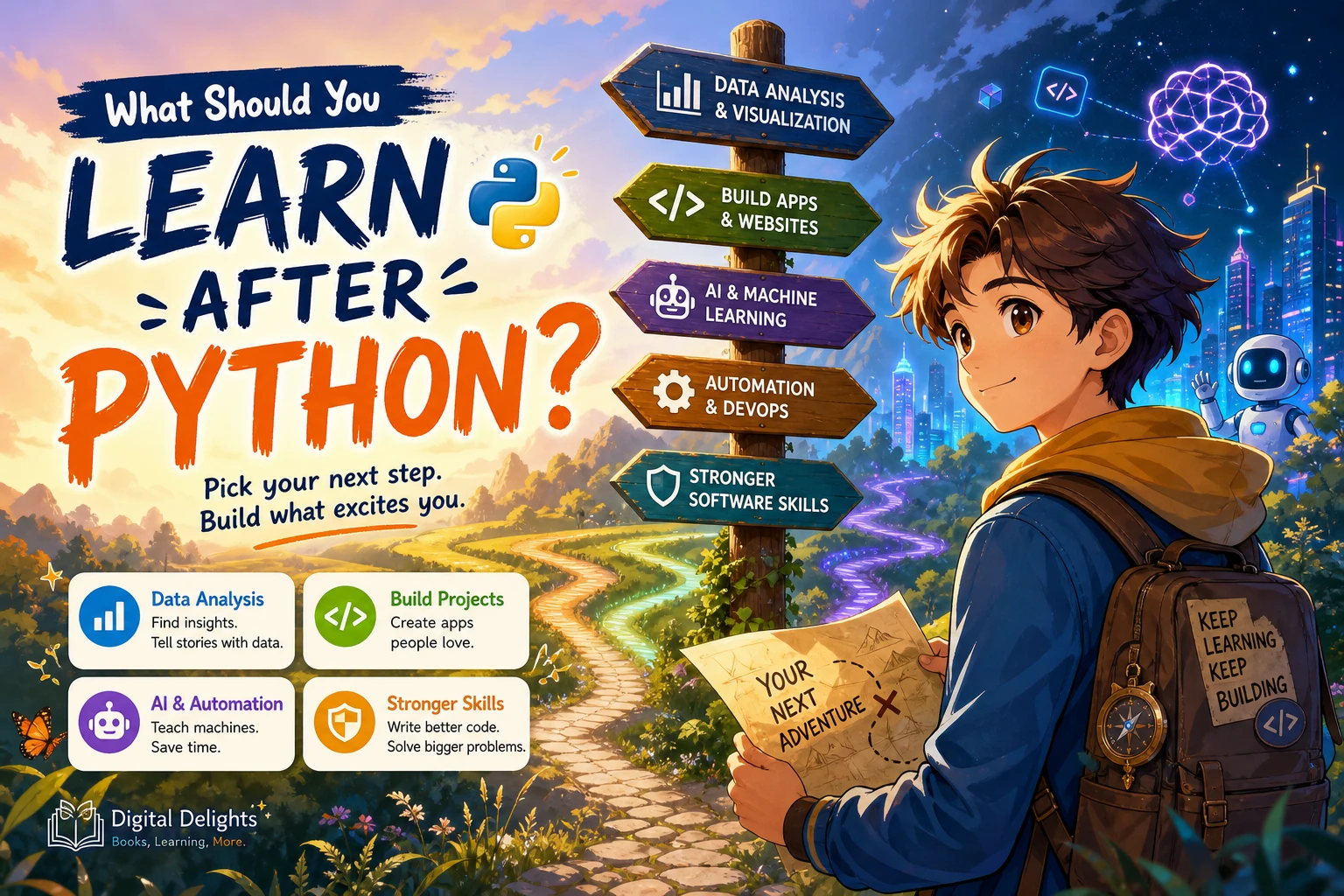
- Choose a direction after the basics. Explore automation, data work, web development, or another area based on a project that interests you.
You do not need to understand every Python feature before making something useful. The aim is to build a reliable foundation and extend it as your projects ask for more.
Choosing a beginner Python resource
Before choosing a book, check whether it is aimed at someone new to programming or mainly at readers learning Python after using another language. Also consider the teaching style you want: a careful textbook, a short introductory guide, or material that puts extra emphasis on exercises and projects.
| Resource | What the catalog description says it covers | Potential fit |
|---|---|---|
| Starting Out with Python, 6th Edition | Step-by-step fundamentals, examples and exercises, followed by topics including functions, files, data structures, and object-oriented programming. | Consider it if you want a structured introduction that starts at the beginning and develops core concepts. |
| Python for Beginners | Setup guidance and introductory topics such as data types, loops, strings, functions, and an initial look at data analysis. | Consider it if you want a beginner-labelled guide spanning setup and a range of early Python topics. |
| Python Bookcamp: Exercises and Projects | Core topics including variables, control flow, data structures, functions, debugging, and file handling, with exercises and case studies. | Consider it if you want practice and project work to accompany your study of the basics. |
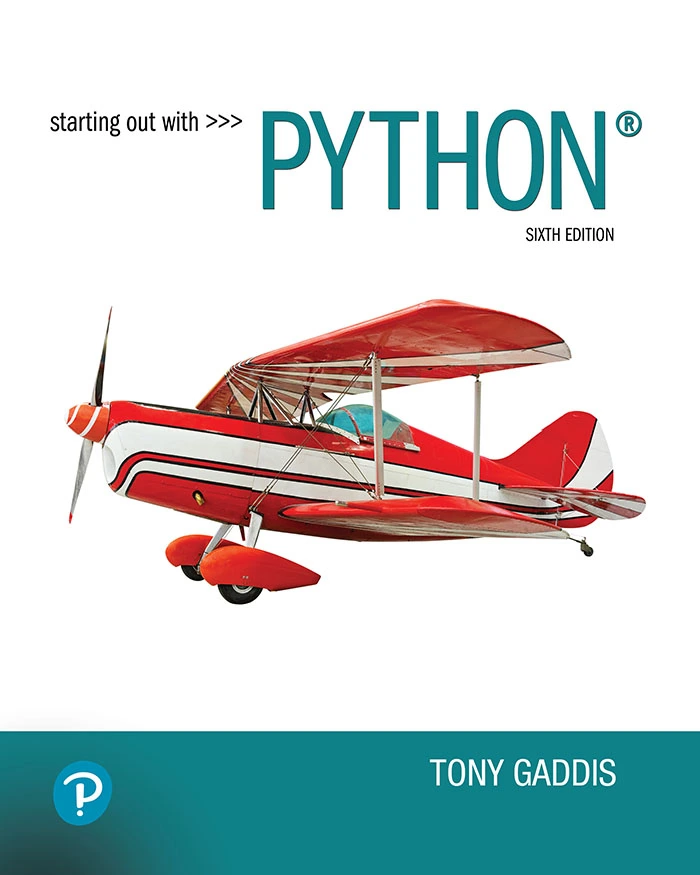
Starting Out with Python, 6th Edition
By Tony Gaddis
Readers seeking a step-by-step introduction with examples, exercises, and coverage of core Python concepts.
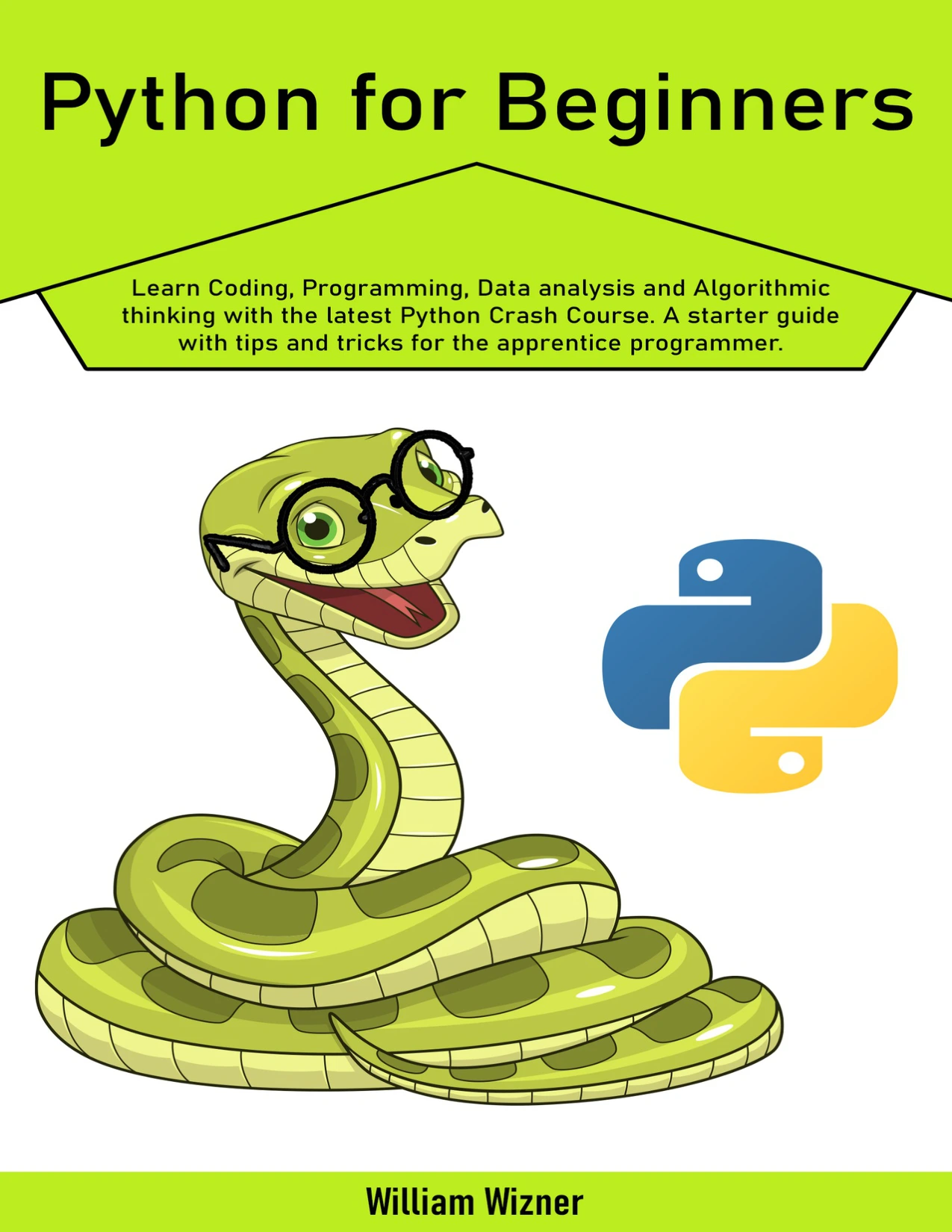
Readers looking for beginner-oriented setup guidance and a broad introduction to Python fundamentals.
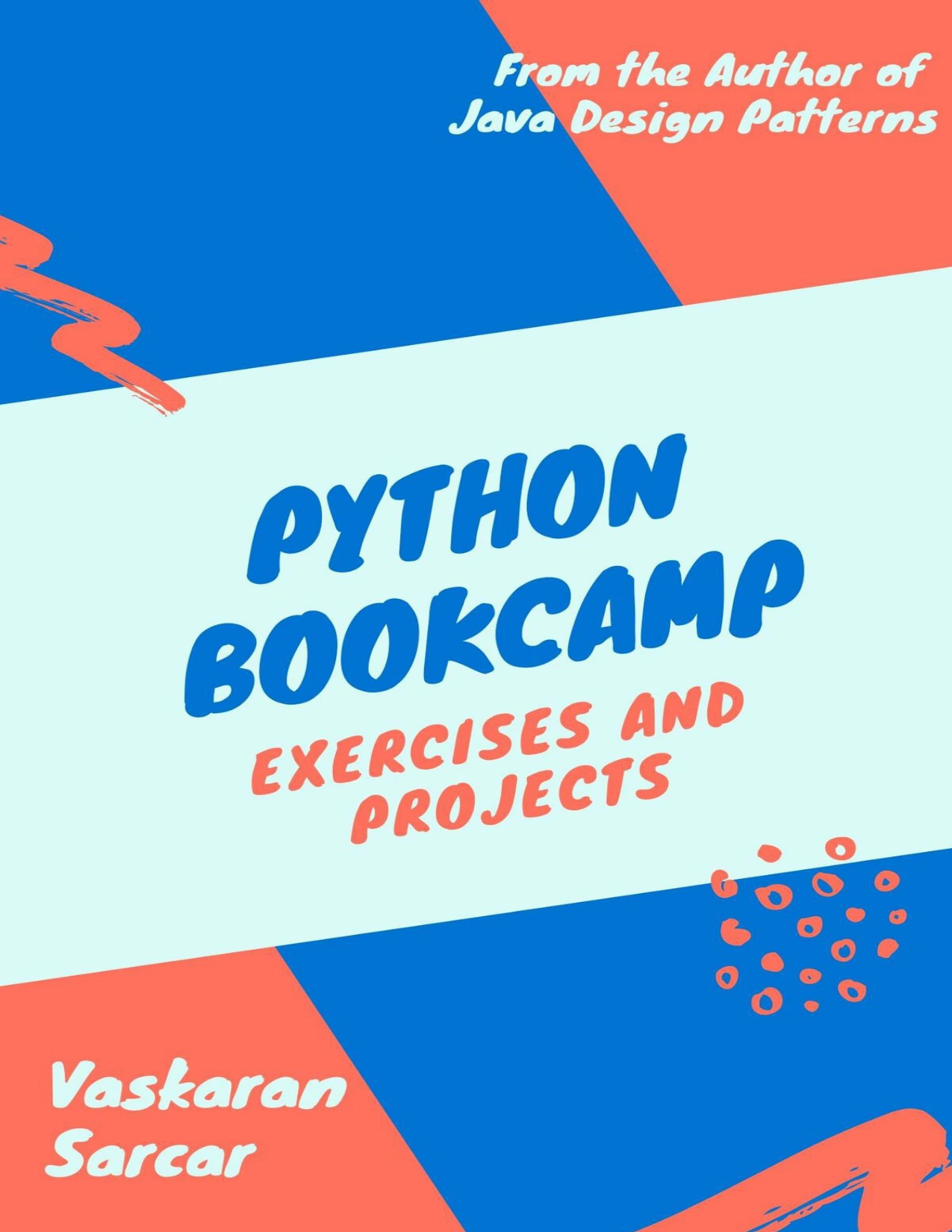
Python Bookcamp: Exercises and Projects
Beginners who prefer reinforcing concepts through exercises, case studies, and small projects.
These are different formats and emphases, not a ranking. Catalog descriptions can help you shortlist a resource, but they cannot tell you which teaching style will suit you personally. You can also browse the broader Python book collection and compare descriptions with your current experience and goal.
Frequently asked questions
Can I learn Python with no coding experience?
Yes. Start with a resource designed to teach programming fundamentals as well as Python. A tutorial intended for people new to the language may still assume they already understand programming, so check its stated prerequisites.
How long does it take to learn Python?
There is no dependable single timeline for everyone. The answer depends on your prior experience, how regularly you practise, and what “learn Python” means for your goal. Focus on measurable steps—writing a small program, understanding its output, and fixing a simple error—rather than a promised number of days.
Is Python easier than other programming languages?
Ease is relative to the learner, the language being compared, and the task. Python is often presented as approachable because its syntax is readable, but that does not show that every learner will find it easier or that programming concepts disappear. A better test is whether the language and learning materials suit the project you want to tackle.
Is Python easy to learn but hard to master?
That is a useful shorthand if taken carefully. You can begin writing small Python programs without knowing the whole language, while larger or specialized projects call for additional skills, tools, and problem-solving practice. “Mastery” also depends on what kind of work you want to do.
So, is Python hard to learn?
Python is approachable for beginners, but learning to program still takes attention and repeated practice. The first steps can be simple; understanding control flow, organizing data, debugging, and building a project require you to keep applying what you learn.
Start with a beginner-appropriate resource, write and change code regularly, and give yourself room to make mistakes. Python does not have to feel effortless to be learnable—and you do not need to master everything before your first useful program.