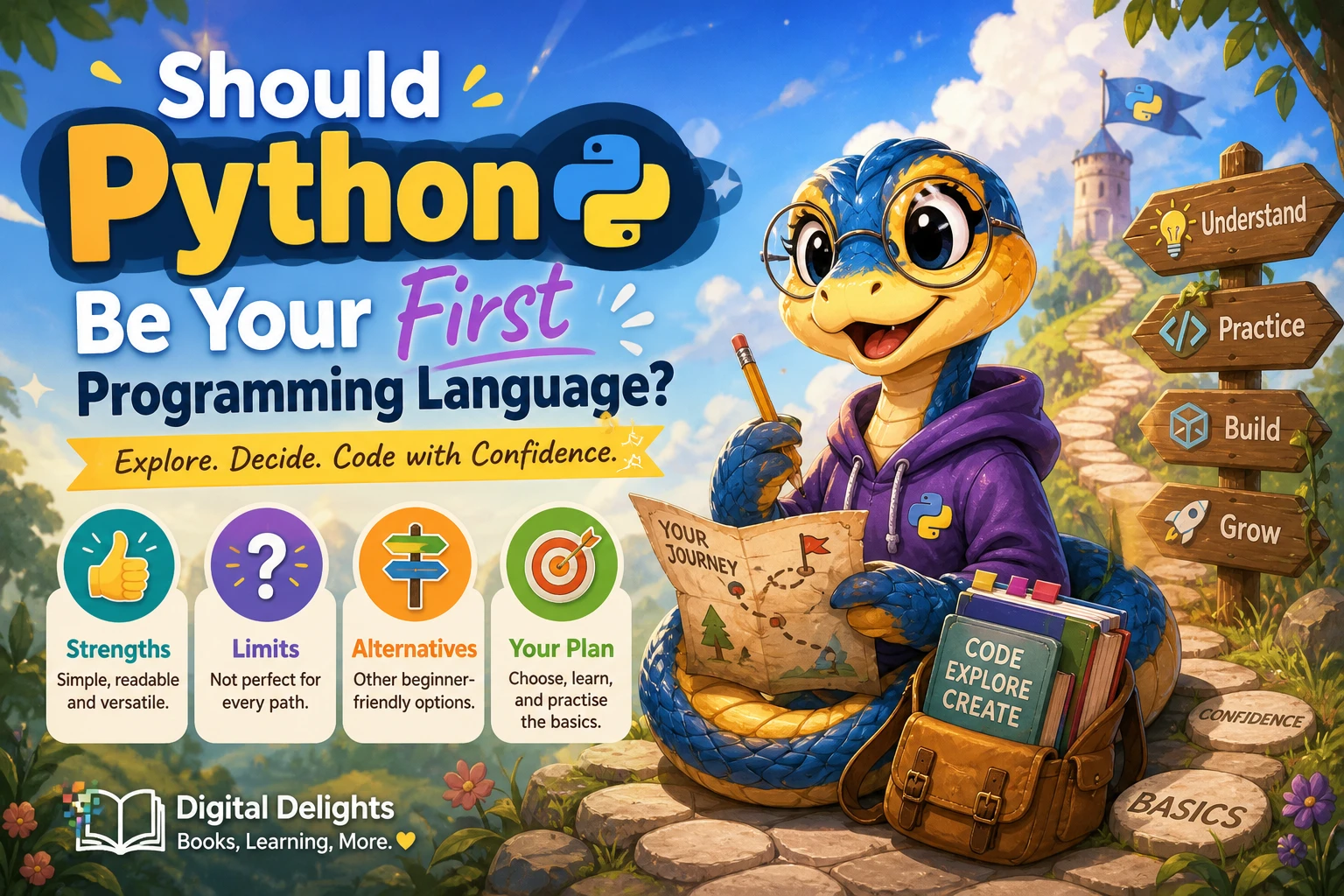
Is Python a Good First Programming Language?
Yes—Python can be a strong first programming language, particularly if you learn from a course or book designed for people who have never programmed before. Its syntax is relatively readable, and you can use it to experiment with code and build projects as your skills grow. But no language is the right first choice for everyone: your goals, course requirements, and preferred kinds of projects matter too.
One important distinction: Python’s official tutorial is intended for readers who already have some basic programming knowledge, so it may not be the best starting point if you are completely new. Python.org directs first-time learners to separate beginner guidance. This article explains what makes Python appealing, what can still be challenging, how to start, and how to choose a learning resource.
Why Python can work well as a first language
A first language should let you practise the central ideas of programming without making every early step feel like a puzzle in punctuation. Python can be a reasonable fit because its syntax is designed to be readable, it includes an interactive interpreter for trying code, and its standard library provides built-in tools. The Python FAQ specifically identifies these features as reasons Python can suit beginners; they are useful advantages, not a guarantee that every learner will find programming easy.
Readable code can make examples easier to follow
Learning to program involves more than memorizing commands. You need to understand what instructions do, how they fit together, and how to express a solution in steps. Python’s comparatively clear-looking syntax can make it easier to focus on those questions while you are getting started. You will still encounter new concepts and unfamiliar terminology, but the code itself may be less distracting in early examples.
You can experiment while you learn
An interpreter lets you enter code and see what happens, which can support small experiments: change a value, try a different condition, or see how a list behaves. Python also comes with a standard library of tools. Together, these features give learners ways to explore ideas and use existing functionality without having to build every supporting tool from scratch. See the official Python FAQ for the language’s stated reasons for being suitable for beginners.
The language can remain useful after the basics
Python is used for tasks such as scripting and rapid application development, as the Python tutorial notes. That means learning the fundamentals can lead into different kinds of projects rather than ending with introductory exercises. However, a language’s range does not mean you need to choose a specialty immediately. First build a foundation in writing, testing, and improving small programs.
What can make learning Python challenging?
Python may be approachable, but learning programming still takes practice. Many beginners find the underlying habits more demanding than the syntax: deciding how to break a task into steps, keeping track of information, and working out why code behaves differently from what they expected.
- Problem decomposition: turning a broad goal into smaller instructions that a computer can follow.
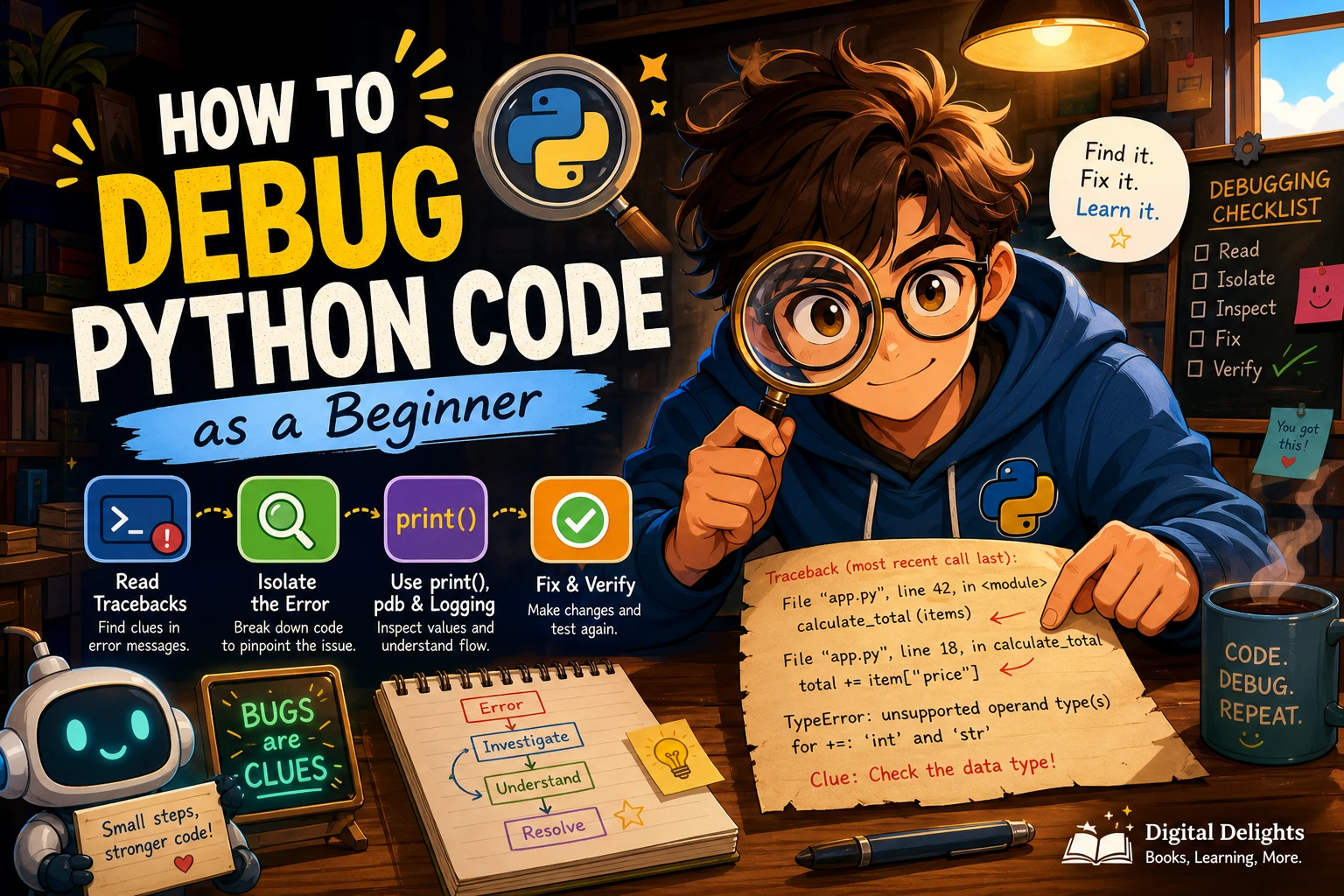
- Debugging: investigating errors and unexpected results instead of guessing at fixes.
- Working with data: understanding how values, strings, lists, and other structures hold information.
- Setup and tools: getting a Python interpreter and a way to write and run code ready to use.
- New vocabulary: learning terms such as variable, function, argument, and loop as you meet them in context.
Setup need not become a separate project. Python.org provides getting-started guidance for beginners. If you are following a course or book, check its setup instructions first and use a stable Python version that the material supports.
Choose beginner instruction—not just a beginner language
Being new to Python and being new to programming are not quite the same thing. The official Python tutorial says it is designed for people who are new to Python, not for people who are new to programming. If you have never coded before, look for learning materials that explain programming concepts from the beginning, provide setup help, and include practice. The tutorial’s intended audience is described on the official tutorial introduction.
Is Python right for you as a first language?
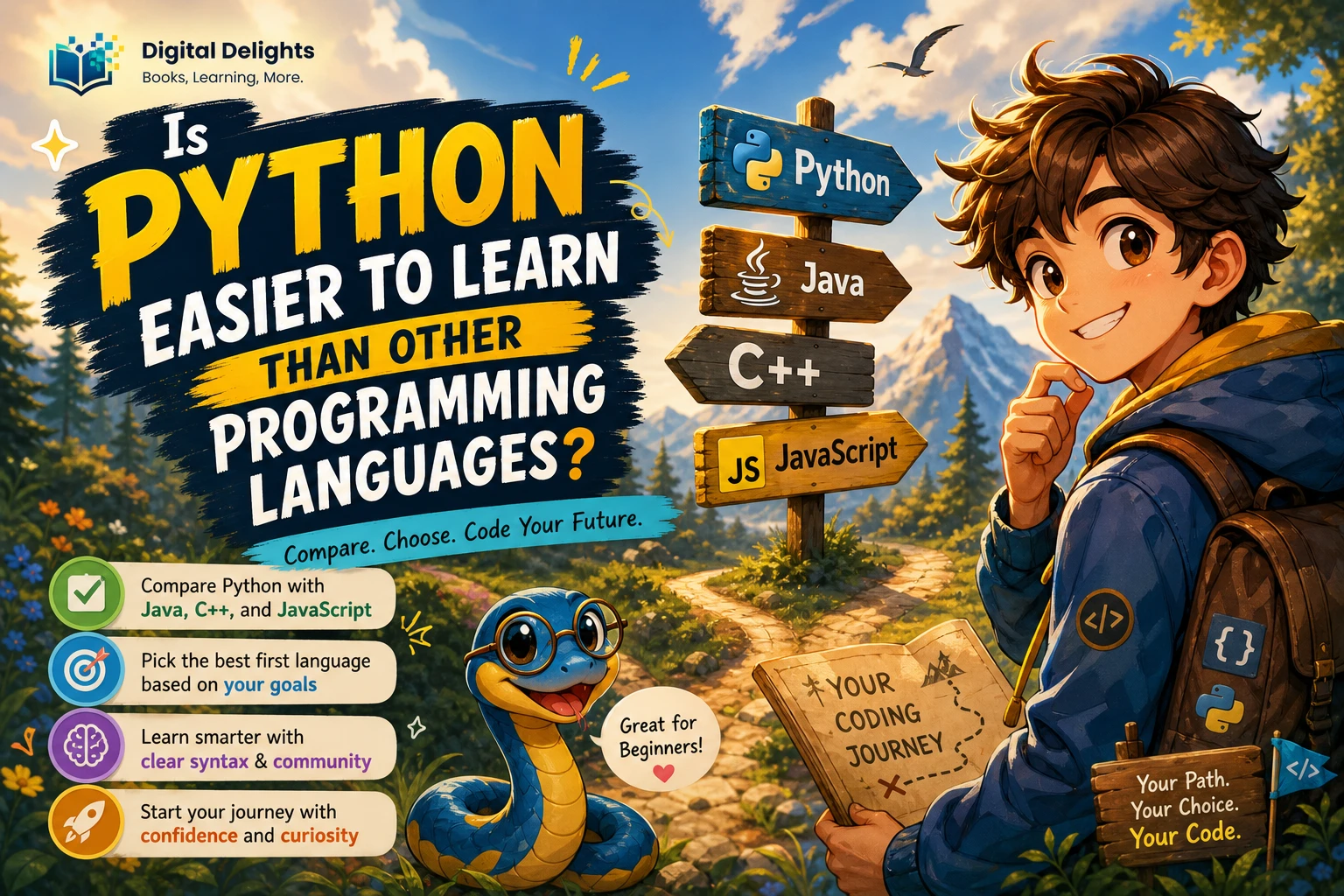
Python is a sensible option if you want a general introduction and are interested in exploring projects that use it. A different language may be more appropriate if a class, workplace, or specific project requires one. That is a practical decision, not evidence that one language is universally best for beginners.
| Your situation | A practical starting point |
|---|---|
| You are new to coding and want a general foundation | Python can be a good choice; use material explicitly written for complete beginners. |
| Your class or instructor specifies a language | Start with the required language so your practice matches the course. |
| You have a particular project in mind | Check which language and tools the project or learning path expects. |
| You are unsure what you want to build | Try a short beginner course and a few small exercises before committing to a specialty. |
The official Python FAQ favors Python as a beginner language, while the official tutorial sets a prerequisite boundary for its own material. Neither source provides comparative learning-outcome data proving Python works better than other languages for every learner. Treat claims that one language is simply “the easiest” as a generalization, not a promise.
A practical path for learning Python from scratch
You do not need to plan a long curriculum before writing your first program. Work through a small set of foundations, practise them in short sessions, and use each new idea in a small task.
- Pick a beginner-specific resource. Check that it assumes no prior coding experience or clearly explains any prerequisites. Prefer materials with setup instructions and exercises.
- Get a working environment. Follow the instructions in your chosen resource to run Python and write code. Avoid mixing installation guides for different versions or tools unless you understand why.
- Learn the basic building blocks. Start with values and variables, input and output, conditions, loops, and functions. Practise reading short examples as well as writing your own.
- Change examples deliberately. Alter one value or instruction at a time, predict what will happen, then run the code and compare the result with your prediction.
- Use errors as information. Read the message, locate the line it points to, and check the surrounding code. Try to identify the cause before replacing a section wholesale.
- Build a small project. Choose something with a clear finish, such as a number-guessing game, a basic quiz, or a simple list-based task tracker. Keep the first version small enough to complete.
- Extend one feature at a time. Add a score, another question, or a way to repeat an action. Small changes give you practice connecting concepts without making the project unwieldy.
The goal at first is not to write impressive or perfect code. It is to become more comfortable translating a simple idea into instructions, running those instructions, and improving them when something goes wrong.
How to choose a beginner Python book or course
A resource’s label is less important than how well it supports your starting point. Before choosing, look for:
- Clear prerequisites: Does it say whether you need any previous programming experience?
- A gradual sequence: Does it introduce concepts in manageable steps and explain how they relate?
- Practice: Are there exercises, problems, or projects that ask you to use what you have learned?
- Setup guidance: Does it help you get ready to run the examples?
- A teaching style that suits you: Do you prefer visual explanations, concise topic-by-topic guidance, or a longer course?
For readers comparing digital books, Python Illustrated is described in the catalog as a beginner-oriented, visual introduction that starts with setup and moves into core concepts. A beginner’s guide to Python covers foundational topics including variables, conditionals, loops, functions, and data structures, and its listed contents include programming problems. These are options to compare by format and coverage; catalog descriptions do not establish that a particular resource will suit every learner.
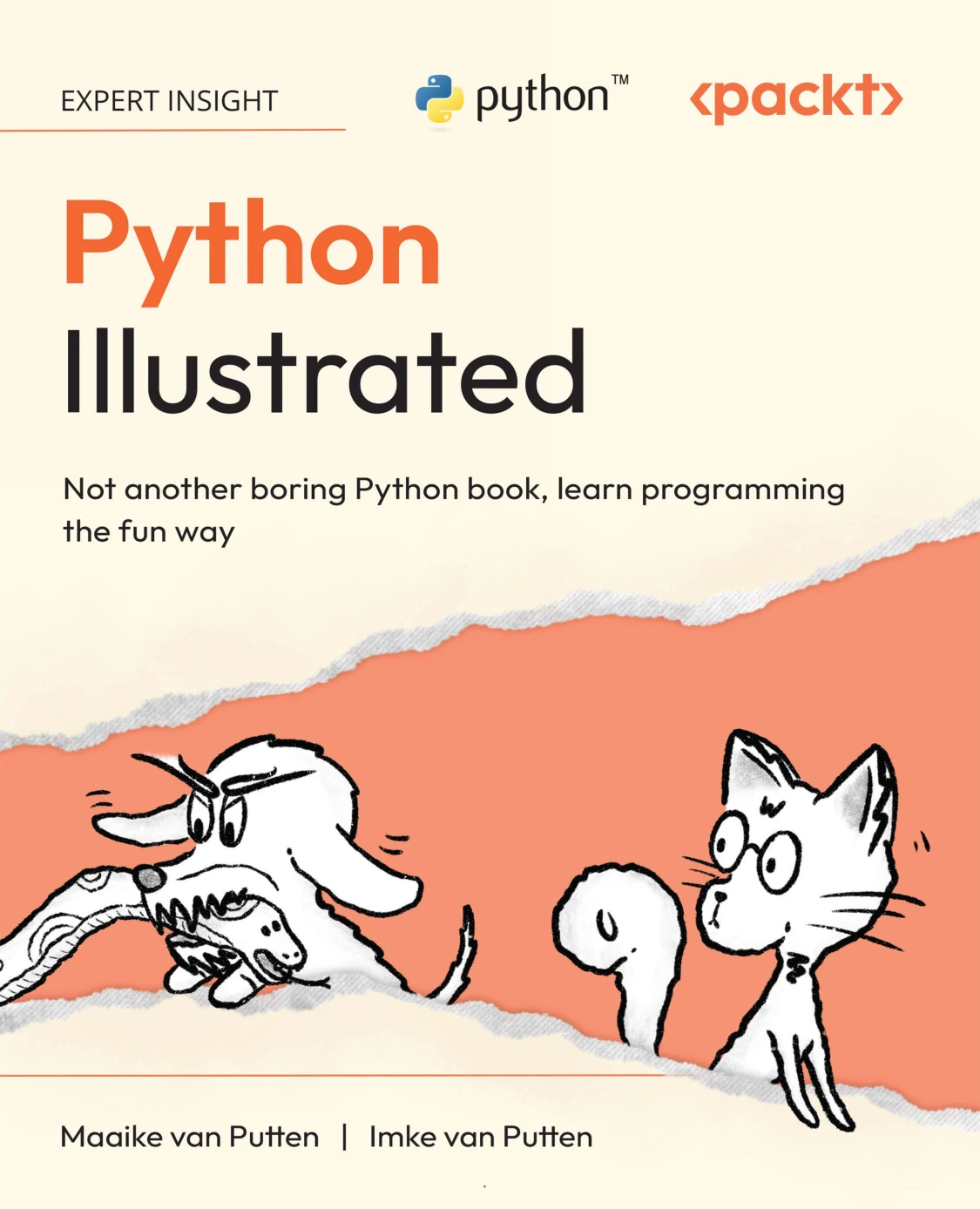
Readers who prefer illustrated explanations and a guided introduction that includes setup and core concepts.
New learners looking for a structured sequence through basics such as variables, loops, functions, and data structures.
| Resource | Catalog-described emphasis | May suit a reader who prefers |
|---|---|---|
| Python Illustrated | Visual, beginner-friendly explanations, setup, and core Python concepts | Illustrated explanations alongside step-by-step instruction |
| A beginner’s guide to Python | Core language topics, a structured progression, and programming problems | A focused topic sequence with practice problems |
Read the available contents and description before choosing. A book can be useful as a reference or practice companion, but regular coding practice is what lets you test whether you can apply its explanations independently.
Frequently asked questions
Can a complete beginner learn Python?
Yes. Choose a course or book that is intended for people with no programming experience. Do not assume that every Python resource—including the official Python tutorial—is designed for a first-time programmer.
Is Python easier than other programming languages?
Python’s readable syntax and language features can make it approachable, but “easier” depends on the learner, the teaching material, and the task. The supplied official sources do not establish that Python produces better learning outcomes than other languages in every setting.
Should beginners use the official Python tutorial?
It can be useful once you have some programming basics, but the tutorial says it is not intended for people who are new to programming. If you are starting from zero, begin with a resource that teaches programming fundamentals as well as Python.
What should a new Python learner build first?
Try a small program with a clear goal, such as a quiz, a number-guessing game, or a simple task list. Pick one you can finish with the concepts you have learned, then add a small feature after the first version works.
Do I need to decide on a Python specialty before I start?
No. Learn the fundamentals first. Once you are comfortable writing and changing small programs, you can explore a direction that interests you, such as data work, automation, or application development.
Conclusion: Python is a strong option, with the right starting material
Python can be a good first programming language if it fits your goals and you learn from instruction designed for your experience level. Its readability, interactive interpreter, and standard library are useful starting points, but they do not remove the need to practise problem-solving and debugging. Begin with the basics, write small programs, and choose your next step based on what you want to make—not on the idea that one language is best for everyone.