
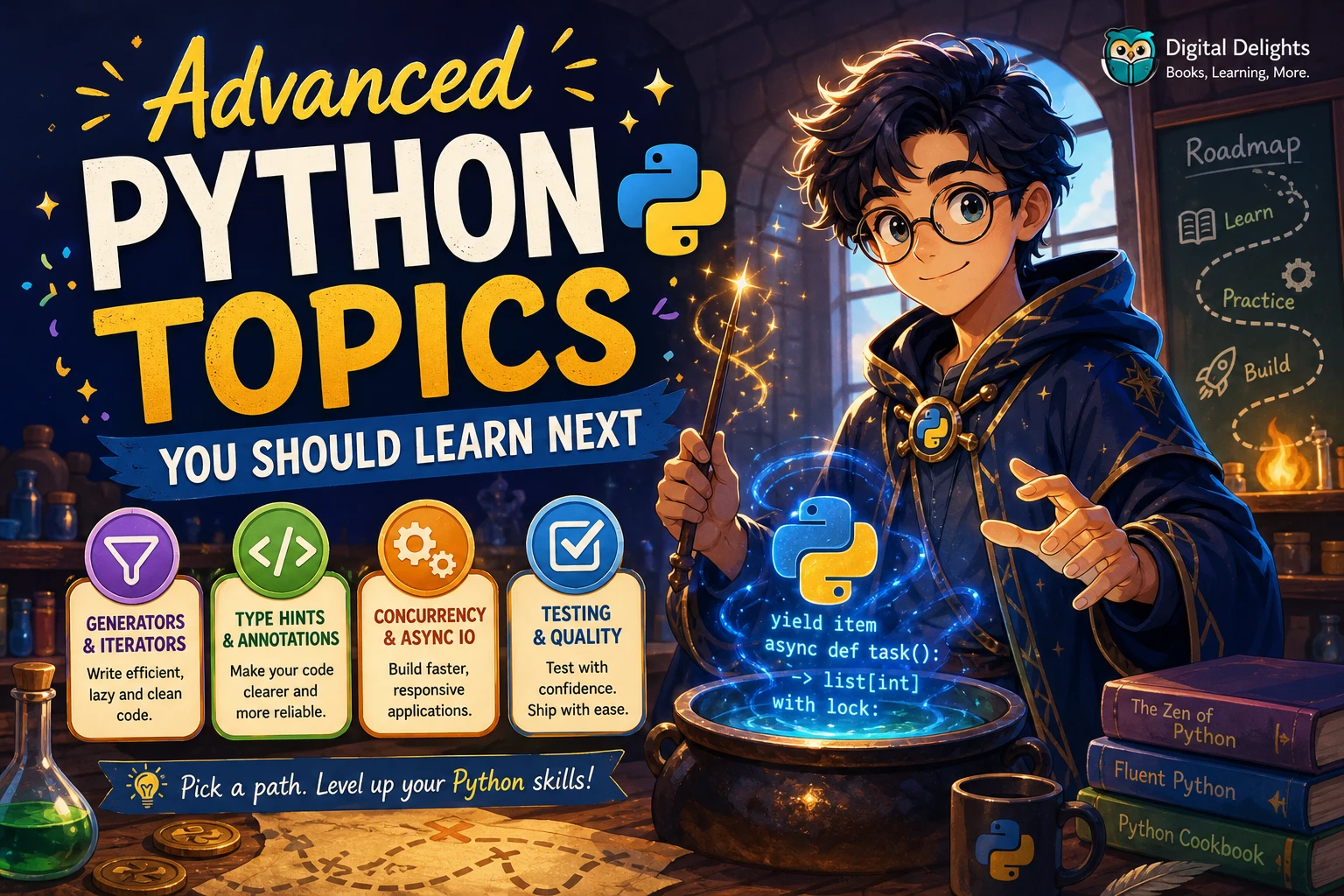
Advanced Python Topics You Should Learn Next
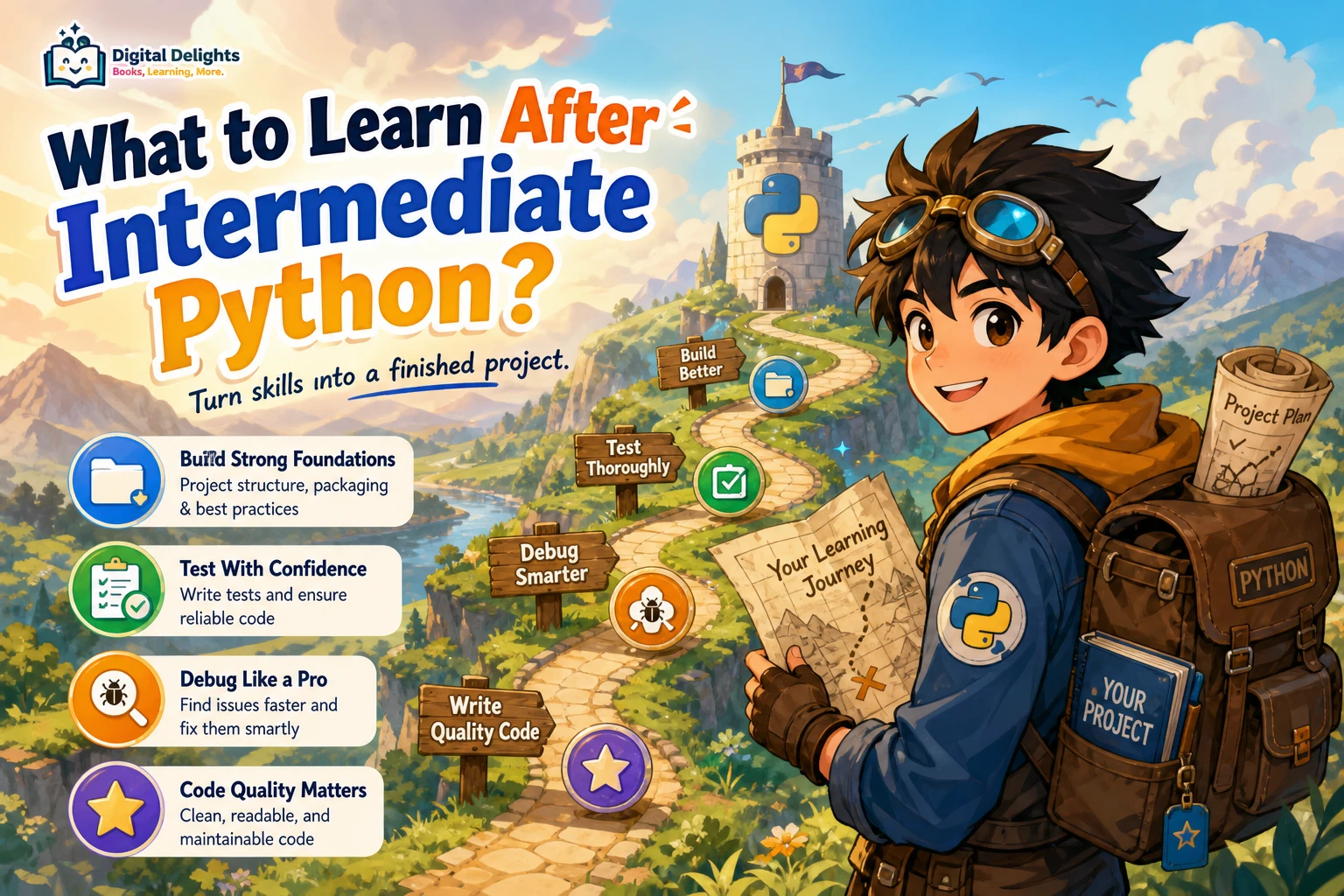
Advanced Python is less about collecting obscure syntax and more about solving harder programming problems with clarity. If you can already write functions, work with classes and exceptions, organize code into modules, and debug everyday errors, you can start building skills that make programs easier to maintain, test, and scale.
A practical shortlist includes Python’s data model, iterators and generators, decorators and context managers, type hints, concurrency, testing and performance tools, and—when your work calls for it—metaclasses. You do not need to master every topic at once. Choose the ones that address a real challenge in a project you care about.
What Should You Know Before Studying Advanced Python?
There is no single formal threshold for being ready. As a useful starting point, be comfortable writing functions, defining and using classes, handling exceptions, importing modules, and tracing bugs in a small program. You should also be able to read unfamiliar code without getting stuck on every basic syntax choice.
If those foundations still feel shaky, strengthen them first. A structured overview such as Python 101 covers foundational language concepts alongside topics such as debugging, testing, profiling, threading, and packaging. For a broader step-by-step foundation, Programming with Python includes functions, collections, object-oriented programming, decorators, and generators.
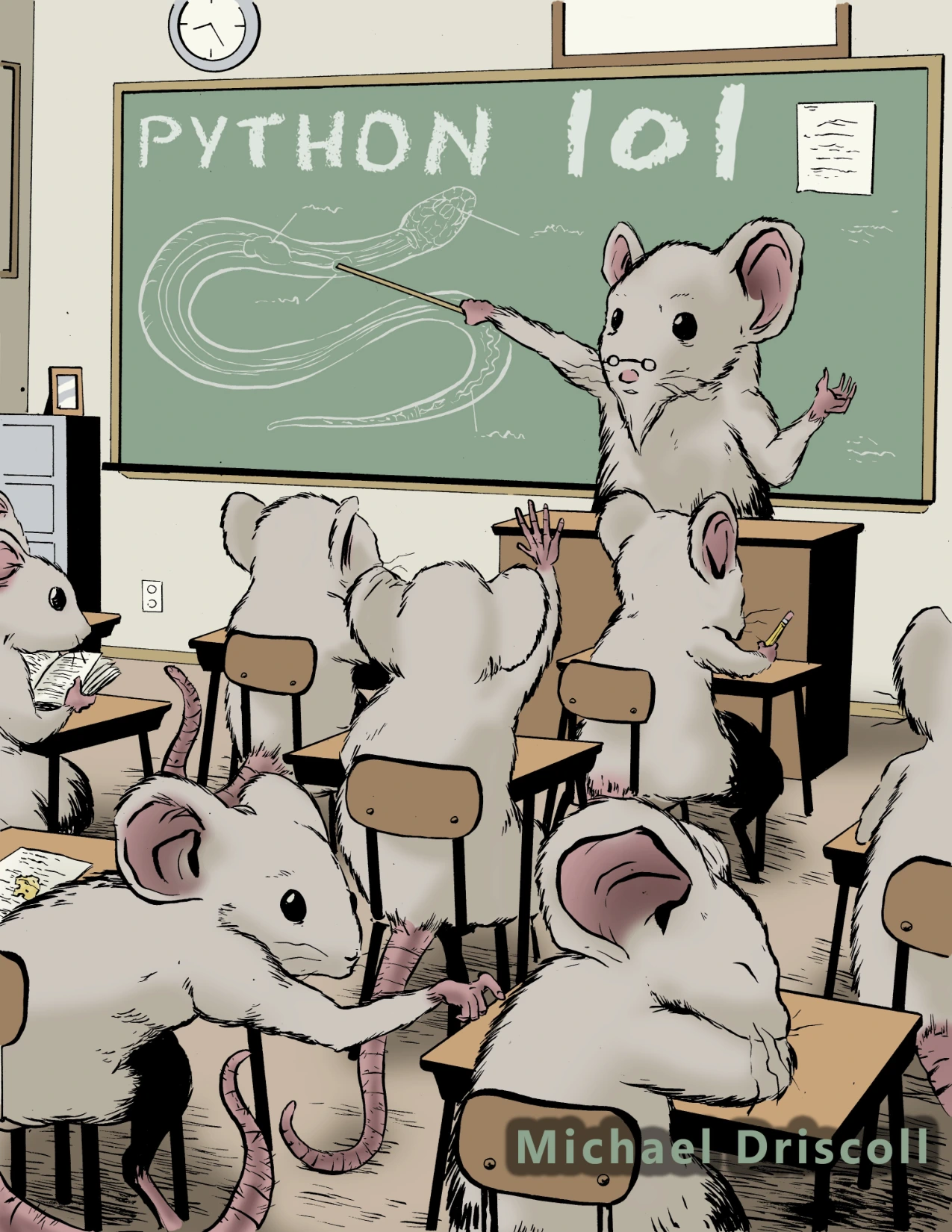
Learners who want a general Python reference with practical tools alongside fundamentals.
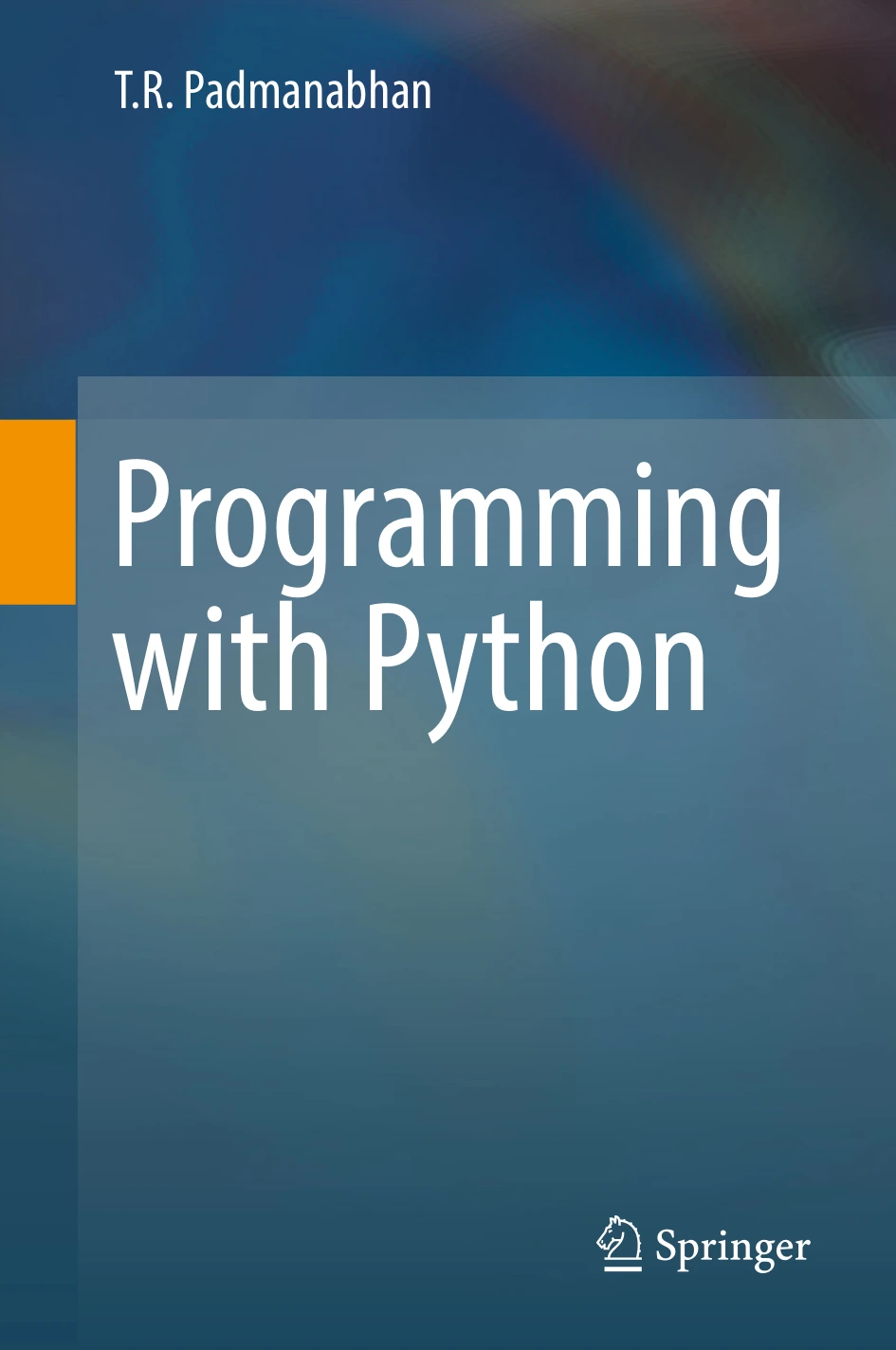
Readers seeking a structured treatment of Python concepts from fundamentals to selected advanced features.
Readiness also depends on what you want to build. Someone automating network tasks may benefit from asynchronous I/O sooner than someone writing a small command-line tool. Treat the sequence below as a menu and roadmap, not a compulsory syllabus.
Advanced Python Topics to Prioritize
1. Python’s data model and special methods
Python’s data model explains how familiar operations connect to methods on objects. Special methods such as __len__, __iter__, and __enter__ let custom objects work naturally with built-in operations and language features. Understanding these conventions helps you design objects that are predictable to use.
Go on to attribute lookup and descriptors when you need to understand how managed attributes, properties, or framework features work. Descriptors are useful to recognize and apply in the right situations, but you rarely need to build a descriptor just to make a simple class work. The Python data model reference documents special methods, attribute access, descriptors, and class creation.
2. Iterators and generators
Iterators produce values one at a time; generators provide a concise way to define that behavior. They are useful when a program processes a sequence incrementally rather than needing to keep every result in memory at once. This pattern appears in file processing, data pipelines, and custom iteration.
Learn how iter() and next() relate to iteration, how yield suspends and resumes a generator, and how generator expressions differ from list comprehensions. Then consider what happens when a generator is exhausted and how exceptions or cleanup affect its use.
3. Decorators and context managers
A decorator wraps or transforms a function or class, making it possible to apply reusable behavior such as logging or timing. Start with ordinary functions as decorators before exploring more complex forms that accept arguments. Pay attention to preserving useful function metadata when wrapping functions.
Context managers help manage setup and cleanup around a block of code. The with statement is commonly used for resources such as files, where cleanup should happen even if an error occurs. Learn how to use existing context managers first; implement your own when a repeated resource-management pattern makes it worthwhile.
For a reference that includes decorators, generators, and other language features, see Python Advanced Programming. Its catalog description also lists topics such as testing, debugging, multiprocessing, and multithreading.
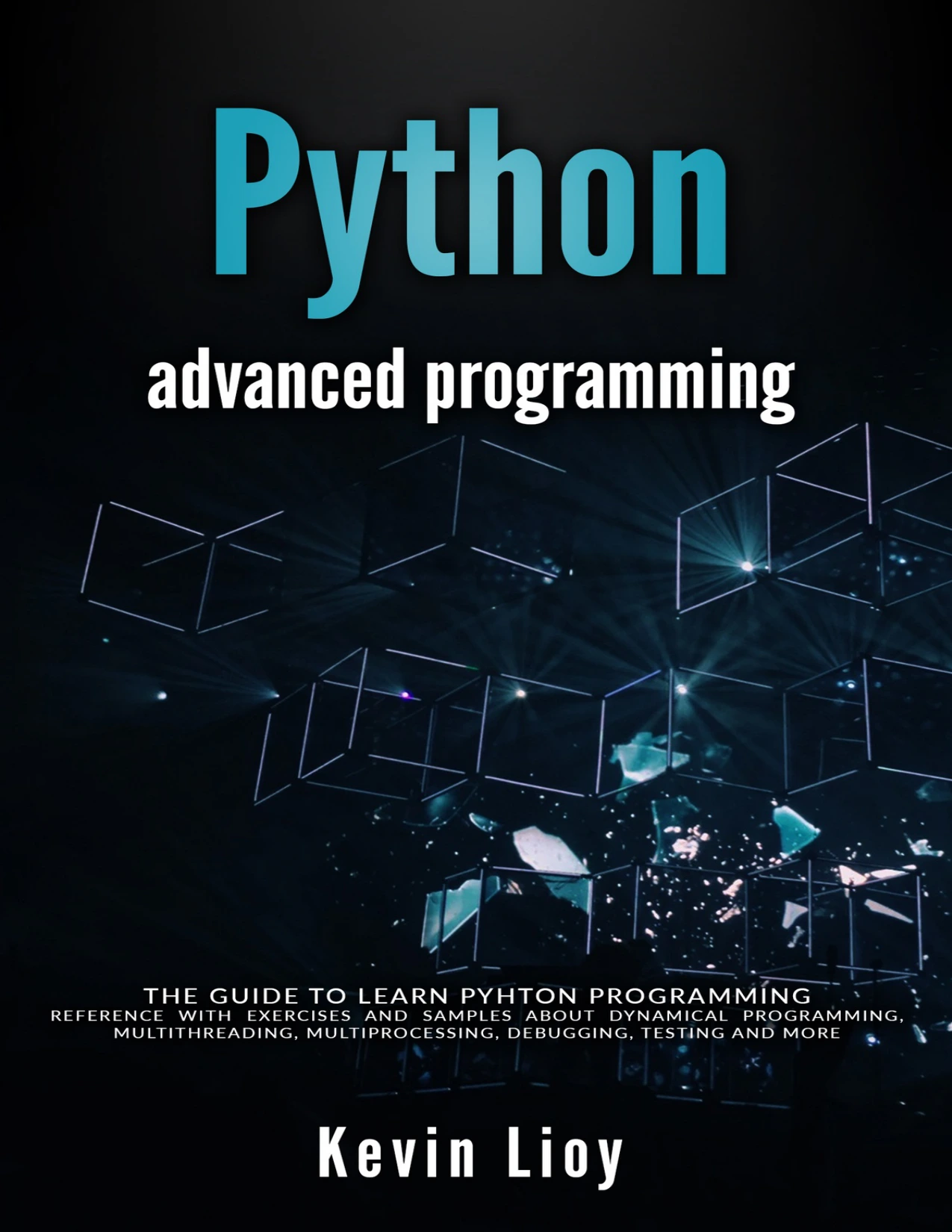
By Kevin Lioy
Readers comfortable with Python basics who want a reference with exercises on advanced programming subjects.
4. Type hints and API design
Type hints can make a function’s expected inputs and outputs easier to understand. As your code grows, explore collection types, generics, and protocols to describe more useful interfaces. Good annotations support communication between developers and can be checked with external tools.
Do not mistake annotations for automatic runtime validation. Python does not enforce type hints on values by itself; a type checker or other tool can inspect them, while runtime validation requires a separate mechanism. The official typing documentation explains the annotation system and related tools.
Use annotations to clarify an API, not to decorate every expression regardless of benefit. Clear names, focused functions, and consistent behavior remain essential to a usable interface.
5. Concurrency: asyncio, threads, and processes
Concurrency approaches are not interchangeable. The right choice depends on the work being performed and how its tasks spend time:
asyncio: Consider it for programs coordinating many I/O-bound tasks, such as network operations, when the libraries in use support asynchronous calls.- Threads: Consider threads when tasks wait on I/O and a threaded library or interface fits the program. Shared state needs careful handling.
- Processes: Consider separate processes when work can be divided into independent jobs and process-level parallelism suits the task. Account for communication and process-management overhead.
Start with a simple sequential version and identify the bottleneck before adding concurrency. Mixing blocking work into an asynchronous program can prevent other tasks from making progress; the asyncio development guide describes blocking code and the use of executors.
If network programming is your goal, Python Networking 101, Second Edition covers socket programming, AsyncIO, network performance, and automation according to its catalog description.
Learners exploring Python socket programming, AsyncIO, and network automation.
6. Testing, debugging, and profiling
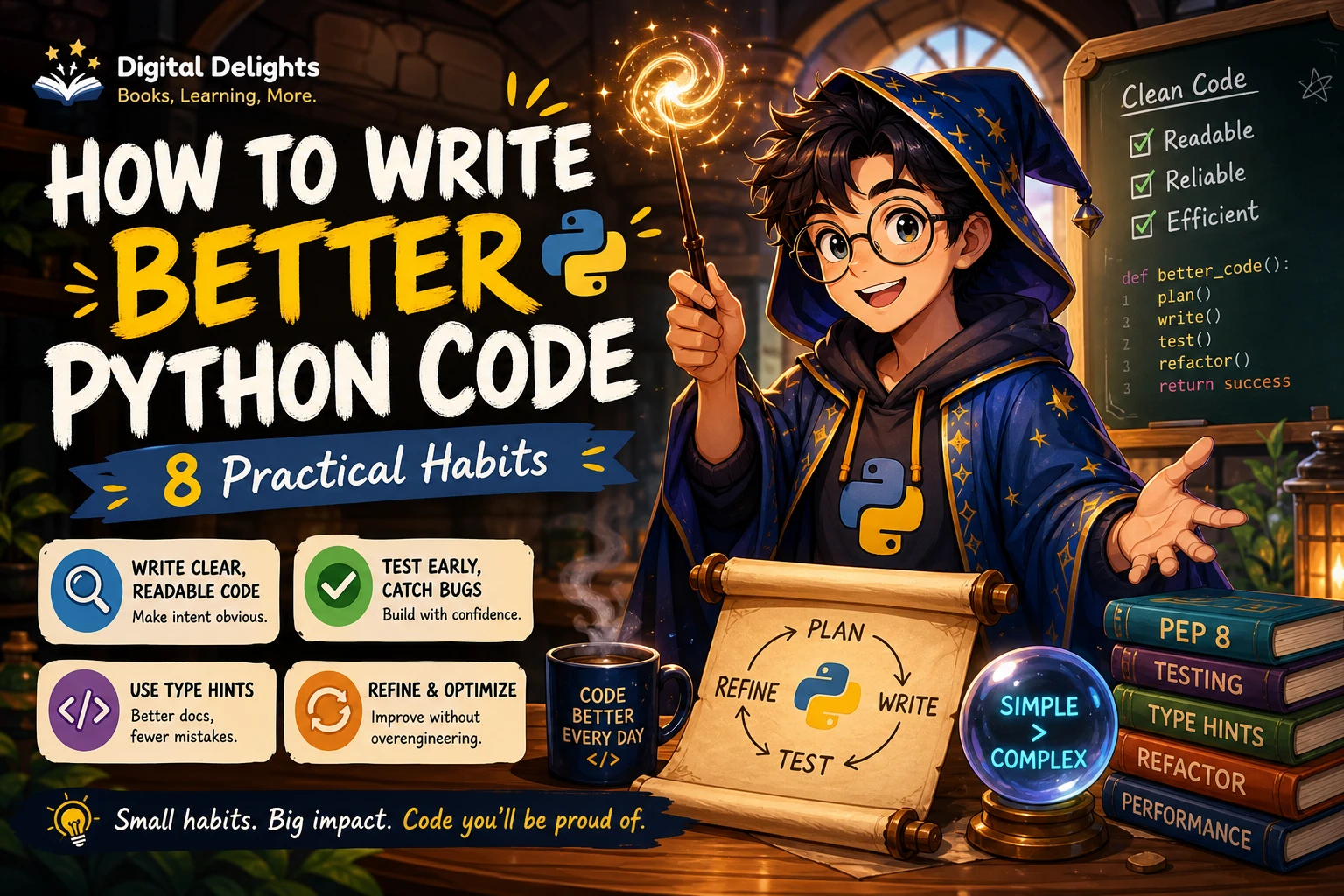
Advanced code is only useful if you can tell whether it behaves correctly and where it is spending its time. Learn to write tests for expected behavior and edge cases, use a debugger to inspect program state, and profile before optimizing. Profiling helps distinguish a genuine performance bottleneck from a section of code that merely looks inefficient.
Build a small habit: reproduce a bug, reduce it to a clear example, add a test for the behavior, and then make a focused change. When investigating speed, measure a representative workload and compare results after each change. The product catalog description for Python 101 lists debugging with pdb, profiling with cProfile, and testing with doctest and unittest.
7. Metaclasses and class creation
A metaclass influences how classes are created. This can be useful for specialized frameworks, libraries, or APIs that need to inspect or modify class definitions systematically. It is also an easy topic to overuse: many designs can be expressed more simply with functions, decorators, inheritance, or composition.
First understand ordinary classes, special methods, and descriptors. Learn metaclasses when you encounter a concrete design problem that calls for class-creation customization, rather than treating them as a required badge of advanced Python knowledge. The data model reference covers customizable class creation.
8. Python-version awareness
Python features and behavior can change between releases. When working on a project, check which versions it supports and confirm that language features and libraries are compatible with that range. This matters especially for tools that inspect annotations or depend on details of class creation.
Python 3.14’s release notes describe changes involving deferred annotation evaluation and explain that some third-party tools that inspect annotations may need to adapt. Read the Python 3.14 “What’s New” notes for the documented details, and verify current compatibility requirements when publishing or deploying code.
Choose Advanced Python Topics by Your Goal
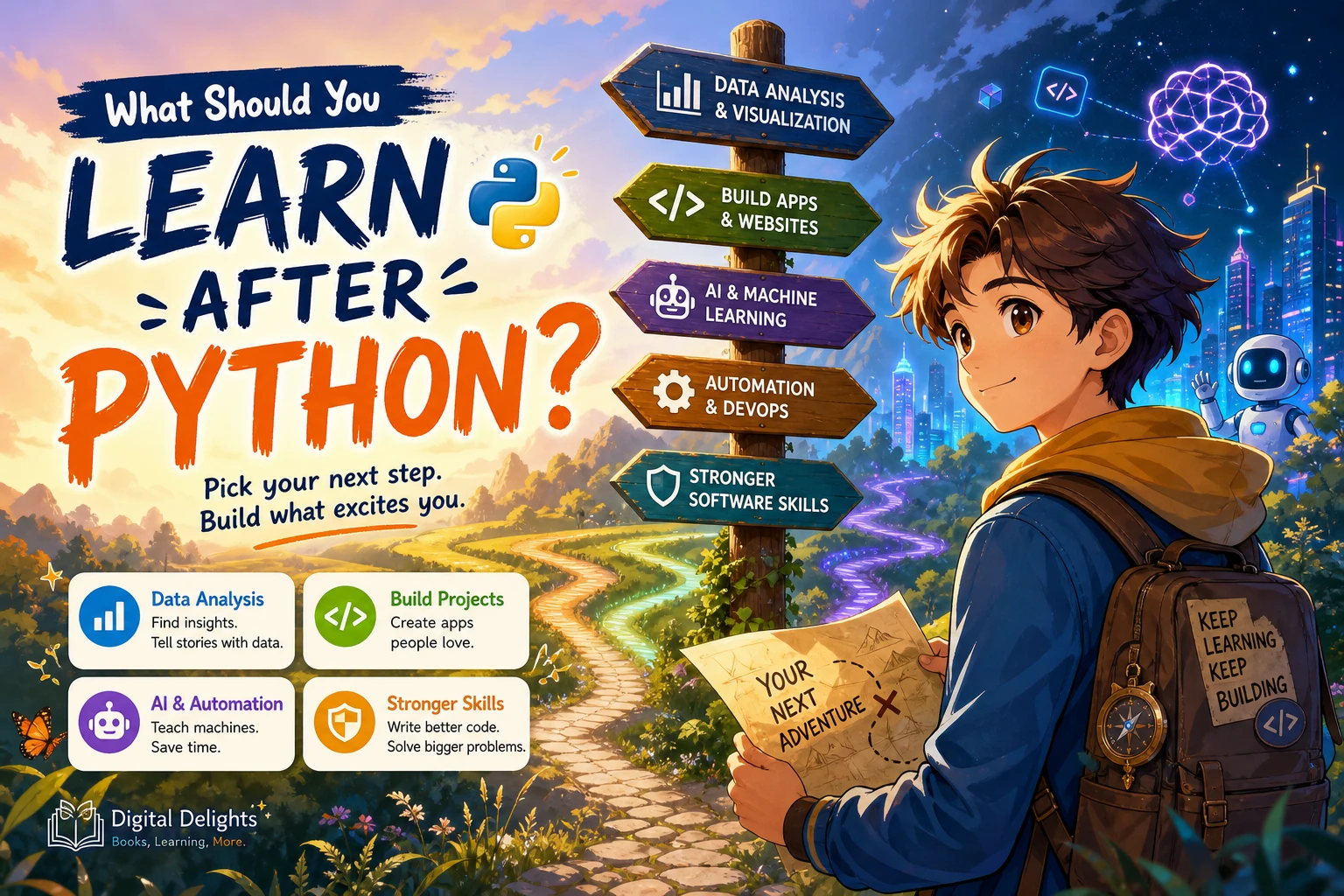
Use the problem you want to solve to decide what to study next. This keeps learning focused and gives you a project in which to test each idea.
| Goal | Topics to explore | Practice idea |
|---|---|---|
| Coordinate network requests | AsyncIO, tasks, cancellation, and blocking calls | Build a small client that retrieves several resources and handles failures. |
| Make a library easier to use | Type hints, protocols, exceptions, and API design | Design a small module with clear inputs, outputs, and error behavior. |
| Process large or streamed data | Iterators, generators, and profiling | Read records incrementally and measure memory or runtime for a realistic input. |
| Improve reliability | Testing, debugging, and context managers | Write tests around a resource-handling function, including an error case. |
| Understand framework behavior | Descriptors, attribute lookup, and class creation | Trace how a property or other managed attribute behaves before implementing a custom version. |
A Practical Learning Sequence
- Pick a real problem. Choose a bug, bottleneck, or awkward interface in a small project.
- Study only the relevant concept. Learn the core behavior and the common trade-offs before reaching for advanced variations.
- Build a small example. Isolate the idea in a short program so you can observe what it does.
- Test and inspect it. Try ordinary and edge cases; use debugging or profiling tools when they answer a specific question.
- Compare alternatives. Ask whether a simpler approach solves the same problem with less complexity.
- Consult a deeper reference as needed. A focused resource can help when you identify a specific gap. The catalog’s Python Advanced Programming listing describes coverage of decorators, concurrency, debugging, and testing.
Common Mistakes When Learning Advanced Python
- Skipping the foundations: Advanced tools are harder to understand if functions, classes, exceptions, or modules are still unfamiliar.
- Learning features without a problem to solve: A concept becomes easier to evaluate when you apply it to a real program.
- Treating concurrency models as synonyms: Choose based on workload, library support, and the trade-offs involved.
- Assuming type hints validate data: Use a type checker or an explicit runtime-validation approach when validation is required.
- Reaching for metaclasses too early: Prefer a simpler design unless class-creation customization solves a genuine need.
- Optimizing before measuring: Profile a representative task so effort is directed at an actual bottleneck.
Frequently Asked Questions About Advanced Python
What should I know before learning advanced Python?
Be comfortable with functions, classes, exceptions, modules, and debugging everyday programs. That is practical editorial guidance, not a formal prerequisite; the best starting point depends on your experience and the project you want to tackle.
Are Python type hints checked at runtime?
No. Type hints describe intended types, but Python does not enforce them automatically at runtime. Type-checking tools can analyze annotations; runtime validation requires a separate approach.
Should I learn asyncio, threading, or multiprocessing first?
Start with the workload. AsyncIO is often relevant to I/O-bound network programs designed around asynchronous libraries; threads can suit I/O-waiting tasks; processes may suit independent work that benefits from process-level execution. First measure the problem and consider library support before choosing.
Do I need to learn metaclasses?
Usually not as an early priority. Learn what metaclasses do and study them when a framework or class-creation problem gives you a clear reason. Many everyday designs do not need them.
Conclusion: Learn the Python That Your Projects Need
The most useful advanced Python topics are the ones that help you understand behavior, make interfaces clearer, manage concurrency responsibly, and improve reliability. Start with a project-sized problem, study the concept that addresses it, and test the result before adding more abstraction.
You can explore the Python book collection at Digital Delights for resources spanning different learning goals. Choose a focused reference that matches the topic you are working on, and let your next project—not a checklist of obscure features—guide what you learn.