
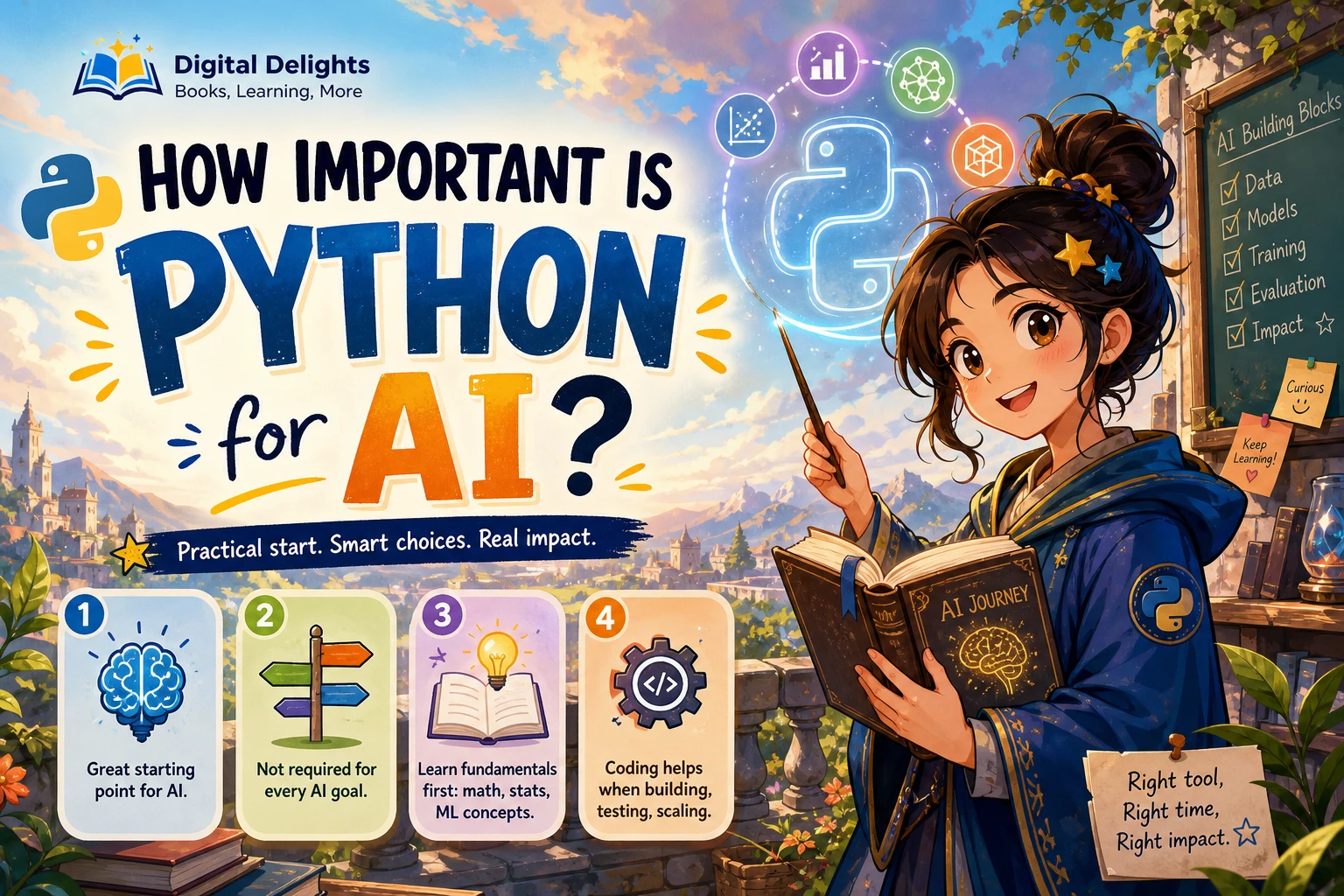
How Important Is Python for AI?
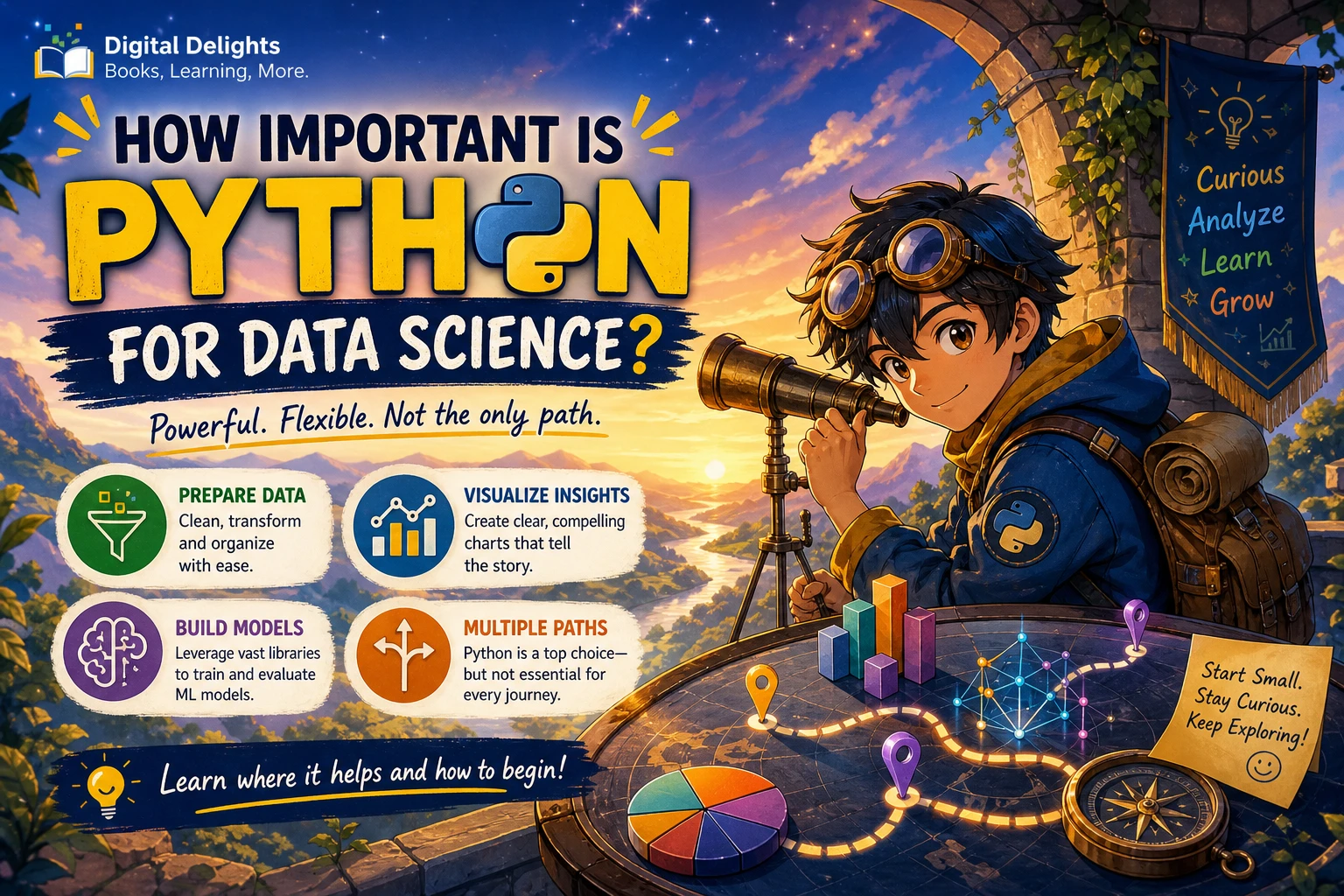
Python is highly useful for AI, but it is not required for every way of learning about or using AI. If you want to write programs that work with data, train or evaluate models, or build applications around AI systems, Python is a practical place to start. Its readable style also makes it easier to experiment and adjust code.
But using an AI tool is different from building one. You can explore many AI products without programming. This guide explains what Python contributes, which basics to learn first, and how to choose a learning path that fits your goal.
Why is Python widely used in AI learning and development?
Python is a high-level programming language designed to support clear, efficient development. Its official tutorial describes it as suitable for scripting and rapid application development. Those qualities make it convenient for trying an idea, inspecting the result, and revising the code without first building a large software system. Read the Python tutorial.
Python is also extensible: programs can connect with code written in languages such as C or C++. That helps explain an important distinction. Python can provide a readable interface for an AI workflow without every demanding computation necessarily being performed by Python code alone. The documentation describes extension options; it does not establish that Python is the best choice for every AI task.
Learning materials also commonly use Python to teach AI topics. For example, publisher descriptions of Python-based AI resources cover areas such as machine learning and deep learning. These examples show that Python is a useful learning route, not that every AI learner or professional must use it.
What can Python help you do in AI?
Python can be useful across several stages of an AI project. The precise tools and methods depend on the project, but the broad workflow often includes:
- Prepare and explore data: load information, inspect its structure, identify missing or inconsistent values, and create useful summaries.
- Experiment with models: organize inputs and outputs, run an algorithm, and adjust choices as you learn what works for a particular problem.
- Evaluate results: examine model performance and errors rather than assuming a prediction is correct because a program produced it.
- Build an application: connect a model or AI service to an interface or a larger software workflow.
These are different skills from simply writing a prompt into an AI assistant. In a coding project, Python helps you express and repeat steps; it does not decide whether your data is appropriate, your evaluation is meaningful, or your system is safe to use.
Do you need Python to learn or use AI?
No—not if your goal is to use AI tools. You can use many AI services for tasks such as drafting, summarizing, or brainstorming without writing code. It is still useful to check important outputs and understand the limitations of a tool, but programming is not a prerequisite for trying it.
Python becomes more useful when your goal is to build or investigate AI systems. Coding helps when you want to handle data systematically, reproduce an experiment, customize a workflow, or integrate an AI feature into software. Some learning resources assume basic Python knowledge, while more advanced material may also expect mathematics or machine-learning foundations. Those are resource-specific expectations, not universal entry rules. Packt’s AI cookbook is one example of a Python-based learning pathway.
How much Python should a beginner learn?
You do not need to master every part of the language before exploring AI. Start with the fundamentals that let you read, write, and debug small programs:
- Variables, values, and basic types such as strings, numbers, and booleans
- Lists and dictionaries for organizing collections of information
- Conditions and loops for controlling what a program does
- Functions for naming and reusing steps
- Reading and writing files
- Errors, debugging, and reading messages from the interpreter
Next, practise combining these ideas rather than only memorizing syntax. For instance, write a small script that reads a file, counts categories in its contents, and prints a summary. That kind of exercise builds confidence with data handling before you add models or specialized libraries.
For a structured introduction followed by an initial look at machine learning, Python: 2 Books in 1: Learn Python Programming for Beginners and Machine Learning combines beginner Python coverage with an introductory machine-learning section. It is a possible next step for someone who wants both topics in one learning resource.
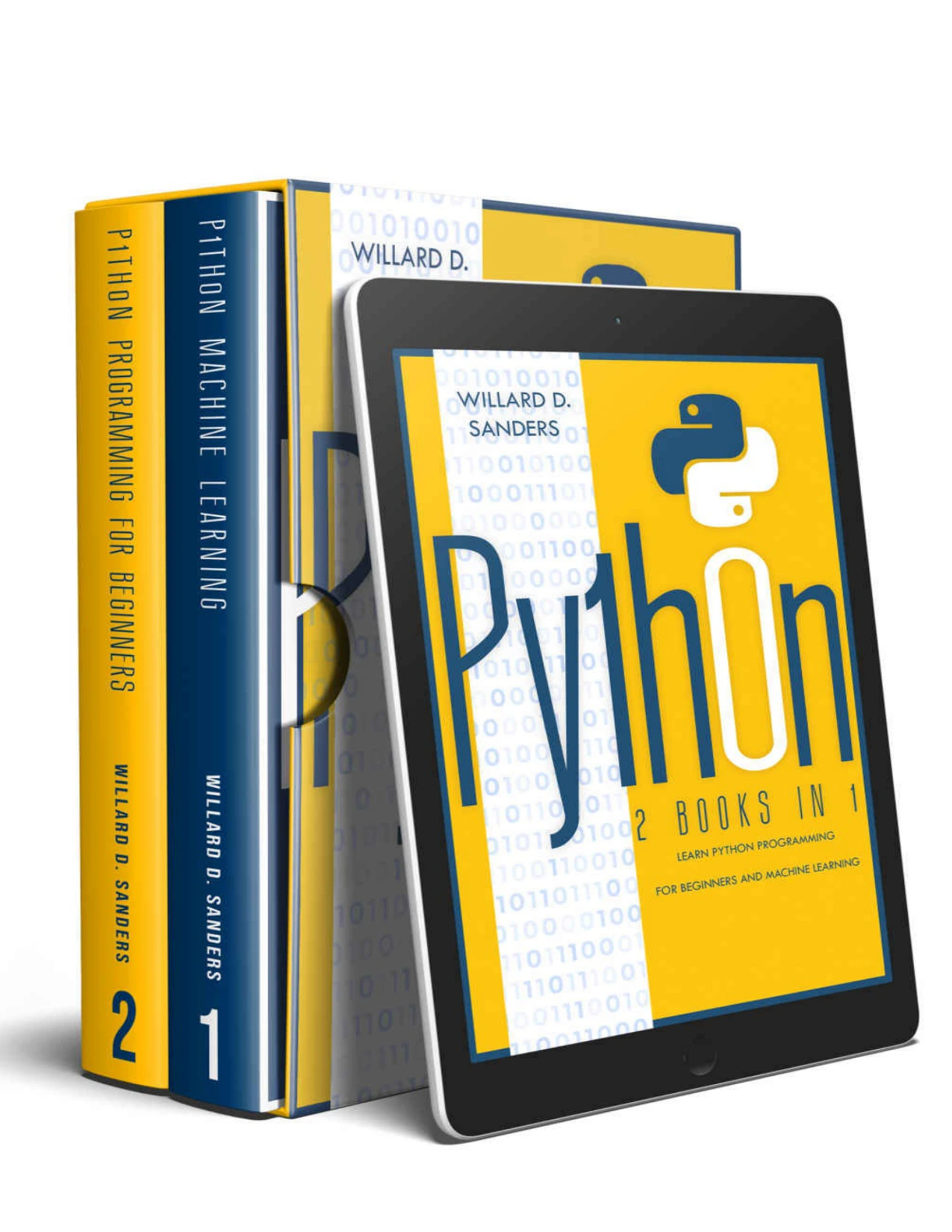
Python: 2 Books in 1: Learn Python Programming for Beginners and Machine Learning
Beginners who want a single resource covering foundational Python and an introduction to machine learning.
When might Python not be enough—or not be the main priority?
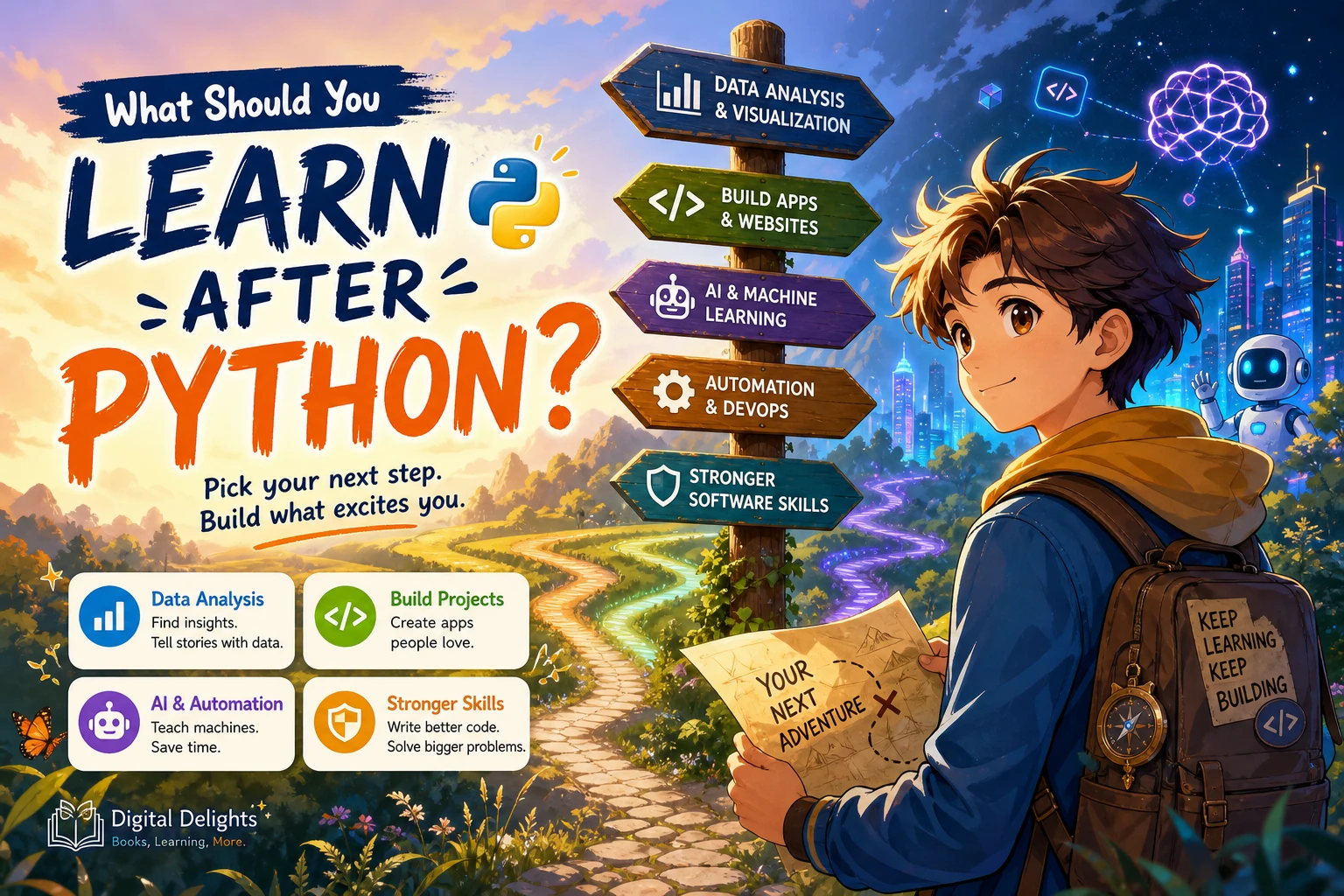
Python is a tool, not a complete AI education. Your next priority depends on what you want to do:
- If you want to use AI products: learn how to assess outputs, protect sensitive information, and choose appropriate tasks. Coding may be optional.
- If you want to build applications: learn programming fundamentals and how an application connects to an AI capability. Other languages or technologies may matter for the surrounding system.
- If you want to work with data or models: practise data preparation, evaluation, and the relevant mathematical and machine-learning concepts alongside Python.
- If you want to deploy or maintain a system: consider software design, testing, security, and the operational environment as well as model code.
The available sources do not provide measured comparisons that establish when another programming language is faster or preferable. Avoid choosing a language based on broad claims alone; identify the project requirements and check the documentation for the tools you plan to use.
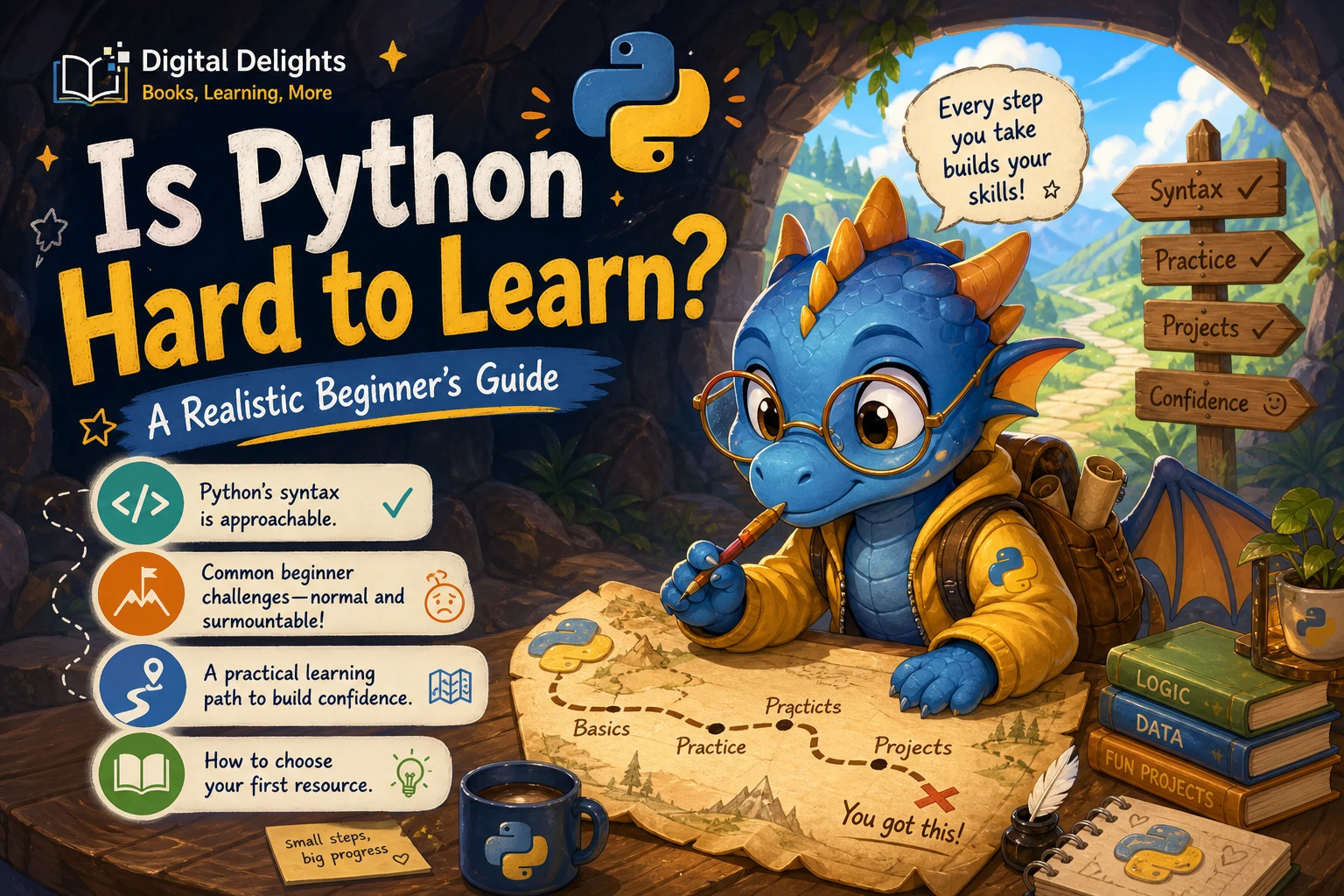
A practical learning path from Python basics to AI
- Learn core Python. Work through data types, collections, conditions, loops, functions, files, and debugging.
- Practise with small data tasks. Read a dataset or text file, clean up a few inconsistencies, and produce a simple summary.
- Study machine-learning basics. Learn what a model learns from examples, how training differs from testing, and why evaluation matters.
- Build one small, understandable project. Choose a limited task, document your data and assumptions, and inspect mistakes as well as successful results.
- Follow the documentation for your chosen tools. Check the supported Python version and installation instructions for each library rather than assuming all releases are compatible. Python’s documentation notes that available libraries can depend on version, platform, and configuration. See the Python library introduction.
Once the fundamentals feel familiar, choose a resource that matches the next step. For a chatbot-focused project, The Beginner’s Guide to Creating AI Chatbots covers Python, natural-language processing, and chatbot development. If you are ready to explore neural networks through Python examples, Practical Deep Learning, 2nd Edition: A Python-Based Introduction is a more specialized option. Check the description and prerequisites of any resource against your current experience before moving on.

The Beginner’s Guide to Creating AI Chatbots
Learners interested in applying Python to chatbot projects.
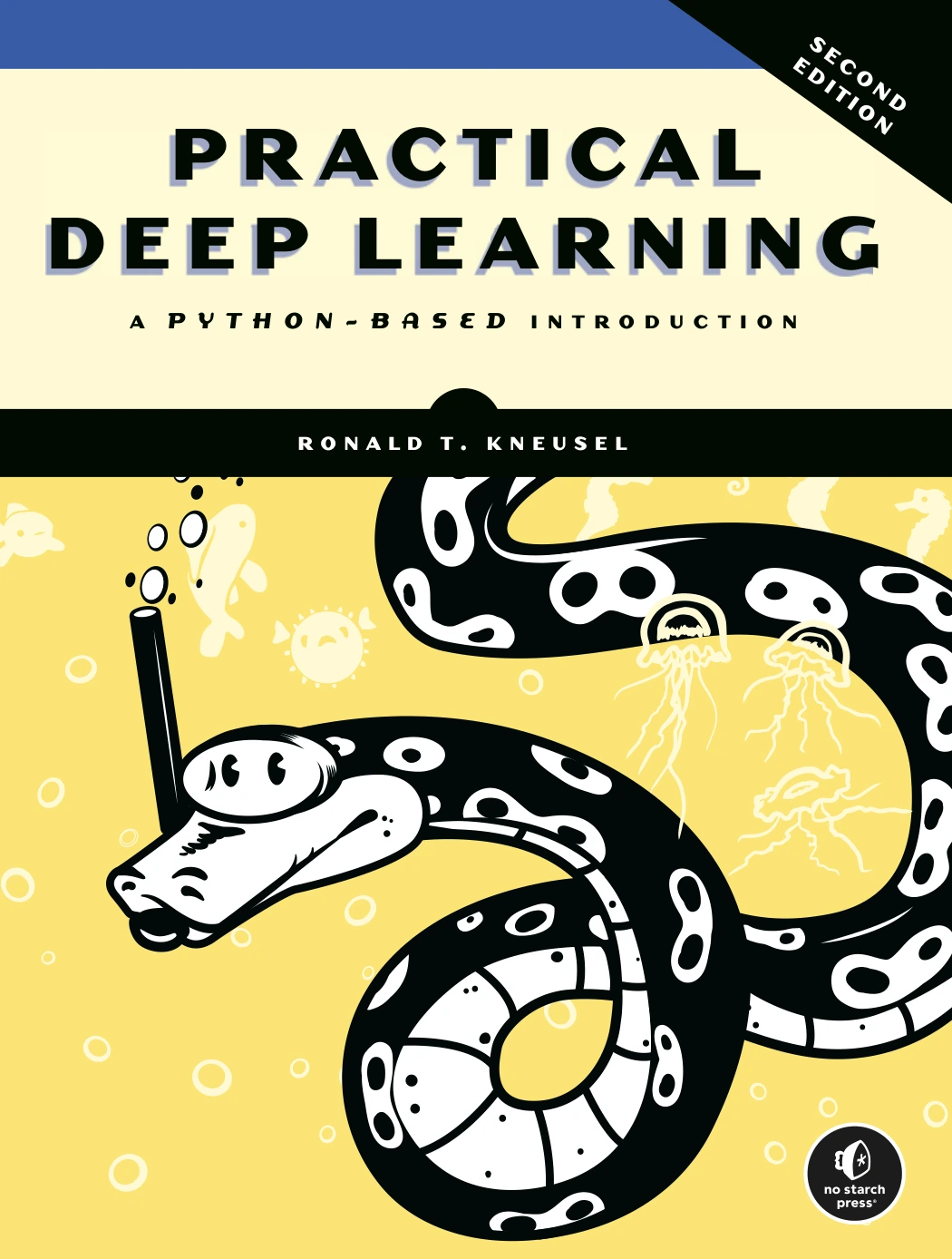
Practical Deep Learning, 2nd Edition: A Python-Based Introduction
Readers with some programming foundation who want to explore practical deep-learning topics.
Frequently asked questions
Is Python mandatory for AI?
No. Python is a useful route for coding-focused AI study and projects, but it is not mandatory for using AI tools or for every AI-related goal. The skills you need depend on whether you want to use, build, research, or deploy AI systems.
Can I use AI without learning to code?
Yes. Many AI tools can be used through a graphical interface or natural-language prompts. Coding becomes relevant when you want to automate tasks, work directly with data, customize a system, or build software around AI.
Should I learn Python before machine learning?
If you want to implement machine-learning exercises or work with Python-based tools, learning basic Python first is helpful. You can also study machine-learning ideas conceptually before coding. More advanced study may require additional mathematics or programming, depending on the course or project.
Which Python version should I install for AI?
Start by checking the installation instructions for the particular library or course you intend to use. Support can vary by Python version and platform, so the newest release is not automatically the right choice for every project.
Conclusion: Python is a practical route, not a gatekeeping rule
Python matters for AI because it offers a readable way to explore data, experiment with models, and build software workflows. It is especially valuable if you want to create or study AI systems yourself. But you do not have to learn Python simply to use AI tools, and programming alone is not a substitute for understanding data, evaluation, and the purpose of a project.
Choose your goal first. If it involves building, start with Python fundamentals and one small project; if it involves using AI tools, begin with practical judgment and responsible use. Digital Delights’ Python learning resources offer a way to explore relevant programming books as your needs become clearer.