
Why Is Python So Popular?
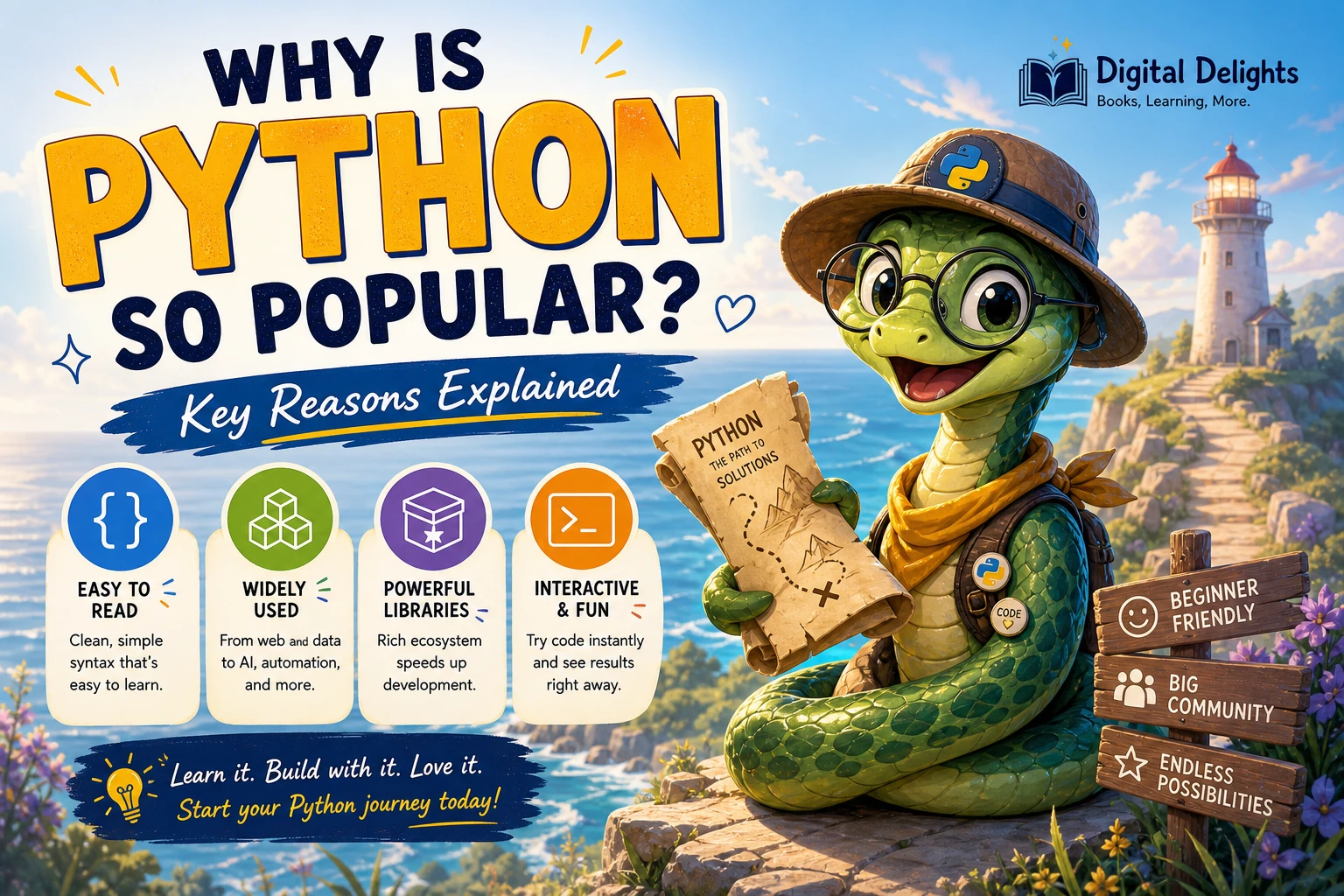
Python is popular in part because its code is designed to be readable, it can be used for many kinds of work, and its standard library and third-party modules let programmers build on existing tools. Its interactive interpreter also makes it possible to try code in small steps. These features help explain Python’s appeal to beginners and experienced developers, although they do not prove how much each factor contributes to its popularity.
“Popular” can refer to different measures, such as use in education, developer surveys, or job listings. The available sources do not provide a comparable statistic for those measures. Instead, this guide looks at practical features that make Python an appealing language to learn and use—and at situations where it may not be the best fit.
Python is approachable to read and learn
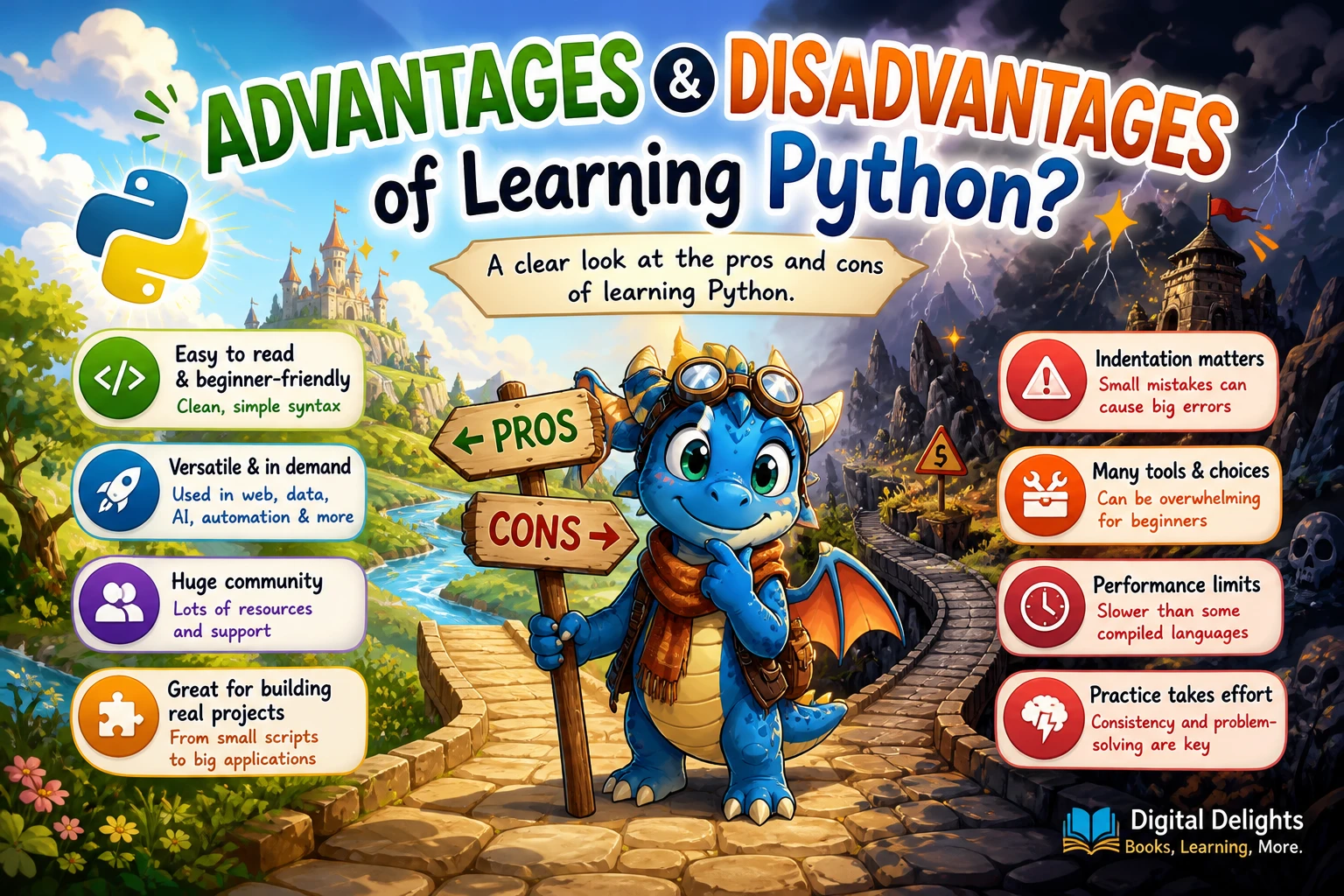
Python’s syntax is intended to be readable, and its official overview describes the language as easy to learn. That can make a first program feel less intimidating: readers can often focus on the logic of a task without first decoding a large amount of punctuation or boilerplate. This is a design advantage, not a promise that programming itself is effortless.
Python also includes an interactive interpreter. You can enter a short expression, see the result, and adjust it immediately. That creates a simple way to explore how language features behave before putting them into a larger script. The official FAQ describes the interpreter as a way to try out language features while programming.
Readable code can remain useful beyond a learner’s first exercises. When a program is revisited or shared, clear names and straightforward structure can make its intent easier to follow. Good habits still matter: a readable language cannot automatically make unclear logic or poorly organized code easy to maintain.
One language serves many kinds of work
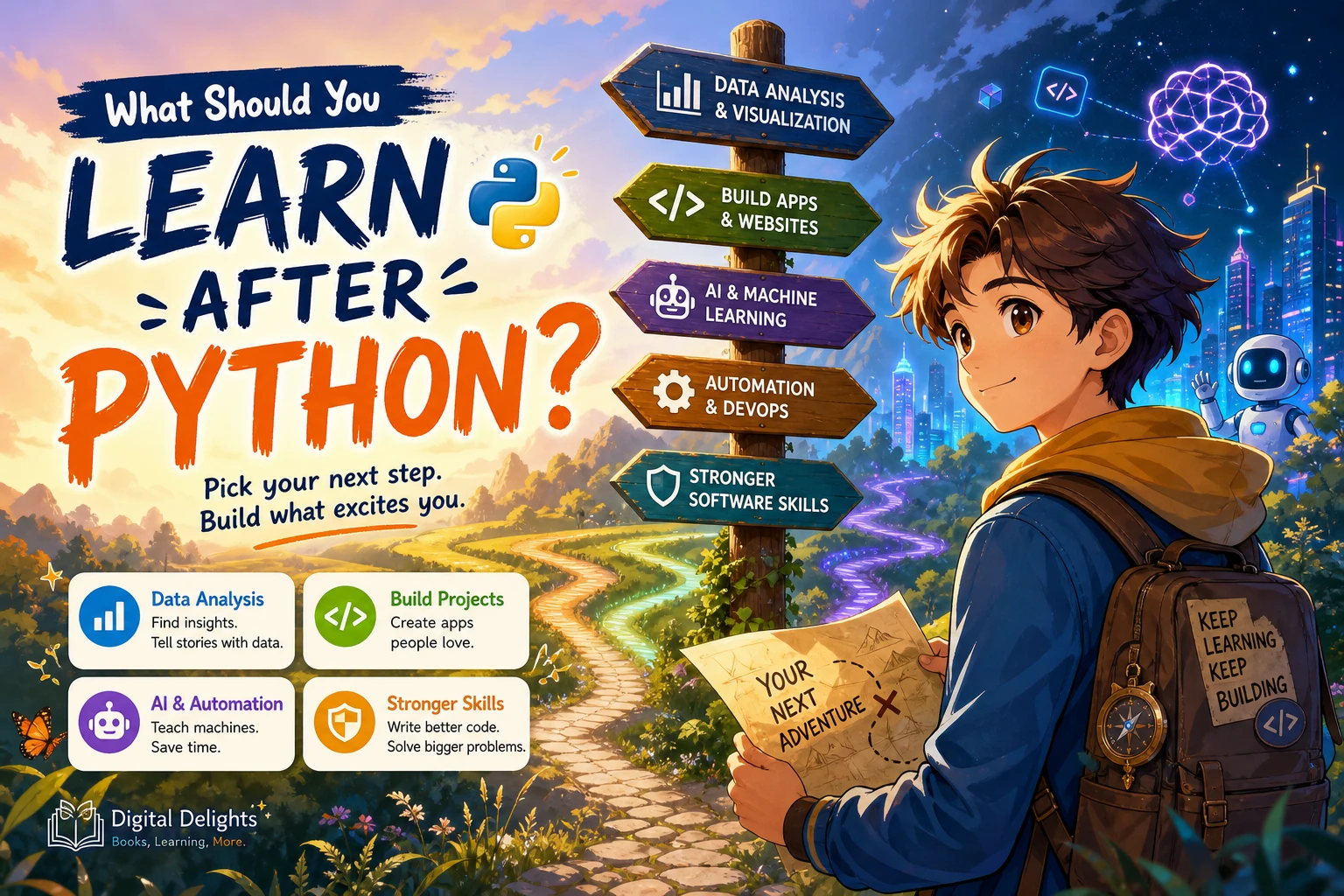
Python is not limited to one specialty. Python.org lists uses that include web development, scientific and numeric computing, education, networking, databases, and software development. This breadth gives learners room to start with general programming and later explore a direction that interests them.
- Automation and scripting: write small programs to handle repeatable tasks or work with files.
- Web development: use Python as part of building web applications.
- Data and scientific work: analyze information or perform numeric and scientific computing with suitable tools.
- Education: use a readable language to introduce programming concepts.
These examples describe possible application areas, not a guarantee that Python is the right tool for every project. A team’s existing systems, performance needs, libraries, and deployment environment all affect the choice.
Libraries extend what Python can do
Python comes with a standard library, and programmers can also use third-party modules. In practical terms, these resources can provide building blocks for common tasks, so a project does not always need to start from scratch. Python.org describes both the standard library and third-party modules as part of the language’s ecosystem.
That convenience has a trade-off. A project may depend on particular packages or versions, which adds setup and maintenance work. For a personal experiment, this may be minor; for a shared project, it helps to keep dependencies organized and documented. Python’s beginner guidance points learners toward virtual environments, which can keep one project’s package requirements separate from another’s.
If a tutorial asks you to install a package, note the package name and the steps used. Keeping your project’s environment distinct helps avoid confusion when different projects need different versions.
Python’s broad usefulness can make it relevant to learners
A language that appears in several fields can give learners flexibility: the same fundamentals—variables, conditions, loops, functions, and data structures—can support very different kinds of small projects. Someone curious about automation might write a file-organizing script; someone interested in data might explore a simple dataset.
This is a practical reason Python may attract attention, but it should not be mistaken for proof that Python is the most used language, the best career choice, or the language every team prefers. The available research does not measure adoption, job demand, or community size. If those are the questions that matter to you, look for recent evidence that defines its measure and context.
When might Python not be the best fit?
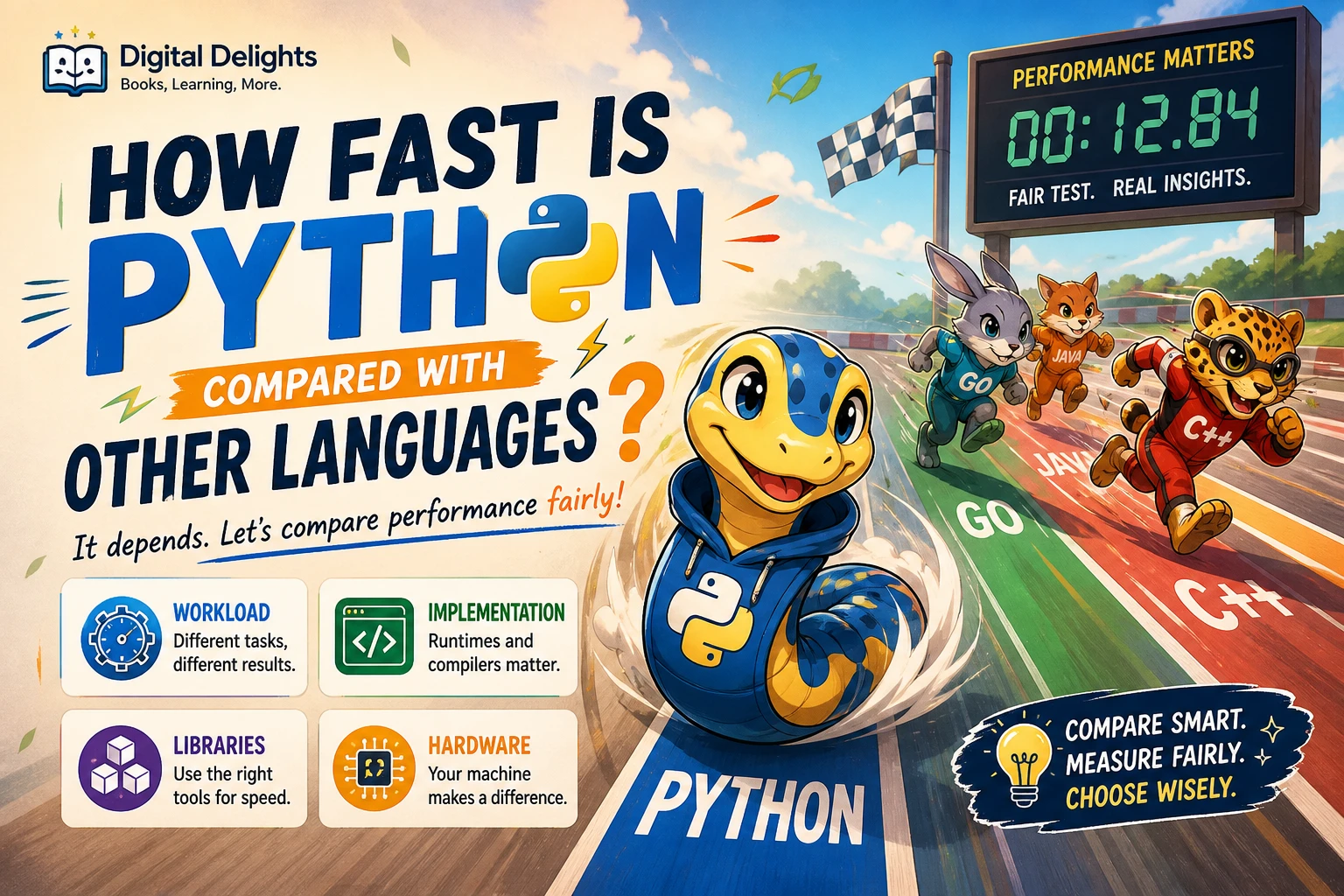
Python’s performance is not captured by a simple label such as “fast” or “slow.” The result depends on the implementation, operating system, workload, and where a program spends its time. The official programming FAQ advises investigating performance bottlenecks rather than assuming where they are.
For a small script or a data-processing workflow, performance may be adequate. For a demanding application, test the relevant workload and compare suitable approaches before choosing a language or rewriting code. Other considerations—such as integration with existing software, deployment constraints, or team familiarity—may also matter more than a general claim about speed.
Is Python a good choice for beginners?
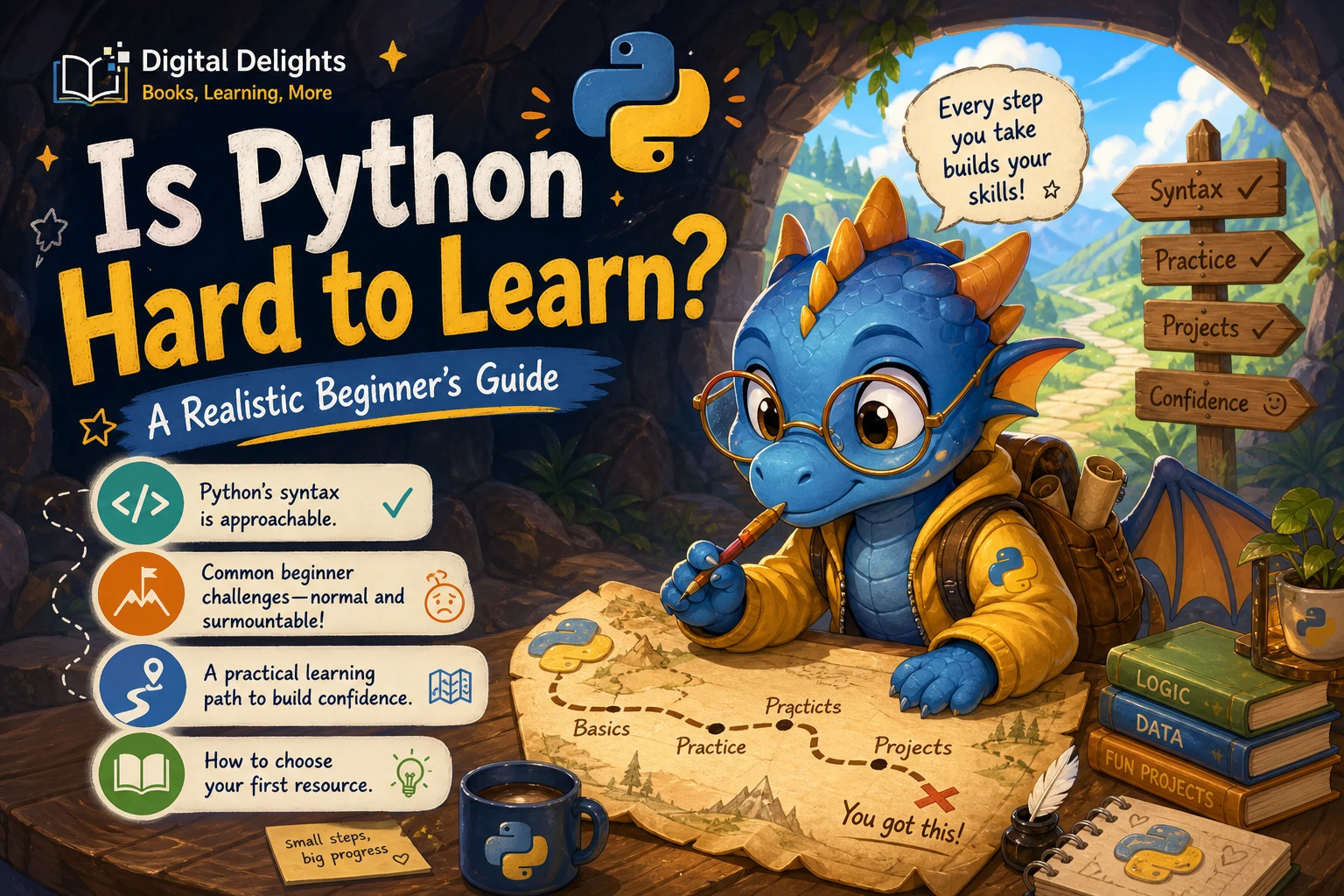
Python can be a sensible first language if you want to practise programming fundamentals and explore a range of project types. Its readable syntax and interactive interpreter offer helpful starting points, but progress still comes from writing, running, debugging, and revising code yourself.
A useful first exercise is to write a small program that asks for a name and prints a greeting. Then extend it to respond differently depending on the input. This introduces input, output, variables, and a condition without requiring a large setup or project plan.
For structured practice, Python Bootcamp: A Rapid Crash Course Featuring Q&A Sessions, Exercises, and Projects is described in the Digital Delights catalog as a practice-led introduction with questions, exercises, and projects. If you are browsing more broadly, the Python book category gathers related learning resources.
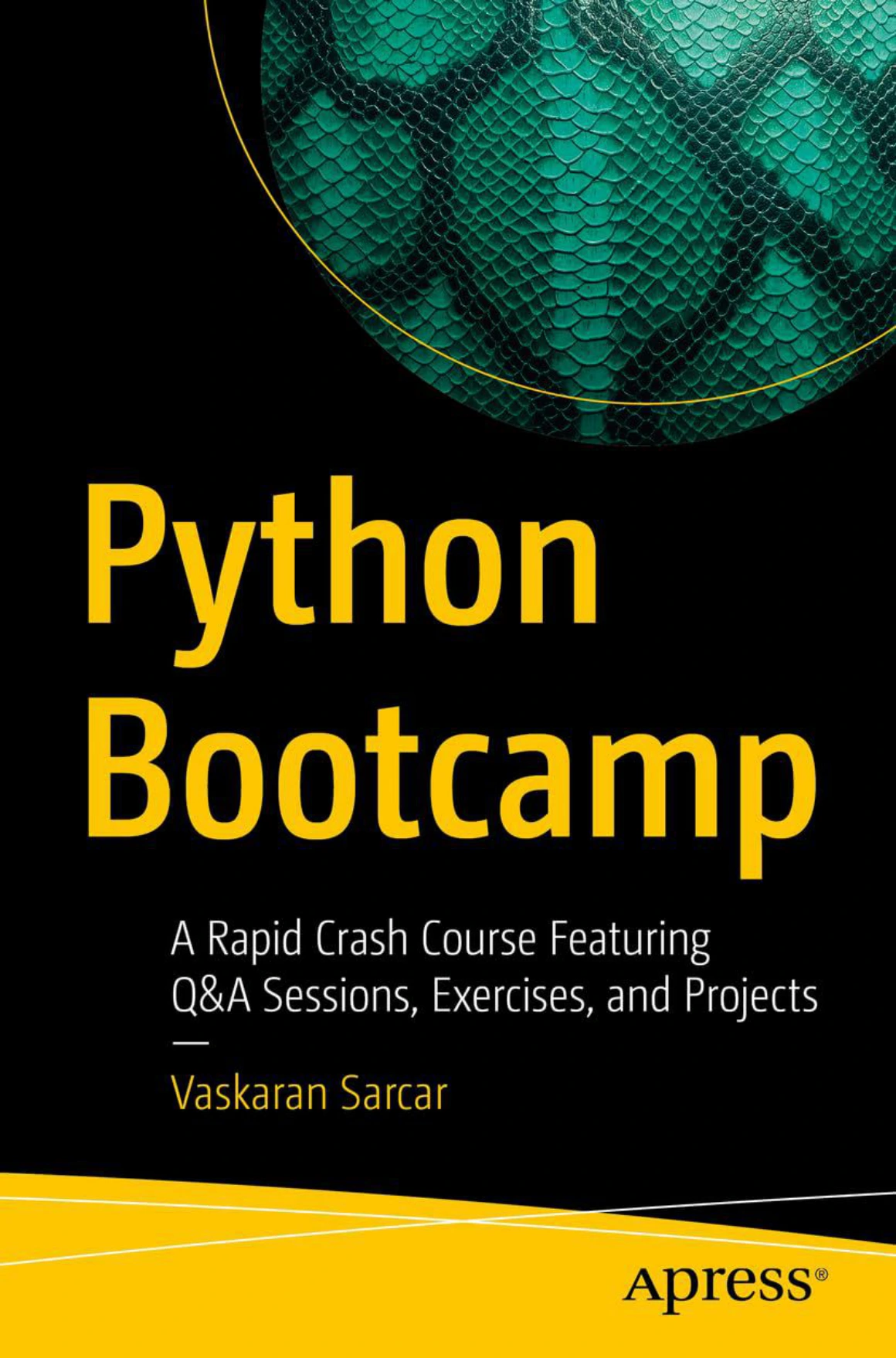
Python Bootcamp: A Rapid Crash Course Featuring Q&A Sessions, Exercises, and Projects
Learners who prefer a fast introduction with Q&A sessions, exercises, and projects, as described in the supplied catalog.
Frequently asked questions
Is Python easy to learn?
Python is designed with readable syntax, which can make it approachable for beginners. Learning to program still takes practice: you need to understand logic, work through errors, and apply concepts in your own code. The official Python overview describes the language as easy to learn, but that should not be read as a guarantee of effortless progress.
Why do people use Python for different kinds of projects?
Python supports a range of application areas, and its standard library and third-party modules provide tools for different tasks. Whether it fits a particular project depends on the requirements, available packages, and surrounding technology.
Is Python slow?
There is no useful answer without a workload and implementation in view. Performance varies, so measure the part of your program that matters rather than assuming Python will be too slow—or fast enough—for every case.
Do I need to know another programming language before learning Python?
No prior language is required by Python.org’s beginner guidance. Start with basic programs and build up gradually. If you later work on projects with external packages, learn how to manage project environments and dependencies.
Conclusion: Python’s appeal comes from useful flexibility
Python combines readable syntax, an interactive way to experiment, and uses across several areas of computing. Its standard library and third-party modules extend its capabilities, while dependency management and project-specific performance remain considerations. Those features help explain why many learners and developers find Python useful, even though the available sources do not establish a single measure or cause of its popularity.
If you are deciding whether to learn it, try a small program first. A brief hands-on test will show you more about whether Python suits your goals than a popularity claim alone.
Sources
- What is Python? Executive Summary | Python.org — official overview of Python’s readability and learning approach.
- About Python | Python.org — official overview of application areas, the standard library, and third-party modules.
- General Python FAQ — Python documentation — information about the interactive interpreter.
- Programming FAQ — Python documentation — performance guidance.
- Python for Beginners | Python.org — beginner guidance and project environments.