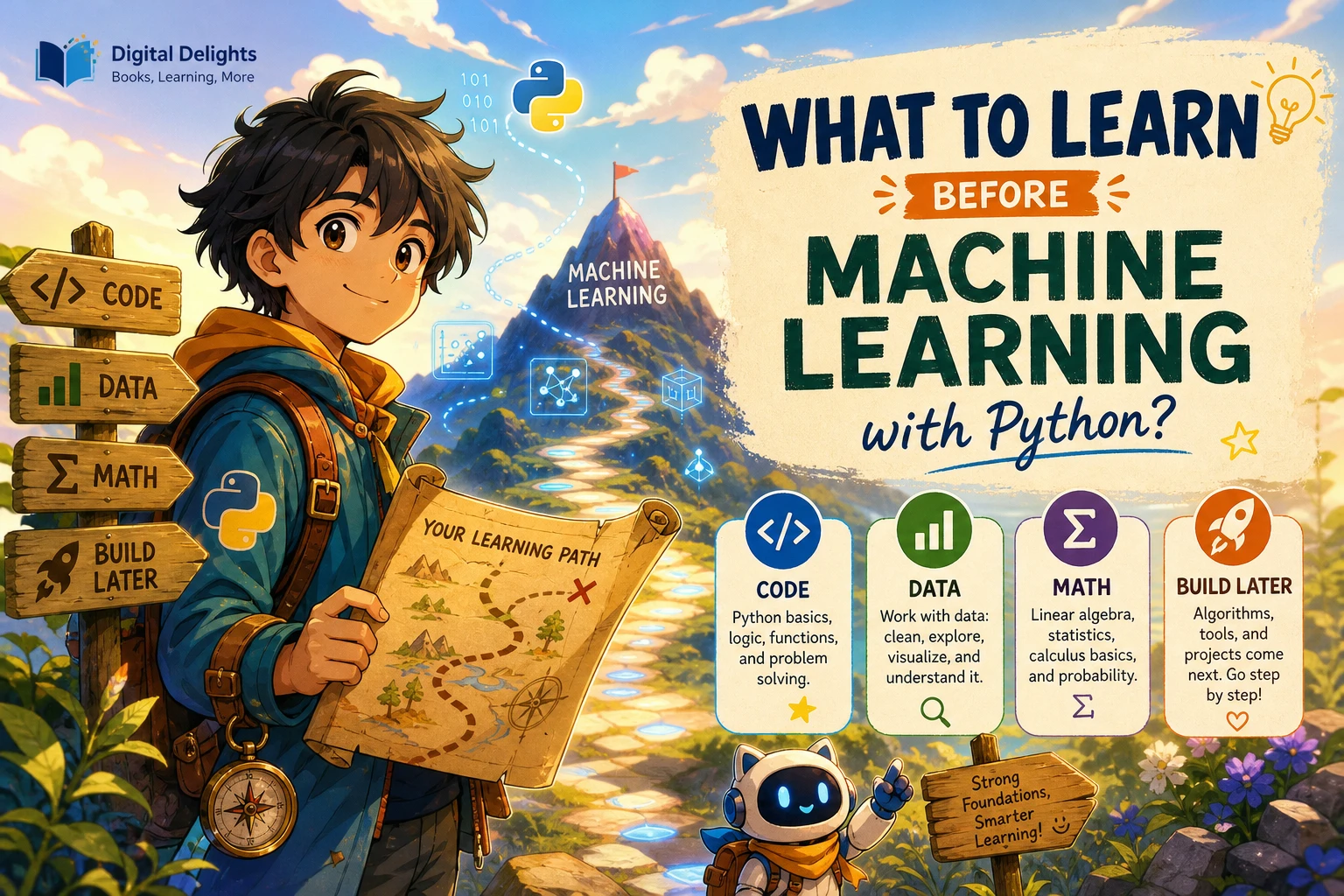
What Should You Learn Before Machine Learning with Python?
You do not need to master every part of Python or finish an advanced mathematics course before beginning machine learning. A useful starting point is being able to write small Python programs, work with basic data structures, inspect and summarize data, and follow introductory statistics. Build further knowledge as a course or project calls for it.
This guide lays out a practical prerequisite checklist, explains which topics can wait, and suggests a learning order. The aim is readiness to learn—not an arbitrary entry exam.
The short prerequisite checklist
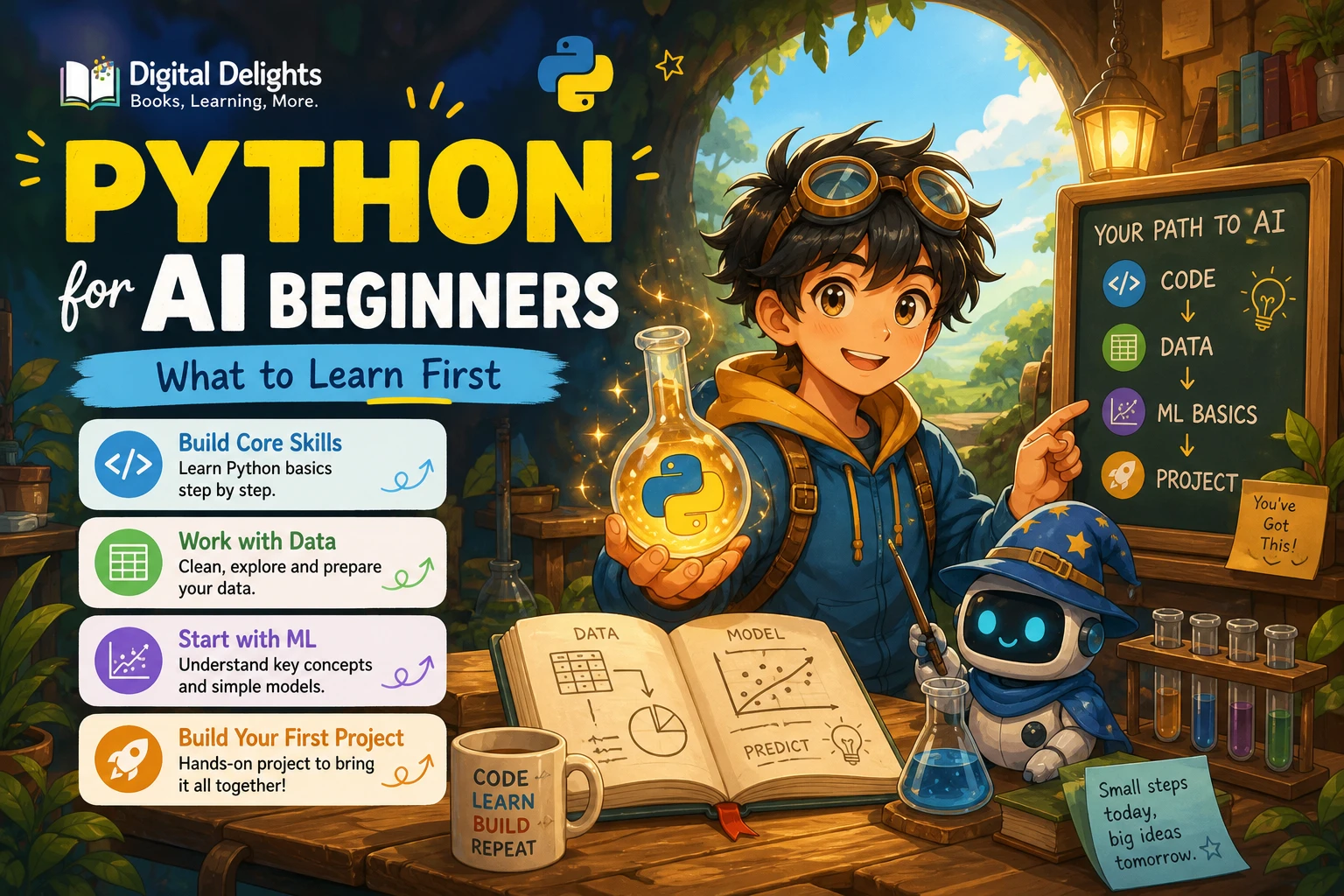
Before following a first machine-learning tutorial, try to become comfortable with these foundations:
- Python fundamentals: variables, common data types, conditionals, loops, functions, lists, and dictionaries.
- Working with code: importing modules, installing packages, running a script, and using error messages to find problems.
- Basic data work: opening a dataset, checking its columns and values, spotting missing or inconsistent entries, and calculating simple summaries.
- Math foundations: arithmetic, averages and variation, basic probability, and an introductory sense of vectors and matrices.
This is a practical readiness list, not a universal standard. The official Python tutorial covers core programming topics including control flow, functions, data structures, modules, files, exceptions, and virtual environments. Meanwhile, published course descriptions set different expectations for mathematics and Python experience. That variation is a reason to check the requirements of the specific course or project you plan to use, rather than treating one prerequisite list as a rule for everyone.
What Python skills matter most?
You do not need to know every feature of Python. You need enough fluency to read a short program, understand how data moves through it, and make small changes without losing track of what the code is doing.
Prioritize these building blocks
- Variables and types: recognize numbers, strings, booleans, and collections, and understand how values are assigned.
- Conditionals and loops: follow decisions and repeated operations in a script.
- Functions: pass inputs to a reusable block of code and understand what it returns.
- Lists and dictionaries: store and retrieve groups of values, including simple records.
- Modules and packages: import code and install dependencies as directed by your learning materials.
- Debugging basics: read a traceback, identify the line that failed, and test a focused fix.
A good practice task is to read a small table of values, calculate a count and an average, and print the results with a clear label. If you can break that task into steps, write a function for part of it, and investigate a simple error, you are practising several useful skills at once.
Advanced object-oriented design and less-common language features can wait for many introductory projects. Learn them when a course or the structure of your own program makes them useful; do not make them a gate you must pass before exploring basic models.
For a structured introduction to Python 3 concepts such as data types, functions, modules, files, testing, and debugging, The Python Apprentice is one catalog option. If you already understand the basics but want more deliberate practice, Python Programming Exercises, Gently Explained focuses on short programming problems. Choose one according to what you need to practise; neither is a compulsory prerequisite.
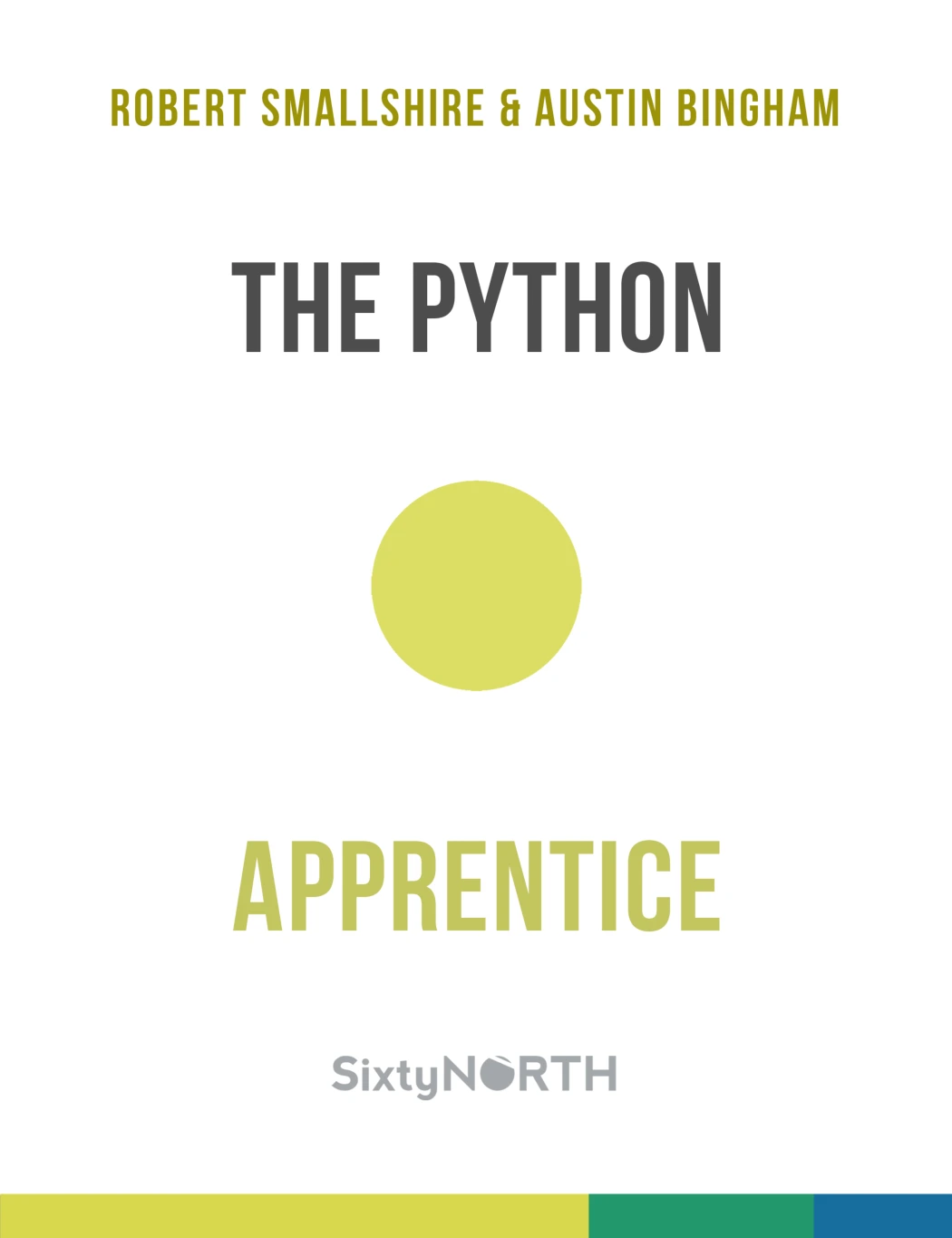
Learners who want a structured introduction to Python 3, including functions, files, testing, and debugging.
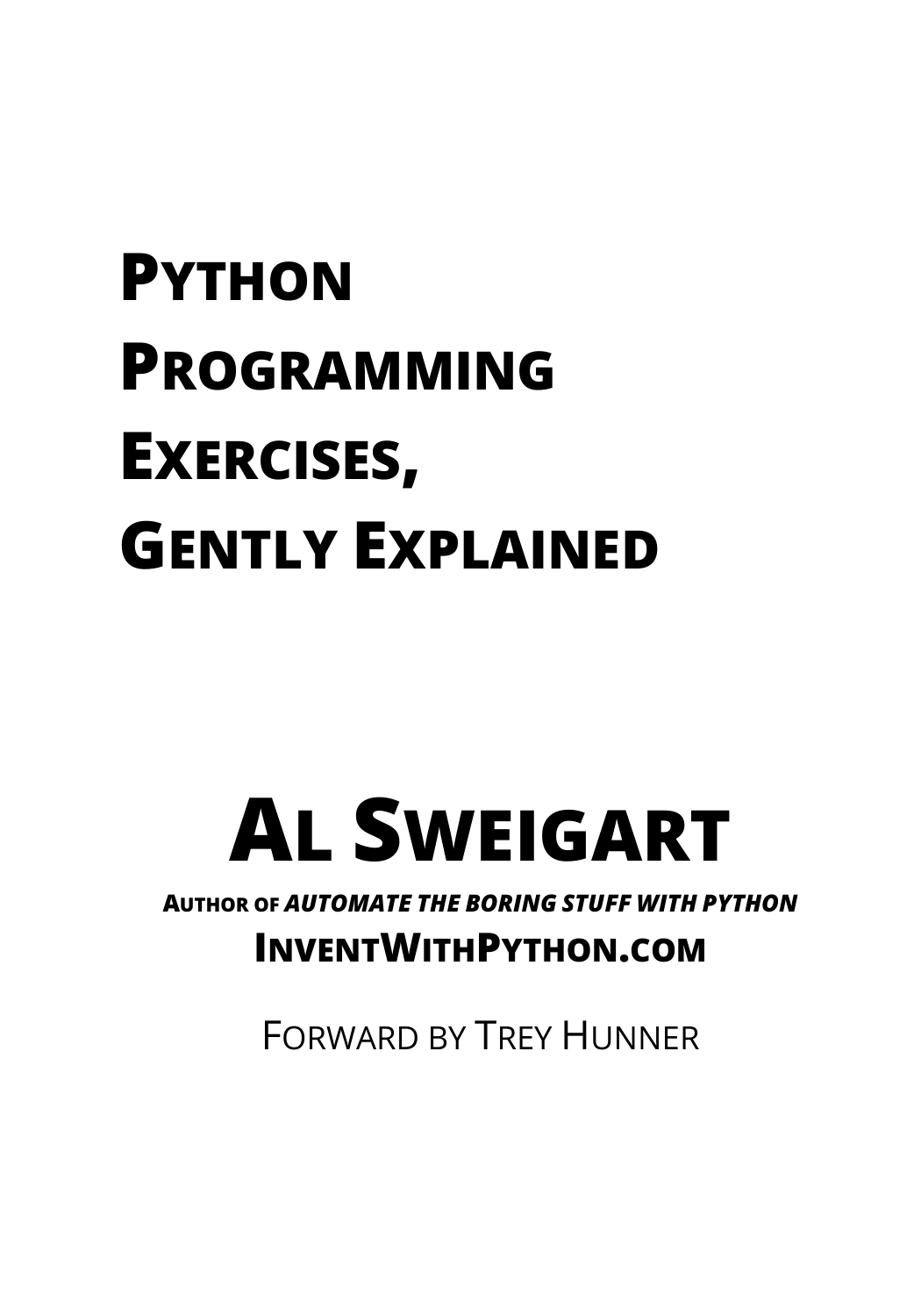
Python Programming Exercises, Gently Explained
By Al Sweigart
Learners who know some basics and want short programming problems for deliberate practice.
How much math do you need?
Learn enough math to make sense of the examples you are working through, then deepen it as your goals become clearer. Some introductory material presents machine learning with limited advanced mathematics, while other courses expect prior statistics or linear algebra. For example, an O’Reilly scikit-learn course description lists intermediate Python alongside basic statistics and linear algebra. A Pearson catalog description for a different machine-learning book says it does not require linear algebra or advanced math. These are different learning materials, not a single field-wide threshold.
Math that helps you get started
- Arithmetic and algebra: follow calculations and rearrange simple expressions.
- Descriptive statistics: interpret counts, averages, spread, and simple summaries of data.
- Probability: reason about uncertainty and how likely an event or outcome may be.
- Vectors and matrices: recognize how collections of numbers can represent observations, features, or model parameters.
Math to deepen when your goals call for it
More linear algebra, calculus, and probability can help when you want to understand model mechanics in greater depth or study topics that use those tools heavily. You do not have to treat every one of these subjects as a complete prerequisite for trying an introductory machine-learning workflow. A useful companion for learners who want to develop mathematics alongside Python is The Statistics and Calculus with Python Workshop, whose catalog description covers statistics, calculus, Python tools, and applied exercises.
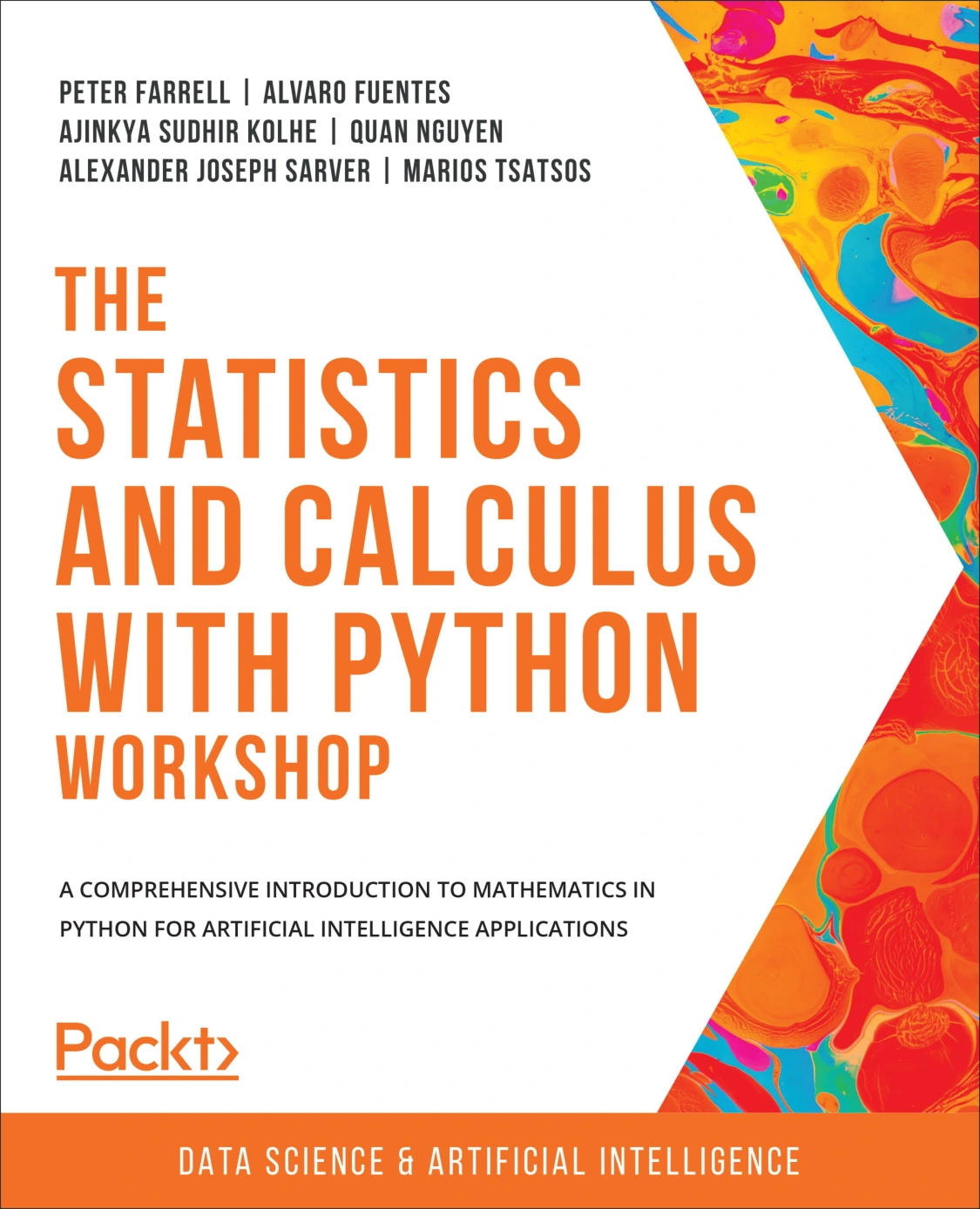
The Statistics and Calculus with Python Workshop
Learners who want to work on statistics and calculus through Python examples and exercises.
Learn data work before—or alongside—models
Machine-learning examples often begin with data in a ready-to-use form. Real practice is more instructive when you can also examine what the data contains and make sensible decisions about it. Before fitting a model, practise asking simple questions:
- What does each row represent, and what does each column mean?
- Are values missing, duplicated, or recorded in inconsistent formats?
- What are the typical values and ranges in the columns you plan to use?
- Can a small table or chart help reveal an unusual value or pattern?
- Which column are you trying to predict, and which information will be available to make that prediction?
These are learning prompts, not a claim that every dataset needs the same treatment. The goal is to avoid treating model code as magic: understand the information going in, and inspect what comes out. You can learn data handling and visualization alongside basic modeling rather than waiting until you know every technique.
A practical learning sequence
The following sequence is an editorial roadmap, not a proven one-size-fits-all order. Adjust it to the course, dataset, and type of machine learning you want to explore.
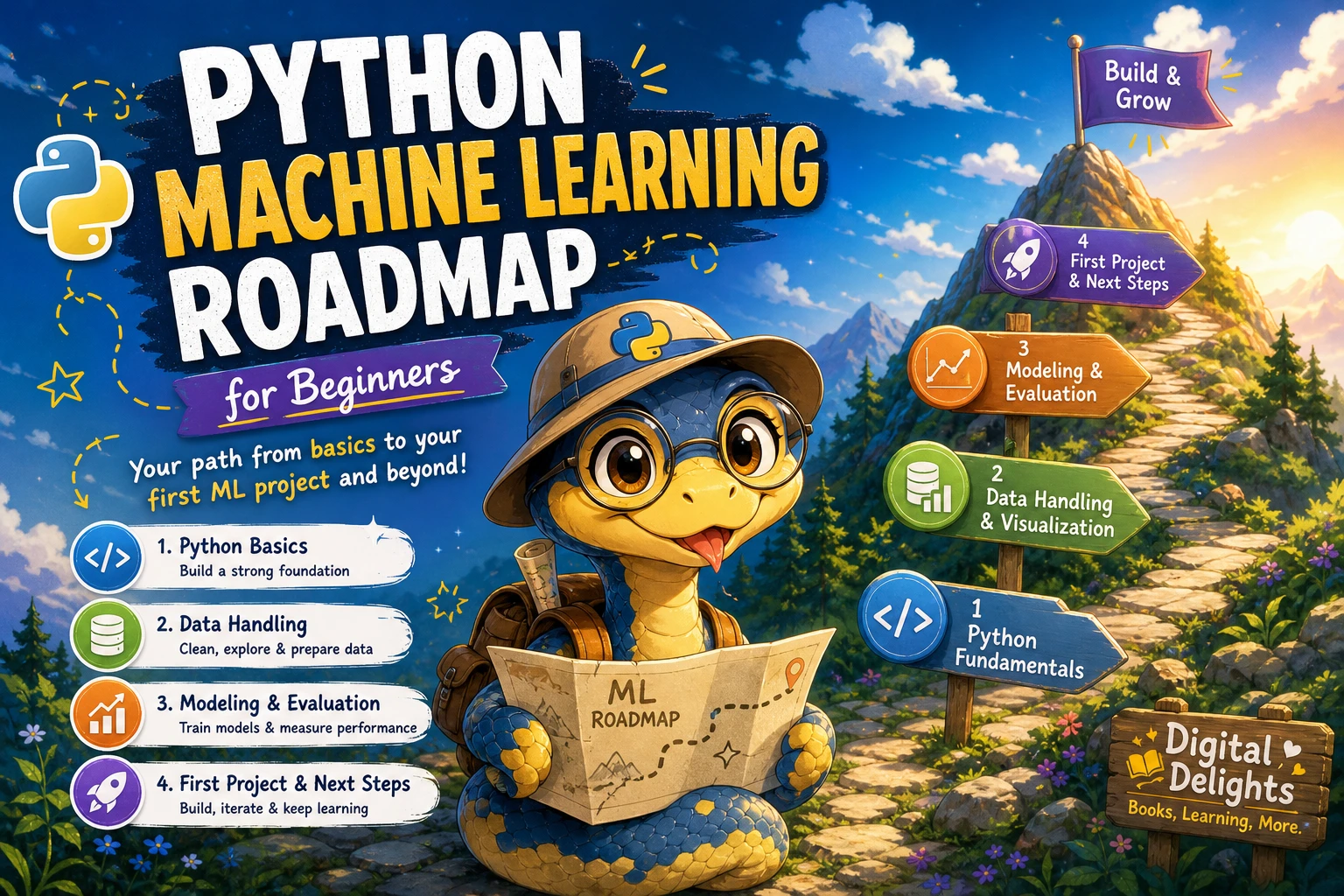
- Learn core Python. Work through variables, collections, conditionals, loops, functions, imports, and basic debugging.
- Write small programs. Solve short tasks without copying the solution first. Explain what your code expects and what it returns.
- Handle a small dataset. Load or inspect tabular data, check its structure, calculate summaries, and try a simple visualization.
- Build math as needed. Review descriptive statistics and probability, then add vectors, matrices, or calculus when your chosen material uses them.
- Try an introductory supervised-learning example. Identify the target and inputs, follow how data is divided or prepared, and learn what the evaluation result means.
- Review and change the example. Alter a reasonable input or setting, rerun the workflow, and compare what changed rather than treating a successful run as proof of understanding.
For a first structured overview of Python-based AI and machine-learning topics, Artificial Intelligence and Machine Learning Fundamentals covers topics including regression, classification, clustering, and neural networks. Its catalog description says it assumes some programming comfort, so it is more appropriate after you have started building basic coding fluency than as a substitute for learning Python itself.
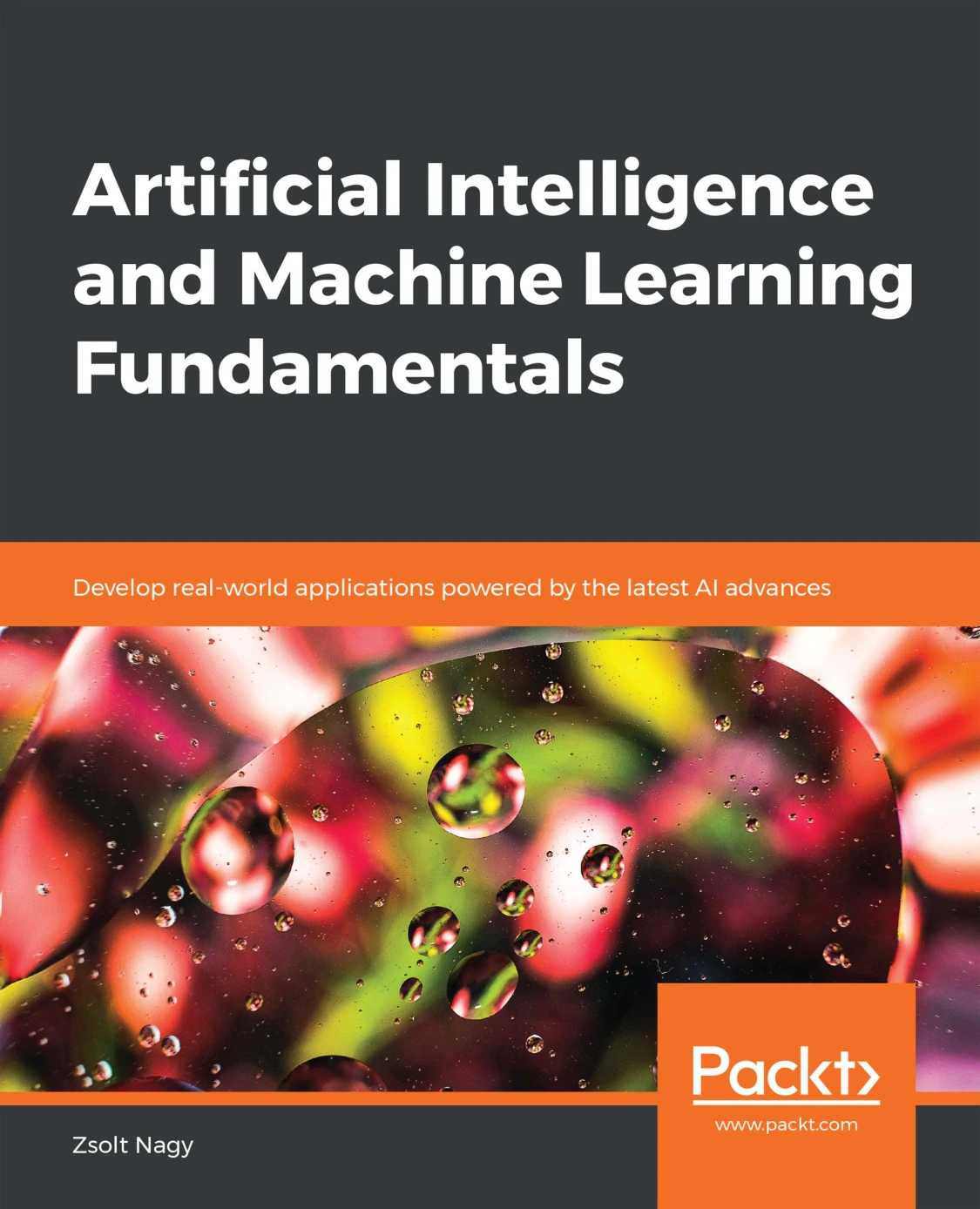
Artificial Intelligence and Machine Learning Fundamentals
By Zsolt Nagy
Readers with some programming comfort seeking an introduction to regression, classification, clustering, and neural networks.
Common mistakes to avoid
- Waiting until you know all the math. Start with the foundations needed for your first material and add depth when you meet a concept that calls for it.
- Copying model code without tracing it. Check what the inputs represent, what the code changes, and what the output means.
- Skipping data inspection. Look at the dataset before relying on a model result; unexpected or poorly understood inputs can make a workflow hard to interpret.
- Confusing a working run with understanding. Try explaining the steps and changing a small part of the example to see whether you can reason about the result.
- Ignoring setup instructions. Use the Python version and package setup specified by your course or project, and check compatibility before changing versions. The official Python documentation describes the language, but that alone does not establish compatibility for every third-party library or tutorial.
A beginner’s readiness check
You are ready to begin an introductory machine-learning resource if you can answer “yes” to most of these questions—or are willing to learn the missing pieces as they appear:
- Can I read a short Python script using variables, conditionals, loops, and functions?
- Can I work with a list or dictionary and import a module?
- Can I run a script, install a package using instructions, and start investigating an error message?
- Can I inspect a small table and calculate or interpret a basic summary such as a count or average?
- Do I have a basic understanding of averages, variation, and probability—or a plan to review them?
- Have I checked what programming, math, and setup knowledge my chosen learning material expects?
If some answers are “not yet,” use them as a study plan rather than a reason to give up. Work on one gap at a time, then return to the machine-learning example.
Frequently asked questions
Can I learn Python and machine learning at the same time?
Yes, if the learning material is paced for your current level and you are comfortable pausing to practise Python when needed. If you are new to programming, first learn enough basics to understand short scripts; then study introductory machine learning while continuing to strengthen your Python.
Do I need calculus before starting machine learning?
Not necessarily for every introductory resource. Some materials ask for more mathematics than others, and the requirements depend on the learning goal. Begin with the math your chosen resource uses, then study calculus more deeply if your next topic requires it.
Which Python topics can wait?
Advanced object-oriented design and less frequently used language features can usually wait while you learn the fundamentals. Prioritize reading and writing small programs, functions, collections, imports, and basic debugging, then expand your Python knowledge as a project demands.
Should I learn data analysis first?
You do not have to complete a separate, comprehensive data-analysis course before trying machine learning. It is useful to learn basic data inspection and summaries before or alongside your first model so you can understand the inputs and interpret the results.
Sources and further reading
- The Python Tutorial — Python documentation
- O’Reilly: Advanced Machine Learning with scikit-learn course description
- Pearson computer science catalog
- Python documentation
These sources illustrate that learning materials can set different prerequisites. They do not establish one universally optimal study order or a single minimum level of mathematics for every machine-learning goal. For your next step, choose a beginner resource that matches your current Python skills, then practise by writing and adapting small programs.