
Python Machine Learning Roadmap for Beginners
Starting machine learning with Python can feel confusing when tutorials jump between programming, statistics, data tools, and neural networks. A clearer path is to learn those parts in sequence: get comfortable with Python, practise handling data, study basic machine-learning ideas, and then build and evaluate a small project.
Being new to Python is not quite the same as being new to programming. If you have never coded before, spend more time on the language fundamentals first. If you already know another language, you may be able to move through that stage more quickly. Either way, you do not need to begin with deep learning or advanced mathematics. This roadmap shows what to learn, what to practise, and how to decide what comes next.
The Python machine learning roadmap at a glance
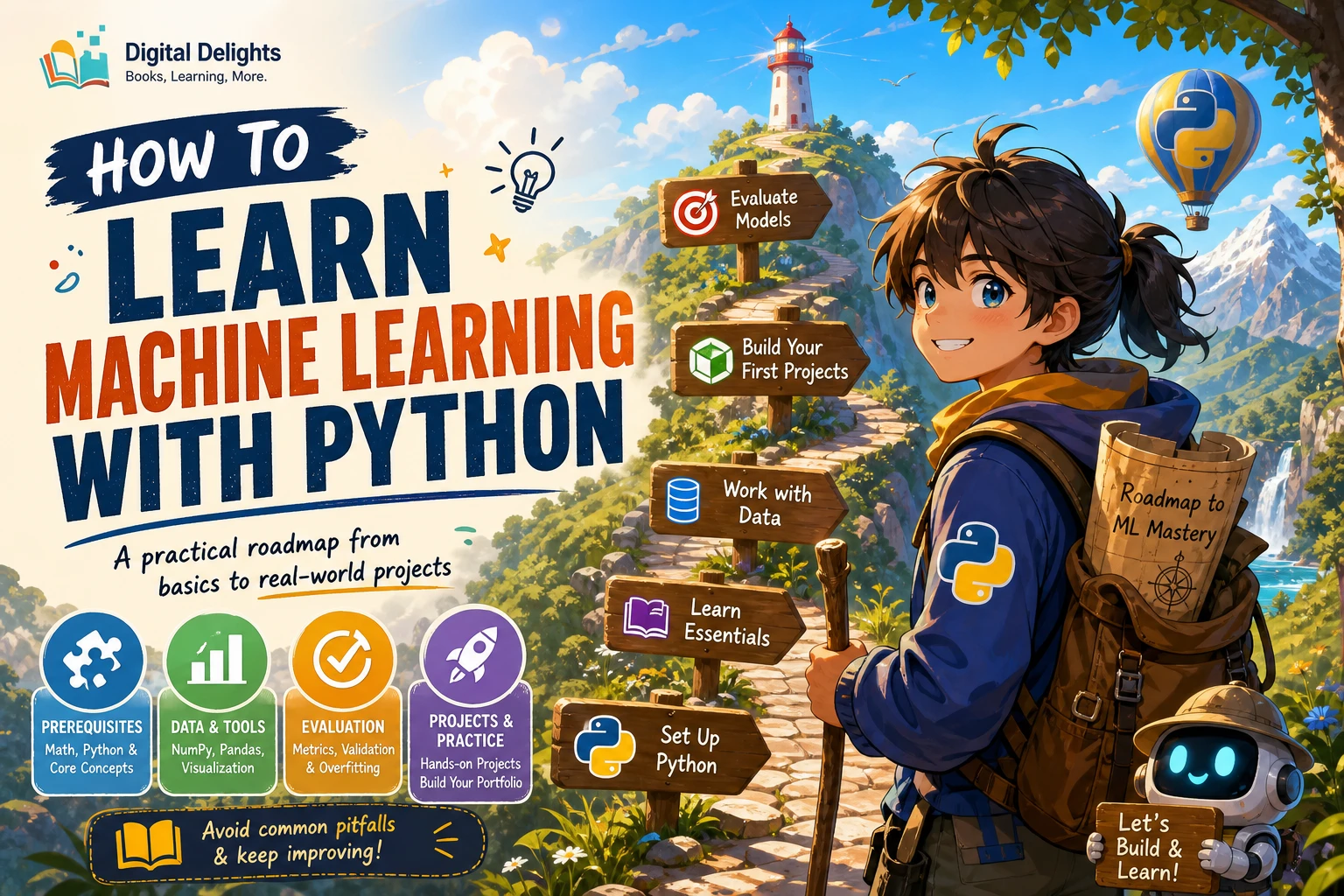
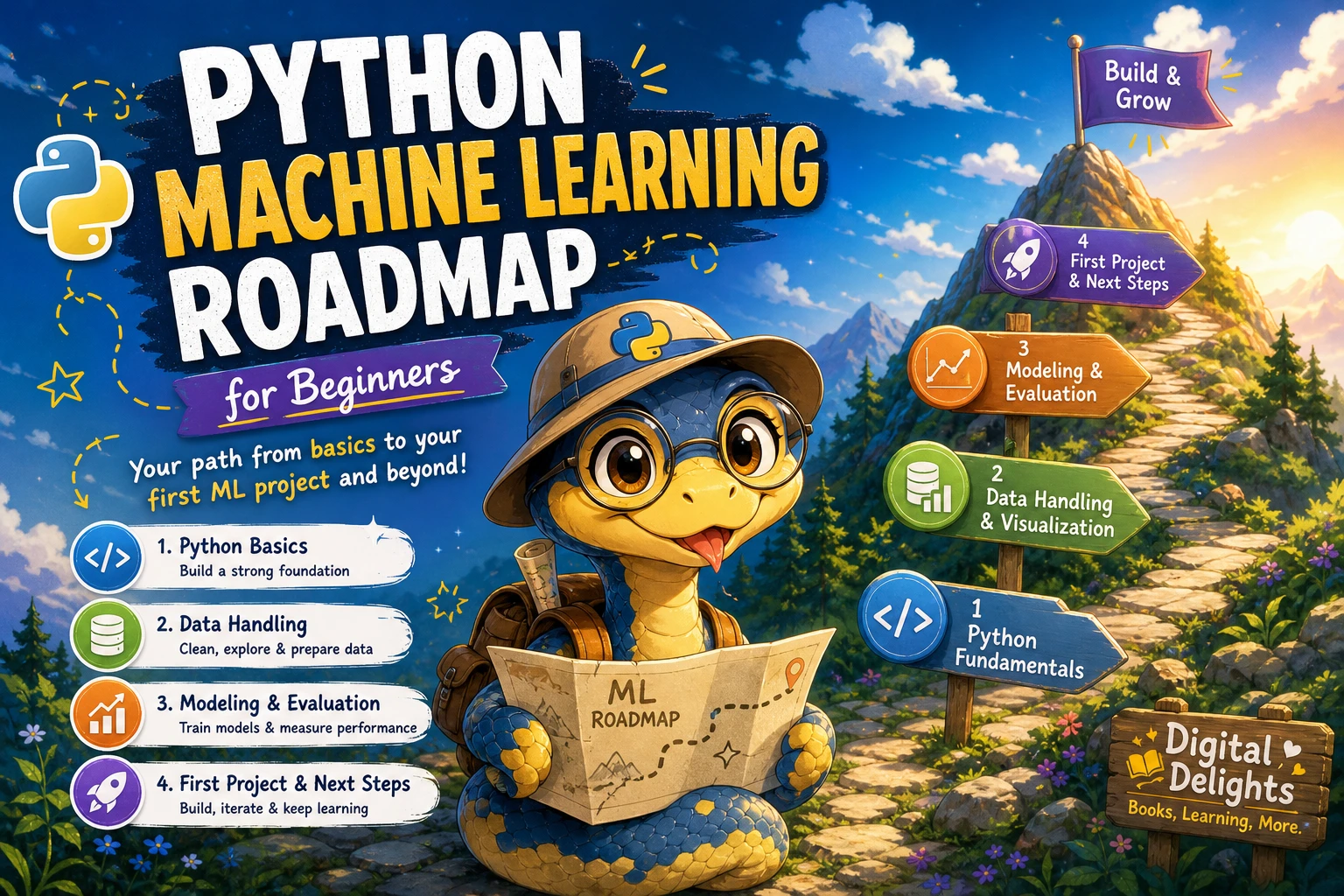
Use this sequence as a flexible guide, not a fixed curriculum. Move forward when you can apply each stage in a small program or exercise.
- Python fundamentals: data types, control flow, functions, modules, and debugging.
- Project setup: run Python in a separate environment for each project.
- Data handling: load, inspect, clean, summarize, and visualize data.
- Core machine learning: understand features, targets, supervised learning, and basic model types.
- Model evaluation: use a suitable test approach and metric, and look for overfitting and data leakage.
- End-to-end practice: complete one small project and explain its limits.
- Choose a next direction: deepen your statistics, explore unsupervised learning, or move toward deep learning.
Step 1: Build a working Python foundation
Machine-learning examples are easier to understand when ordinary Python code is familiar. Before focusing on algorithms, practise reading and writing short programs that use:
- Variables, numbers, strings, booleans, lists, and dictionaries
- Conditional statements and loops
- Functions, arguments, and return values
- Imports, modules, and basic file handling
- Errors, exceptions, and simple debugging
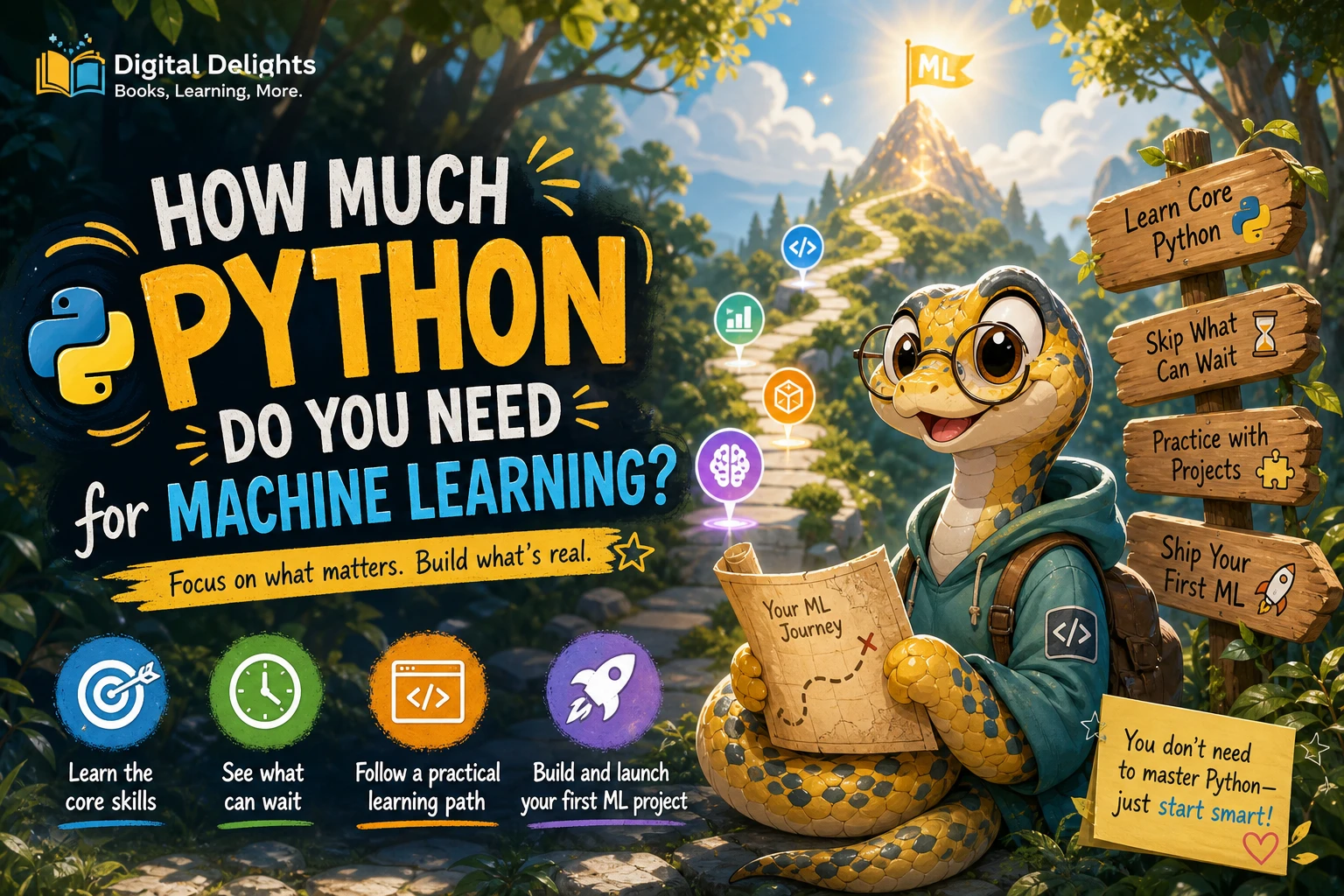
You do not need to master every feature of Python before trying machine learning. You should, however, be able to follow a short script, make a small change, run it, and understand the result. If you are entirely new to programming, practise these skills with small tasks—such as calculating totals, filtering a list, or reading values from a file—before adding data libraries and model code.
The official Python tutorial covers language fundamentals, but it says it is intended for people new to Python who already have a basic understanding of programming. If that is not you, start with beginner-level instruction and use the official tutorial as a reference as your familiarity grows.
Step 2: Keep each project’s setup separate
Machine-learning projects often rely on third-party Python packages. A project environment helps keep its installed packages separate from those used by other projects, reducing the chance that one project’s changes disrupt another.
Python includes venv for creating virtual environments. The official venv documentation explains how to create and use them. You can learn the basic idea early; you do not need to understand every environment-management option before beginning.
When you install a data or machine-learning library, check that library’s current installation instructions and Python compatibility information. Compatibility can vary between packages and releases, so avoid assuming that a particular Python version works with every tool.
Step 3: Learn to work with data
A model can only work with the data you provide, so learning to inspect and prepare data is part of learning machine learning—not a chore to skip on the way to algorithms. Practise answering basic questions about a dataset before trying to model it:
- What does each row represent?
- Which columns contain useful information, and which are identifiers or notes?
- Are there missing values, inconsistent formats, or unexpected entries?
- What do simple summaries and plots reveal?
- Does the dataset contain information that would not be available when making a real prediction?
For an early exercise, take a small, clearly documented table and describe its rows and columns. Check a few example records, summarize relevant fields, and make a simple chart. This helps you build the habit of understanding data before choosing a model.
A resource such as Python for Data Science: Step-by-Step Crash Course may suit learners looking for an introduction that connects Python setup, data-science concepts, scikit-learn, and practical exercises. Treat any book as a learning aid, and check the current documentation for the tools you actually install.
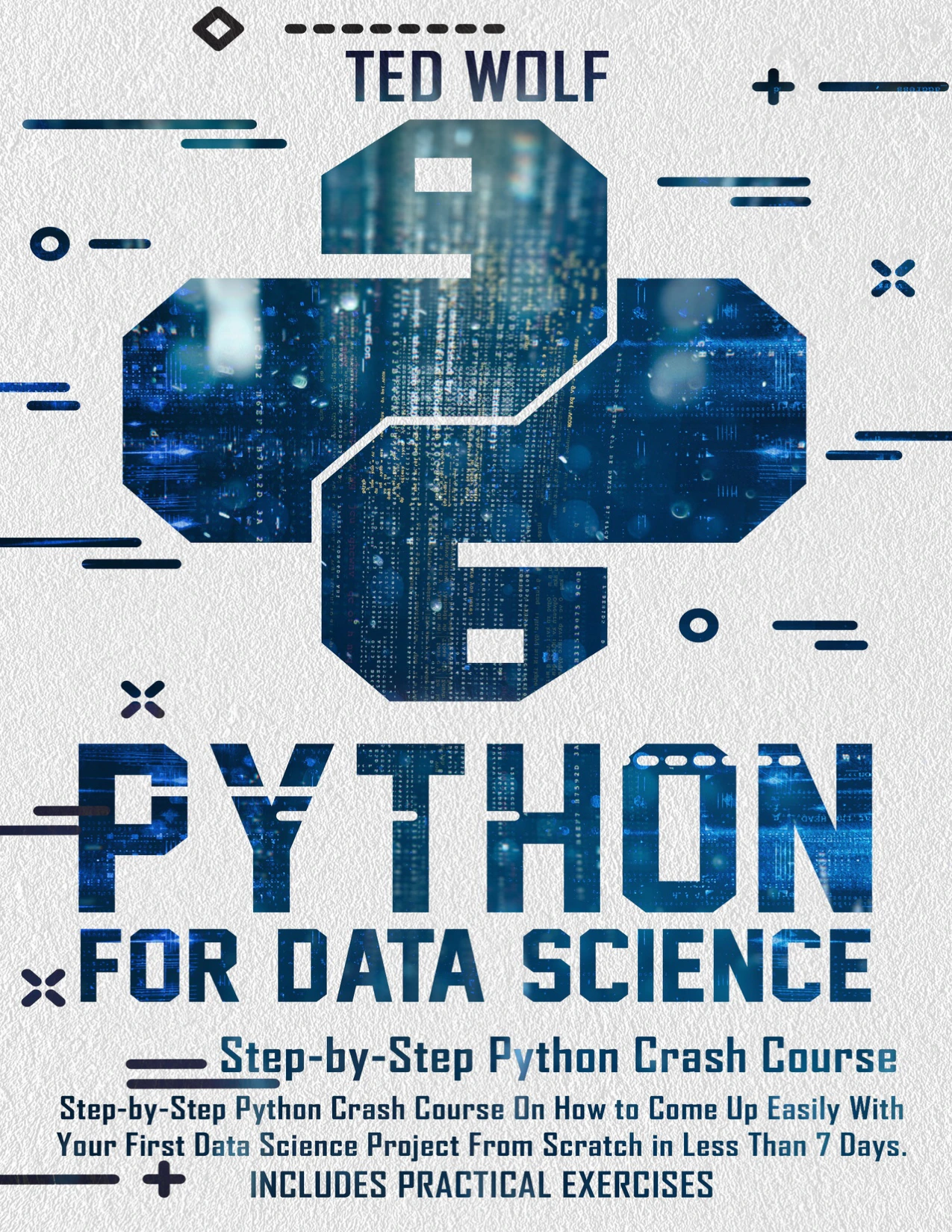
By Ted Wolf
Learners looking for a resource covering Python setup, scikit-learn, data structures, and practical exercises.
Step 4: Learn the core machine-learning ideas
Start with the parts of a machine-learning problem rather than memorizing a long list of algorithms. In a typical supervised-learning task, you have examples with known answers. The model uses selected input information to estimate an answer for an example it has not seen.
- Features are the input fields used by a model.
- Target is the value or category the model is intended to predict.
- Regression predicts a numeric value, such as a measured amount.
- Classification predicts a category, such as one label from a set of labels.
- Unsupervised learning looks for structure in data without a supplied target label.
Then learn the basic workflow: define a question, select relevant data, prepare it, choose a suitable approach, fit a model on training data, and evaluate it on data held back for that purpose. The goal at this stage is to understand what each step is for, not to try every algorithm.
Machine Learning with Python: A Practical Beginners’ Guide covers data preparation, model design, validation, and introductory algorithms including regression, support vector machines, nearest neighbors, and tree-based methods. Its catalog description also notes an appendix introducing Python; readers who need more programming practice may want to build that foundation alongside it.
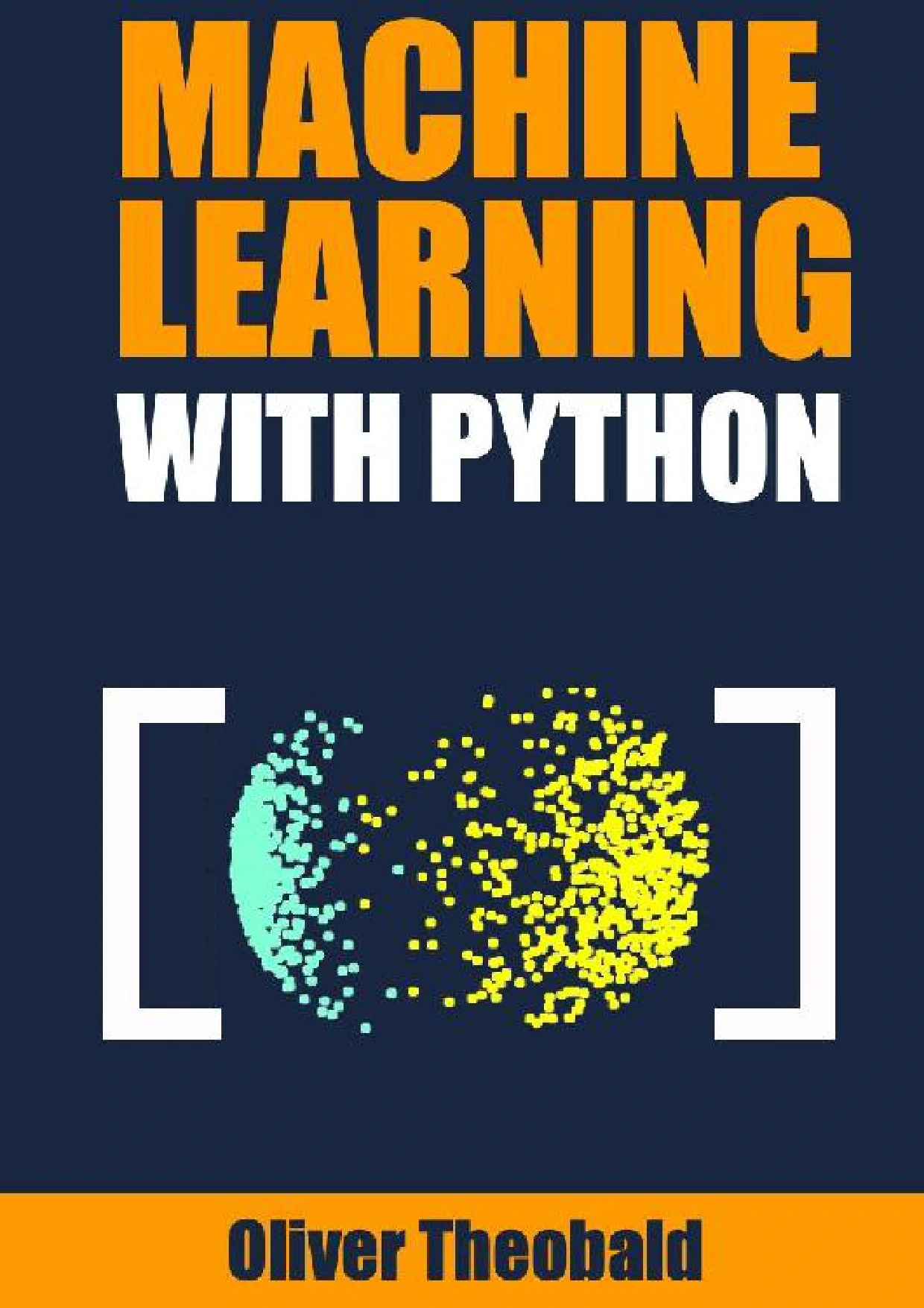
Machine Learning with Python: A Practical Beginners’ Guide
Readers ready to study data preparation, validation, model design, and foundational methods.
Step 5: Evaluate a model rather than trusting its score
A model’s result only means something in relation to the question, the data, and the evaluation method. Learn these ideas before treating a score as evidence that a model is useful:
- Train/test separation: evaluate on data that was not used to fit the model, so the test offers a more meaningful check of performance on unseen examples.
- Appropriate metrics: choose a measure that fits the task and the cost of different kinds of errors. Accuracy alone may not answer the right question in every classification problem.
- Overfitting: a model may fit its training examples well but perform less reliably on new ones.
- Data leakage: information unavailable at prediction time can accidentally enter training or evaluation and make results misleading.
- Baseline comparison: compare your model with a simple, sensible starting point. A more complex approach is not automatically more useful.
Keep a record of how you split the data, what metric you used, and what the result does—and does not—show. That explanation is part of the project, not an optional extra.
Step 6: Complete one small end-to-end project
Choose a project with a clear question and data you can understand. Keep the first scope small enough that you can explain the whole process without hiding important steps behind code.
- State the question. Say what you want to estimate or group, and why.
- Inspect the data. Explain what each row represents and note missing or unusual values.
- Prepare the inputs. Record the decisions you make about features, targets, and data cleaning.
- Build a simple baseline. Establish a basic comparison before trying a more involved model.
- Evaluate fairly. Keep evaluation data separate from model fitting and use a relevant metric.
- Discuss limitations. Identify what the data leaves out, where the method may fail, and what you would investigate next.
Possible project formats include predicting a numeric quantity from a small table, classifying examples with known labels, or exploring groups in an unlabeled dataset. These are practice directions, not guarantees that a particular dataset or model will produce meaningful results.
What should you learn after the basics?
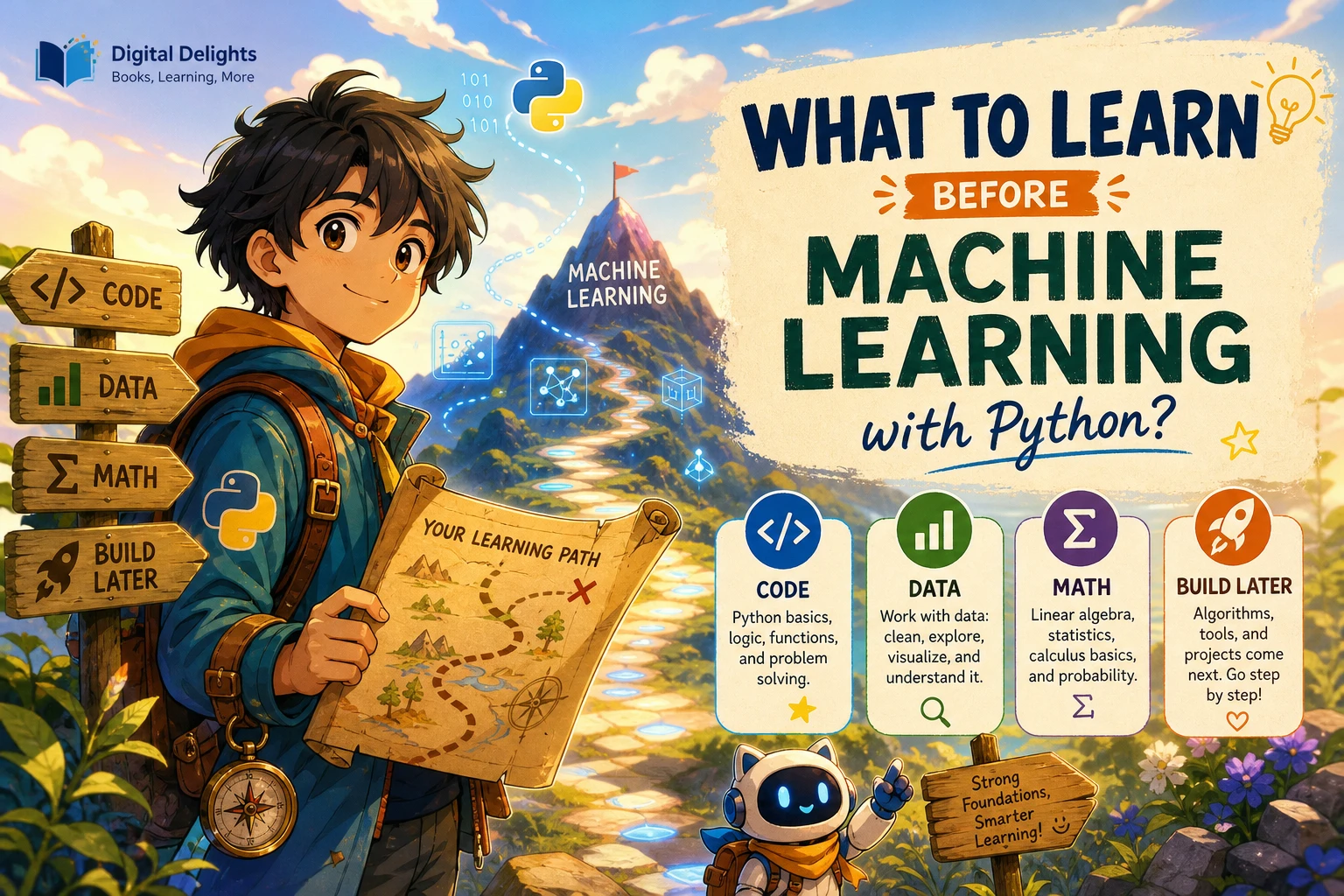
Let your project and interests guide the next stage. If you want to improve classical machine-learning work, study evaluation, feature preparation, and the assumptions behind the methods you use. If you find mathematical details difficult, revisit the relevant ideas as they arise rather than treating advanced mathematics as a universal gatekeeper.
Deep learning is a separate step, not the first requirement for every machine-learning learner. It can call for a stronger foundation in topics such as calculus and linear algebra; the requirements depend on what you intend to study. The O’Reilly sample for Fundamentals of Deep Learning lists basic calculus, matrices, and Python among its prerequisites and describes linear algebra as helpful. That is a guide to that deep-learning material, not a universal prerequisite list for all introductory machine learning.
If you decide to explore neural networks, choose a framework after checking its current installation guidance and begin with a small example. A catalog resource such as Python: 2 Books in 1: Learn Python Programming for Beginners and Machine Learning combines introductory Python material with an introduction to machine-learning concepts. It may be useful for readers who prefer those subjects in one resource, while its catalog description does not establish current software compatibility.
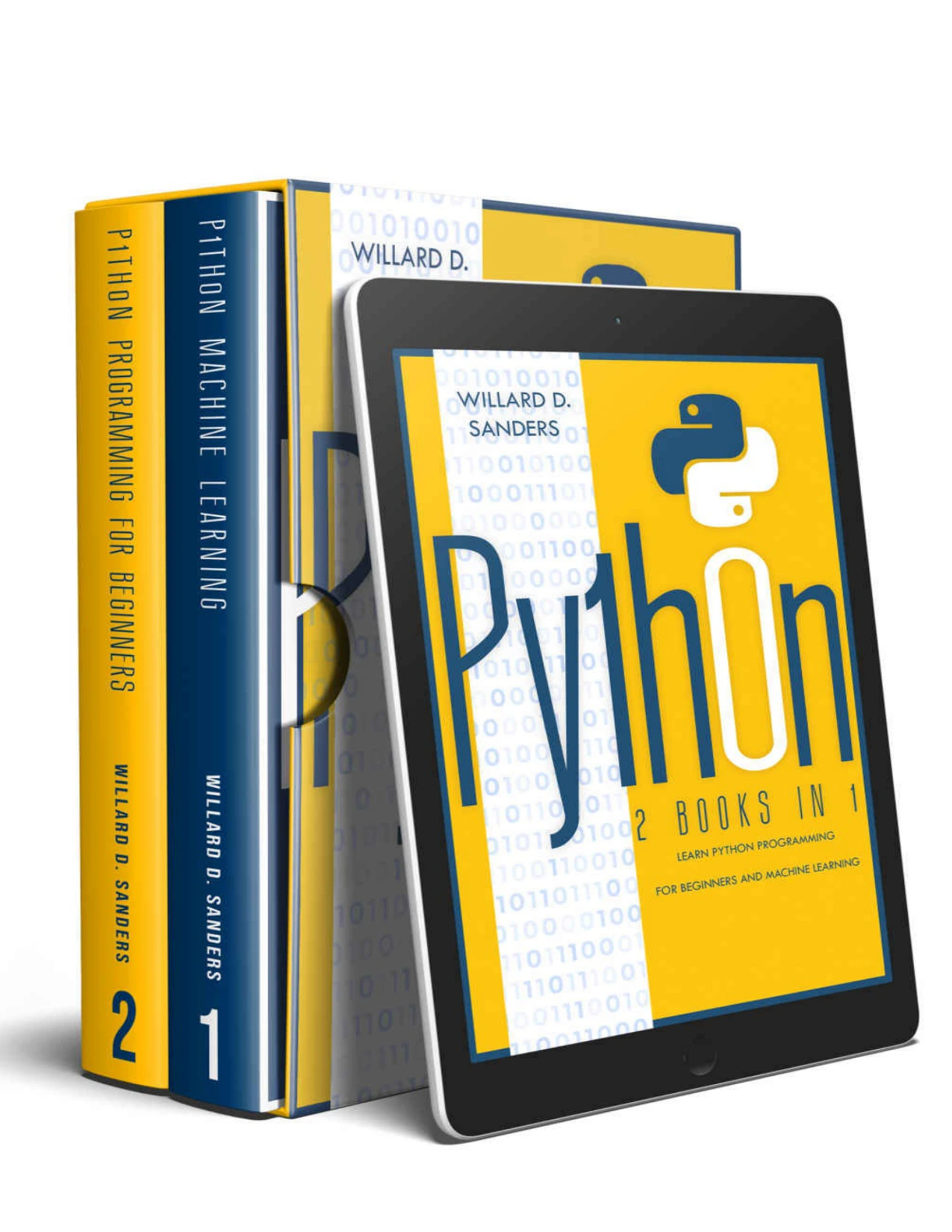
Python: 2 Books in 1: Learn Python Programming for Beginners and Machine Learning
Readers who prefer a bundled beginner-focused guide to both programming and machine-learning concepts.
Choosing a learning resource for your stage
These catalog resources cover different parts of the learning path. Choose by the subject you need next, rather than assuming one title must cover every skill in the roadmap.
| Resource | Useful for | What the catalog says it covers |
|---|---|---|
| Python for Beginners: Learn Coding, Programming, Data Analysis and Algorithmic Thinking | Readers building their first Python foundation | Setup, data types, loops, conditions, functions, and an introduction to data analysis and machine learning. |
| Python for Data Science: Step-by-Step Crash Course | Learners moving from Python toward data work | Python setup, data structures, scikit-learn, machine-learning concepts, and practical exercises. |
| Machine Learning with Python: A Practical Beginners’ Guide | Readers ready to study introductory model workflows | Data preparation, validation, model design, and foundational algorithms. |
| Python: 2 Books in 1: Learn Python Programming for Beginners and Machine Learning | Readers who want Python and introductory ML topics together | Two beginner-focused guides, one on Python and one on machine learning. |
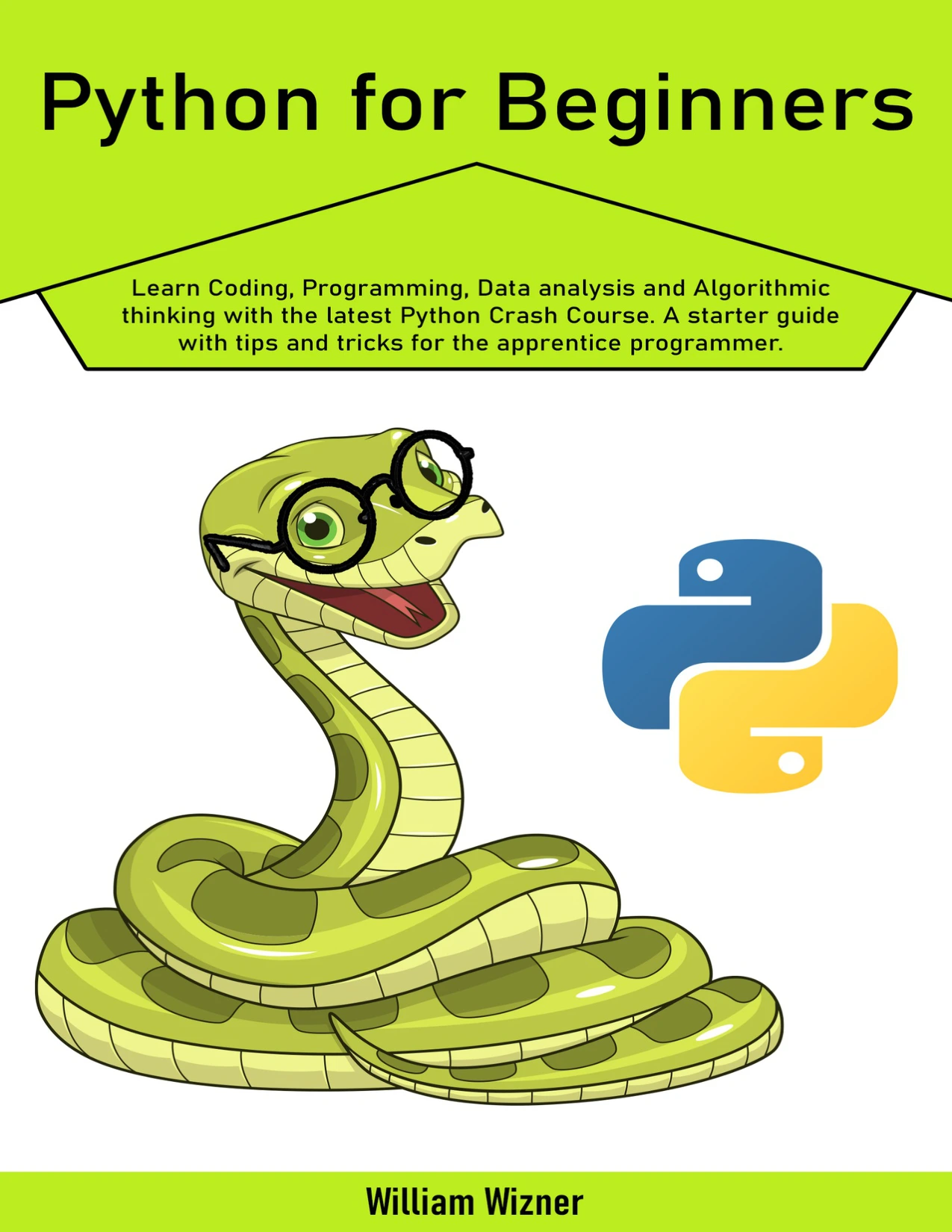
Learners who want coverage of setup, core Python concepts, and an introduction to data analysis.
These descriptions can help you match a resource to a topic, but they do not establish instructional quality or guarantee that code examples match today’s software releases. Verify technical details against current official documentation.
Common beginner mistakes to avoid
- Rushing past programming basics: unfamiliar syntax makes model examples harder to follow. Strengthen Python as needed instead of treating it as a one-time hurdle.
- Installing packages without checking compatibility: consult current package instructions and use a project environment.
- Studying algorithms without data work: practise inspecting and preparing data alongside learning model concepts.
- Choosing a metric by habit: connect evaluation to the actual prediction task and consequences of errors.
- Reporting a score without context: explain the baseline, evaluation setup, and limitations.
- Starting with an oversized project: a focused question and manageable dataset make it easier to learn from the full workflow.
Frequently asked questions
Can I learn machine learning with Python if I have never programmed?
Yes, but give yourself time to learn programming fundamentals first. Begin with variables, conditions, loops, functions, and debugging, then add data handling and machine-learning concepts. Python’s official tutorial assumes some prior programming knowledge, so a complete beginner may find a beginner-first learning resource a better entry point.
Do I need advanced math before starting machine learning?
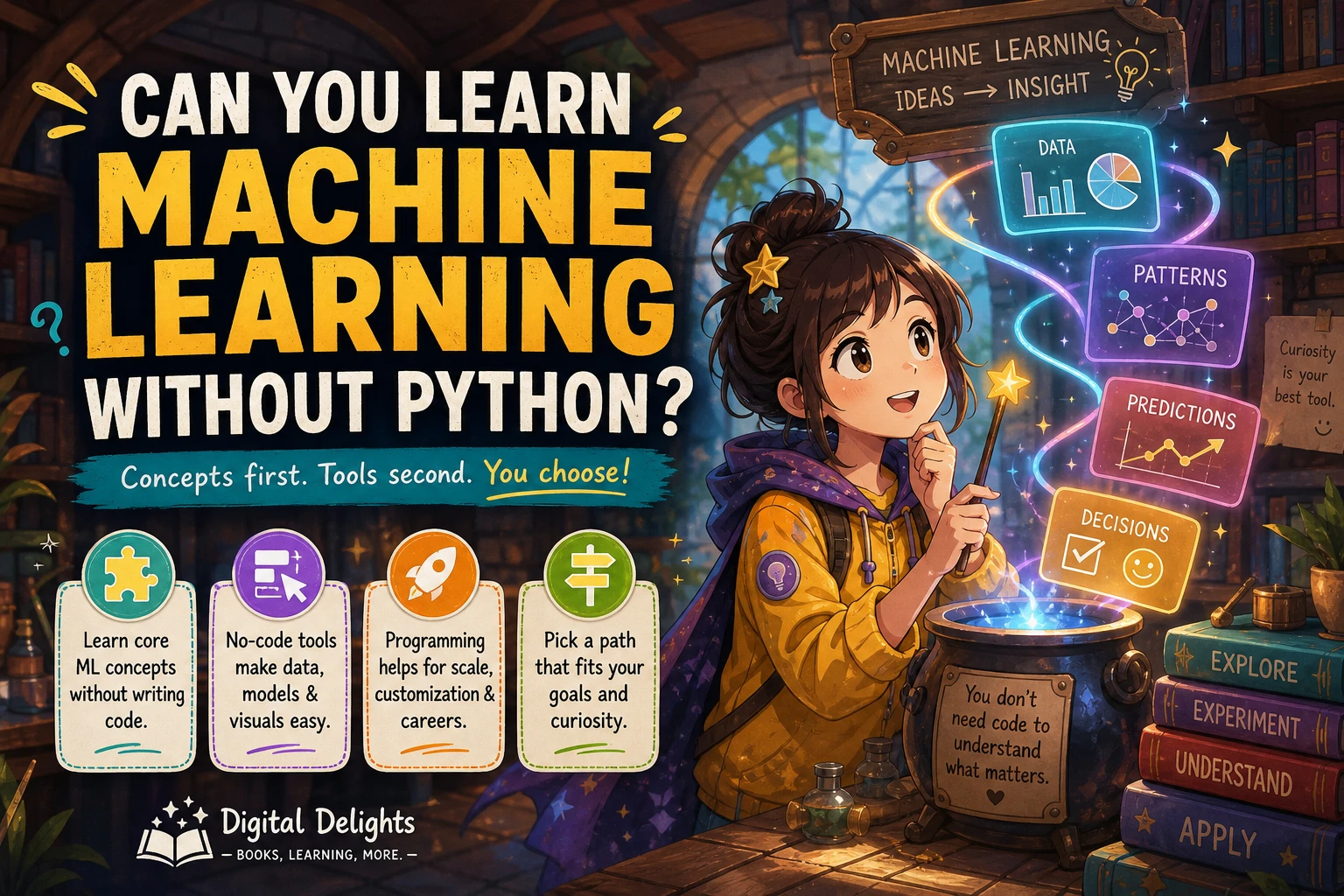
Not necessarily for an initial introduction to classical machine-learning workflows. Learn the mathematical ideas relevant to the methods you use as you encounter them. Deep learning can require more mathematical preparation, including calculus and linear algebra, depending on the material and your goals.
When should I start learning deep learning?
After you can write basic Python, work with data, understand a simple model workflow, and evaluate results carefully. You can explore it earlier out of curiosity, but a foundation in data preparation and evaluation will make neural-network examples easier to interpret.
How long does this roadmap take?
There is no reliable universal timeline. It depends on your previous programming experience, available study time, and how much practice you need at each stage. Use the skills in the roadmap—not a deadline—as your measure of progress.
Conclusion: Learn the workflow, not just the algorithms
A practical Python machine-learning roadmap begins with programming fundamentals, then adds project setup, data skills, core concepts, careful evaluation, and a small end-to-end project. Deep learning can come later if it fits your interests. Work through the stages in order, revisit earlier skills when a project exposes a gap, and keep your claims about results proportional to what your data and evaluation can support.
Sources and further reading
- The Python Tutorial — Python documentation: tutorial audience and foundational language topics.
- venv — Creation of virtual environments — Python documentation: Python’s virtual-environment tool.
- Fundamentals of Deep Learning — O’Reilly sample: prerequisites described for that deep-learning resource.