
Python Data Science Roadmap for Beginners
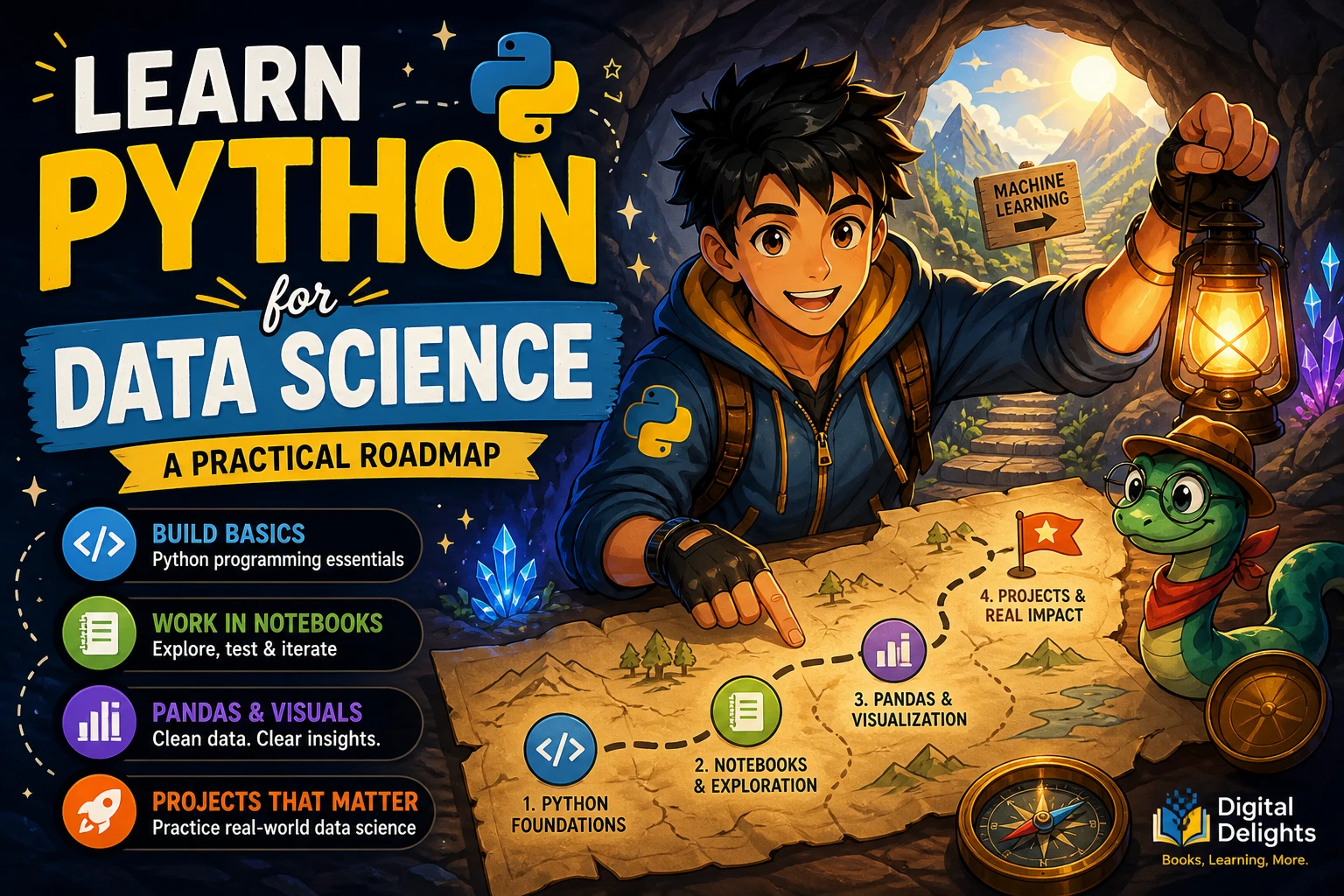
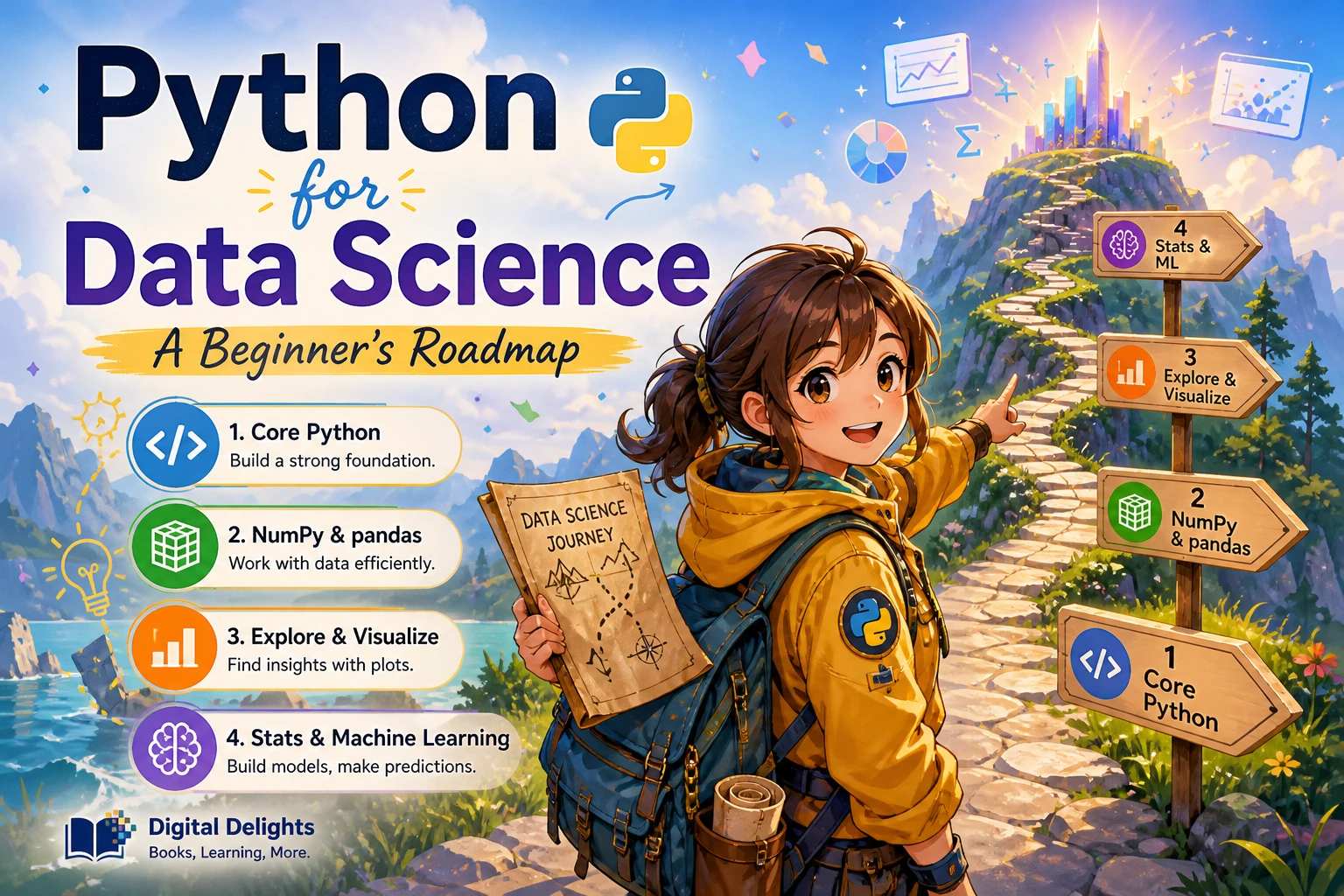
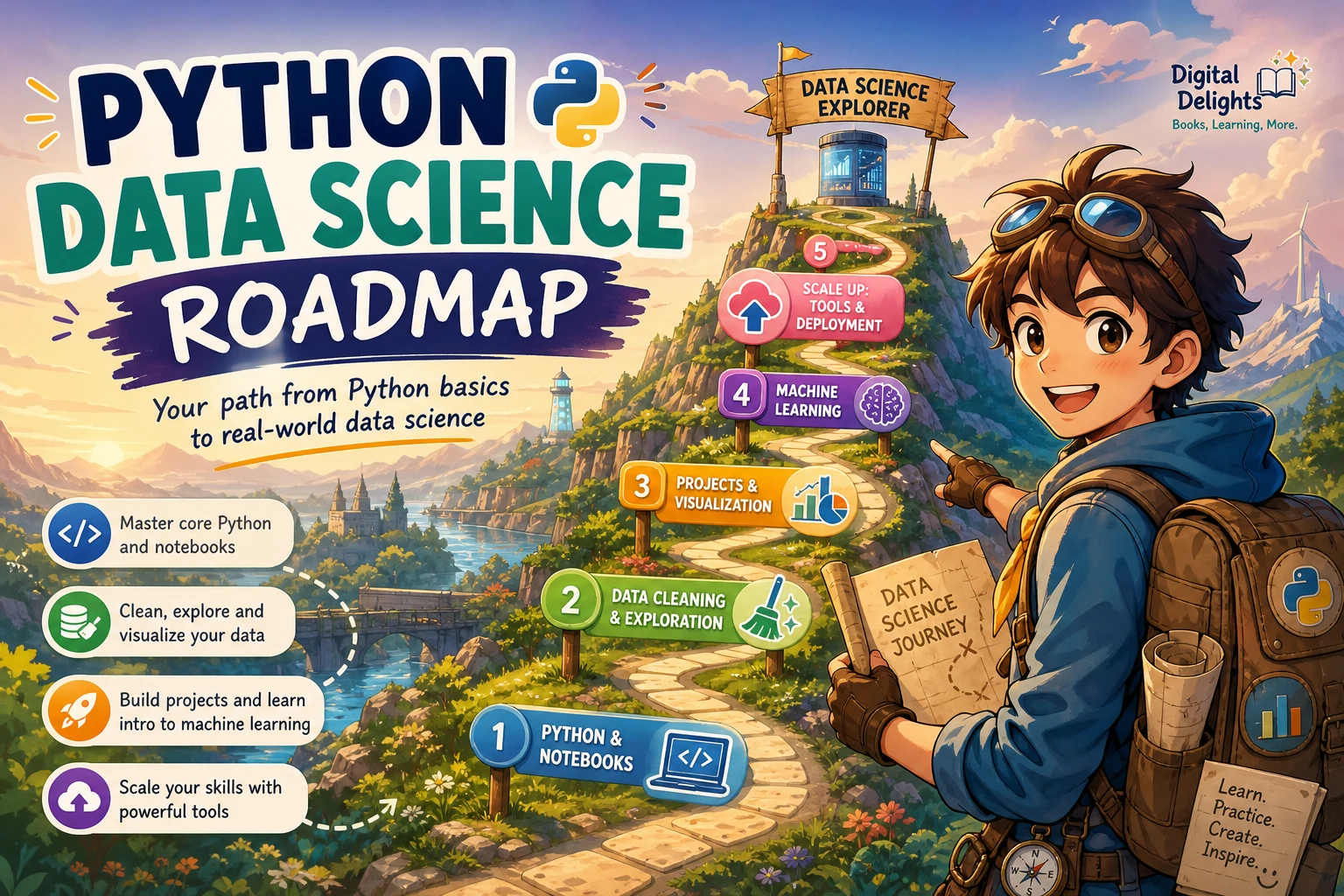
Starting data science can feel like facing a long list of languages, libraries, statistics, and machine-learning methods. A clearer route is to learn the pieces in sequence: Python fundamentals, a repeatable coding setup, notebooks and data libraries, data cleaning and visualization, small projects, then introductory machine learning. Tools for processing larger datasets can come later, when a project actually calls for them.
This Python data science roadmap is a practical sequence, not an official curriculum or a promise of a particular learning timeline. Follow it one stage at a time, and use projects to check whether you can apply each skill—not just recognize its name.
The Python data science roadmap at a glance
- Learn Python basics, including collections, functions, control flow, and debugging.
- Set up Python and an isolated environment for each project.
- Use notebooks to explore data; learn NumPy and then pandas.
- Clean and summarize data, make clear visualizations, and reason about what they show.
- Complete small projects and document your process and findings.
- Study introductory machine learning with scikit-learn once you can prepare and inspect data.
- Explore scaling tools such as Dask only when your data or computation needs exceed a single-machine workflow.
Step 1: Learn Python fundamentals before data libraries
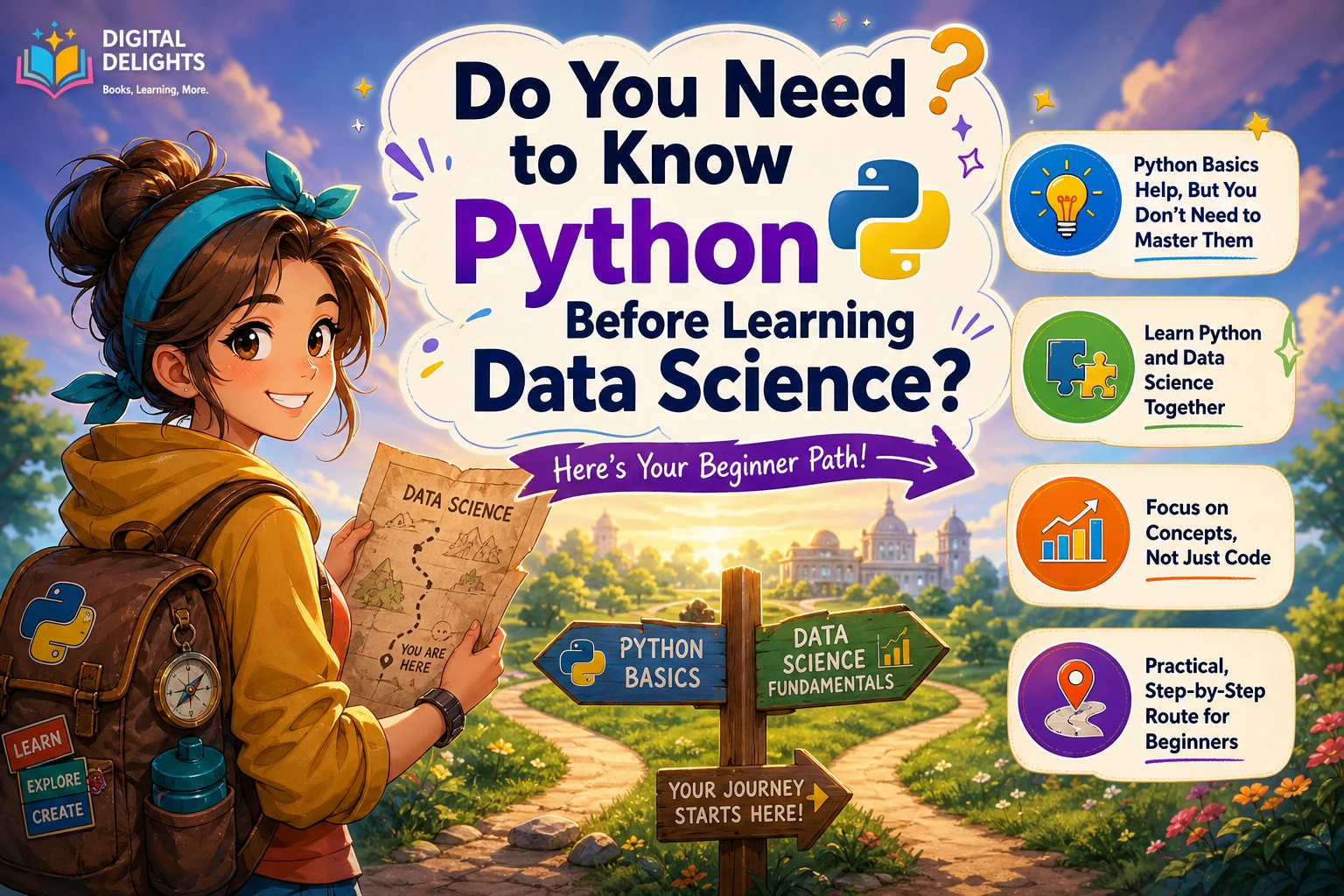
You do not need to become an expert Python developer before beginning data work. You do need enough fluency to read a short program, change it, and understand what its main parts are doing. The official Python tutorial introduces the language’s core concepts and features.
Prioritize these fundamentals:
- Variables and basic types: store and work with numbers, text, and Boolean values.
- Collections: use lists and dictionaries to organize related information.
- Control flow: write conditions and loops to make code respond to data.
- Functions: package repeated operations into named, reusable steps.
- Modules and imports: understand how Python code and libraries are organized.
- Debugging: read error messages, isolate a problem, and test a small change.
Practise with modest tasks: calculate the average of a list of values, count how often words appear in a text, or write a function that checks whether a value is missing. The goal is not to build a large application. It is to get comfortable expressing a sequence of steps in code.
If you prefer a structured introduction, The Practice of Computing Using Python covers programming fundamentals, algorithms, data structures, and exercises. For a more direct beginner sequence, Python Programming for Beginners: Learn Python in a Step by Step Approach, Complete Practical Crash Course to Learn Python Coding covers core language topics including variables, loops, data structures, functions, files, and exceptions.
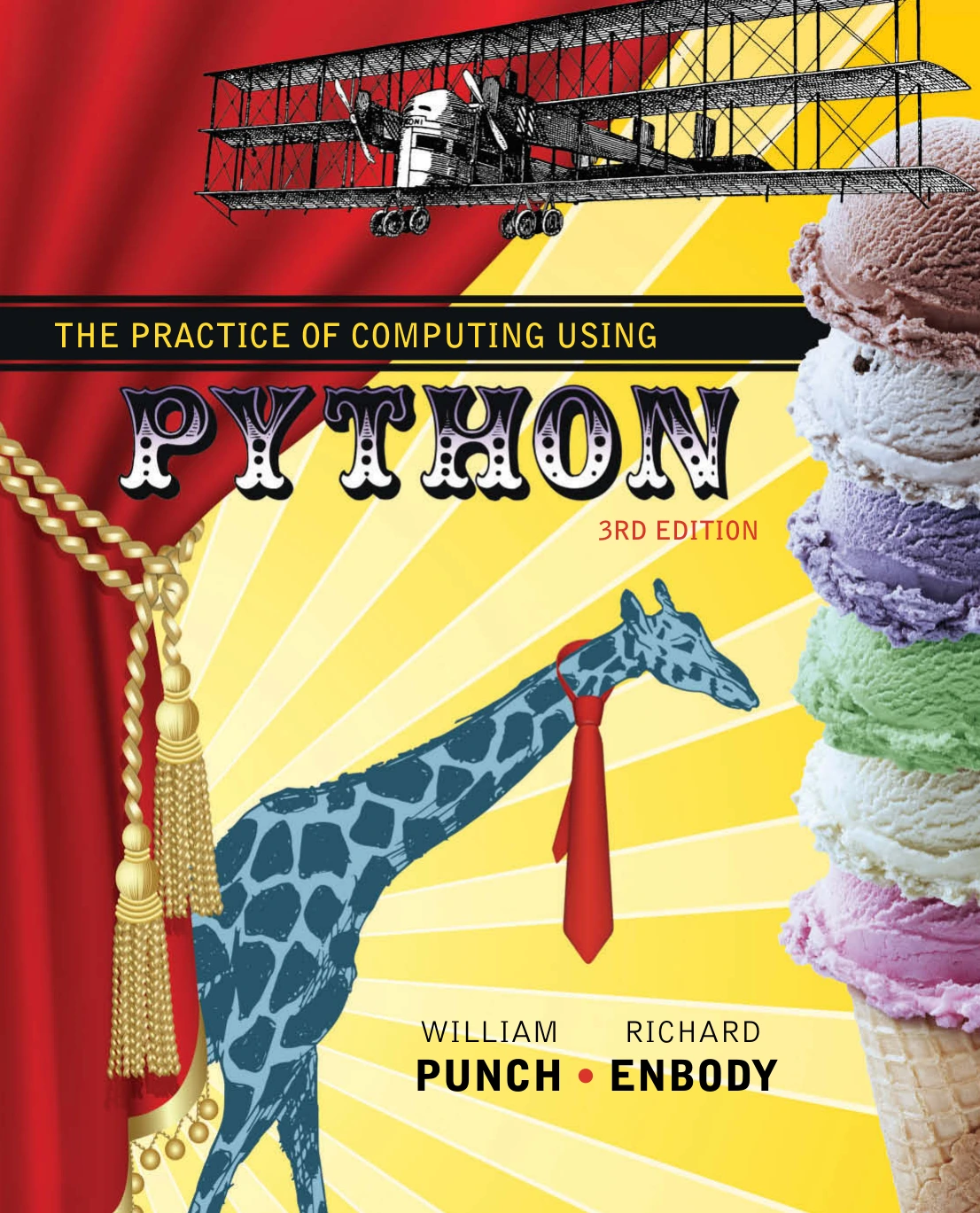
The Practice of Computing Using Python
Beginners who want practice with algorithms, data structures, and core computing concepts.
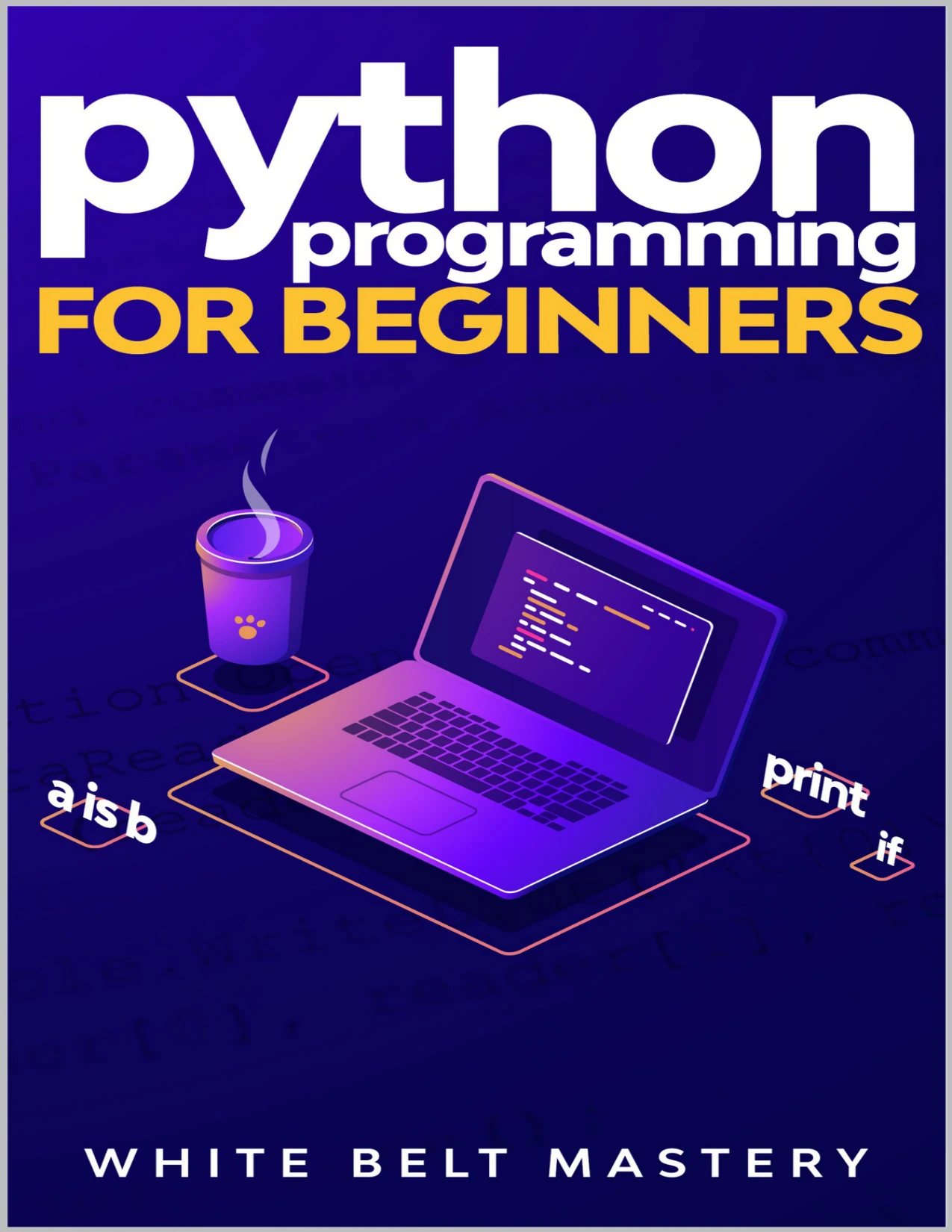
New programmers seeking an ordered introduction to variables, loops, data structures, functions, and files.
Step 2: Set up a repeatable Python workspace
A project’s Python packages can have different requirements from another project. An isolated environment keeps those dependencies separate, making it easier to reproduce work and reducing conflicts between projects. Python’s documentation explains how to create and manage virtual environments with venv.
A useful setup routine is straightforward:
- Choose a stable Python release rather than a prerelease unless you have a specific reason to test one.
- Create a new virtual environment for the project.
- Install only the packages that project needs.
- Record the environment or package requirements so you can recreate it later.
Python releases and library support change. As of October 9, 2026, Python.org lists Python 3.14.8, released September 30, 2026, as the latest stable Python 3 release; Python 3.15 is a prerelease. Check the Python 3.14.8 release information and the compatibility notes for the packages you plan to use before choosing an interpreter. This roadmap does not establish a package-by-package compatibility matrix.
Step 3: Explore data with notebooks, NumPy, and pandas
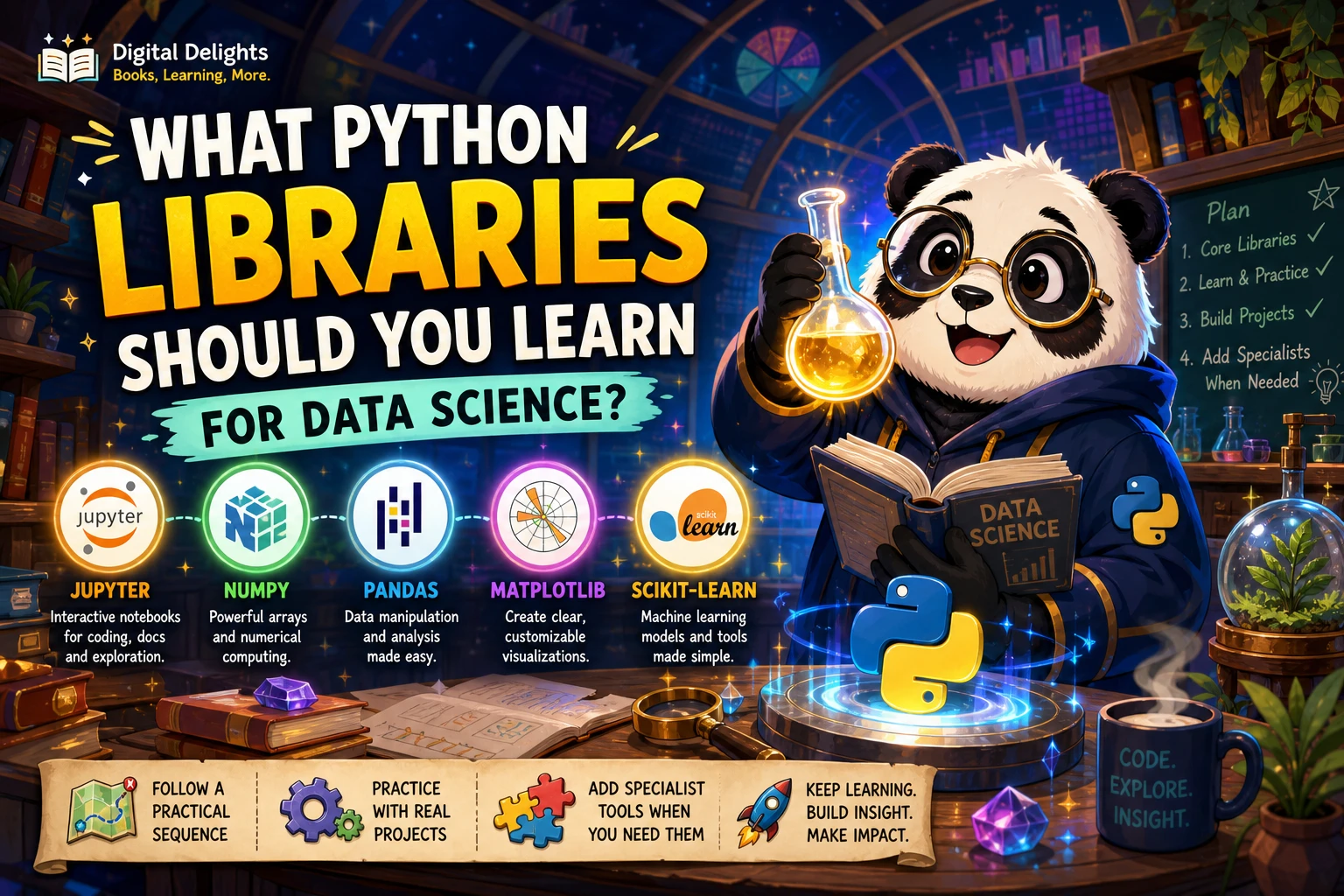
Once basic Python feels familiar, start working with data interactively. A notebook lets you combine code, outputs, and explanatory notes in one place, which can make it easier to test small questions and record what you learn. The Python Data Science Handbook, 2nd Edition covers Jupyter/IPython alongside NumPy, pandas, Matplotlib, and scikit-learn.
Get comfortable with NumPy arrays
NumPy provides tools for working with arrays and numerical operations. Learn how to create and inspect arrays, select elements, and perform calculations across data. These ideas help you understand the kinds of numerical structures used throughout the Python data ecosystem.
Use pandas for tabular data
Next, learn to inspect and manipulate tables with pandas. Practise loading a dataset, checking column names and data types, selecting rows and columns, filtering records, handling missing values, grouping records, and combining tables. These operations are central to turning raw data into something you can analyze.
Do not try to memorize every method. Keep a small reference of operations you use, and practise choosing the right operation for a question. A suitable applied introduction in the catalog is Python for Data Science: Step-by-Step Crash Course on How to Come Up Easily with Your First Data Science Project from Scratch in Less Than 7 Days. Includes Practical Exercises. Its listed topics include Python setup, data structures, data aggregation, scikit-learn, and practical exercises.
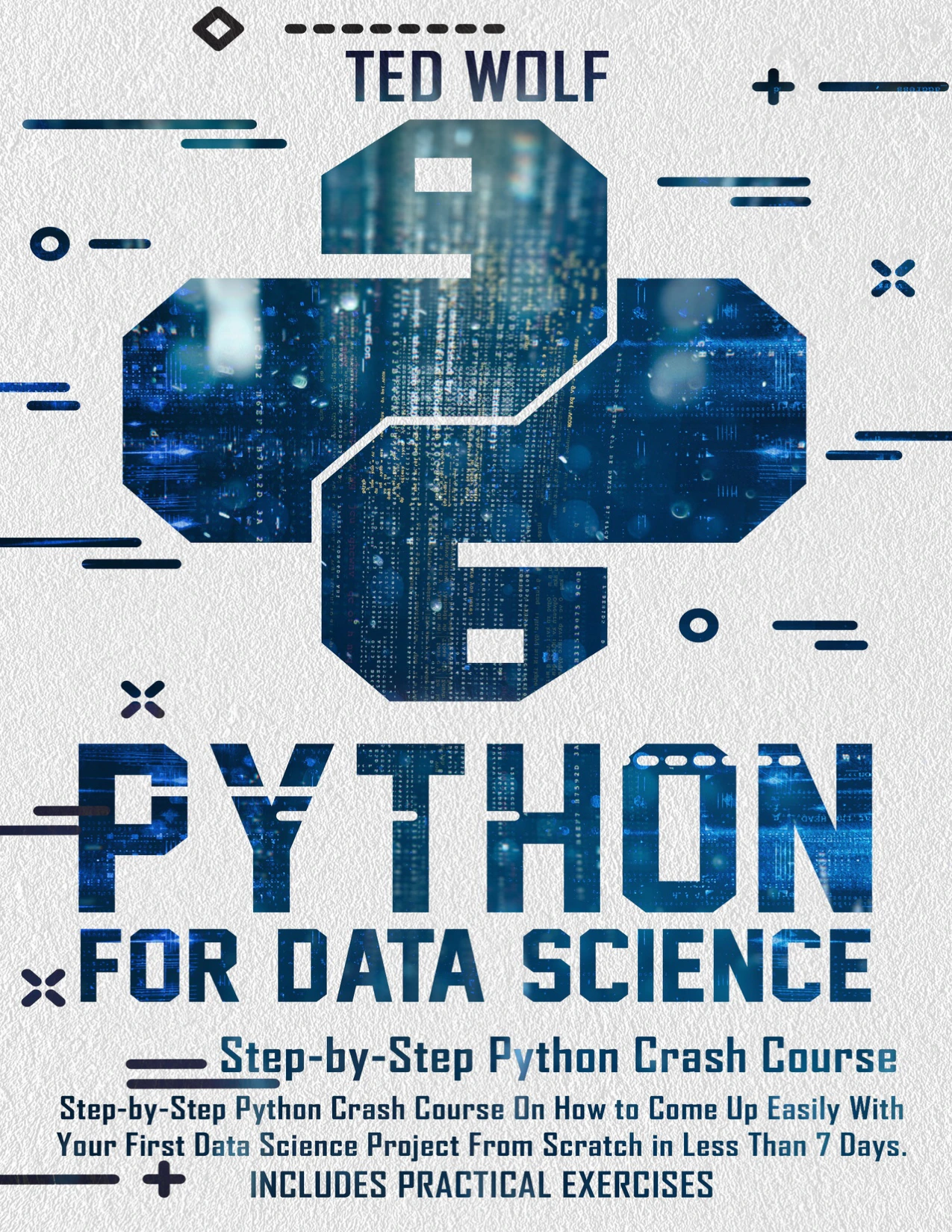
By Ted Wolf
Learners ready to explore setup, data structures, aggregation, scikit-learn, and practical code.
Step 4: Clean, summarize, and visualize data
Analysis begins before modeling. Real datasets may contain missing entries, inconsistent categories, duplicated records, or values stored in an unexpected format. Learn to inspect the data, decide how to handle these issues, and explain the reasoning behind each choice.
Build a repeatable first-pass routine:
- Check the dataset’s size, column names, types, and a few sample rows.
- Look for missing values, duplicates, unusual values, and inconsistent labels.
- Summarize relevant columns with counts, ranges, or other appropriate descriptive measures.
- Make a chart that helps answer a specific question.
- Write down what the analysis shows—and what it does not establish.
Start with charts that match the question: a histogram to inspect a distribution, a bar chart to compare categories, or a scatter plot to examine the relationship between two numerical variables. A chart can reveal a pattern, but it does not by itself prove why that pattern exists. Consider the source and limitations of the data before drawing a conclusion.
Step 5: Build small projects that show your reasoning
Projects turn individual skills into a complete workflow. Choose a dataset that interests you and a question you can answer with the information available. Keep the scope small enough to finish, and make the work understandable to someone who did not write the code.
Beginner project ideas include:
- Explore a public weather dataset and compare patterns across dates or locations.
- Summarize a personal reading, spending, or exercise log, taking care not to share sensitive information.
- Analyze a public survey by cleaning categories and comparing selected responses.
- Examine a sports or transport dataset and visualize a few clearly defined measures.
For each project, include the question, the source and limitations of the data, the steps used to clean it, a few useful summaries or charts, and a short conclusion. A tidy notebook or script that explains its decisions is more informative than a complicated model whose inputs and results are unclear.
Step 6: Add introductory machine learning
Move into machine learning after you can load, inspect, clean, and summarize data. That foundation helps you understand what information goes into a model and how to interpret an evaluation. Start with the basic workflow: define a question, prepare suitable data, split data for training and evaluation, fit a model, and examine how well it performs on data it was not trained on.
Then explore a small selection of common methods through a library such as scikit-learn. Focus first on the relationship between the question, the features, the model, and the evaluation—not on collecting a long list of algorithms. Keep a simple baseline for comparison and be alert to data leakage, where information that should not be available during training influences the evaluation.
For a resource specifically focused on this next stage, Machine Learning with Python: A Practical Beginners’ Guide covers data preparation, model design, validation, and several foundational algorithms. It is a more focused choice than a general Python introduction.
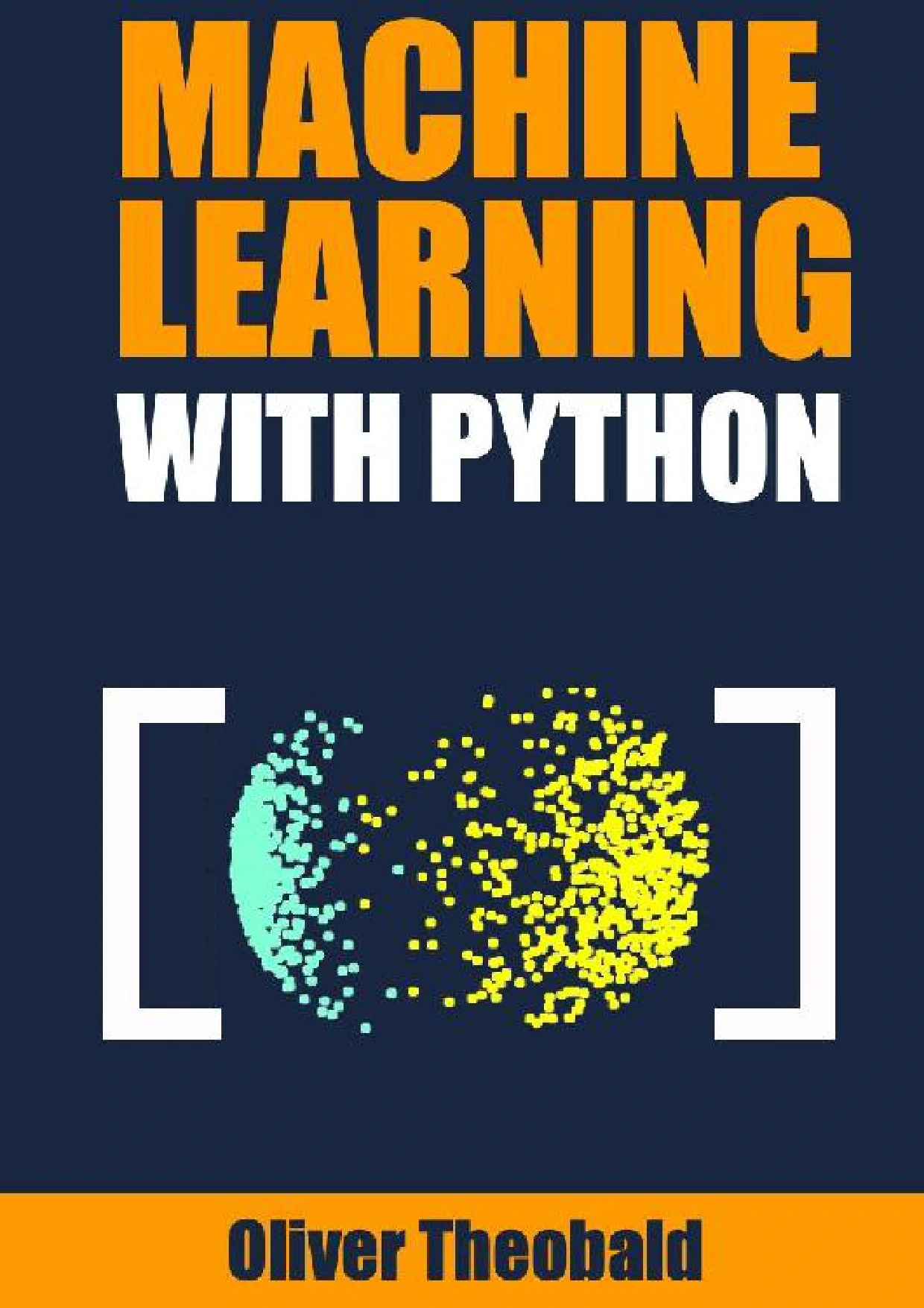
Machine Learning with Python: A Practical Beginners’ Guide
Readers who already have some Python background and want to study data preparation, validation, and foundational models.
Step 7: Learn scale-up tools only when needed
Distributed computing is not a required first step in data science. Begin with a single-machine workflow and learn how to prepare and analyze data there. Consider tools such as Dask when the size of the data or the computation becomes a practical obstacle and you have a reason to change the workflow.
Manning’s Data Science with Python and Dask describes its intended readers as already having Python and PyData-stack experience, positioning Dask as a scaling tool rather than an entry-level prerequisite. That distinction can help you avoid spending early study time on infrastructure you may not need.
Common beginner mistakes to avoid
- Starting with machine learning before data preparation: learn to inspect and clean data first, so you understand what a model receives.
- Collecting tools without practising: learn a small set of tools by using them to answer real questions.
- Skipping the basics of Python: unfamiliarity with functions, collections, and debugging makes data libraries harder to use.
- Treating a chart or model as an explanation: describe what the result supports, and be clear about its limits.
- Assuming every learner needs the same mathematics or tooling sequence: requirements depend on the projects and specialization you choose.
- Trying to scale too early: add more complex infrastructure in response to a genuine need, not simply because it is part of the wider field.
Frequently asked questions
What should I learn first for Python data science?
Start with Python fundamentals: variables, collections, conditions, loops, functions, imports, and basic debugging. Then practise using notebooks and move into NumPy and pandas for numerical and tabular data work.
Do I need advanced mathematics before starting?
The available sources do not establish a universal mathematics prerequisite. You can begin learning Python and basic data exploration while building relevant statistical and mathematical understanding alongside your projects. The depth you need depends on the questions and methods you pursue.
When should I start machine learning?
Start when you can load, inspect, clean, and summarize a dataset, and can explain what your input data represents. Those skills give you a better basis for preparing data and interpreting a model’s evaluation.
Which Python version should I use?
Choose a stable release and check whether the packages in your project support it. Python.org listed 3.14.8 as the latest stable Python 3 release on October 9, 2026, but package compatibility can vary. Check the current release information and package documentation before setting up a learning environment.
How long does it take to follow this roadmap?
There is no supported standard timeline in the available research. Progress depends on your previous programming experience, study time, and the complexity of your projects. Use completed tasks—such as cleaning a dataset or explaining a chart—as evidence of progress rather than relying on a fixed schedule.
Do I need Dask as a beginner?
No. Begin with a single-machine workflow. Consider Dask or another scale-up tool when your data or computation creates a specific constraint that your current approach cannot handle conveniently.
A practical next-step checklist
Use this short checklist to turn the roadmap into action:
- Write and debug a few small Python programs.
- Create an isolated environment for a data project.
- Open a dataset in a notebook and inspect its structure.
- Use pandas to clean and summarize the data.
- Create a chart tied to a clear question.
- Complete a small project and explain its limits.
- Only then begin a simple machine-learning workflow if it serves your question.
The most useful Python data science roadmap is one you can apply repeatedly: understand the code, inspect the data, make deliberate choices, and explain what you found. Build that foundation before adding more libraries or more complex infrastructure.