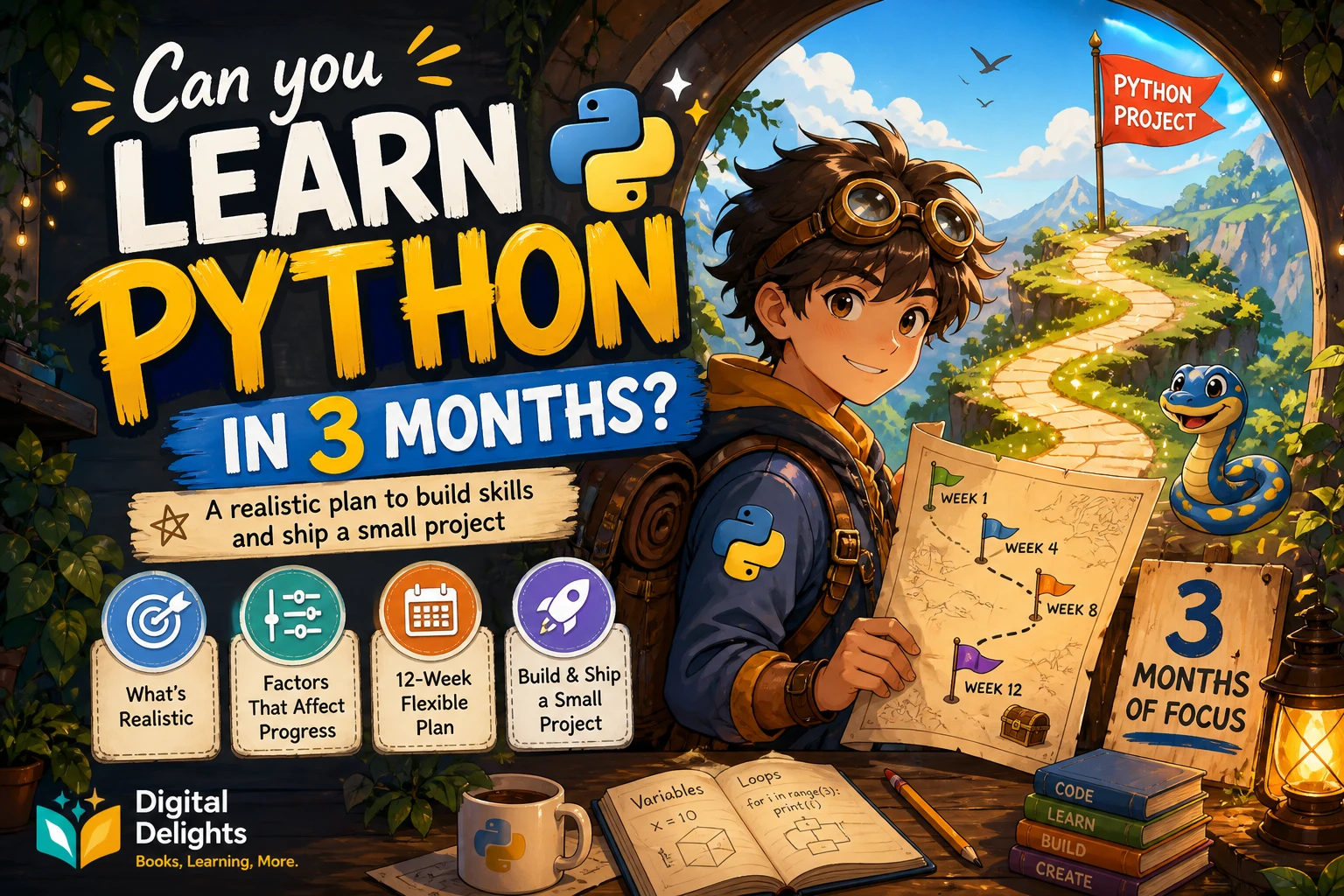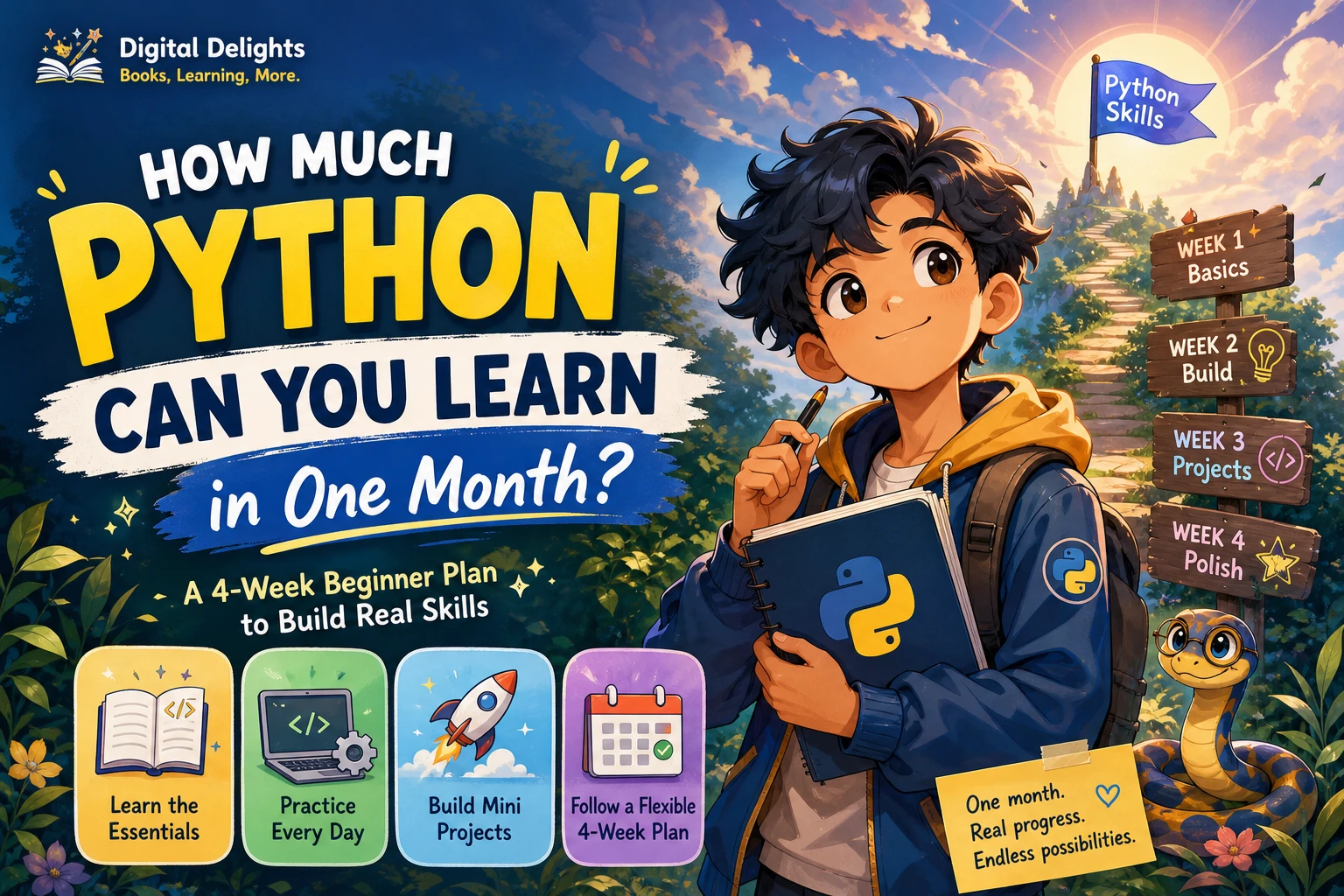
Can You Learn Python in One Day?
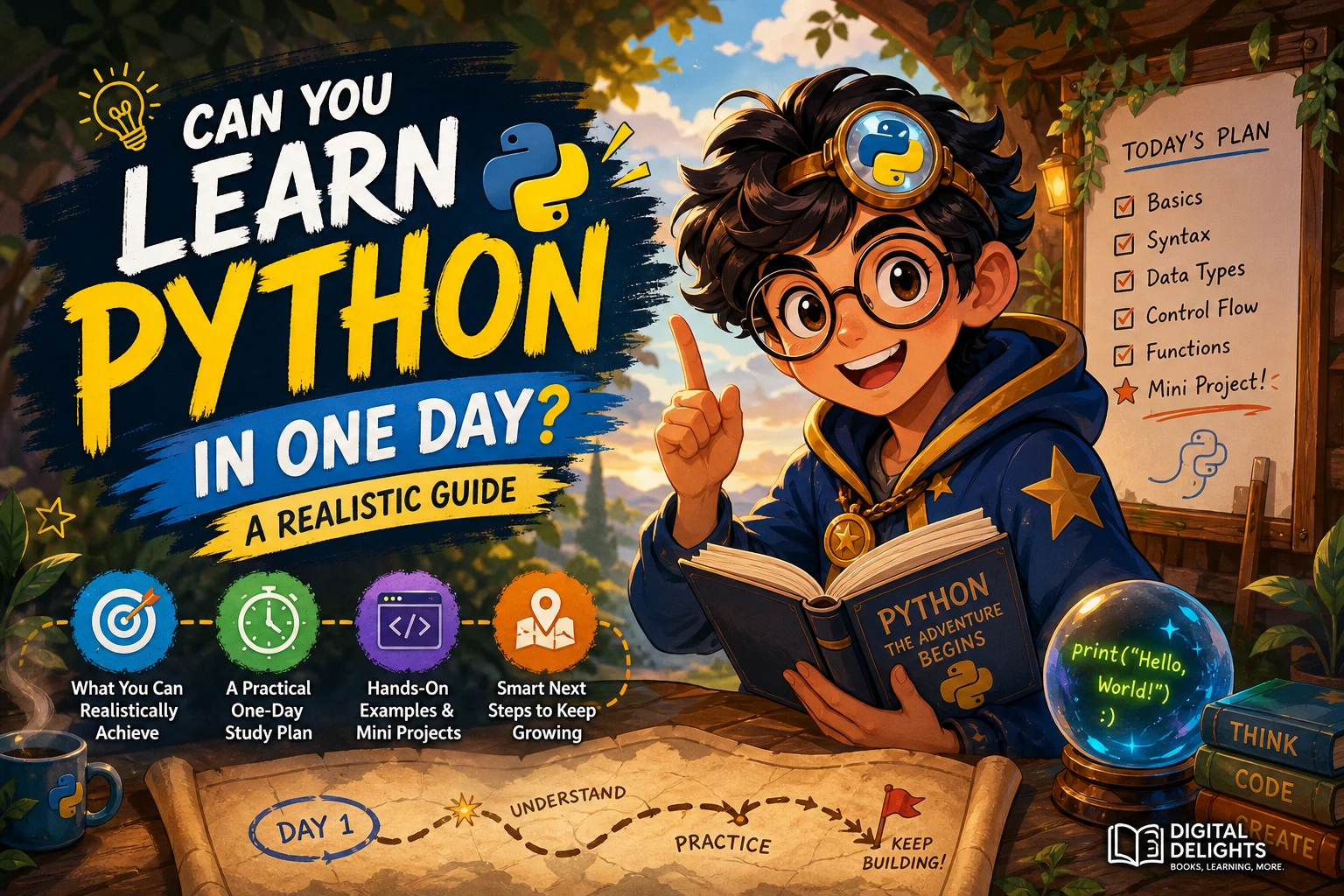
Short answer: You can get started with Python in one day. With focused, hands-on study, a beginner may learn how to run simple code, use a few core programming concepts, and complete a small guided program. But one day is not a realistic promise of broad proficiency or independent problem-solving.
The answer depends on what you mean by “learn.” Recognizing basic syntax is different from building a program without help, and both are different from becoming comfortable with Python’s libraries and tools. Use a day to build a first foothold—not to measure whether you are already a programmer.
What can a beginner realistically learn in one day?
A focused introduction can give you a useful first look at Python. You might learn to run the interpreter or a script, display and collect simple input, store information in variables, and work with common values such as text and numbers. You can also try conditions, loops, and a basic function.
A practical end-of-day goal is to understand a small program well enough to explain its main steps and make a modest change to it. For example, you might adapt a guided program to ask a different question or calculate a different result. That is a meaningful start, but it does not show that you can yet solve unfamiliar programming problems on your own.
Python’s official tutorial introduces topics including control flow, functions, and data structures, while noting that it is not intended to be comprehensive. That is a useful reminder that an introduction is a starting point, not a complete education in the language: The Python Tutorial.
What “learning Python” might mean
- Getting oriented: You can open a Python environment and run a short example.
- Learning introductory concepts: You recognize and try basic syntax, variables, conditions, loops, and functions.
- Completing a guided task: You can follow a small example, understand its purpose, and make a simple adjustment.
- Working independently: You can plan, write, troubleshoot, and improve programs for new problems. This takes continued practice beyond a single day.
Prior experience with another programming language may make some ideas feel familiar, but the supplied research does not establish how much it changes a one-day outcome. If you are completely new to programming, expect to spend time understanding the ideas as well as learning Python’s syntax.
A practical one-day Python study plan
Think of this as a flexible study outline, not a guaranteed course or a promise of proficiency. Keep a Python interpreter or suitable learning environment available, and spend most of your study time typing, running, and changing code—not just watching or reading.
| Study block | Focus | Try this |
|---|---|---|
| Get set up | Open Python and run a first example | Display a message and check that your code runs |
| Work with values | Variables, numbers, text, and input | Ask for a name or number and use the response |
| Make decisions | Conditions and comparisons | Print different responses depending on an answer |
| Repeat and organize | Loops and simple functions | Repeat a small task, then move one part into a function |
| Build and revise | Combine ideas in one small program | Run it, inspect errors, and make one change without copying |
1. Make sure you can run Python
Begin by opening a working Python environment. You can use an installed interpreter or another appropriate learning environment. Follow the setup instructions for the course or resource you choose, and confirm that a short example runs before moving on. A setup mismatch or an unfamiliar editor can consume attention that you would rather spend learning.
2. Learn a few building blocks at a time
Start with values, variables, and basic input and output. Then try a condition that makes a choice, a loop that repeats an action, and a function that gives a section of code a name. After each explanation, type a short example and change something about it. Seeing what happens when you alter a value or condition is part of the learning process.
3. Combine the basics in one small program
Choose a task that is small enough to finish with guidance—for example, a simple bill-splitting calculator or a short quiz. Keep the first version limited to the ideas you have already tried. If the code feels confusing, reduce the task rather than adding more features.
Here is a small example using input, variables, a function, and a conditional:
def greeting(name):
    if name:
        return f"Hello, {name}!"
    return "Hello!"

name = input("What is your name? ").strip()
print(greeting(name))
Run it, then try changing the wording or adding another response. A loop could be a later improvement, such as asking the question more than once. The aim is not to memorize this example; it is to follow how the input moves through the program and test a small change.
4. Leave room for errors and review
Beginners often spend time resolving typos, indentation, unexpected input, or setup issues. Treat that as normal practice, not as proof that you are “bad at coding.” When something goes wrong, read the error message, check the line it points to, and change one thing at a time. Before you stop, try to explain what your program does without reading every line aloud.
What one day will not teach you
A short introduction can make Python less unfamiliar, but it cannot cover everything involved in writing useful software. After one day, you should not expect to know every feature of the language, choose among its many libraries confidently, or solve a wide range of new problems without guidance.
- Independent problem-solving: Translating an unfamiliar goal into steps and code takes practice beyond following a worked example.
- Broad language knowledge: Python includes more topics than an introductory session can cover. The official tutorial itself describes its scope as introductory rather than comprehensive.
- Specialized skills: Data analysis, web development, automation, testing, and machine learning each require additional tools and subject-specific knowledge.
- Reliable recall: Seeing a concept once does not ensure you will remember or apply it later. Returning to the material and writing code again helps you identify what still needs work.
There is no single, evidence-based number of study hours that guarantees a particular Python skill level. A book or course’s title and advertised duration describe its format or scope; they do not establish what every learner will be able to do afterward.
How to keep learning after your first day
- Rebuild your small program. Start with a blank file and recreate as much as you can. Refer to your notes when needed, then identify which parts you could not remember.
- Practise with small variations. Change the inputs, add a condition, or handle a different result. Small modifications help connect syntax to program behaviour.
- Use exercises and projects. Work through short problems, then make a small project that matters to you. If you get stuck, break the task into simpler steps.
- Choose a longer learning path. A structured beginner resource can help you revisit fundamentals in sequence and continue into topics a one-day introduction leaves out.
If you want a fundamentals-focused digital book, Python 3 Learning in One Day for Absolute Beginners covers introductory topics such as values, loops, lists, functions, files, and modules, according to its catalog description. Its title is not evidence that readers master Python in one day; treat it as a resource to study at a pace that leaves room for practice.
Readers seeking an introductory resource covering topics such as values, loops, functions, files, and modules.
For a more extended, practice-led follow-up, Python Bootcamp: A Rapid Crash Course Featuring Q&A Sessions, Exercises, and Projects is described as covering Python 3 with question-and-answer sections, exercises, and projects. It may suit learners who want to keep practising after an initial introduction.
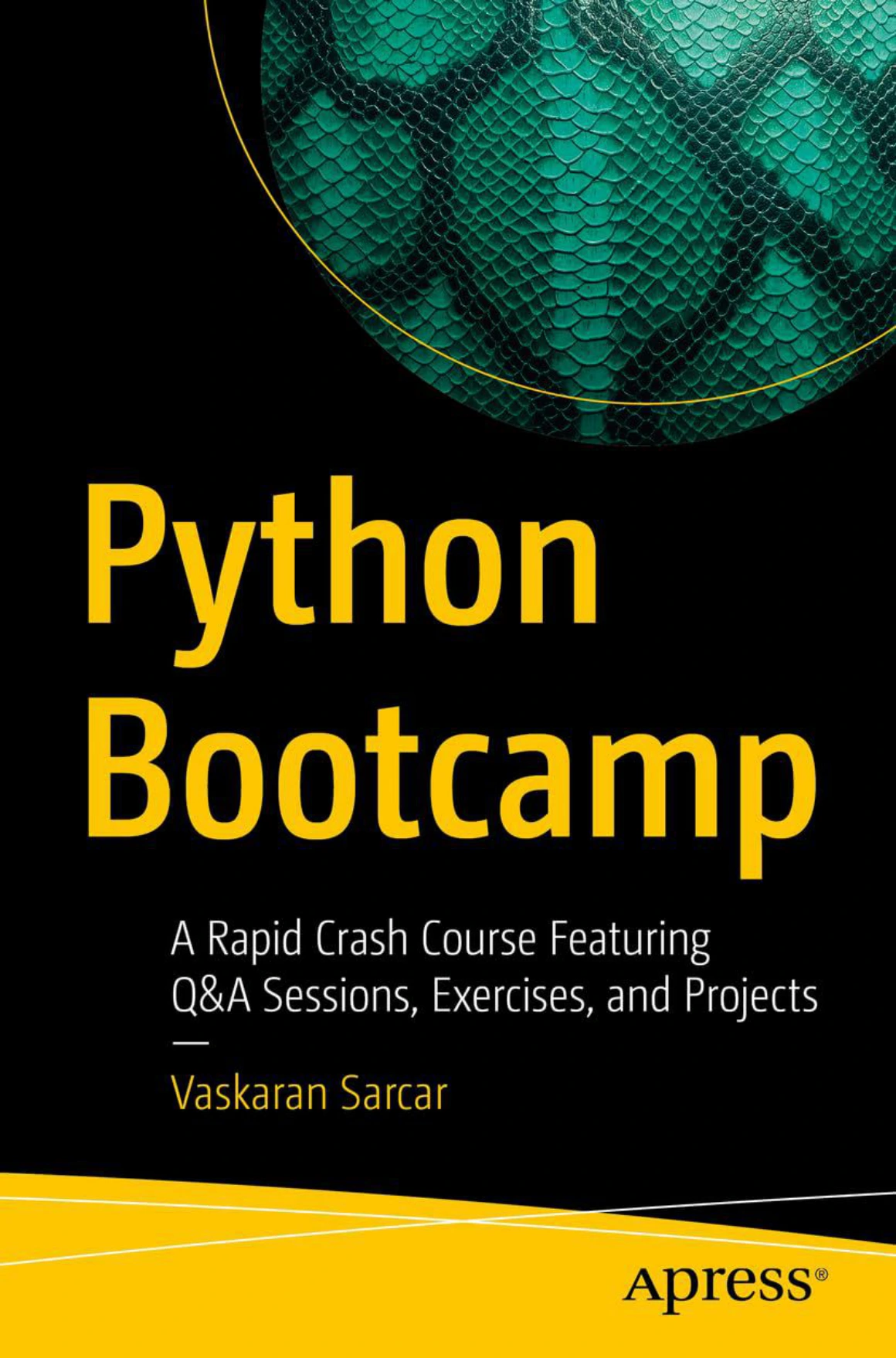
Python Bootcamp: A Rapid Crash Course Featuring Q&A Sessions, Exercises, and Projects
Learners looking for a resource described as including Python 3, Q&A sessions, exercises, and projects.
You can also browse the Python collection to compare resources by their stated subject and approach.
Choosing a follow-up resource
| Resource | Catalog-described focus | May suit |
|---|---|---|
| Python 3 Learning in One Day for Absolute Beginners | Introductory Python topics, from values and loops to functions, files, and modules | Readers seeking a fundamentals-oriented starting resource |
| Python Bootcamp: A Rapid Crash Course Featuring Q&A Sessions, Exercises, and Projects | Python 3 introduction with Q&A sessions, exercises, and projects | Learners who want a practice-led resource to continue with |
These descriptions summarize the catalog information; they are not independent assessments of learning outcomes. Choose the format that matches how you want to study, and make time to write and revise code alongside it.
Common questions about learning Python in one day
Can a complete beginner write a Python program in one day?
A complete beginner may be able to write or modify a small program by following guidance and practising the building blocks. Whether that happens in one day depends on the learner, the task, available study time, and any setup difficulties. Completing a guided example is a first milestone, not proof of independent proficiency.
How many hours should a beginner study?
There is no universal number of hours that guarantees a particular result. Instead of trying to hit a fixed total, use focused study blocks, take breaks when needed, and reserve time for typing, running, and revising code. The amount of practice that helps will vary from person to person.
Is Python easy to learn?
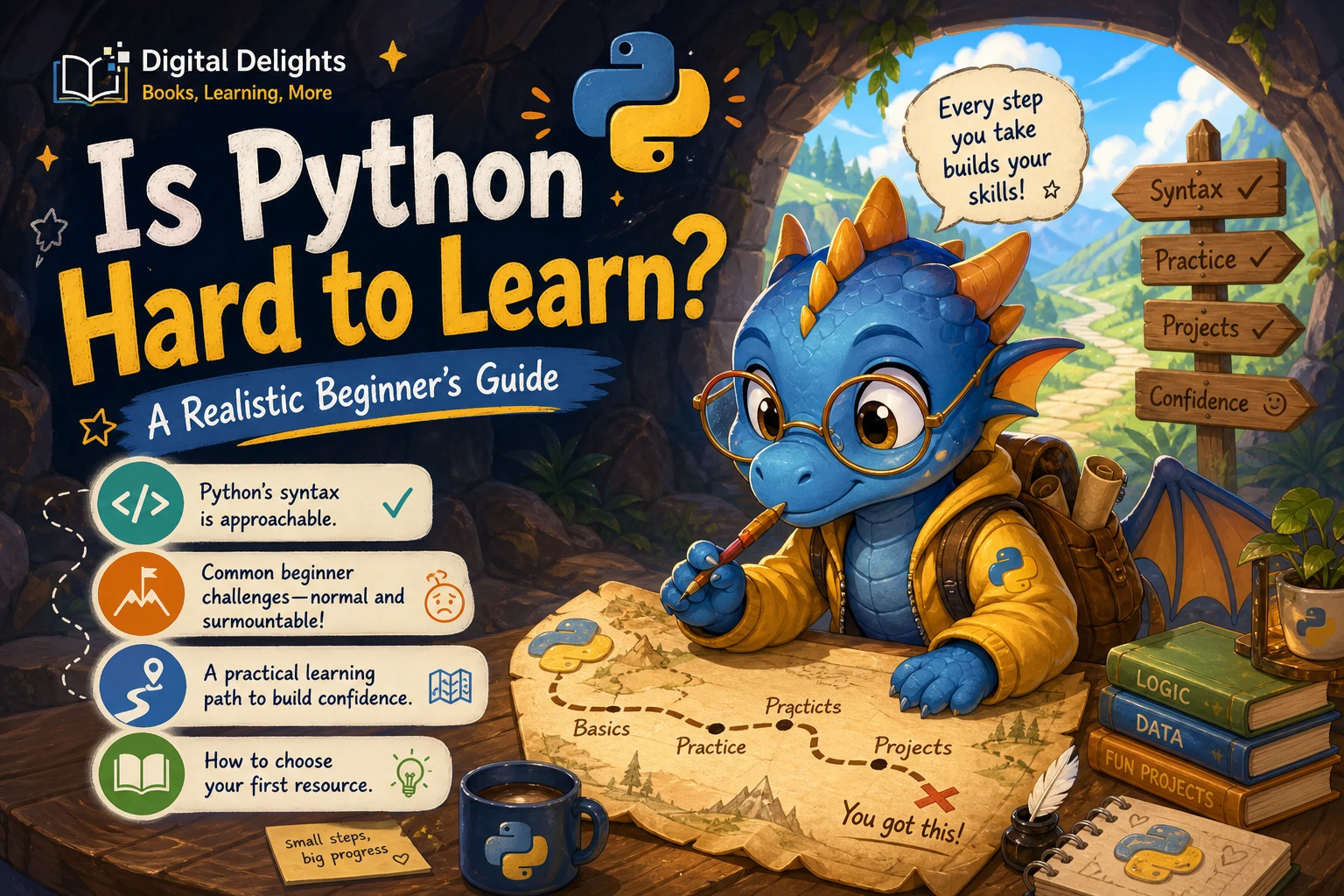
Python can be approachable as a first language, but approachable does not mean effortless. Beginners still need to learn how instructions fit together, how to reason through a task, and how to respond to errors. Working in small steps makes those challenges easier to manage.
What should I learn after the basics?
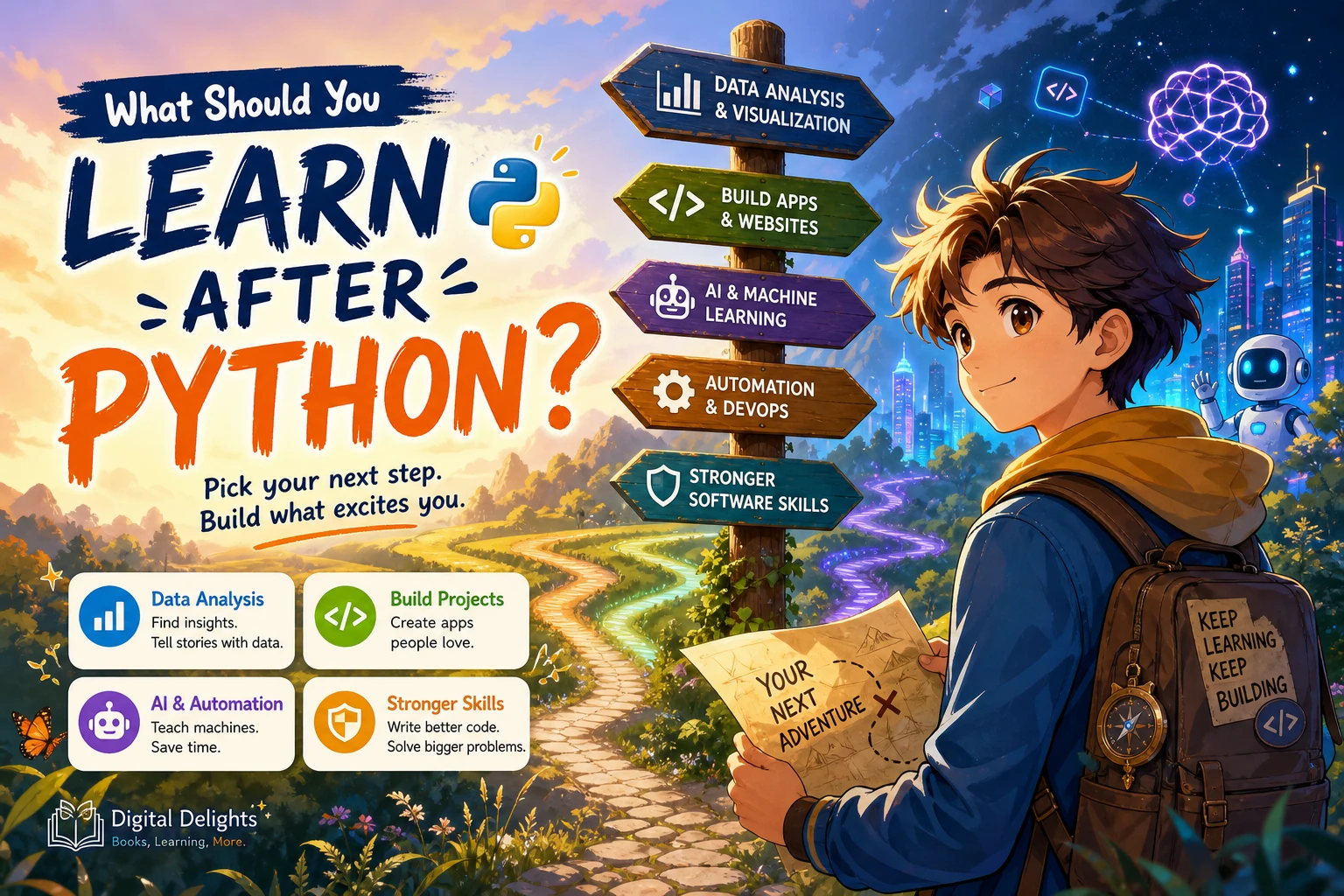
Keep practising variables, conditions, loops, functions, and data structures by making small programs. Then choose a direction based on what you want to do—such as automation, data analysis, or web development—and learn the tools relevant to it. You do not need to pick a specialization on your first day.
The realistic answer
Yes, you can begin learning Python in one day. A focused day can help you get set up, try fundamental concepts, and complete a small guided program. No, one day cannot guarantee broad proficiency, confident independent problem-solving, or lasting recall. Treat the first day as a launch point: keep practising, revisit what was difficult, and build skills one small program at a time.