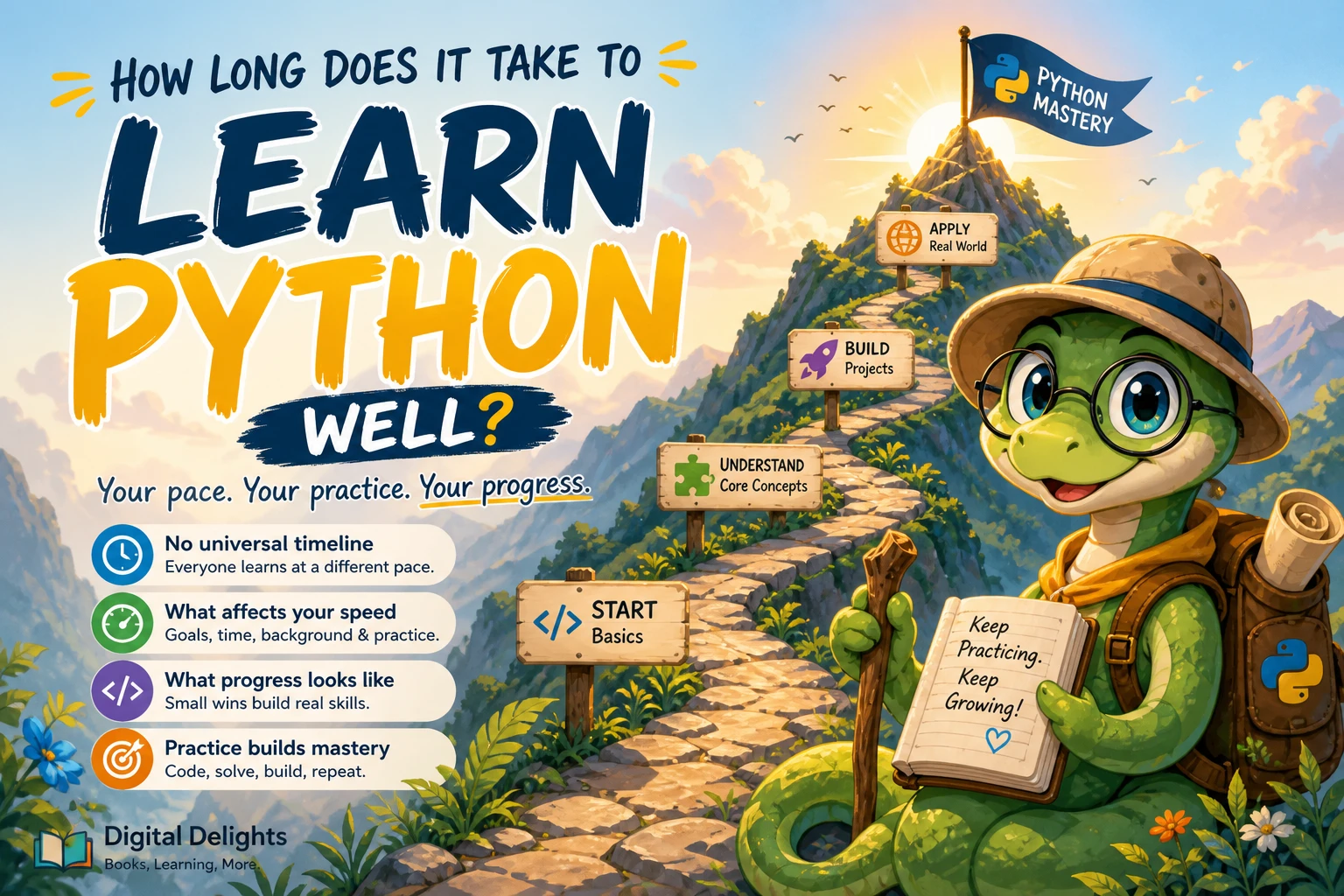
How Long Does It Take to Learn Python Well?
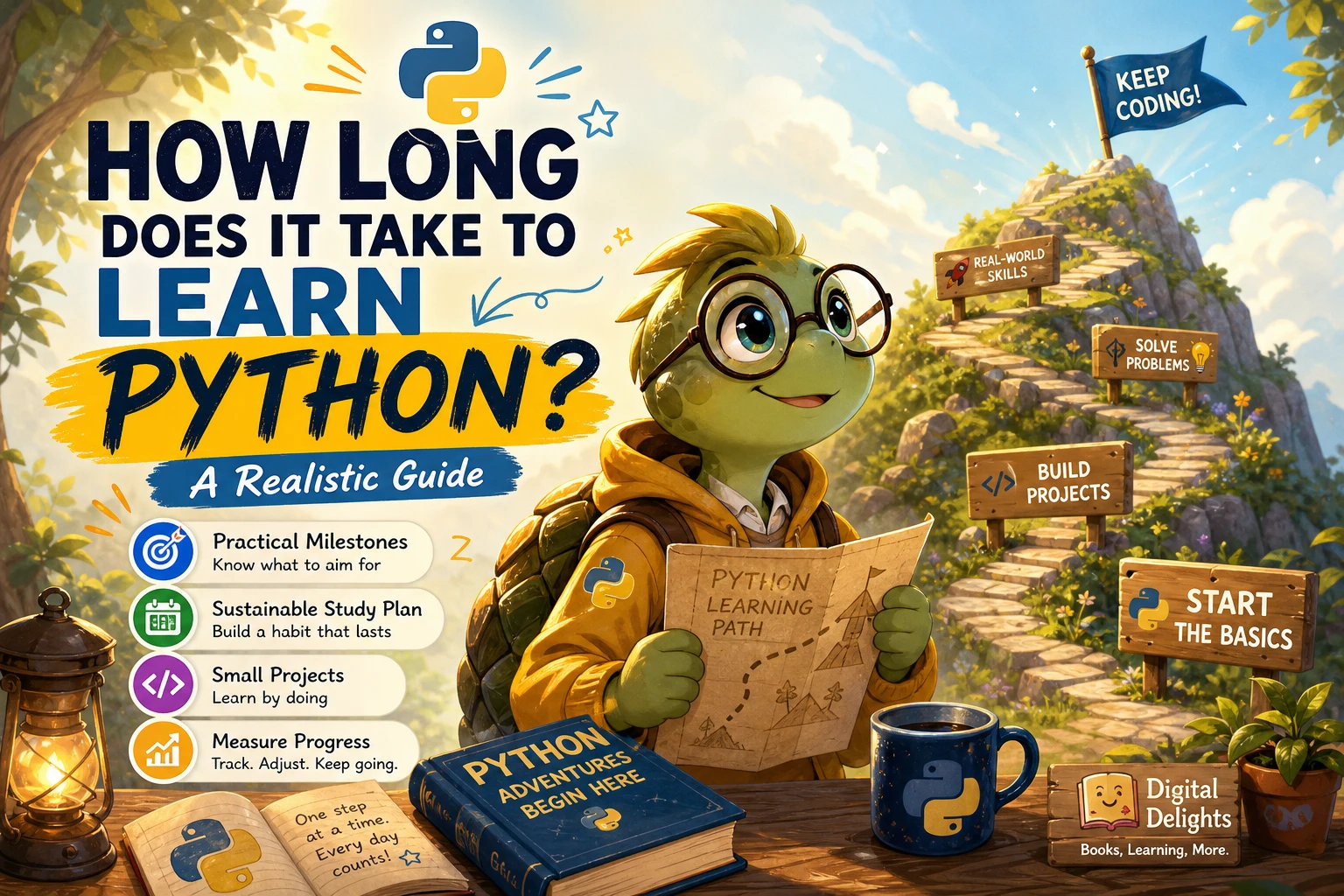
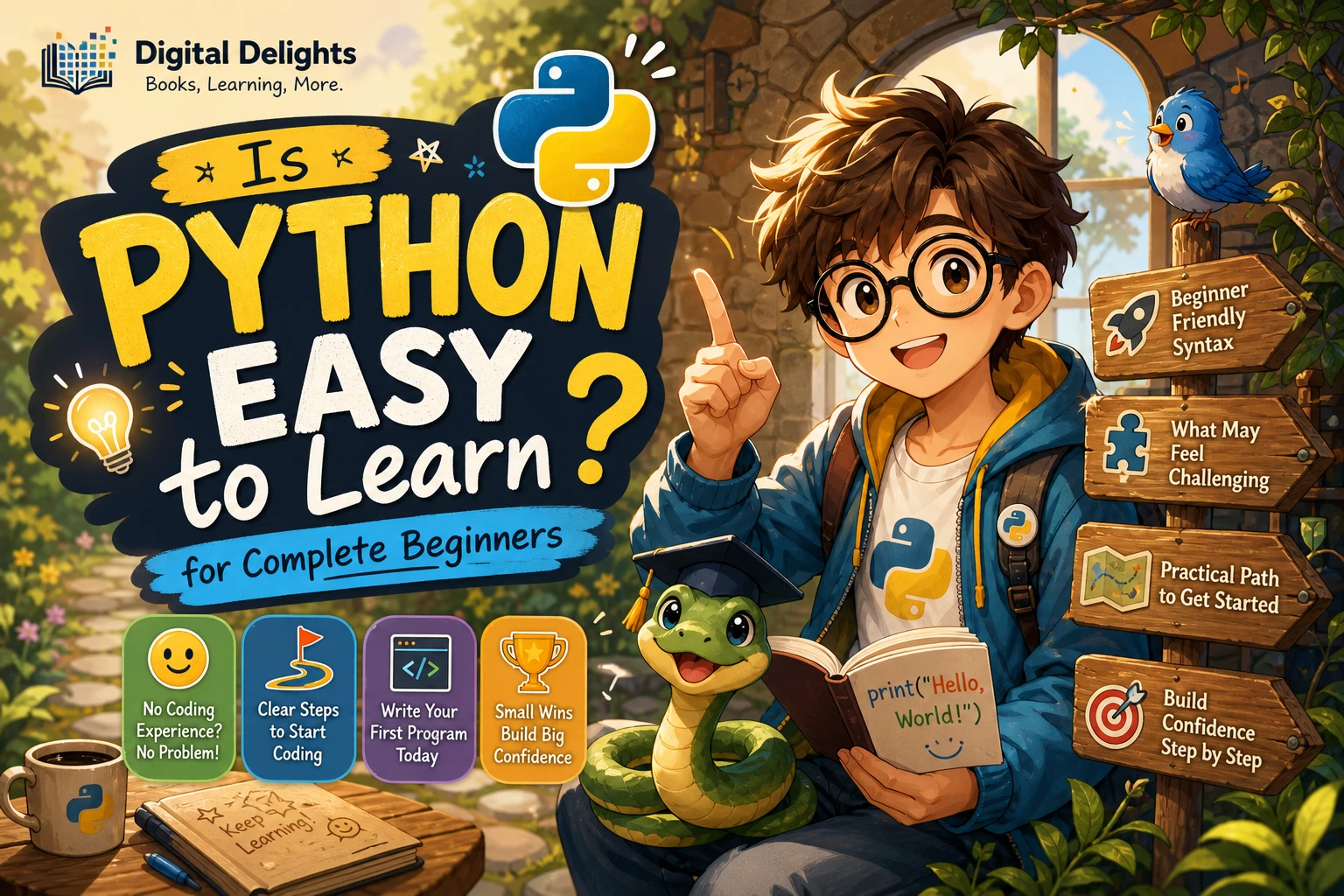
There is no reliable universal timeline for learning Python well. The time it takes depends on what you already know, how often you practise, and what you want to do with the language. Learning enough to write a short script is a different goal from building a complete application or using Python for data science.
A more useful way to measure progress is by milestones: can you explain the basics, solve small problems without copying a tutorial, debug your own code, and complete a project that serves a real purpose? This guide breaks down what those milestones look like, what can affect your pace, and how to make your practice count.
How Long Does It Take to Learn Python?
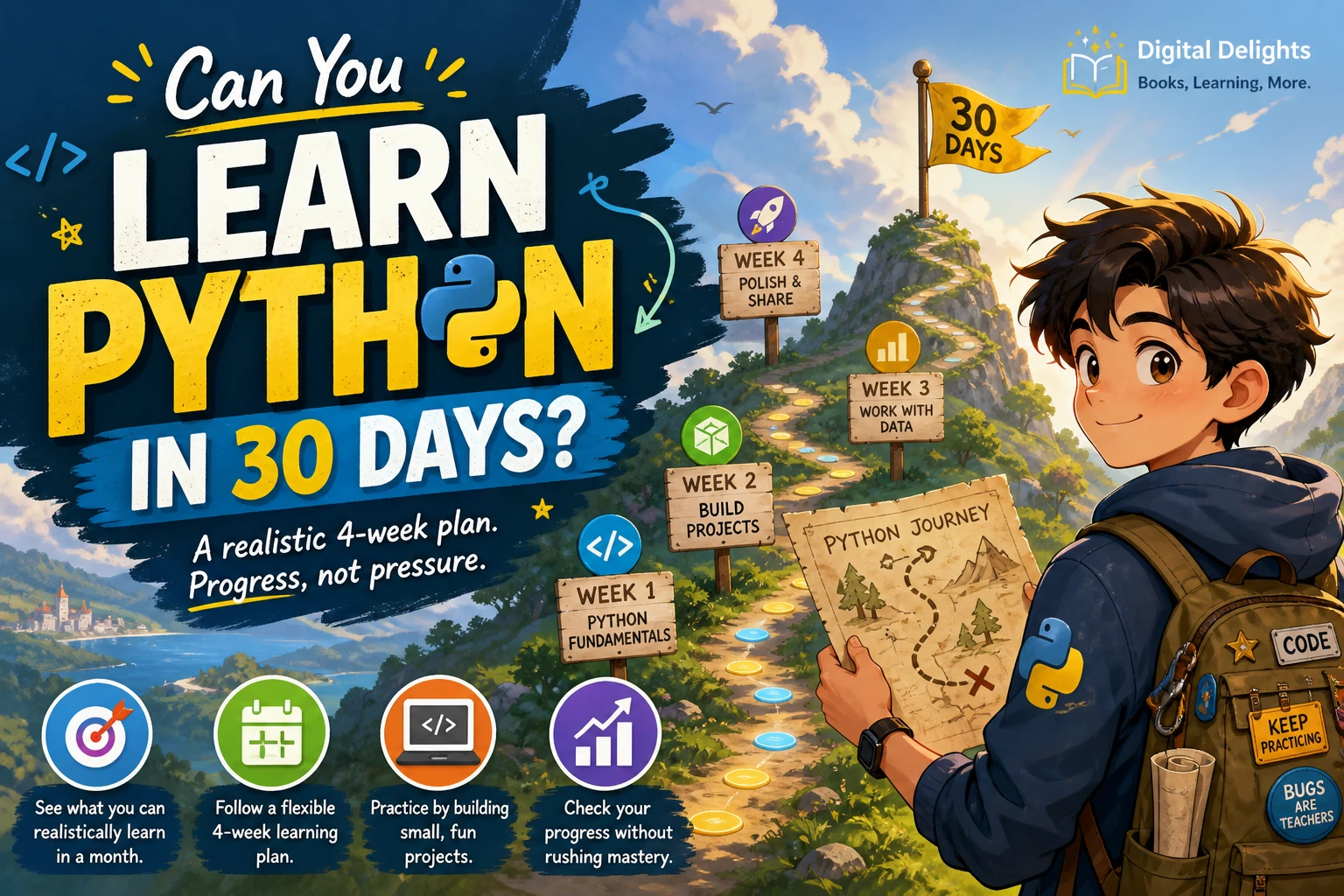
There is no evidence-backed number of hours, weeks, or months that applies to everyone. The available learning materials describe topics and skills, but they do not establish how quickly different learners master them. Treat any precise timeline as an estimate based on particular assumptions—not a promise or a standard you must meet.
Instead, define your destination. If you want to automate a repetitive task, you may not need the same breadth of knowledge as someone aiming to build web applications or work with machine learning. You can start using Python for small tasks while continuing to develop your skills.
Your starting point matters, too. The official Python tutorial is aimed at readers who already have some basic programming understanding. Someone new to programming may need to spend more time learning general ideas such as variables, decisions, repetition, and problem-solving before those ideas feel familiar in Python.
What Does It Mean to “Learn Python Well”?
“Well” is not a single finish line. Use these stages to describe what you can do now and choose a sensible next step.
Stage 1: Understand the fundamentals
You can read and write simple Python using variables, strings, numbers, conditions, loops, and basic input and output. You understand what a short program is doing, even if you still need examples or notes.
Stage 2: Combine concepts into useful scripts
You can use functions and collections such as lists and dictionaries to organise a small program. You can break a task into manageable steps, run your code, and make straightforward changes when the output is wrong.
Stage 3: Build and improve small projects
You can take a modest idea from a blank file to a working result without following a tutorial line by line. You know how to investigate errors, test different inputs, and revise code when your first approach does not work.
Stage 4: Apply Python to a specific area
You have learned the additional tools and practices your chosen work requires. Data analysis, automation, web development, and machine learning involve different libraries, workflows, and kinds of problems. General Python knowledge is a foundation, not a substitute for learning the tools of a particular field.
What Affects Your Python Learning Pace?
Whether you have programmed before
If you already understand programming concepts in another language, you can focus more on Python’s syntax and conventions. If this is your first programming language, you are learning both the language and broader ways of thinking about instructions, data, and problem-solving. Neither starting point guarantees a particular pace.
How much of your learning is hands-on
Reading or watching an explanation can help introduce an idea, but it does not show by itself whether you can use it. Writing code, changing it, and investigating unexpected results gives you a chance to practise applying concepts. A useful session ends with some code you have written or modified yourself.
How you respond to errors
Errors are part of programming, not proof that you are unsuited to it. Learning to read an error message, locate the relevant line, check your assumptions, and test a small change is an important part of becoming more independent. If a program fails, try to identify what you expected and what actually happened before looking for a complete solution.
The size and complexity of your projects
A short script with a clear input and output is a smaller learning challenge than a program that uses files, external services, multiple libraries, or a user interface. Projects that are too ambitious can make it hard to tell which concept is causing trouble. Build complexity gradually and add one new challenge at a time.
Your intended use
Learning Python for simple automation and learning it for professional software development are not identical goals. Specialist work may require additional programming concepts, tools, testing practices, and subject knowledge. Decide what you want to make or solve, then let that goal guide what you study next.
A Milestone-Based Python Learning Roadmap
Use this roadmap as a sequence, not a deadline. Move forward when you can apply a topic in a small example, and return to earlier material whenever a project exposes a gap.
1. Learn basic syntax and data types
Start with how to run a Python program, assign values to variables, work with strings and numbers, and display results. Practise making small changes to examples so you learn what each line affects.
- Write a program that asks for a name and prints a personalised greeting.
- Use numbers and arithmetic to calculate a simple total.
- Store text and numbers in variables and inspect the results.
2. Add decisions, loops, functions, and collections
Learn how programs choose between alternatives and repeat actions. Then practise writing functions to give a task a clear name and using lists or dictionaries to work with related information.
- Use a condition to respond differently to different inputs.
- Use a loop to process several items rather than writing the same instruction repeatedly.
- Put a repeated task in a function and call it with different values.
- Store a small set of related items in a list or dictionary.
3. Practise reading errors and debugging
When something goes wrong, slow down and check the exact error message. Look at the line it identifies, inspect the values involved, and test one change at a time. Keep examples of errors you have solved; reviewing them can help you recognise similar problems later.
4. Build, test, and refine a small project
Choose a project with a clear purpose and a manageable scope. For example, make a simple quiz, a personal task list, or a script that organises information you enter. Start with the smallest working version, then add features only after the core behaviour works.
When it runs, test more than the ideal case. Try empty input, unexpected values, and repeated use. Make a short note about what you changed and why. Being able to explain your own code is a stronger sign of progress than having copied a longer example successfully.
5. Choose a direction and learn its tools
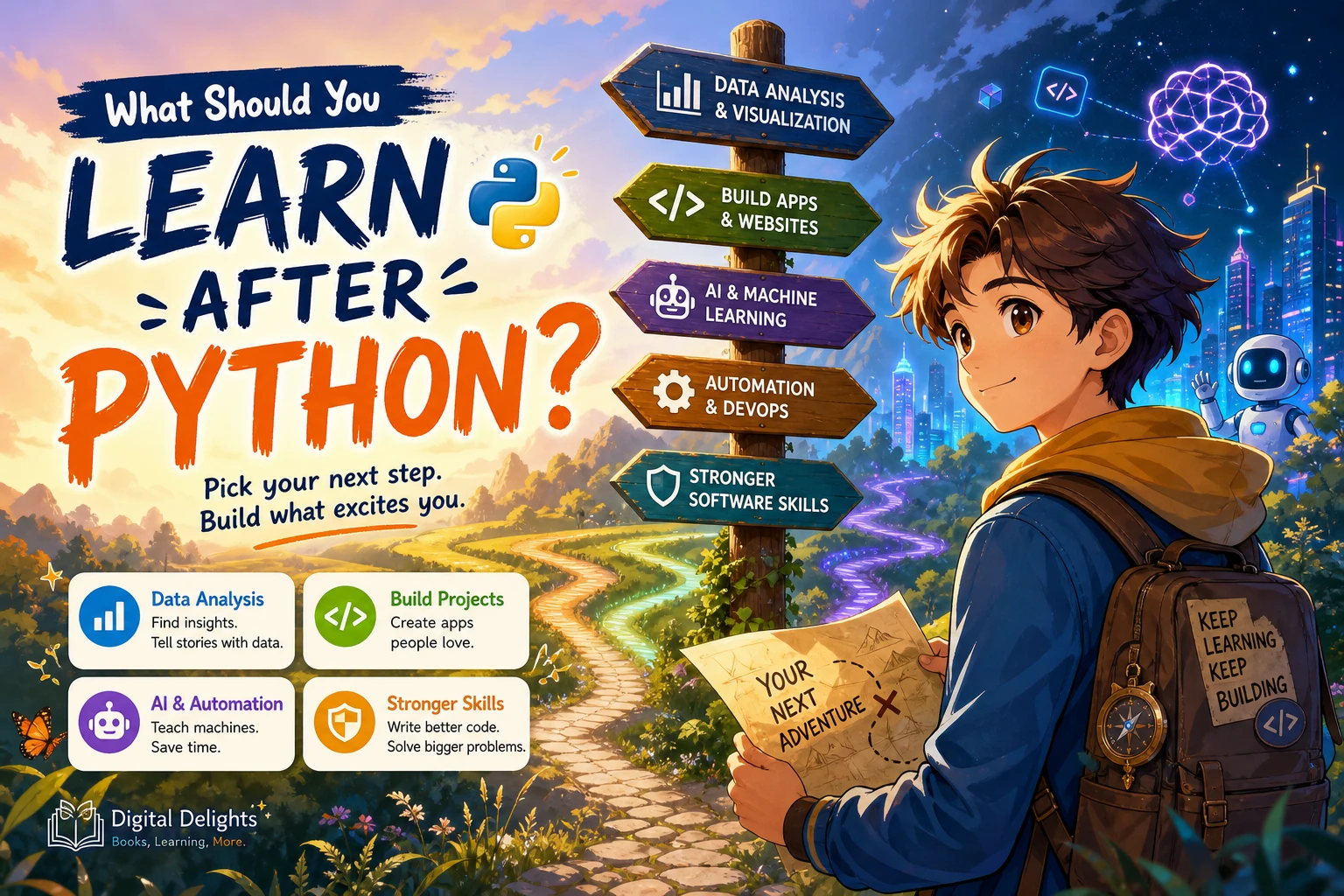
Once you can make small programs independently, choose a practical direction. A data-focused learner might explore data structures and analysis tools; someone interested in automation might practise working with files and repetitive tasks. Learn the new tools alongside small projects that make their purpose clear.
How to Make Progress More Efficiently
- Practise regularly: Choose a routine you can sustain. Consistency gives you repeated opportunities to recall and apply ideas; there is no single required number of sessions.
- Write code before viewing the answer: Attempt the exercise, even if your first version is incomplete. The effort of deciding what to try is part of learning.
- Keep projects close to your current level: A project should stretch you without requiring you to learn many unfamiliar topics at once.
- Change existing examples: Alter the inputs, add a feature, or rewrite a section in your own way to check whether you understand how it works.
- Review and improve earlier work: Revisit a project after learning a new concept and see whether you can make it clearer or more reliable.
- Track abilities, not just pages completed: Record what you can now build or explain without step-by-step instructions.
Expectations That Can Get in the Way
Finishing a course is not the same as being proficient
A course or book can provide structure, examples, and practice, but completing it does not automatically mean you can solve unfamiliar problems. Use learning materials as a guide, then check your understanding by building something that is not a direct copy of the lesson.
“Job-ready” depends on the role
There is no single Python milestone that makes every learner job-ready. Different roles call for different technical skills, project experience, and ways of working. Treat Python as one part of a larger learning plan, and look at the actual requirements of the work you want to pursue.
Getting stuck is part of the process
Programming often involves trying an approach, finding a flaw, and revising it. Progress does not mean never needing help. It means becoming better at narrowing down a problem, using documentation or examples thoughtfully, and understanding the changes you make.
Choosing a Resource for Your Current Stage
A resource is most useful when it fits what you need to practise now. If you are brand new to coding, Python for the Greenhorns Book-1 is described in the catalog as an introduction for first-time programmers, covering setup, basic concepts, and simple exercises. If you already know the fundamentals and want structured practice, Python Workout: 50 Essential Exercises (MEAP Version 3) focuses on exercises across core Python topics.

Python for the Greenhorns Book-1
By Monty
First-time programmers seeking a gentle introduction to Python setup, basic concepts, and simple exercises.
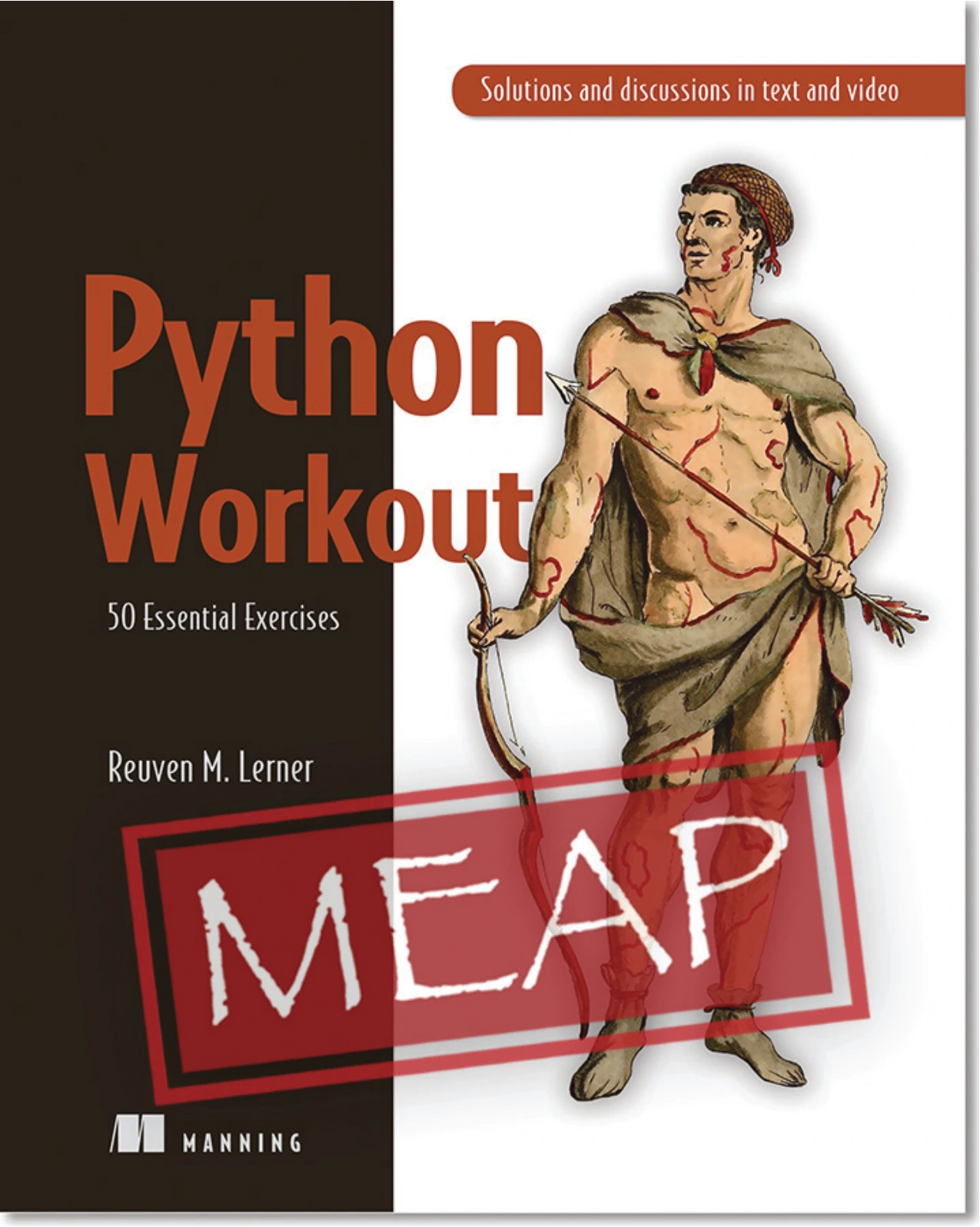
Python Workout: 50 Essential Exercises (MEAP Version 3)
Learners who already know the basics and want to work through practical exercises.
| Your current need | Possible resource | Why it may fit |
|---|---|---|
| First steps with programming | Python for the Greenhorns Book-1 | Introduces setup, basic concepts, and exercises for beginners. |
| More practice with Python fundamentals | Python Workout: 50 Essential Exercises (MEAP Version 3) | Centres practice around exercises and assumes familiarity with Python fundamentals. |
These are different kinds of support, not a ranking or a promise about how quickly you will progress. You can also browse the Python collection to compare other learning resources by topic and level.
Frequently Asked Questions
Do I need programming experience before learning Python?
No. You can begin with Python as your first programming language. Choose material intended for beginners; some technical references, including the official tutorial, assume you already understand basic programming concepts.
Does practising every day make you learn Python faster?
Regular practice can help you revisit concepts and keep applying them, but the available sources do not establish a specific schedule or prove a set timeline. Choose a sustainable routine and focus on what you can do with the material, rather than counting sessions alone.
When should I move from tutorials to projects?
Start small projects as soon as you can combine a few basic concepts, such as variables, conditions, and loops. You do not need to wait until you have studied every feature of Python. Begin with a modest goal, use references when needed, and gradually reduce how much you rely on step-by-step instructions.
How can I tell if I know Python well?
Ask whether you can write a small program for a clear purpose, explain its main parts, investigate errors, and make changes without following a tutorial exactly. For specialist work, also check whether you can use the tools and concepts required in that area.
Conclusion: Measure Python Progress by What You Can Build
How long it takes to learn Python well depends on what “well” means for you. There is no dependable universal clock. Build a foundation, practise using it, learn to debug, and move from guided examples to projects you can shape yourself. When you can solve a problem, explain your approach, and identify what you need to learn next, you have a practical measure of progress—and a clear path forward.