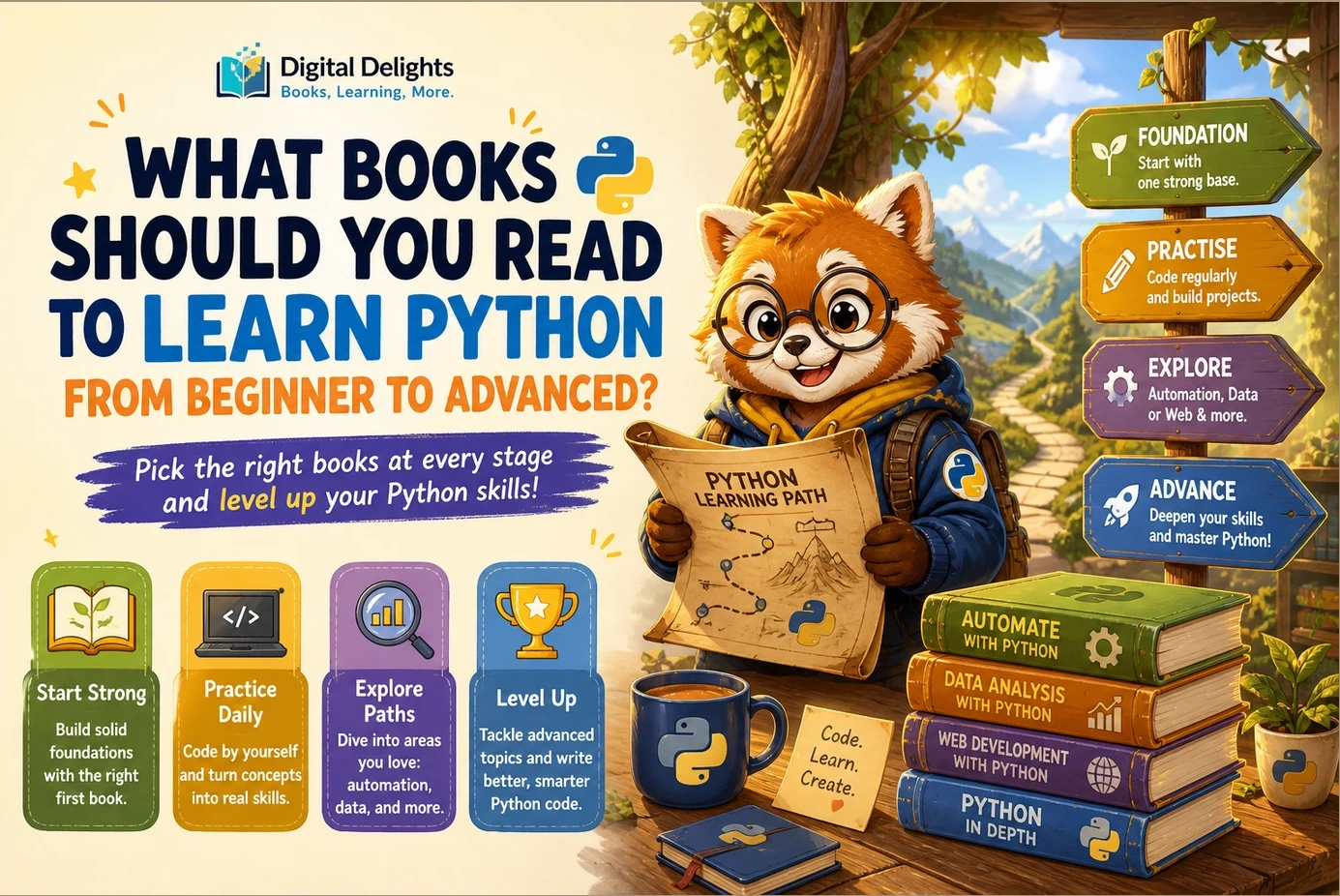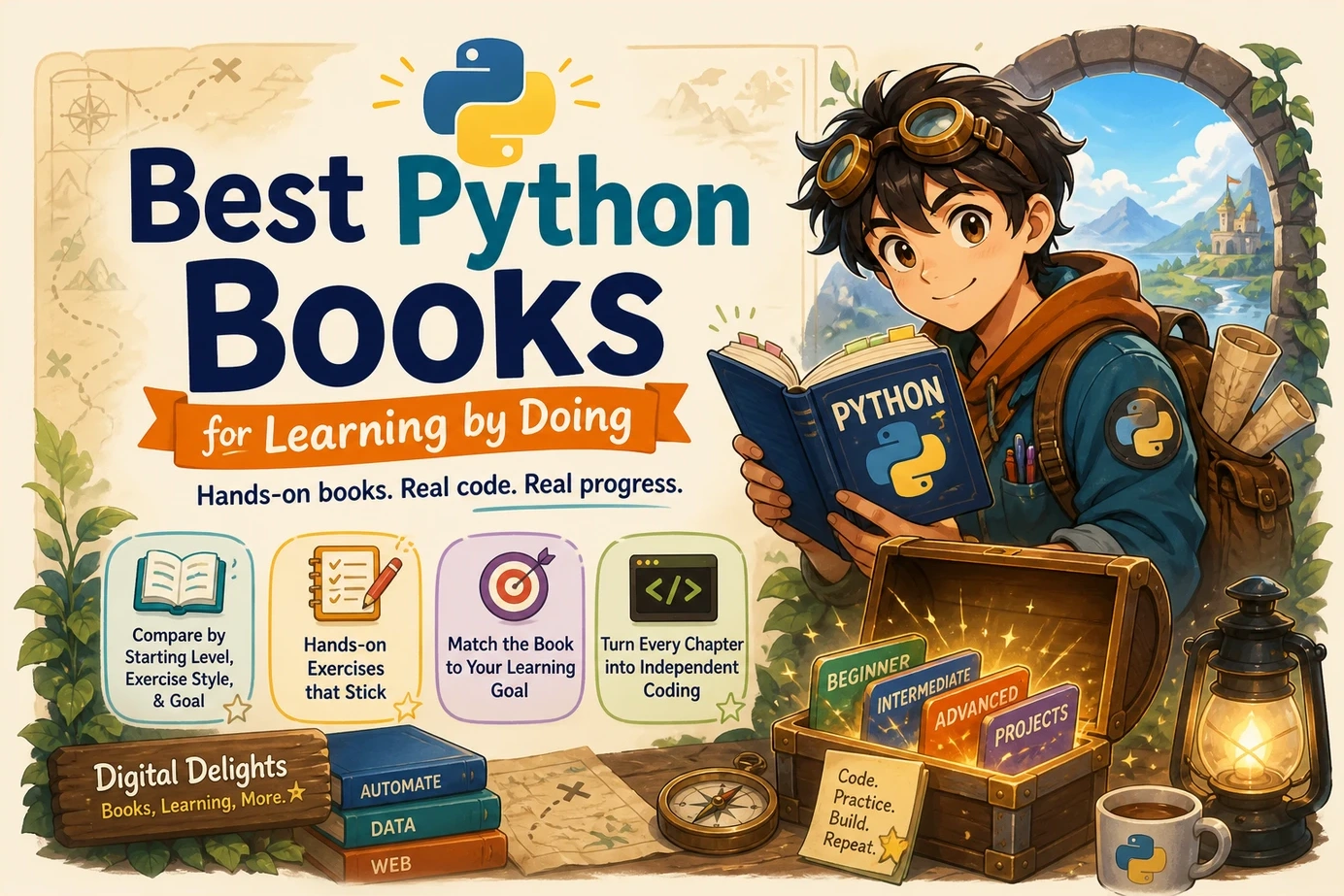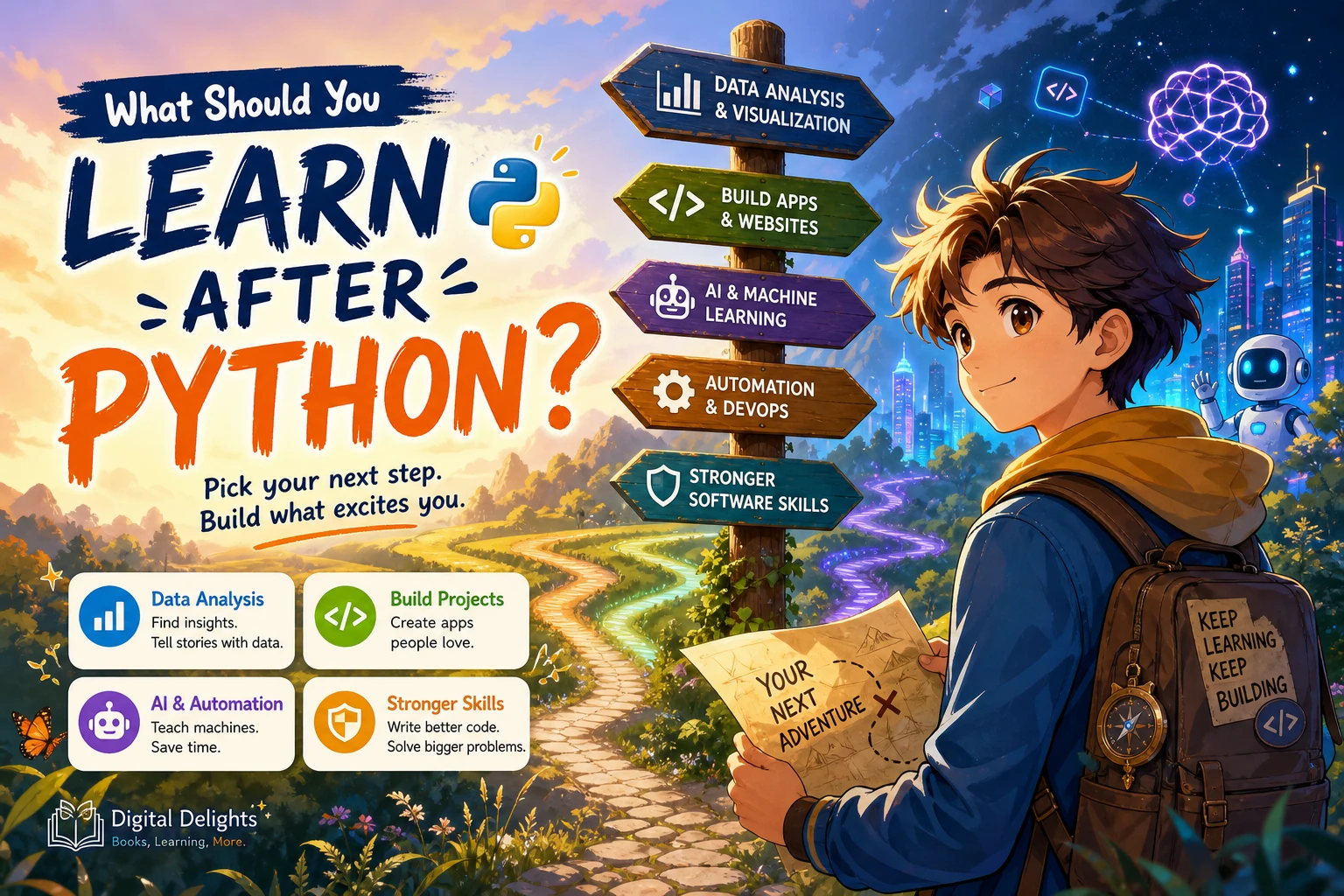
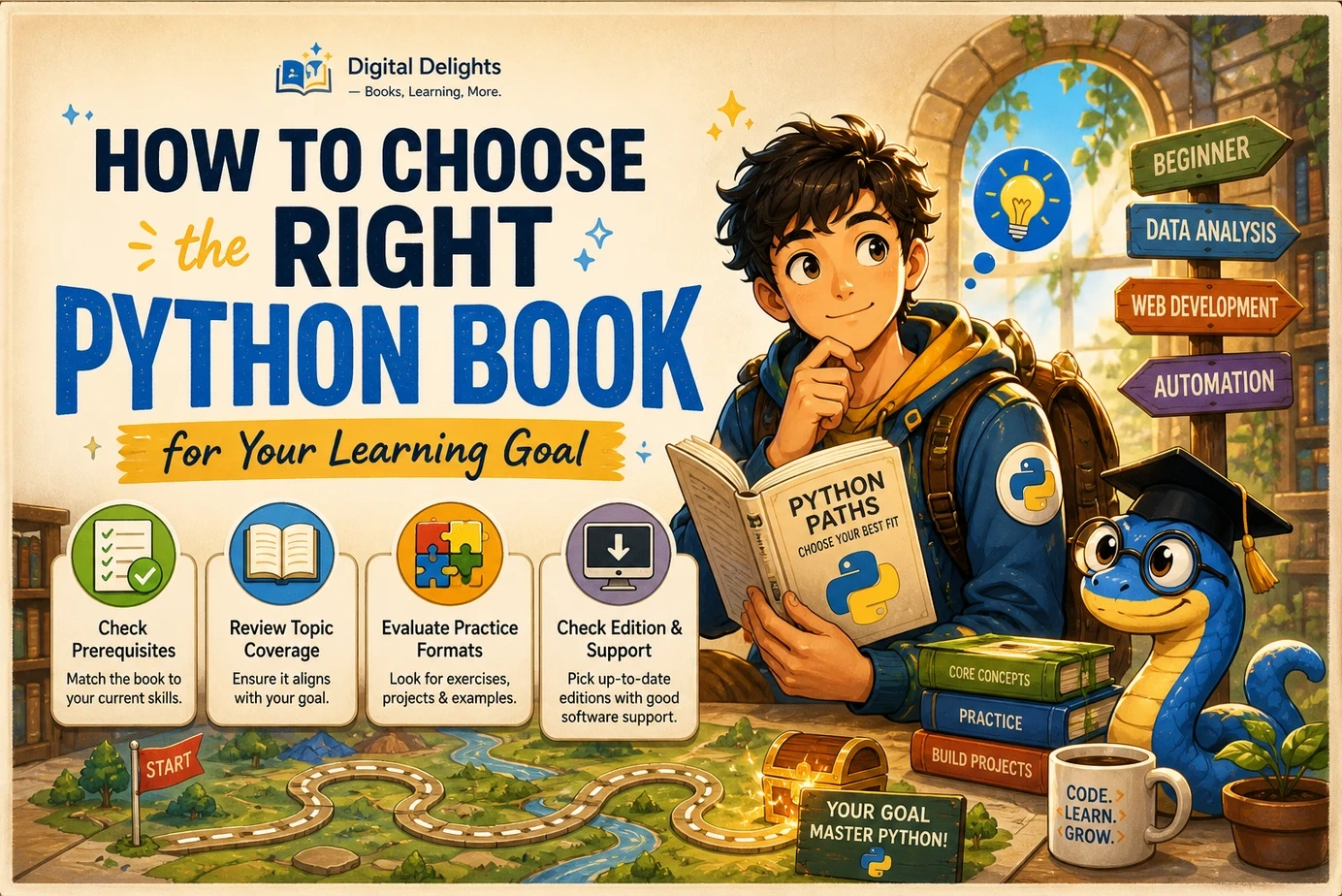
How to Choose the Right Python Book for Your Learning Goal
A Python book can cover the right language and still be the wrong starting point. A guide to machine learning may assume you already understand functions. A web-development book may focus on deploying applications rather than writing your first program. An advanced language guide may explain better ways to write code without teaching programming from scratch.
The simplest way to choose is to match three things: your current skills, one task you want to accomplish, and the kind of practice you need. Then check the exact edition, software requirements, and available learning support.
This guide explains how to choose a Python book without relying on a universal “best” ranking. You will learn how to read a contents page, assess prerequisites, compare teaching styles, and narrow your options to one useful starting resource.
How to choose a Python book: start with your current skills
Before comparing titles, separate your programming experience from your experience with Python. Those are different starting points.
If you are completely new to programming
Look for a book that teaches both programming concepts and Python syntax. It should explain what a variable represents, why a loop repeats work, how a function receives information, and how to interpret an error—not just show the commands.
A useful beginner contents page should include:
- Installing Python and running a script.
- Variables, strings, numbers, and basic input and output.
- Conditions and loops.
- Lists, dictionaries, and other core collections.
- Functions, parameters, and return values.
- Reading and writing files.
- Errors, exceptions, and basic debugging.
- Exercises that require you to write your own code.
Do not choose a specialist book simply because its subject sounds exciting. First check whether it teaches these foundations or expects you to arrive with them.
If you know another programming language
You may need less explanation of loops and functions, but more help with Python’s conventions, collections, modules, and approach to organizing code. A lengthy introduction to programming could repeat material you already know.
The official Python tutorial explicitly targets programmers who are new to Python, rather than people who are new to programming. Use it as a starting benchmark: a paid book should offer something you need beyond that introduction, such as guided exercises, a particular application, or a more suitable explanation style.
If you already write basic Python
Choose according to the problem you cannot yet solve comfortably. You might need to clean messy datasets, structure a growing project, build an application, or investigate slow code.
Try this practical self-check:
- Can you write a loop without copying an example?
- Can you put repeated logic into a function?
- Can you decide whether a list or dictionary fits a small task?
- Can you read a file and work with its contents?
- Can you follow an error message to the relevant part of your program?
This is not an exam. If several answers are “not yet,” look for foundations and practice before a book centered on advanced frameworks or optimization.
Match the contents to a concrete learning goal
Replace “I want to learn Python” with an outcome you can recognize. “I want to combine monthly CSV reports” is easier to match to a book than “I want to become good at coding.”
Use the following table to identify the coverage that matters. The prerequisites are questions to investigate, not universal requirements for every book in that category.
| Learning goal | Topics to look for | Prerequisites to check |
|---|---|---|
| Learn programming from scratch | Setup, syntax, collections, functions, files, debugging, small exercises | Does it assume any previous coding experience? |
| Automate routine tasks | File operations, text processing, APIs, error handling, repeatable scripts | Does it explain functions, paths, and installing packages? |
| Analyze spreadsheet-style data | Cleaning, filtering, grouping, joining, aggregation, visualization | How much Python and spreadsheet knowledge is expected? |
| Build machine-learning projects | Data preparation, training, evaluation, overfitting, model comparison | What Python, statistics, and mathematics are assumed? |
| Build web applications | Requests, routes, APIs, data storage, application structure, deployment | Is this an introduction to web development or a production workflow? |
| Improve existing Python code | Data structures, functions, readability, maintainability, focused techniques | Must you already be able to write working programs? |
| Investigate performance problems | Profiling, memory use, numerical computing, concurrency, optimization | Does it assume substantial Python experience? |
General programming foundations
For a first book, a coherent sequence matters more than a long list of technologies. Check whether early exercises use ideas already explained, and whether later projects build on those exercises.
A small command-line expense tracker is a useful example of a foundations project: it can bring together input, collections, functions, files, and error handling. You do not need a web framework or machine-learning library to practise those skills.
Automation and data collection
Choose an automation book around the task you want to repeat. Renaming files, transforming text, collecting web data, and generating reports involve different tools. A scraping guide is not automatically a complete guide to everyday automation.
If your specific goal is extracting information from web pages, Hands-On Web Scraping with Python covers web-page structure, HTTP, XPath and CSS selectors, Beautiful Soup, Scrapy, Selenium, and APIs. Its documented scope makes it a candidate for web data collection rather than a general-purpose first programming book.
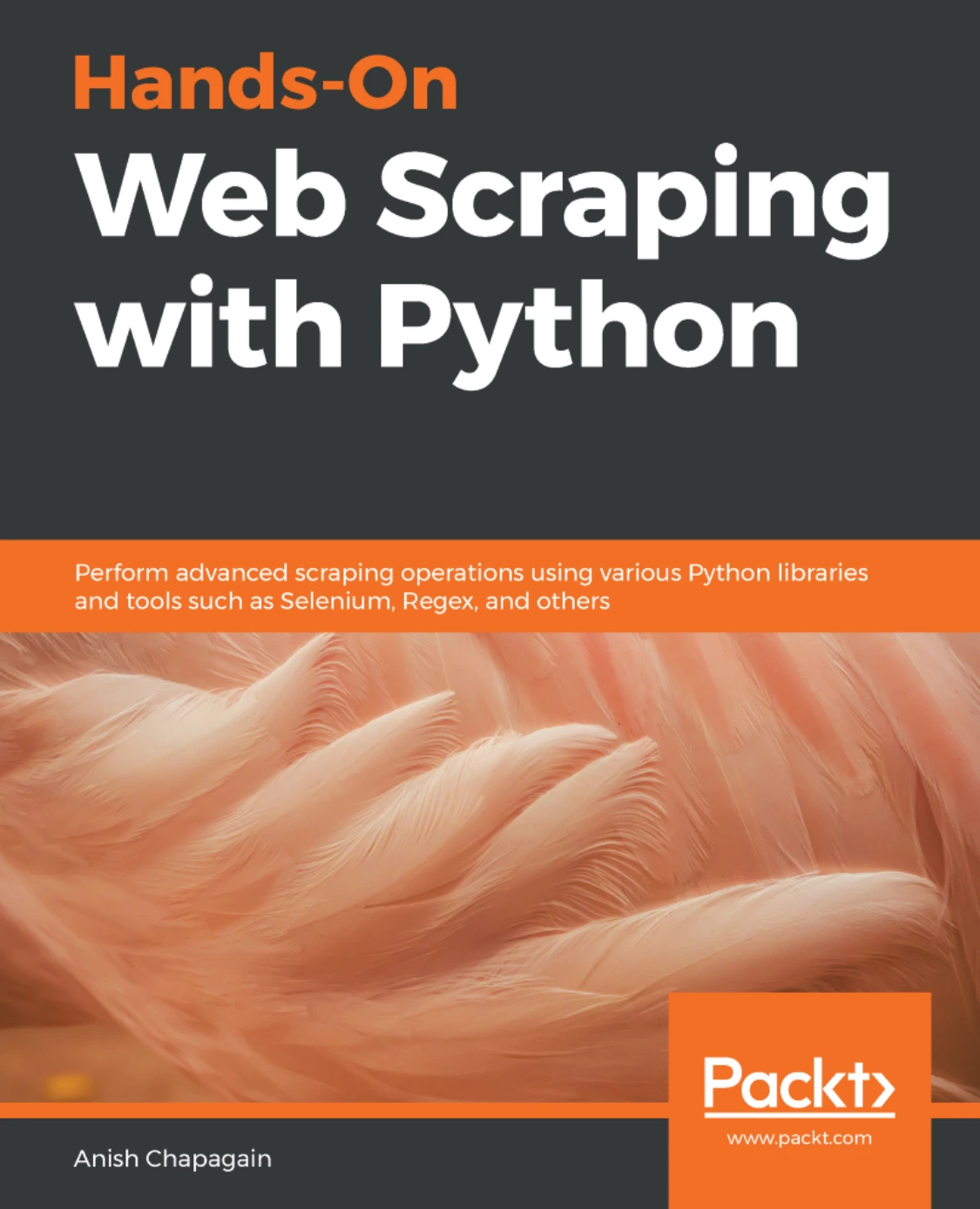
Hands-On Web Scraping with Python
Readers seeking web-page extraction techniques, with coverage spanning page structure, selectors, scraping libraries, browser automation, and APIs.
For practice, start with a saved HTML file or a site you have permission to use. Choose learning examples that do not require bypassing access controls or collecting sensitive personal information.
Data analysis before machine learning
If you want to clean reports, combine tables, or visualize trends, prioritize data-analysis coverage. A book dominated by neural networks may spend little time on the everyday transformations you need.
Python for Data Science: A Hands-On Introduction moves from Python data structures and libraries into retrieving data from files, APIs, and databases. Consider it when your goal involves understanding how data enters and moves through a Python workflow. Check a sample to judge whether its treatment of the foundations matches your starting level.
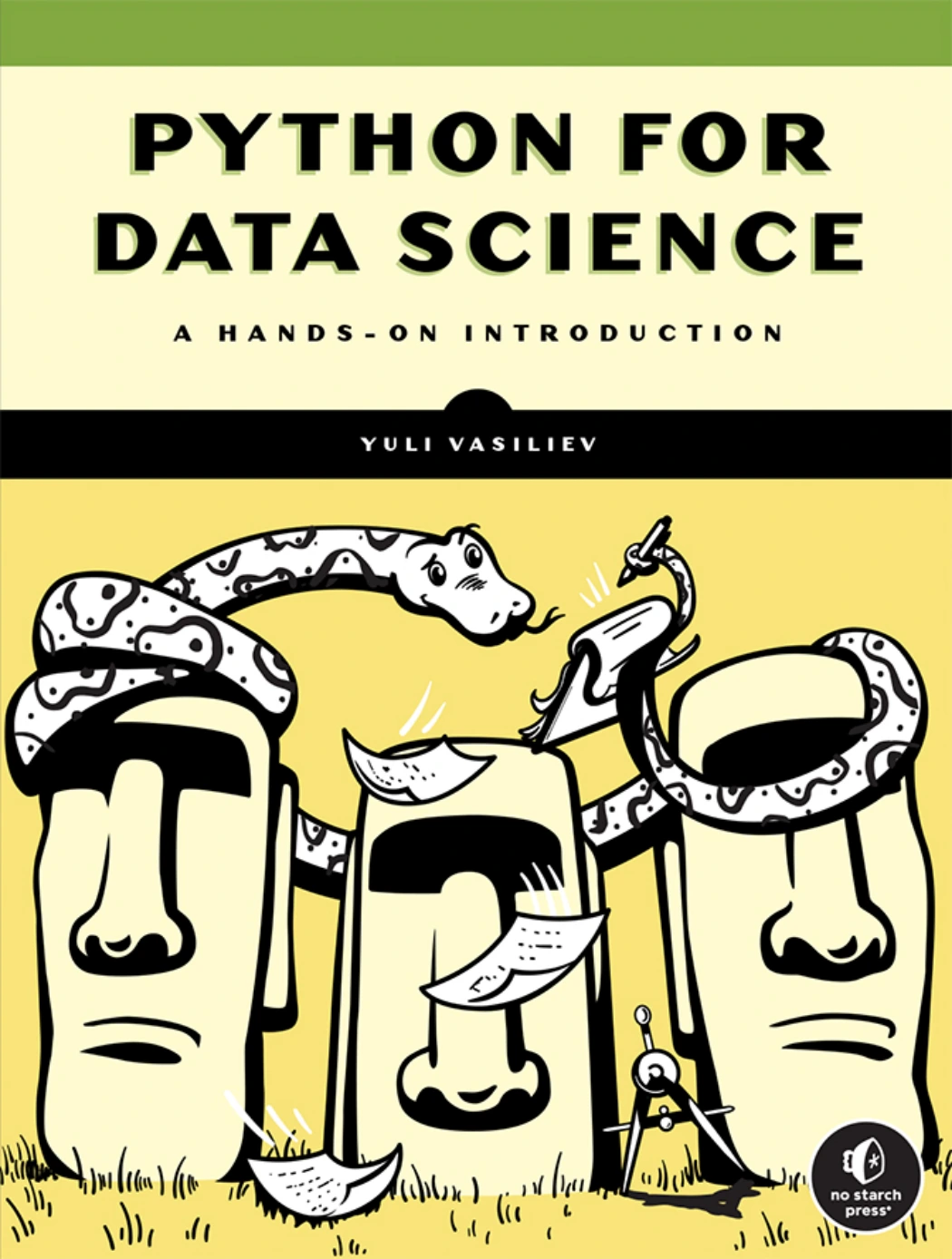
Python for Data Science: A Hands-On Introduction
Learners interested in Python data structures and retrieving data from files, APIs, and databases; sample review is advised to assess starting-level fit.
For machine learning, look beyond whether a book includes a model-building example. You should also want explanations of how models are evaluated and what makes a result useful.
Applied Machine Learning and AI for Engineers is positioned for engineers and developers interested in applied AI. Its catalog coverage includes regression, classification, model evaluation, and practical work with Python, scikit-learn, Keras, and TensorFlow. It is a conditional option for that goal—not a substitute for checking its Python and mathematics assumptions.
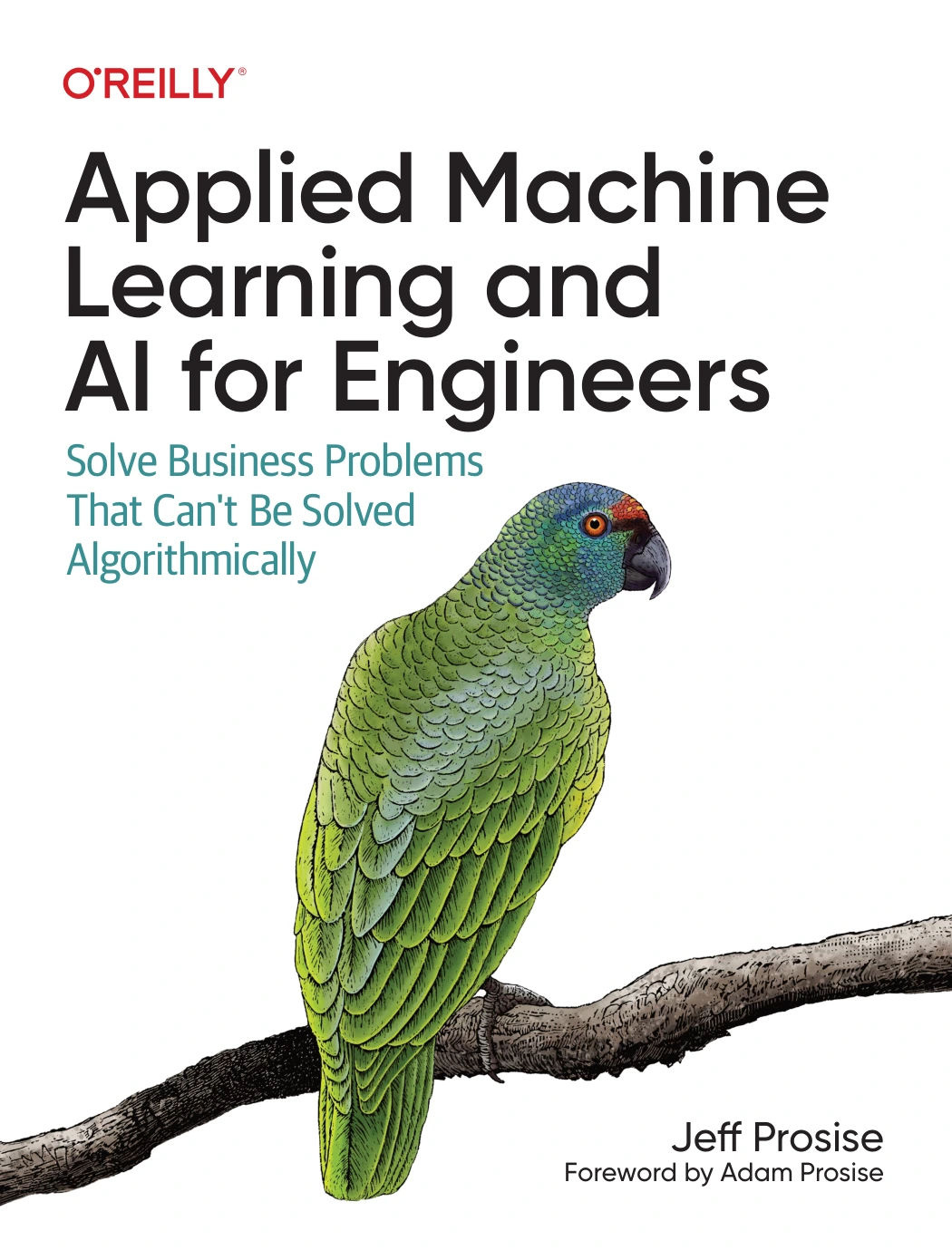
Applied Machine Learning and AI for Engineers
By Jeff Prosise
Engineers and developers exploring regression, classification, model evaluation, and practical AI tools.
Web applications: first app or production system?
These are different learning goals. An introductory web book should explain how requests, routes, and responses fit together. A production-oriented book may instead spend substantial time on deployment, infrastructure, monitoring, and security.
A Blueprint for Production-Ready Web Applications follows a to-do application through development and production workflows using Python, Quart, React, TypeScript, Docker, Terraform, and AWS. The catalog explicitly positions it for programmers who already know the basics. Consider it when you want to understand how an application is assembled and operated, rather than when you need your first lesson in Python.
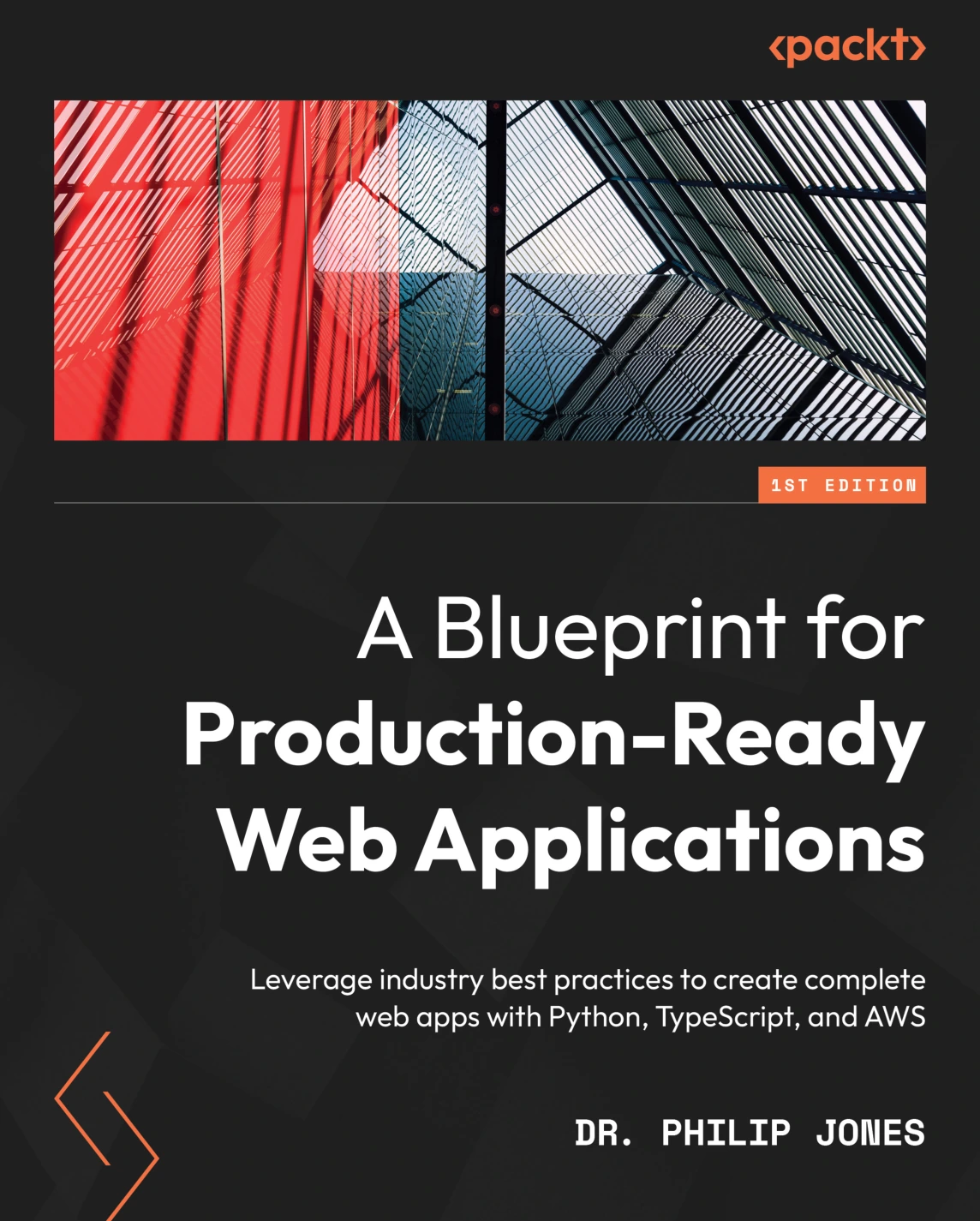
A Blueprint for Production-Ready Web Applications
By Philip Jones
Programmers who know the basics and want a project-led view of full-stack development, deployment, monitoring, and security.
Clearer code versus faster code
If your scripts work but are difficult to change, look for readability and maintainability. If they are too slow or use too much memory, look for measurement and performance analysis. Buying an optimization book will not necessarily address confusing function names or tangled project structure.
Python How-To: 63 Techniques to Improve Your Python Code uses focused explanations, examples, and challenges to explore everyday Python decisions, including collections, text processing, and type hints. It is worth comparing when you can already write code and want to make better choices within it.
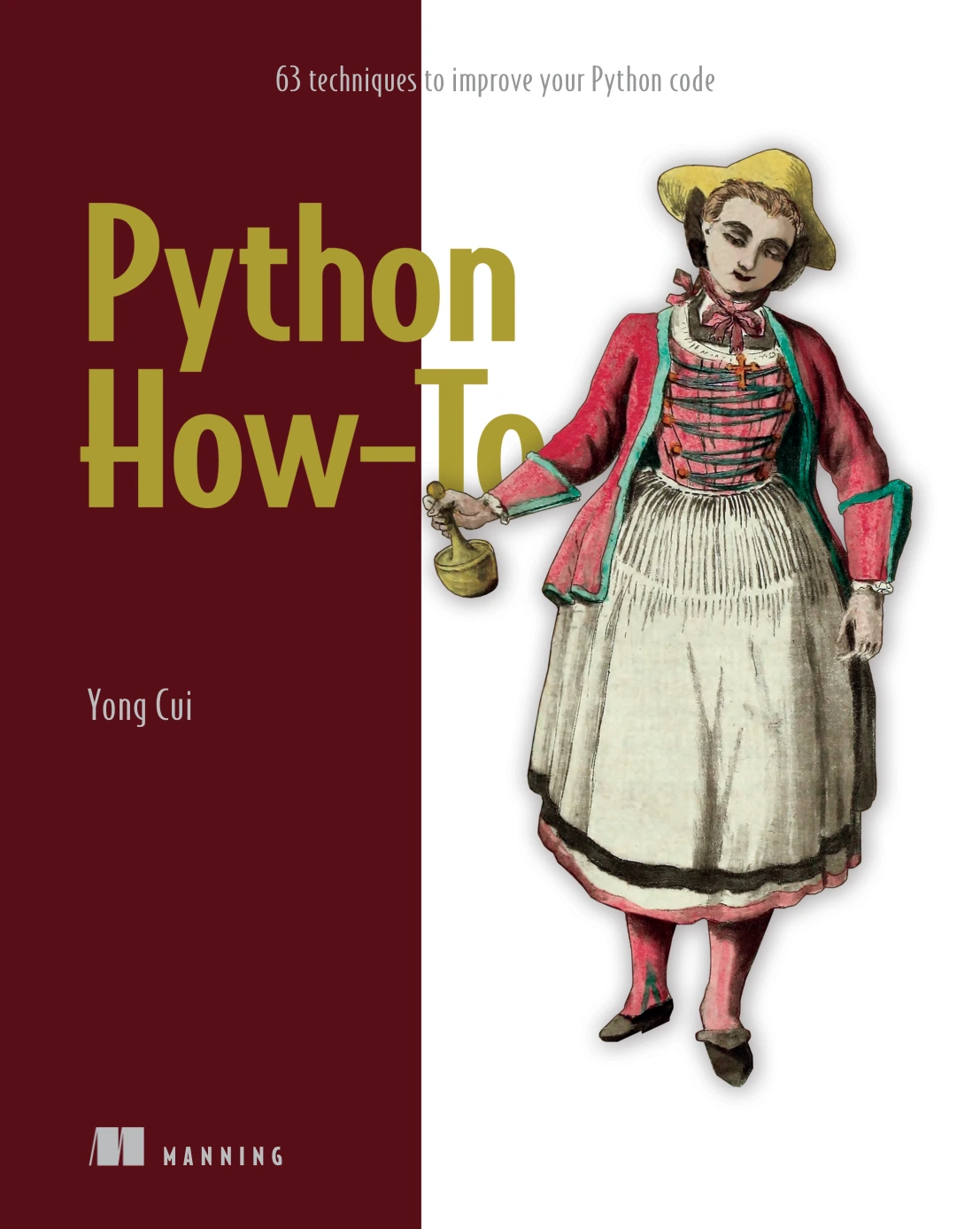
Python How-To: 63 Techniques to Improve Your Python Code
By Yong Cui
Readers already writing Python who want focused explanations, examples, and challenges around maintainable code and language choices.
High Performance Python: Practical Performant Programming for Humans (Third Edition) focuses on profiling, data structures, memory, numerical computing, compilation, and concurrency. Its scope fits readers investigating demanding workloads. A useful question before choosing it is: “Do I have a working program whose performance I need to understand?”
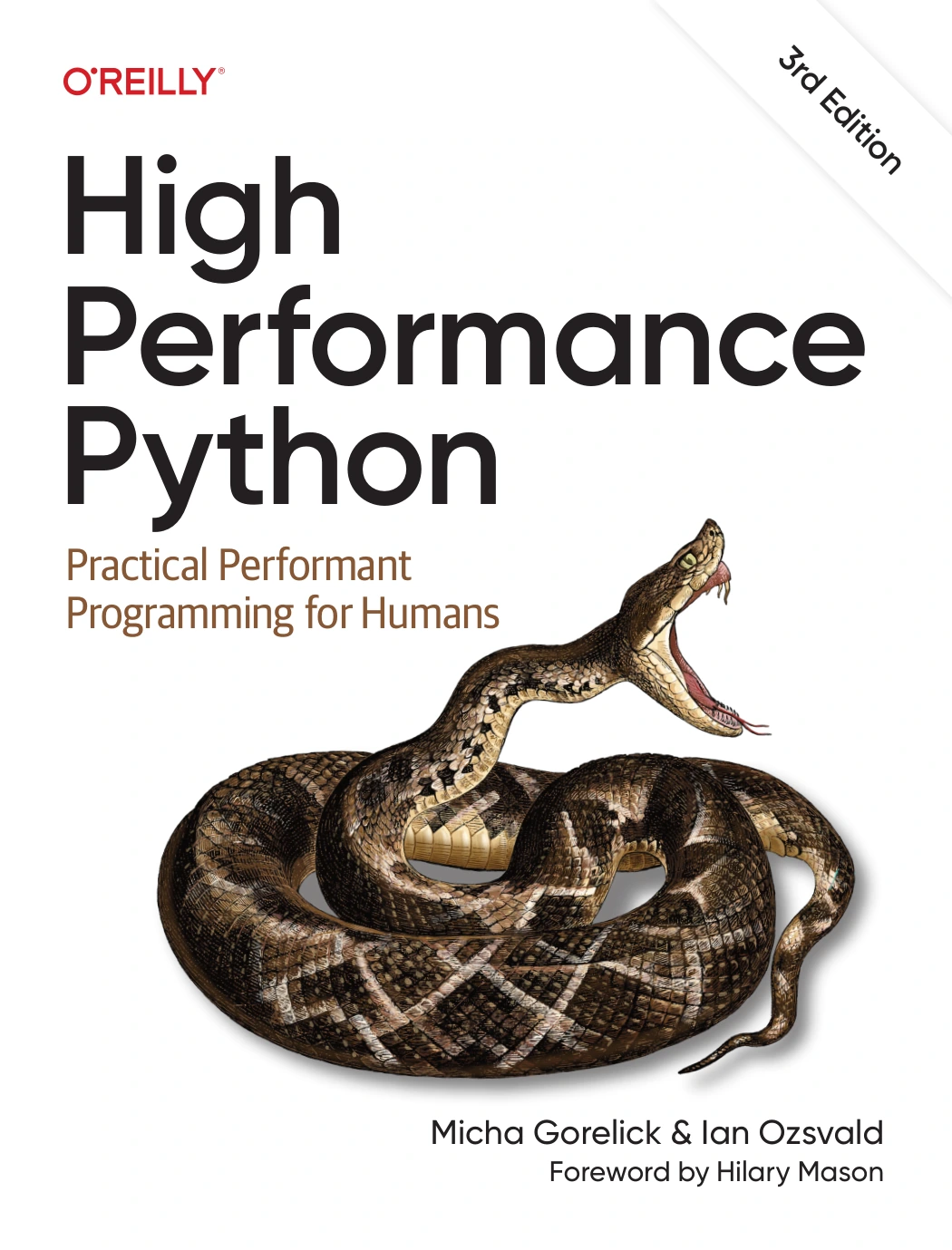
High Performance Python: Practical Performant Programming for Humans (Third Edition)
Experienced Python readers investigating execution time, memory, numerical workloads, and optimization approaches.
Compare how the book teaches, not just what it covers
Two books can contain similar topics but ask you to learn in very different ways.
Guided projects
A guided project gives you a sequence and a visible result. It can help you connect individual concepts, but following instructions is not the same as making your own decisions.
Look for opportunities to change the project: add a feature, use different input, or handle an edge case. Those changes can reveal which parts you understand and which you have merely reproduced.
Focused exercises
Short exercises let you practise a specific idea without managing an entire application. They are useful when your difficulty is narrow—for example, using dictionaries or breaking a task into functions.
Check whether the book provides hints, solutions, explanations of solutions, or another feedback mechanism. A title that promises exercises does not establish how much feedback is included.
Reference-style material
A reference helps you look up a topic when you know what you need. It may be less suitable as your first learning path if it assumes you can decide which concepts to study next.
You do not have to choose only one format forever. Choose the format that supports your next step.
Use a sample chapter as a fit check
If a sample is available, examine a topic you partly understand rather than judging only the introduction.
- Does the explanation tell you why the code works?
- Are unfamiliar terms defined before they are used?
- Can you predict the output of an example?
- Are there manageable tasks to attempt independently?
- Can you comfortably read the code on your intended device?
For a digital book, also inspect the available format and preview. Small code text or awkward page layouts can make switching between reading and coding frustrating.
Check the exact edition and software requirements
Do not treat a publication date, edition number, or “updated” label as proof that every example will run unchanged in your environment. Check language requirements and library requirements separately.
Before choosing, look for:
- Python version: Which interpreter does the book use?
- Dependencies: Are package versions specified?
- Setup instructions: Do they address your operating system and explain the development environment?
- Companion files: Are required code files and datasets available?
- Corrections: Is there an errata page or other update resource?
- Publication status: Is this the final book or an early-access manuscript?
An early-access edition is a particular snapshot of a developing book. Do not assume that reviews, contents, or prerequisites for the final publication also describe that snapshot.
Likewise, if an introductory description discusses both Python 2 and Python 3, examine its setup and examples carefully. For a current Python 3 learning path, avoid a resource that leaves you uncertain about which material to follow.
The product descriptions above establish coverage and positioning. They do not establish present-day compatibility for every example.
Make a shortlist and choose one starting book
Compare two or three candidates against the same questions. Eliminate mismatches before worrying about minor differences.
- Write your outcome: “I want to combine monthly reports and calculate totals by department.”
- List your existing skills: Spreadsheet experience, some Python syntax, limited confidence with functions.
- Identify essential coverage: Loading data, cleaning values, grouping, joining, and exporting results.
- Check prerequisites and samples: Decide whether you need a foundations book before the specialist material.
- Check edition support: Confirm the required files, software instructions, and publication status.
- Choose one resource and one project: Use the project to turn the reading into independent practice.
Example: a spreadsheet user choosing a data book
Imagine a reader who understands spreadsheet formulas and wants to automate a recurring reporting task. They are choosing between a data-work introduction and an advanced performance guide.
The data introduction is the more relevant candidate because the immediate problem is learning to retrieve and transform information. Performance optimization may become useful later, once a working workflow exists and a measured limitation needs attention.
However, if the sample assumes functions and collections that the reader cannot yet use, the next step should be foundational Python practice. A relevant destination is not always the right first step.
Avoid these common selection mistakes
- Interpreting “beginner machine learning” as “no programming knowledge required.”
- Choosing the longest book instead of the most relevant curriculum.
- Buying several overlapping introductions before practising with one.
- Ignoring required datasets, companion files, or software versions.
- Choosing advanced optimization when the real problem is basic code organization.
- Assuming that finishing a book proves you can solve unfamiliar problems.
Frequently asked questions
Can a specialist Python book be my first programming book?
Possibly, if it genuinely teaches programming foundations and provides enough practice before introducing specialist tools. Check the prerequisite statement and a sample. A short syntax overview may not be sufficient for someone who has never written code.
Is an older Python book still useful?
It may still help with concepts, but inspect its interpreter, libraries, setup instructions, and support resources. Separate the value of its explanations from the work required to use its examples. Age alone is not a complete selection criterion.
Should I choose projects or exercises?
Choose focused exercises when you need practice with individual concepts. Choose guided projects when you want to see concepts work together. In either case, include a task that requires you to make decisions without copying the solution.
When is the free official Python tutorial enough?
It can be a suitable starting point if you already understand programming and want an introduction to Python. Its stated audience excludes complete programming beginners. Consider a book when you need a different pace, more guided practice, or a curriculum tied to your intended application.
Do I need separate books for data analysis and machine learning?
Not necessarily. Some books cover both. Check whether the balance suits your goal: cleaning and reporting tasks need different emphasis from training and evaluating predictive models. Start with the material that addresses your current task rather than buying for every possible future interest.
Your final selection checklist
Before committing to a Python book, make sure you can answer these questions:
- What specific task am I trying to learn?
- Do I meet the stated prerequisites?
- Does the contents page devote meaningful space to my goal?
- Does the sample explanation style suit me?
- Will I write code independently, and how will I check it?
- Do I understand the edition, software requirements, and available support?
- What small project will I attempt alongside the reading?
The right choice is not necessarily the most comprehensive title. It is the book that gives you an appropriate next step and a workable way to practise it. Once you have identified that step, browse the Python books and learning resources at Digital Delights with your checklist in hand.
Source note
The audience distinction for the free tutorial is supported by The Python Tutorial. Linked book descriptions are based on the supplied Digital Delights catalog. The selection framework is editorial guidance about curriculum fit, not a comparative test of learning effectiveness.