What Are the Best Python Books for Intermediate Programmers?
The best Python books for intermediate programmers address the problem your beginner book no longer solves. You may understand functions and loops but struggle to organize a larger program, follow generator-heavy code, or decide when a class is useful. Those are different learning needs, and they call for different books.
Among the Digital Delights titles covered here, Functional Programming in Python is a focused introduction to function-centered techniques, Functional Python Programming offers broader coverage, and Playful Python Projects: Modeling and Animation provides a project-based route. The Python Master is an advanced option for exploring language internals, while 500 Lines or Less complements language study with software-design case studies.
These are editorial matches based on documented coverage—not a tested ranking. Start with your next learning goal, then choose the book whose contents match it.
Best Python books for intermediate programmers at a glance
This comparison separates substantial next-step resources from a fundamentals refresher. The background and limitations below are editorial guidance based on the catalog descriptions, not universal prerequisites.
Catalog-backed Python resources compared by learning goal
| Book | Learning goal | Useful starting background | Scope limitation |
|---|---|---|---|
| Functional Programming in Python — Martin McBride | Understand pure functions, closures, composition, and lazy iteration | Basic Python knowledge; new to functional programming | A focused programming-style introduction, not a general development handbook |
| Functional Python Programming — Steven F. Lott, third edition | Explore functional techniques and data-processing patterns more broadly | Existing Python knowledge | Its emphasis is functional programming rather than comprehensive coverage of every Python topic |
| Playful Python Projects: Modeling and Animation — Maxim Mozgovoy | Practise through simulations, animation, and modeling | Beginner or intermediate hobbyist skills | Its project domain may not match business automation or web-development goals |
| 500 Lines or Less: Experienced Programmers Solve Interesting Problems | Study program decomposition and implementation trade-offs | Comfort reading code and following a small system | A software-design supplement, not a Python-only course |
| The Python Master — Robert Smallshire and Austin Bingham | Explore descriptors, metaclasses, object internals, and byte-oriented programming | Confidence with functions, classes, and existing Python programs | Advanced material rather than a gentle transition from beginner lessons |
| Python Programming for Intermediates — Noah Roberts | Refresh core mechanics, collections, control flow, and functions | Some programming exposure with gaps in Python fundamentals | The described coverage is largely foundational despite the intermediate label |
You do not need all six. A focused book paired with a project you can revise is a more useful starting plan than a reading stack with no clear purpose.
Which book matches your next learning goal?
Understand Python more deeply
If you can write working programs but struggle to explain what happens behind attribute access or class creation, consider The Python Master. The catalog lists descriptors, metaclasses, object storage, customized attribute access, instance creation, class decorators, and byte-oriented programming among its topics.
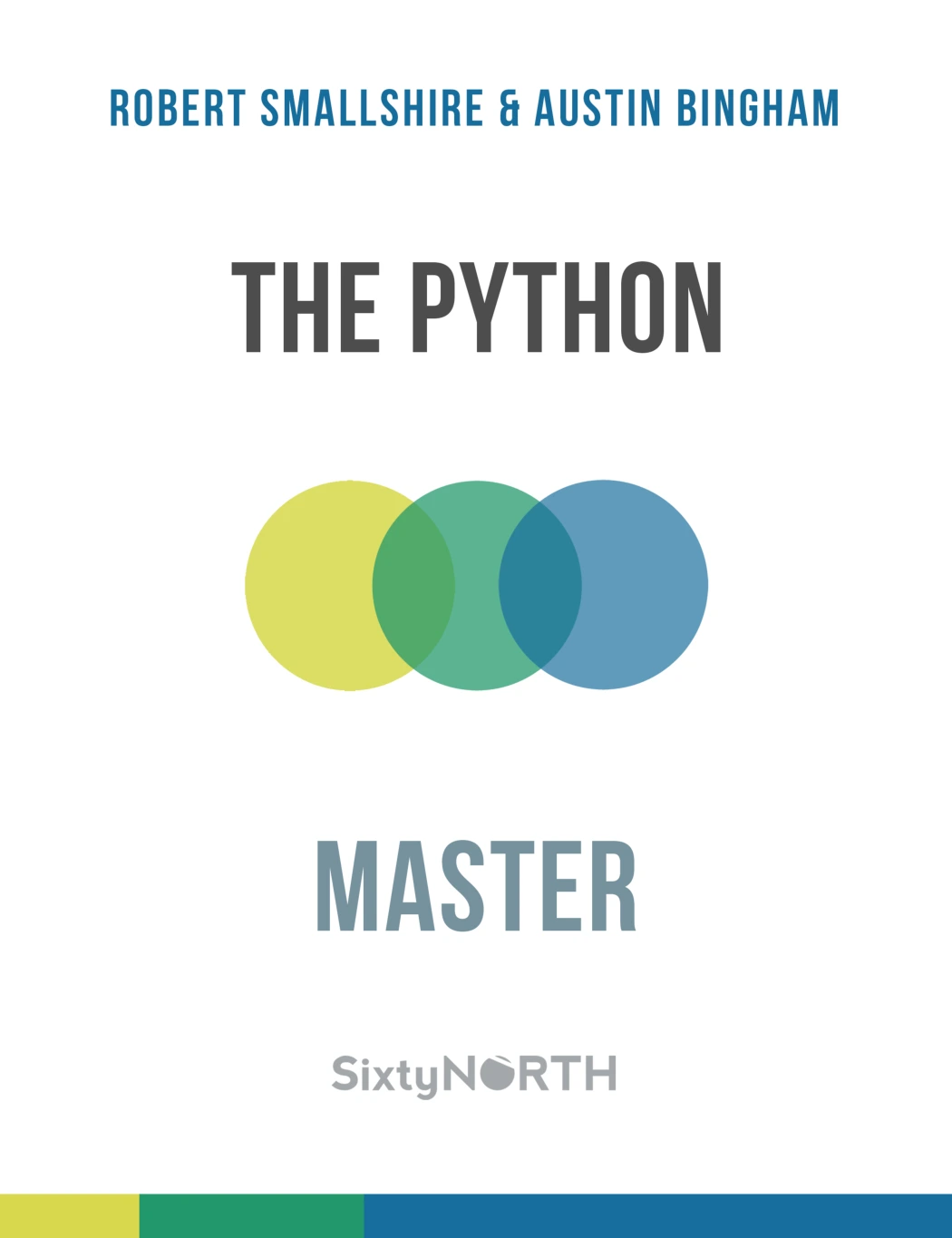
Python readers ready to investigate descriptors, metaclasses, object internals, and byte-oriented programming.
That makes it a targeted option for readers approaching advanced Python. It is not the first place to turn if your immediate difficulty is splitting a script into functions or handling a missing file. Understanding an advanced mechanism also does not mean you should introduce it into every project.
For a manageable companion exercise, build a small class with a clearly defined interface. Identify what its public attributes represent, write examples of expected behavior, and note which parts of the implementation callers should not need to know. Let a concrete question guide your reading rather than trying to use every feature you encounter.
For context, the publisher description of Luciano Ramalho’s Fluent Python, second edition describes a broader intermediate-to-advanced scope spanning the data model, collections, functions, typing, generators, concurrency, and metaprogramming. It illustrates how wide the phrase “language depth” can be; it is not a verified Digital Delights listing in this guide.
Turn working scripts into maintainable programs
Sometimes the next step is not more syntax. Your scripts work, but changes are risky, names are unclear, and setup instructions exist only in your memory. In that situation, evaluate books for their treatment of organization, tooling, documentation, and design—not merely their list of advanced language features.
The supplied publisher research provides two useful scope comparisons. Beyond the Basic Stuff with Python describes coverage of environment setup, formatting, naming, static analysis, Git, profiling, documentation, and object-oriented design. Pearson presents Effective Python, third edition as an itemized collection of advice. Neither title has a matching product row in the catalog material used here, and the available research does not establish their exercise quality or learning outcomes.
Whatever resource you choose for this goal, give yourself an observable task:
- Separate input and output from the calculations they support.
- Replace unclear names with names that explain the role of each value.
- Write down how to install dependencies and run the program.
- Add checks for ordinary inputs and likely failure cases.
- Make one small requirement change and see which parts of the program need editing.
The last step is especially useful: it reveals whether your structure supports change or merely looks tidy.
Learn functional techniques
Functional Programming in Python by Martin McBride is aimed at readers who know basic Python but are new to functional programming. Its described coverage includes pure functions, side effects, mutable and immutable objects, recursion, closures, iterators, generators, partial application, currying, and composition.
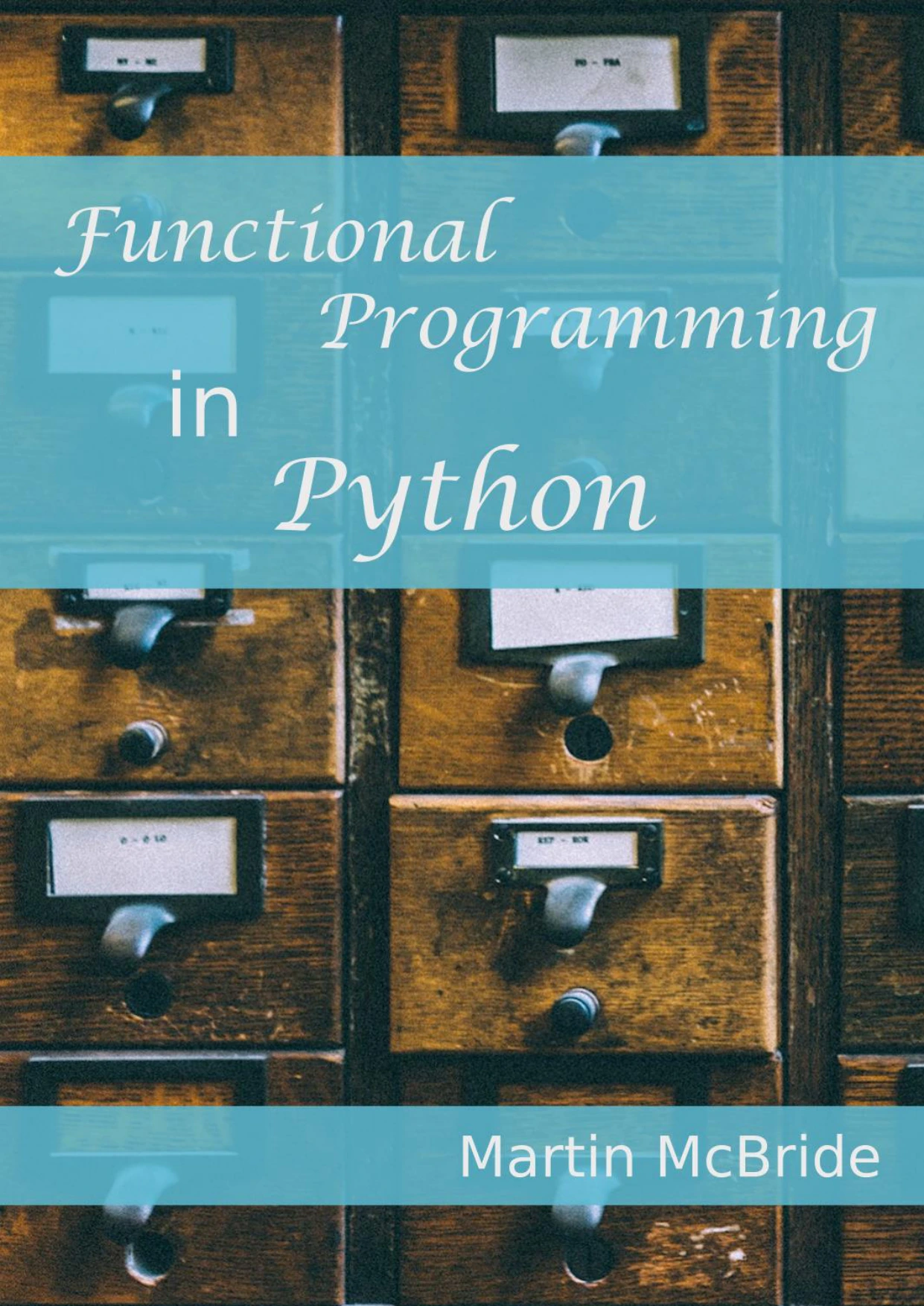
Functional Programming in Python
Readers who know basic Python but are new to pure functions, composition, closures, and lazy iteration.
This is a relevant match if you can write loops and functions but want to understand another way of combining behavior. A useful study question is: which parts of this program compute a result, and which parts interact with the outside world?
Steven F. Lott’s Functional Python Programming: Use a Functional Approach to Write Succinct, Expressive, and Efficient Python Code (Third Edition) has broader described coverage. It connects function-centered thinking with iterators, generators, lazy processing, data cleaning, decorators, concurrency, and web services.
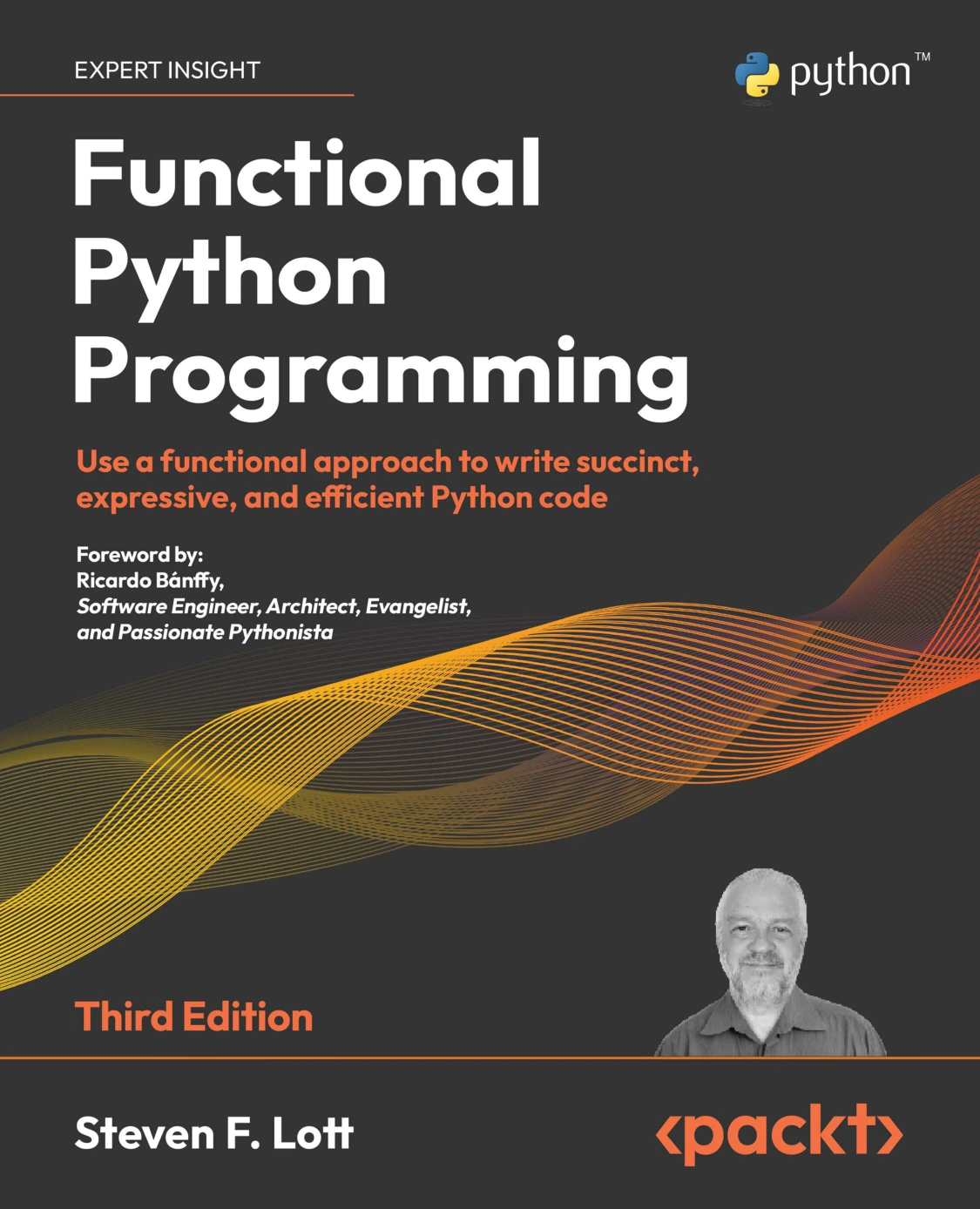
Existing Python programmers interested in function-centered data processing, generators, decorators, and related applications.
The distinction is breadth, not a demonstrated quality ranking. McBride’s book provides an introduction to the approach; Lott’s catalog description extends into more application areas. There is no need to read both before applying a single idea.
Try using your chosen book to improve a small reporting script. Keep reading data, transforming records, calculating results, and displaying output conceptually separate. Then ask whether each transformation is understandable on its own. Avoid replacing a readable loop with a complicated chain merely to make the program look more functional.
Practise through projects and code reading
If you understand explanations but have difficulty building something independently, Playful Python Projects: Modeling and Animation offers a different route. The catalog describes projects involving turtle graphics, animation, collisions, random walks, living systems, grid worlds, and state machines. Its intended audience includes beginners and intermediate hobbyists.
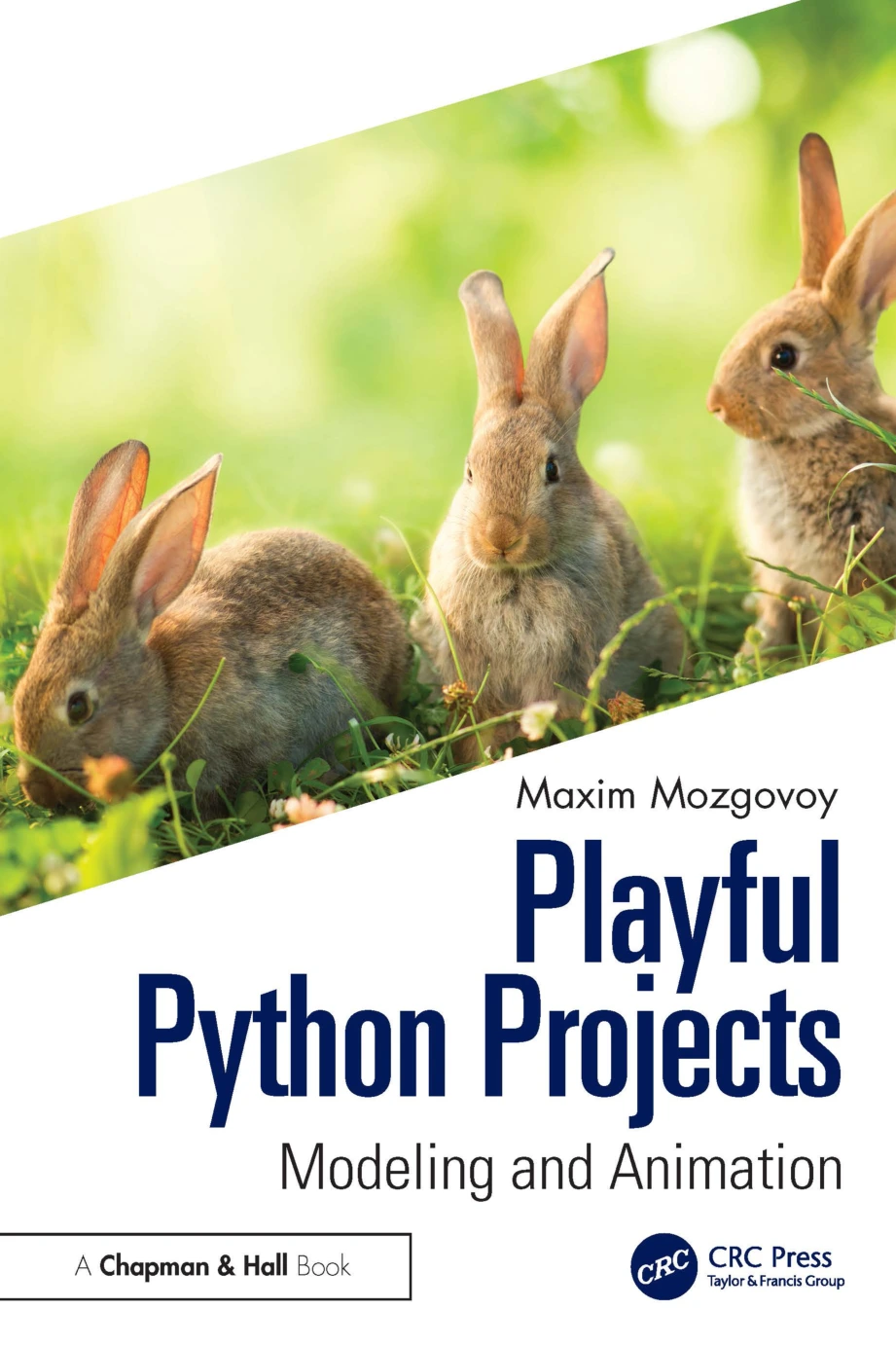
Playful Python Projects: Modeling and Animation
Beginners and intermediate hobbyists interested in simulations, motion, random walks, and state-based projects.
Choose it when those domains interest you. Interest gives you a reason to change an example: alter a movement rule, add a new state, compare different starting conditions, or make the simulation easier to inspect. Those modifications are more revealing than reproducing the original output.
For code-reading practice, 500 Lines or Less: Experienced Programmers Solve Interesting Problems presents compact software case studies. The catalog describes projects such as a web crawler, continuous integration system, graph database, Python interpreter, static analysis tool, and simple web server.
500 Lines or Less: Experienced Programmers Solve Interesting Problems
Programmers who want to examine how compact systems are structured and how implementation trade-offs are explained.
Treat it as a software-design supplement, not a Python-only course. Before reading a chapter’s implementation, sketch your own design:
- What goes into the program, and what comes out?
- Which responsibilities belong together?
- What state must the program remember?
- Where might an error occur?
- Which choice would become difficult to change later?
Then compare your reasoning with the chapter. The objective is to understand trade-offs, not to imitate an author’s structure without understanding why it exists.
Move to Python from another language
An experienced Java or C++ programmer who is new to Python has different needs from someone who learned programming through Python tutorials. The first reader may need a fast introduction to Python’s conventions; the second may need deeper explanations of ideas they already use.
Manning’s description of The Quick Python Book, fourth edition illustrates this distinction. It targets developers comfortable with another language and describes coverage of syntax, libraries, object-oriented programming, and data handling, with questions and labs. The publisher identifies Python 3.13 as the edition’s update target.
Use that audience distinction when evaluating any book. “Intermediate programmer” does not necessarily mean “intermediate Python programmer.” The same introductory chapters can be valuable to one reader and repetitive to another.
How to choose the right level and edition
Check your readiness against tasks, not labels
As an editorial readiness check, ask whether you can do the following without following a tutorial line by line:
- Write a function that accepts arguments and returns a result.
- Work with lists, dictionaries, sets, and tuples.
- Read a file and process its contents.
- Handle an expected error without hiding every exception.
- Split a small program into understandable parts.
- Run your program independently and explain its output.
You do not need perfect fluency in every area. However, substantial gaps suggest a focused review before a book on descriptors or metaclasses.
Python Programming for Intermediates: A Short and to the Point Guide For Intermediate Programmers can serve that refresher role. Its catalog description emphasizes execution basics, data types, collections, control flow, and functions. That makes it a conditional choice for consolidating fundamentals—not evidence of the same depth as an advanced language book.
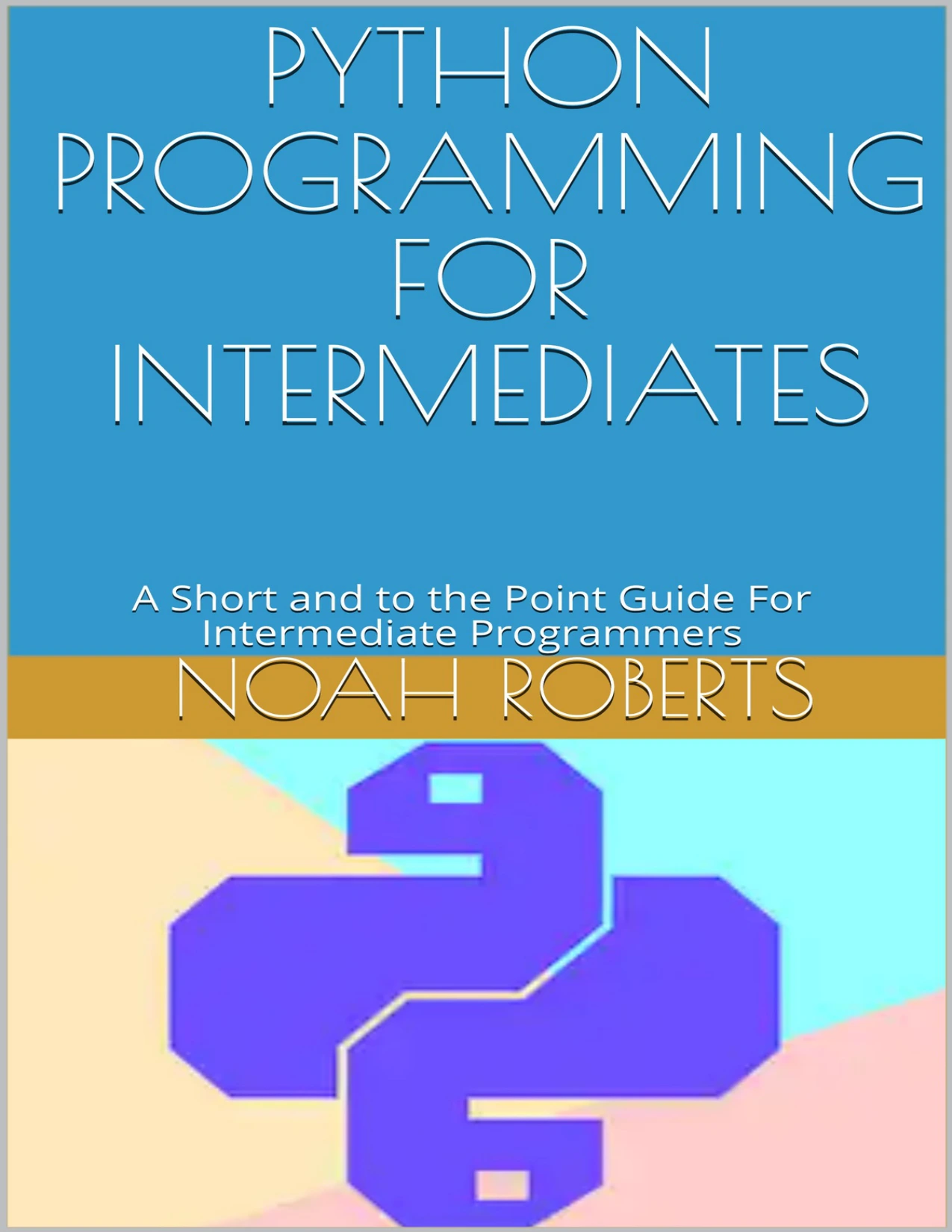
Python Programming for Intermediates: A Short and to the Point Guide For Intermediate Programmers
By Noah Roberts
Readers with programming exposure who need to consolidate Python collections, control flow, functions, and execution basics.
Compare a sample with one specific skill gap
Before choosing, write a sentence such as “I want to understand generators well enough to read this code” or “I want to reorganize my script so I can change its input source.” Then inspect the contents and, where available, a sample chapter.
Look for explanations that connect mechanisms with decisions. Does the material explain when a technique is useful? Can you follow the examples with your current background? Does the chapter address the problem you actually have?
A long contents list proves breadth, not clarity. Likewise, an “advanced” label does not establish that a book is the right next step for you.
Check versions and dependencies separately
Confirm the exact edition and inspect any stated Python or library requirements. A newer edition is not proof that every example matches your environment, and an older book is not automatically unsuitable for learning established concepts.
Version-sensitive chapters deserve extra attention. For example, the official Python 3.14 release documentation describes changes including deferred annotation evaluation and officially supported free-threaded Python. These are reasons to supplement relevant typing and concurrency discussions with documentation—not reasons to discard every older explanation.
When an example fails, check the interpreter version, dependency versions, errata, and any publisher-provided code before concluding that you misunderstood the concept.
Turn your chosen book into practical progress
Use a repeatable study cycle rather than measuring progress only by pages completed:
- Read one coherent section. Identify the problem it addresses.
- Recreate an example. Explain its inputs, outputs, and assumptions.
- Change a requirement. Add an empty input, a different data shape, another state, or a likely failure.
- Apply the idea elsewhere. Use it in a small program that matters to you.
- Review the result. Decide whether the new approach is clearer and easier to change.
For functional programming, adapt a data-processing script. For project practice, extend a simulation. For design case studies, compare two possible structures before implementing either. For advanced language mechanisms, keep the experiment small enough that you can explain exactly what the feature contributes.
Avoid three common traps: collecting books instead of using them, copying examples without changing anything, and treating complicated code as evidence of progress. A simpler solution you understand is more useful than an impressive one you cannot maintain.
Frequently asked questions
What should I know before reading an intermediate Python book?
A practical starting point is familiarity with functions, collections, files, basic exceptions, and running a small program independently. Prerequisites vary: a project book aimed partly at beginners demands a different starting point from a book on metaclasses.
Should I choose a broad reference or a project book?
Choose according to the obstacle you face. If unfamiliar language behavior keeps stopping you, prioritize explanations of that behavior. If you can follow examples but struggle to build independently, prioritize projects you can modify. A reference and a project can complement each other, but you do not need to acquire both at once.
Are older Python books still useful?
They can be useful for established concepts and design reasoning. Check interpreter and dependency requirements, and supplement version-sensitive material with official documentation. Age alone does not establish either usefulness or compatibility.
Do I need an advanced Python book yet?
Only if its topics match your questions. If your current challenge is handling errors or organizing a small program, address that first. Descriptors and metaclasses are not a checklist you must complete before writing useful Python.
Should I read a Python book from beginning to end?
Read sequentially when chapters build on one another. For case studies or targeted topics, selective reading may be more appropriate. In either case, keep notes about prerequisites you skipped and return to them when they block understanding.
Choose one book and one practical goal
For an introduction to functional techniques, start by examining Functional Programming in Python; for broader coverage of that approach, compare it with Lott’s Functional Python Programming. Choose Playful Python Projects when you want simulation-based practice, or use 500 Lines or Less to study design decisions. Reserve The Python Master for questions that genuinely require advanced language knowledge.
The most useful next step is specific: identify one gap, choose a relevant resource, and make something that forces you to apply it. Let the problem determine the book—not the promise on its cover.
Sources and recommendation basis
The Digital Delights recommendations use the linked catalog descriptions. Publisher research provides context for language depth, development practices, and audience differences; it does not establish comparative learning outcomes or store availability. Relevant source descriptions are available from O’Reilly for Fluent Python, No Starch Press for Beyond the Basic Stuff with Python, and Manning for The Quick Python Book. Version-sensitive guidance draws on the official Python release documentation linked above.