

The Bible of Algorithms and Data Structures: A Complex Subject Simply Explained
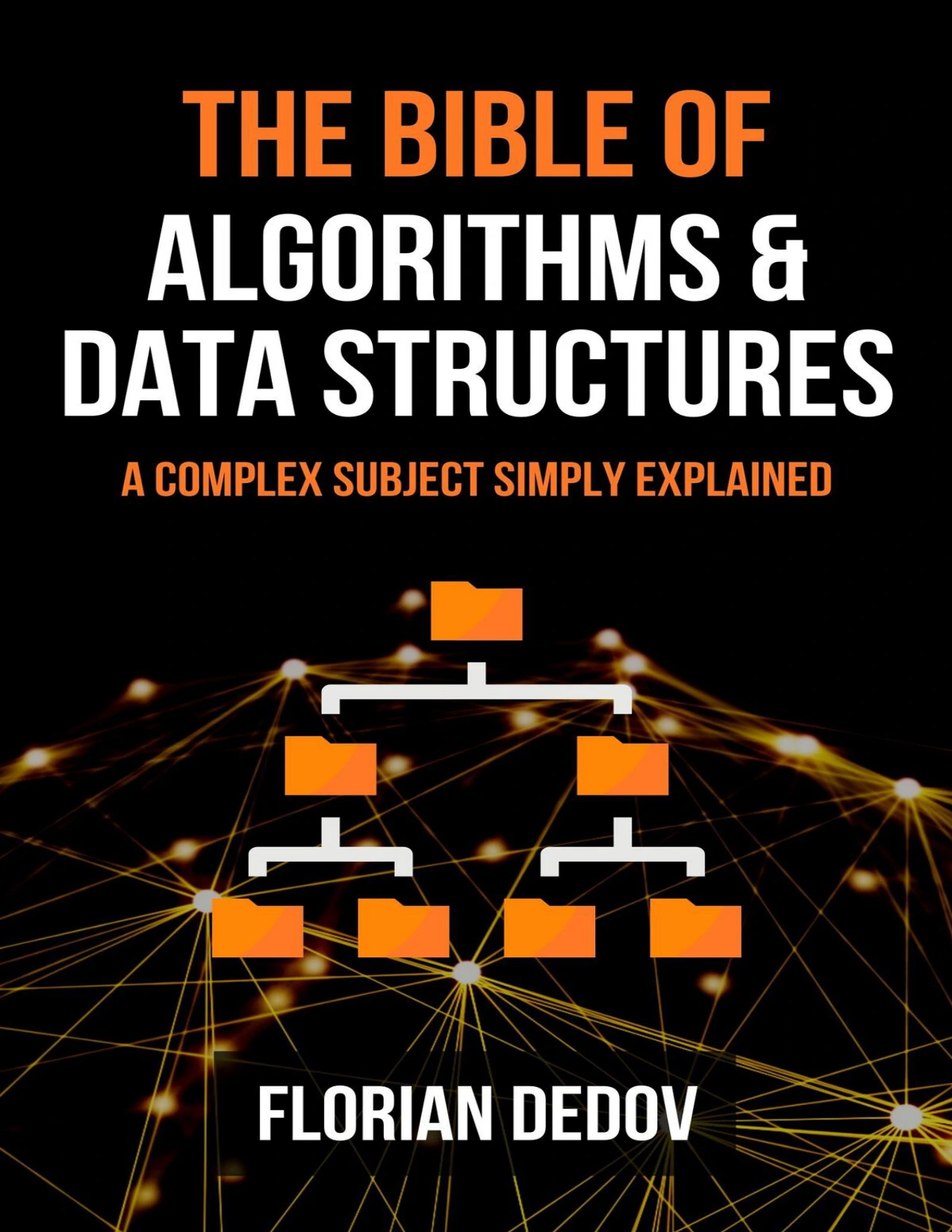
Original price was: $5.00.$2.50Current price is: $2.50.

Florian Dedov
Product Specs:
- File Type: PDF
- File Size: 1.8 MB
- Book Language: English
- Total Page Count: 102
- Instant Download
An Intuitive Route Through a Difficult Subject
For many computer science students, algorithms and data structures can feel like a maze of abstract definitions and formal proofs. Florian Dedov takes a different route. Instead of treating the subject as a collection of mathematical hurdles, he starts with intuition and plain-language explanations before layering in the formal details where they genuinely help. This ebook builds understanding step by step—from runtime complexity and Big O notation through sorting algorithms, graph theory, and core data structures like linked lists, stacks, queues, trees, and hash tables.
Why This Book Takes an Intuitive Approach
Dedov’s central idea is simple: formal definitions matter, but they can obscure the underlying intuition when you are first learning. Each new concept begins with a non-scientific, metaphor-driven explanation that focuses on what is happening and why. Only after that foundation does the book introduce the mathematically accurate notation and definitions where useful. This approach makes the material feel closer to a guided conversation than a dense textbook lecture.
What You’ll Work Through
- Algorithmic thinking and pseudocode — how to describe solutions without language-specific syntax.
- Runtime complexity — Big O, Omega, Theta, asymptotic growth, and analyzing efficiency.
- Sorting algorithms — bubble sort, selection sort, insertion sort, merge sort, quick sort, plus greedy and divide-and-conquer strategies.
- Graph theory and graph algorithms — breadth-first search, depth-first search, Dijkstra, and Kruskal.
- Core data structures — linked list, stack, queue, priority queue, heap, and binary search tree.
- Self-balancing trees — AVL tree, B-tree, and B*-tree.
- Hashing — hash functions, collision resolution, separate chaining, open addressing, linear probing, quadratic probing, and double hashing.
Why This Matters for Your Programming Career
Beyond passing exams, algorithms and data structures show up again and again in technical interviews at major software companies. Dedov points out that interviewers often present abstract problems that require efficient solutions, and an inefficient brute force approach rarely leads to an offer. More broadly, he frames problem solving—not language syntax—as the real core of programming. Whether you are building software, working in cybersecurity, or exploring machine learning, understanding runtime complexity and choosing the right data structures changes how you approach every problem.
How You’ll Learn
The book uses pseudocode to keep concepts language-agnostic, and it uses Python for the few practical coding examples because Python is close to pseudocode. Before starting, readers should be comfortable with basic programming ideas such as loops, if-statements, functions, variables, return values, and recursion. A high-school level understanding of math—functions, logarithms, basic algebra, and basic calculus—is also enough. The author also mentions his NeuralNine YouTube channel as a companion resource for the same topics in video form.
Who This Is For
This ebook works best as a supplement for computer science students who want clearer intuition before tackling formal coursework. It is equally useful for self-taught programmers preparing for technical interviews or anyone who wants a practical, structured introduction to algorithms and data structures without drowning in proofs. It is not a replacement for a rigorous university textbook, and it does not try to be—but it offers a strong conceptual foundation to build on.
If you’re ready to replace confusion with a clearer mental model of how algorithms and data structures actually work, this book provides a structured, approachable starting point. It won’t replace a rigorous university textbook, and it doesn’t try to. Instead, it gives you the intuitive foundation you need before diving into formal proofs—or before walking into your next coding interview with more confidence.
User Reviews
Be the first to review “The Bible of Algorithms and Data Structures: A Complex Subject Simply Explained”
You must be logged in to post a review.
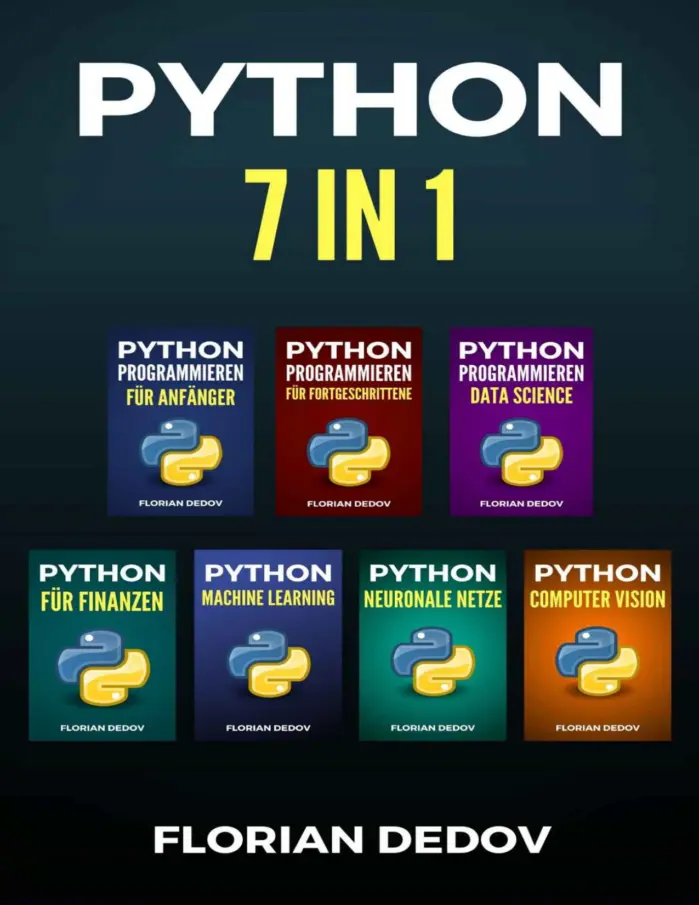
Python Programmieren 7 in 1: Der schnelle Einstieg
Sold by Florian Dedov Original price was: $5.00.$2.50Current price is: $2.50.
There are no reviews yet.