

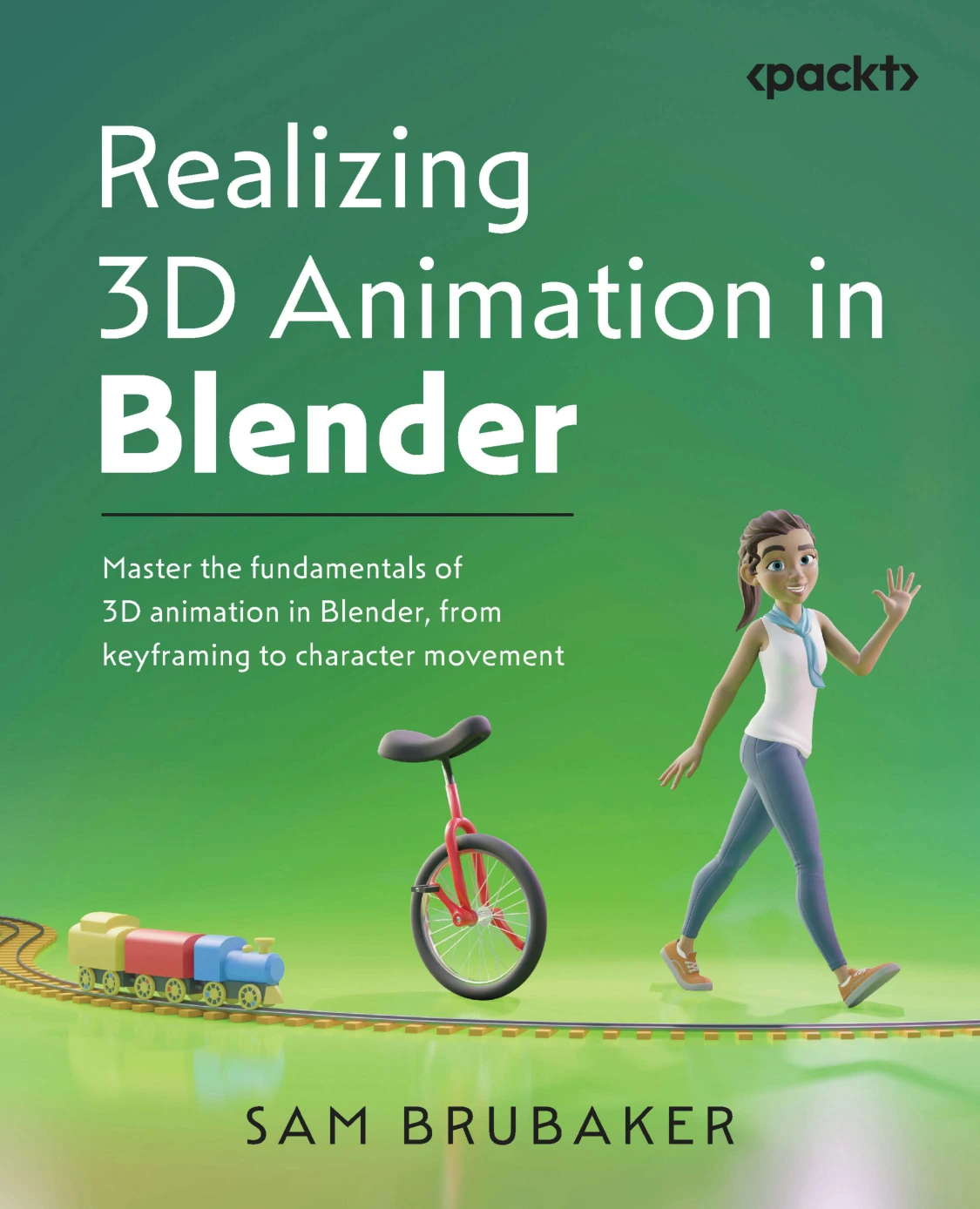
Realizing 3D Animation in Blender: Master the fundamentals of 3D animation in Blender, from keyframing to character movement
Original price was: $5.00.$2.50Current price is: $2.50.

Sam Brubaker
Product Specs:
- File Type: PDF
- File Size: 68.0 MB
- Book Language: English
- Total Page Count: 456
- Instant Download
Bring Your Blender Scenes to Life, One Keyframe at a Time
Blender can model, sculpt, render, and simulate just about anything. But making a scene move convincingly is a different craft. Realizing 3D Animation in Blender is Sam Brubaker’s practical guide to that craft, built around the tools and workflows that turn static objects into believable motion. It is aimed at readers who want to understand not just which buttons to press, but why certain keyframes, curves, and relationships produce better animation.
Published by Packt in 2024, the book moves from animation fundamentals into character performance. The early chapters focus on the Timeline, the Graph Editor, Bezier keyframes, and object relationships. Later material steps into character animation, including linking and posing a character. The result is a structured path through Blender’s animation system rather than a loose collection of tips.
Keyframes, Curves, and the Logic of Motion ⏱️
The book begins with the essentials: creating simple movement with keyframes, keying location and rotation, and understanding how the Timeline represents time. From there, it digs into the Graph Editor, where interpolation and easing determine whether motion feels mechanical, floaty, or natural. Bezier handles, extrapolation, and F-curves are treated as practical tools for shaping timing and weight.
Readers work through examples such as a bouncing ball and a unicycle, using motion paths, tilting, and balancing to explore how animated objects carry momentum. These exercises are not just demonstrations; they build the instincts animators use when judging whether a movement reads clearly on screen.
Object Relationships and Rendering 🎬
Animation rarely happens in isolation. The book explains object origins, parenting, constraints, drivers, and world-space versus local-space behavior. These concepts matter because a character rig, camera move, or mechanical action often depends on relationships between objects rather than on isolated keyframes.
Rendering gets its own chapter, covering camera setup, output settings, pre-render checks, image sequences, and video export. The emphasis is on producing usable results without wasting time on avoidable render problems. For anyone who has ever waited through an unnecessary render, this section alone can save hours.
From Fundamentals to Character Animation
Part 2 shifts toward character work, beginning with linking and posing a character. That transition matters: the earlier lessons in keyframes, curves, and relationships are the foundation for making a rig move with intent. Sam Brubaker’s background as an animator and Blender instructor comes through in the book’s step-by-step approach and its focus on the reasoning behind the workflow.
Who Will Get the Most From This Blender Book
This guide suits Blender users who are comfortable with the basics of the interface and want to build real animation skills. Beginners may find the early chapters approachable, while intermediate artists can use the Graph Editor and character sections to strengthen weak spots. It is also a useful reference for self-taught animators who want a more structured understanding of timing, interpolation, and rigged character movement.
Add It to Your Digital Delights Library
If your goal is to move beyond static renders and make Blender scenes feel alive, Realizing 3D Animation in Blender offers a clear, project-based route through the fundamentals and into character animation. This digital edition is ready for your e-reader, tablet, or workstation, so you can keep it open beside Blender while you work. 🧠
User Reviews
Be the first to review “Realizing 3D Animation in Blender: Master the fundamentals of 3D animation in Blender, from keyframing to character movement”
You must be logged in to post a review.
Original price was: $5.00.$2.50Current price is: $2.50.






There are no reviews yet.