

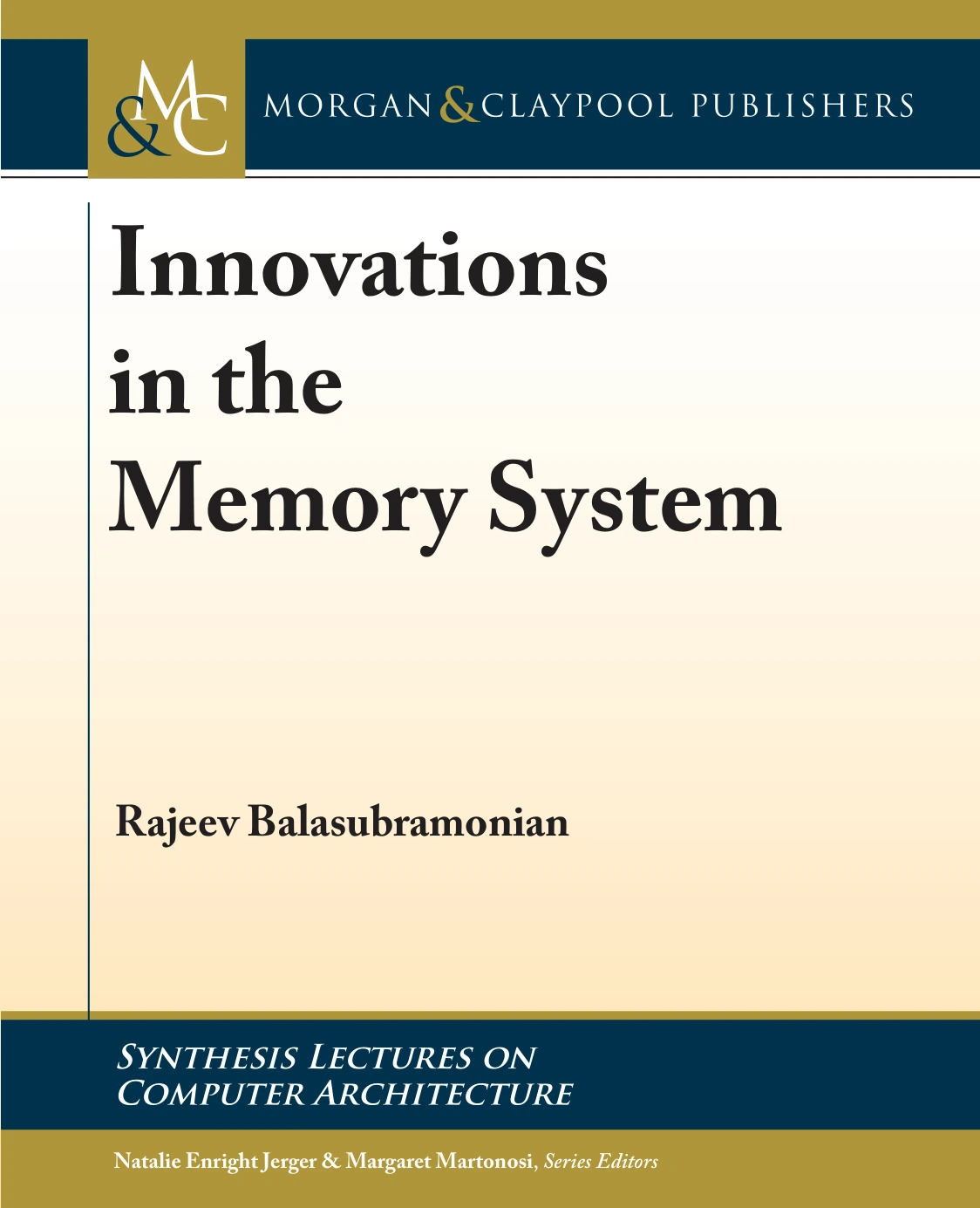
Innovations in the Memory System
Original price was: $13.99.$7.00Current price is: $7.00.

Rajeev Balasubramonian
Product Specs:
- File Type: PDF
- File Size: 1.4 MB
- Book Language: English
- Total Page Count: 153
- Instant Download
Memory is more than a place to store bits: its design can shape a computer’s performance, energy use, reliability, and security. Innovations in the Memory System examines how research is pushing memory architecture into new roles, including bringing computation closer to data.
Rajeev Balasubramonian moves from core concepts to a tour of prominent developments in the field. The result is a focused introduction to the design choices and research directions behind modern memory systems.
Start with the architecture behind memory
The opening chapters establish memory-system fundamentals and survey commercial memory products. This grounding gives readers a framework for understanding the later discussions of scheduling, data placement, DRAM chip design, and memory channels.
See how systems make room for innovation
Dedicated chapters consider memory reliability and refresh alongside near-data processing and memory security. Together, these subjects show how memory design must address more than capacity: it also involves managing data movement, maintaining dependable operation, and considering security risks.
A research-oriented guide for architecture readers
Rather than treating memory as a static component, the book presents it as an active area of computer architecture research. It may be especially relevant to students, researchers, and practitioners looking for an organized overview of memory-system approaches and the challenges they address.
For readers interested in what happens between processors and the data they need, this volume offers a clear route through the ideas shaping memory-system design.
User Reviews
Be the first to review “Innovations in the Memory System”
You must be logged in to post a review.
Original price was: $13.99.$7.00Current price is: $7.00.

There are no reviews yet.