

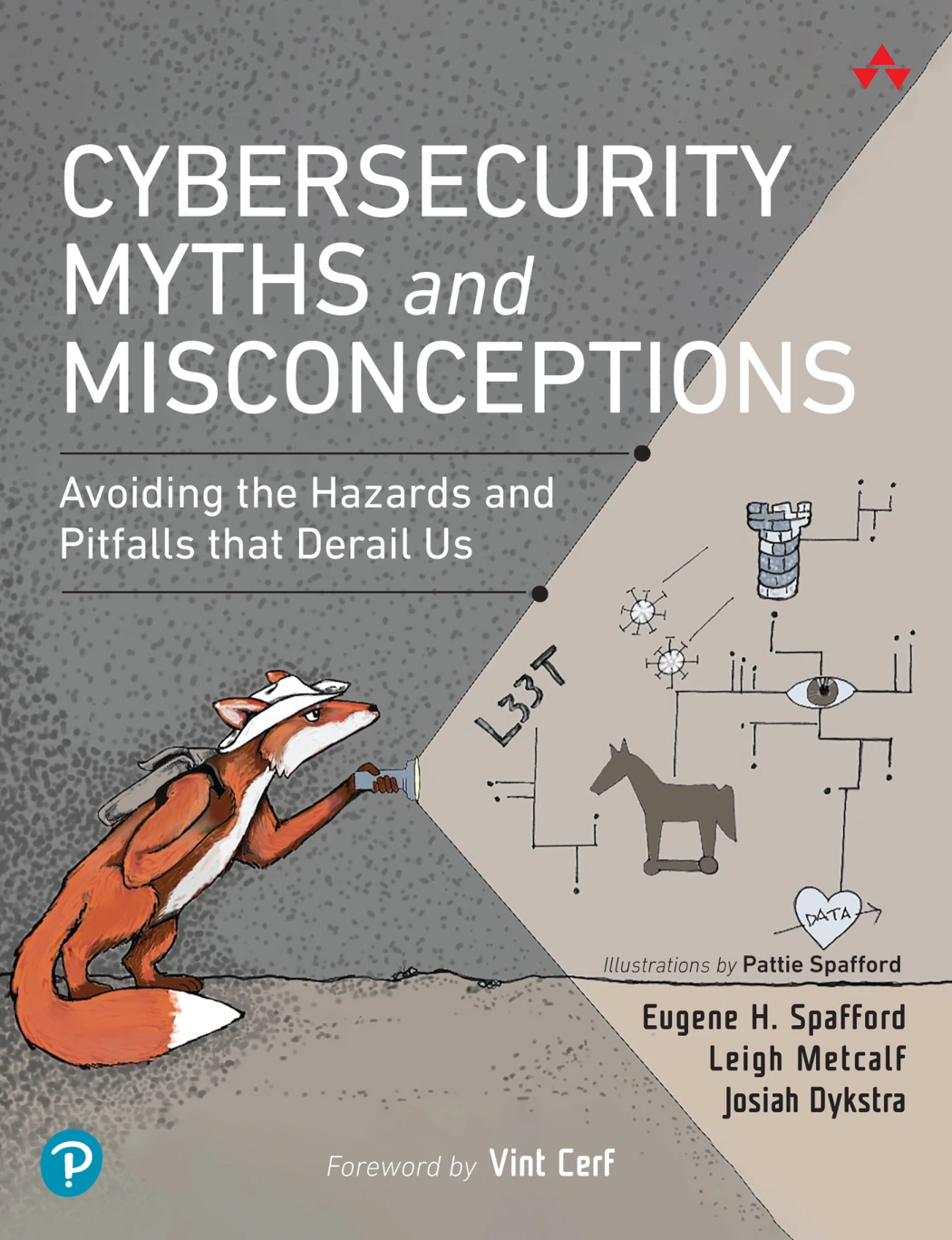
Cybersecurity Myths and Misconceptions: Avoiding the Hazards and Pitfalls that Derail Us
Original price was: $34.39.$17.20Current price is: $17.20.

Eugene H. Spafford
Product Specs:
- File Type: PDF
- File Size: 7.5 MB
- Book Language: English
- Total Page Count: 419
- Instant Download
Cybersecurity decisions are often shaped by ideas that sound sensible at first—and prove misleading on closer inspection. In Cybersecurity Myths and Misconceptions, Eugene H. Spafford, Leigh Metcalf, and Josiah Dykstra examine more than 175 such beliefs, showing how assumptions, human bias, and incomplete explanations can complicate security work.
Rather than treating cybersecurity as a collection of easy answers, the authors invite readers to question familiar claims and think more carefully about the situations behind them. The result is a wide-ranging look at the reasoning that affects security decisions, from everyday practice to research and leadership.
Question the assumptions behind security decisions
The book moves through general cybersecurity concepts, human behavior, contextual challenges, and data. Along the way, it considers misconceptions about the internet, vulnerabilities, malware, security tools, legal issues, analogies, statistics, and visualizations. Topics such as cognitive biases, faulty assumptions, and perverse incentives help explain why flawed ideas can persist—even when they seem intuitively convincing.
More than 175 myths, examined in context
Each misconception is part of a broader conversation about how people interpret risks and choose responses. The authors draw on cybersecurity examples to explore why simplistic rules or confident conclusions can fail to account for changing circumstances. They also discuss ways to identify mistaken reasoning and approaches for avoiding or mitigating its effects.
- Explore common cybersecurity misconceptions held by users, professionals, and leaders.
- Consider how cognitive biases and faulty assumptions shape decisions.
- Examine claims about security tools, vulnerabilities, malware, and digital forensics.
- Think critically about the use of analogies, statistics, and visualizations in security work.
For practitioners, researchers, and curious readers
This book is relevant to cybersecurity practitioners, developers, researchers, organizational leaders, and readers building their understanding of the field. Its broad subject matter makes it useful for revisiting familiar beliefs as well as for noticing how myths can influence prevention, investigation, and security planning.
Cybersecurity Myths and Misconceptions offers a thoughtful prompt to pause before accepting a security claim as universal: ask what it assumes, where it applies, and what the evidence actually supports.
User Reviews
Be the first to review “Cybersecurity Myths and Misconceptions: Avoiding the Hazards and Pitfalls that Derail Us”
You must be logged in to post a review.
Original price was: $34.39.$17.20Current price is: $17.20.

There are no reviews yet.