

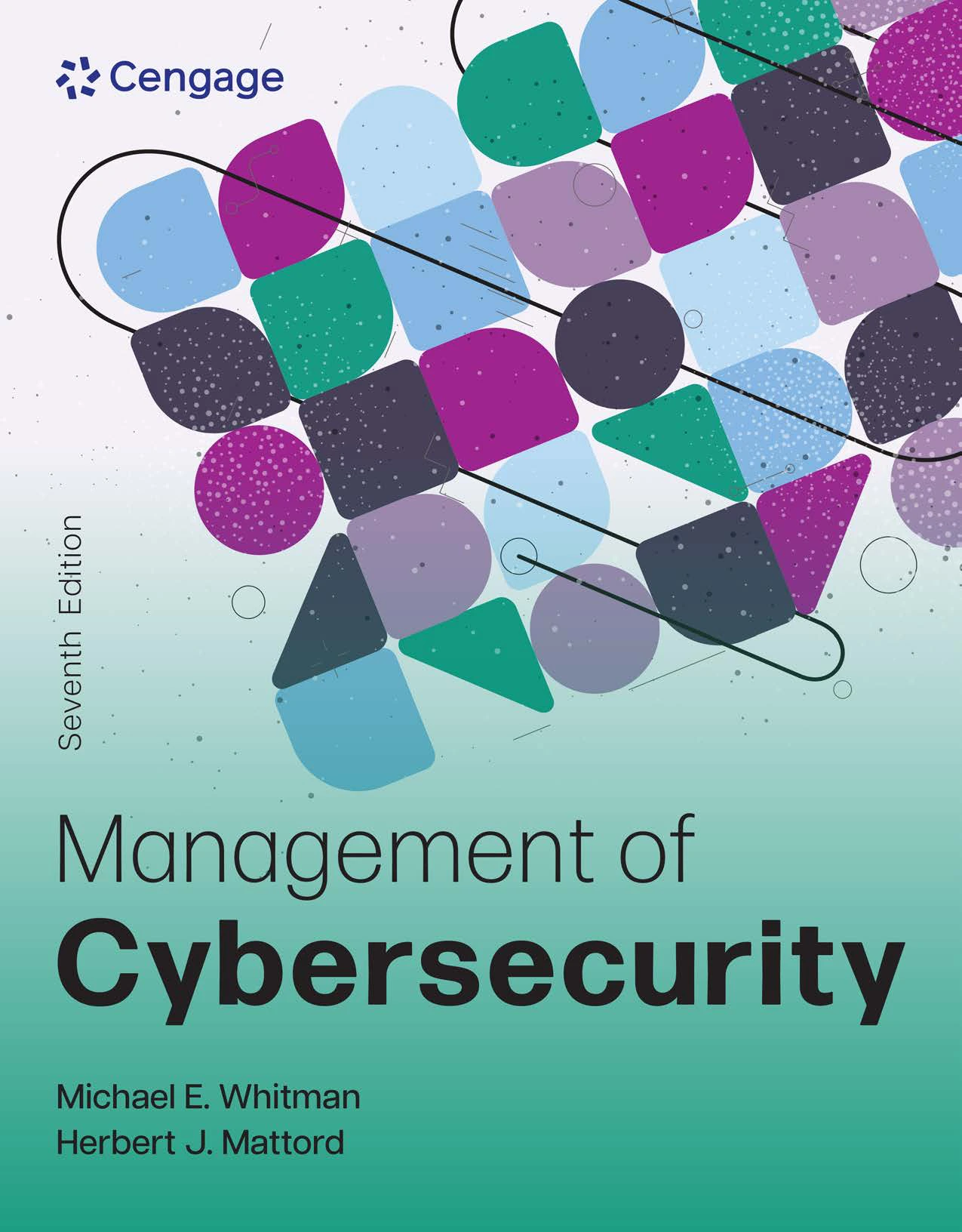
Management of Cybersecurity, 7th Edition
Original price was: $5.00.$2.50Current price is: $2.50.

Michael
Product Specs:
- File Type: PDF
- File Size: 9.8 MB
- Book Language: English
- Total Page Count: 546
- Instant Download
Cybersecurity Is a Management Discipline 🔐
Firewalls and encryption matter, but they only protect an organization when someone manages them—setting direction, allocating resources, measuring results, and preparing for the day something goes wrong. Management of Cybersecurity, Seventh Edition treats security as a leadership responsibility, not a back-office IT task. Michael E. Whitman and Herbert J. Mattord map the full landscape: governance, risk, policy, compliance, contingency planning, and the operational mechanisms that keep systems and data safe.
What the Seventh Edition Covers 📘
This Cengage Learning textbook walks through twelve chapters, beginning with foundational concepts like the C.I.A. triad and the twelve categories of threats, then moving into strategic planning for cybersecurity. Later chapters address risk assessment and treatment, the legal and ethical landscape, and the development of a cybersecurity program—including organizational culture, staffing, and professional credentials.
From there, the focus shifts to management models, performance measurement, and contingency planning. The closing chapters cover incident response, disaster recovery, business continuity, and protection mechanisms such as access controls, network security, cryptography, and emerging technologies. A glossary, endnotes, and index round out the reference material.
Risk, Policy, and Governance in Practice 💡
Risk management receives substantial attention—assessing risk, choosing treatment strategies, and weighing qualitative and hybrid valuation methods. The text also explores policy at every level: program policy, issue-specific policy, and system-specific policy. Readers see how standards, guidelines, and practices fit together, and why policy development is as much about people as it is about documents.
Governance topics include strategic planning, security convergence, the use of frameworks like ISO/IEC 27014:2020 and NIST guidance, and the roles that executive support and communities of interest play in a workable security program.
From Incident Response to Business Continuity
Contingency planning gets its own chapter, covering business impact analysis, incident response, digital forensics, disaster recovery, and crisis management. The authors explain how to test plans and why timing matters when an organization moves from detection to recovery. Later chapters examine cybersecurity maintenance—monitoring external and internal environments, vulnerability assessment, configuration and change management, and the cybersecurity maintenance model.
Who This Book Is For
The material is aimed at students and professionals who need to understand security management rather than just configure a device. It suits undergraduate and graduate courses in cybersecurity management, information security, and IT governance, as well as managers moving into security leadership roles. A background in basic IT concepts helps, but the book builds its management framework from the ground up.
A Textbook for the Next Generation of Security Leaders
Whitman and Mattord have written a thorough, structured guide to the organizational side of cybersecurity. The seventh edition reflects current frameworks, laws, and practices, with review questions and exercises at the end of each chapter to reinforce learning. Whether you are studying for a course or building a security program at work, this edition offers a clear path through a complex field. 📚
User Reviews
Be the first to review “Management of Cybersecurity, 7th Edition”
You must be logged in to post a review.

Fundamentals of Drawing from Life
Sold by Michael Original price was: $5.00.$2.50Current price is: $2.50.

There are no reviews yet.