Should Python Be Your First Programming Language?
For many beginners, yes—but it depends on what you want to make and how you prefer to learn. Python is a reasonable first language because its syntax is designed to be readable and it is used in areas including education, web development, scientific computing, and software development. Those qualities can make it easier to focus on the logic of a program while you are getting started. They do not make programming itself effortless.
You will still need to practise breaking problems into steps, reading errors, and revising code. If you choose Python, start with instruction designed for people who have never programmed rather than assuming every official tutorial is a first-course curriculum. This guide weighs Python’s strengths and limitations, considers other learning routes, and gives you a practical way to begin.
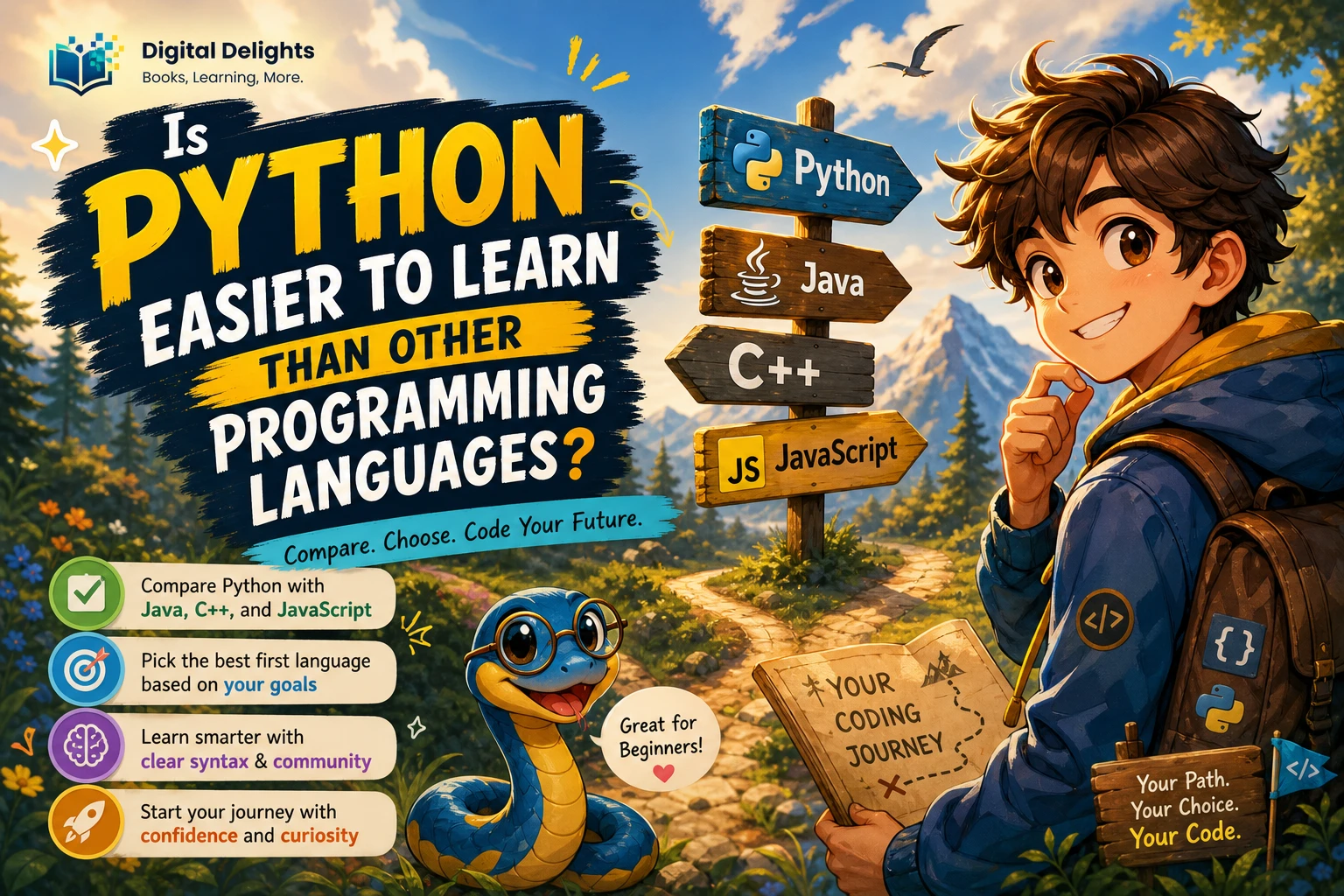
Is Python a good first programming language?
Python is a strong first choice if you want a general-purpose language, prefer relatively readable code, and are motivated by projects you can build with it. It is not a universal answer: a different course or language may fit better if your main goal calls for a particular tool or learning approach.
Python’s official overview highlights readable syntax and rapid development, and lists applications across several fields. That makes it a versatile place to begin, not proof that every learner will find it easiest or learn faster with it. Python’s official overview
Why Python can work well for beginners
Readable code can reduce the syntax hurdle
Programming languages have rules for expressing instructions. Python’s emphasis on readable syntax can make short examples easier to scan, so a beginner may have more attention available for understanding what the code is doing. You will still need to learn the rules, but the language can make early experiments feel approachable.
You can explore different kinds of projects
Python is used in areas such as education, web development, scientific computing, databases, and software development. That range gives learners room to explore different interests without deciding on a narrow specialty at the outset. It does not mean Python is the only suitable tool for any of those fields; it simply offers several possible directions for practice.
Small experiments make concepts visible
You can begin with short programs that accept input, make a decision, repeat an action, or transform a list of values. Running a small example and changing one thing at a time helps connect concepts to observable results. The habit matters more than how quickly you advance through a list of topics.
What Python will not make easy
Problem-solving still takes practice
Choosing a language does not remove the work of deciding what a program should do. Beginners need to learn how to separate a task into manageable steps, represent information, make decisions, and test whether the result behaves as intended. These skills develop through practice, not through syntax alone.
Errors and debugging are part of learning
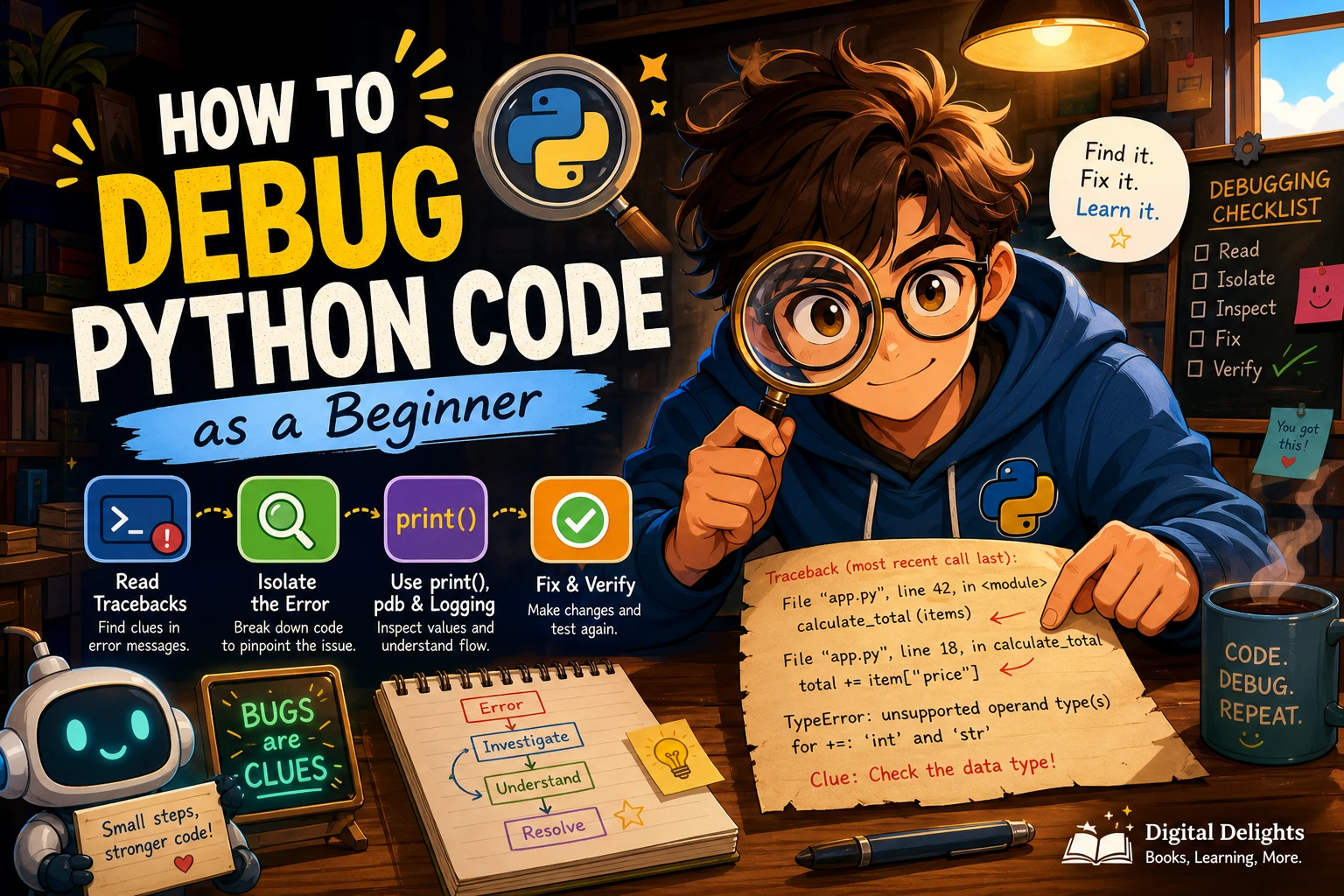
New programmers often meet errors caused by a typo, a value of an unexpected type, or a misunderstanding about program flow. Reading the message, locating the relevant code, and testing a correction are normal parts of writing software. A useful learning resource explains how to investigate errors rather than implying that code should work perfectly on the first try.
Choose instruction for your experience level
Python’s Beginner’s Guide distinguishes people who have never programmed from those who already know another language, and points newcomers toward beginner-specific learning material. So, if this is your first encounter with code, check that a course or book starts with programming fundamentals instead of assuming prior experience. Python’s Beginner’s Guide
When another starting point may suit you better
There is no single best first language for everyone. Start by asking what you hope to build and what kind of instruction will keep you practising. The table below is a way to think about learning routes, not a ranking of languages or a claim that one route guarantees a particular outcome.
| Your priority | A route to consider | What to check before choosing |
|---|---|---|
| Try general programming with readable code | Python | Does the course explain basic concepts from the beginning? |
| Explore how websites are structured and made interactive | A web-focused course covering HTML, CSS, and JavaScript | Does it give you chances to build and revise small web pages? |
| Understand lower-level programming concepts or work toward a specific technical curriculum | A course using the language required for that goal | Does the material explain setup and concepts at your current level? |
| Learn through visual, guided activities | A visual or block-based introduction before text-based code | Will it help you move toward the kind of programming you want to do? |
If you are unsure, choose a beginner course with clear explanations and short exercises, then give it enough time to try a few small projects. Switching languages before you have practised the basics can make it harder to tell whether the issue is the language, the teaching material, or simply the normal effort of learning.
A practical way to start learning Python
- Pick a true beginner resource. Look for coverage of variables, basic data types, conditionals, loops, functions, and how to run code. Check that it does not assume previous programming knowledge.
- Follow the setup steps in your learning material. Installation and editor instructions can differ between courses, so use the version and setup guidance your course specifies.
- Write and run small programs yourself. Do not only read examples. Change values, predict what will happen, run the code, and compare the result with your expectation.
- Practise debugging deliberately. When something fails, read the error, inspect the relevant lines, and change one thing at a time. Keep notes on mistakes you understand so you can recognize similar patterns later.
- Build a modest project. Choose a small goal, such as a quiz, a simple text-based game, or a program that organizes a short list. Keep the scope limited enough that you can finish, test, and improve it.
- Review the fundamentals before adding tools. Make sure you can explain what your program’s variables, conditions, loops, and functions do before moving on to a framework or specialized library.
For a structured introduction to Python fundamentals, Coding in Python: Tips and Tricks to Coding with Python Using the Principles and Theories of Python Programming covers topics including variables, data types, lists, conditionals, loops, functions, and classes. Its catalog description says it is intended for readers interested in Python, including people starting without a programming background. Check the book’s listed version details and your own course requirements when setting up your environment.
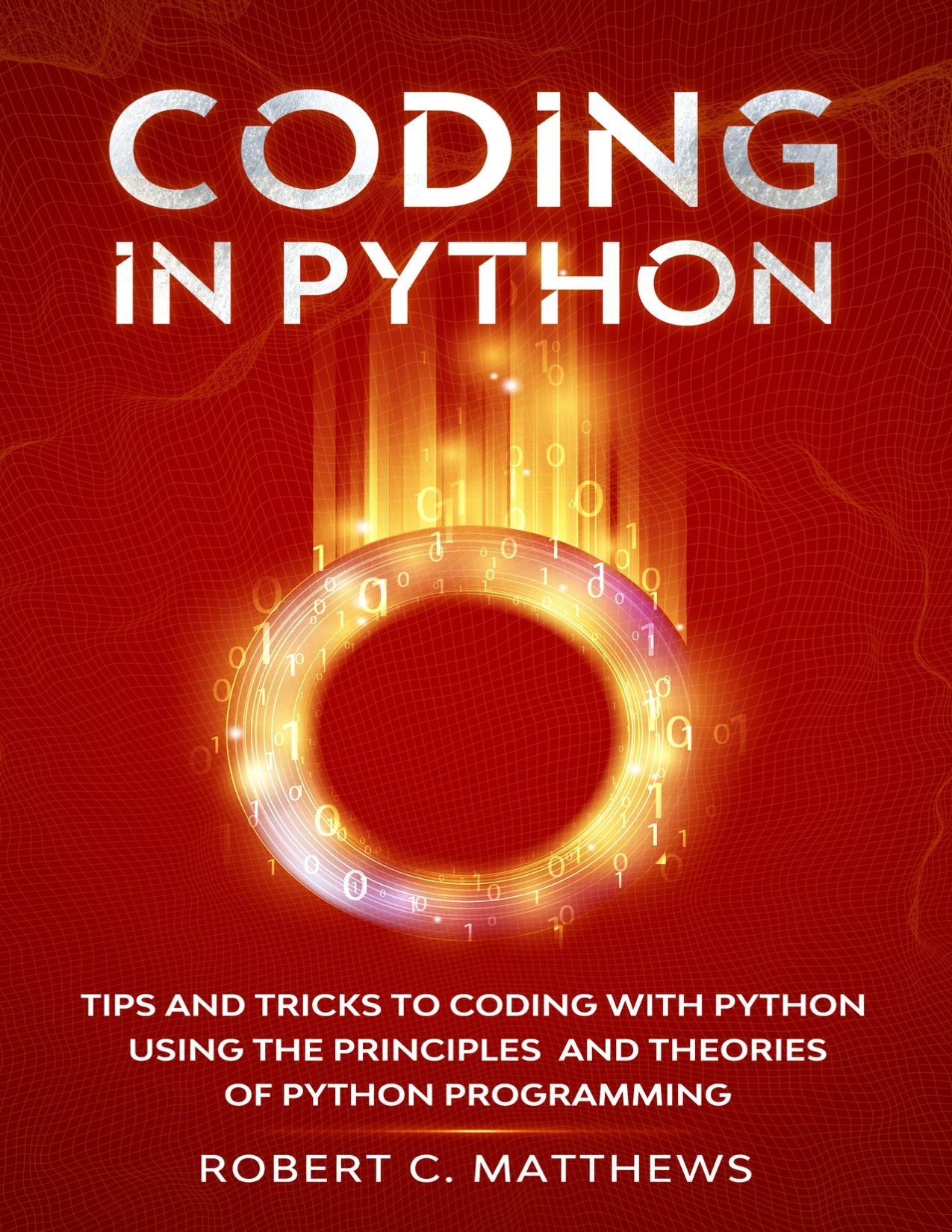
Learners seeking an introduction to variables, data types, control flow, functions, and classes, including readers starting without a programming background.
If you would rather learn by completing small programs, Tiny Python Projects focuses on small, testable projects and topics such as strings, lists, dictionaries, files, and regular expressions. It may suit a learner who wants hands-on practice alongside explanations of Python fundamentals.
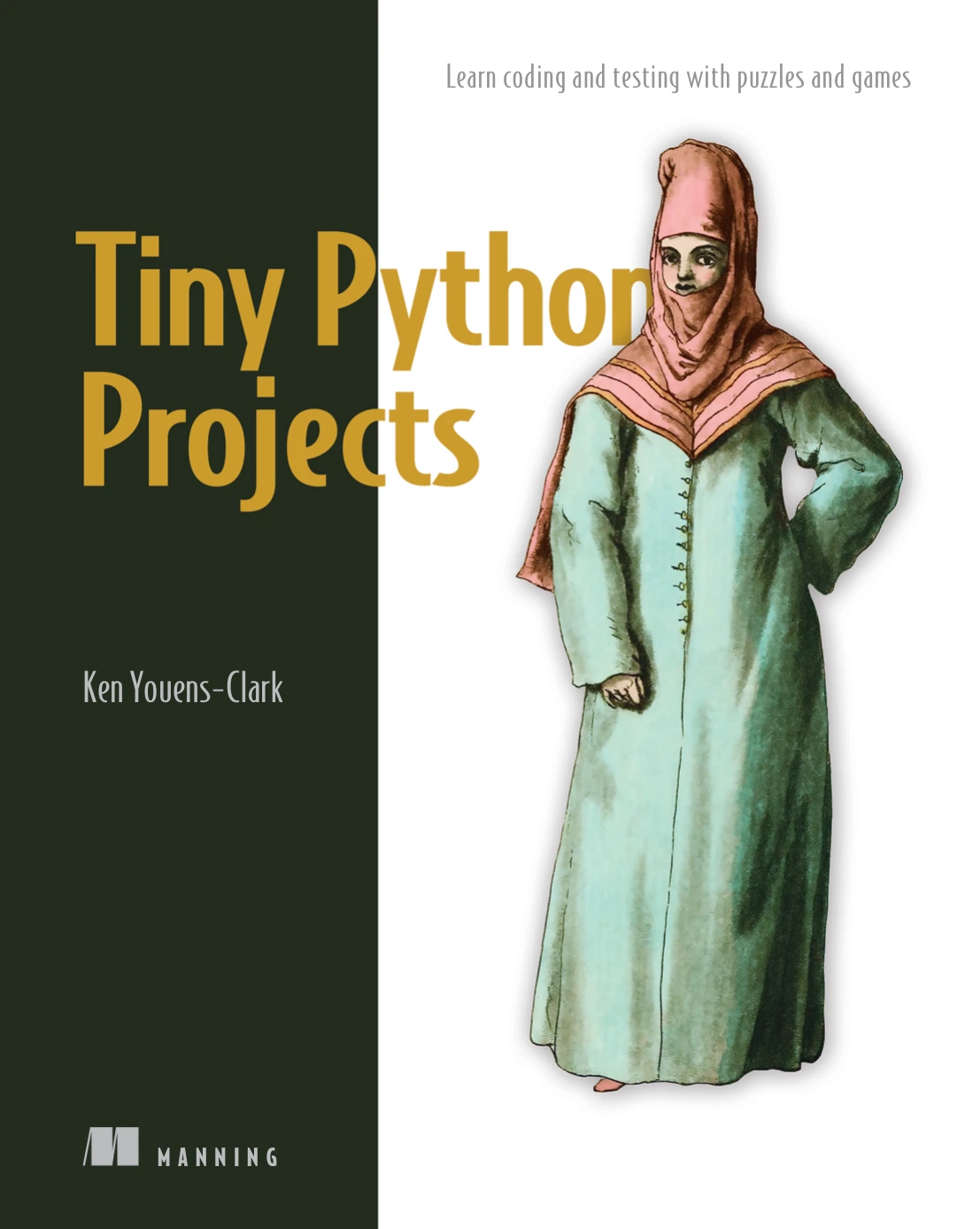
Learners who prefer building and testing compact programs while working with core Python topics.
Common misconceptions about learning Python
- “Easy syntax means programming is easy.” Readable code may lower one barrier, but problem-solving, testing, and debugging still require effort.
- “Learning syntax is enough.” Knowing what a loop looks like is different from deciding when and how to use one. Write programs, make mistakes, and revise them.
- “One language is best for everybody.” The right starting point depends on your goals, prior experience, and the quality and style of the learning material available to you.
- “I need to master everything before building anything.” A small project can help you discover what you understand and what you need to review. Keep the first project manageable.
Frequently asked questions
Can someone with no coding experience start with Python?
Yes. Python.org welcomes first-time programmers, and its Beginner’s Guide points people who have never programmed toward beginner-specific materials. Choose a resource that introduces programming concepts instead of relying on prior coding knowledge. About Python
Does Python teach transferable programming concepts?
Learning Python can give you practice with concepts such as variables, conditions, loops, functions, data structures, and debugging. Those ideas are useful beyond one language, although their syntax and details can differ elsewhere. Understanding them comes from applying them, not merely memorizing Python keywords.
Should beginners start with Python or another language?
Choose based on your goal and the course you are prepared to follow consistently. Python is a reasonable general-purpose starting point; another route may be more directly aligned with a particular project or curriculum. There is no evidence here to establish one universal winner.
Which Python version should a beginner install?
Follow the setup instructions for your chosen course and check that its examples support the version you plan to use. As of October 9, 2026, Python.org lists Python 3.14.8 as a stable release, dated September 30, 2026. Release information changes, so verify the current release details before installing.
Conclusion: choose a starting point you can practise with
Python can be a good first programming language if its readable style and broad range of applications fit your interests. It will not remove the need to reason through problems, work with errors, or practise regularly. Begin with instruction made for newcomers, write small programs, and use a modest project to put the basics together. If another learning route better matches what you want to create, that is a valid place to start too.