Can I Learn Python Without Being Good at Math?
Yes—you can learn Python without being especially good at math. Math confidence is not a universal prerequisite for learning the language’s fundamentals or writing many useful programs. You will encounter arithmetic and numerical examples, but getting comfortable with Python also involves learning its syntax and working out how to break a task into steps.
The amount of math you need depends more on what you want to do with Python than on Python itself. This guide explains the math a beginner is likely to meet, which specialties use more of it, and how to get started without waiting until you feel like a math expert.
Can You Learn Python Without Being Good at Math?
For learning core Python skills, weak math skills are not a reason to put off starting. Python’s official beginner information is aimed at people who are new to programming and describes the language as accessible to learn. That is useful reassurance, though it does not mean every Python project avoids math or that every learner will find programming effortless.
At the beginning, you can focus on how to store information, make decisions in code, repeat instructions, and organize code into functions. Those are programming concepts. Some examples use numbers, but you do not need advanced algebra or calculus just to understand what a variable or loop does.
A practical distinction helps: being able to learn Python fundamentals is different from having all the mathematical background needed for a particular technical specialty. Start with the fundamentals and build additional math knowledge if your goals call for it.
What Math Do Python Beginners Actually Use?
Early Python lessons commonly use simple arithmetic and comparisons. For example, a program might add two values, calculate a total, or check whether one number is larger than another. Python’s official tutorial introduces arithmetic operators and variables before moving on to programming constructs such as loops. It also states that it assumes some basic familiarity with programming, so a complete newcomer may prefer a more introductory learning resource.
Here is a small example:
price = 12
quantity = 3
total = price * quantity

if total > 30:
    print("The total is over 30")
else:
    print("The total is 30 or less")
You need to follow multiplication and understand the comparison with 30. But the main programming ideas are assigning values to names, multiplying them, and choosing between two actions. The same structure can be used for non-math tasks, such as checking whether a name appears in a list or whether a file exists.
As you progress, you may meet concepts such as averages, percentages, or working with dates and measurements. You can learn the specific math when it becomes relevant; you do not have to study every mathematical topic before writing your first program.
Is Programming the Same as Math?
No. Programming and math overlap, but learning to code is not simply doing school mathematics on a computer. Math can be part of a program’s subject matter, while programming is also about describing instructions clearly and deciding what should happen in different situations.
For example, imagine writing a simple reminder program. You might need to store a task, check whether it is due, and show a message. The challenge may be organizing those steps and handling different cases, not solving an equation.
It is normal to need practice with both. A learner who feels unsure about algebra may still be good at spotting patterns, following a process, asking why a program behaves a certain way, and testing possible solutions. Those habits are useful when learning to code, even though they do not replace math when a project genuinely requires it.
When Does Math Matter More in Python?
Python is used for many different kinds of work. Some tasks involve little more than basic arithmetic, while others rely on statistics, geometry, calculus, or other specialized math. The requirements vary with the specific project and role; a whole field should not be treated as having one identical math threshold.
| Python activity | Typical math demand | What to expect |
|---|---|---|
| Simple scripts and task automation | Often low | Basic arithmetic may appear, but many tasks focus on text, files, repeated actions, or moving information between tools. |
| Web and application development | Often low to moderate | Many projects emphasize program structure and data handling. Particular features, such as pricing or graphics, may introduce more calculations. |
| Data analysis | Varies | Some work involves summarizing or comparing data; other questions require more statistics and careful interpretation. |
| Machine learning | Varies, and can become substantial | Using a prepared tool and developing or evaluating models in depth are different tasks. Deeper work can call for statistics, linear algebra, or calculus. |
| Scientific computing and graphics | Often higher | Some projects use numerical methods, geometry, simulations, or other mathematical models. |
These are broad guideposts, not strict rules. A beginner can explore a field before mastering all of its theory. When a project raises a mathematical question, learn the relevant idea in context and check that you understand what your code’s results mean.
Math-focused Python resources illustrate how the language can also be a tool for exploring mathematical ideas. For example, No Starch Press’s description of Doing Math with Python covers topics including statistics, geometry, probability, and calculus. That is an example of a math-rich application of Python—not evidence that advanced math is a prerequisite for learning the basics.
A Beginner Path If Math Feels Intimidating
Give yourself permission to begin with programming fundamentals. A steady sequence makes it easier to separate the challenge of learning code from any math you may meet along the way.
- Learn variables and basic values. Practise assigning text and numbers to names, then displaying or changing those values.
- Use conditions. Write small
ifstatements that make a choice based on a comparison or other condition. - Practise loops. Repeat a simple action, such as printing each item in a short list.
- Write functions. Put a small, reusable task into a function and try it with different inputs.
- Make tiny projects. Try a quiz, a checklist, a text-based menu, or a simple file organizer. Choose something where the main challenge is the programming logic rather than a complex calculation.
- Learn math on demand. If a project needs an average, percentage, or geometric calculation, pause to understand that concept and then test it with a few values.
Practise by changing an example and predicting what will happen before you run it. When the result surprises you, inspect the inputs and follow the instructions one step at a time. That habit helps you build programming understanding without treating every error as a math problem.
If you are learning both coding and math from scratch, choosing a beginner resource that explains programming concepts explicitly can help. Python Programming for Beginners: Learn Python in a Step by Step Approach, Complete Practical Crash Course to Learn Python Coding covers fundamentals including variables, control flow, data structures, functions, files, and modules. It may suit a reader looking for an ordered introduction before moving into a more specialized area.
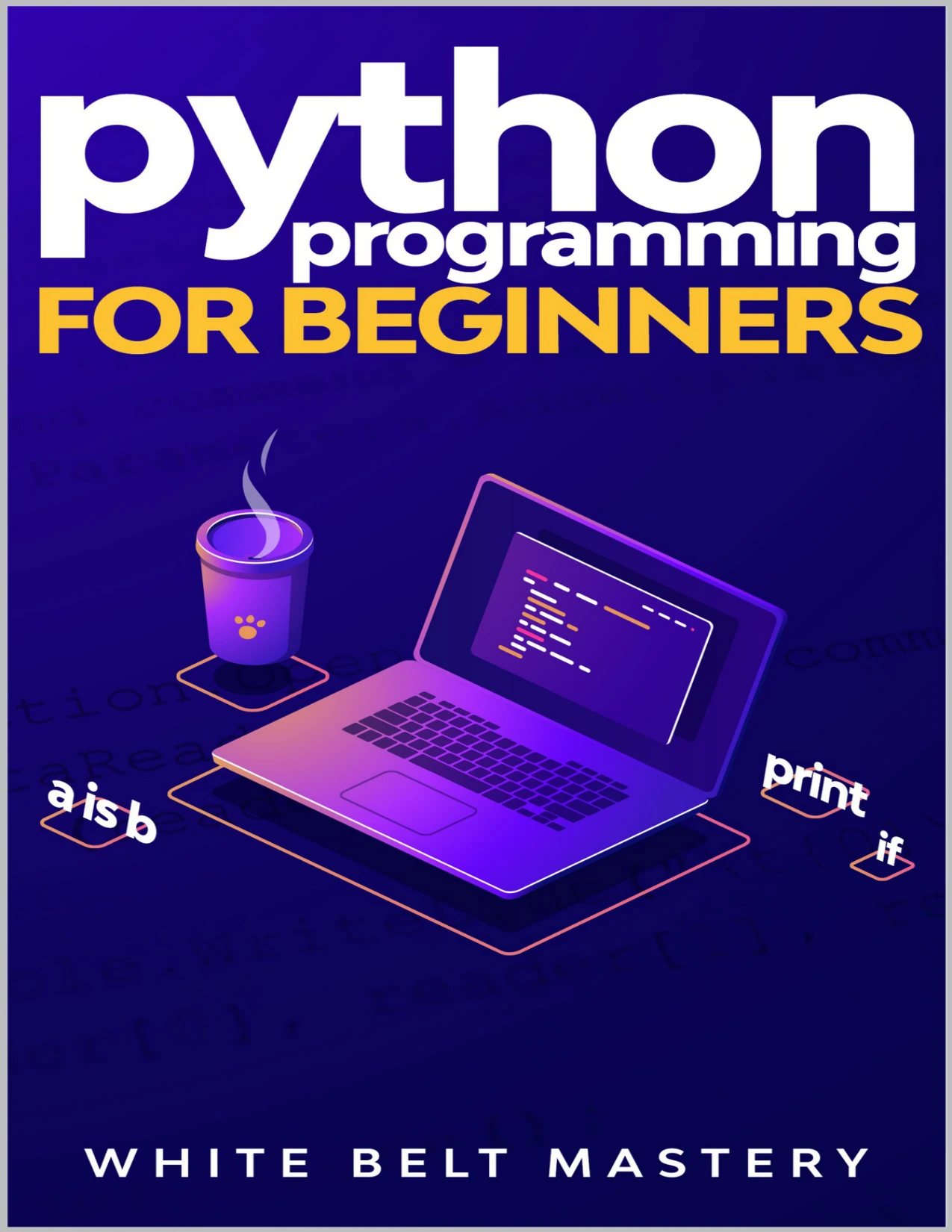
Readers seeking a step-by-step introduction covering variables, control flow, data structures, functions, files, and modules.
Common Worries That Can Slow You Down
Waiting until you are “good at math” to begin
This can delay learning skills that do not require advanced math. Start with basic Python and let your intended projects show you what additional knowledge would be useful.
Assuming every error means you made a math mistake
Many beginner errors come from syntax, spelling, indentation, or using a value in an unexpected way. Read the error message, check the relevant line, and simplify the example before deciding the underlying issue is mathematical.
Starting with an advanced, math-heavy project
A complex project can combine unfamiliar code with unfamiliar math. If you are new to both, begin with a smaller version: for example, write a program that displays data before trying to model or analyze it. Add complexity gradually.
Trying to memorize everything before practising
Programming concepts become clearer when you use them. Work through small examples, make a change, and observe the result. You can look up a formula or syntax detail when you need it rather than trying to remember it all in advance.
Frequently Asked Questions
Do I need algebra to learn Python?
You do not need advanced algebra to begin learning Python fundamentals. Beginner examples may use arithmetic and comparisons, and particular projects may require algebra. Learn the math relevant to your goals as it comes up.
Do I need calculus for Python?
No, calculus is not a general prerequisite for learning Python or writing many kinds of scripts and applications. It can be useful for some scientific, mathematical, or machine-learning work, depending on what you are trying to build or understand.
Is Python useful if I struggle with numbers?
Yes. Python can be used for tasks involving text, files, automation, and other kinds of information—not just calculations. You will still encounter numbers in some lessons and projects, but you can choose a first project that emphasizes other skills.
Which Python fields use more math?
Scientific computing, mathematical modeling, some graphics work, and parts of data science and machine learning can involve more math. The amount depends on the specific task: using a tool to complete an analysis may call for different knowledge than developing methods or interpreting results in depth.
Is the official Python tutorial suitable if I have never programmed?
The official tutorial is a valuable language reference, but it says that it assumes a basic understanding of programming. If you are completely new to coding, start with a resource that teaches programming concepts from the beginning, then use the tutorial as a reference as you gain familiarity.
Should You Learn Python If You Are Not Good at Math?
Yes. You can start with the language’s core ideas and ordinary examples without first becoming confident in advanced math. Begin with variables, conditions, loops, functions, and a small project that interests you. If your goals later involve statistics, calculus, or another specialized area, build that knowledge as part of the path.
For a more mathematical route, Math Adventures with Python: An Illustrated Guide to Exploring Math with Code combines Python with topics such as algebra, geometry, trigonometry, complex numbers, and matrices through coding activities. It is a different kind of starting point: useful to consider if you want to explore math through code, rather than a requirement for every new Python learner.
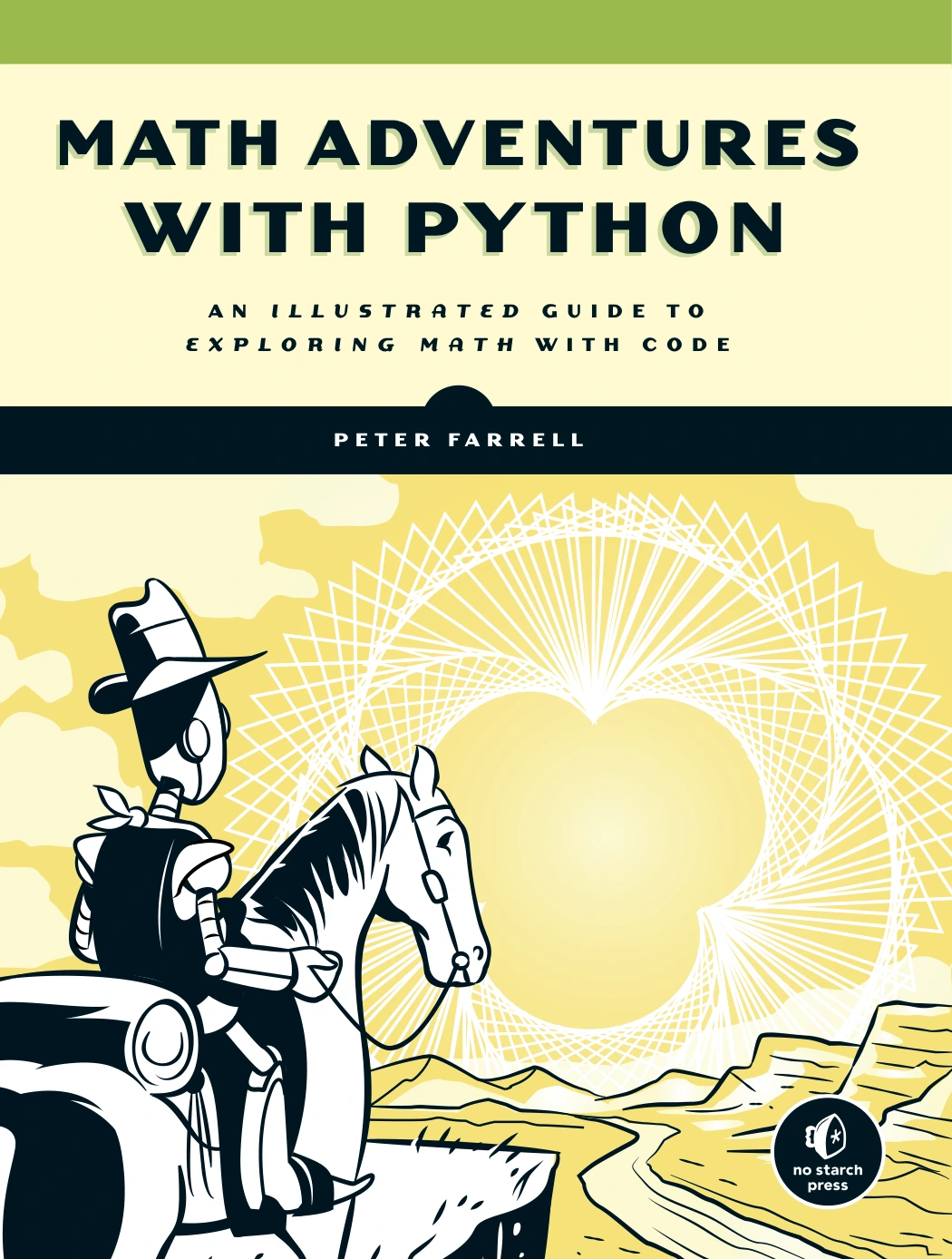
Math Adventures with Python: An Illustrated Guide to Exploring Math with Code
Learners interested in exploring mathematical topics such as algebra, geometry, and trigonometry through Python projects.
The key is to choose a first step that matches your current goal. You do not need to settle every question about math before you write your first line of Python.