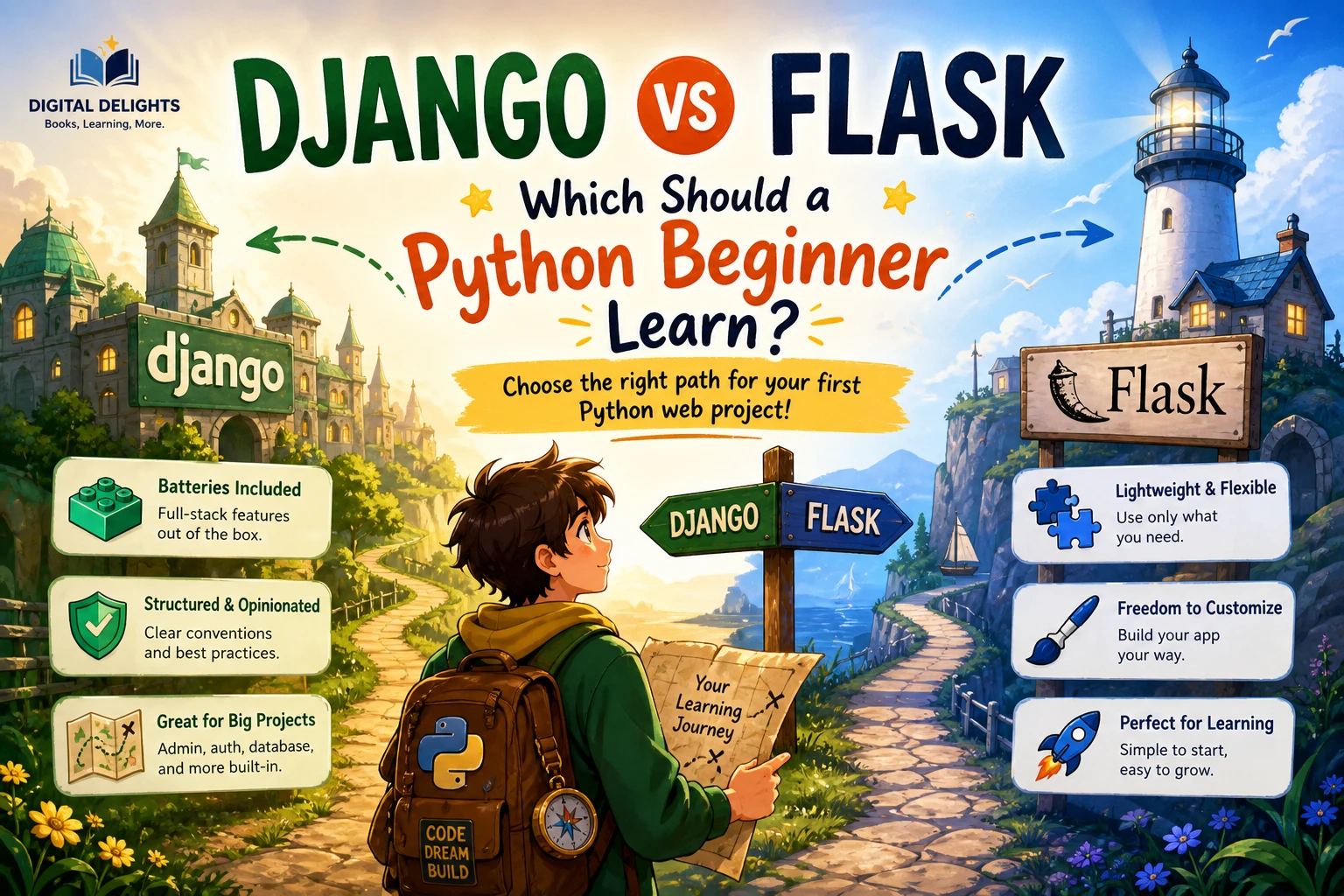
Django vs Flask: Which Should a Python Beginner Learn?
Choosing between Django and Flask is easier when you start with the kind of project you want to build. If you want a structured path toward a conventional website with pages, forms, and database-backed content, Django may be a practical first choice. If you want to begin with a smaller framework and make more of the design decisions yourself, Flask may fit better.
Neither framework is automatically easier for every beginner. Django provides a more integrated project structure; Flask starts with a more minimal core. Your experience with Python and the project you have in mind matter more than a general claim about which one is best. This guide compares their learning experience, suggests what to study first, and lays out a small project plan to help you decide.
Django vs Flask for beginners: the quick verdict
- Consider Django if you want a guided structure for building a fuller website and prefer to learn several connected web-development concepts together.
- Consider Flask if you want a smaller starting point, are curious about how web applications fit together, and do not mind making more choices as your project grows.
- Learn some Python first if concepts such as loops, functions, and lists are still unfamiliar. Framework tutorials make more sense when you can already read basic Python.
Think of this as a starting recommendation, not a permanent commitment. The programming fundamentals you build with either framework will remain useful if you later explore the other.
What are Django and Flask?
Django and Flask are Python frameworks used to build web applications. They provide tools and conventions that help connect incoming web requests to application code and responses. The key difference for a learner is how much structure and functionality comes as part of the framework and how many choices are left to the developer.
Django offers a more integrated learning path
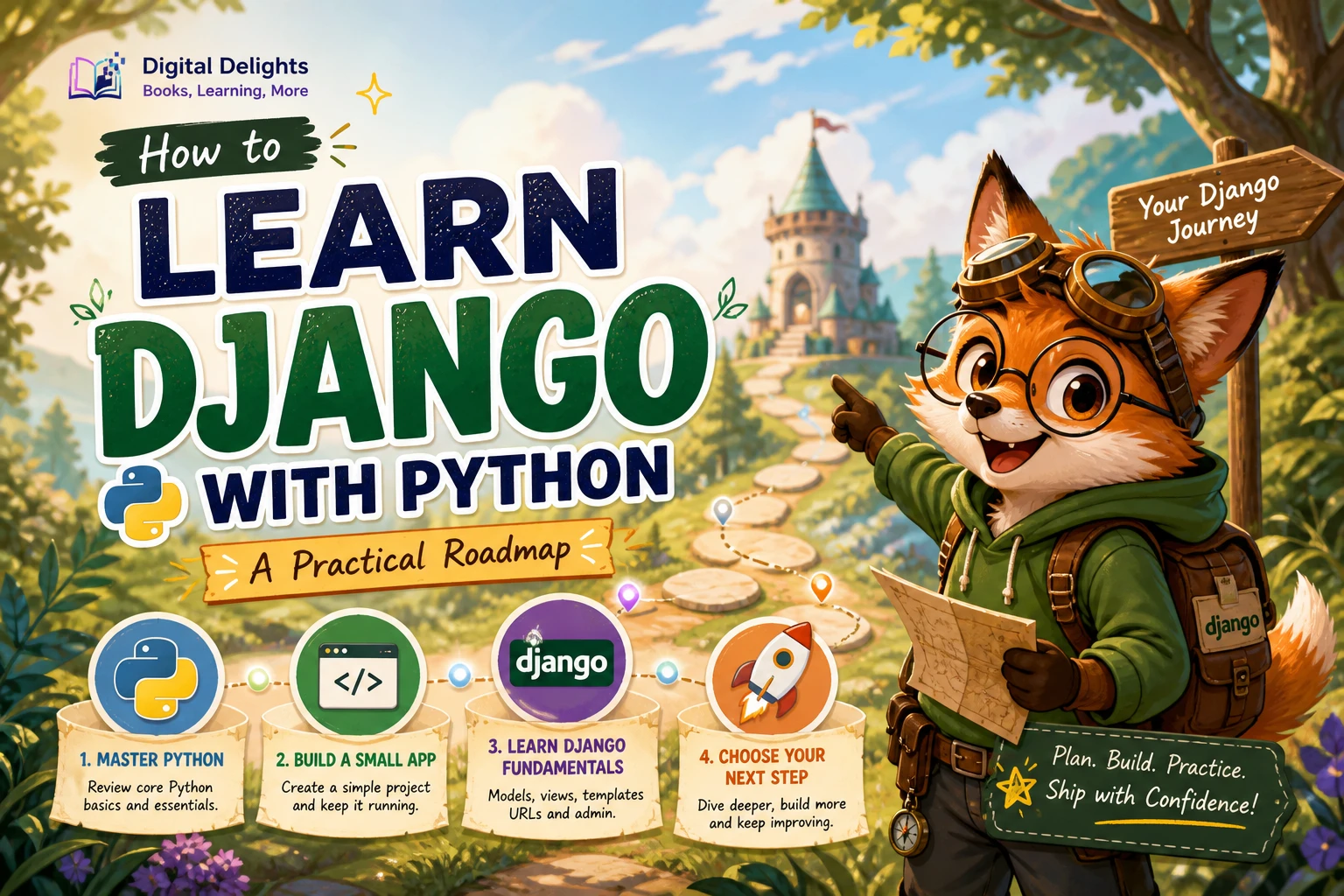
Django is often approached as a framework for building a complete website from a coordinated set of parts. A Django learning project can introduce project setup, URL configuration, views, templates, data models, and forms. Depending on the project and the material you follow, you may also work with authentication, tests, APIs, and deployment.
That connected path can help beginners see how common website features relate to one another. It also means there are more concepts to encounter at the start. A Django guide in the Digital Delights catalog, for example, teaches through a blogging project and covers models, views, templates, forms, authentication, testing, APIs, and deployment. That describes the guide’s subject coverage, not an independent judgment that Django is easier.
Flask starts with a smaller framework core
Flask is commonly described as minimal and more open-ended than Django. A Flask project can begin with a small application and grow as you add the pieces your particular project needs. This can make the first framework concepts feel more approachable, but a smaller starting point does not necessarily mean less work overall: you may need to decide how to organize or extend the application as it grows.
A catalog guide to Flask covers web basics, routes, templates, forms, and a practical project. Those topics offer a useful route into web development, while the book description itself does not establish that Flask is universally easier or faster to learn.
Django vs Flask: beginner comparison
| Question | Django | Flask |
|---|---|---|
| How does it get started? | With a more integrated structure and multiple related concepts to learn. | With a smaller core and fewer initial framework decisions. |
| How much choice does the learner have? | More of the project path is organized around Django’s connected components. | More decisions about how to shape and extend the project may be left to you. |
| What might a first project teach? | How pages, data, forms, and other website features work together. | How routes, templates, forms, and a small application fit together. |
| Who may prefer it? | A learner who wants a structured route toward a fuller website. | A learner who wants to start small and explore web concepts with more flexibility. |
This is a practical comparison of learning approaches, not a measured ranking. The available evidence does not establish which framework gets all beginners to a working project sooner. The result depends on your Python background, the tutorial you use, and what you are trying to build.
How to choose based on your goal
Choose Django if you want a guided website project
If your goal is to build a website with several connected features, Django may give you a useful learning sequence. You can follow how a request reaches a view, how a template presents a page, and how a model represents application data. That approach suits learners who would rather follow an established structure than decide every architectural detail themselves.
For project-based study, Django – The Easy Way (3rd Edition) follows a blogging platform through project setup, templates, models, forms, authentication, testing, APIs, and deployment. Use it as a Django-focused learning option if that project path matches your aims; its catalog description does not compare its quality with Flask books.
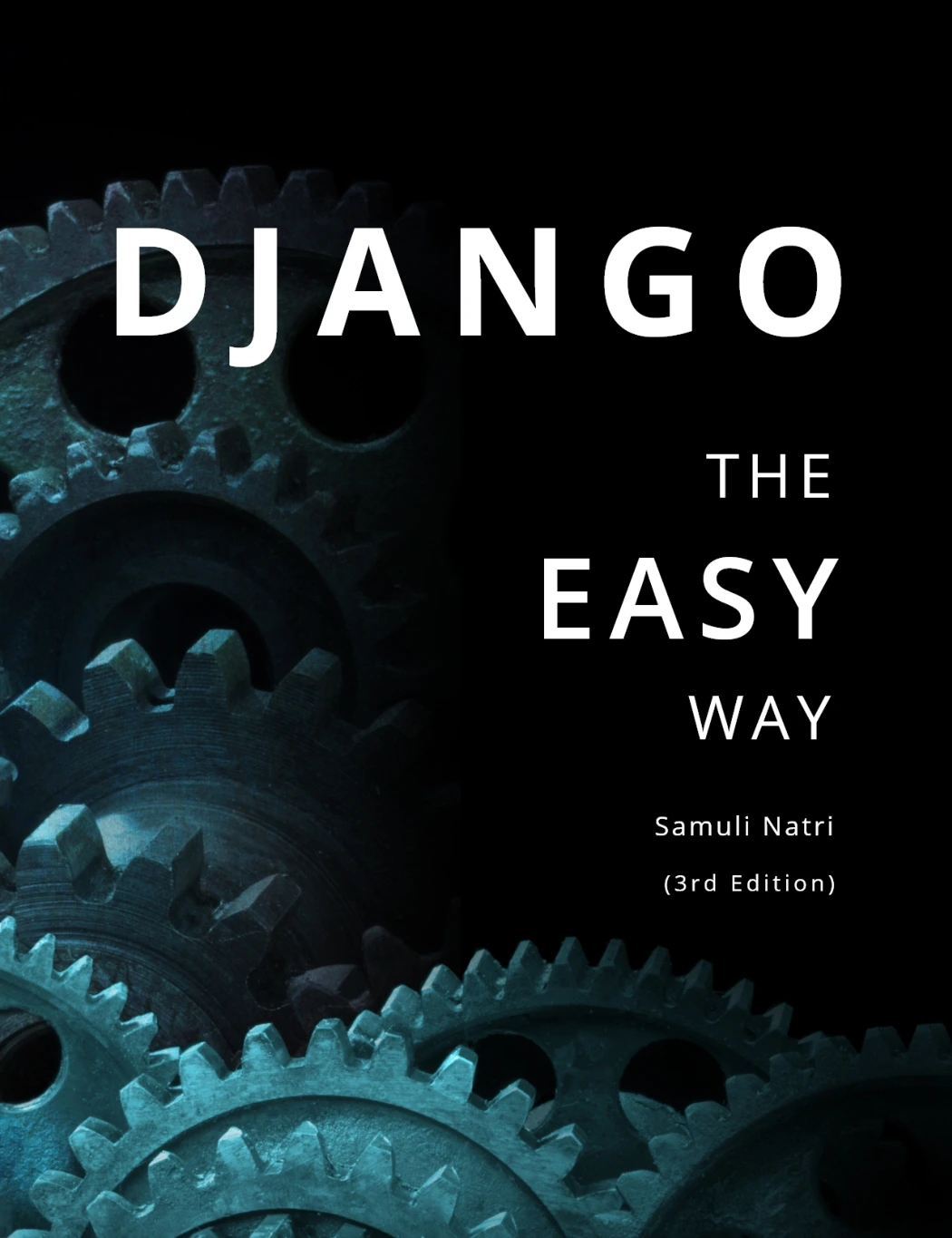
Django – The Easy Way (3rd Edition): How to build and deploy web applications with Python and Django
By Samuli Natri
Readers who want to follow a Django blogging project covering templates, models, forms, authentication, testing, APIs, and deployment.
Choose Flask if you want to begin with a smaller application
If you would like to start with a compact web app and see how routes and responses work before taking on a more integrated set of tools, Flask may suit your learning style. Expect to make more decisions as you add functionality. That open-endedness can be educational, but it may feel less guided if you are new to both Python and web development.
A Quick step by step guide to learning web development with Python and Flask is a Flask-oriented option whose catalog description covers web basics, routes, templates, forms, and a practical lab. Treat it as a focused introduction, not as evidence that Flask is a better first framework for everyone.
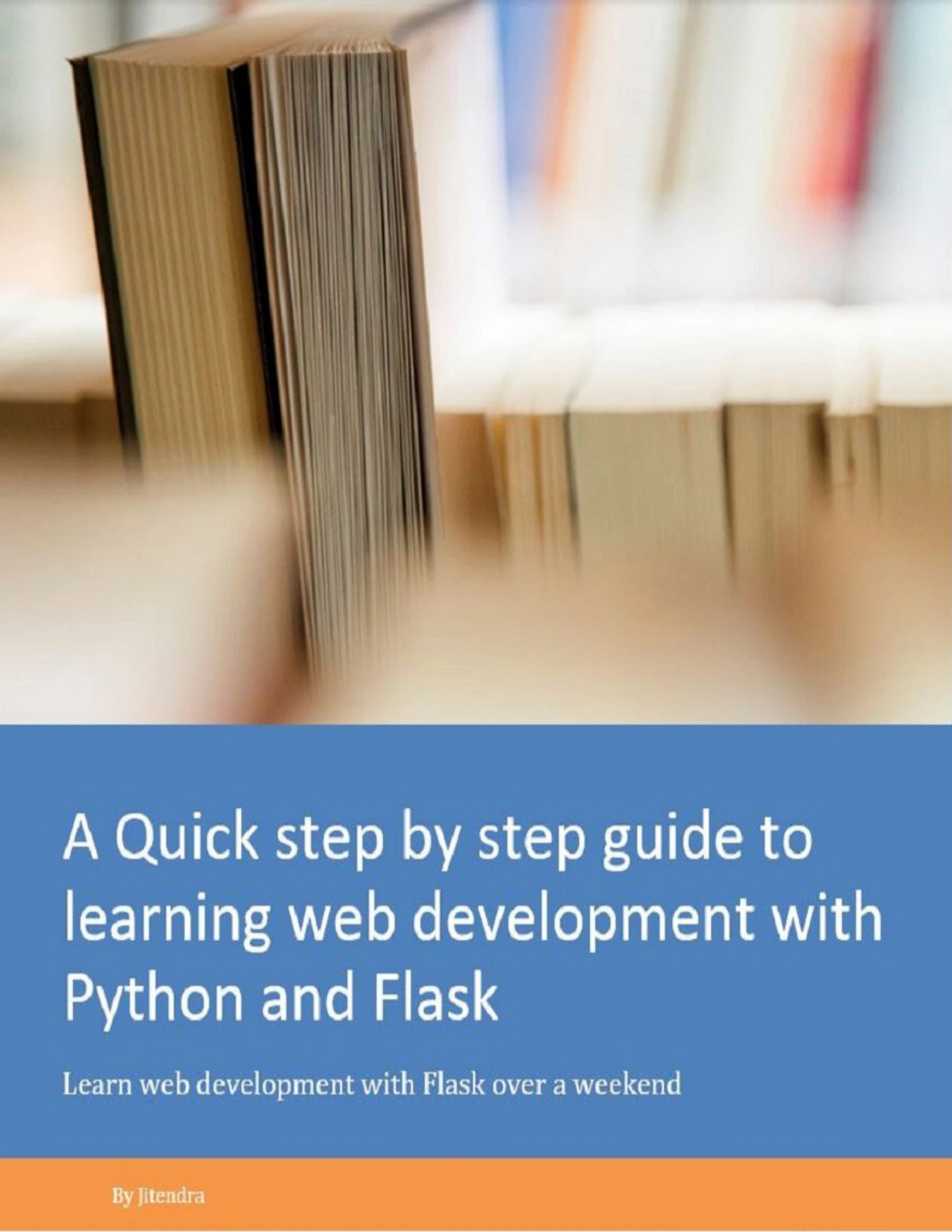
Learners looking for an introductory Flask guide covering web basics, routes, templates, forms, and a practical lab.
Building an API? Pick a learning project, not a slogan
Both framework learning paths can involve web application and API concepts, but the available sources here do not support a blanket claim that one is always the better API choice. Decide what you want to learn: routing, data exchange, authentication, testing, or deployment. Then choose a tutorial that actually covers those topics and matches your current Python level.
What should you learn before either framework?
Learn enough Python to understand basic control flow, functions, and common data structures before treating framework code as your main subject. You do not need to master every part of Python first, but you should be able to follow a short program, recognize how values move through it, and make small changes without relying on copying every line.
The official Python tutorial says it is intended for people new to Python who already have a basic understanding of programming; it is not designed as a first introduction to programming itself. If you have never programmed, start with beginner-level programming concepts alongside Python rather than expecting a framework tutorial to teach everything at once (The Python Tutorial).
- Control flow: understand conditions and loops.
- Functions: recognize parameters, return values, and how functions divide work.
- Data structures: get comfortable with lists and dictionaries, which frequently appear in application code.
- Debugging basics: read error messages and test small changes rather than changing many things at once.
- Web vocabulary: learn what a request, response, route, and HTML template mean as you encounter them.
If you want a book-based Python foundation, A beginner’s guide to Python covers core topics including variables, conditionals, loops, functions, file handling, and data structures. For practice after learning the basics, Python Programming Exercises, Gently Explained contains 42 short exercises, according to its catalog listing. These are optional study resources, not prerequisites imposed by either framework.
New Python learners seeking coverage of variables, control flow, functions, file handling, and data structures before choosing a framework.
Python Programming Exercises, Gently Explained
By Al Sweigart
Learners who want additional practice with the 42 short exercises described in the catalog.
A small first-project plan
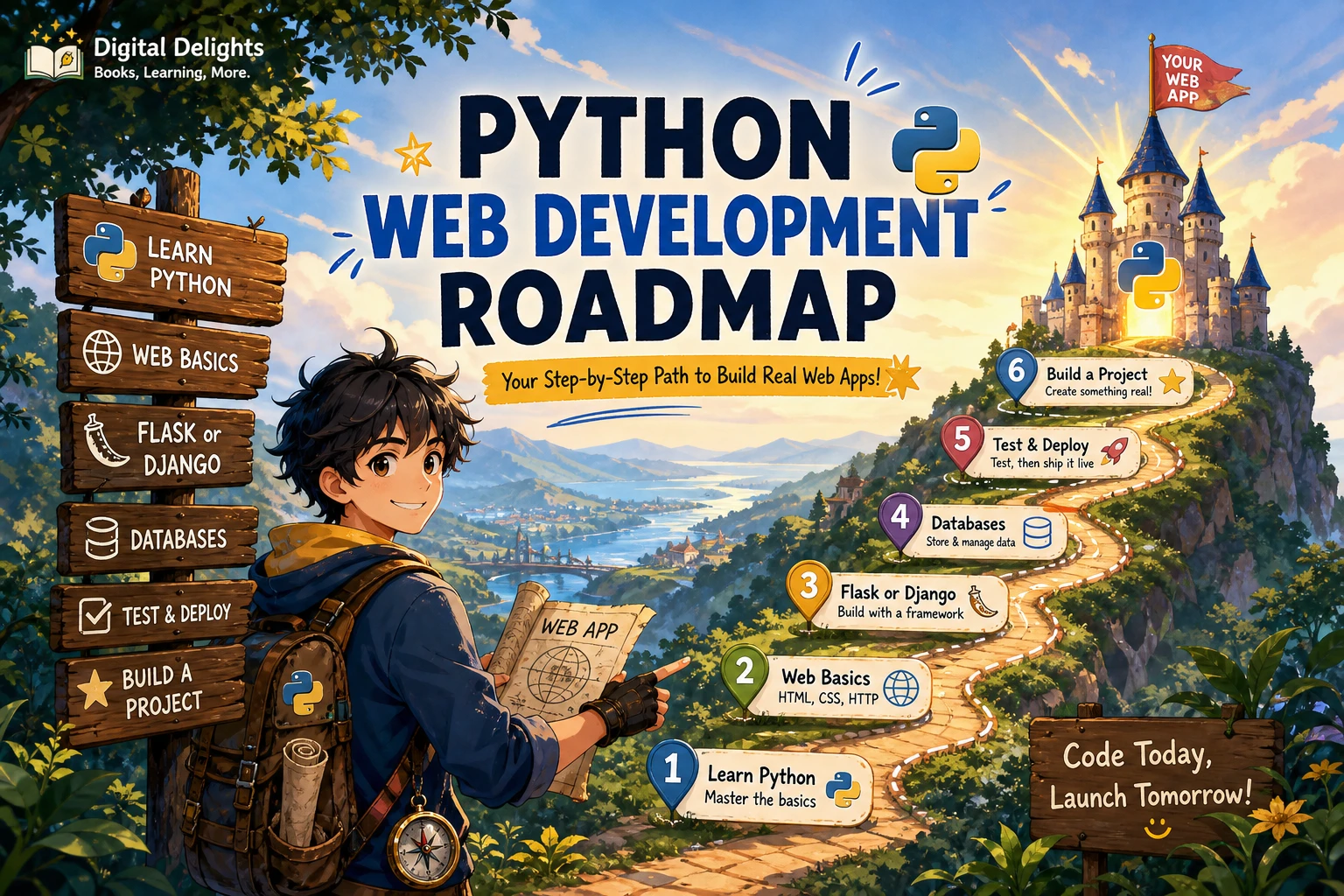
Use one modest project to test which framework suits you. For example, make a reading list that lets someone view entries, add a book, and mark an entry as finished. Keep the first version deliberately small; the point is to learn the path from a browser action to Python code and back.
- Write down the basic features. Start with a list view and a form to add an entry. Avoid accounts, complex permissions, and deployment in the first pass.
- Choose a learning route. Pick Django if you want the project organized around a fuller set of website components. Pick Flask if you want to begin with a smaller application and make more structural choices yourself.
- Build one feature at a time. Make a page display first, then add input, then decide how the project will store and retrieve entries.
- Keep notes on what you understand. If framework conventions help you move forward, that is useful evidence for your learning preference. If you want to understand each choice and are comfortable researching it, the more open-ended route may be engaging.
- Revisit the other framework later. Once the first project works, try recreating one small feature in the other framework. Comparing the approaches can clarify what each framework is doing for you.
Do not judge your ability by how quickly a first project comes together. Setup problems, unfamiliar web concepts, and debugging are part of the learning process in either framework.
Choosing current learning materials
Framework instructions can change over time. Before installing anything, check the current official framework documentation and confirm that a tutorial’s commands and requirements match the versions you plan to use. The research available for this article does not verify the latest Django or Flask releases or their current Python compatibility details, so this guide intentionally avoids version-specific installation steps.
When comparing books or courses, check whether the material fits your starting point and project goal. A useful resource should make its prerequisites clear, take you through runnable examples, and explain the concepts behind its code. The catalog descriptions for the Django and Flask titles linked above establish their stated coverage, but they do not provide a controlled comparison of teaching quality or completeness.
Browse the Python learning resources if you want to explore more programming material. Choose a resource that helps you practice, not just one that names the framework you have already picked.
Frequently asked questions
Is Django easier than Flask for beginners?
Not for everyone. Django offers a more integrated structure that can guide a learner through connected website concepts. Flask starts with a smaller core but may leave more decisions to the developer. Your Python experience and preference for guidance versus flexibility affect which feels easier.
Is Flask better for APIs?
There is no universal answer supported by the material reviewed for this article. Compare the API features, examples, and prerequisites in current learning materials, then choose based on the application you want to build. Both frameworks appear in learning resources that cover web development and APIs, but that alone does not establish which is best for a particular API.
Can a complete beginner learn Django or Flask?
Yes, but someone who is completely new to programming may benefit from learning basic programming and Python concepts first. The official Python tutorial assumes some prior programming knowledge, so a first-time programmer should use a more introductory learning path before relying on it as their only starting point.
Should I learn Python before Django or Flask?
Learn the Python basics first: control flow, functions, and common data structures. You do not need to know every Python feature, but basic familiarity makes it easier to distinguish Python concepts from framework-specific ones.
Can I learn Django and Flask one after the other?
Yes. Start with one framework and complete a small project so you have something concrete to compare. Then try the other. Learning both at once can introduce extra framework-specific decisions before you have a firm grasp of the underlying web concepts.
Conclusion: choose the framework that matches your first project
For a beginner building a structured, conventional website, Django may be the more natural first framework to explore. For someone who wants to start with a smaller framework and is comfortable making additional choices, Flask may be a better fit. Neither choice replaces learning Python fundamentals, and neither framework is the right answer for every project.
Pick a small project, follow current learning material, and focus on understanding how each part works. The best first framework is the one that helps you keep learning and finish something you can explain.
Sources and evidence notes
- The Python Tutorial — Python 3.14.7 documentation: supports the distinction between learning Python and starting programming with no prior programming foundation.
- Web Development with Django 6 — Third Edition: publisher material describes a Django learning path that includes project setup, models, views, templates, forms, authentication, testing, and deployment. This is evidence of that book’s scope, not a comparison of framework difficulty.
- Beginning Python: From Novice to Professional, Flask activity and Mastering Flask Web and API Development: publisher materials frame Flask differently for different audiences and describe its minimal, open-ended approach. These are instructional framings, not controlled learning-curve evidence.
Evidence limitation: The research available for this article did not verify current official Django or Flask documentation, release details, compatibility requirements, or a like-for-like beginner learning-curve comparison. Check each framework’s current official documentation before following version-specific setup advice.