
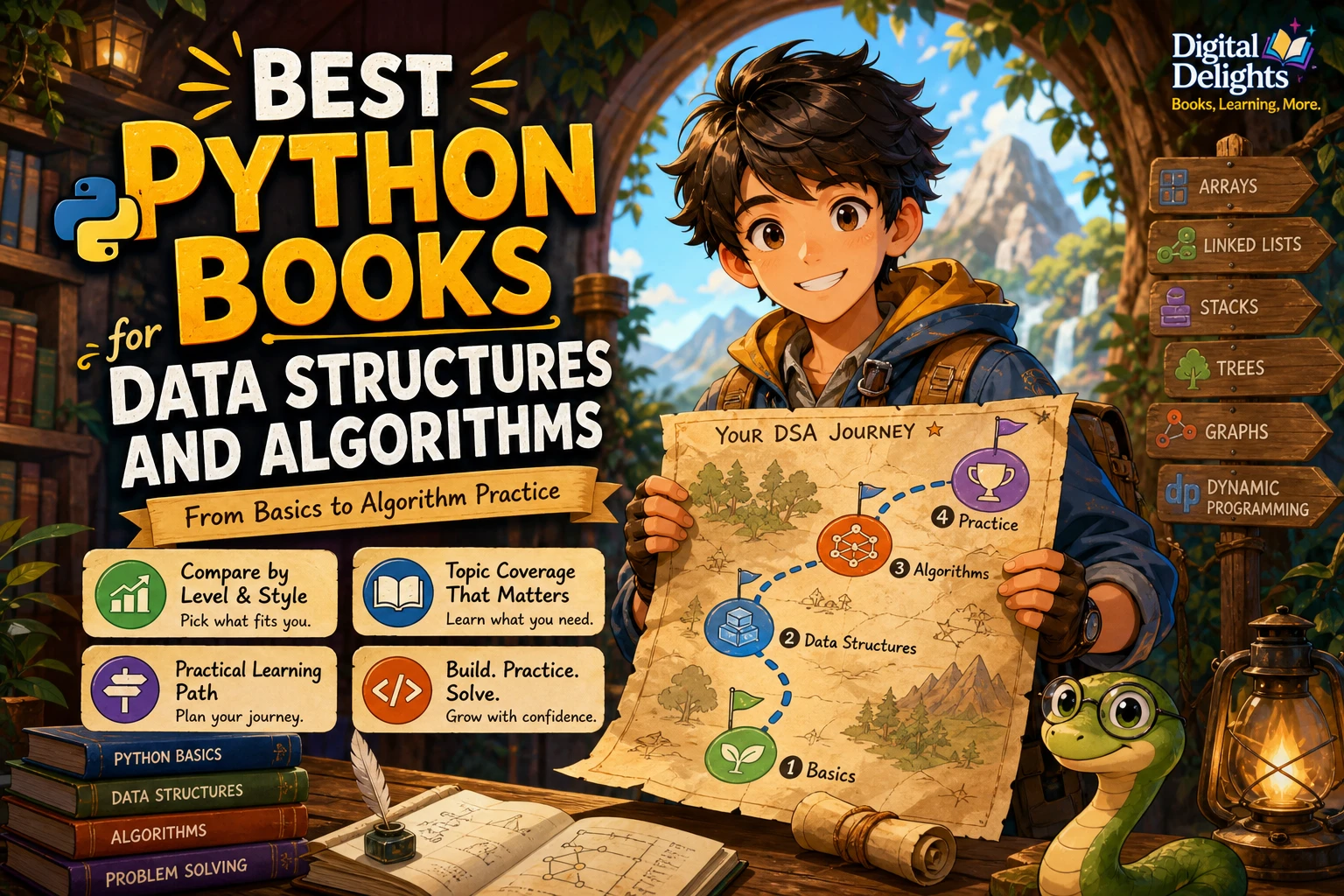
Best Python Books for Data Structures and Algorithms
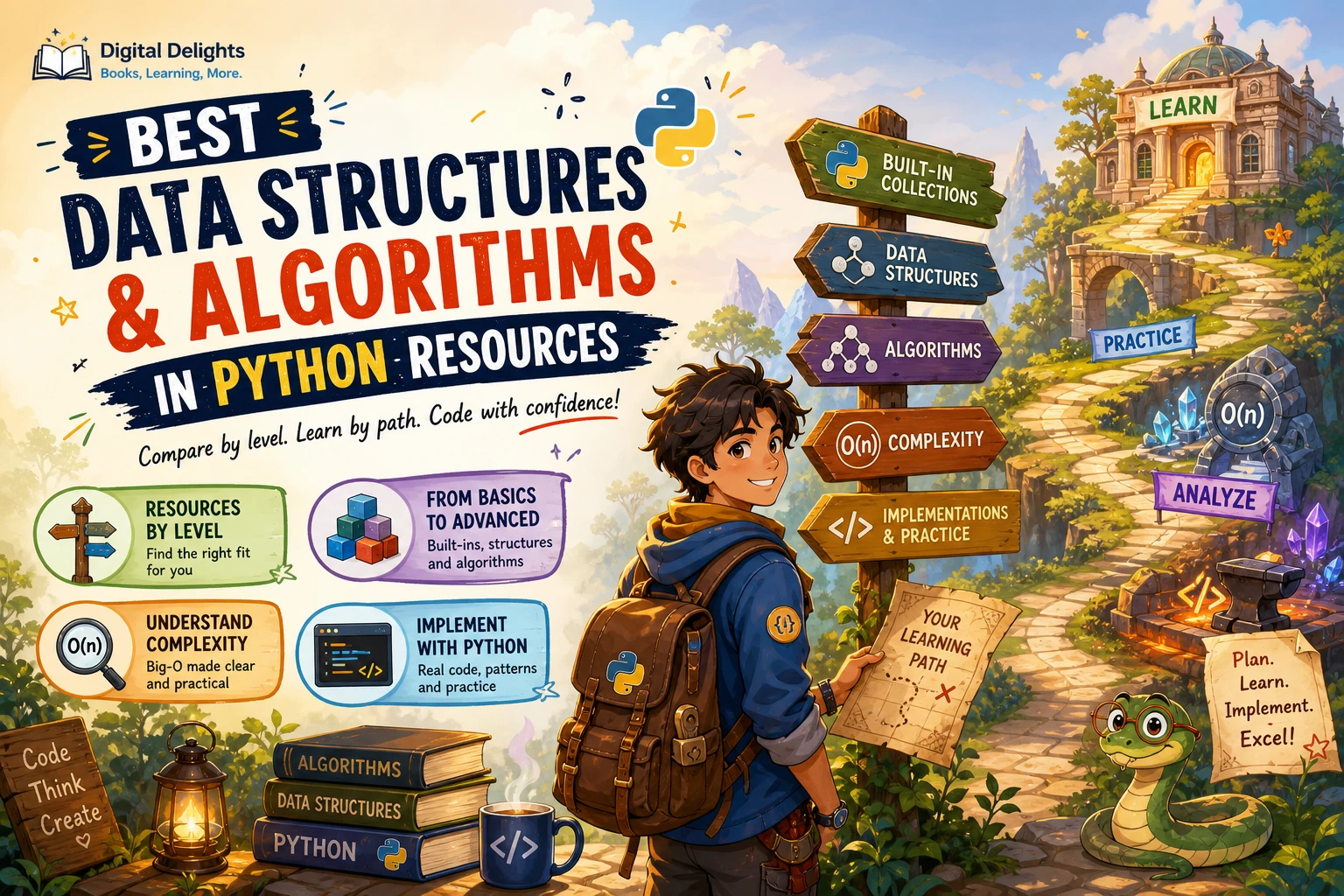
The right Python data structures and algorithms book depends on what you already know and how you want to learn. Some titles combine Python fundamentals with early computer science concepts; others assume you can code and focus on algorithmic problems, implementations, or broader reference material. There is no single best fit for every learner.
For a guided start, consider 100 Days of Coding in Python or The Python Workshop. If you want to explore recursion and programming concepts, Conceptual Programming with Python is a relevant option. For Python-based algorithm problems, look at Competitive Programming in Python: 128 Algorithms to Develop Your Coding Skills. For a wider survey that uses both Python and C#, consider Essential Algorithms.
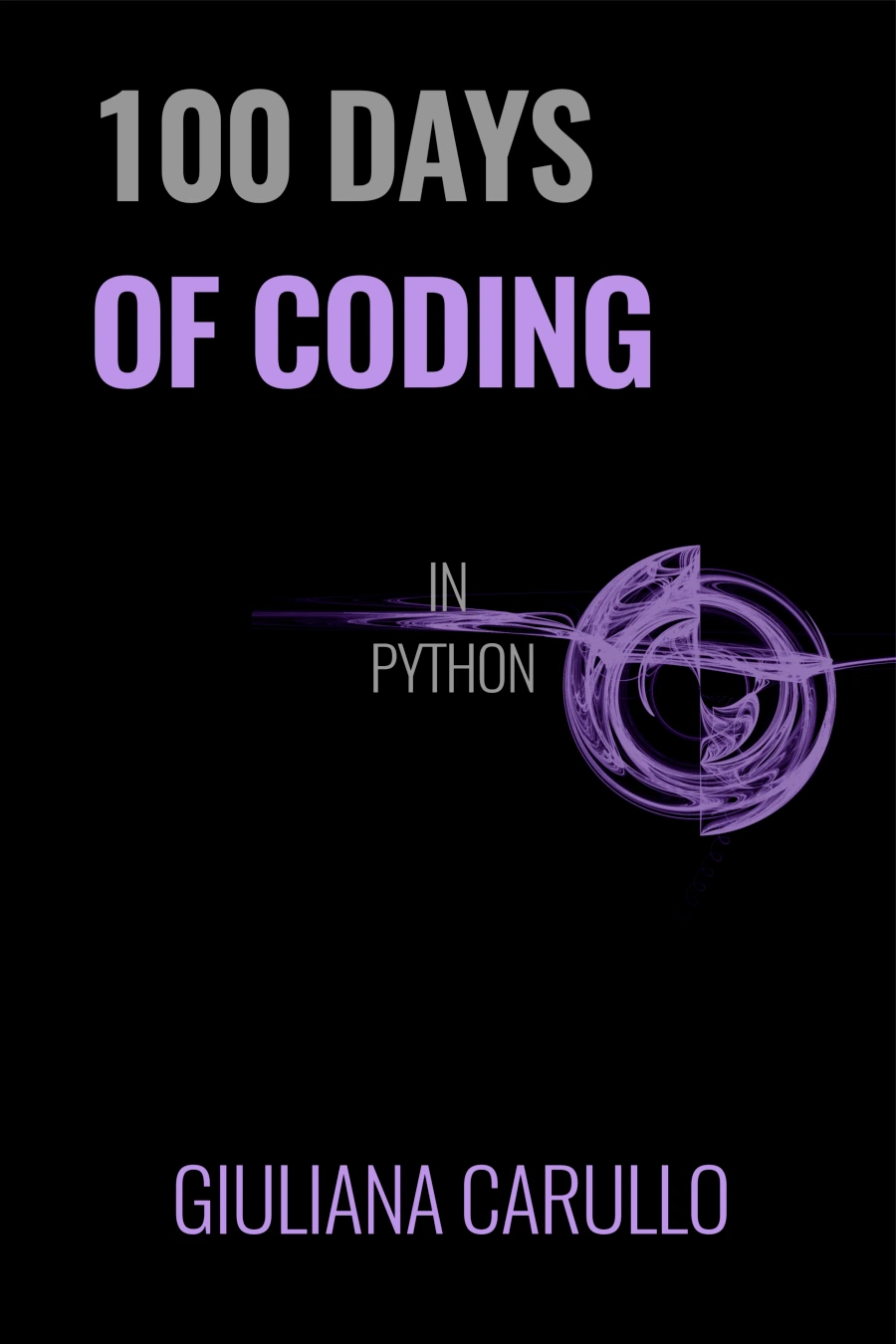
New programmers who prefer a paced sequence with theory and practice.
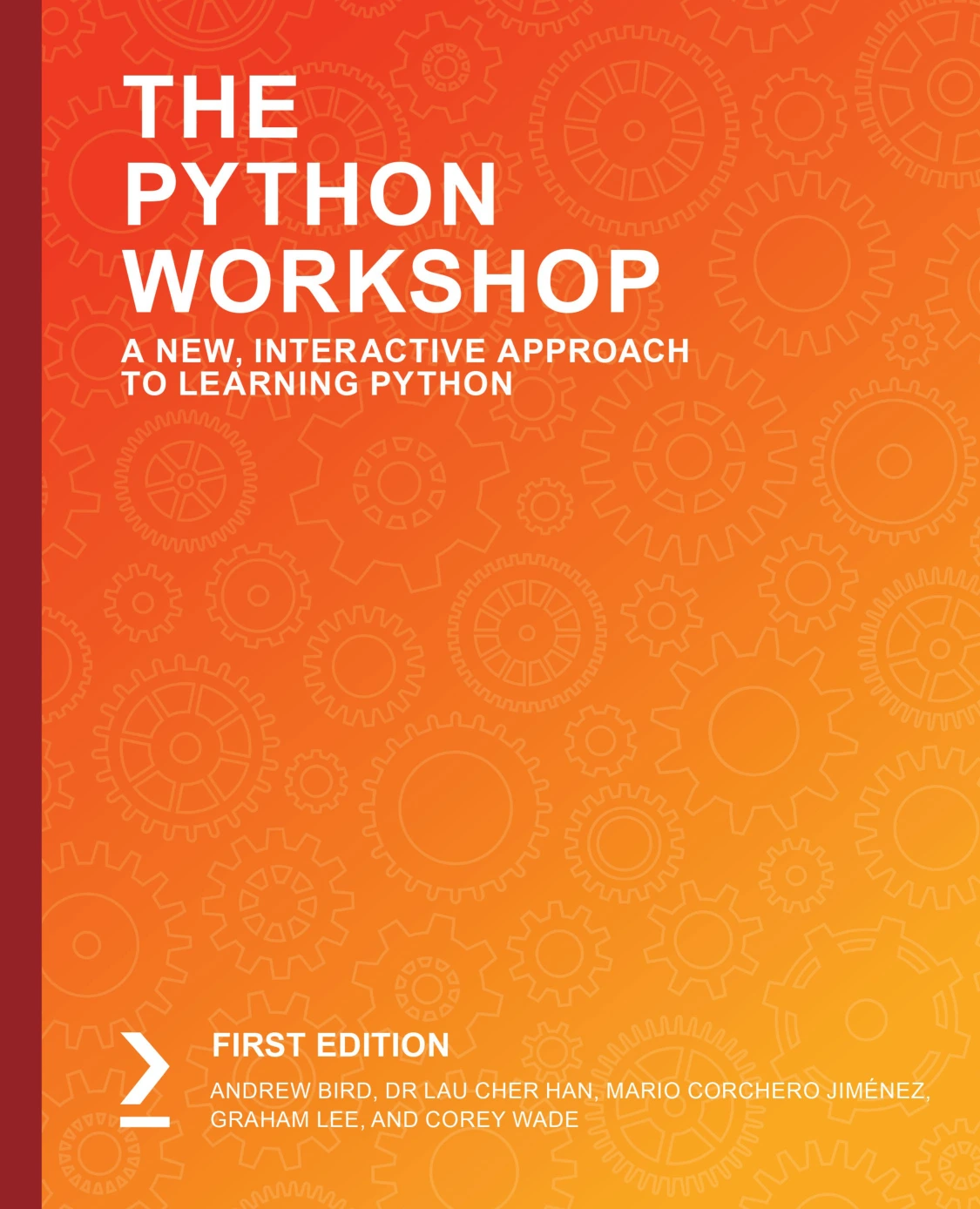
By Andrew Bird
Learners who want to build Python skills by working through practical activities.
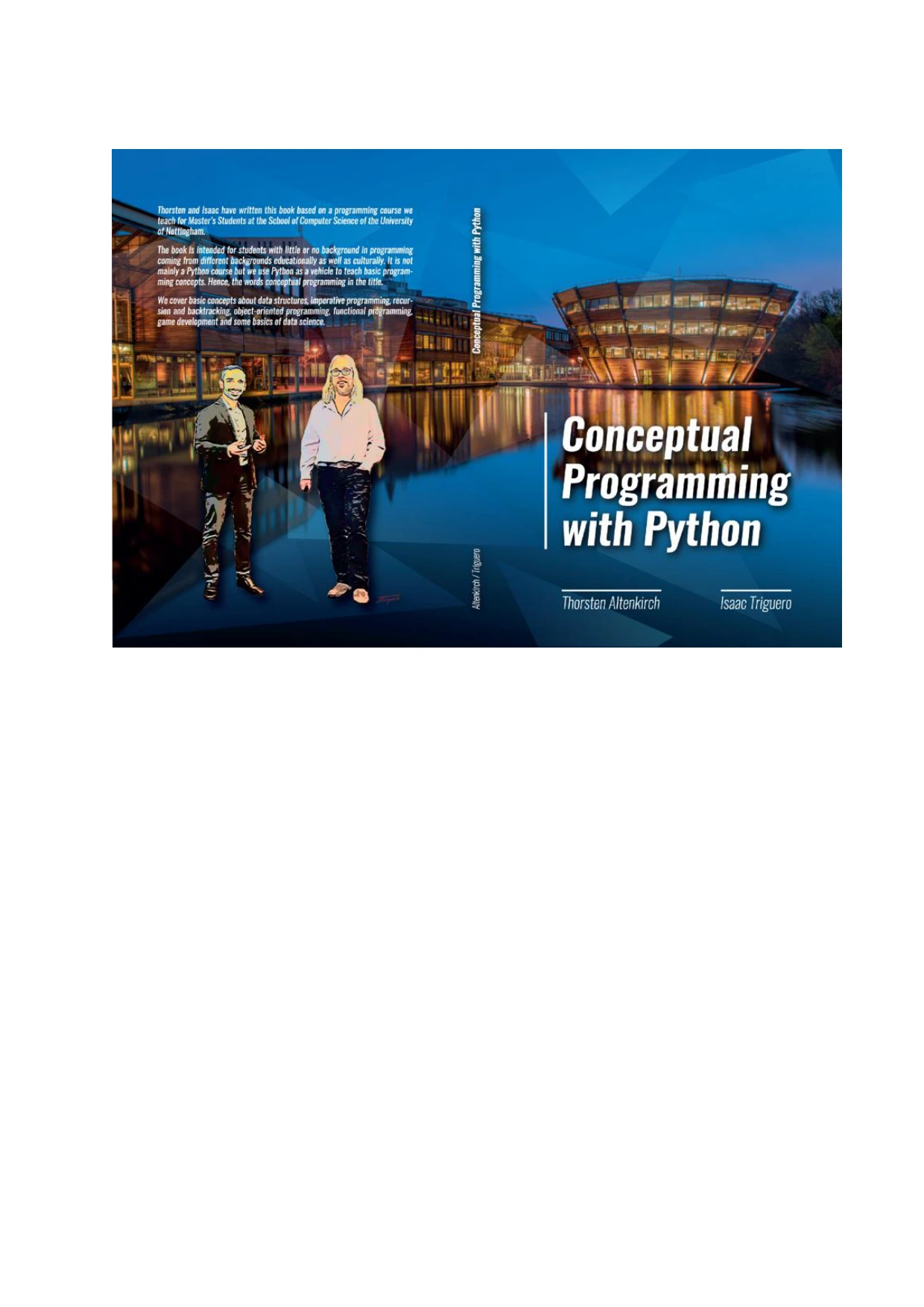
Conceptual Programming with Python
Readers interested in the ideas behind programs and algorithm design.
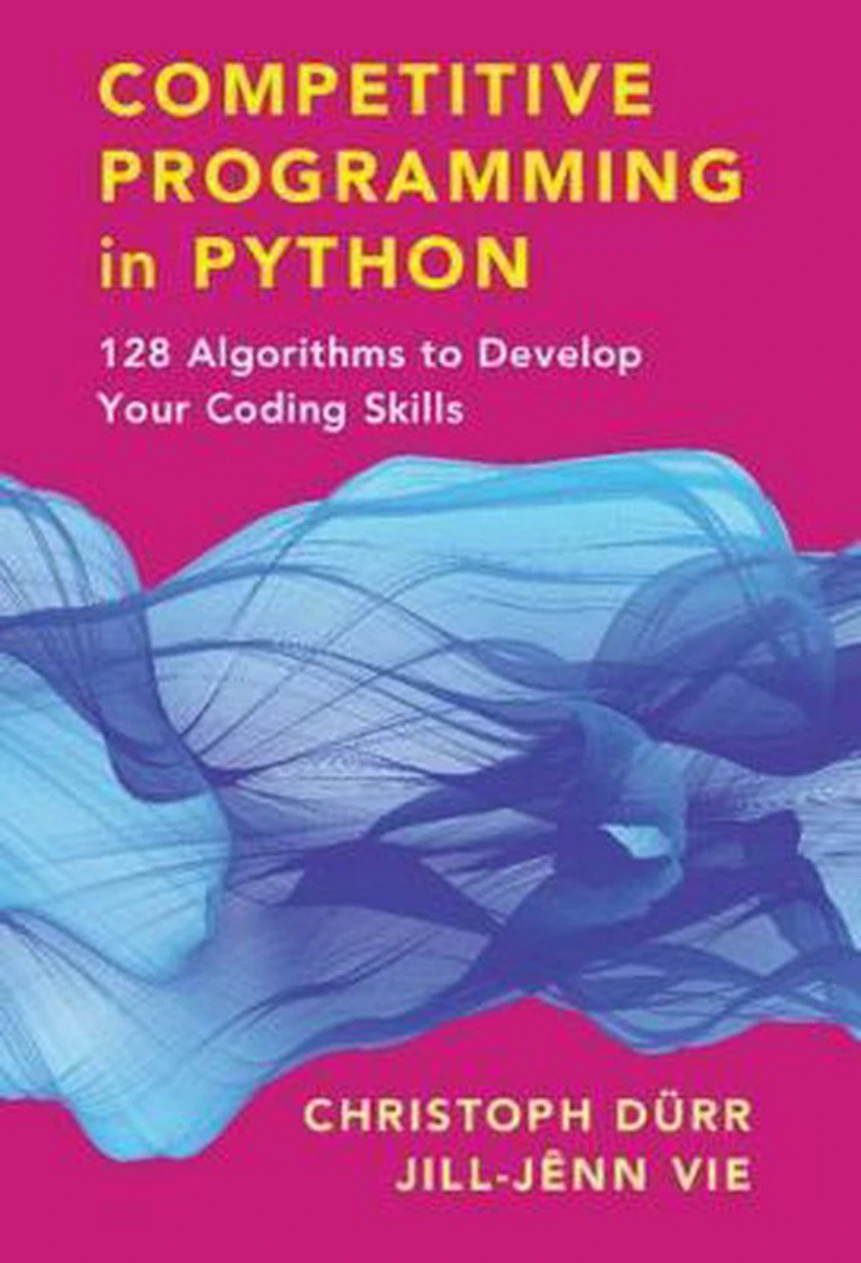
Competitive Programming in Python: 128 Algorithms to Develop Your Coding Skills
Learners with basic Python fluency seeking focused problem-solving practice.
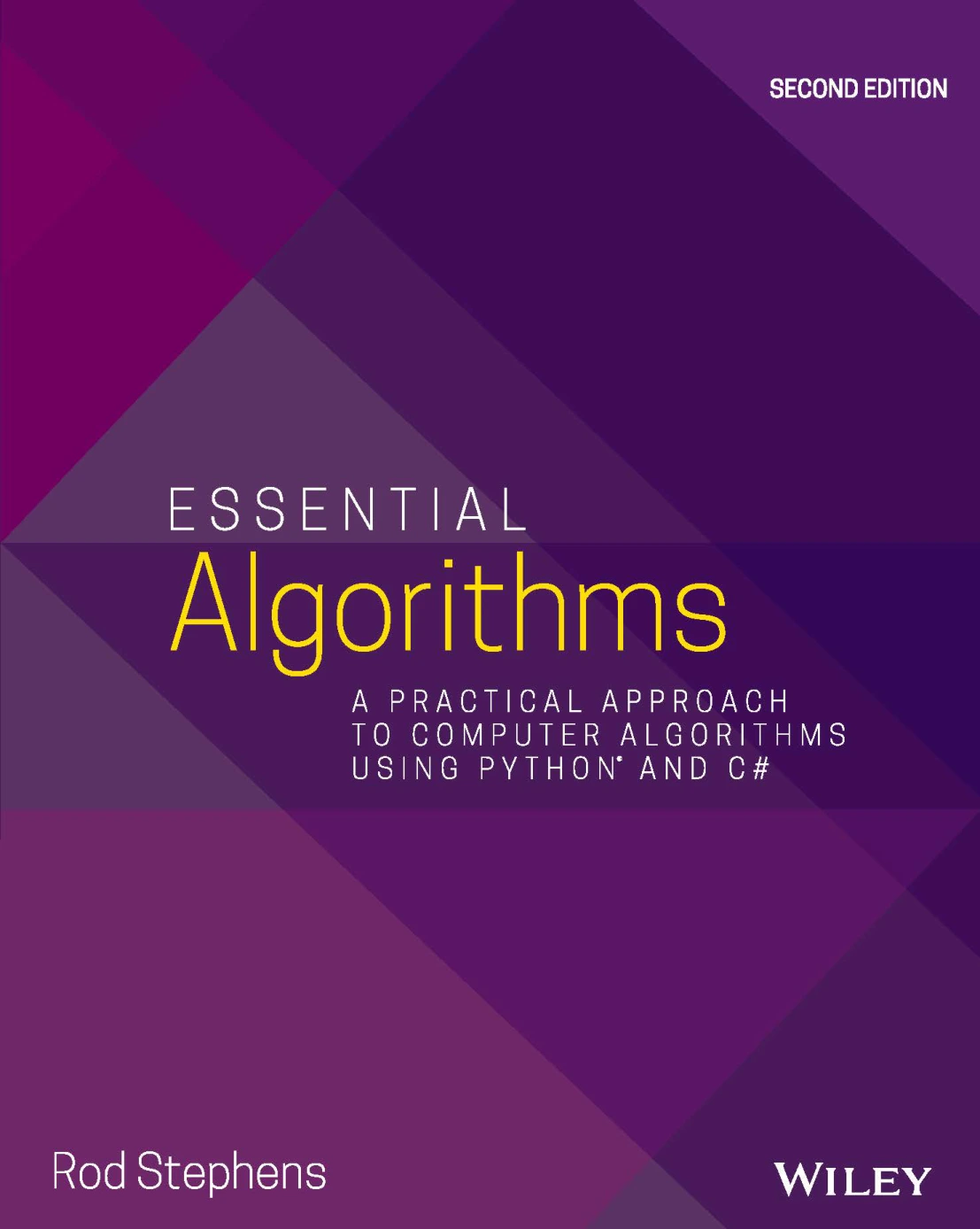
Essential Algorithms: A Practical Approach to Computer Algorithms Using Python® and C#
By Rod Stephens
Readers wanting a wide-ranging resource with examples in two programming languages.
These are recommendations by stated scope and reader fit, not the result of a controlled comparison. Use the guide below to match a book to your current Python level, learning style, and goal.
How to Choose a Python Data Structures and Algorithms Book
Data structures organize information; algorithms describe ways to process it. Studying them together means learning both what a structure is useful for and how the operations performed on it affect a solution. Before picking a book, consider these factors.
Check the Python prerequisites
Some books teach Python alongside broader programming ideas, while others are easier to use once you can already write and debug basic programs. If you are new to programming, look for a clear progression through variables, conditionals, loops, functions, and core collections such as lists and dictionaries. If you already code, you may prefer to spend less time on syntax and more time on algorithm design and problem solving.
Look at the balance between explanation and practice
A readable explanation can help you understand an idea, but implementing it is what reveals where your understanding is incomplete. Check whether the book offers exercises, worked examples, projects, or problems to solve. Think about the kind of practice you will actually use: short exercises, a guided sequence, or longer algorithm challenges.
Match the scope to your purpose
A beginner’s programming workbook, a broad computer science text, and a contest-problem collection serve different purposes. For coursework, you may want orderly coverage of concepts. For interview preparation, prioritize problem-solving practice and the ability to explain trade-offs. For competitive programming, look for problem-centered algorithm coverage. A general reference can be useful over time, but may not provide a step-by-step learning path.
Check edition and code context
Books can refer to different Python versions, and examples may need adjustment in a newer environment. Before relying on a particular example, check the book’s edition and any available sample code or errata. A version reference in a book’s description is not, by itself, proof that every example has been tested with your current setup.
Python Books for Data Structures and Algorithms by Reader Need
The comparison below focuses on the scope described for each title and the type of reader it may suit. It is not a ranking of instructional quality.
| Book | Best fit | Stated focus | Consider before choosing |
|---|---|---|---|
| 100 Days of Coding in Python | Beginners who want a paced sequence | Python foundations, practice, algorithms, data structures, and design patterns | Its day-by-day structure suits learners who want a learning rhythm; it covers more than DSA alone. |
| The Python Workshop | Learners who want to work through practical Python exercises | Python fundamentals, built-in structures, exercises, and later algorithmic topics | Its scope is a broad Python workshop, not just a dedicated DSA text. |
| Conceptual Programming with Python | Readers interested in the ideas behind programs | Data structures, algorithms, recursion, backtracking, and programming approaches | It ranges into subjects beyond DSA, including game development and introductory data science. |
| Competitive Programming in Python | Python learners ready for focused algorithm problems | 128 algorithms and problems across topics including arrays, graphs, trees, strings, and search | Its contest-oriented scope is a better match once you can read and write Python code comfortably. |
| Essential Algorithms | Readers looking for broad algorithm and data-structure coverage | Data structures and algorithms with examples in Python and C# | It is a wide-ranging reference; decide whether you want that breadth or a narrower guided introduction. |
For a structured beginner path: 100 Days of Coding in Python
100 Days of Coding in Python by Giuliana Carullo is described as a paced, day-by-day guide for people new to programming. Its stated topics include Python fundamentals, practice, algorithms, data structures, and design patterns. That combination makes it a reasonable starting point if you want to build general programming habits while meeting DSA concepts along the way.
Its scope is broader than a dedicated algorithms course. If your immediate goal is to study graph algorithms or solve contest problems, you may eventually want a more focused resource. But for a learner who benefits from a planned sequence and repeated practice, its structure is a useful feature to consider.
For learning through exercises: The Python Workshop
The Python Workshop takes a hands-on approach, with exercises and examples that build from Python basics toward data structures and algorithmic thinking. The stated coverage includes structures such as lists, dictionaries, sets, and tuples, alongside topics such as functions and algorithms.
Choose it if you want a broad practical introduction and prefer to learn by writing code as you go. Because it covers Python programming beyond DSA, it may be less direct than a focused algorithm book for someone who already knows the language and wants concentrated problem practice.
For conceptual foundations and recursion: Conceptual Programming with Python
Conceptual Programming with Python develops programming ideas through Python, including data structures, algorithms, recursion, and backtracking. Its described examples include the Towers of Hanoi and a Sudoku solver, which connect algorithmic techniques to recognizable problems.
This title may appeal if you want to understand different ways of structuring programs rather than learning a list of Python features in isolation. Its scope extends into functional and object-oriented programming, game development, and introductory data science, so it is a broader conceptual text rather than a narrow DSA workbook.
For Python algorithm problems: Competitive Programming in Python
Competitive Programming in Python: 128 Algorithms to Develop Your Coding Skills, by Christoph Dürr and Jill-Jênn Vie, is organized around algorithmic problems and Python implementations. Its stated coverage includes arrays and sequences, strings, graphs, shortest paths, trees, geometry, and exhaustive search, among other topics.
This is a more focused choice if you already have enough Python experience to concentrate on problem solving and implementation. It may also be relevant to contest preparation or interview practice, but a book alone cannot guarantee readiness for either. Work through problems yourself before studying a solution, then explain why the chosen method fits and what its trade-offs are.
For broader coverage: Essential Algorithms
Rod Stephens’s Essential Algorithms: A Practical Approach to Computer Algorithms Using Python and C# covers a wide range of structures and algorithms. The catalog description lists topics such as linked lists, stacks, queues, hash tables, trees, sorting, searching, graph traversal, and complexity, with examples in Python and C#.
Consider it if you want a substantial reference that connects algorithm behavior with implementation and analysis. Since it uses two programming languages and spans many subjects, check that this format matches your learning goal. If you need a gentle first course, a more guided beginner resource may be a better first step.
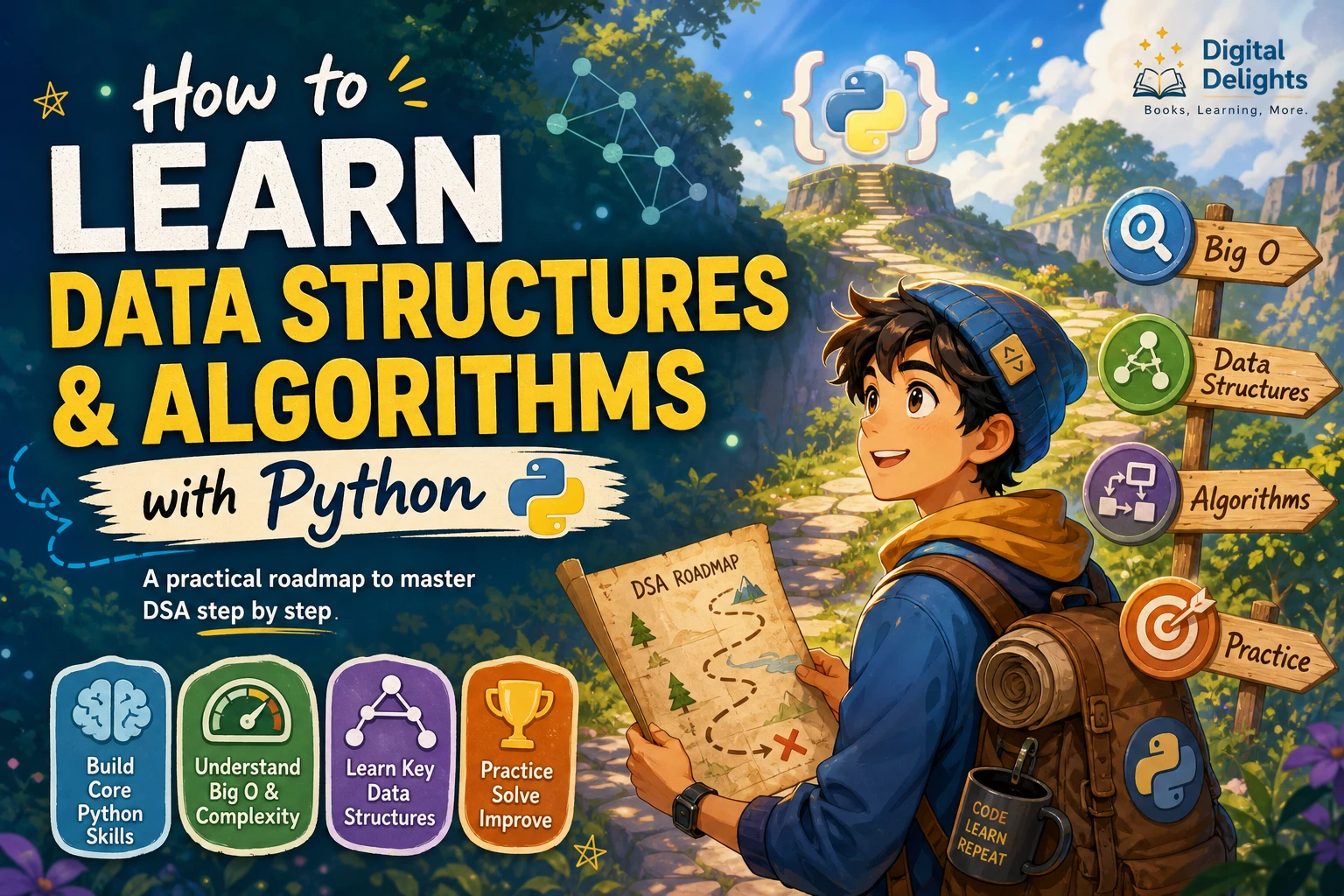
A Practical Learning Sequence for Python DSA
You do not need to master every Python feature before starting data structures and algorithms. You do need enough fluency to write small programs, follow control flow, and test your code. This sequence helps keep study manageable.
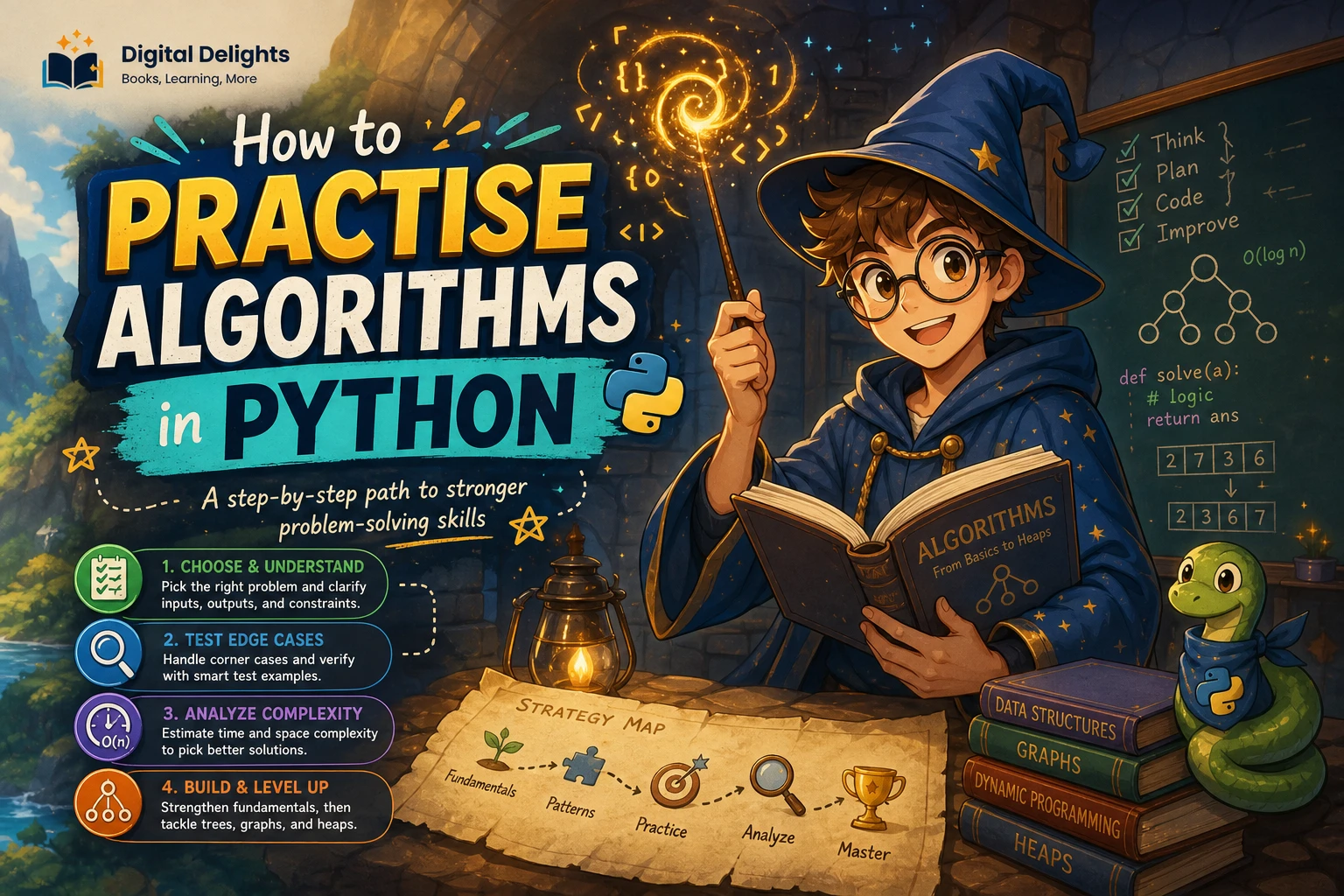
- Review Python essentials. Practise variables, conditionals, loops, functions, basic error handling, and reading input and output. Make sure you can trace a short program and explain what each part does.
- Understand familiar data structures. Work with lists, tuples, dictionaries, and sets. Learn what kinds of tasks they support and how choosing one structure rather than another changes the way you work with data.
- Learn to reason about efficiency. Compare solutions by considering how the amount of work grows as the input grows. Big O notation is a way to discuss that growth; it is not a stopwatch reading for a particular computer.
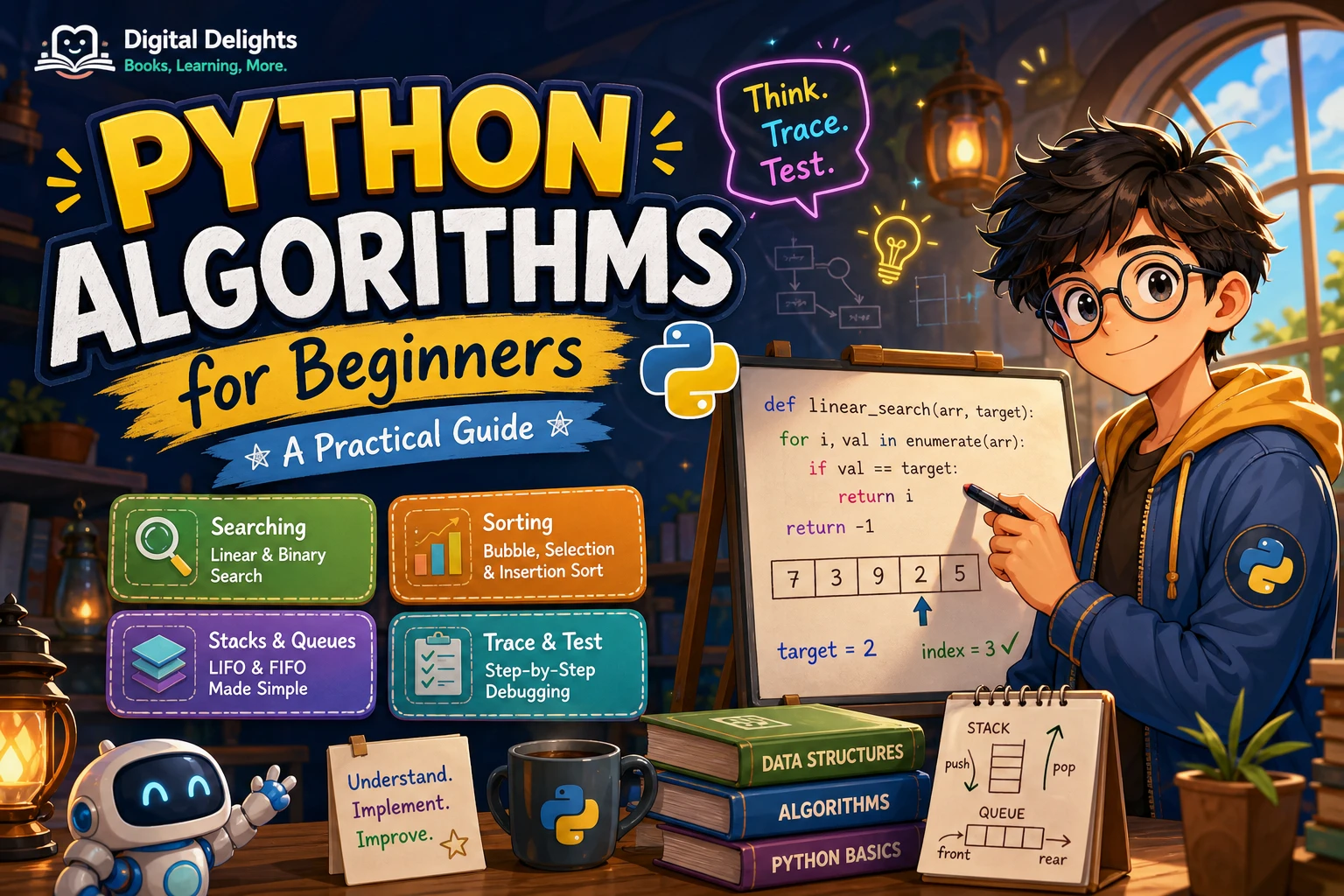
- Study core structures and algorithms. Build understanding through examples such as stacks, queues, linked lists, trees, searching, sorting, and graph traversal. For each one, ask what problem it addresses and what limitations it has.
- Implement and test. Write a small version yourself, check it with ordinary cases, and then try edge cases: empty input, one item, repeated values, or unexpectedly large input. Compare your result with the expected behavior.
- Practise problems and review. Try a problem before reading the solution. Afterward, summarize the approach, test it, and note what clue in the problem suggested the relevant structure or algorithm.
A useful study loop is: read one concept, close the book, explain it in your own words, implement a small example, and then solve a related exercise. If you cannot explain why an approach works, revisit the idea before moving on.
Common Mistakes When Choosing a DSA Book
- Starting with a book that assumes too much Python. If you are still learning loops and functions, a code-dense algorithm text can make two subjects difficult at once. Strengthen the basics first or choose a resource that teaches them alongside computer science concepts.
- Confusing breadth with a learning path. A book that covers many topics can be a helpful reference without being the clearest first course. Choose based on whether you need a sequence, focused exercises, or a broad overview.
- Reading without implementing. Recognizing an algorithm on the page is not the same as being able to write, test, and explain it. Make room for hands-on practice.
- Trying to memorize solutions. Memorization is fragile when a problem changes. Focus on the reasoning, the conditions under which a method works, and the trade-offs between approaches.
- Assuming old examples run unchanged. Check the edition and code context, and be prepared to investigate or adapt examples rather than assuming compatibility with your environment.
- Expecting one book to meet every goal. A beginner guide can help establish programming fluency; a problem collection can provide more targeted practice later. Your resource needs may change as your skills develop.
Frequently Asked Questions
Do I need to know Python before studying data structures and algorithms?
You need some Python basics, but you do not have to be an advanced programmer. Aim to understand variables, conditionals, loops, functions, and the language’s common built-in collections. A resource such as 100 Days of Coding in Python combines introductory programming with algorithms and data structures; a focused problem book is more suitable once basic coding feels familiar.
Which Python DSA book is suitable for a complete beginner?
Among the titles discussed here, 100 Days of Coding in Python is explicitly described as a step-by-step resource for people new to programming. The Python Workshop is another option if you want a practical, exercise-led introduction to Python that includes data structures and later algorithmic topics. Choose according to whether you prefer a day-by-day plan or a workshop format.
Should I choose a textbook, a practical guide, or a problem collection?
Choose a textbook or broad guide if you want systematic coverage and explanations across many topics. Choose a practical guide if you learn best by coding along with examples. Choose a problem collection if you already know the basics and want to practise applying algorithms. You can use more than one format at different stages rather than expecting one book to do everything.
Are Python DSA books useful for coding interviews?
They can help you learn structures, algorithmic reasoning, and implementation practice. Interview preparation also involves solving unfamiliar problems, explaining your thinking, and checking edge cases. Use a book as part of a practice routine, not as a promise of interview success.
Conclusion: Choose for Your Current Stage
The best Python book for data structures and algorithms is the one whose prerequisites, teaching style, and topic coverage fit your next learning step. Start with a structured Python resource if you are still building programming fluency. Choose a conceptual guide if you want to understand recursion and how programs are designed. If you can already code, move toward algorithm problems or a broader reference that matches your goal.
Whatever you choose, pair reading with implementation. Test examples, solve exercises, and explain your reasoning. That active practice is what turns a book’s coverage into usable programming knowledge.