
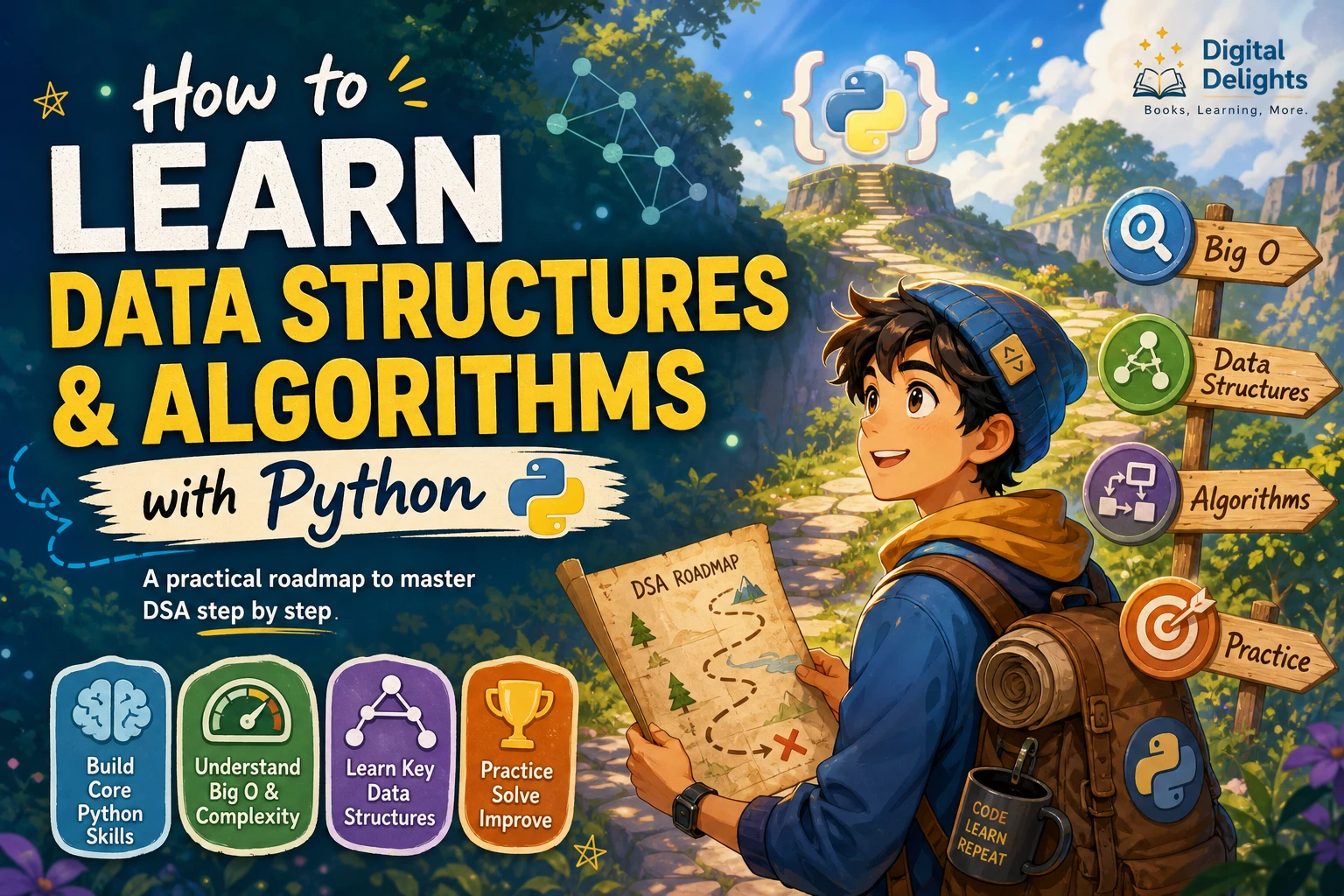
How to Learn Data Structures and Algorithms with Python
Learning data structures and algorithms means building three related skills: understanding how a structure stores information, choosing an algorithm to solve a problem, and reasoning about how the solution behaves as the input grows. Python makes it easy to write readable examples, but the concepts still take deliberate practice.
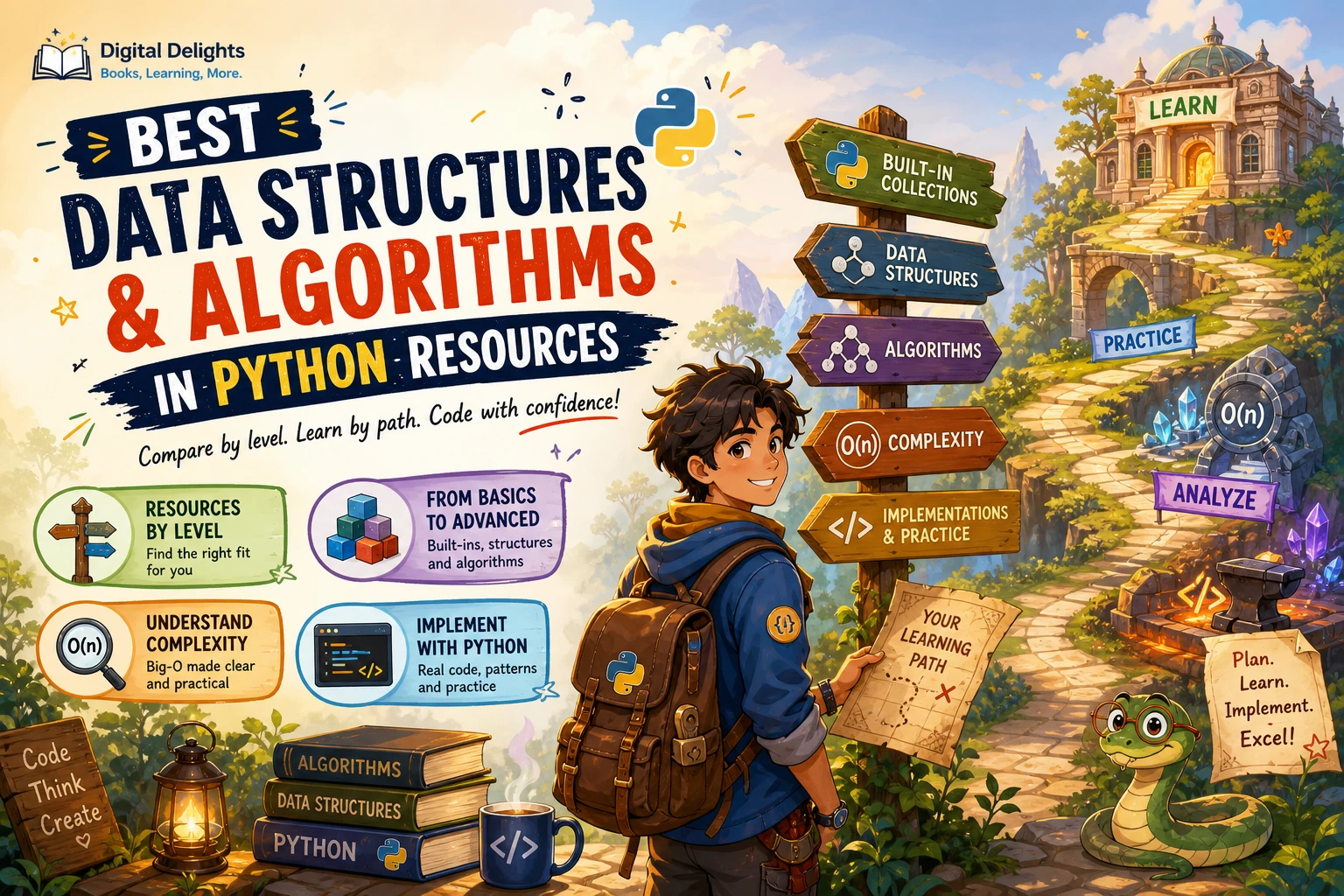
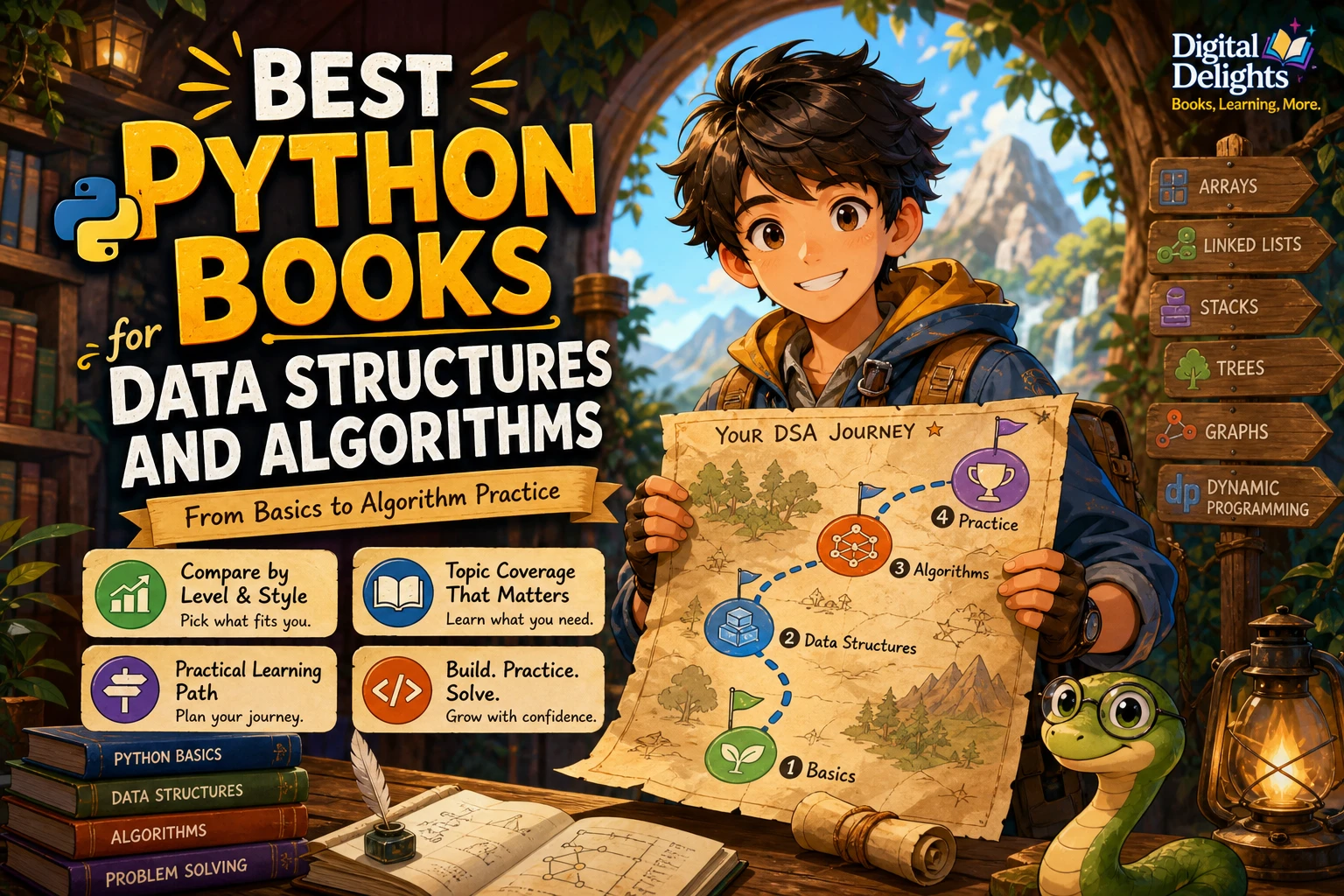
A useful learning order is: refresh Python fundamentals, learn to describe time and space costs, study common data structures, practise algorithms that use them, and test your solutions against edge cases and suitable built-ins. Treat this as a practical roadmap—not a universal or proven-best curriculum—and adjust the pace to your background.
What Python knowledge should you have first?
Before focusing on data structures and algorithms, be comfortable writing small Python programs. You should be able to use:
- Variables, numbers, strings, and Boolean values
- Conditionals and
forandwhileloops - Functions, parameters, return values, and basic debugging
- Lists, dictionaries, sets, and tuples
- Indexing, iteration, and simple input and output
You do not need to be an advanced Python developer. However, if loops, functions, and collections are unfamiliar, learn those first so you can concentrate on the problem-solving ideas rather than Python syntax. Python’s official tutorial says it is intended for readers who are new to Python but have a basic understanding of programming; it also covers control flow and built-in data structures. See the official Python tutorial.
If you are starting from scratch, a general introduction such as The Python Workshop is described in the catalog as a hands-on guide that progresses from fundamentals toward data structures and algorithms. A broader textbook option is Introduction to Python Programming and Data Structures, which covers Python fundamentals as well as topics such as recursion, sorting, linked lists, stacks, queues, trees, and graphs.
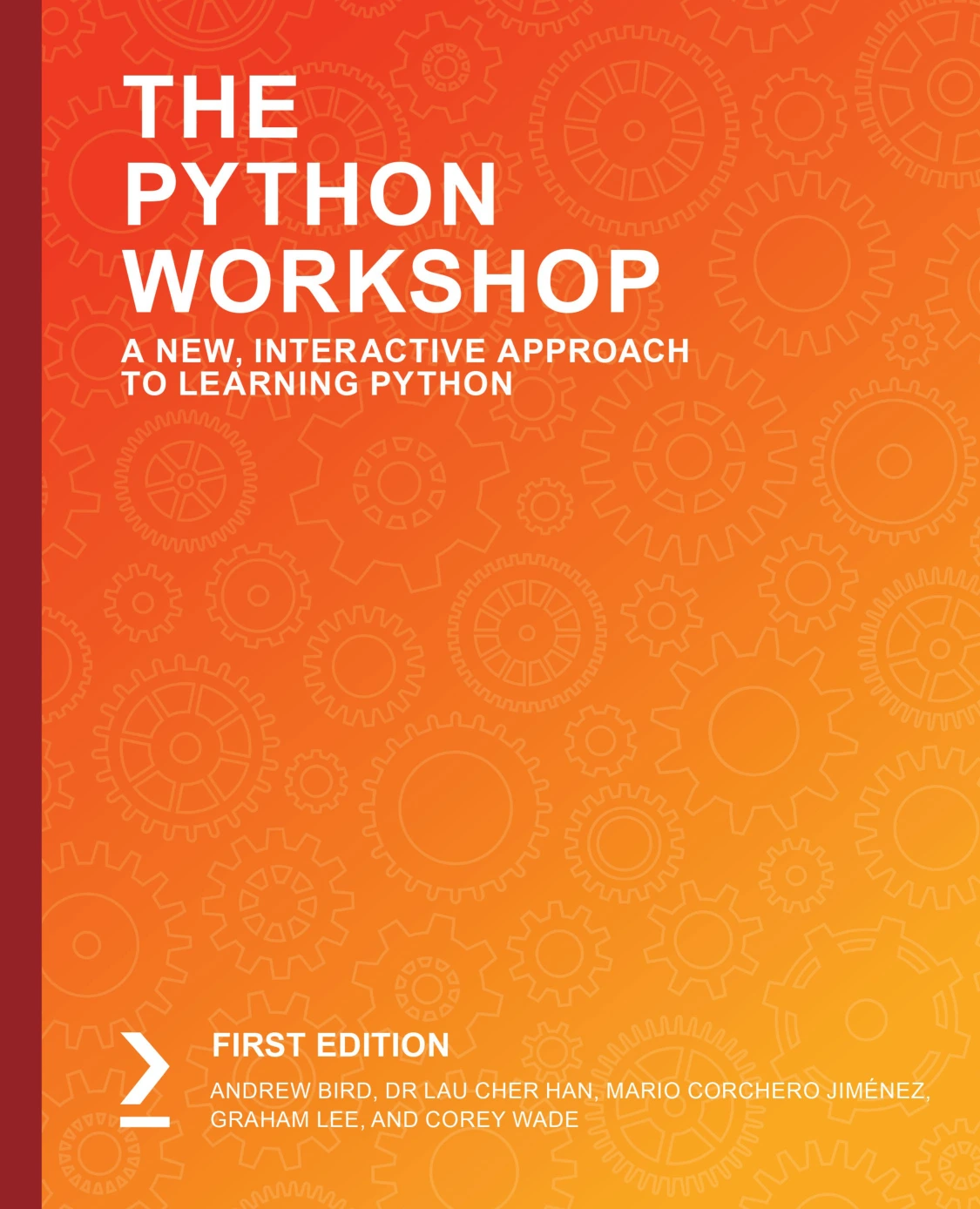
By Andrew Bird
Learners who want to practise Python fundamentals and build toward structures and algorithms.
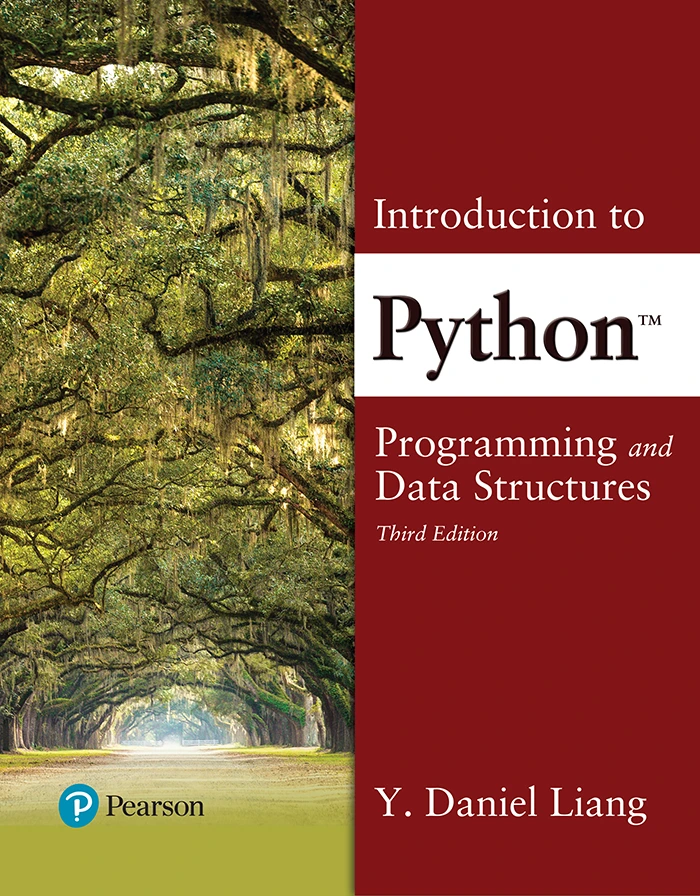
Introduction to Python Programming and Data Structures
By Daniel Liang
Self-directed learners seeking broad Python instruction alongside data-structures coverage.
Learn Big O and space complexity
Complexity analysis gives you a way to discuss how an algorithm’s resource use changes as its input grows. Big O notation describes an upper-bound growth pattern, rather than giving an exact runtime in seconds. It is useful for comparing approaches, but it does not account for every practical factor, such as the computer, implementation details, or the size and shape of a particular input.
For example, consider checking whether a value appears in a list by examining items one at a time. If the list doubles in size, the number of checks may also roughly double in the worst case. By contrast, an approach that compares every item with every other item can require far more work as the list grows. The point is not to memorize labels in isolation; it is to identify what work the code repeats.
When analysing a solution, ask:
- What is the input size? Name the quantity that grows, such as the number of list items or graph nodes.
- What operations repeat? Look for nested loops, repeated searches, recursion, or copying.
- What extra memory is used? Consider temporary lists, sets, dictionaries, recursion calls, and other stored values.
- Which case are you describing? Best, typical, and worst cases can behave differently.
Practise explaining the reasoning in plain language before naming a complexity class. “This scans each item once” is a more useful starting point than attaching a Big O label without justification.
Study data structures in a practical order
For each structure, learn what it is good for, what its common operations do, and what trade-offs it introduces. Then write a small example and test it. The exercises below are deliberately modest: the goal is to make the structure’s behavior concrete before using it inside larger algorithms.
1. Lists and array-style sequences
Python lists are a natural starting point for ordered collections. Practise reading an item by index, traversing every item, adding values, and removing or updating values. Compare searching by scanning with accessing a known position by index. Ask what happens when the collection is empty or the requested value is absent.
Exercise: Write a function that returns the largest number in a list without calling max(). Test it with a single item, repeated values, and negative numbers. Decide how the function should handle an empty list.
2. Stacks and queues
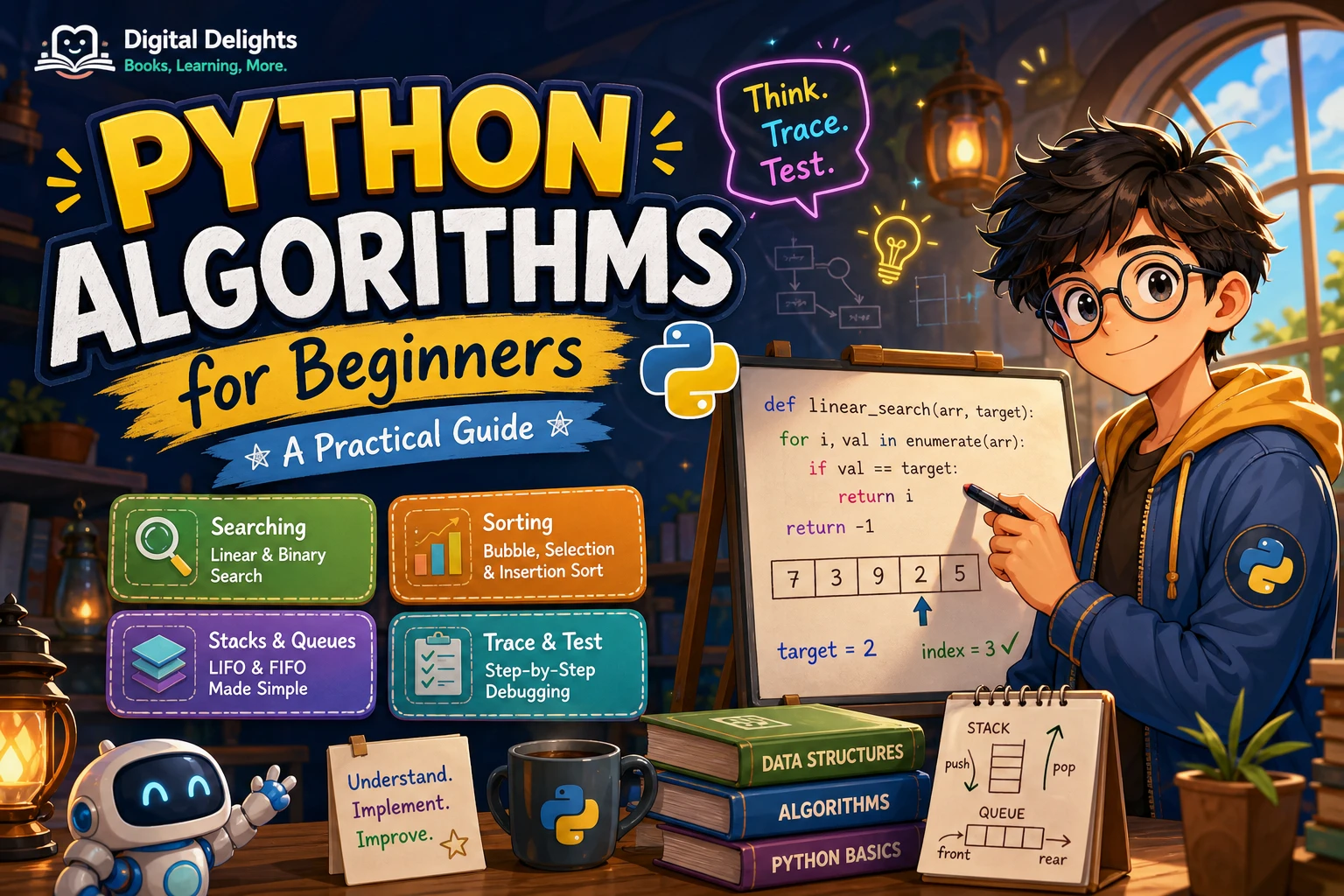
A stack follows last-in, first-out behavior: the most recently added item is the next one removed. A queue follows first-in, first-out behavior. These models appear in tasks such as tracking nested work or processing items in arrival order. Python’s tutorial introduces lists as a way to implement stacks and explains why a different approach is appropriate for efficient queue operations; consult the Python tutorial’s data-structures section for its examples.
Exercise: Use a list as a stack to reverse a short sequence. Then describe how you would process a line of tasks in arrival order, and look up the suitable standard-library structure before implementing a queue in application code.
3. Linked lists
A linked list connects elements through references rather than relying on a single contiguous, indexable sequence. Learning one helps clarify how links, traversal, insertion, and deletion work, though it does not mean you should use a custom linked list for every Python task.
Exercise: Sketch three nodes and their references, then write a small node class and a function that visits each node in order. Trace what must change to insert a node between two existing nodes.
4. Hash tables and sets
Dictionaries and sets are useful when you need to associate keys with values or track distinct items. Practise membership checks, adding and removing entries, and counting occurrences. Explore what your code should do when a key is missing or when an item is encountered more than once.
Exercise: Write a function that counts how many times each word occurs in a sentence using a dictionary. Then write a second function that returns the distinct words using a set.
5. Trees
Trees represent hierarchical relationships. Begin with a simple binary tree and learn how to visit its nodes in different orders. Then look at how search trees organise values and why their shape can affect how much work a search requires.
Exercise: Create a small tree by hand and write a recursive function that counts its nodes. Try a tree with one node, a tree with several levels, and an empty tree.
6. Graphs
Graphs model connections: for instance, a route network or relationships between items. Learn how to represent a graph with an adjacency list, then practise visiting connected nodes while keeping track of what you have already seen.
Exercise: Represent a handful of locations as a dictionary of neighboring locations. Write a traversal that visits every location reachable from a chosen starting point, including a test for an isolated location.
Move from structures to algorithms
Once the basic structures feel familiar, study algorithms that search, rearrange, or traverse data. A sensible progression for independent practice is:
- Searching: Start with a simple scan through a collection. Then learn binary search and identify the condition its input must meet before the method applies.
- Sorting: Compare a straightforward sorting approach with more efficient general-purpose methods. Focus on how comparisons and data movement contribute to the work.
- Recursion: Learn to identify a base case and a smaller subproblem. Trace calls on paper, and compare a recursive solution with an iterative one where appropriate.
- Graph traversal: Practise breadth-first and depth-first traversal, recording visited nodes so cycles do not lead to repeated work.
- Greedy methods and dynamic programming: After you can break problems into smaller parts, explore when a locally chosen step may work and when storing solutions to overlapping subproblems can help.
Do not try to cover every algorithm family at once. After each topic, solve a few small problems that require you to explain why the chosen method fits. For a wider treatment of algorithm topics with Python and C# examples, Essential Algorithms: A Practical Approach to Computer Algorithms Using Python® and C# covers structures, searching, sorting, recursion, graph topics, and algorithm analysis according to its catalog description.
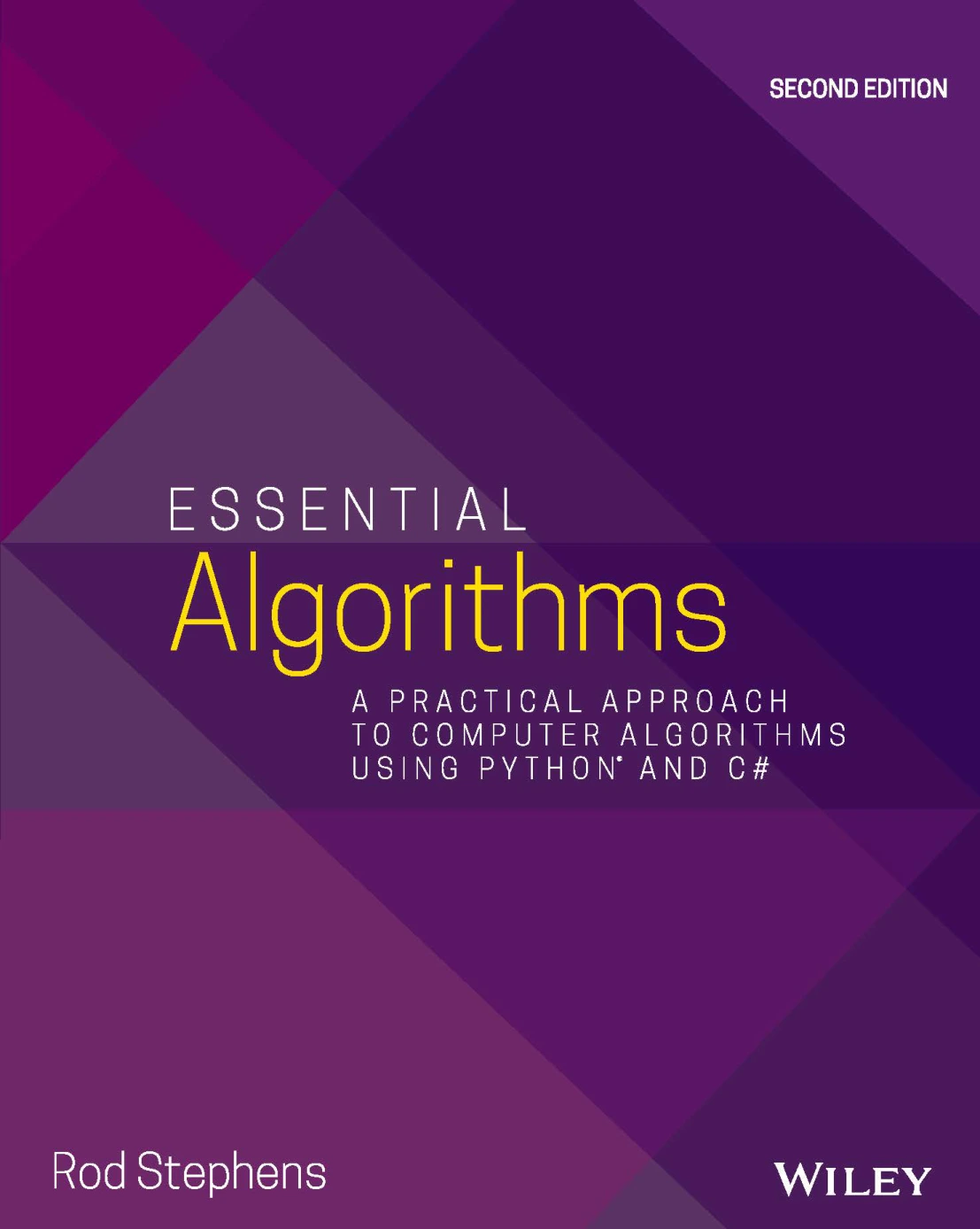
Essential Algorithms: A Practical Approach to Computer Algorithms Using Python® and C#
By Rod Stephens
Learners ready to study algorithm analysis and topics beyond introductory Python.
Practise with a repeatable problem-solving routine
A reliable routine helps you learn from each problem instead of collecting code snippets. Use the same sequence whether you are working by hand or writing a short Python program:
- Restate the problem. Note the input, expected output, and any limits or assumptions.
- Work through a small example. Trace the values and decisions by hand before coding.
- Write a direct solution. Aim for correctness and clarity before trying to optimise.
- Test edge cases. Try an empty input if valid, a single item, repeated values, already ordered data, and a missing target where relevant.
- Explain the costs. Identify the work that grows with the input and any additional memory your method uses.
- Compare with Python tools. Check whether an appropriate built-in or standard-library tool already solves the practical task clearly.
- Refine only when needed. If the solution has a meaningful limitation, explain what causes it and test a more suitable approach.
There is a useful distinction between learning and application. Implementing a stack, search, or tree traversal yourself can help you understand how it works. In ordinary application code, using a suitable built-in or library implementation is often clearer than maintaining a custom version. These goals complement each other: build to learn, then choose the simplest appropriate tool for the job.
For hands-on Python practice that includes data structures, sorting and searching, complexity, and recursive functions, The Python Workshop, Second Edition is one catalog option. For a focused collection of algorithm problems with Python implementations, Competitive Programming in Python covers a wider range of subjects, including sequences, graphs, trees, and shortest paths. These resources have different stated scopes; the catalog does not establish that one teaching approach is more effective than another.
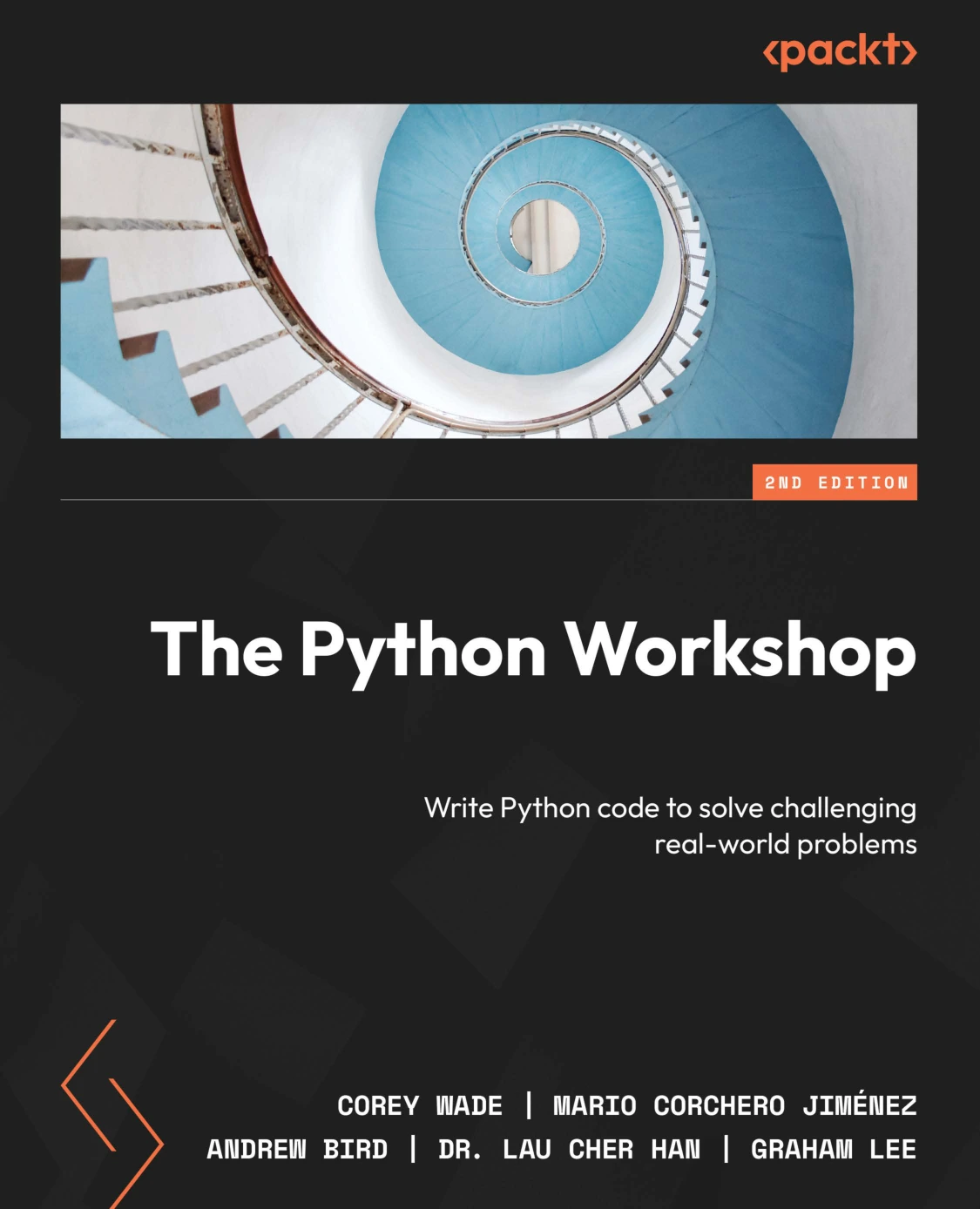
The Python Workshop: Write Python code to solve challenging real-world problems, Second Edition
By Corey Wade
Learners who want applied coding activities as they develop Python and algorithm skills.
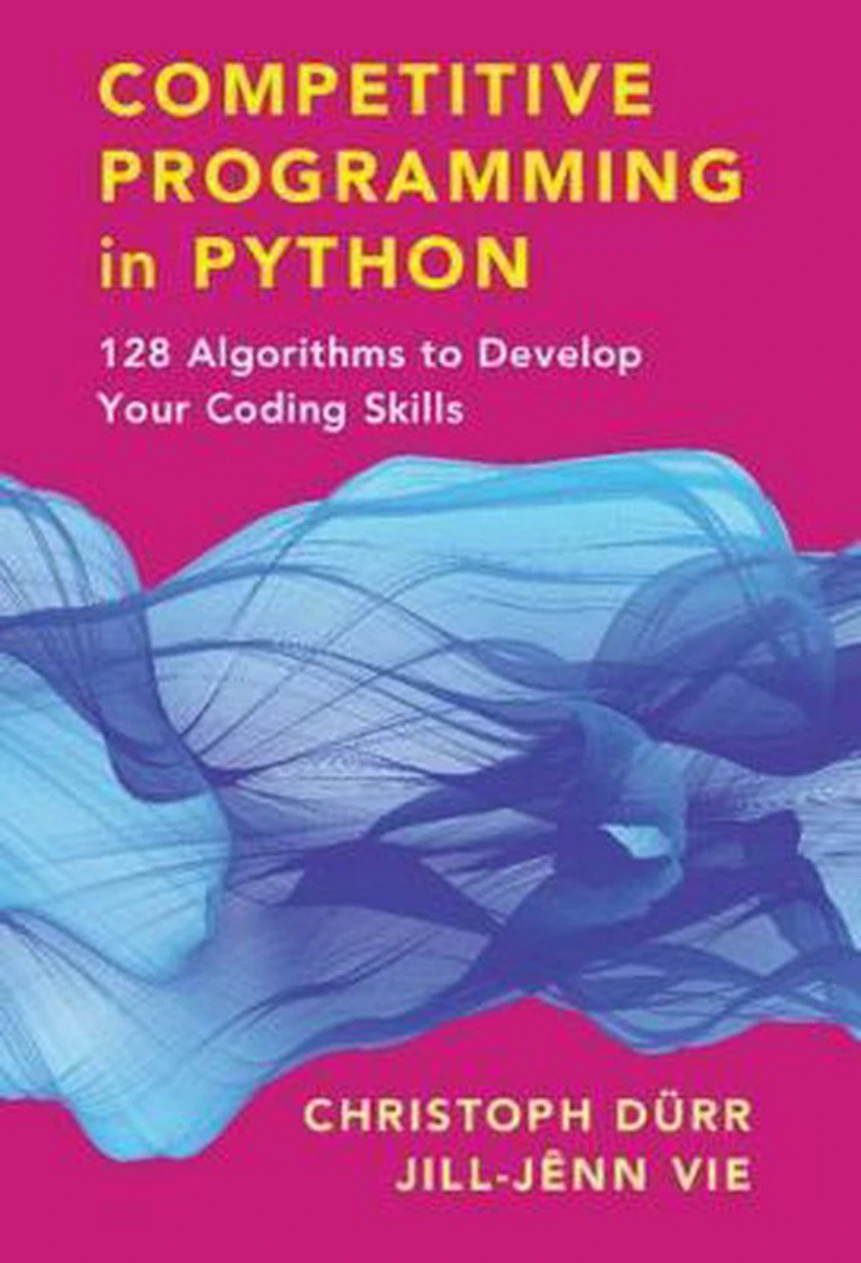
Competitive Programming in Python: 128 Algorithms to Develop Your Coding Skills
Learners looking for a problem-focused route through a wide range of algorithm subjects.
Common mistakes to avoid
- Memorizing code without tracing it. Explain what each step changes and why it is needed. Then try a slightly different input.
- Skipping complexity analysis. A working answer is a start; understanding how its work grows helps you compare approaches.
- Ignoring edge cases. Empty collections, duplicates, and missing values often reveal assumptions that ordinary examples hide.
- Optimising before establishing correctness. First make the solution understandable and testable; then identify a specific reason to improve it.
- Treating a tiny benchmark as proof. A short timing on one input is not conclusive evidence about performance at other sizes or on other systems.
- Confusing study implementations with production choices. Reimplementing a structure can teach its mechanics, while suitable built-ins may be preferable in working code.
Choosing a book or learning resource
Choose a resource based on what you need next, not on an unsupported claim that one title is the best for everyone. Check whether the material assumes Python familiarity, how much practice it includes, and whether its coverage matches your current goal.
| Learning need | Catalog resource | Why it may fit |
|---|---|---|
| Learn Python foundations through activities | The Python Workshop | Its catalog description emphasizes exercises and a progression from core syntax toward structures and algorithms. |
| Use a broad Python programming textbook | Introduction to Python Programming and Data Structures | Its listed coverage spans introductory Python, recursion, efficiency, sorting, and multiple data structures. |
| Study algorithm concepts across several areas | Essential Algorithms: A Practical Approach to Computer Algorithms Using Python® and C# | It includes Python examples and a broad set of data structures and algorithm topics, including performance analysis. |
| Work through contest-style algorithm problems | Competitive Programming in Python | Its catalog description presents 128 subject-organized problems with Python implementations. |
The descriptions above indicate scope, not comparative learning outcomes. Preview a resource’s level and format where possible, and select one that supports the next concrete step in your roadmap.
Frequently asked questions
Do I need to know Python before studying data structures and algorithms?
Basic programming familiarity is helpful. Be comfortable with variables, functions, loops, conditionals, and common collections such as lists and dictionaries. If you are new to programming, learn those fundamentals first; the official Python tutorial is intended for readers who already have a basic understanding of programming.
Should I implement data structures myself?
Implementing a structure is a useful learning exercise because it makes its operations and trade-offs visible. For application code, compare your custom version with Python’s built-in or standard-library options and choose the simplest suitable tool. You do not need to use a hand-built structure just because you studied it.
What should I learn first: data structures or algorithms?
Learn them together in small steps. A structure explains how information is organised; an algorithm explains how to work with it. Start with lists and simple searches, then connect structures such as dictionaries, trees, and graphs to the algorithms that use them.
How can I practise and check whether my solutions are efficient?
Trace a small example, implement the solution, test edge cases, and explain its time and space costs. Compare it with an appropriate Python tool when one exists. Benchmarks can be informative when carefully designed, but a single tiny test should not be treated as a general conclusion about performance.
Conclusion
To learn data structures and algorithms with Python, build a foundation in the language, reason about complexity, study structures one at a time, and practise algorithms through small, testable problems. Focus on explaining why a solution works—not just reproducing code—and distinguish between implementing concepts for learning and choosing practical tools in application code.
This roadmap is a starting point, not a fixed timetable or a proven universal sequence. Keep your examples small, revisit ideas as problems become harder, and choose learning materials whose level and coverage match what you need next.