

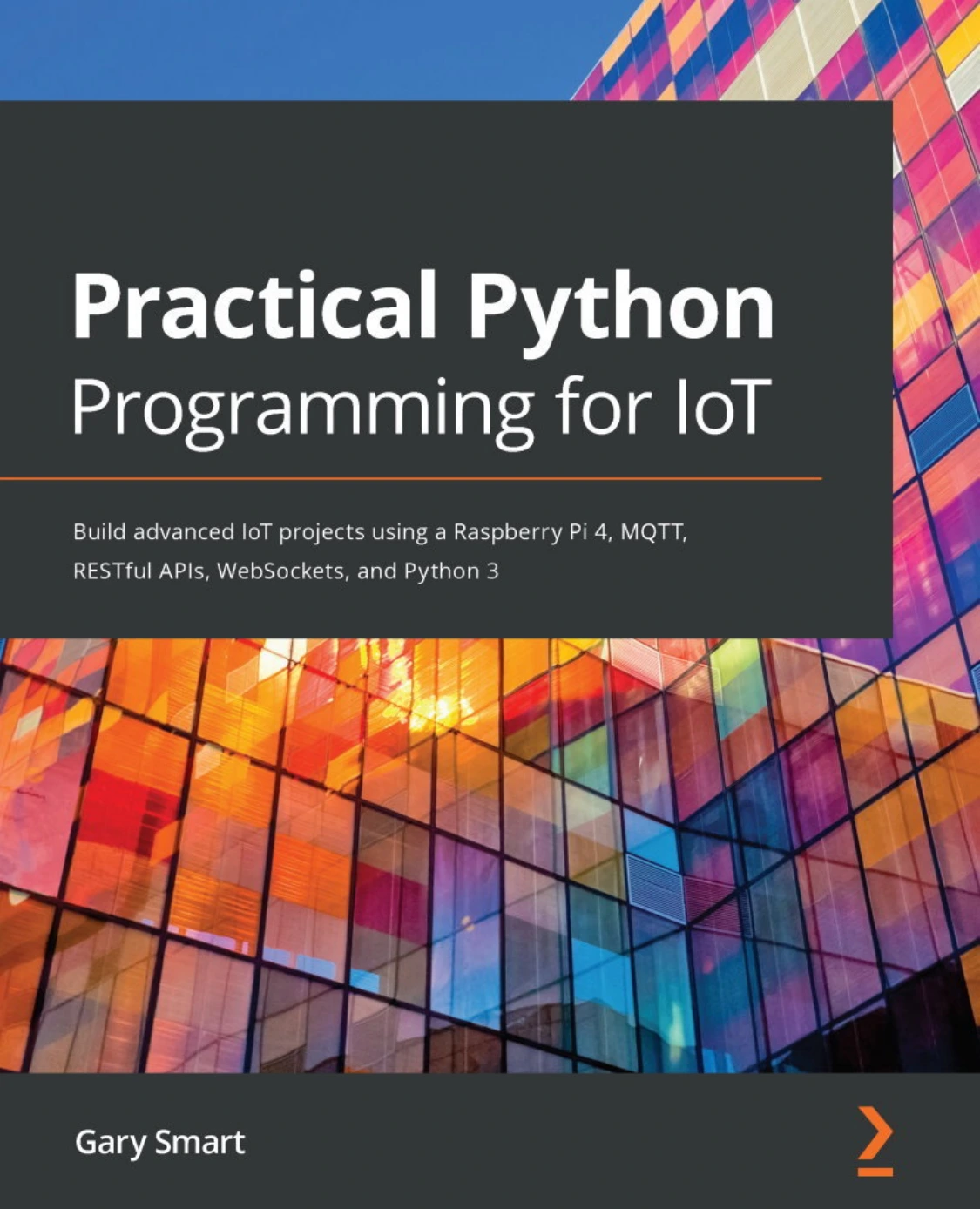
Practical Python Programming for IoT: Build advanced IoT projects using a Raspberry Pi 4, MQTT, RESTful APIs, WebSockets, and Python 3
Original price was: $5.00.$2.50Current price is: $2.50.

Gary Smart
Product Specs:
- File Type: PDF
- File Size: 28.4 MB
- Book Language: English
- Total Page Count: 500
- Instant Download
Connect Python Code to the Physical World
Practical Python Programming for IoT is a project-driven guide for developers who want to build connected devices with Python 3 and the Raspberry Pi 4. Written by Gary Smart and published by Packt, it brings together several technologies that often appear separately: MQTT, RESTful APIs, WebSockets, Flask, GPIO control, and practical electronics. Instead of treating those topics as isolated pieces, the book shows how they fit into a working IoT workflow.
From Python Setup to a Working IoT Toolkit 💻
Early chapters establish a reliable development environment on the Raspberry Pi. You will work through Python virtual environments, GPIO packages, the PiGPIO daemon, and GPIO interface configuration. The book then introduces breadboard prototyping with push buttons, LEDs, and resistors, along with the skill of reading electronic schematic diagrams. From there, it explores two Python approaches to blinking an LED—GPIOZero and PiGPIO—before building a first IoT program and examining the server-side code patterns behind it.
RESTful APIs, WebSockets, and MQTT ⚙️
Network communication is a major part of the book. It introduces Flask and Flask-RESTful for creating RESTful API services, then extends the same territory into WebSocket communication with Flask-SocketIO. A dedicated MQTT chapter covers the Mosquitto broker, publishing and subscribing, topics and wildcards, Quality of Service, retained messages, durable connections, and the Paho-MQTT client library. The examples stay grounded in controlling an LED and building web-based clients, so the protocols become practical tools rather than abstract specifications.
Electronics and the Physical World
Later material shifts from code to circuits. You will explore Raspberry Pi pin numbering and compare GPIO libraries including GPIOZero,, CircuitPython and Blinka, PiGPIO, SPIDev, and SMBus. The book explains digital I/O, analog I/O, PWM, SPI, I2C, 1-wire, and UART, then walks through an ADS1115 analog-to-digital converter circuit and PWM LED control. This is where the IoT focus becomes tangible: sensors, signals, and actuators are treated as part of the software problem.
Who This Book Is For 📚
Practical Python Programming for IoT suits programmers, makers, and hobbyists who already know some Python and want to build real IoT projects on the Raspberry Pi. It is especially useful if you prefer learning by wiring circuits, writing code, and seeing the two meet. The book assumes a hands-on mindset and provides a path from environment setup to networked device communication.
Why It Belongs on Your Shelf
What makes this guide useful is its range. It does not stop at blinking an LED, and it does not stay only at high-level cloud concepts. It connects Python, electronics, and network protocols in one continuous project-oriented narrative, giving you a practical vocabulary for building connected systems with the Raspberry Pi 4.
User Reviews
Be the first to review “Practical Python Programming for IoT: Build advanced IoT projects using a Raspberry Pi 4, MQTT, RESTful APIs, WebSockets, and Python 3”
You must be logged in to post a review.
Original price was: $5.00.$2.50Current price is: $2.50.

There are no reviews yet.