

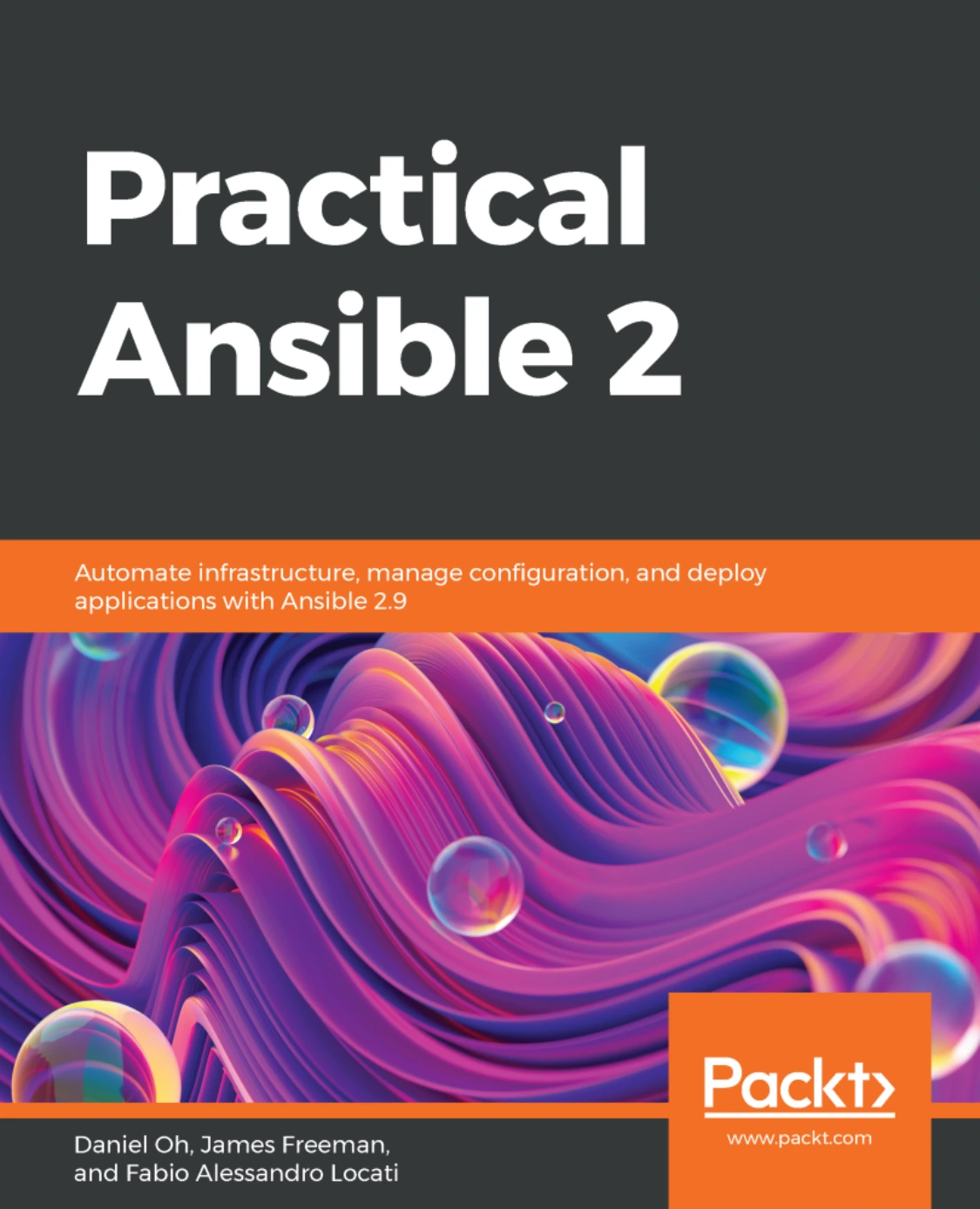
Practical Ansible 2
Original price was: $5.00.$2.50Current price is: $2.50.

Daniel Oh
Product Specs:
- File Type: PDF
- File Size: 6.2 MB
- Book Language: English
- Total Page Count: 394
- Instant Download
Practical Ansible 2: Automation for Real Infrastructure ⚙️
Ansible works best when it stops being a pile of one-off commands and starts acting like a maintained system. Practical Ansible 2 is a Packt Publishing guide to building that kind of system with Ansible 2.9. Daniel Oh, James Freeman, and Fabio Alessandro Locati write for readers who need automation to survive contact with real servers, mixed operating systems, cloud platforms, and teams that have to maintain the work later.
The book begins with installation and configuration, then builds outward through inventories, playbooks, roles, variables, and YAML. From there it moves into modules, plugins, coding practices, and the operational details that determine whether automation remains readable and reliable as it grows.
From First Playbook to Organized Automation 🧩
Early chapters cover the Ansible framework, ad hoc commands, inventory files, host groups, variables, and Jinja2 filters. Playbooks and roles receive substantial attention: how plays and tasks differ, how roles organize variables and dependencies, how loops and conditions shape task execution, and how strategies and ansible-pull affect the way automation runs.
Modules, Plugins, and Maintainable Code
Readers learn how to execute modules from the command line, read module documentation, work with return values, and develop custom modules. The book also covers plugin types, custom plugin creation, sharing work with the community, preferred directory layouts, cloud inventory choices, environment separation, and version control. Chapter-end questions and further reading give the material a study-friendly rhythm.
Advanced Operations and Safer Deployments 🔐
Later sections address asynchronous execution, rolling updates, maximum failure percentages, task delegation, run_once, local playbook runs, proxies, jump hosts, prompts, tags, and Ansible Vault. These are the details that often separate a lab demonstration from an automation workflow that can be trusted with production changes.
Network, Container, and Cloud Automation ☁️
The book extends Ansible beyond server configuration into network devices, containers, Kubernetes, and cloud services. It discusses why network automation matters, how Ansible connects to networking hardware, available networking modules, conditional statements for network devices, container-focused modules, Docker automation, Kubernetes objects, and automation against AWS, Google Cloud Platform, Azure, Rackspace Cloud, and OpenStack.
Testing, Troubleshooting, and Moving Forward
The final chapter turns to troubleshooting and testing strategies, a necessary counterweight to the optimism of a freshly written playbook. Throughout, the emphasis stays practical: install, configure, organize, test, secure, and extend Ansible without losing sight of the people who will read the code later.
Who May Find This Book Useful
System administrators, DevOps engineers, cloud engineers, developers, and IT professionals who want a structured path into Ansible automation will find relevant material here. Beginners can follow the progression from fundamentals to advanced topics, while experienced readers may appreciate the focused chapters on modules, plugins, network automation, cloud platforms, and operational safety. For anyone building configuration management skills with Ansible 2.9, this Packt title offers a practical route from basic commands to more deliberate, maintainable automation.
Original price was: $5.00.$2.50Current price is: $2.50.






There are no reviews yet.