

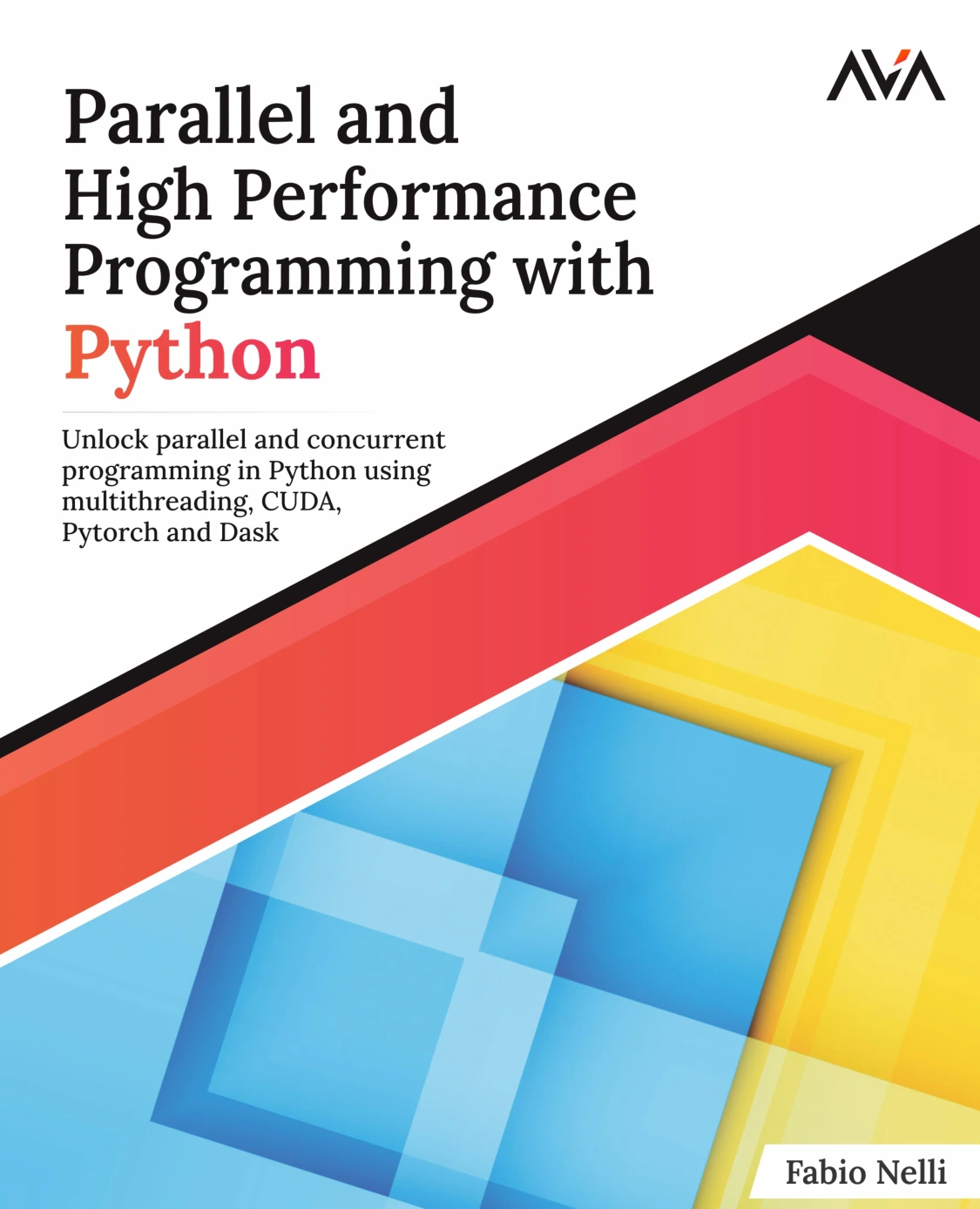
Parallel and High Performance Programming with Python: Unlock Parallel and Concurrent Programming in Python using Multithreading, CUDA, Pytorch, and Dask
Original price was: $5.00.$2.50Current price is: $2.50.

Fabio Nelli
Product Specs:
- File Type: PDF
- File Size: 10.8 MB
- Book Language: English
- Total Page Count: 396
- Instant Download
Parallelism Without the Guesswork 💻
Python makes it easy to write clear code, but clear code does not automatically use all the hardware available. Parallel and High Performance Programming with Python is a practical guide to the libraries and techniques that let Python programs run concurrently, use multiple cores, and scale across processors, GPUs, and distributed systems. Fabio Nelli builds the subject from the ground up, pairing explanations of how parallelism works with example code readers can follow and adapt.
From Operating System Basics to Python’s GIL
The early chapters establish the foundation: how operating systems schedule processes and threads, why concurrency is not the same as parallelism, and how Python’s Global Interpreter Lock shapes the way threads behave. From there, the book examines the standard library tools that many Python developers meet first, including threading and multiprocessing, before moving into synchronization and process-based approaches.
Threads, Processes, and Asynchronous Code
Thread-based concurrency and process-based parallelism each solve different problems. The book covers both in detail, then introduces asynchronous programming with AsyncIO. This progression helps readers understand not just which API to call, but when a thread pool, a process pool, or an event loop is the more sensible choice for a given workload.
Distributed Systems and GPU Acceleration ⚙️
When a single machine is not enough, distributed systems come into play. Celery, Dramatiq, and SCOOP are presented as ways to distribute tasks across workers, with examples showing how concurrent operations are scheduled and executed. GPU programming is covered through Numba’s CUDA support and PyOpenCL, giving readers a route into accelerating vector-heavy and compute-intensive work.
Parallel Data Science and AI 🧠
Much of modern data science already relies on NumPy, pandas, and scikit-learn. This book shows how Dask extends those familiar tools into parallel and out-of-core workflows, with parallel arrays, dataframes, and machine learning APIs. It also looks at artificial intelligence, where machine learning and deep learning increasingly depend on parallel and distributed computing. The book’s subtitle also highlights PyTorch, reflecting the growing role of deep learning frameworks in high-performance Python work.
What Readers Can Expect
- Clear explanations of core parallel and concurrent programming concepts.
- Example-driven coverage of Python’s standard library and third-party libraries.
- Practical introductions to GPU computing, distributed task queues, and parallel data analysis.
- A progression from foundational theory to advanced applications in data science and AI.
- Material suited to readers who already know Python and want to improve performance and scalability.
Who This Book Is For
Developers, data scientists, engineers, and students with a working knowledge of Python will find the most value here. The book does not assume prior experience with parallel programming, but it does move quickly enough to serve readers who want to apply these techniques in real projects. If your Python scripts are hitting performance limits, or if you are preparing for work involving GPUs, distributed systems, or large datasets, this guide offers a structured way to understand the available options.
Why Parallel Python Matters
Hardware keeps moving toward more cores, faster accelerators, and distributed architectures. Software that ignores those resources leaves performance on the table. Parallel and High Performance Programming with Python helps bridge that gap by explaining the concepts and showing the code. Digital Delights is pleased to offer this ebook for readers ready to make their Python applications faster, more responsive, and better prepared for demanding workloads.
User Reviews
Be the first to review “Parallel and High Performance Programming with Python: Unlock Parallel and Concurrent Programming in Python using Multithreading, CUDA, Pytorch, and Dask”
You must be logged in to post a review.
Original price was: $5.00.$2.50Current price is: $2.50.

There are no reviews yet.