

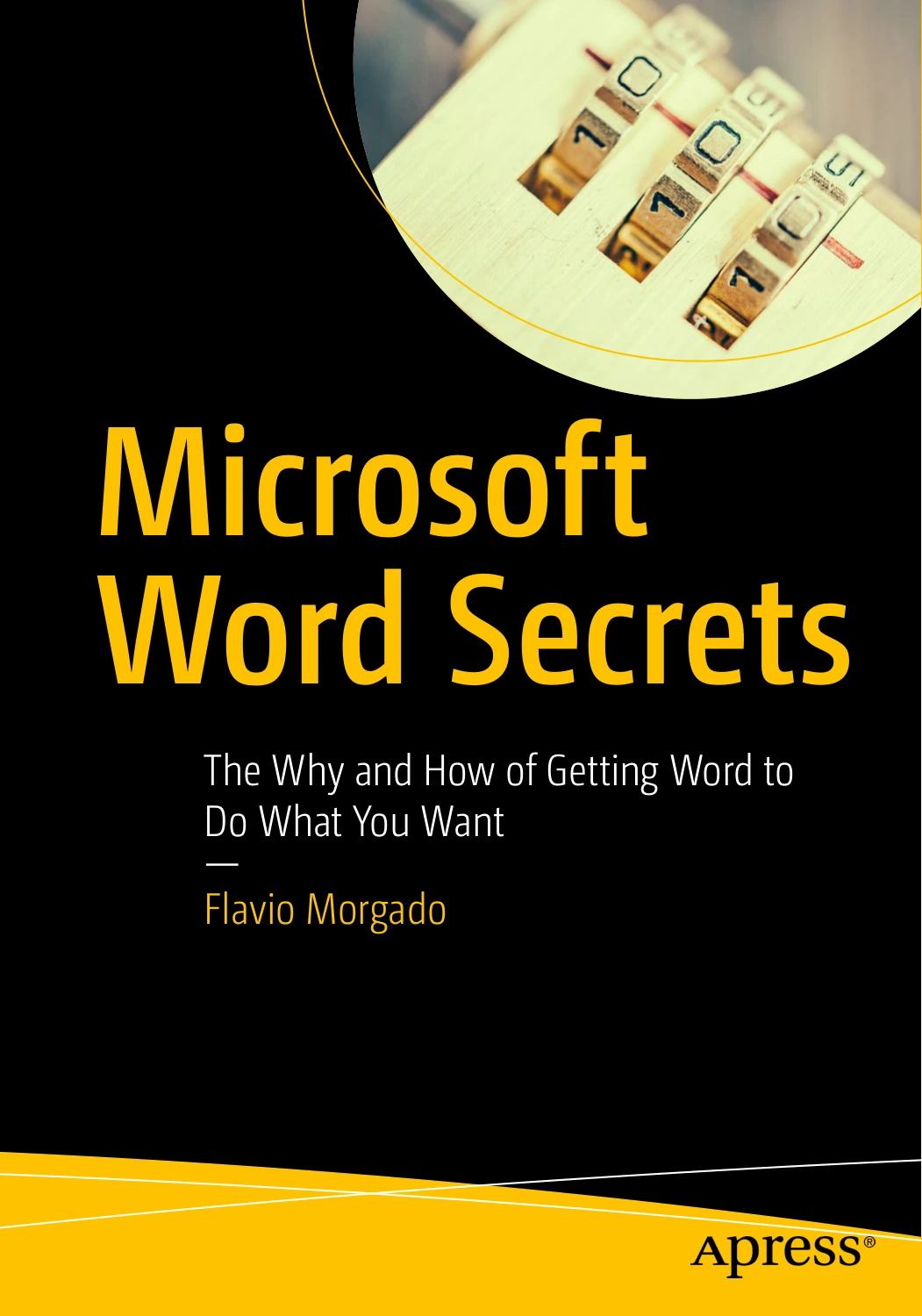
Microsoft Word Secrets: The Why and How of Getting Word to Do What You Want
Original price was: $5.00.$2.50Current price is: $2.50.

Flavio Morgado
Product Specs:
- File Type: PDF
- File Size: 56.9 MB
- Book Language: English
- Total Page Count: 750
- Instant Download
Microsoft Word can produce polished documents, but it can also fight you at the worst possible moment. A paragraph refuses to keep its spacing. A heading changes the whole page. A table of contents goes stale. Microsoft Word Secrets explains what is happening behind those frustrations and how to make Word follow your intentions.
Flavio Morgado approaches Word as a system rather than a collection of buttons. Published by Apress in 2017, the book examines how formatting is inherited, how styles control structure, and how section breaks, page setup, and tables interact in real documents. It is written for users who are ready to move beyond trial and error.
Why Word Behaves the Way It Does
The early chapters start with foundations that many users never inspect: file extensions, hidden characters, paragraph inheritance, and the difference between direct formatting and style-based formatting. Understanding these details makes later problems easier to diagnose, because Word’s behavior usually follows rules even when those rules are hidden from view.
Inside the Chapters
- File extensions and document structure — how Word files are identified and why changing extensions can cause trouble.
- Hidden characters and paragraph formatting — line spacing, indents, numbering, bullets, hyphenation, and inherited attributes.
- Character attributes — typefaces, spacing, kerning, superscript, subscript, highlighting, and the Format Painter.
- Selecting, finding, and replacing text — search techniques, wildcard patterns, and paragraph breaks.
- Styles and recommended styles — applying, creating, modifying, and removing styles for consistent formatting.
- Heading styles — navigation, renumbering, multilevel lists, and building a table of contents.
- Page and section formatting — headers, footers, orientation, vertical alignment, and section breaks.
- Tables — converting text to tables, selecting cells and rows, and managing table structure.
Styles, Headings, and Long Documents
For anyone working with reports, manuals, theses, or book-length manuscripts, the material on styles and heading levels is especially useful. The book shows how Word’s built-in styles can become a reliable framework, and how heading styles support navigation and automatic tables of contents. Instead of formatting every heading by hand, readers learn to build documents that remain consistent as they grow.
Sections, Pages, and Tables
Longer documents often need different page layouts in different places. Morgado explains how section breaks control page size, orientation, headers, and footers, and how these settings can affect spacing and numbering. The table chapter follows the same practical logic, covering the mechanics of selecting, converting, and organizing tabular content without losing control of the document.
Who This Book Is For
Microsoft Word Secrets is best suited to readers who already know the basics of Word and want a deeper understanding of its formatting engine. Writers, editors, administrative professionals, students, and anyone responsible for structured business documents will find the explanations useful. It is not a beginner’s tour of the ribbon; it is a guide for users who want fewer surprises and more predictable results.
A Practical Reference for Word Users
With ten chapters and a focus on the reasons behind Word’s behavior, this Apress title works as both a sequential read and a reference to revisit when a document becomes difficult. If you have ever wondered why a style override persists or why a section break changes the page, this book offers the explanation and the method to correct it.
User Reviews
Be the first to review “Microsoft Word Secrets: The Why and How of Getting Word to Do What You Want”
You must be logged in to post a review.
Original price was: $5.00.$2.50Current price is: $2.50.


There are no reviews yet.